
REVIEW · HISTORICAL TOURS
Warsaw: Jewish History Guided Walking Tour in English
Warsaw remembers in layers. This 150-minute English walking tour brings Jewish Warsaw into focus through places such as Nożyk Synagogue, Chłodna Street, and Waliców Street. I like its balance of prewar culture, wartime suffering, Polish resistance, and the Jewish community’s life today. I also like that guides such as Andrzej, Jacek, Aga, Luke, and Christopher have been praised for clear storytelling and thoughtful answers.
The main drawback is simple: you are outside for the full two and a half hours. Cold weather can bite, and some locations no longer have surviving buildings, so the guide must rely on photographs, maps, and explanation. For $26, though, I find this a strong-value introduction, especially if you want history connected to actual city streets rather than a lecture in a room.
In This Review
- Key points to know before you book
- Why Jewish Warsaw needs more than a wartime story
- Starting at Grzybowski Square and All Saints Church
- Nożyk Synagogue, a rare surviving building
- Chłodna Street and the former ghetto bridge
- Waliców Street and the ghetto boundary
- Rebuilding the story when the buildings are gone
- The human stories behind the dates
- A careful look at the Jewish community today
- How the guides handle a difficult subject
- Is $26 good value for 150 minutes?
- Who should take this Warsaw walking tour?
- Should you book it?
- FAQ
- How long does the Warsaw Jewish History Guided Walking Tour last?
- What language is the tour conducted in?
- How much does the tour cost?
- Where does the tour meet?
- Does the tour include hotel pickup and drop-off?
- Will the tour visit Nożyk Synagogue?
- Does the tour include Chłodna Street?
- Does the tour visit Waliców Street?
- Is this a private tour?
- Can I cancel for a full refund?
- Can I reserve now and pay later?
Key points to know before you book
- Nożyk Synagogue is Warsaw’s only surviving prewar synagogue, making it one of the tour’s most meaningful physical reminders.
- Chłodna Street marks the former bridge linking two parts of the ghetto, a location that helps explain how divided and controlled Jewish life became.
- Waliców Street once formed part of the ghetto boundary, and the guide connects it with the Warsaw Uprising and the city’s wartime destruction.
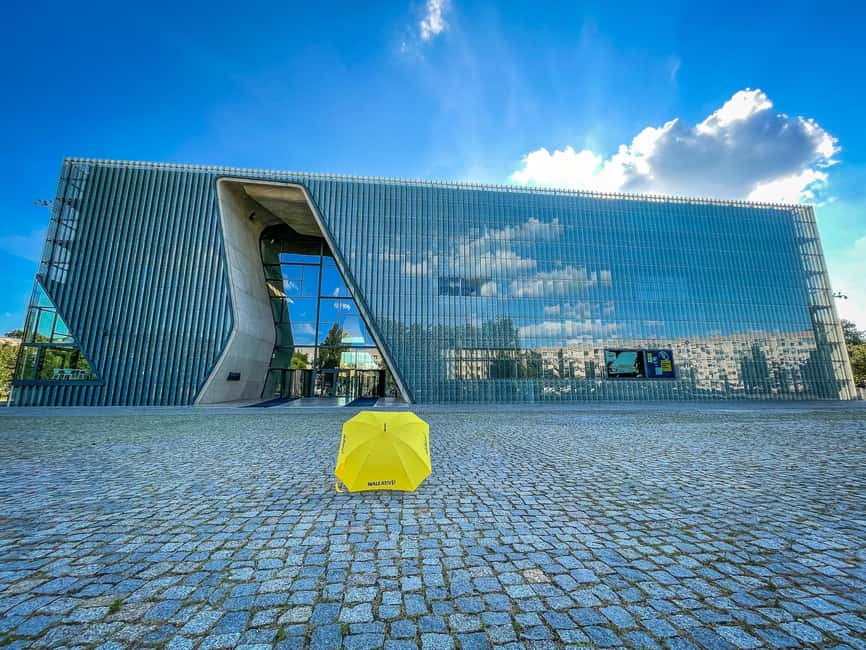
- The tour begins beside All Saints Church at Grzybowski Square, where you look for a yellow umbrella.
- The focus reaches beyond the Holocaust, covering Jewish life, art, politics, resistance, and the young Jewish community of present-day Warsaw.
- This is a general walking tour rather than a private tour, although the supplier can help arrange a smaller private outing after booking.
Why Jewish Warsaw needs more than a wartime story
Before the Second World War, Warsaw was the second-largest Jewish city in the world. That fact changes how you see the city. The Jewish population was not a small side chapter in Warsaw’s story. It was part of the city’s daily life, culture, politics, journalism, theater, and art.
That wider frame is the best feature of this tour. The guide does not begin with persecution and end with death. You first learn how Jewish residents helped shape Warsaw during more peaceful periods, then how that society changed under pressure from occupying powers, and finally how the Holocaust destroyed it.
I value that order. If you only visit former ghetto sites, it is easy to picture Jewish Warsaw as a place defined solely by suffering. This walk works harder to show the people who lived there as artists, writers, actors, journalists, neighbors, parents, and citizens.
The story also reaches back to the 19th century. Jewish residents joined other Warsaw citizens in resistance to occupying powers and took part in Polish uprisings. That detail matters because it shows Jewish life as part of the broader political history of Poland, not as a separate story running alongside it.
More History Tours in Warsaw
- Warsaw: POLIN Museum of the History of Polish Jews Ticket
★ 4.7 · 1,142 reviews - Warsaw: Chopin Concert at Historical Venue in Old Town
★ 4.7 · 445 reviews - Small-Group Historical Guided Tour of Warsaw with pick up/drop off. Public Tour.
★ 4.5 · 343 reviews
Starting at Grzybowski Square and All Saints Church
The meeting point is beside All Saints Church at Grzybowski Square. Look for the yellow umbrella. This is a useful landmark in central Warsaw, and one review specifically described the meeting point as easy to find.
Grzybowski Square is a fitting place to begin. The tour’s subject is not confined to one museum or one memorial. It is spread across streets that now look modern, rebuilt, or ordinary. Starting in a central public square helps you shift from seeing Warsaw as today’s capital to reading it as a city repeatedly damaged, rebuilt, and reinterpreted.
At the start, your guide sets out the basic timeline and explains the place of Jewish residents in Warsaw’s development. The group then moves on foot through the area connected with the former ghetto.
The tour is conducted in English, and the quality of spoken English seems to be one of its strongest points. Guides named Ana, Jacek, Andrzej, Christopher, Aga, Luke, and others have been praised for clear delivery, fluent speech, humor, and the ability to answer questions. That matters on a history walk, because a missed sentence can mean missing the connection between one location and the next.
Nożyk Synagogue, a rare surviving building
Nożyk Synagogue is the only surviving prewar synagogue in Warsaw. That makes it an important stop not simply because it is a religious building, but because it offers a direct link to the Jewish city that existed before the war.
Much of the former Jewish quarter was destroyed or changed beyond recognition. In that setting, a surviving synagogue carries unusual weight. It gives you something concrete to look at while the guide describes a much larger community, one that included religious life but also newspapers, theaters, political groups, schools, businesses, and family homes.
The supplied information says you will see Nożyk Synagogue. It does not guarantee entry, so you should not book this walk expecting an interior visit. One person who had already entered the synagogue hoped the tour would include it for everyone, which is a useful distinction: seeing the building from the route is not the same as having an admission visit.
Still, the exterior helps anchor the history. I prefer this kind of stop to a long list of vanished addresses. One surviving structure can make the scale of loss easier to grasp.
Chłodna Street and the former ghetto bridge
Chłodna Street is one of the tour’s most striking locations. Here, the guide explains the site of the bridge that joined separate parts of the Warsaw ghetto.
A bridge may sound like a small detail, but it reveals the cruel logic of the ghetto. Jewish residents were forced into a confined area that was not even one simple, connected neighborhood. Movement between sections became controlled, difficult, and symbolic. The bridge connected people while also showing how completely their lives had been restricted.
Today, the physical structure is gone. That creates a challenge for any walking guide. You are not looking at a preserved bridge or intact wartime street scene. You are listening, comparing the present street with historical photographs and maps, and trying to picture what is no longer there.
One useful suggestion from the feedback was that photos and maps would help explain vanished places. Some guides already bring this material, and one person specifically praised the use of photographs from the period. If visual aids are important to you, it is reasonable to ask your guide at the start if maps or old images will be used.
This stop also shows why a walking tour can work better than a simple museum visit. You are standing in the modern city while hearing how the same road functioned during the occupation. The contrast is uncomfortable, but it is the point.
More Walking Tours in Warsaw
- Warsaw: Old Town Highlights Walking Tour in English
★ 4.7 · 1,516 reviews - Warsaw: Old Town Guided Walking Tour
★ 4.9 · 599 reviews - Half-Day Polish Food Walking Tour with Guide and Dinner
★ 4.5 · 381 reviews - Warsaw: Warsaw Ghetto Private Walking Tour with Hotel Pickup
★ 4.9 · 369 reviews
Waliców Street and the ghetto boundary
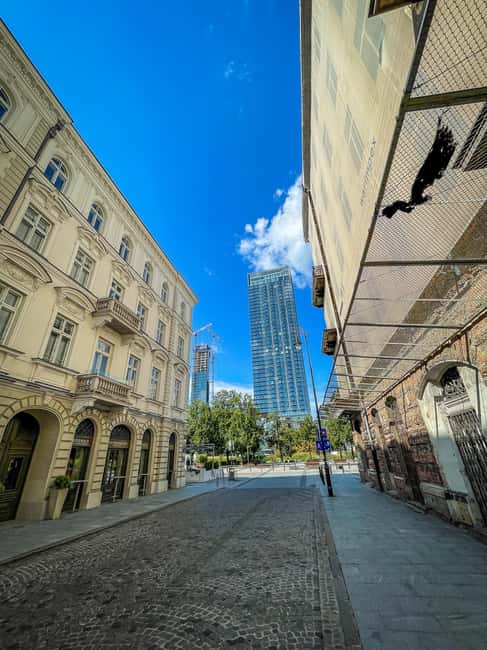
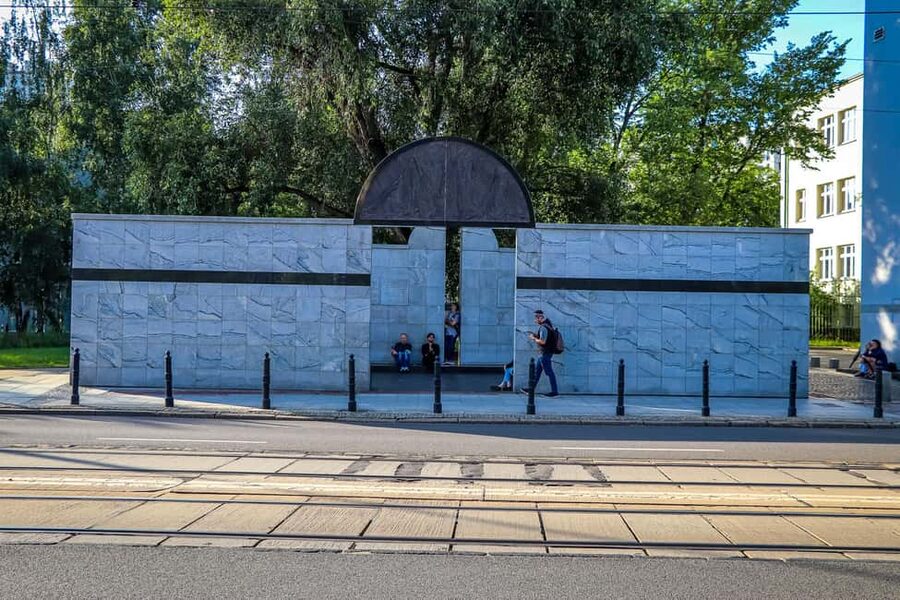
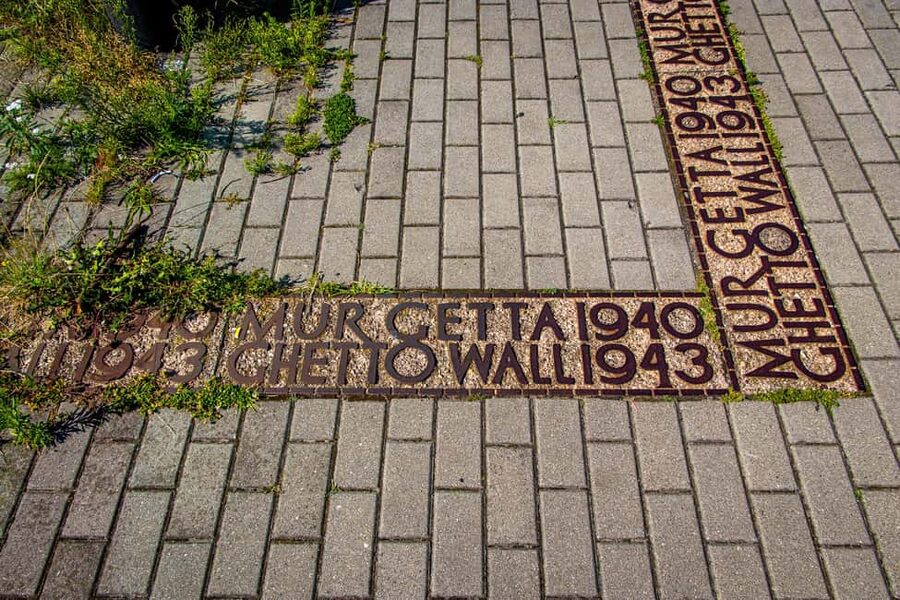
Waliców Street once marked part of the ghetto border. The guide uses it to explain how boundaries were imposed and how the Jewish district related to the surrounding city.
A border is never just a line on a map. It determines who can pass, who is cut off, and how quickly a neighborhood can be isolated. On Waliców Street, you get a clearer sense of the ghetto as a system of control rather than an abstract wartime term.
The discussion also reaches the Warsaw Uprising. This is important because Warsaw’s wartime story includes more than one uprising and more than one form of resistance. The guide helps place Jewish resistance, Polish resistance, occupation, and the city’s destruction into a connected timeline.
For me, this is where the tour’s broader approach pays off. You do not get a narrow list of Holocaust dates. You get the political and urban setting around them, including the ways ordinary residents and resistance groups responded to terrible conditions.
The route is not designed as a solemn silence walk from start to finish. Several guides have used gentle humor, direct language, and questions to keep the group involved. That can sound risky with such painful material, but the strongest comments describe guides who handled the subject with care while keeping the presentation accessible.
Rebuilding the story when the buildings are gone
The biggest practical challenge on this walk is also one of its central lessons: much of Jewish Warsaw no longer survives in physical form.
You may see a street, a modern building, or an open space where the original setting has disappeared. That can feel less immediately dramatic than entering a preserved historic quarter. It can also be more demanding. You need to listen closely and use the guide’s photographs, maps, and descriptions to connect the present city with the past.
One guide was praised for recommending relevant films and television programs to continue the learning afterward. Another gave suggestions for further things to do in Warsaw. Those touches are useful because this tour cannot show everything in 150 minutes, and no single walk can recreate a destroyed neighborhood.
The best guides seem to understand this limitation. They do not pretend that a modern street looks exactly as it did before 1939. Instead, they explain what changed and why the absence itself matters.
You should also expect a fair amount of standing and walking without a planned café stop. A person taking the tour in very cold weather wished for a warm break, and another noted that the entire experience takes place outdoors. Dress for the forecast, especially from late autumn through winter. Comfortable shoes are just as important as warm clothing.
The human stories behind the dates
The tour’s subject includes mass violence, but it is not only a sequence of atrocities. Its strongest human element comes from the attempt to restore individuality to a community that is often reduced to numbers.
You hear about artists, actors, writers, and journalists who made interwar Warsaw a major center of Jewish culture. You also hear about Jewish participation in the city’s political struggles during the 19th century. These details make the later destruction more understandable because you first see what existed.
The guide also shares stories of bravery and resilience. Those stories do not soften the Holocaust, and they should not be used to force an upbeat ending. They do show that Jewish residents were not passive figures in a history done to them. They made choices, resisted, created culture, helped others, and continued living under extreme pressure.
Several guides have been praised for inviting questions. That is especially valuable here because people arrive with different levels of background knowledge. You can ask about a date, a location, a family connection, or the relationship between Jewish and Polish history without needing to know the right vocabulary in advance.
One especially moving account described an elderly woman who happened to stop near the group and share memories of growing up during the war. That kind of encounter cannot be promised, but it shows how public spaces can still carry personal memory.
A careful look at the Jewish community today
The final message is not that Jewish Warsaw ended in 1945. The tour also discusses the young, diverse, energetic Jewish community that looks toward the future.
That present-day focus gives the walk a needed balance. You are not left with the idea that Jewish life in Warsaw belongs only to the past, or that the city’s Jewish story ends with memorials. The guide connects earlier generations with a community living in Warsaw today.
The information provided does not promise a visit to a modern community center or a meeting with community members. Instead, this part comes through the guide’s explanation. Think of it as context rather than a separate attraction.
I appreciate that distinction. A respectful tour should not turn a living community into a display. Mentioning its continued presence helps you see Warsaw as a place with an ongoing Jewish life, not simply an open-air memorial.
How the guides handle a difficult subject
The strongest praise is aimed at the guides. Names that appear repeatedly include Andrzej, Jacek, Luke, Aga, Ana, Christopher, Anna, Tomasz, and others. The exact guide depends on the date and assignment, so you cannot assume you will receive a particular person.
The qualities to expect are clear English, strong command of the subject, willingness to answer questions, and a personal style that can include humor. One guide was praised for combining family experience with humor while discussing a very difficult subject. Another was described as factual and objective, supporting explanations with historical evidence.
That range is helpful. Some people want a formal, carefully structured presentation. Others learn better from stories, direct conversation, and occasional humor. The feedback suggests the guides use several approaches rather than reading a fixed script.
There are minor risks with a general group walk. One person found it difficult to hear because the guide sometimes walked ahead before finishing a sentence, particularly with a large group. If that happens, stay near the guide and speak up early. Another person felt the tour ended sooner than expected after some participants, so group pace and behavior can affect the experience.
The overall rating of 4.7 from 324 reviews indicates a consistently strong experience, but it is not a private seminar. Your satisfaction will depend partly on group size, weather, and how actively you take part.
Is $26 good value for 150 minutes?
At $26 per person, this is good value if you want a guided introduction to Jewish Warsaw. You are paying for 150 minutes with a local English-speaking guide, not for hotel transport, museum admission, or a private group.
The value comes from the connections. Chłodna Street, Waliców Street, Nożyk Synagogue, the ghetto, the Warsaw Uprising, prewar culture, and modern Jewish life make more sense when one person links them together. Without that explanation, some locations can look like ordinary city streets with little visible evidence of their former role.
The price also covers the reservation fee and the guide’s payment for a general walking tour. If you want a smaller private experience, the supplier can help organize one after you book. That would likely suit families, study groups, or anyone who wants more time for questions, but the price given here applies to the general tour.
You can reserve and pay later, and cancellation is free up to 24 hours before the tour for a full refund. Those terms are useful if your Warsaw plans are still shifting, though they do not change the outdoor nature of the walk.
Who should take this Warsaw walking tour?
I would choose it if you want a serious but accessible introduction before visiting other Jewish-history sites in Warsaw. It suits first-time visitors, people with family connections to Poland, and anyone who wants to understand how Jewish life fitted into the wider story of the city.
It is also a good choice if you prefer places and stories to indoor displays. The route gives you physical reference points, even when the original structures are gone.
You may want something else if you dislike walking in cold weather, need frequent indoor breaks, or expect every historic building to survive. You should also know that this is not advertised as a private tour, so the pace and discussion will reflect the group.
I would arrive ready to listen, ask questions, and accept that some of the most important places are now absent. Bring warm layers in winter, wear comfortable shoes, and keep close enough to hear the guide clearly.
Should you book it?
Book this tour if you want the human story behind Warsaw’s Jewish sites, not just a checklist of monuments. The combination of Nożyk Synagogue, Chłodna Street, Waliców Street, prewar culture, wartime resistance, and present-day Jewish life gives you a useful foundation for understanding the city.
I would be especially happy to recommend it at $26 when your schedule allows the full 150 minutes outdoors. Skip it only if the weather is poor for you, you need a private pace, or you want guaranteed synagogue entry. For most visitors seeking a thoughtful first look at Jewish Warsaw, it is a worthwhile and fairly priced walk.
FAQ
How long does the Warsaw Jewish History Guided Walking Tour last?
The tour lasts 150 minutes, or two and a half hours.
What language is the tour conducted in?
The live tour guide speaks English.
How much does the tour cost?
The listed price is $26 per person.
Where does the tour meet?
Meet beside All Saints Church at Grzybowski Square. Look for a yellow umbrella.
Does the tour include hotel pickup and drop-off?
No. Hotel pickup and drop-off are not included.
Will the tour visit Nożyk Synagogue?
The route includes seeing Nożyk Synagogue, which is Warsaw’s only surviving prewar synagogue. Entry inside is not guaranteed by the provided tour details.
Does the tour include Chłodna Street?
Yes. The guide visits the site of the former bridge on Chłodna Street that joined parts of the ghetto.
Does the tour visit Waliców Street?
Yes. Waliców Street is included as a former ghetto border, with discussion of the Warsaw Uprising.
Is this a private tour?
No. It joins a general walking tour. If you want a smaller private tour, you can contact the supplier after booking to arrange one.
Can I cancel for a full refund?
Yes. You can cancel up to 24 hours in advance for a full refund.
Can I reserve now and pay later?
Yes. The tour allows you to reserve your place and pay later.
Just added in Warsaw
- Historical Walking Tour of Jewish Warsaw★ 5.0 · 68 reviews
- Deluxe Polish Food Tour Experience in Warsaw★ 5.0 · 19 reviews
- CO2-Offset Arrival Transfer from Warsaw Airport to Warsaw City★ 5.0 · 1 review
- Amazing photo walk through the Old town of Warsaw★ 5.0 · 32 reviews
- 8-day tour around Poland by private car★ 5.0 · 2 reviews
- Electric Scooter Tour: Full Tour – 3-Hours of Magic!★ 5.0 · 3 reviews
- 2h Rental of Motorboat for 10 in Warsaw no License Needed★ 5.0 · 1 review
- 2 Hour Super Segway City Tour of Warsaw★ 5.0 · 5 reviews
Historical Tours, compared.

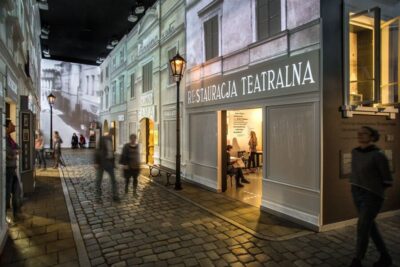
POLIN Museum of the History of Polish Jews Ticket
Read our review →
Gdańsk City Sights & History Guided Walking Tour in English
Read our review →

Small-Group Historical Guided Tour of Warsaw with pick up/drop off. Public Tour.
Read our review →Browse the lists this tour appears in