
REVIEW · HISTORICAL TOURS
Gdańsk City Sights & History Guided Walking Tour in English
Gdańsk’s old center reads like a history book. This 150-minute walk follows the route once used by Polish kings, moving from the Golden Gate through Long Market to the harbor. I especially like the way it links handsome rebuilt facades with the harder stories of WWII and communism, and I like that guides such as Tufi, Kate, Sandra, and Filip bring plenty of humor and personal feeling to the past. The main consideration is the general tour format: group size can vary, and a large crowd may make some stops less intimate.
At $26 per person, this is a strong way to get your bearings before exploring on your own. You will cover the city’s headline sights, hear why Gdańsk became a wealthy Baltic trading center, and learn how its long struggle for self-rule connects to the Solidarity movement. Bring warm or rain-ready clothing, since the tour runs in all weather, and check carefully for the yellow umbrella at the Golden Gate.
In This Review
- Key points to know before you go
- Starting at the Golden Gate with Gdańsk’s story
- Merchant townhouses and the city’s Baltic fortune
- Long Market and Neptune’s place in the city
- St. Mary’s Basilica and a well-timed clock
- The Zuraw crane and Gdańsk’s working waterfront
- WWII, the Polish Post Office, and the start of the war
- Solidarity and Gdańsk’s push for independence
- Guide style, group size, and the pace of 150 minutes
- Weather, breaks, and practical comfort
- Is $26 a fair price for this Gdańsk walk?
- Who should book this tour?
- Should you book the Gdańsk City Sights and History Walk?
- FAQ
- How long does the Gdańsk walking tour last?
- What language is the tour conducted in?
- Where does the tour meet?
- Does the tour include hotel pickup and drop-off?
- What sights are covered?
- Does the tour explain how WWII began in Gdańsk?
- Does the tour cover the Solidarity movement?
- Is the tour wheelchair accessible?
- What happens if it rains or snows?
- Is this a private tour?
Key points to know before you go
- The route connects royal ceremony with working harbor life: Walk from the Golden Gate and Long Market to the Zuraw crane, seeing both grand facades and the waterfront that made Gdańsk wealthy.
- The history reaches from medieval trade to modern freedom: The guide explains WWII, the start of the war in Gdańsk, and Solidarity’s role in the fall of communism.
- St. Mary’s Basilica is a major highlight: You will see the world’s largest brick Gothic church, with the chance to time your visit around the clock’s moving figures.
- Guide quality is a major strength: Tufi, Kate, Sandra, Filip, Marcin, Paul, and others are praised for clear English, humor, energy, and strong storytelling.
- Weather matters: The walk goes ahead in rain, snow, wind, and cold. Some guides add a coffee or warming break when conditions are rough.
- This is a shared tour, not a private walk: The $26 payment covers the reservation and guide’s payment, while a smaller private tour must be arranged separately.
Starting at the Golden Gate with Gdańsk’s story
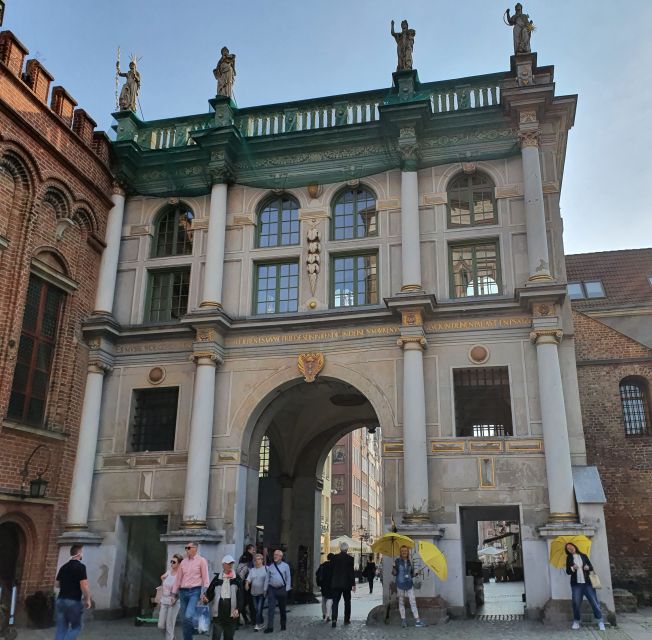
Meet at the Golden Gate, known locally as Złota Brama, where you should look for a yellow umbrella. The meeting point is central and easy to place once you reach the gate, though one person found the instructions unclear about which side to use. I would arrive a little early and scan both sides rather than begin the day by chasing a guide through the old center.
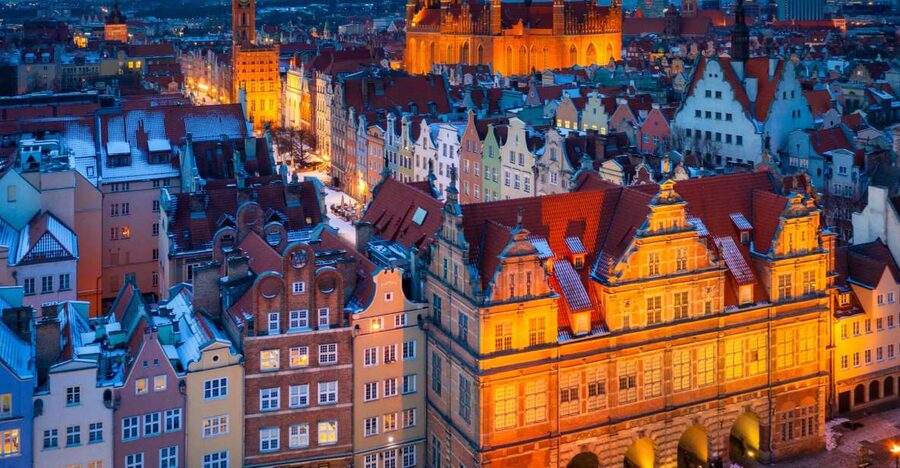
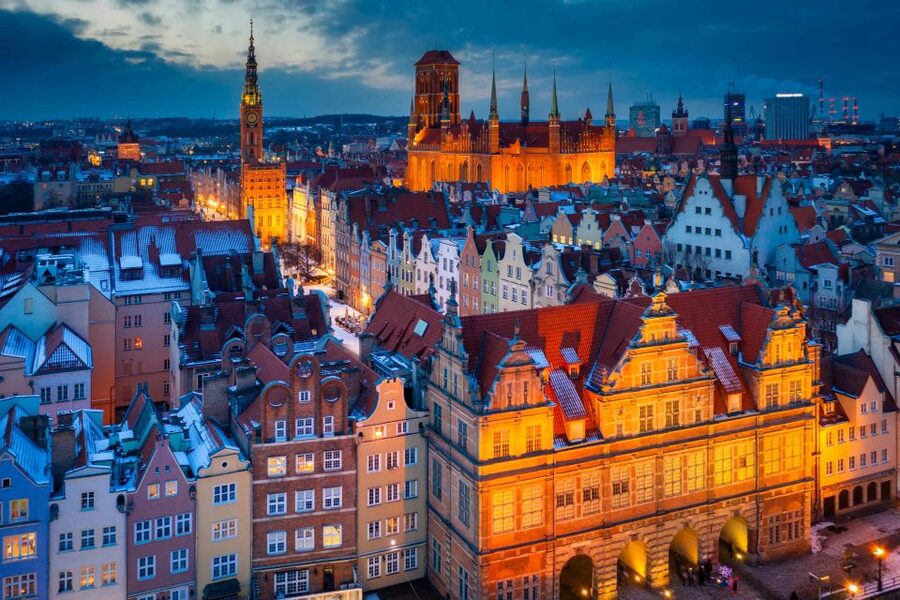
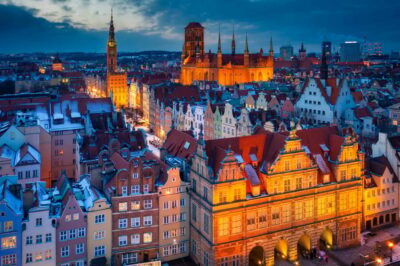
From here, the walk enters Gdańsk’s historic core. The route is not just a parade of pretty buildings. It explains how Polish, Dutch, and German influences shaped the city, and why Gdańsk spent so much of its life balancing local identity against larger political powers.
That context is useful because the city can look more uniform than it really is. The facades feel polished and colorful today, but the guide makes clear that much of the old center was destroyed during WWII and rebuilt with painstaking care. You get both the beauty of the restored streets and a better sense of the effort behind them.
The format is especially good for a first morning or afternoon in town. You learn which streets matter, how the old center fits together, and which places deserve a return visit after you have absorbed the basic story.
More History Tours in Gdańsk
- Gdansk: City Cruise on Historical Polish Boat
★ 4.8 · 2,913 reviews - Gdańsk: Sunset Cruise on a Historic Polish Boat
★ 4.9 · 977 reviews - Historic City Center Tour Gdansk in German
★ 4.6 · 455 reviews
Merchant townhouses and the city’s Baltic fortune
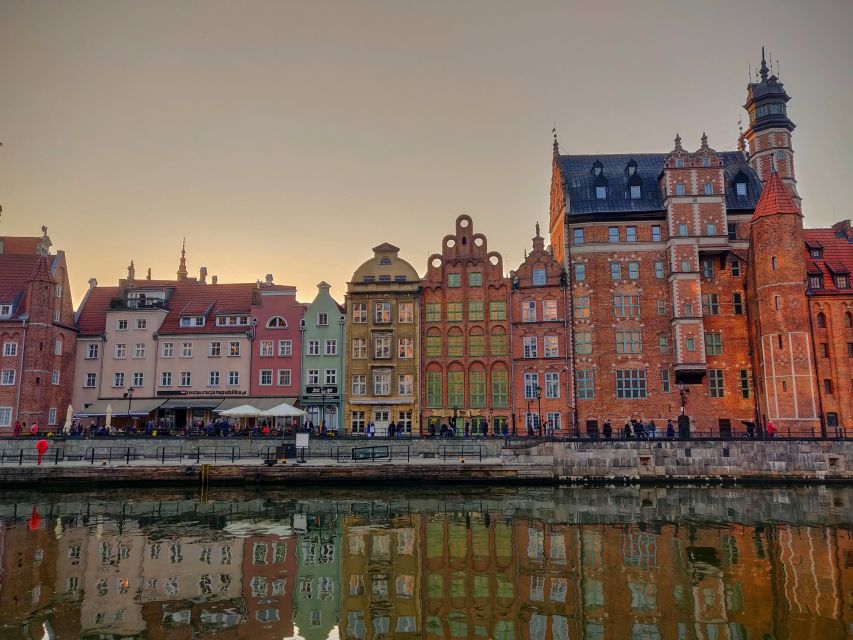
The early part of the walk focuses on the colorful merchant houses that line the old route. Their narrow fronts, ornate details, and varied colors make this one of Gdańsk’s most photogenic areas, but the guide gives them an economic purpose rather than treating them as decoration.
For centuries, merchants used this part of the city to trade across the Baltic. Gdańsk grew wealthy because of its position, commercial connections, and access to the harbor. The blend of local, Polish, Dutch, and German influences becomes easier to understand when you see the old center as a trading city rather than simply a historic district.
I like this part of the tour because it answers a question that photographs cannot: why does Gdańsk look so distinctive? The architecture reflects money, trade, and outside connections. It also shows why the destruction of the city was such a loss, and why rebuilding the facades mattered so much to local identity.
Guides often add small details that help the buildings stick in your mind. Rachael appreciated being shown interesting spots that could easily be missed, while other guides have used humor and personal anecdotes to keep several centuries of material from feeling like a lecture.
Long Market and Neptune’s place in the city
The route continues into Long Market, or Długi Targ, one of the central public spaces in the old town. This is where the grand merchant facades gather around a broad, ceremonial street, and where the Neptune Fountain provides one of the city’s familiar meeting points.
The fountain is more than a quick photo stop. Neptune connects Gdańsk to the sea, which is fitting for a city whose fortunes depended on maritime trade. Your guide can place the fountain within the wider story of civic pride, wealth, and the city’s relationship with the Baltic.
This is also a good moment to look up. Gdańsk rewards attention above eye level, with decorative gables, coats of arms, and details on buildings that are easy to pass without a guide. The walk gives you time for photos, but the exact pace depends on the group and the guide’s style.
The tour is designed to cover a lot, and some guides pack in a great deal of history. That is a plus if you enjoy context and dates, but it may feel like a lot to absorb in one sitting. If you prefer a slower architectural walk, a private version could suit you better.
St. Mary’s Basilica and a well-timed clock
St. Mary’s Basilica is one of the tour’s essential stops. Its brick Gothic construction is imposing without relying on elaborate stone carving, and it is described as the largest brick Gothic church in the world.
The outside tells only part of the story. Your guide explains the building’s place in Gdańsk and gives you a chance to take in its scale. One guide timed the visit so the group could see the figurines move when the clock struck noon, a small moment that added life to the stop.
Timing will depend on the start of your particular tour, so you should not count on seeing the clock at noon every time. Still, the example shows the value of having a local guide who pays attention to the day’s rhythm rather than simply following a fixed script.
This stop also offers a useful break from the open streets. In winter, that matters. Several walks took place in severe cold, with temperatures around freezing or below, and guides adjusted by doing some talking indoors or adding a stop for coffee, mulled wine, or a bathroom break.
More Walking Tours in Gdańsk
- Main Town Gdańsk Walking Tour
★ 5.0 · 644 reviews - Discover Gdansk Walking Tour
★ 5.0 · 495 reviews - Gdańsk: Old Town Private Walking Tour with Legends and Facts
★ 4.9 · 245 reviews - Gdansk Old Town 2-Hour Walking Tour
★ 4.5 · 94 reviews
The Zuraw crane and Gdańsk’s working waterfront
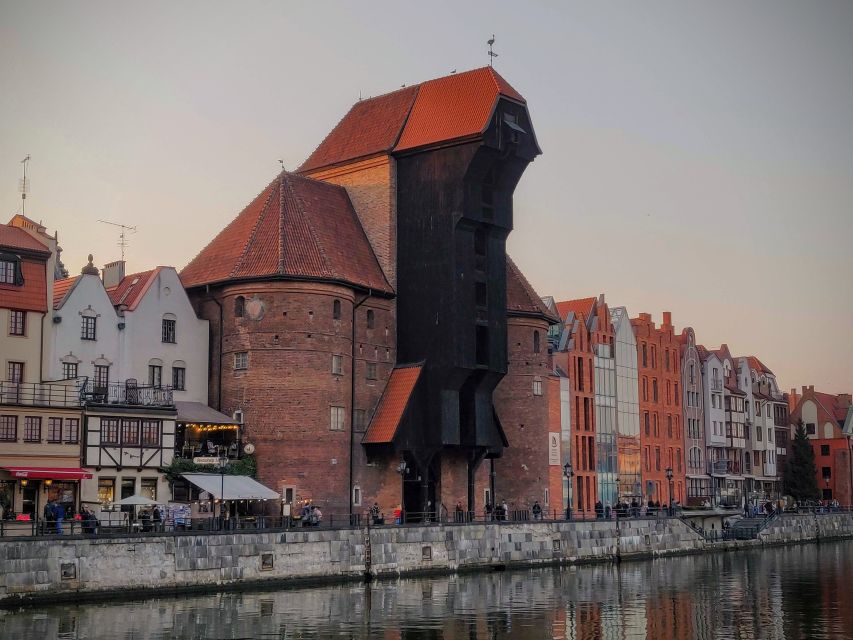
At the harbor, the Zuraw crane gives the tour a welcome change of mood. Its medieval treadwheel mechanism is a reminder that Gdańsk was a place of loading, lifting, shipping, and commerce, not only grand townhouses and royal processions.
The crane is the largest of its kind in the world and a symbol of Gdańsk. Its wooden structure and position by the water make it one of the city’s most memorable sights, particularly when the guide explains how a machine like this supported port life.
The walk also takes in rivers and canals. That water is central to understanding Gdańsk’s past. It explains the city’s prosperity and helps you see how the old center related to ships, warehouses, merchants, and the wider Baltic.
This is one of the places where a walking tour provides more than a map. You can find the crane on your own, but you may not connect it so quickly to the city’s commercial rise. The guide supplies that link in a compact, easy-to-follow way.
WWII, the Polish Post Office, and the start of the war
Gdańsk’s past is not a simple tale of prosperity. The walk turns toward the conflicts that shaped the city in the 20th century, including the events surrounding the beginning of WWII.
The guide explains how the war started in and around the city, placing Gdańsk within the wider struggle over territory, identity, and political control. This section gives the restored old town a different weight. The rebuilt facades are beautiful, but they are also reminders of how much was lost.
The story of the Polish Post Office is one of the more powerful episodes covered on the walk. Filip, also known as Tufi, has been especially praised for explaining the battle there with force and clarity. You should expect this part to be more serious than the light stories about architecture and trade.
That balance is one of the tour’s strengths. The guides use humor when it helps, but they do not turn difficult history into a sightseeing backdrop. You get a clearer picture of why Gdańsk matters to Polish identity and why arguments about the city’s future became so intense.
Solidarity and Gdańsk’s push for independence
The final historical thread reaches into the postwar period and the Solidarity movement. Gdańsk’s continual push toward independence is not presented as a distant medieval idea. It continues through the city’s modern political story and helps explain the fall of communism across the Eastern Bloc.
This part is valuable because it connects the old streets to a living national memory. Gdańsk was not simply a prosperous port in the past. It also became a place where workers and citizens challenged communist rule.
The guide’s job here is to give you the basic sequence and meaning without requiring a full political history course. Several guides have been praised for making difficult material clear, including Kate, who is known for presenting centuries of change in an easy-to-follow way, and Marcin, whose storytelling mixes historical detail with humor.
If modern European history interests you, this may be the strongest reason to book the tour. You leave with a more useful understanding of how medieval trade, wartime destruction, and the struggle against communism all fit into one city’s story.
Guide style, group size, and the pace of 150 minutes
The guide can shape the experience more than the route does. Tufi is repeatedly praised for passion, humor, a clear voice, and personal stories. Kate receives similar praise for her clarity and command of the subject, while Sandra is noted for thoughtful explanations and practical recommendations.
Other guides, including Filip, Paul, Marcin, Sophia, Zosia, Isabella, and Katie, have also been praised for energy and strong English. You should expect an informative walk with room for questions rather than a silent transfer from one photo stop to another.
The 150-minute length gives the guide time to make connections, but it asks you to stay on your feet for two and a half hours. Comfortable shoes are sensible, and weather-appropriate clothing is essential. There is no hotel pickup or drop-off, so you need to reach the Golden Gate yourself.
Group size can affect the feel of the walk. One person found a larger group cumbersome at some locations, while another joined a small group of eight or nine and enjoyed the more personal atmosphere. Since this joins the general walking tour, you cannot assume a small group every time.
The booking price covers the reservation fee and the guide’s payment. It is not a private tour disguised as a cheap one. If you want more control over pace, questions, or time at each stop, contact the provider after booking about arranging a smaller private walk.
Weather, breaks, and practical comfort
The tour operates rain or shine, which is both useful and important to understand. Winter conditions can be demanding, with reports of snow, strong wind, and very low wind chill. A warm coat, gloves, and shoes suited to wet streets will make a real difference.
Guides have shown good judgment in difficult conditions. Some moved parts of the explanation indoors, while others built in a short coffee, bathroom, mulled wine, or warming stop. These breaks are not guaranteed as a formal feature, but the guide may adjust the walk when the weather demands it.
There is no need to pack special equipment. You need weather-appropriate clothing and enough energy for a long urban walk. If you need a bathroom stop, carry small change to save time, since one person specifically found that useful.
The route is wheelchair accessible according to the activity details. Still, old-city walking routes can feel crowded, and group movement near major sights may be less smooth than on a private tour. If access needs are important to you, confirm the exact conditions when booking.
Is $26 a fair price for this Gdańsk walk?
At $26, I see this as good value for a first look at Gdańsk. The tour lasts 150 minutes, includes an English-speaking guide, and covers the city’s central sights plus the historical links between them.
You are paying for interpretation, not admission tickets or transport. That distinction matters. The walk does not include hotel pickup, drop-off, or a long list of paid interiors. Its value comes from helping you understand what you see in the streets, squares, harbor, and basilica.
The price also makes sense if you have only a short stay. You can cover the main old-center route in one session, then use the guide’s suggestions to plan the rest of your time. Several guides provide restaurant and sightseeing recommendations, including options suited to different tastes and budgets.
The overall rating is 4.8 from 876 reviews, and the strongest praise centers on guide quality, clear English, humor, historical detail, and value. No tour is perfect for every person, but that pattern suggests the experience delivers what it promises.
Who should book this tour?
I would book it near the beginning of a Gdańsk stay. You get a useful map in your head, a basic timeline, and a list of places worth revisiting. First-time visitors who want both architecture and political history will get the most from it.
It also suits you if you like a guide who can answer questions rather than recite a short script. The best guides bring energy and personal feeling, which helps when the subject shifts from merchant wealth to wartime violence and the Solidarity movement.
You may want another option if you dislike shared groups, need a very slow pace, or want extensive interior visits. In that case, ask about a private tour after booking.
Should you book the Gdańsk City Sights and History Walk?
Yes, I would recommend it for most first-time visitors, especially at $26. The route gives you Gdańsk’s essential visual sights, but the real payoff is the connection between them: trade created the city’s wealth, war destroyed much of its center, and the struggle for self-rule continued into the age of Solidarity.
Book it early in your stay, wear sensible clothing, and arrive at the Golden Gate looking for the yellow umbrella. If the forecast is cold or wet, prepare seriously. The weather may test you, but a strong guide such as Tufi, Kate, Sandra, or Filip can make two and a half hours pass quickly.
FAQ
How long does the Gdańsk walking tour last?
The tour lasts 150 minutes, or two and a half hours.
What language is the tour conducted in?
The live tour guide speaks English.
Where does the tour meet?
The meeting point is the Golden Gate, or Złota Brama. Look for a yellow umbrella.
Does the tour include hotel pickup and drop-off?
No. Hotel pickup and drop-off are not included.
What sights are covered?
The route includes the Golden Gate, merchant townhouses, Long Market, Neptune Fountain, St. Mary’s Basilica, the Zuraw crane, rivers, and canals.
Does the tour explain how WWII began in Gdańsk?
Yes. The guide discusses how WWII started in the city and covers important wartime events.
Does the tour cover the Solidarity movement?
Yes. The guide explains Gdańsk’s long push toward independence and the Solidarity movement’s role in the fall of communism in the Eastern Bloc.
Is the tour wheelchair accessible?
Yes, the activity is listed as wheelchair accessible.
What happens if it rains or snows?
The tour runs rain or shine. You should bring weather-appropriate clothing, particularly in cold or wet seasons.
Is this a private tour?
No. It joins the general walking tour. The $26 payment covers the reservation fee and guide’s payment. You can contact the provider after booking about arranging a smaller private tour.
Just added in Gdansk
- Wolf’s Lair private tour from Gdansk★ 5.0 · 1 review
- Whisky Tasting in Gdańsk★ 5.0 · 3 reviews
- Transfer from Gdańsk or Airport Gdańsk (GDN) to Kościerzyna★ 5.0 · 1 review
- Westerplatte – 2h private trip by luxury car|★ 5.0 · 4 reviews
- Westerplatte private tour led by Expert-Guide (door to door)★ 5.0 · 5 reviews
- Gdansk EVERYDAY Vodka Tasting Tour★ 5.0 · 6 reviews
- Undercover City Games: Gdynia★ 5.0 · 34 reviews
- VIP transfer from airport Gdansk (GDN) to Hotel in Gdansk / Sopot★ 5.0 · 2 reviews
Historical Tours, compared.

POLIN Museum of the History of Polish Jews Ticket
Read our review →


Small-Group Historical Guided Tour of Warsaw with pick up/drop off. Public Tour.
Read our review →
Browse the lists this tour appears in