
REVIEW · OLD TOWN WALKING TOURS
Gdańsk: Old Town Private Walking Tour with Legends and Facts
Gdańsk wears its history in plain sight. I like the way this private walk links grand streets, medieval churches, river views, and the story of Solidarity instead of treating the Old Town as a collection of pretty façades. I also like the personal touch: guides such as Kaja, Karina, Krzysztof, Gabriella, and Weronika have been praised for warmth, clear explanations, and useful food and drink advice.
The main choice is time. The two-hour route gives you the classic center, while the longer versions add the river islands, St Bridget’s Church, and the European Solidarity Centre. I love the flexibility of a private guide, but $107 per person is a serious price for a short walk, especially if you choose the two-hour option and do not make use of the longer historical route.
In This Review
- Key points
- Why Gdańsk works so well with a private guide
- From Brama Wyżynna to Long Market
- Artus Court and the center of merchant life
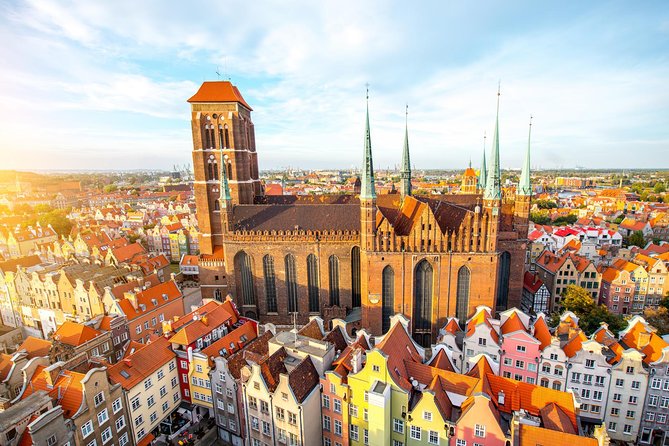
- St Mary’s Basilica, a huge brick church
- Green Gate and the Motława waterfront
- The three-hour route reaches the river islands
- St Bridget’s Church and its amber altar
- The six-hour route and the Solidarity story
- What the guides do especially well
- Is $107 per person good value?
- Timing, meeting point, and practical details
- Who should book this Gdańsk walk?
- Should you book it?
- FAQ
- Where does the tour meet?
- Can the guide pick me up from my accommodation?
- How long is the walking tour?
- Which languages are available?
- Is St Mary’s Basilica included?
- Is St Bridget’s Church included?
- Is the European Solidarity Centre included?
- Can I cancel the booking?
Key points
- Start at the High Gate: Meet beneath Brama Wyżynna, about eight minutes from Gdańsk’s main railway station.
- See the classic royal route: Walk from the Upland Gate through the Golden Gate, Długa Street, and Long Market.
- Enter St Mary’s Basilica: The church visit includes its free areas, with a vast brick interior, organ set, ornate altar, and royal chapel.
- Extend the walk along the Motława: The three-hour route adds Wyspa Spichrzów, warehouse ruins, Olowianka, and the Baltic Symphony Hall.
- Connect amber with Solidarity: The four-hour option includes St Bridget’s Church and its striking amber altar.
- Finish with modern Polish history: The six-hour route reaches the Fallen Shipyard Workers Monument and the European Solidarity Centre.
Why Gdańsk works so well with a private guide
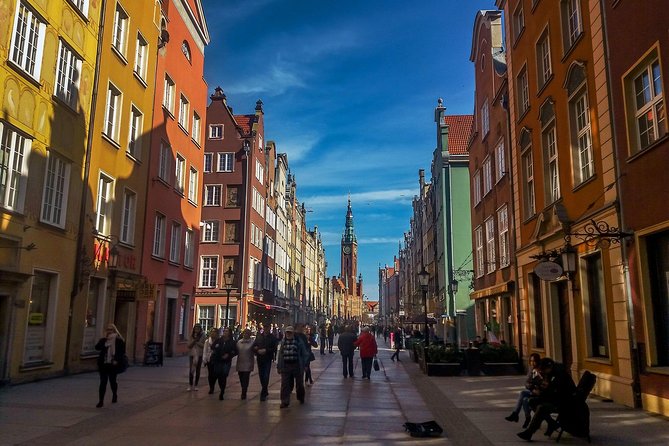
Gdańsk can look easy to understand at first. Its main streets are handsome, compact, and full of signs. But the city’s story is layered: medieval trade, maritime wealth, wartime destruction, postwar rebuilding, and the Solidarity movement all occupy the same few miles.
That is where a private guide earns the fee. You can stop to ask why a building matters, request more local history, or shift the pace when a particular subject catches your attention. One guest specifically appreciated mid-tour changes after the guide understood their interests better. That kind of adjustment is difficult on a large group walk.
The guide also supplies practical advice about restaurants, pubs, and souvenir shops. I would treat this as a useful bonus rather than the main reason to book, but it can help you avoid spending your first evening guessing among tourist menus.
The guide languages are English, Spanish, French, Italian, German, Polish, Russian, Norwegian, and Swedish. The tour is offered for private groups, and the route is wheelchair accessible, although you should still consider the length of the longer walks.
More Walking Tours in Gdańsk
- Gdańsk City Sights & History Guided Walking Tour in English
★ 4.8 · 876 reviews - Main Town Gdańsk Walking Tour
★ 5.0 · 644 reviews - Discover Gdansk Walking Tour
★ 5.0 · 495 reviews
From Brama Wyżynna to Long Market
The meeting point is the tourist information sign beneath the High Gate, Brama Wyżynna, at Wały Jagiellońskie 2A. It is roughly eight minutes from Gdańsk Main Railway Station, making the start convenient if you arrive by train.
The High Gate marks the entrance to the historic center and provides an immediate lesson in Gdańsk’s former importance. From here, the route passes the Golden Gate and follows Długa Street toward the Long Market.
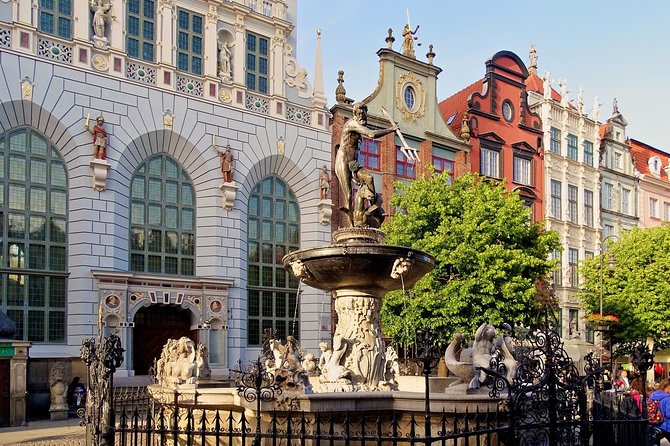
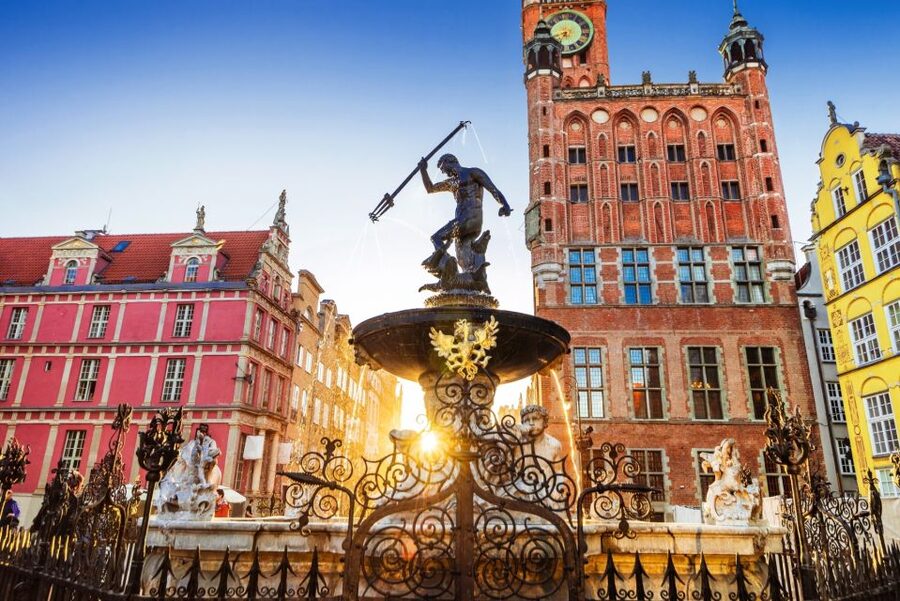
This is the city’s grand public stage. Look for the Gdańsk Town Hall, the Golden House, and Neptune’s Fountain, a seventeenth-century landmark that has become one of the city’s most familiar symbols. A guide can help you read the façades and place the wealthy merchants, city officials, and seafaring trade behind the architecture.
I like this opening because it gives you orientation quickly. You are not simply walking toward a famous fountain. You are following the route through which the city presented its wealth and civic pride.
Artus Court and the center of merchant life
Artus Court is more than another ornate building along the Long Market. It was once a meeting place for the city’s merchants and now operates as a branch of the Gdańsk History Museum, with local history and art collections.
The standard walk includes the exterior and historical explanation, while the supplied details do not promise an included museum entry ticket. If you want substantial time inside the collection, ask your guide about the available visit during the walk.
This is one place where the private format helps. A guide can explain how the building fitted into commercial and social life without forcing you to absorb a long lecture. You get context, then keep moving through the city rather than spending the whole morning indoors.
St Mary’s Basilica, a huge brick church
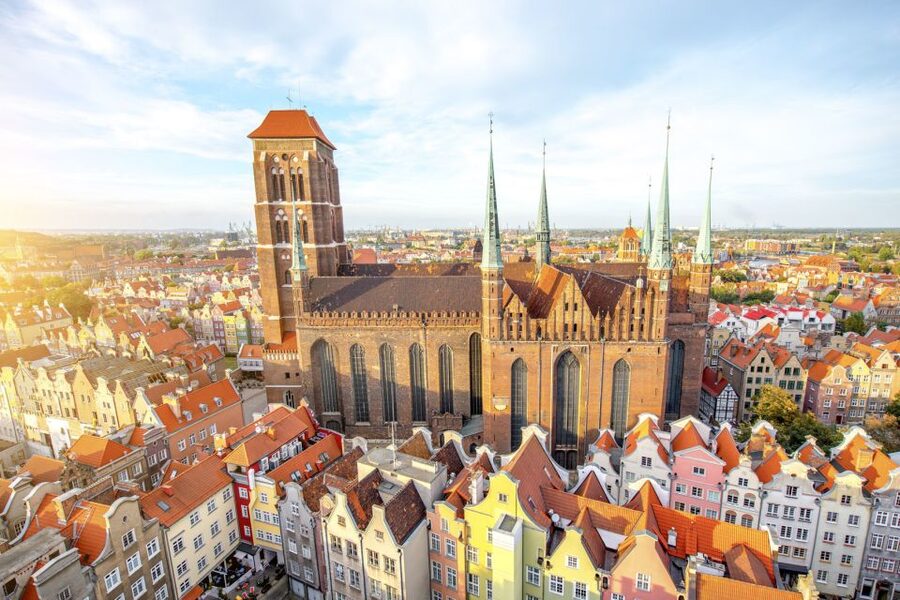
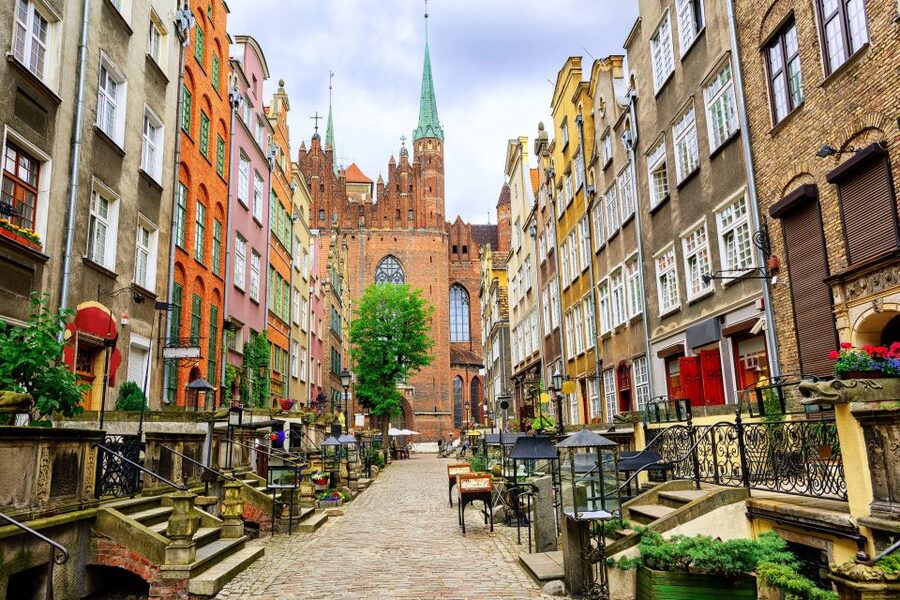
The route continues to St Mary’s Basilica, also called St Mary’s Church. It is one of the largest brick churches in the world, and its scale is startling from the inside.
The included visit covers the free parts of the church on every tour option. Expect a vast hall church with an ornate altar, an organ set, and a royal chapel. The building is not presented as a quick photo stop. Your guide can point out the features that are easy to miss when you enter alone and immediately look upward.
For many people, this will be the strongest part of the two-hour tour. It gives the walk a quiet pause after the busy Long Market, and it shows that Gdańsk’s story is not only about trade and politics.
Keep in mind that the church is a working religious site. Your guide will set the visit within the available areas and current conditions. The information provided does not promise access to every section or a tower visit.
More Old Town walks in Gdansk:
- Gdańsk: Sightseeing EcoCruise around the Old Town of Gdansk
★ 4.6 · 719 reviews - Gdansk Old Town 2-Hour Walking Tour
★ 4.5 · 94 reviews - Sunset on the Shipyard and Old Town Evening Cruise
★ 4.5 · 86 reviews - Electric Scooter Tour: Old Town Gdańsk – 1,5-Hour of Magic!
★ 4.8 · 71 reviews
Green Gate and the Motława waterfront
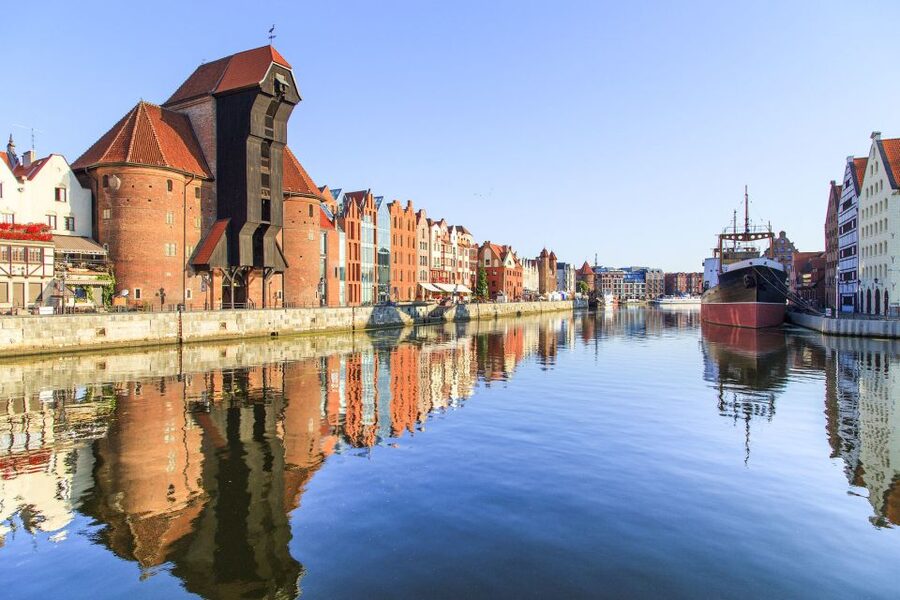
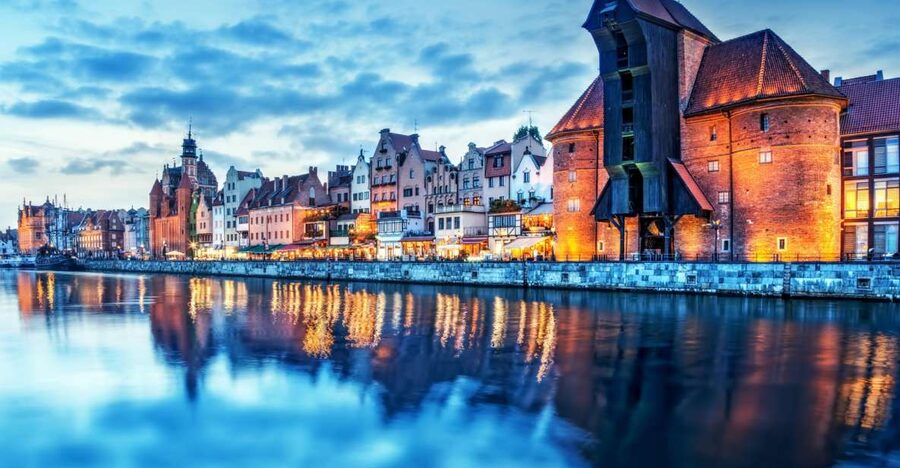
From the Green Gate, you get a scenic view toward the Motława River. This is an important change of mood. The earlier streets are formal and tightly framed, while the river opens the city toward its port and trading past.
The view also helps explain why Gdańsk became Poland’s principal seaport and an industrial center. A short stop here can connect the elegant Main Town with the working waterfront that made the city prosperous.
The two-hour tour ends at the Great Armoury, so you get a clear beginning and end rather than a walk that simply fades out. The Great Armoury is a seventeenth-century building and one of Gdańsk’s finest examples of Renaissance architecture.
The three-hour route reaches the river islands
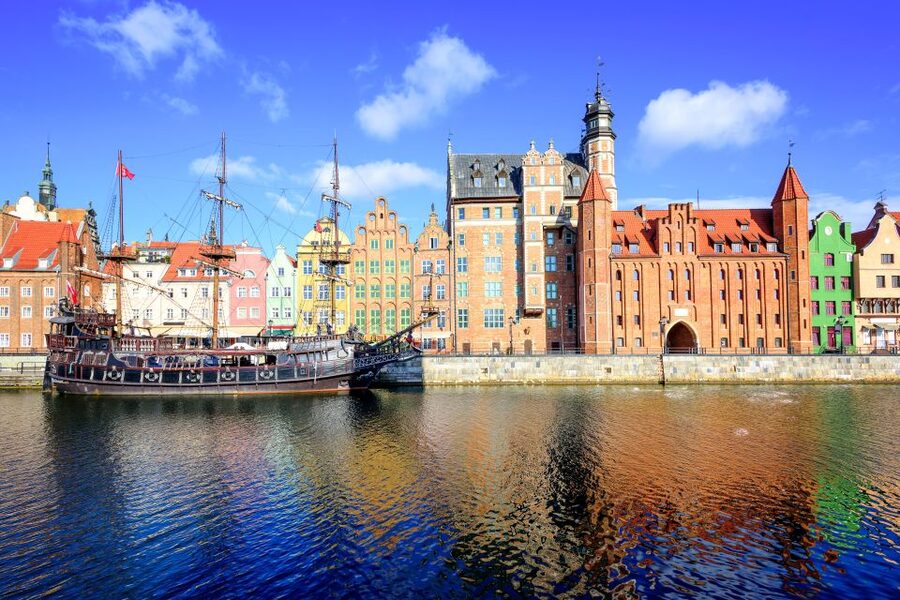
Add an hour and the route moves beyond the most familiar streets. You cross into Wyspa Spichrzów, an island on the Motława that contains old brick structures and warehouse ruins.
This extension is valuable because it gives trade a physical setting. The grand façades near Long Market can feel polished and ceremonial. On the island, the remaining brickwork and warehouse traces point more directly to storage, shipping, and the practical business that supported the city.
The route also reaches Olowianka Old Town, where you see the red-brick Baltic Symphony Hall. This part of the walk is best for people who want to understand Gdańsk as a port city rather than only as a historic center.
The tradeoff is simple: three hours means more context and more walking. If you are short on time, the classic route may be enough. If you have already seen the Long Market or want less familiar scenery, the island section makes the extra hour worthwhile.
St Bridget’s Church and its amber altar
The four-hour version adds St Bridget’s Church, one of the most important stops for connecting Gdańsk’s religious life with its modern political story.
During martial law, the church served as a sanctuary for leaders of Solidarity. One of its large doors shows scenes from August 1980 through the imposition of martial law in December 1981. That detail gives the political story a human scale. Instead of hearing only about dates and institutions, you can look at a physical record of the movement.
St Bridget’s also contains religious objects and a remarkable amber altar. Amber is the raw material most closely associated with this region, so the altar links local craft traditions with a place of worship.
The standard entry ticket is included in the four-hour and six-hour options. I see this as a strong value upgrade for anyone interested in Poland’s twentieth-century history or regional art. It also gives the longer walk a clear purpose, rather than simply adding more streets.
The six-hour route and the Solidarity story
The six-hour option is the fullest version, extending from the Old Town toward the Main Town and the shipyard district. It includes the Monument to the Fallen Shipyard Workers of 1970, which commemorates workers killed during anti-communist riots.
This is a crucial stop because it shows that the Solidarity story did not begin with a single famous moment. The monument honors an earlier conflict and helps explain the anger, courage, and political pressure that shaped later events.
The route then continues to the European Solidarity Centre. Its modern exhibitions cover the Solidarity riots and the trade union movement that helped bring down Poland’s communist government and influenced the collapse of the communist Eastern Bloc.
A skip-the-line ticket is included with the six-hour option. That matters because museum time can otherwise consume a large part of a walking day. Still, six hours is a substantial commitment. You will be walking for much of the day, with a museum visit added to the route. Choose it because you want the political story, not simply because you want to see every possible sight.
For someone with a serious interest in twentieth-century Europe, this is the version I would choose. The earlier stops provide the city’s setting, and the shipyard and museum show why Gdańsk matters far beyond its attractive streets.
What the guides do especially well
The strongest pattern in the guide feedback is personal connection. Kaja has been praised for being warm, funny, clear, and passionate about her home city. Karina, also called Kaja in one account, was described as making her enthusiasm visible. Krzysztof Przyborowski received praise for answering questions fully and keeping an evening tour relaxed rather than rushed.
Gabriella was especially effective with children, using the city’s facts and legends to keep younger participants involved. Weronika was praised for her English and friendly manner. These details matter because a history walk can become dry if the guide only recites dates.
You should expect stories and legends alongside basic facts. That makes the experience easier to remember, but I would still ask your guide to separate local legend from documented history when the distinction matters.
The private format also gives you a chance to adjust the emphasis. Ask for more architecture, trade, religious art, Solidarity, food tips, or local traditions. The best use of this tour is not passive listening. Arrive with two or three interests and let the guide shape the walk around them.
Is $107 per person good value?
At $107 per person, this is not a budget orientation walk. The price makes more sense for a private group than for a solo visitor, since the personal guide, chosen language, and flexible pace are part of what you are paying for.
The two-hour option offers the least value if you measure only by the number of attractions. You see the central route, enter the free areas of St Mary’s, and finish at the Great Armoury. That may be exactly right for a first look or a tight schedule, but you do not reach St Bridget’s Church or the European Solidarity Centre.
The three-hour route adds the Motława islands. The four-hour route adds St Bridget’s and its regular entry ticket. The six-hour route includes the shipyard monument, the European Solidarity Centre, and a skip-the-line museum ticket. If your budget allows it, the four-hour version may be the best middle ground: long enough for a fuller sense of Gdańsk, without turning the day into a full historical study.
A private tour is most worthwhile for families, couples, small groups, and travelers who want to ask many questions. If you prefer to explore at your own speed, or you mainly want a map and a few highlights, a shorter self-guided visit may be better value.
Timing, meeting point, and practical details
The exact start times depend on availability. The tour lasts two, three, four, or six hours, depending on your chosen option.
Pickup is available only within Gdańsk Old Town, defined here as accommodation within 1.5 kilometers of the High Gate. If you provide your address at booking, the guide can meet you there. If not, meet at the tourist information sign under Brama Wyżynna. If your accommodation falls outside the pickup area, the route may be changed accordingly, so check this before booking.
You can cancel up to 24 hours before the tour for a full refund, and the reserve-now, pay-later option keeps your plans flexible. Read the email sent the day before, since it contains important meeting information.
The experience is wheelchair accessible. Even so, tell the operator about your needs in advance, especially if you are considering the six-hour route with its longer walking distance and museum visit.
Who should book this Gdańsk walk?
Book it if you want the city explained rather than merely photographed. The two-hour walk suits a first visit, a short stay, or a morning before another activity. The three-hour version is for people who want the river and trade story.
Choose four hours if St Bridget’s Church, amber craft, and Solidarity interest you. Choose six hours if the shipyard, the workers’ monument, and the European Solidarity Centre are central to your reason for visiting Gdańsk.
I would also recommend it to families, since guides have shown they can make the material work for children. History fans will get the most from the longest route, while food-minded visitors should make a point of asking for restaurant and pub suggestions before the walk ends.
Should you book it?
I would book the four-hour option for the best balance of old streets, river scenery, religious art, amber, and modern history. It offers more than a postcard tour without demanding the full six-hour commitment.
Choose the six-hour walk when Gdańsk’s role in the fall of communism is your main interest. Choose two hours only when time is tight or you want a focused introduction. At $107 per person, the tour is worth it when you value a private conversation, a guide who can adapt to you, and clear historical connections. It is less appealing if you only need a quick list of sights.
FAQ
Where does the tour meet?
Meet your guide at the tourist information sign beneath the High Gate, Brama Wyżynna, at Wały Jagiellońskie 2A, 80-887 Gdańsk. The meeting point is about eight minutes from Gdańsk Main Railway Station.
Can the guide pick me up from my accommodation?
Pickup is available from accommodation in Gdańsk Old Town within 1.5 kilometers of the meeting point. Provide your address when booking. Otherwise, meet the guide at Brama Wyżynna.
How long is the walking tour?
You can choose a two-hour, three-hour, four-hour, or six-hour option. Starting times depend on availability.
Which languages are available?
The tour is available in English, Spanish, French, Italian, German, Polish, Russian, Norwegian, and Swedish.
Is St Mary’s Basilica included?
All options include entry to the free parts of St Mary’s Church. The visit includes the church interior, with features such as the altar, organ set, and royal chapel.
Is St Bridget’s Church included?
St Bridget’s Church is included in the four-hour and six-hour options. Regular entry tickets are provided for those options.
Is the European Solidarity Centre included?
The European Solidarity Centre is included in the six-hour option, with a skip-the-line ticket.
Can I cancel the booking?
Yes. You can cancel up to 24 hours in advance for a full refund. A reserve-now, pay-later option is also available.
Just added in Gdansk
- Wolf’s Lair private tour from Gdansk★ 5.0 · 1 review
- Whisky Tasting in Gdańsk★ 5.0 · 3 reviews
- Transfer from Gdańsk or Airport Gdańsk (GDN) to Kościerzyna★ 5.0 · 1 review
- Westerplatte – 2h private trip by luxury car|★ 5.0 · 4 reviews
- Westerplatte private tour led by Expert-Guide (door to door)★ 5.0 · 5 reviews
- Gdansk EVERYDAY Vodka Tasting Tour★ 5.0 · 6 reviews
- Undercover City Games: Gdynia★ 5.0 · 34 reviews
- VIP transfer from airport Gdansk (GDN) to Hotel in Gdansk / Sopot★ 5.0 · 2 reviews
Old Town Walking Tours, compared.


Sightseeing EcoCruise around the Old Town of Gdansk
Read our review →
Old Town & Wawel Castle Walking Tour in English
Read our review →Browse the lists this tour appears in