
REVIEW · OLD TOWN WALKING TOURS
Warsaw: Old Town Highlights Walking Tour in English
Warsaw’s story is anything but simple. This 150-minute English walking tour makes a strong first introduction to the Polish capital, linking the Copernicus monument, Krakowskie Przedmieście, the Royal Route, Chopin, the Presidential Palace, and the rebuilt Old Town. I like the way it combines grand sights with difficult questions about war, occupation, resistance, and national survival. I also like the guides’ lively delivery, with names such as Michael, Andrzej, Anna, Michal, Lucas, and Jack repeatedly praised for humor and clear storytelling.
The main drawback is practical: you spend almost all of the two and a half hours outdoors, walking rain or shine. Comfortable shoes and weather-ready clothing are essential, especially in colder months or during wet weather. The tour is wheelchair accessible, but the pace and outdoor setting are still worth considering before you book.
In This Review
- Key points at a glance
- Starting beside Copernicus on Krakowskie Przedmieście
- Krakowskie Przedmieście and the Royal Route
- Chopin, music, and the city’s famous inhabitants
- The Presidential Palace and Warsaw’s public life
- Facing Warsaw’s wartime destruction
- Entering the reconstructed Old Town
- What the guides do well
- Group format, pace, and weather
- Is $26 good value?
- Who should book this walk?
- Final verdict: book it for a first look at Warsaw
- FAQ
- How long is the Warsaw Old Town Highlights Walking Tour?
- What language is the tour conducted in?
- Where does the walking tour meet?
- How will I recognize the guide?
- What sights are included on the route?
- Does the tour include hotel pickup?
- Are food and drinks included?
- Is the tour wheelchair accessible?
- What should I bring?
- Can I cancel the booking?
Key points at a glance
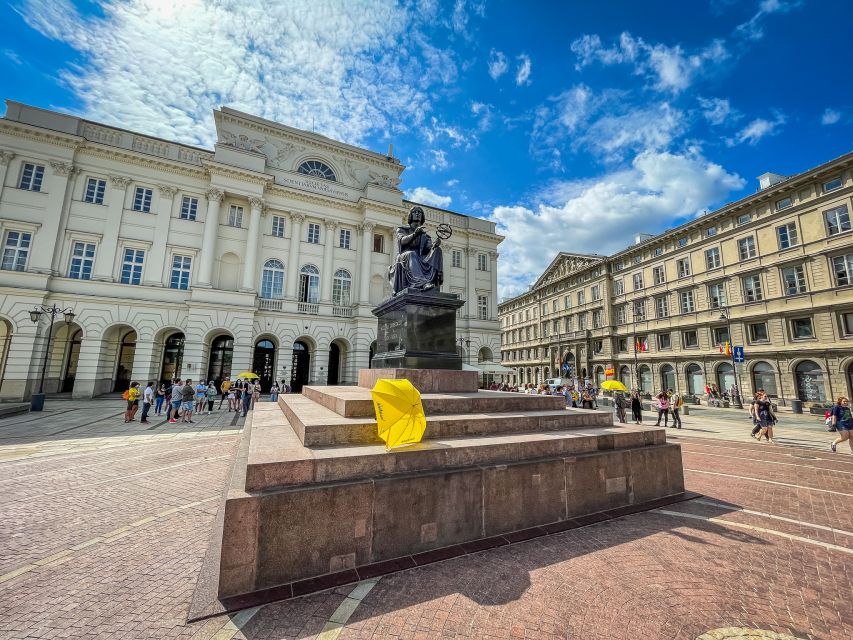
- A compact route through central Warsaw: You see the Copernicus monument, Royal Route, Presidential Palace, Warsaw University buildings, Chopin’s memorial connection, and the Old Town.
- History takes center stage: The guide explains the Nazi occupation, the two major uprisings, and how Warsaw was rebuilt after near-total destruction.
- The Royal Route gives you Warsaw’s grand front door: Krakowskie Przedmieście brings together monuments, churches, university buildings, and political landmarks.
- The reconstructed Old Town is part of the story: Its attractive squares and walls are not untouched medieval scenery, but a remarkable postwar rebuilding project.
- Guide quality is a major strength: Past guides praised by name include Michael, Andrzej, Anna, Michal, Lucas, Jack, Olivia, and Jacek.
- The $26 price needs context: It covers the reservation and guide payment for a general pay-as-you-wish tour, offering a relatively affordable overview rather than a private experience.
Starting beside Copernicus on Krakowskie Przedmieście
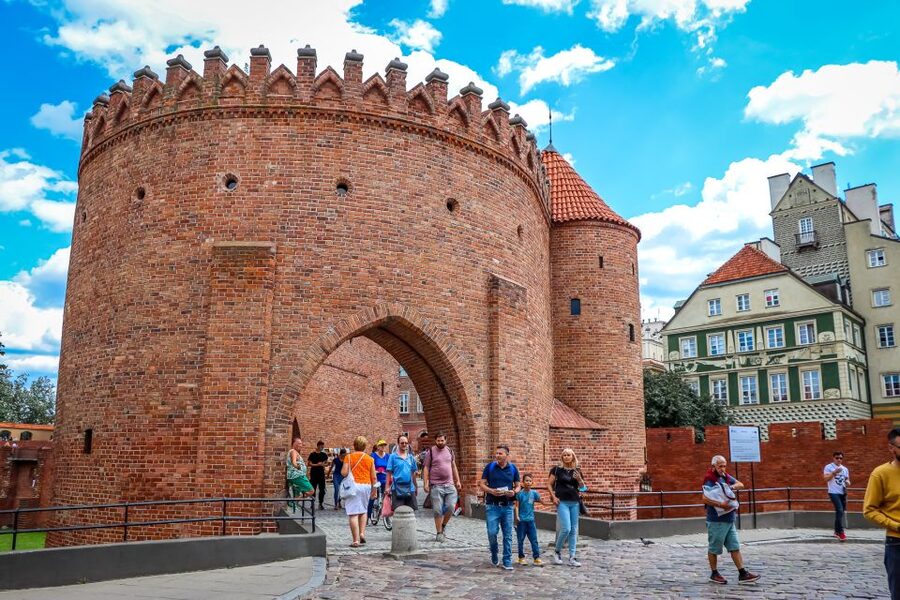
The meeting point is beside the Nicolaus Copernicus Monument at Krakowskie Przedmieście Street 2. Look for the guide carrying a yellow umbrella. That detail matters in a busy central area, and you should contact the operator promptly if you cannot find the group.
This is a smart starting point. Copernicus is one of Poland’s most famous sons, and his statue immediately puts you in the company of people who shaped the country’s cultural and intellectual identity. The tour also connects Warsaw with two other famous residents, Frédéric Chopin and Marie Curie.
You are not simply being marched from one photo stop to another. The guide uses these figures to open a wider conversation about Poland’s changing borders, politics, culture, and place in Europe. That makes the first few minutes useful for getting your bearings before the route becomes more heavily focused on wartime Warsaw.
More Walking Tours in Warsaw
- Warsaw: Old Town Guided Walking Tour
★ 4.9 · 599 reviews - Half-Day Polish Food Walking Tour with Guide and Dinner
★ 4.5 · 381 reviews - Warsaw: Warsaw Ghetto Private Walking Tour with Hotel Pickup
★ 4.9 · 369 reviews
Krakowskie Przedmieście and the Royal Route
From the Copernicus monument, the walk follows Krakowskie Przedmieście along Warsaw’s Royal Route. This is one of the city’s grandest streets, with colorful facades, public buildings, churches, monuments, and busy pedestrian areas.
I like this section because it gives you Warsaw in layers. On the surface, it is an attractive urban promenade. Underneath, it carries the marks of royal power, religious life, education, politics, occupation, and reconstruction.
The guide points out the Presidential Palace and buildings connected with Warsaw University. These sights help explain how the street remains tied to Poland’s political and intellectual life. You will also hear about well-known people linked to the city, including Chopin and Marie Curie.
The route is especially helpful if you have only a short stay. Instead of spending your first hours trying to decide which streets matter, you get a connected walk through the center. One guide, Lukasz, was praised for keeping a good pace, while another, Jacek, was singled out for making the history easy to follow. That combination is important on a city walk: too much detail can bog you down, but too little leaves you with postcards and no context.
Chopin, music, and the city’s famous inhabitants
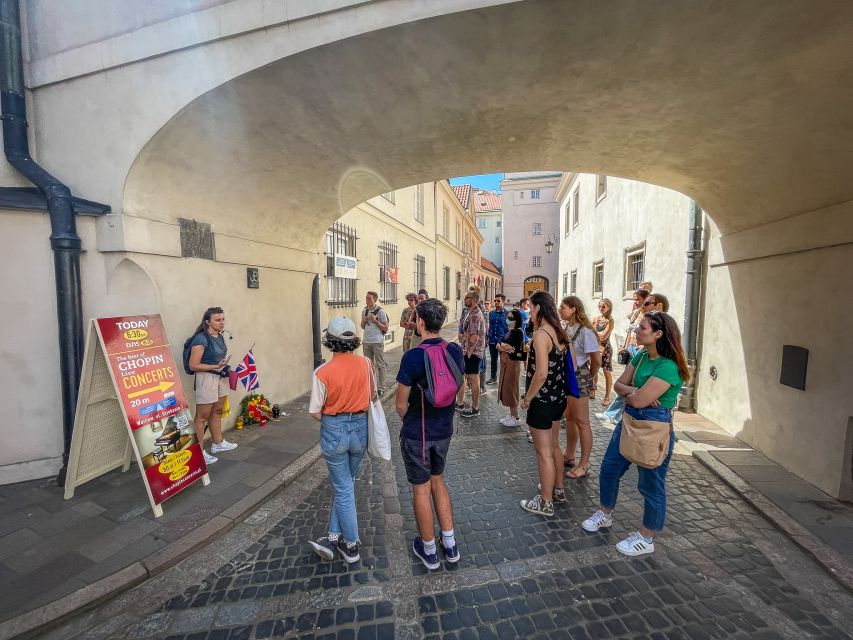
Chopin’s connection to Warsaw gives the tour a more personal angle. You see the place associated with where his heart is buried, a detail that makes his relationship with the city feel more tangible than a simple statue or biography.
Chopin left Warsaw, but the city kept a powerful connection to him. On this tour, his story sits beside the broader history of Poland, a country whose borders and political freedom changed repeatedly. That contrast gives the route emotional range. One moment you are discussing music and art, and the next you are confronting the political forces that shaped the city.
Marie Curie adds another thread to the story. The tour does not present Warsaw as a city defined only by kings or battles. It also introduces people whose work reached far beyond Poland. For you, that makes the walk feel less like a list of monuments and more like an introduction to the people associated with Warsaw.
Do not expect a long music-focused presentation or a visit inside a Chopin museum. The emphasis is on seeing key places and understanding their meaning within the city’s larger story.
The Presidential Palace and Warsaw’s public life
The Presidential Palace is one of the route’s most important political sights. From the outside, it gives you a clear sense of the Royal Route as a ceremonial and governmental spine through the capital.
The guide uses this area to explain Poland’s past and present, including the country’s political changes and its role as a European center of trade, tourism, education, and government. This is useful because Warsaw can be hard to read at street level. Its modern identity is not always obvious when you are looking at old facades or reconstructed monuments.
The tour’s strength here is context. You get a clearer idea of why these buildings matter, instead of simply being told their names. The guides are also encouraged by the experience to answer questions, and one visitor specifically praised a guide for responding well to questions about hidden details.
The walk does not include hotel pickup, food, or drinks. You should arrive ready to begin on foot, and it makes sense to carry water, particularly in warm weather. Since there is no scheduled meal stop, eat before the tour if you know you will need something during the 150 minutes.
More Old Town walks in Warsaw:
- Warsaw: Chopin Concert in the Old Town
★ 4.8 · 2,287 reviews - Warsaw: Chopin Concert at Historical Venue in Old Town
★ 4.7 · 445 reviews - Old Town Warsaw Walking Tour
★ 4.5 · 333 reviews - Warsaw Old Town 1.5-Hour or Full 3-Hour Segway Tour
★ 4.9 · 209 reviews
Facing Warsaw’s wartime destruction
The emotional heart of the tour is its explanation of Warsaw during World War II. The guide discusses the Nazi occupation and the two major uprisings against Nazi rule that helped set the city on fire.
This is difficult material, and the tour appears to handle it as a central part of Warsaw’s identity rather than a brief tragic footnote. You learn how the city was destroyed and how its people endured a period marked by violence, repression, and immense loss.
The subject is complex. Poland’s wartime history cannot be reduced to one simple story, and the tour description makes clear that the guide addresses regional, city, and national history. That wider view is one of the best reasons to choose this walk. It gives you a framework for understanding why Warsaw’s monuments, streets, and rebuilt districts look the way they do.
Several guides were praised for presenting this material with passion, perspective, and humor. That balance matters. The humor does not erase the tragedy, but it can keep a long outdoor history tour from becoming emotionally exhausting. Julie described one guide as an exceptional storyteller and historian who brought perspective to what the people of Poland endured and rebuilt. That is the kind of approach you want here.
Entering the reconstructed Old Town
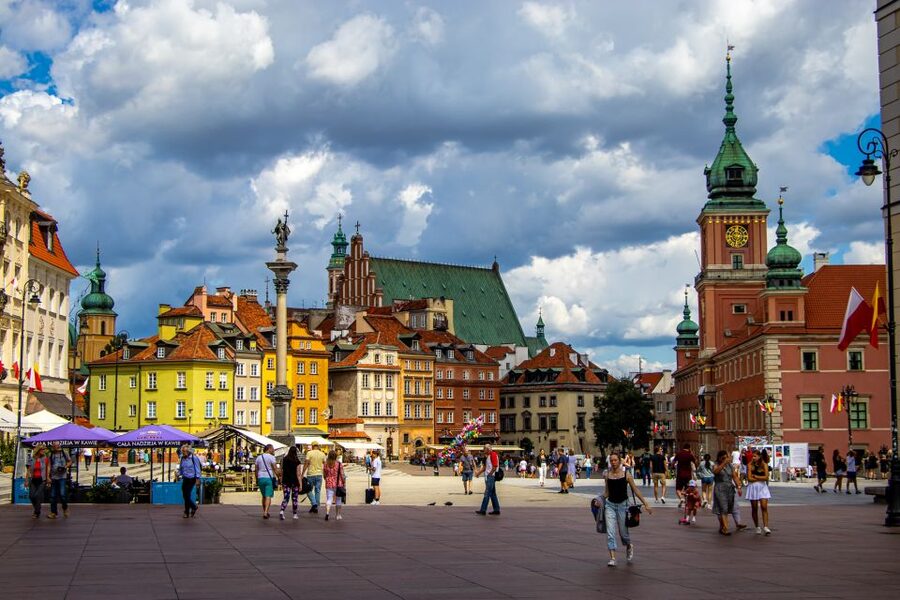
The route continues into Warsaw’s Old Town, enclosed by city walls and filled with colorful buildings and attractive public spaces. This is the section most visitors expect to see, but it is also the place where the city’s past and present come together most clearly.
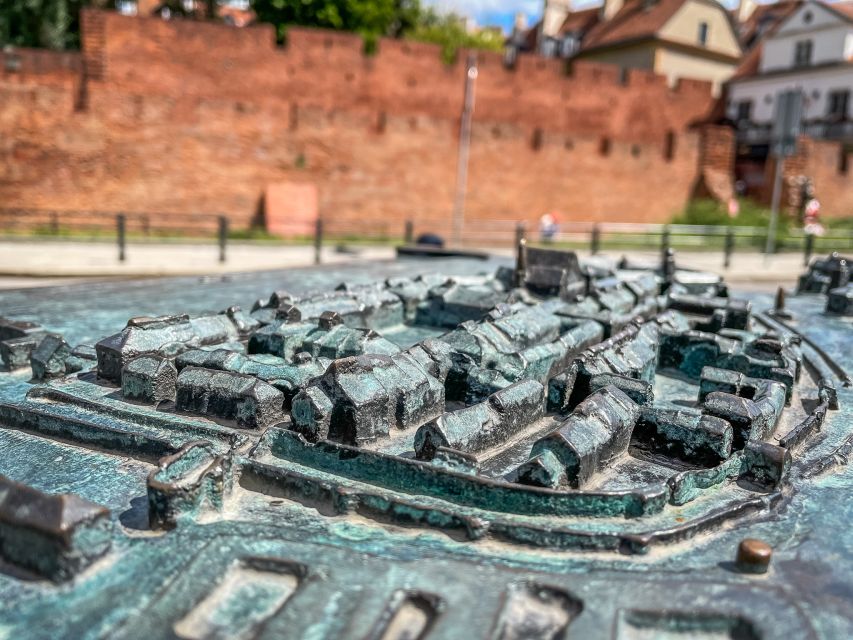
The Old Town was reconstructed after the wartime destruction. Its restored appearance can seem almost too neat if you do not know the story behind it. The guide helps you read the district in a different way: not as a perfectly preserved medieval quarter, but as a symbol of Warsaw’s decision to rebuild.
That distinction is crucial. You can admire the facades, walls, and street layout while also understanding that much of what you see represents an enormous postwar effort. The rebuilt Royal Castle is another major stop. Standing before it, you get one of the clearest examples of Warsaw’s return from devastation.
I find the Royal Castle especially valuable on a first visit because it anchors the city’s royal past while also pointing to its twentieth-century destruction and renewal. You may want to return later for an interior visit, but even from outside, the building carries considerable weight.
The Old Town is also where the walking format works best. You move through a compact area with plenty to look at, while the guide explains how the city walls, castle, streets, and buildings fit together. The tour offers an overview rather than a museum visit, so plan separate time if you want to explore the castle or other interiors in detail.
What the guides do well
Guide quality is the strongest theme in the available feedback. Michael was praised for historical depth and a friendly manner. Andrzej was described as passionate, funny, and engaging. Anna, Ana, Lucas, Jack, Olivia, Jacek, and Michal also received warm praise for their energy, humor, and ability to explain Poland’s past.
You should not expect an identical experience from every guide. A group walking tour depends on the person leading it, the size of the group, the weather, and the questions people bring. Still, the pattern is encouraging: the guides tend to be animated storytellers rather than people who simply recite dates.
English ability was also praised, including clear pronunciation and an easy-to-follow pace. One guide was described as having almost perfect English, while another was appreciated for keeping the walk moving quickly despite rain.
The best guides seem to add useful tips about what to see afterward. Olivia, for example, was praised for offering ideas on where to visit in more detail. That is a practical benefit if you are using this tour on your first day in Warsaw.
Group format, pace, and weather
This is a general tour rather than a private walk. The supplied information describes it as a pay-as-you-wish tour in which the booking amount covers the reservation fee and guide’s payment. If you prefer a smaller private tour, the operator says one can be arranged separately.
The general format keeps the cost lower, but it also means the guide must balance different interests. You may be in a group that wants detailed political history, while someone else mainly wants photographs and orientation. The 150-minute length gives the guide enough time to cover a lot, though it also means the route has a steady pace.
One participant described the pace as good and fast, and another noted that the tour started and finished on time. That is useful if you have an afternoon train, another booking, or a limited stay. You should still avoid scheduling something immediately afterward, since city walks can be affected by group movement and weather.
The tour runs rain or shine. If it becomes wet or cold, the guide looks for cover, but this is still an outdoor activity. In hot weather, guides may use shaded areas when possible. Bring comfortable shoes, a coat or rain layer in poor weather, and clothing suited to standing outside.
Is $26 good value?
At $26 per person, this tour is priced as an accessible introduction rather than a premium private outing. You receive a live English guide for two and a half hours, covering a wide sweep of Warsaw’s central sights and history.
The value is strongest if you are new to the city or have limited time. A good guide can help you understand why the Royal Route matters, how Chopin and Copernicus fit into Warsaw’s identity, and why the reconstructed Old Town deserves more than a quick photo.
It is less ideal if you already know Warsaw well and want specialist detail on one subject. You will not get a long museum visit, food, hotel transport, or an intimate private group as part of the standard booking.
The pay structure also deserves attention. The listed price is not simply a traditional fixed fee for a private tour. It covers the reservation and guide payment for the general pay-as-you-wish format. Read the booking conditions carefully so you understand what your payment includes.
Free cancellation up to 24 hours before the start adds useful flexibility, and you can reserve now and pay later. Those terms are helpful when your Warsaw schedule is still changing.
Who should book this walk?
I would recommend it most strongly to first-time visitors, short-stay visitors, and anyone who wants historical context before exploring independently. It is also a good fit if you enjoy walking and prefer a guide who mixes serious subjects with jokes and personal enthusiasm.
You may find it less suitable if you dislike outdoor tours, have difficulty walking for 150 minutes, or want extensive time inside the Royal Castle. The tour is wheelchair accessible, but the long outdoor format remains an important consideration.
Families with older children may appreciate the mix of famous figures, royal buildings, war history, and city rebuilding. The humor used by several guides can make hard subjects easier to follow, though the wartime material is serious and may not suit very young children.
Final verdict: book it for a first look at Warsaw
Book the Warsaw Old Town Highlights Walking Tour if you want a clear, lively introduction to the city in one morning or afternoon. Its route covers the major central sights, but its real value comes from connecting them to Poland’s political, cultural, and wartime story.
The strongest guides, including Michael, Andrzej, Anna, Michal, Lucas, Jack, and Olivia, appear to bring plenty of personality to the walk. Just dress for the weather, wear good shoes, and remember that this is an outdoor overview rather than a private or museum-heavy tour.
If you have only one day in Warsaw, this is a sensible way to get your bearings fast and decide where to spend the rest of your time.
FAQ
How long is the Warsaw Old Town Highlights Walking Tour?
The tour lasts 150 minutes, or two and a half hours.
What language is the tour conducted in?
The tour is conducted in English with a live English-speaking guide.
Where does the walking tour meet?
The meeting point is next to the Nicolaus Copernicus Monument on Krakowskie Przedmieście Street 2.
How will I recognize the guide?
Look for the guide carrying a yellow umbrella.
What sights are included on the route?
The route includes the Copernicus monument, the Royal Route, Krakowskie Przedmieście, the Presidential Palace, Warsaw University buildings, Chopin-related sites, the Old Town, city walls, and the reconstructed Royal Castle.
Does the tour include hotel pickup?
No. Hotel pickup and drop-off are not included.
Are food and drinks included?
No. Food and drinks are not included.
Is the tour wheelchair accessible?
Yes, the activity is listed as wheelchair accessible.
What should I bring?
Bring comfortable shoes. You should also dress for the weather because the tour takes place outdoors and runs rain or shine.
Can I cancel the booking?
Yes. You can cancel up to 24 hours in advance for a full refund. You can also reserve now and pay later.
Just added in Warsaw
- Historical Walking Tour of Jewish Warsaw★ 5.0 · 68 reviews
- Deluxe Polish Food Tour Experience in Warsaw★ 5.0 · 19 reviews
- CO2-Offset Arrival Transfer from Warsaw Airport to Warsaw City★ 5.0 · 1 review
- Amazing photo walk through the Old town of Warsaw★ 5.0 · 32 reviews
- 8-day tour around Poland by private car★ 5.0 · 2 reviews
- 2 Hour Super Segway City Tour of Warsaw★ 5.0 · 5 reviews
- Electric Scooter Tour: Full Tour – 3-Hours of Magic!★ 5.0 · 3 reviews
- 2h Rental of Motorboat for 10 in Warsaw no License Needed★ 5.0 · 1 review
Old Town Walking Tours, compared.


Sightseeing EcoCruise around the Old Town of Gdansk
Read our review →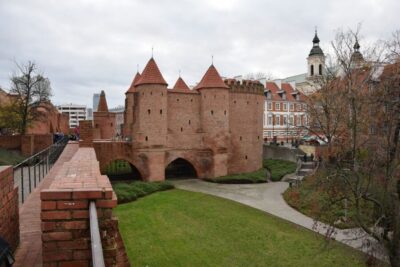
Old Town & Wawel Castle Walking Tour in English
Read our review →
Browse the lists this tour appears in