
REVIEW · JEWISH QUARTER TOURS
Warsaw: Warsaw Ghetto Private Walking Tour with Hotel Pickup
The past is still visible in Warsaw. This three-hour private tour makes the former ghetto understandable by linking streets, wall fragments, photographs, and surviving buildings to the story of the Jewish community that was destroyed during the Second World War. I especially like the small private format, which gives you room to ask difficult questions, and the guides’ use of old maps and photographs to show what has vanished. One important catch: hotel pickup is unclear, so confirm it in advance rather than assuming a car will collect you.
The tour also handles a painful subject with care. Guides such as Marzena, Mary, Eva, and Wojtek have been praised for clear explanations, patience, and a strong command of both Warsaw and wartime history. At $84 per person, it is not the cheapest way to see the area, but the personal attention and efficient route can make it good value, especially if you have only a short time in Warsaw.
In This Review
- Key points to know before booking
- Why this three-hour tour matters
- Meeting the guide on Prozna Street
- Seeing the ghetto walls that remain
- Walking the last street of the ghetto
- Understanding Umschlagplatz and the deportations
- Entering the surviving synagogue
- Reconstructing the Warsaw Ghetto Uprising
- Finishing near the POLIN Museum
- The guides make the biggest difference
- Is $84 per person fair value?
- Who should book this experience?
- Practical tips for a better visit
- Should you book the Warsaw Ghetto tour?
- FAQ
- How long does the Warsaw Ghetto private tour last?
- What languages are available?
- Is the tour private?
- Where is the meeting point?
- Is hotel pickup included?
- How much does the synagogue visit cost?
Key points to know before booking
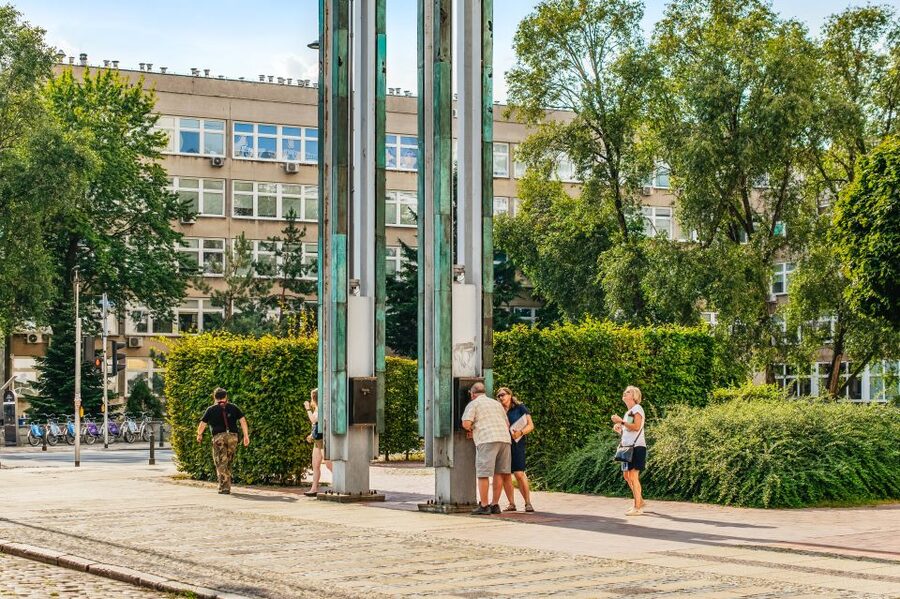
- The route connects real locations to the story: You see fragments of the ghetto wall, the last surviving street within the ghetto area, Umschlagplatz, and the Monument to the Ghetto Heroes.
- Old photographs do much of the heavy lifting: Guides use maps and wartime images to help you picture streets and buildings that no longer exist.
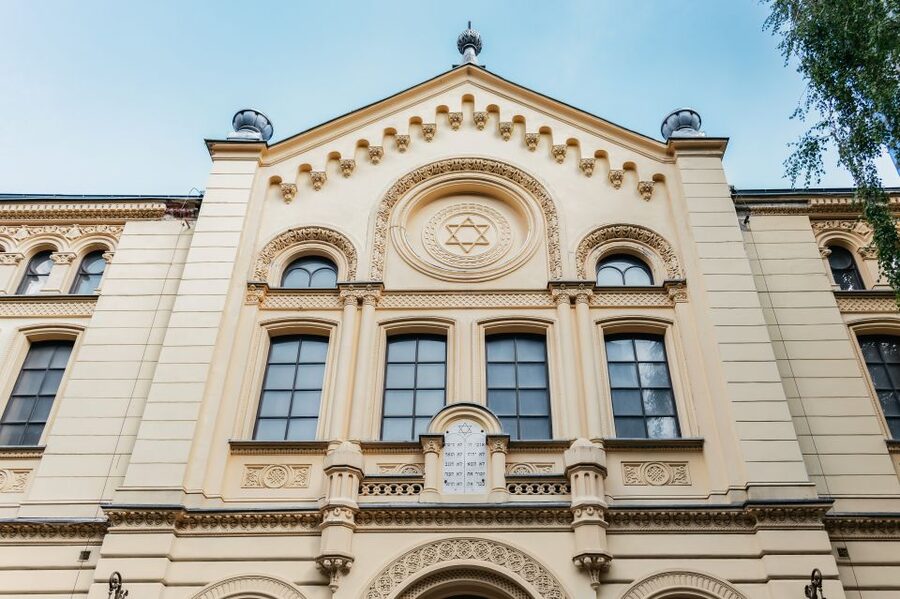
- It includes Warsaw’s only surviving prewar synagogue: A donation or entrance payment of 20 PLN, 5 EUR, or 5 USD is extra.
- The tour is private and available in English or German: That makes it easier to set the pace and ask detailed questions.
- Expect a serious, emotionally demanding morning or afternoon: The subject includes starvation, disease, deportation, mass murder, resistance, and destruction.
- Confirm the pickup arrangement: The meeting instructions name Prozna Street 9, and several past bookings indicate that guests met the guide there rather than at their hotel.
Why this three-hour tour matters
Before the war, Warsaw had one of Europe’s largest Jewish communities. Jewish residents made up about 30 percent of the city’s population, with religious, cultural, commercial, and family life spread through many neighborhoods.
In 1940, Nazi authorities forced more than 400,000 Jews from Warsaw and nearby areas into a ghetto covering roughly four square kilometers. About 100,000 people died there from hunger, disease, exhaustion, and brutal living conditions. More than 300,000 were deported to Treblinka and murdered there.
Those numbers can feel abstract when you read them in a book. The value of this walk is that it puts the numbers onto ordinary city streets. You see where walls once cut through Warsaw, where people were assembled for deportation, and where the uprising of 1943 took place.
The former ghetto is not preserved as one large historical district. Much of it was destroyed, rebuilt, or absorbed into modern Warsaw. That makes a guide unusually useful. Without one, you can easily walk through the area and see only present-day roads, apartment blocks, and traffic.
More Walking Tours in Warsaw
- Warsaw: Old Town Highlights Walking Tour in English
★ 4.7 · 1,516 reviews - Warsaw: Old Town Guided Walking Tour
★ 4.9 · 599 reviews - Half-Day Polish Food Walking Tour with Guide and Dinner
★ 4.5 · 381 reviews
Meeting the guide on Prozna Street
The stated meeting place is Prozna Street 9, between Bistro Charlotte Menora and Strefa Restaurant. Look for a guide holding a PolinTours sign.
This is a practical starting point because the street is connected with Warsaw’s Jewish heritage and sits close to the central part of the city. If you are using the optional pickup, send your hotel details clearly and confirm the arrangement before the day of the tour. The wording around pickup has caused confusion: some bookings included hotel pickup in the confirmation, while the actual meeting took place at the advertised street address.
I would treat Prozna Street 9 as the reliable meeting point unless the company confirms a different plan directly. Keep your phone available and allow a little extra time. You do not want to begin a solemn history tour by rushing across town.
The tour includes transportation by car, but the experience is primarily a walking tour. The car may help connect sections of the route or make pickup possible, but you should still expect several hours on foot. Wear comfortable shoes, bring sun protection, and carry water. Large bags and oversize luggage are not allowed.
Seeing the ghetto walls that remain
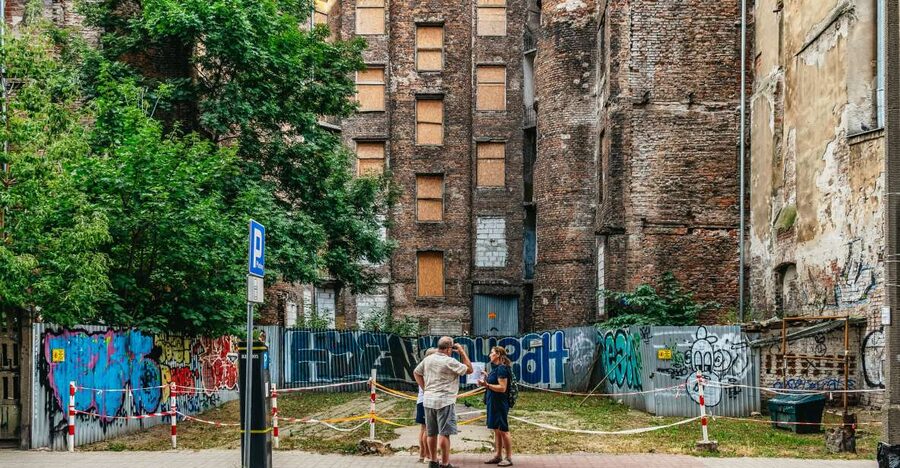
One of the most useful early lessons is learning how little of the original ghetto can be seen at first glance. The Nazis enclosed the area with walls, controlling movement, food, work, and contact with the rest of Warsaw.
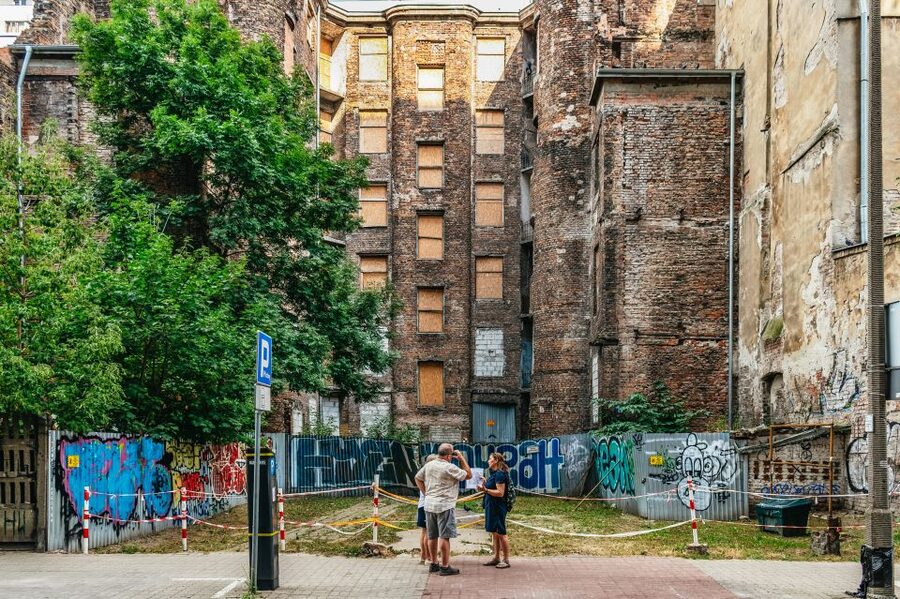
Only fragments of those walls survive. They are easy to miss without help, and their modest size can be startling. You are not looking at a grand ruin. You are looking at a piece of brickwork surrounded by a living city, with modern buildings and daily routines close by.
That contrast gives the site its force. The ghetto was not an isolated camp in a remote place. It was imposed inside Warsaw, and the people imprisoned there were cut off from the city even though the city was physically around them.
Your guide can use wartime photos and maps to explain the original boundaries. Several guides, especially Marzena and Mary, have been praised for bringing printed images or photographs on a tablet. This is not decoration. It lets you compare the view in front of you with the crowded streets and missing buildings shown in the old images.
Walking the last street of the ghetto
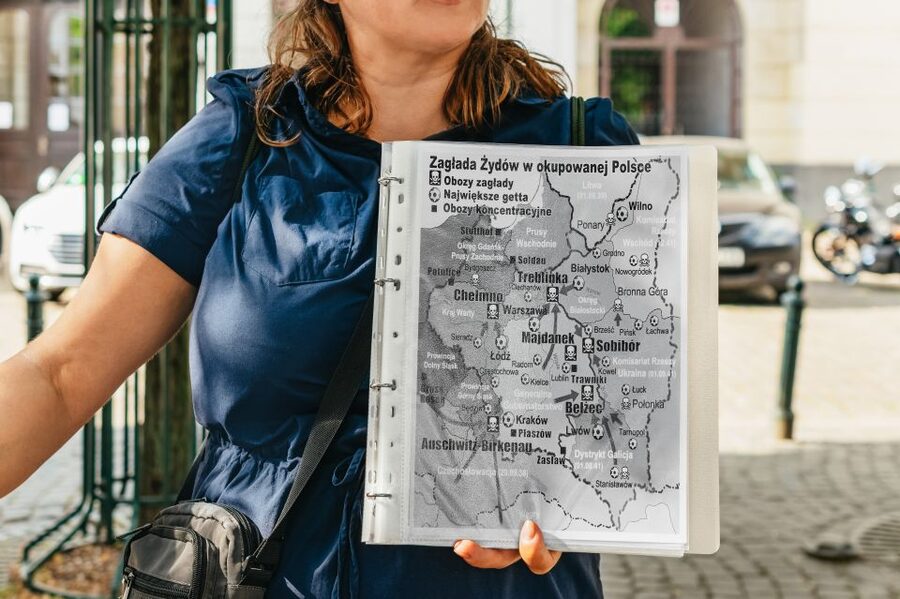
The route includes what is described as the last street of the ghetto. This is one of the tour’s most important stops because it shows the final physical trace of a district that was otherwise almost entirely erased.
The power of this section comes from scale. A street name and a few surviving fragments can suggest how much was lost, but the guide fills in the human detail: how people lived under restrictions, how hunger and disease shaped daily life, and how families tried to survive as the Nazi plan became more violent.
The experience is not only about the final months. You learn about the ghetto’s establishment, the forced concentration of Jewish people into a confined area, and the systems used to control them. You also hear about the choices people faced, including acts of mutual help, attempts to obtain food, and the question of resistance when the odds were almost impossible.
A private guide is particularly useful here. If you already know a great deal about the Second World War, you can ask for more detail. If the subject is new to you, the guide can slow down and explain the basic sequence without making you feel lost.
More Jewish heritage tours in Warsaw:
- Private Tour: Warsaw’s Jewish Heritage by Retro Fiat
★ 5.0 · 208 reviews - Warsaw: Ghetto, Jewish Cemetery & POLIN Museum Private Tour
★ 4.8 · 132 reviews - Tour of the Warsaw Ghetto
★ 5.0 · 119 reviews - Warsaw: Jewish Heritage & Holocaust Walking Tour
★ 4.7 · 119 reviews
Understanding Umschlagplatz and the deportations
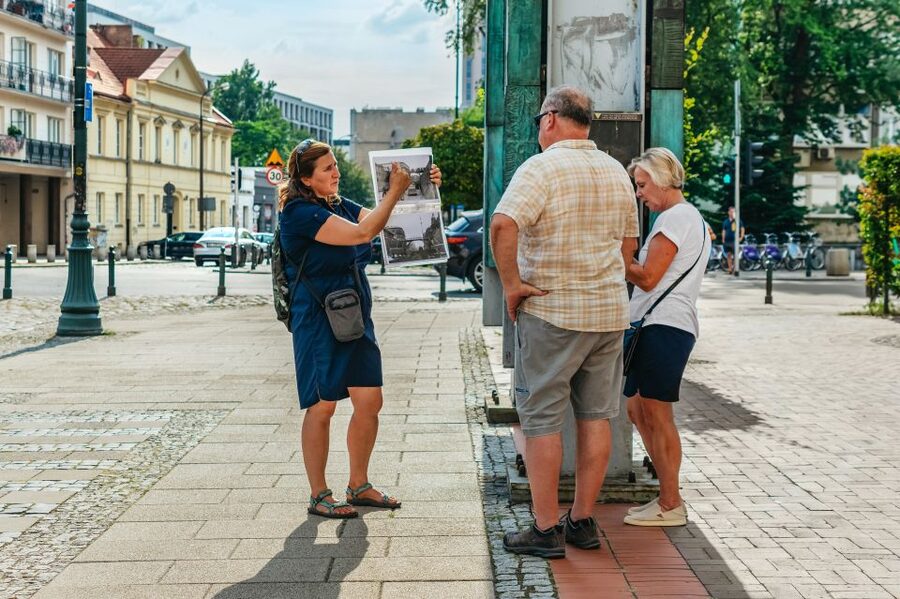
Umschlagplatz was the collection point from which Jewish people were deported to extermination camps, especially Treblinka. The stop is central to understanding how mass murder was put into action.
The tour explains the supposed logic behind the Nazi plan and how the final solution moved from policy to organized deportation and killing. That language can sound cold, but understanding the machinery matters. It shows that the destruction of Warsaw’s Jewish community was not a sudden burst of violence alone. It involved orders, confinement, transport, guards, deception, and forced movement.
The symbolism of Umschlagplatz is also important. This was a place where people were gathered before being taken away, often without knowing the full destination or what awaited them. A guide can connect the location to the broader story without leaving you to interpret a memorial in isolation.
The subject is difficult, and the tour does not soften it into a simple sightseeing stop. You should allow yourself some quiet time afterward. This is not the sort of excursion to squeeze between a shopping trip and a cheerful dinner without a pause.
Entering the surviving synagogue
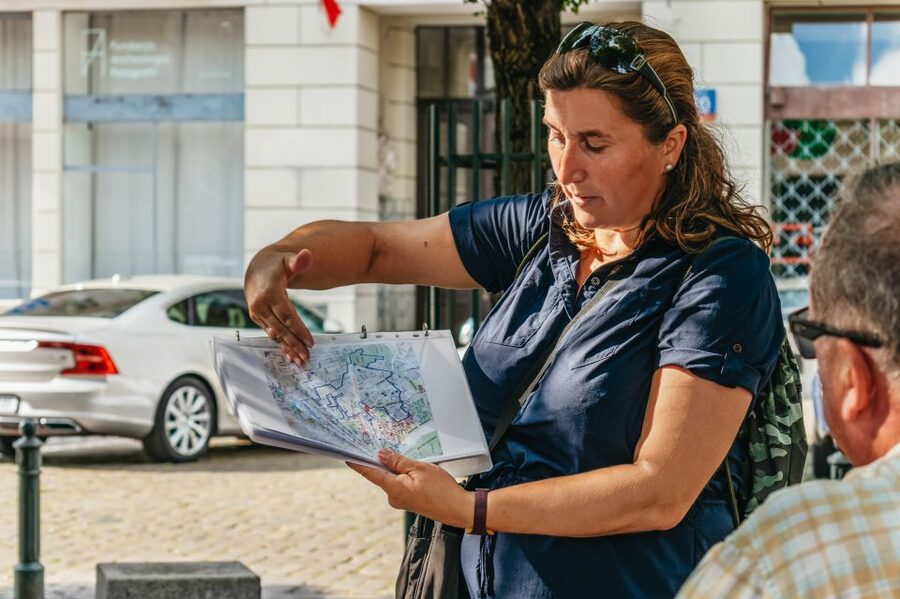
The tour visits the only synagogue in Warsaw that survived the Second World War and remains in operation. The visit adds an important dimension because it is not only a memorial to destruction. It is also a living place of worship.
A payment of 20 PLN, 5 EUR, or 5 USD is required for entrance or as a donation, and this cost is not included. Bring cash. You will also need a head covering or kippah, so do not arrive without one.
This stop can change the tone of the tour. Much of the route concerns disappearance: streets destroyed, families murdered, and a community almost wiped out. A functioning synagogue reminds you that Jewish life in Warsaw was devastated but not erased from the world forever.
Be respectful inside. The synagogue is not simply a museum object placed on a sightseeing route. It remains a religious space, and your guide can explain its role in the city today.
Reconstructing the Warsaw Ghetto Uprising
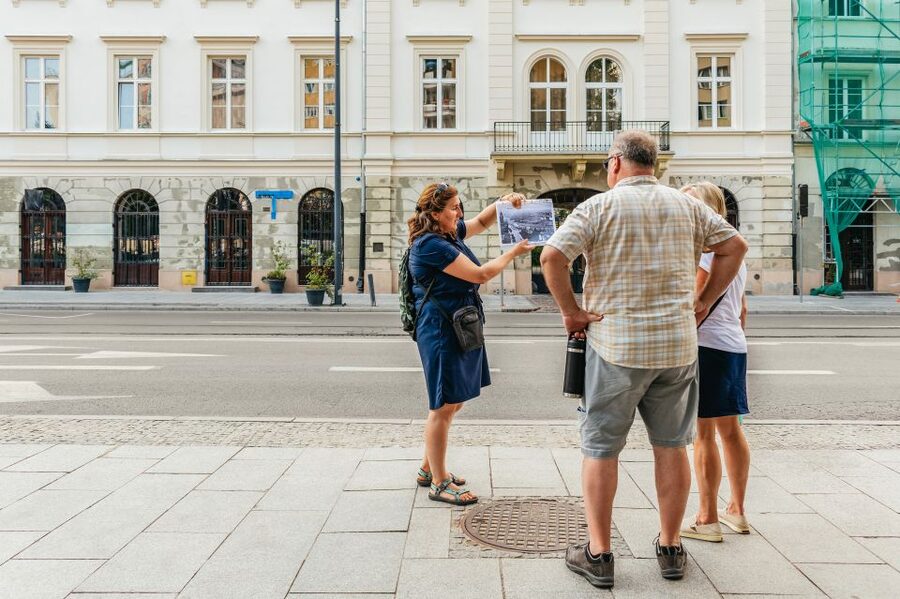
In 1943, when the Nazis tried to complete the liquidation of the ghetto, Jewish fighters rose in resistance. The uprising lasted nearly a month against heavily armed German forces.
The military balance was hopeless. The importance of the uprising is not that it could defeat the German army in a conventional sense. Its importance lies in the decision to resist, even after years of persecution, starvation, deportation, and mass murder.
The guide places this resistance at real locations and explains who helped, why people took up arms, and how the uprising developed. You hear about the people who fought, those who supported them, and the wider conditions that shaped their choices.
The ghetto was destroyed as an act of revenge after the uprising. Only a small number of Jews survived, including Władysław Szpilman, whose story became known internationally through Roman Polanski’s film The Pianist.
The Monument to the Ghetto Heroes gives the uprising a clear focal point. It is one of Warsaw’s most significant memorials, and the guide explains its symbolism rather than treating it as a quick photo stop. The surrounding space also helps you understand how postwar Warsaw chose to remember the destruction.
Finishing near the POLIN Museum
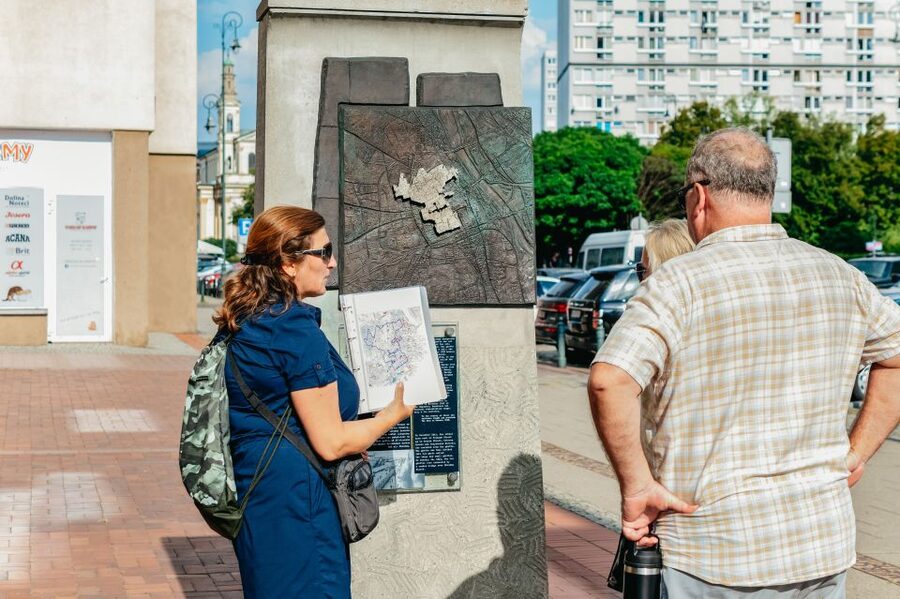
The tour can finish at the POLIN Museum of the History of Polish Jews. The museum entrance is not listed as part of this tour, so plan to buy a separate ticket if you want to continue indoors.
Ending here makes practical sense. The outdoor route gives you physical locations and a wartime timeline. The museum can then add broader material about Jewish life in Poland before the war, the Holocaust, and the postwar period.
You should allow at least two additional hours if you plan to visit the museum. The tour itself covers a lot in three hours, but it cannot provide the same depth as a full museum visit.
Several guides have also helped guests make the transition to the museum, including advice about the museum restaurant. That can be useful if you want to pause for soup or a meal before continuing.
The guides make the biggest difference
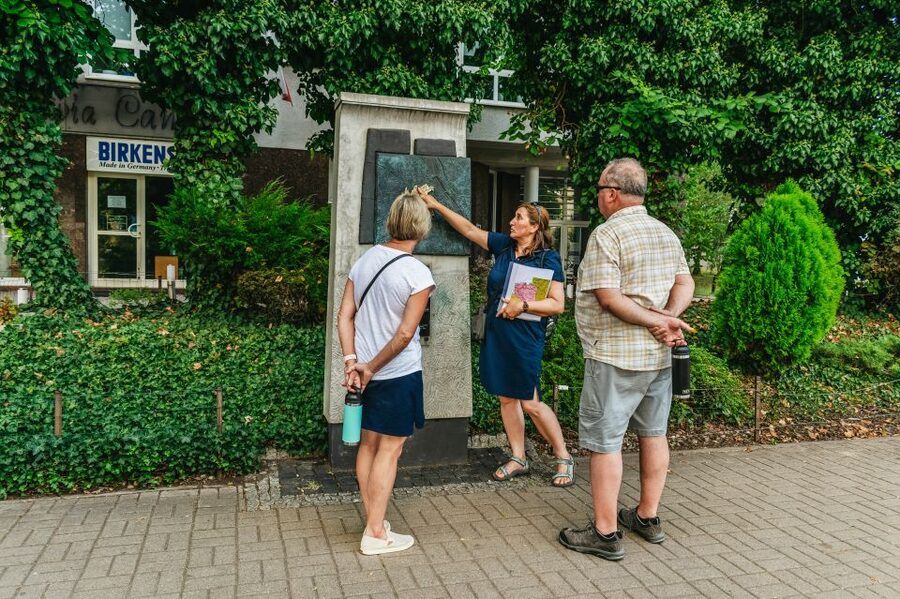
The strongest part of this experience is the guiding. Marzena receives repeated praise for her clear English, passion, patience, and ability to answer questions. Mary is also described as warm, well prepared, and able to adapt the route to a guest’s interests and walking pace.
Other named guides include Eva and Wojtek. Eva has been praised for a warm and personal manner, while Wojtek used a large collection of photographs on a tablet to compare wartime Warsaw with the modern city.
The common thread is preparation. The guides do not simply recite dates. They build the story in order, then connect each stage to the place where you are standing. That method helps you understand how the ghetto was created, how it operated, how deportations worked, and why the uprising began.
The private format also matters. You can stop to ask about Polish, Jewish, German, or Warsaw history without worrying about holding up a large group. One guide adjusted the pace for a 77-year-old guest, while another included public transport when that suited the group. Those details suggest a flexible approach, although the exact guide and route can vary.
Is $84 per person fair value?
At $84 per person, this is a significant spend for a three-hour walking experience. A free map or self-guided route costs far less, and some parts of the former ghetto can be visited independently.
The difference is interpretation. The surviving fragments are scattered, and many important locations are not visually obvious. A private guide saves you from spending half a day trying to work out where the old boundaries were or what a plain-looking street once contained.
The price also buys flexibility. You can ask questions, adjust the pace, and focus more closely on family history, the uprising, religious life, or the Nazi system of persecution. For two people or a small family group, that may be better value than paying for several separate tours.
One past booking raised the fair point that the price could discourage some people from taking the tour. I agree that cost is the main drawback. If your budget is tight, consider visiting the POLIN Museum and selected memorials independently. If you want a guided explanation that ties the entire area together, the fee is easier to justify.
Who should book this experience?
I would choose this tour if you have a serious interest in the Second World War, the Holocaust, Jewish Warsaw, or the Warsaw Ghetto Uprising. It is also a good choice if you learn best through stories, maps, and physical locations rather than through museum labels alone.
It suits adults and older teenagers, but it is not recommended for children under 14. The subject matter is harsh, and the walking can be demanding for anyone with mobility limitations. The activity is specifically not suitable for people with mobility impairments.
You do not need to be an expert. The guides can explain the basic timeline, yet they also appear able to respond well to detailed questions. The private setting makes it useful for both first-time learners and people who have already read widely about the Holocaust.
I would not choose it as a casual city walk or a light introduction to Warsaw. The tour is solemn, emotionally heavy, and packed with information. Give yourself time afterward to think, eat, or visit the museum at a slower pace.
Practical tips for a better visit
Wear shoes you can walk in for three hours. Bring a hat and sunscreen in warm weather, plus water and some cash for the synagogue payment.
Take a head covering or kippah for the synagogue. Food and drinks are not included, and large bags or oversize luggage are not allowed.
Ask about hotel pickup before booking. The advertised meeting point is Prozna Street 9, and past guests have reported confusion about the pickup wording. If you do not receive a clear confirmation, plan to meet the guide there.
The activity offers free cancellation up to 24 hours in advance, and you can reserve now and pay later. English and German tours are available. Check the available starting times because the tour lasts three hours and museum hours may affect your plans afterward.
Should you book the Warsaw Ghetto tour?
Yes, if you want the former ghetto explained as a connected story rather than a list of memorials. The surviving wall fragments, last street, synagogue, Umschlagplatz, and Monument to the Ghetto Heroes become far more meaningful when a guide links them to maps, photographs, and personal stories.
Book it knowing that the price is above a standard group walk and that pickup needs clarification. For me, the strongest reason to choose it is the guide’s role: Marzena, Mary, Eva, and Wojtek have each been praised for patience, clear explanations, and a human approach to a painful subject.
If you have only one day in Warsaw, this tour can give you a strong foundation, then leave time for the POLIN Museum. If you prefer to explore quietly and independently, you can save money by walking the area yourself. But if you want the city’s missing streets to make sense, this private tour earns serious consideration.
FAQ
How long does the Warsaw Ghetto private tour last?
The tour lasts three hours.
What languages are available?
The tour is available in English and German.
Is the tour private?
Yes. It is arranged for a private group.
Where is the meeting point?
The stated meeting point is Prozna Street 9, between Bistro Charlotte Menora and Strefa Restaurant. Look for a guide holding a PolinTours sign.
Is hotel pickup included?
Pickup is described as optional, but the instructions also identify Prozna Street 9 as the meeting point. Because past bookings have reported confusion, confirm the pickup arrangement before the tour.
How much does the synagogue visit cost?
Entrance or a donation for the synagogue costs 20 PLN, 5 EUR, or 5 USD. This payment is not included in the tour price.
Just added in Warsaw
- Historical Walking Tour of Jewish Warsaw★ 5.0 · 68 reviews
- Deluxe Polish Food Tour Experience in Warsaw★ 5.0 · 19 reviews
- CO2-Offset Arrival Transfer from Warsaw Airport to Warsaw City★ 5.0 · 1 review
- Amazing photo walk through the Old town of Warsaw★ 5.0 · 32 reviews
- 8-day tour around Poland by private car★ 5.0 · 2 reviews
- 2 Hour Super Segway City Tour of Warsaw★ 5.0 · 5 reviews
- Electric Scooter Tour: Full Tour – 3-Hours of Magic!★ 5.0 · 3 reviews
- 2h Rental of Motorboat for 10 in Warsaw no License Needed★ 5.0 · 1 review