
REVIEW · OLD TOWN WALKING TOURS
World War II Warsaw Old Town, Military Cemetery Walking Tour
Warsaw’s pretty center hides a painful past. This private walking tour makes the reconstructed Old Town readable, tracing German occupation, the Warsaw Rising, the former Warsaw Ghetto, and the people who fought to free the city. I like the private format, since your guide can adjust the pace and explain difficult subjects without rushing. I also like the clear focus on people and choices, not only dates and ruins.
The four-hour option adds Powązki Military Cemetery and transport tickets, giving you a fuller picture of Poland’s wartime sacrifice. The main drawback is simple: the two-hour route cannot include the cemetery, and even the longer tour uses public transport, so it is less compact than an Old Town walk alone.
In This Review
- Key points to know before booking
- Starting beside the Warsaw Mermaid
- Reading the rebuilt Old Town through wartime history
- The Warsaw Rising Monument and the cost of resistance
- The former Warsaw Ghetto boundary markers
- Paying respects at the Tomb of an Unknown Soldier
- Adding Powązki Military Cemetery for four hours
- Choosing between two hours and four hours
- Who will get the most from this tour
- Practical details that make the day easier
- Should you book the Warsaw wartime walking tour?
- FAQ
- Where does the tour meet?
- Is hotel pickup available?
- What happens if my hotel is outside Warsaw Old Town?
- Does the two-hour tour visit Powązki Military Cemetery?
- Is public transport included for the cemetery visit?
- Which languages are available?
- Can I cancel the tour for a refund?
Key points to know before booking

- Market Square begins the story: The tour starts beside the Warsaw Mermaid, in a square destroyed during the struggle to liberate the city and later rebuilt.
- The Warsaw Rising gets proper attention: You follow the steps of anti-Nazi resistance fighters and learn about the underground movement, spies, and ordinary people who took great risks.
- Ghetto history is part of the route: Former Warsaw Ghetto boundary markers connect the Old Town walk to the largest Nazi ghetto created during World War II.
- The four-hour tour reaches Powązki: Public transport takes you to the Military Cemetery, where Polish military figures and wartime heroes are buried.
- Guides speak seven languages: You can request German, English, French, Italian, Spanish, Russian, or Polish.
- The tour works best for history-minded visitors: The subject is serious and sometimes grim, but the private setting allows questions and a more personal pace.
Starting beside the Warsaw Mermaid
Your meeting point is next to the Warsaw Mermaid at Pomnik Syrenki, on Market Square at Rynek Starego Miasta 18i. If your hotel is in Warsaw Old Town, pickup may be arranged, but you need to provide the full address when booking. If your accommodation is more than 1.5 kilometers from the meeting point, you should plan to meet by the Mermaid instead.
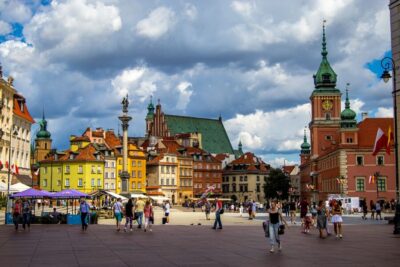
That detail matters because the Old Town is the natural starting place for this story. At first glance, Market Square looks like a postcard scene of colorful facades, cafés, and cobbled streets. Your guide helps you see what is missing. Much of this district was destroyed during the fighting and the later destruction of Warsaw, so the beauty around you is the result of a major reconstruction.
I appreciate this opening because it immediately corrects a common misunderstanding. The Old Town is not an untouched medieval quarter. It is a carefully rebuilt place, and that fact gives the walk its emotional force. You are not simply admiring old buildings. You are looking at a city that was nearly erased and then put back together.
The guide’s job here is to set the wider frame: the German occupation of Poland, the rise of Nazi control, the war’s effect on Warsaw, and the chain of events that led to the Warsaw Rising in August 1944. The strongest praise for this experience centers on clear explanations and memorable anecdotes, which is exactly what you need at the beginning of a subject this large.
More Walking Tours in Warsaw
- Warsaw: Old Town Highlights Walking Tour in English
★ 4.7 · 1,516 reviews - Warsaw: Old Town Guided Walking Tour
★ 4.9 · 599 reviews - Half-Day Polish Food Walking Tour with Guide and Dinner
★ 4.5 · 381 reviews
Reading the rebuilt Old Town through wartime history
The two-hour route stays focused on Warsaw Old Town and nearby memorial places. It is not a general sightseeing walk with a few wartime facts added at the end. The subject is occupation, destruction, resistance, and liberation from start to finish.
You will learn how life changed under German rule and how the occupation affected both public life and private decisions. The guide also covers Adolf Hitler and the Nazi system, but the tour’s emphasis remains on what those policies meant for Warsaw and its people.
That people-first approach is valuable. Military history can become a parade of commanders and battles. Here, you hear about underground organizers, spies, resistance fighters, and everyday heroes. You also gain a sense of the pressure facing civilians, although the exact stories will depend on the guide and the questions you ask.
Because this is a private tour, you can pause when a subject needs more explanation. You can ask how the underground worked, why the Warsaw Rising began, or how the city’s destruction unfolded. A larger group would usually make those questions harder to fit in.
The guide is described as a licensed five-star professional, with commentary available in seven languages. English, German, French, Italian, Spanish, Russian, and Polish are offered. Italian speakers may especially value the guide style praised for capable storytelling and many anecdotes. English-language feedback also highlights useful historical details that bring events to life.
The Warsaw Rising Monument and the cost of resistance
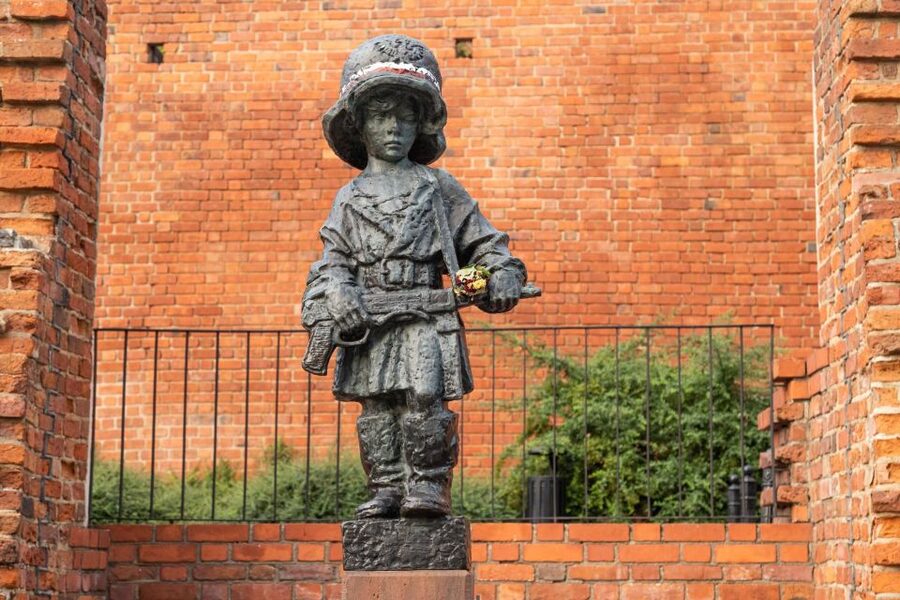
One of the key stops is the Warsaw Uprising Monument. It honors the anti-Nazi resistance fighters who took part in the Warsaw Rising, including General Tadeusz Komorowski.
The monument gives the tour a clear human focus. You are not only asking what happened to Warsaw during the war. You are also considering why people chose to resist, what they hoped to achieve, and what the rising cost them.
Your guide connects the monument to the underground movement, spies, and people who supported resistance efforts. These subjects help explain the rising as a broad social struggle rather than a single military event. The walk follows the steps of Warsaw insurgents, so the streets themselves become part of the lesson.
You should expect a serious discussion here. The tour is designed to present the history plainly, including occupation, destruction, and the consequences of liberation. It is not a light city stroll with a quick photo stop. If you prefer your sightseeing cheerful and uncomplicated, this may feel heavy. If you want to understand Warsaw beyond its attractive rebuilt center, this is one of the tour’s strongest sections.
The private setting helps again. You can ask about the general, the resistance network, or the difficult choices faced by people inside the city. You are not limited to the guide’s prepared script.
The former Warsaw Ghetto boundary markers

The route also passes former boundary markers of the Warsaw Ghetto. These small markers may not look as grand as a major monument, but they carry enormous weight.
The Warsaw Ghetto was the largest Nazi ghetto created during World War II. Seeing the boundary markers helps you understand that the ghetto was not an abstract space on a map. It occupied real streets and divided neighborhoods that had once been part of daily city life.
This is one place where a guide adds real value. Without context, a marker can be easy to miss. With an explanation of the ghetto’s size, purpose, and role in the war, the stop becomes a direct reminder of how Nazi occupation reshaped Warsaw through forced separation and persecution.
The route also includes the ghetto uprising as part of the wider wartime story. That distinction matters. The tour covers both the Warsaw Rising of 1944 and the earlier Jewish uprising in the ghetto. They were separate events, with different circumstances and outcomes, and your guide helps place them in the correct order.
Do not expect a museum-style display at every stop. Much of the Old Town experience depends on spoken interpretation. I recommend listening closely and asking questions, especially if you want to connect the boundary markers with the city’s larger wartime timeline.
More Old Town walks in Warsaw:
- Warsaw: Chopin Concert in the Old Town
★ 4.8 · 2,287 reviews - Warsaw: Chopin Concert at Historical Venue in Old Town
★ 4.7 · 445 reviews - Old Town Warsaw Walking Tour
★ 4.5 · 333 reviews - Warsaw Old Town 1.5-Hour or Full 3-Hour Segway Tour
★ 4.9 · 209 reviews
Paying respects at the Tomb of an Unknown Soldier
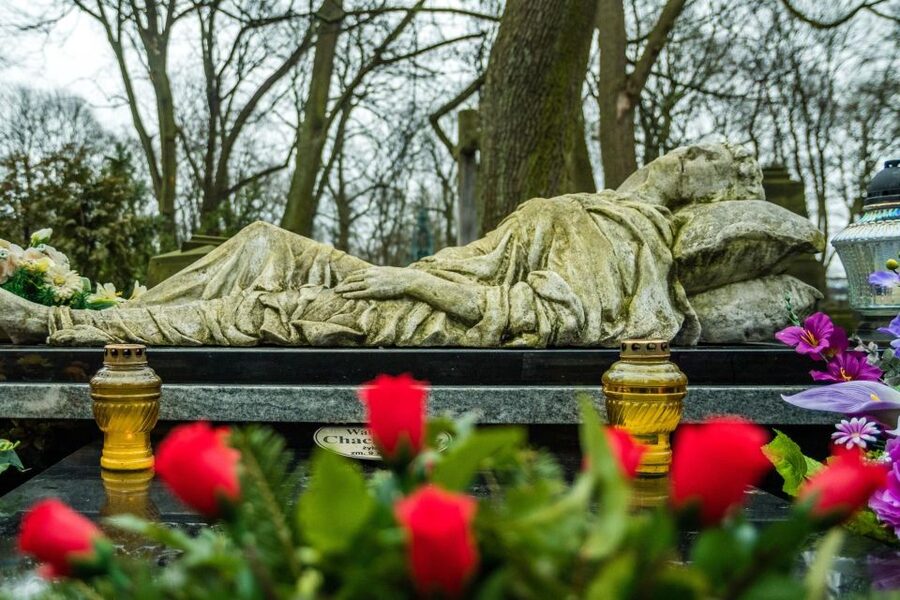
The two-hour route ends with the opportunity to pay your respects at the symbolic Tomb of an Unknown Soldier. This is a fitting final stop for the Old Town portion because it shifts attention from one battle or group to the many Polish soldiers whose names and stories were lost.
The tomb gives the walk a quiet finish after the heavier material about occupation and resistance. It also widens the story beyond Warsaw. The guide has discussed the city’s destruction, but this stop points toward the many Polish military sacrifices linked to the war.
This ending is one reason the two-hour option works well for visitors with limited time. You get a focused Old Town route, several important memorial sites, ghetto history, and a final place for reflection without committing to a longer afternoon.
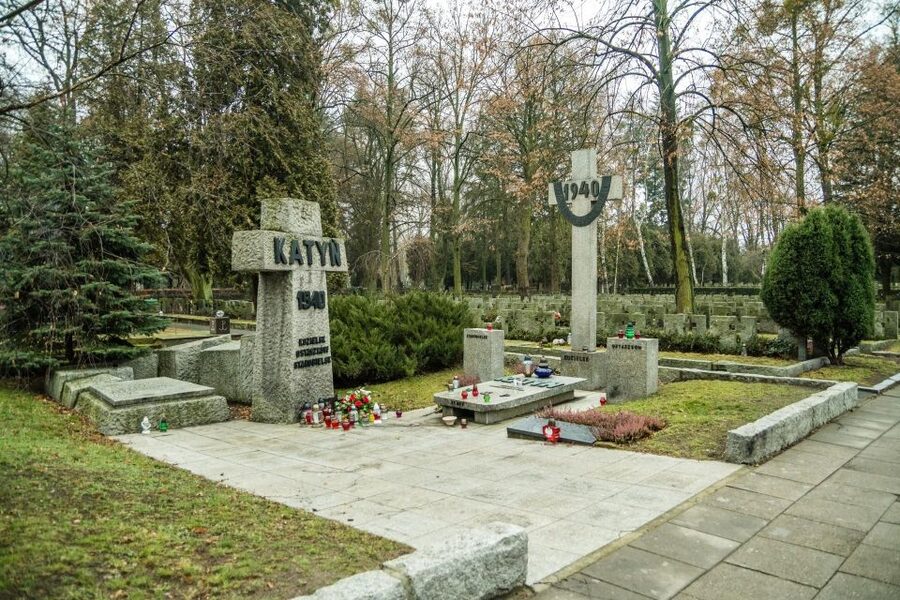
Still, you should understand the limit. The two-hour tour does not include Powązki Military Cemetery or the military museum. If military graves, named Polish heroes, and a broader look at wartime remembrance matter to you, choose four hours.
Adding Powązki Military Cemetery for four hours

The longer tour adds Powązki Military Cemetery, also known as the Powązki Military Cemetery, and provides two-way public transport tickets. You will not walk all the way from the Old Town, which is sensible. The cemetery lies far enough away that an extra walk would take time from the actual history.
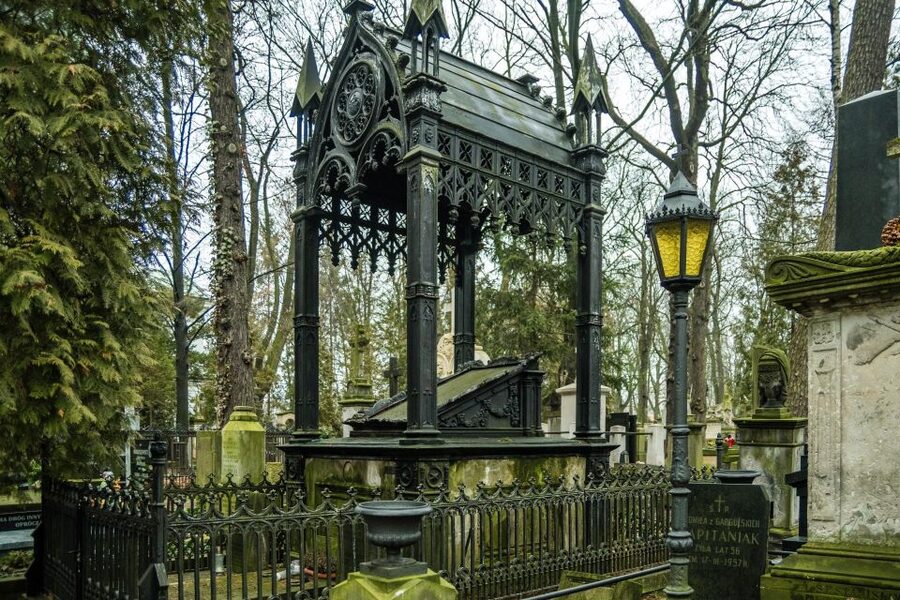
At Powązki, you visit a necropolis honoring members of the Polish military. Many World War II heroes are buried there, so the cemetery shifts the experience from public memorials to individual graves and names.
That change in setting is important. In the Old Town, you see monuments designed to represent major events. At Powązki, you encounter remembrance at a more personal scale. The cemetery gives the guide room to discuss Polish military figures and the human cost of German occupation.
The four-hour option also includes free entry to the Military Museum in Powązki. This adds objects and displays to the spoken history, although the information provided does not specify the museum’s exact collection or size. You should think of it as an added historical stop rather than a substitute for a major national museum visit.
Public transport is part of the longer itinerary, and the tour supplies the necessary tickets. That makes the extra distance easy to manage, but it does add a change of rhythm. You will move from walking among Old Town monuments to a transit ride and then a cemetery visit. For some people, that makes the tour feel more complete. Others may prefer to keep the experience entirely within the Old Town.
Choosing between two hours and four hours
The choice is less about fitness than about how much wartime history you want in one session.
Choose the two-hour tour if you want:
- A compact route in Warsaw Old Town
- The rebuilt Market Square and its wartime context
- The Warsaw Uprising Monument
- Underground resistance and ghetto history
- Former Warsaw Ghetto boundary markers
- The Tomb of an Unknown Soldier
Choose the four-hour tour if you want all of the above plus:
- Public transport to and from Powązki
- Powązki Military Cemetery
- Graves of Polish military figures and World War II heroes
- Free entry to the Military Museum in Powązki
- More time to discuss the cost of occupation and liberation
At $112 per person, the price is not bargain sightseeing, especially for a two-hour walk. The value comes from the private group format, a licensed guide, language choice, and a route built around difficult history rather than simple photo stops.
The four-hour option makes a stronger value case if you care about military history. It includes transport tickets and museum entry, and it gives you twice the time to ask questions. For a couple, family, or small private group sharing the guide, that extra time can be worthwhile.
You should also remember that the number of attractions depends on the option you select. Read the chosen duration carefully so you do not expect Powązki on the shorter route.
Who will get the most from this tour
I would recommend this experience to first-time visitors who want to understand why Warsaw looks both old and new. It suits history students, families with older children, military history fans, and anyone interested in World War II beyond the most famous battlefields.
It is also a good fit if you want a flexible conversation. A private guide can respond to your interests in the resistance, Nazi occupation, the ghetto, Polish military history, or the city’s reconstruction.
The tour may be less suitable if you want a broad overview of all Warsaw attractions. It does not focus on royal history, food, nightlife, or modern city life. It is a specialized route with a serious subject.
The walking portion also requires attention and steady movement through historic streets. The four-hour version adds public transport and a cemetery, so allow enough time in your day rather than squeezing it between two tightly timed activities.
Practical details that make the day easier

Check your email the day before, since important meeting information may be sent then. If you request hotel pickup, provide your full address and make sure the accommodation is in Warsaw Old Town.
If you do not provide an address, or your hotel is more than 1.5 kilometers from the Mermaid meeting point, plan to meet at Rynek Starego Miasta 18i. That point is specific enough to enter into your map before you leave your hotel.
The tour is private, and the guide can speak English, German, French, Italian, Spanish, Russian, or Polish. When booking, select the language you can follow most easily. This matters more than usual because the experience depends heavily on spoken explanation.
You can cancel up to 24 hours before the start for a full refund, and reserve now while paying later. Those terms help if your Warsaw plans are still shifting, but the main decision remains the duration. The cemetery is not part of the two-hour option, and the shorter tour does not include its transport or museum admission.
Should you book the Warsaw wartime walking tour?
Book it if you want Warsaw’s Old Town to mean more than attractive reconstructed streets. The tour connects Market Square, resistance memorials, ghetto boundary markers, and the Tomb of an Unknown Soldier into one clear story.
For the best value, I would choose four hours if your schedule allows. Powązki Military Cemetery and the Military Museum add named people, graves, and a different kind of remembrance. Choose two hours if you need a focused Old Town introduction or prefer not to spend half a day on one subject.
The guide’s strongest qualities are clear historical detail and storytelling filled with useful anecdotes. That makes this a good choice for you if you want the hard facts explained in human terms, at a pace shaped around your own questions.
FAQ
Where does the tour meet?
The meeting point is next to the Warsaw Mermaid, Pomnik Syrenki, at Rynek Starego Miasta 18i, 00-272 Warsaw.
Is hotel pickup available?
Pickup is available from accommodations and hotels located in Warsaw Old Town. You must provide your full address when booking.
What happens if my hotel is outside Warsaw Old Town?
Pickup is not included for accommodations outside Warsaw Old Town. If your accommodation is more than 1.5 kilometers from the meeting point, or you do not provide an address, the guide will meet you beside the Warsaw Mermaid.
Does the two-hour tour visit Powązki Military Cemetery?
No. Powązki Military Cemetery is included only in the four-hour tour.
Is public transport included for the cemetery visit?
The four-hour tour includes two-way public transport tickets to Powązki Military Cemetery. The two-hour tour does not include these tickets.
Which languages are available?
The live guide is available in German, English, French, Italian, Spanish, Russian, and Polish.
Can I cancel the tour for a refund?
Yes. You can cancel up to 24 hours in advance for a full refund. You can also reserve now and pay later.
Just added in Warsaw
- Wroclaw Small-Group Tour with Lunch from Warsaw★ 5.0 · 2 reviews
- Warsaw: Wolf’s Lair & Swieta Lipka Small-Group Tour + Lunch★ 5.0 · 3 reviews
- Wilanów Palace: 2-Hour Guided Tour with Entrance Tickets★ 4.8 · 8 reviews
- Warsaw Zoo Skip-the-Line Entry Ticket with Private Transport★ 4.8 · 3 reviews
- Warsaw: Private Vodka Tasting Night with Snacks and Pickup★ 5.0 · 7 reviews
- Warsaw Private Wilanow Palace & Garden Tour★ 4.6 · 30 reviews
- Warsaw Wolf’s Lair with St. Lipka and Mamerki Private Guided★ 4.2 · 3 reviews
- Warsaw Old Town UNESCO HERITAGE walking tour in English★ 4.5 · 23 reviews
Old Town Walking Tours, compared.



Sightseeing EcoCruise around the Old Town of Gdansk
Read our review →
Old Town & Wawel Castle Walking Tour in English
Read our review →Browse the lists this tour appears in