
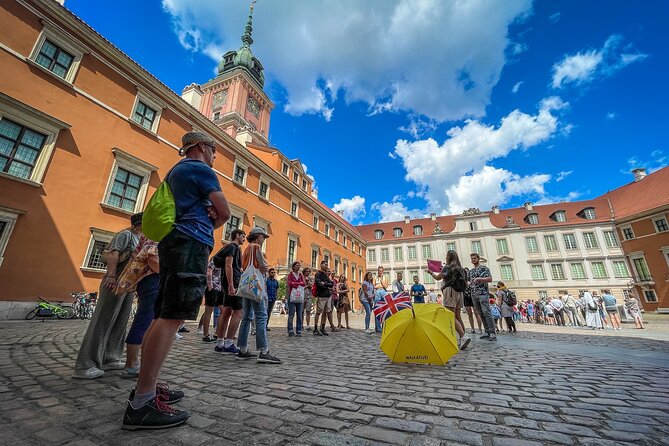
REVIEW · OLD TOWN WALKING TOURS
Old Town Warsaw Walking Tour
Warsaw’s rebuilt heart tells an extraordinary story. I like the way this tour connects Krakowskie Przedmiescie with the Old Town, then finishes in New Town, giving you royal landmarks, wartime history, and local figures in one steady route. I also like the guides’ lively delivery. Aga, Andrzej, Ania, Jack, and Olivia have all been praised for mixing clear facts with humor and personal insight.
The main caution is group size, which can reach 40 people. A few guests found a strong accent or weak microphone hard to follow, so staying close to the guide matters. The walk is not punishing, but you should dress for the weather because it runs outdoors in rain, cold, or heat.
In This Review
- Key points at a glance
- What this Warsaw walk is really designed to do
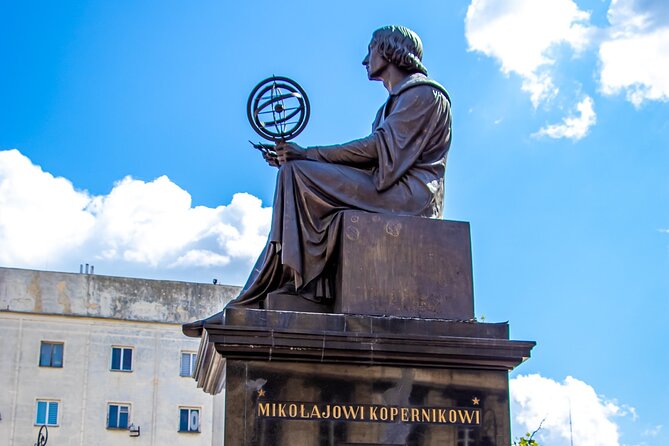
- Beginning at the Copernicus Monument on Krakowskie Przedmiescie
- Entering the reconstructed Old Town
- The final stretch through New Town
- How much walking and listening should you expect?
- The guide makes or breaks the experience
- Is $26.60 good value?
- Who should book this walk?
- Practical details before you go
- Should you book the Old Town Warsaw Walking Tour?
- FAQ
- How long is the Old Town Warsaw Walking Tour?
- Where does the walking tour begin?
- Where does the tour end?
- Is the tour offered in English?
- Is hotel pickup included?
- What does the $26.60 price cover?
- Can I cancel for a full refund?
Key points at a glance
- A 2.5-hour route from the Copernicus Monument to the Barbican: You see the main royal boulevard, Old Town, and New Town without needing city transport between stops.
- Warsaw’s near-total wartime destruction is central to the story: The rebuilt Old Town is a UNESCO World Heritage Site, with reconstruction so careful that it can look centuries old.
- The tour covers more than pretty squares: Expect stories about Chopin, Maria Skłodowska-Curie, Polish politics, music, art, World War II, and modern Warsaw.
- Humor is part of the guiding style: Several guides have been praised for making difficult subjects easier to follow without treating them lightly.
- The $26.60 fee covers the reservation and guide payment: This is not a transport tour or hotel pickup service, and all sightseeing stops are free to enter.
- Come prepared for an outdoor group walk: Wear comfortable shoes, bring weather protection, and stay near the guide if the group is large.
What this Warsaw walk is really designed to do
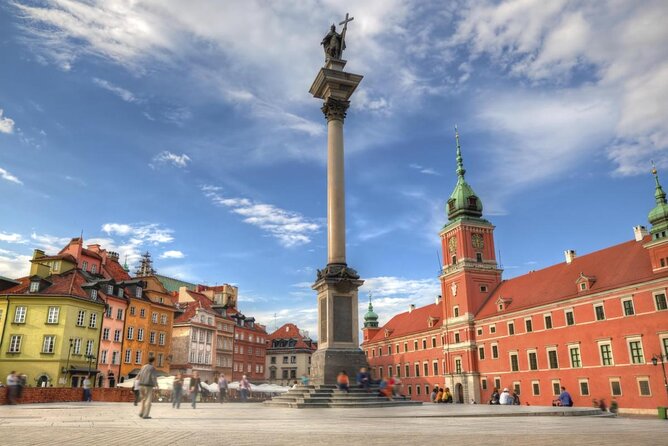
This is a city orientation tour, not a museum visit or a deep tour of every building. In two and a half hours, you move through Warsaw’s central historic zone while the guide explains how the city went from royal capital to wartime ruin, then rebuilt itself into the Polish capital you see today.
That focus gives the walk real value. Warsaw can look polished and old-fashioned around Castle Square and the Old Town, but much of what you see was rebuilt after World War II. Without that context, the colorful houses and red roofs can seem like a charming European backdrop. With it, the streets become part of a remarkable story about memory, identity, and national recovery.
I would take this tour near the start of a Warsaw visit. It gives you a useful map in your head and points out places you can revisit later. The guide also provides the kind of broad background that helps the rest of your sightseeing make sense.
The experience is offered in English and uses a mobile ticket. It begins at the Nicolaus Copernicus Monument on Krakowskie Przedmiescie and ends at the Warsaw Barbican on Nowomiejska Street. Since the route is conducted on foot, you do not spend time loading onto a bus or waiting for transfers.
More Walking Tours in Warsaw
- Warsaw: Old Town Highlights Walking Tour in English
★ 4.7 · 1,516 reviews - Warsaw: Old Town Guided Walking Tour
★ 4.9 · 599 reviews - Half-Day Polish Food Walking Tour with Guide and Dinner
★ 4.5 · 381 reviews
Beginning at the Copernicus Monument on Krakowskie Przedmiescie
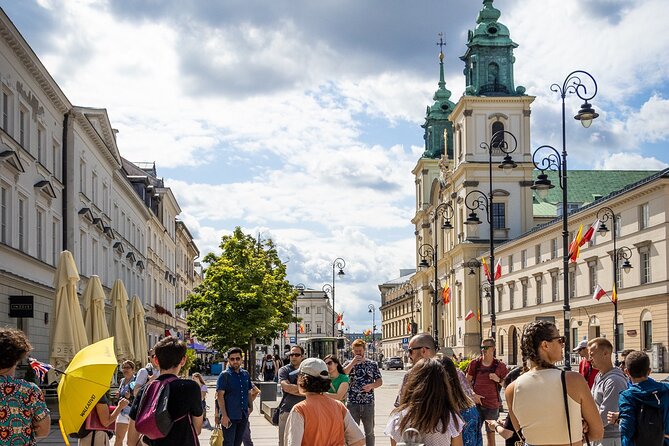
The meeting point at the Copernicus Monument puts you on one of Warsaw’s grandest streets from the first minute. Krakowskie Przedmiescie leads toward the Old Town and recalls the city’s royal past through palaces, churches, monuments, and formal buildings.
The scheduled time here is about an hour, though the exact pace depends on the group and the guide. This is less about entering attractions and more about stopping outside important buildings while the guide explains their place in Warsaw’s story. Admission is free because the tour does not include paid interior visits.
You can expect attention to the Presidential Palace, the Bristol Hotel, and St. Cross Church. Each gives the guide a different way to explain the city. The Presidential Palace connects the street to modern political life. The Bristol Hotel adds a touch of Warsaw’s elegant prewar world. St. Cross Church is especially meaningful for music lovers because Chopin’s heart is interred there.
That detail is a good example of the route’s strength. You are not simply walking past a church façade. You are given a personal link to one of Poland’s best-known figures. Guides have also used music, art, and personal stories to make Warsaw’s past easier to grasp.
I like this opening because it starts with a broad view rather than rushing straight into the prettiest square. You first get the royal avenue, then the city’s cultural and political references, and only afterward reach the reconstructed Old Town. It makes the route feel like a progression through different versions of Warsaw.
The boulevard is also a practical place to begin. It is near public transportation, and the central setting makes it a sensible meeting point if you are already sightseeing in the city center. Hotel pickup is not provided, so you need to make your own way here.
Entering the reconstructed Old Town
The next hour focuses on Warsaw’s Old Town, or Stare Miasto. This is the visual center of the experience, with red roofs, painted houses, medieval-style lanes, and the Royal Castle. Yet the most important fact is not how old the buildings look. It is how recently much of this district was rebuilt.
Warsaw’s Old Town was almost completely destroyed during World War II. After the war, it was reconstructed with such care that the finished district can be difficult to distinguish from an original medieval quarter. That rebuilding helped earn the Old Town UNESCO World Heritage recognition, making it one of the more unusual sites on the list.
Your guide should help you read the streets with that fact in mind. The point is not to pretend everything survived untouched. The point is to understand why reconstructing the old center mattered so much to Polish people, and how the rebuilt district became part of the city’s modern identity.
This is also where the guides’ storytelling style matters most. The material can become heavy, especially when the discussion moves from prewar Warsaw to destruction and recovery. The best guides on this route have been praised for using humor carefully, keeping the mood human while still respecting the subject.
Aga has been singled out for explaining what is original and what was rebuilt. Other guides, including Andrzej and Jacek, have been praised for clear historical explanations and a funny, energetic presentation. Guide assignments can change, so you should not book on the assumption that one particular person will lead your group. Still, the repeated pattern is clear: the strongest part of this experience is the guide’s ability to make a difficult past understandable.
You may hear much of the discussion focused on 1939 to the present. That is useful because Warsaw’s current appearance cannot be separated from World War II and the decades that followed. One reasonable criticism is that some people would prefer still more time on the war and its effect on Poland. This walk gives you an introduction, not a dedicated WWII tour.
The Old Town portion also includes the Royal Castle area. Even when you do not enter, the exterior setting helps explain the city’s connection to Poland’s monarchy and political history. The tour is therefore doing several jobs at once: showing you the main sights, explaining the reconstruction, and giving you a framework for later visits inside museums or historic buildings.
The final stretch through New Town
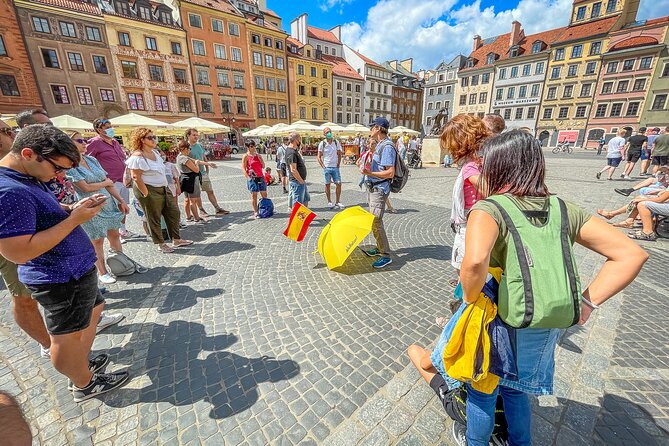
The route continues into New Town, or Nowe Miasto, for about 30 minutes. The name can fool you. This district was also established in the Middle Ages, so New is new only in relation to the older settlement beside it.
This shorter section gives the walk a useful ending. Instead of stopping after the main Old Town square, you continue into another historic district and reach the Barbican, the old defensive structure between Old Town and New Town. The tour ends at Warsaw Barbican, at Nowomiejska 15/17.
New Town adds a personal and scientific connection through Maria Skłodowska-Curie, who was born here. Her story broadens the tour beyond kings, churches, and war. It shows Warsaw as a place linked to major achievements in science as well as national struggle.
The Barbican works well as a final point because it gives you a clear sense of the old city’s former defenses. It is also a practical place to continue exploring on your own. You finish in the historic center rather than being returned to a hotel or transported to a distant drop-off point.
One piece of advice is worth stressing: make sure your expectations include New Town. The published route does include it, but one unhappy guest felt that this area received too little attention. The 30-minute allotment is short, so the final section is more of a conclusion than a full tour of the district.
More Old Town walks in Warsaw:
- Warsaw: Chopin Concert in the Old Town
★ 4.8 · 2,287 reviews - Warsaw: Chopin Concert at Historical Venue in Old Town
★ 4.7 · 445 reviews - Warsaw Old Town 1.5-Hour or Full 3-Hour Segway Tour
★ 4.9 · 209 reviews - Everyday concerts of Chopin’s music at the Old Town in Warsaw
★ 5.0 · 192 reviews
How much walking and listening should you expect?
The experience lasts about two hours and 30 minutes. It is an outdoor walking tour with a moderate physical requirement, though the amount of walking is not extreme. Several comments describe the pace as manageable, and one guide was praised for keeping the walk informative without making it exhausting.
The bigger challenge may be listening rather than distance. Guides deliver a lot of information in a fairly short period, and the route can include serious historical subjects, names, dates, and political background. I recommend standing close to the guide and avoiding the back of the group if you want every detail.
The maximum group size is 40. That is not a small private walk, and a large group can make it harder to hear or gather around a monument. One person found the guide’s accent and microphone difficult to follow. This appears to be an occasional issue rather than the main pattern, but it is a fair reason to position yourself near the front.
The tour operates in all weather. In winter, bring thermal layers, a warm hat, and gloves. In wet weather, a rain jacket is more useful than an umbrella in a moving group. Comfortable shoes are sensible year-round, since you will be outside for the full route.
Children must be accompanied by an adult. The tour is not presented as a child-specific activity, but the mix of stories, buildings, and city views can work well for older children who can manage a long guided walk.
The guide makes or breaks the experience
The strongest praise is aimed at the guides, not at the route alone. Aga has been described as warm, funny, and especially good at explaining the rebuilding of the Old Town. Andrzej and Andrew have been praised for making centuries of Polish history easy to follow. Ania and Olivia have been noted for their charm, humor, and clear communication. Jacek, sometimes listed as Jack, has been praised for combining facts with jokes.
That range matters because the tour covers a lot. A dry recital of dates would make the route tiring. A lively guide can connect Chopin, royal Warsaw, wartime destruction, Polish politics, art, music, and the city’s current identity in a way that feels like one story.
I also like that several guides have stayed after the formal walk to answer questions. That extra conversation can be particularly useful if you want advice on what to see next or need a point clarified.
There is one balance to watch. This is described as a general pay as you wish tour, but the $26.60 amount paid at booking covers the reservation fee and the guide’s payment. You can still choose to reward the guide, but the price is not simply a token reservation charge that leaves the guide unpaid.
Most people will find the humor a benefit, especially when the subject turns grim. A small number may find frequent reminders about tipping distracting, or feel that a guide’s personal style is too forceful. If you prefer a quiet, academic lecture, this may not be your ideal format. If you want history delivered with energy and a few well-placed jokes, it is a better match.
Is $26.60 good value?
At $26.60 per person, the tour is reasonably priced for a guided walk lasting roughly two and a half hours. You are paying for a local guide, a professional presentation, and a carefully connected route through three historic areas. You are not paying for entrance tickets, private transport, or hotel collection.
That distinction helps you judge the value correctly. If you want a private experience, this is not the standard product. The group may contain as many as 40 people. The provider says a smaller private tour can be arranged separately, so you can ask about that if personal attention matters more than price.
For most first-time visitors, the fee makes sense because Warsaw’s story is not obvious from the streets alone. The rebuilt Old Town looks convincing, but the reconstruction is the point. A guide gives you the background you would otherwise need to assemble from several sources.
The tour is also a good use of a first afternoon or morning because it covers major sights without locking you into museum opening hours. Since all three stops list free admission, you can keep your extra spending for places you choose to enter later.
Who should book this walk?
I would recommend it to a first-time visitor who wants a clear introduction to central Warsaw. It suits you especially well if you enjoy history, architecture, personal stories, and guides who use humor rather than speaking in a stiff formal style.
It is also a good choice if you want to understand why the Old Town looks old even though so much of it was rebuilt. That single theme gives the tour more substance than a standard photo stop through pretty streets.
You may want a different experience if you need a private guide, dislike large groups, or want an intensive account of World War II. The route touches the war and its consequences, but it also covers royal history, culture, science, and modern Poland. It is a broad introduction rather than a single-subject tour.
I would also think twice if you have limited hearing and cannot stay near the guide. Most of the feedback about communication is positive, but one person had trouble with an accent and microphone. Staying close is the simplest fix.
Practical details before you go
Your confirmation arrives when you book, and the mobile ticket is convenient for a city walk. The tour begins at the Nicolaus Copernicus Monument on Krakowskie Przedmiescie and ends at the Warsaw Barbican, so plan your day around a one-way route rather than a return to your hotel.
The experience is near public transportation, but transportation to and from the attractions is not included. You will need to reach the starting point yourself and make your own onward plans after the Barbican.
Free cancellation is available until 24 hours before the start time for a full refund. Cancellations or changes made within 24 hours are not refunded or accepted. The tour also requires a minimum number of participants, so if the operator cancels for that reason, you are offered another date or experience, or a full refund.
Should you book the Old Town Warsaw Walking Tour?
Book it if you want a lively first look at Warsaw and value the story behind the rebuilt streets. The route is well chosen, the price is fair, and the best guides make a difficult subject clear, funny, and human.
Skip it if you want a private walk, a small group, or a detailed World War II study. For everyone else, this is a strong introduction to Krakowskie Przedmiescie, Old Town, and New Town, with enough practical orientation to help you explore the rest of Warsaw on your own.
FAQ
How long is the Old Town Warsaw Walking Tour?
The tour lasts approximately two hours and 30 minutes.
Where does the walking tour begin?
It begins at the Nicolaus Copernicus Monument on Krakowskie Przedmiescie in Warsaw.
Where does the tour end?
The walk ends at Warsaw Barbican, at Nowomiejska 15/17.
Is the tour offered in English?
Yes. The tour is offered in English.
Is hotel pickup included?
No. Hotel pickup and drop-off are not included. You must make your own way to the designated meeting point.
What does the $26.60 price cover?
The amount covers the reservation fee and the guide’s payment for the general pay as you wish tour. You may also choose to reward the guide.
Can I cancel for a full refund?
Yes. You can cancel at least 24 hours before the experience start time for a full refund. Cancellations within 24 hours are not refunded.
Just added in Warsaw
- CO2-Offset Arrival Transfer from Warsaw Airport to Warsaw City★ 5.0 · 1 review
- Historical Walking Tour of Jewish Warsaw★ 5.0 · 68 reviews
- Deluxe Polish Food Tour Experience in Warsaw★ 5.0 · 19 reviews
- Amazing photo walk through the Old town of Warsaw★ 5.0 · 32 reviews
- 8-day tour around Poland by private car★ 5.0 · 2 reviews
- 2 Hour Super Segway City Tour of Warsaw★ 5.0 · 5 reviews
- Electric Scooter Tour: Full Tour – 3-Hours of Magic!★ 5.0 · 3 reviews
- 2h Rental of Motorboat for 10 in Warsaw no License Needed★ 5.0 · 1 review
Old Town Walking Tours, compared.


Sightseeing EcoCruise around the Old Town of Gdansk
Read our review →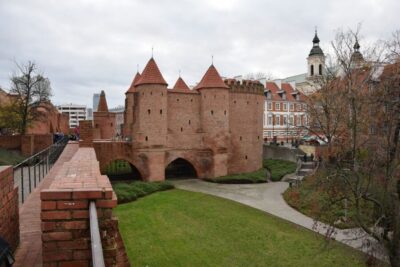
Old Town & Wawel Castle Walking Tour in English
Read our review →Browse the lists this tour appears in