
REVIEW · JEWISH QUARTER TOURS
Warsaw: Ghetto, Jewish Cemetery & POLIN Museum Private Tour
Warsaw remembers in fragments. This private tour brings those fragments together through ghetto boundary markers, resistance memorials, the Jewish Cemetery, and POLIN Museum. I especially like the private guide format, which leaves room for questions, and the use of old photographs to show buildings and streets destroyed during the war. The main drawback is that the two-hour option is quite compressed and does not include the cemetery or museum.
The subject is painful, but the tour handles it as serious history rather than a quick sightseeing stop. I also like the choice of languages and the option to extend the walk to three or five hours. If you want a fuller picture of Jewish life in Poland before, during, and after the war, the five-hour version is the stronger choice.
In This Review
- Key points at a glance
- Why this Warsaw history tour matters
- Starting at Długa Street
- The two-hour walk through the former ghetto
- The Monument to the Ghetto Heroes
- Mila 18 and the story of resistance
- Umschlagplatz and the road to Treblinka
- Extending the tour to Muranów Jewish Cemetery
- Spending five hours at POLIN Museum
- What the private guide adds
- Is $112 per person good value?
- Who should book this experience?
- My recommendation
- FAQ
- How long is the Warsaw Ghetto tour?
- What does the two-hour tour include?
- Is the Jewish Cemetery included in every option?
- Does the five-hour tour include POLIN Museum tickets?
- Can I skip security lines at POLIN Museum?
- Where does the tour meet?
- Is hotel pickup available?
Key points at a glance
- The two-hour route follows the former ghetto: See boundary markers, the Monument to the Ghetto Heroes, Mila 18, and the Umschlagplatz Monument.
- Mila 18 adds a personal connection: The Anielewicz Mound marks a hidden resistance shelter linked to the 1943 uprising.
- The three-hour option adds Muranów Jewish Cemetery: Public transport is provided for the trip to this large and moving burial ground.
- The five-hour option includes POLIN Museum: Skip the museum ticket-office line and see the main exhibition, a temporary exhibition, and the Heritage Gallery.
- Guiding is the heart of the experience: The tour is private, offered in seven languages, and shaped around questions and conversation.
- The meeting point is easy to identify: Find the anchor monument outside the Field Cathedral of the Polish Army on Długa Street.
Why this Warsaw history tour matters
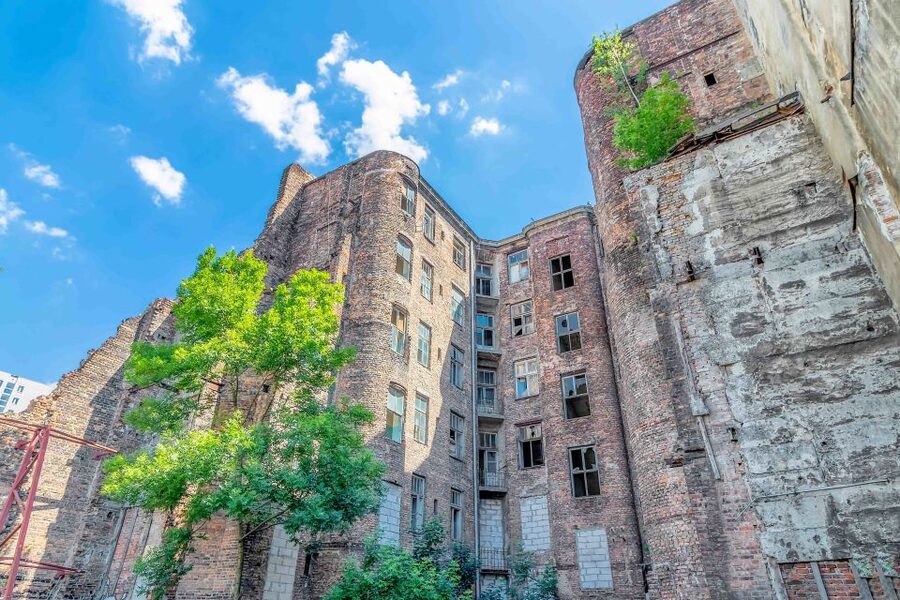
The former Warsaw Ghetto is not preserved as one enclosed historic quarter. Much of wartime Warsaw was destroyed, rebuilt, or altered. That can make the first visit confusing. You walk through ordinary modern streets, then suddenly encounter a wall marker, memorial, or small plaque that points to an enormous vanished world.
That is where a guide earns the fee. A good explanation connects the surviving pieces. You learn where the ghetto boundary ran, how more than 400,000 Jewish people were imprisoned there, and what hunger, disease, forced labor, deportations, and death meant in daily life. You also hear about underground education, cultural life, resistance, and the 1943 Warsaw Ghetto Uprising.
This is not a light sightseeing outing. You should expect difficult subjects and solemn memorials. The private format helps because you can ask for clarification, slow down at a memorial, or connect the discussion to your own interests without being tied to a large group.
The tour is operated by Rosotravel Poland and offers English, Spanish, French, German, Italian, Polish, and Russian. A strong language match matters here. Historical terms and personal stories lose force when explanations feel rushed or unclear.
More Museums in Warsaw
- Warsaw: POLIN Museum of the History of Polish Jews Ticket
★ 4.7 · 1,142 reviews - Warsaw: Polish Vodka Museum Tour with Tasting
★ 4.6 · 788 reviews - Warsaw: Museum World of Illusion Entry Ticket
★ 3.9 · 666 reviews
Starting at Długa Street
The meeting point is beside the anchor monument in front of the main entrance to the Field Cathedral of the Polish Army at Długa 13/15. This is in central Warsaw, near the Old Town, and the monument gives you a clear visual marker.
Pickup is available only from accommodation within 1.5 kilometers of the meeting point. If your hotel is farther away, you need to arrive at Długa Street yourself. Check the message sent the day before, since the operator provides important meeting instructions there.
The location also gives the tour a useful opening point. You begin near Warsaw’s historic center before moving toward the former ghetto and Muranów. Your guide can set the wartime story in place before you reach the first memorial.
The two-hour walk through the former ghetto
The basic two-hour route is the best choice if you have limited time or want a focused introduction. It is a walking tour, so wear comfortable shoes and prepare for a serious amount of standing and walking through city streets.
The route explains what happened to Warsaw during German occupation and how Jewish people from Warsaw and nearby areas were forced into the ghetto. The scale is difficult to grasp from numbers alone. Boundary markers help you understand that the ghetto was not an abstract place on a map. It occupied real streets, crossed daily routes, and cut families off from the rest of the city.
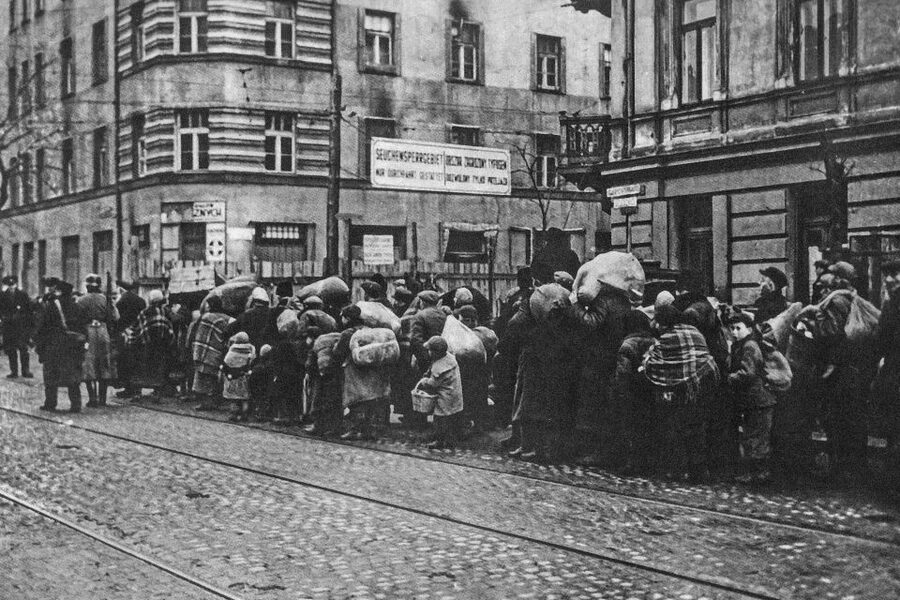
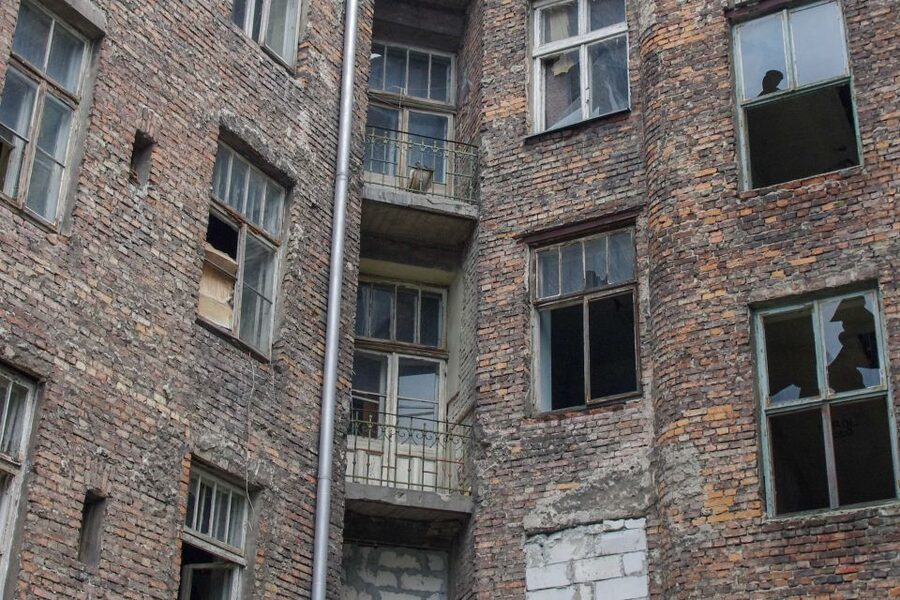
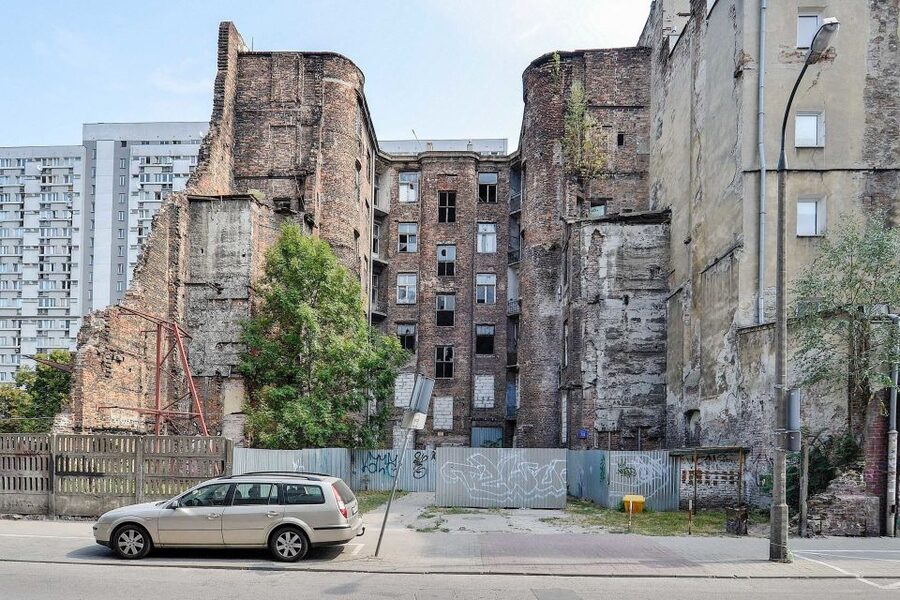
You will see surviving ghetto boundary markers and hear stories about people who lived under extreme conditions. The physical remains are limited, which is one reason the guide’s photographs and street-level explanations matter so much. Old images can show you buildings that no longer exist and help you compare wartime Warsaw with the city around you.
One particularly useful feature is the chance to ask about what has disappeared. A German visitor praised the way guide Iwona used photographs and the shape of existing streets to explain places erased by the war. Her clear German and ability to respond to questions made the route feel like a conversation instead of a memorized speech.
The walk also addresses the Warsaw Ghetto Uprising of 1943. The uprising was a Jewish armed resistance against the German decision to liquidate the remaining ghetto population. The tour places that revolt within the wider story of persecution, deportation, and the Holocaust, while also giving attention to courage and organized resistance.
The Monument to the Ghetto Heroes
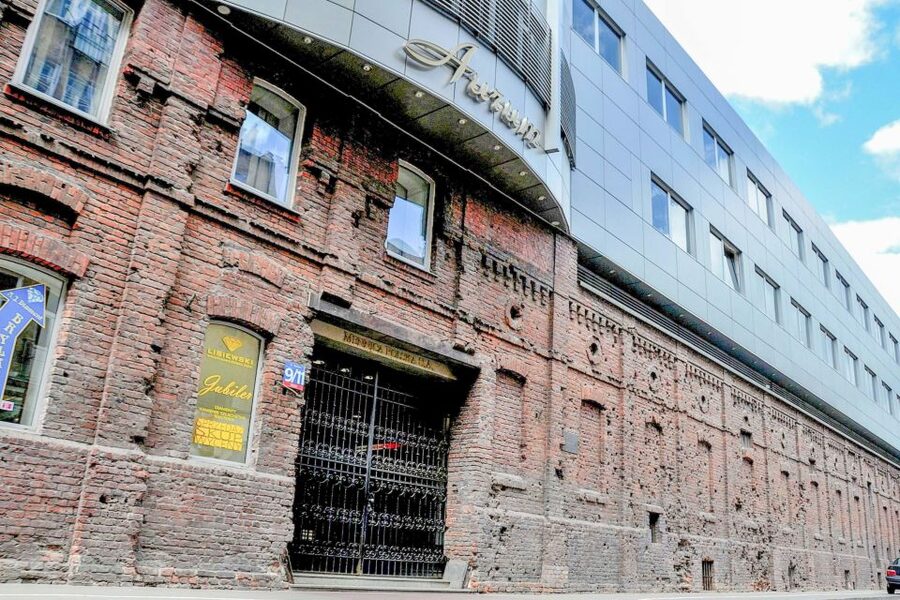
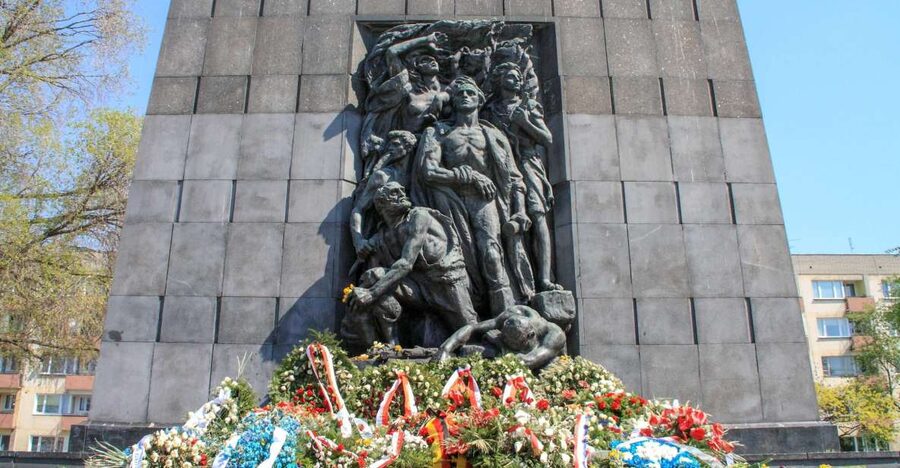
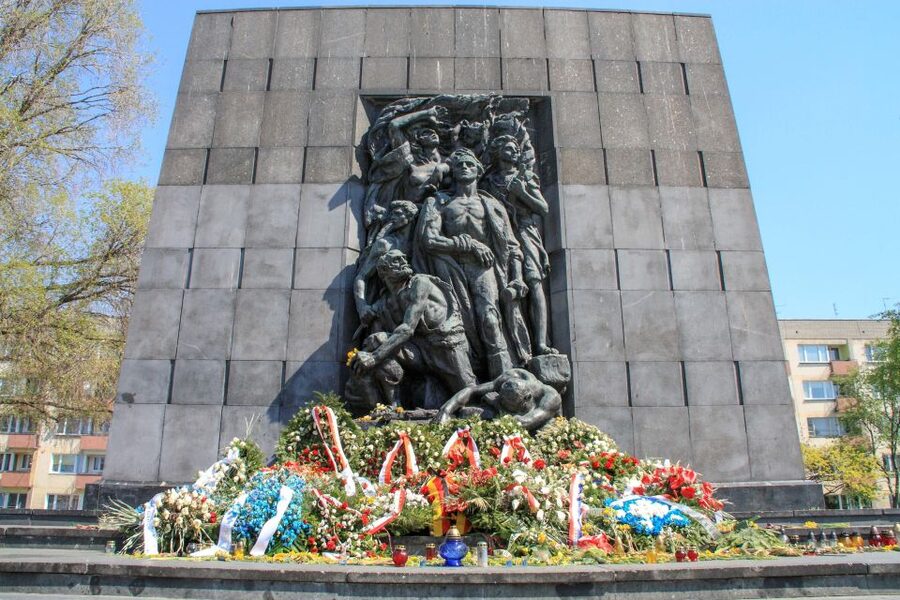
The Monument to the Ghetto Heroes is one of the central stops. Its strong, spare design gives the uprising a physical focus, and your guide explains the people and events behind it.
This is a place to pause rather than rush through for a photograph. You will learn how the memorial relates to the final armed resistance in the ghetto and why the surrounding area became a major site of remembrance. The guide can also point out other nearby memorials that are easy to pass without understanding.
The tour may also discuss the Monument to the Warsaw Uprising, mentioned as an early point of reference near the route. That memorial concerns the broader 1944 Warsaw Uprising, not the Jewish uprising of 1943. Keeping those two events separate is important, and a private guide can explain how they fit into Warsaw’s wartime story without blending them together.
More Jewish heritage tours in Warsaw:
- Warsaw: Warsaw Ghetto Private Walking Tour with Hotel Pickup
★ 4.9 · 369 reviews - Private Tour: Warsaw’s Jewish Heritage by Retro Fiat
★ 5.0 · 208 reviews - Tour of the Warsaw Ghetto
★ 5.0 · 119 reviews - Warsaw: Jewish Heritage & Holocaust Walking Tour
★ 4.7 · 119 reviews
Mila 18 and the story of resistance
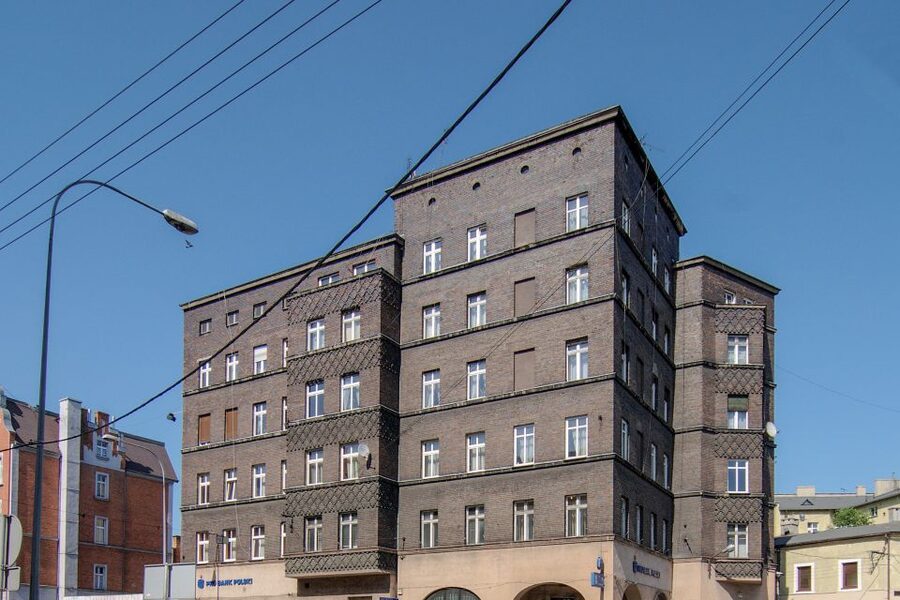
At Mila 18, the Anielewicz Mound marks the location of a hidden shelter used by Jewish resistance fighters. The site is associated with Mordechai Anielewicz, a leading figure in the uprising.
There is no grand surviving building to tour here. The power comes from knowing what happened below and around this ground. The mound gives the guide a place to explain the underground network, the final days of the uprising, and the people who chose resistance despite overwhelming odds.
I find this kind of stop more meaningful when the guide supplies names and human details. Otherwise, it can look like a simple patch of ground. This is another reason to favor the private format if you want to ask follow-up questions about resistance groups, hiding places, or the difference between symbolic memorials and preserved structures.
Umschlagplatz and the road to Treblinka
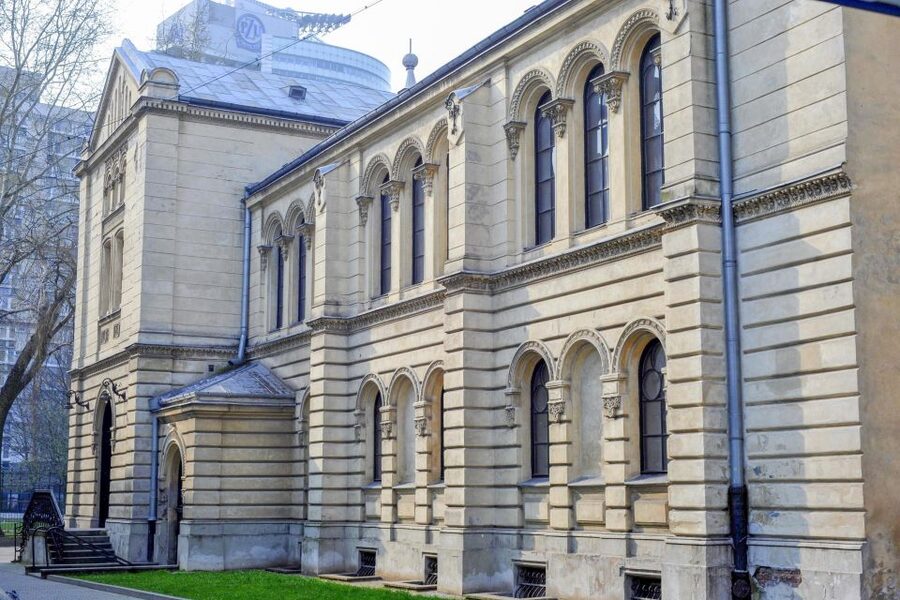
The two-hour walk ends at the Umschlagplatz Monument. This memorial marks the departure point where Jewish people were assembled and loaded onto trains for deportation to Treblinka.
The number connected with this place is vast: more than 300,000 Jewish people were killed at Treblinka after deportation from Warsaw and other locations. The monument gives that crime a specific address. You are not only hearing about a camp far from the city. You are standing at the point where people were taken away.
Ending here gives the short tour a clear emotional and historical arc. It begins with the ghetto’s boundaries and daily conditions, moves through resistance, and finishes at deportation. That sequence is powerful, but it also means the two-hour route leaves little time for the broader history of Jewish life in Poland before the war.
Extending the tour to Muranów Jewish Cemetery
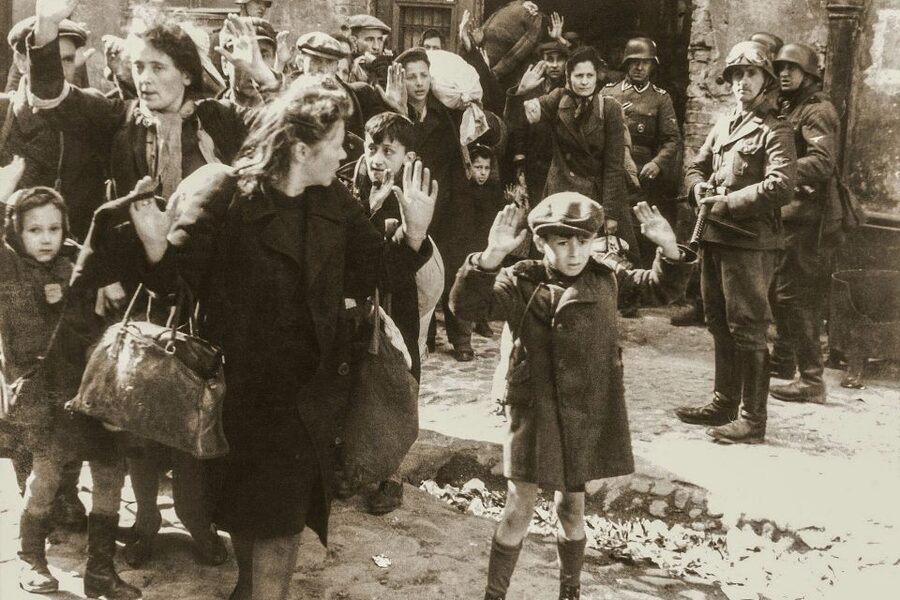
The three-hour option adds the old Jewish Cemetery in Muranów. Established in 1809, it is one of Europe’s largest Jewish cemeteries and the resting place of more than 200,000 people.
A public transport ticket for the one-way trip is included. That detail matters because the cemetery lies outside the central walking route. You do not have to spend the extra hour simply covering a long distance on foot, though you should still expect the tour to involve movement and outdoor time.
Inside, the guide can show you graves connected with spiritual leaders, political activists, writers, cultural figures, and people whose names are no longer known. The cemetery adds a dimension the former ghetto sites cannot provide. It shows Jewish life and memory across generations, not only persecution during the German occupation.
You may find weathered stones, crowded sections, and a quiet atmosphere that calls for slower pacing. The cemetery is not a polished museum display. Its value comes from the layers of names, symbols, family connections, and wartime loss.
For many visitors, this is the best addition to the short route. It gives you a fuller sense of the community that existed before the Holocaust and the scale of what was destroyed. If you can spare three hours, I would choose this option unless POLIN Museum is your main priority.
One practical point deserves attention: cemetery entry and the public transport ticket are not included in the two-hour option. Since the cemetery is only part of the three-hour and five-hour tours, choose the correct duration when booking.
Spending five hours at POLIN Museum
The five-hour version combines the former ghetto, the Jewish Cemetery, and POLIN Museum of the History of Polish Jews. It includes skip-the-line tickets for the museum, covering the main exhibition, the current temporary exhibition, and the Heritage Gallery.
Skip-the-line here means you avoid the ticket-office queue. It does not let you bypass entrance or security checks. That distinction is small but useful, especially on a busy day.
POLIN is a modern museum devoted to the history, culture, and heritage of Polish Jews before, during, and after the war. That wider time frame is its great value. The street walk concentrates on the Nazi occupation, ghetto, uprising, and Holocaust. POLIN helps you understand that Jewish history in Poland did not begin in 1939 and did not end with the war.
The museum can easily take longer than the planned visit. One French visitor expected to spend much of the day there and found the displays unusually clear and educational. Build your expectations accordingly. A five-hour tour gives you an organized introduction, but you may want to return independently if the museum captures your attention.
The five-hour option is the most complete package, but it is also the most demanding. You are combining a serious outdoor walk, a cemetery visit, public transport, and a large museum. If you prefer a relaxed pace, the three-hour route followed by a separate museum visit may suit you better.
What the private guide adds
The guide is the main variable in any history tour, and the feedback here points to strong language skills and clear explanations. One guide, Iwona, was praised for excellent German and for explaining difficult material in an understandable way. French-language guiding also received specific praise for the effort and clarity of the explanations.
A private group changes the rhythm. You can ask why a boundary marker is located on a particular street, request a definition of a historical term, or spend more time at Mila 18. You are not waiting for a large group to take photographs or trying to hear a guide over street noise.
The operator describes the guide as a five-star licensed expert, but the more useful point for you is practical: choose the language in which you can comfortably discuss painful and complex history. English, Spanish, French, German, Italian, Polish, and Russian are available.
The tour is not a theatrical performance. Its strongest moments come from clear context, personal stories, photographs, and the guide’s ability to connect separate memorials. Ask questions. That is where a private tour gives you the most value.
Is $112 per person good value?
At $112 per person, this is not a budget walking tour. The price makes the most sense for a private group that wants a guide in a specific language and prefers a tailored experience over a standard group walk.
Value depends heavily on the option you select. The two-hour version gives you the core ghetto route and several major memorials, but no cemetery admission or museum ticket. The three-hour version adds the cemetery and includes the one-way public transport ticket. The five-hour version adds the museum and its ticket-office line skip.
For a solo visitor, the cost may feel high compared with a self-guided walk. For a couple, family, or small group, the private format can be more reasonable, particularly when you share the cost and want direct access to the guide.
I would not choose the five-hour tour simply because it includes more. Choose it if you want a structured introduction to POLIN and can handle a full schedule. Choose three hours if memorials and the cemetery are your priority. Choose two hours if you want the essential route and have other Warsaw plans.
Free cancellation up to 24 hours before the tour and the option to reserve now and pay later make planning less rigid. Those policies are useful, but the real value comes from selecting the right length.
Who should book this experience?
I recommend the tour to anyone who wants context rather than a list of memorial names. It suits first-time visitors to Warsaw, families with older children who can handle difficult history, and people with a personal or academic interest in Polish Jewish history.
The private setting is particularly useful if your group includes different ages or background knowledge. You can ask the guide to slow down, explain a term, or focus more on daily life, resistance, architecture, or remembrance.
I would think twice if you want a cheerful sightseeing activity or dislike walking between modern city streets and memorial sites. The former ghetto has few intact wartime buildings, so the experience relies on explanation, maps, photographs, and imagination.
The subject also requires attention. You will hear about starvation, disease, deportation, mass death, and the destruction of a community. That seriousness is not a flaw, but it is best to plan this tour for a time when you can give it your full focus.
My recommendation
Book the two-hour route if you need a concise, focused introduction to the former ghetto. It covers the boundary markers, Ghetto Heroes Monument, Mila 18, and Umschlagplatz, giving you the essential wartime story.
Book three hours if you want the most balanced history walk. The cemetery adds Jewish life, memory, and generations beyond the ghetto years, and the public transport ticket keeps the extra route practical.
Book five hours if POLIN Museum is high on your Warsaw list and you want the museum placed within the story of the city and its Jewish community. Just remember that five hours is an introduction, not enough time to see every museum display at leisure.
At $112 per person, this is best for people who value a private guide, a chosen language, and thoughtful explanation. It will not replace independent reading or a long museum visit, but it can give your Warsaw stay a clear, human frame for places that otherwise risk becoming scattered memorial stops.
FAQ
How long is the Warsaw Ghetto tour?
The available options last two, three, or five hours. The longer versions add the Jewish Cemetery and, on the five-hour tour, POLIN Museum.
What does the two-hour tour include?
The two-hour walking tour covers the former Warsaw Ghetto, including boundary markers, the Monument to the Ghetto Heroes, the Anielewicz Mound at Mila 18, and the Umschlagplatz Monument.
Is the Jewish Cemetery included in every option?
No. The Jewish Cemetery is included only in the three-hour and five-hour options. Cemetery entry and a one-way public transport ticket are not included with the two-hour option.
Does the five-hour tour include POLIN Museum tickets?
Yes. The five-hour option includes skip-the-line tickets for POLIN Museum. They cover the main exhibition, the ongoing temporary exhibition, and the Heritage Gallery.
Can I skip security lines at POLIN Museum?
The ticket allows you to skip the line at the ticket office. You still need to pass through the museum entrance and security checks.
Where does the tour meet?
Meet beside the anchor monument outside the main entrance to the Field Cathedral of the Polish Army at Długa 13/15, 00-238 Warsaw.
Is hotel pickup available?
Pickup is available only from accommodation within 1.5 kilometers of the meeting point, generally in or near Warsaw Old Town. Accommodation outside that area requires you to meet the guide at Długa Street.
Just added in Warsaw
- Historical Walking Tour of Jewish Warsaw★ 5.0 · 68 reviews
- Deluxe Polish Food Tour Experience in Warsaw★ 5.0 · 19 reviews
- CO2-Offset Arrival Transfer from Warsaw Airport to Warsaw City★ 5.0 · 1 review
- Amazing photo walk through the Old town of Warsaw★ 5.0 · 32 reviews
- 8-day tour around Poland by private car★ 5.0 · 2 reviews
- Electric Scooter Tour: Full Tour – 3-Hours of Magic!★ 5.0 · 3 reviews
- 2h Rental of Motorboat for 10 in Warsaw no License Needed★ 5.0 · 1 review
- 2 Hour Super Segway City Tour of Warsaw★ 5.0 · 5 reviews