
REVIEW · HISTORICAL TOURS
Warsaw: POLIN Museum of the History of Polish Jews Ticket
History feels personal here. Warsaw’s POLIN Museum traces 1,000 years of Jewish life in Poland through artifacts, paintings, sound, reconstructed spaces, and hands-on displays. I like that the museum presents Jewish communities as active participants in Polish society, not only as victims of the Holocaust. I also like the excellent audio guide, which can detect where you are and provide the right commentary. The main drawback is the sheer amount of material. Two hours gives you a useful visit, but three to five hours is more realistic if you want to read carefully.
This is not simply a Holocaust museum. The Holocaust is one major part of an eight-gallery journey that begins with the first Jewish communities in Poland and continues into the postwar period and the revival of Jewish culture. The subject is painful, but the museum generally lets the evidence speak for itself rather than forcing an emotional response. Bring comfortable shoes, plan a pause, and accept that you may not see every display in one visit.
In This Review
- Key points to know before you go
- Why POLIN matters in Warsaw
- Gallery One: the first Jewish communities in Poland
- Gallery Two: community, religion, and daily life
- Gallery Three: political change and the Polish Jewish experience
- Gallery Four: Jewish life before the Second World War
- Gallery Five: the Holocaust and the destruction of Jewish Poland
- Gallery Six: the postwar period and cultural revival
- The audio guide and interactive design
- How long should you allow?
- Price, access, and practical details
- Who will enjoy POLIN most?
- Should you book the POLIN Museum ticket?
- FAQ
- How long does a visit to POLIN Museum take?
- What does the POLIN Museum ticket include?
- Is the audio guide available in English?
- Can I leave the museum and return later?
- Is POLIN Museum open every day?
- Are children allowed to visit POLIN Museum?
- Is the museum wheelchair accessible?
Key points to know before you go
- One thousand years in eight galleries: The visit covers settlement, community life, politics, religion, work, persecution, the Holocaust, and Jewish life after 1945.
- An audio guide that follows your position: The English and Polish guide can identify where you are and start the appropriate narration.
- Plan three hours if history is your priority: Two hours covers the main route at a brisk pace, while four to six hours allows time for wall text and interactive features.
- The museum tells more than a wartime story: Medieval, industrial, and prewar Jewish life receive substantial attention before the Holocaust galleries.
- You can take a same-day food break: You may leave for lunch and return on the same ticket, and the museum restaurant offers informal cafeteria-style service.
- Small practical limits matter: Oversize luggage is not allowed, Tuesdays are closed, and admission to the core exhibition ends two hours before closing.
Why POLIN matters in Warsaw
Warsaw’s Jewish past is impossible to understand if you look only at the destruction of the Second World War. For centuries, Jewish people built homes, businesses, religious institutions, schools, political movements, and cultural networks across Poland. POLIN gives that long story room to breathe.
That balance is the museum’s greatest strength. The Holocaust is treated with seriousness, but it does not swallow the earlier centuries. You see Jewish life before the catastrophe, which makes the later loss more understandable and more devastating. You also see that Jewish history in Poland was never separate from Polish history. Migration, royal policies, urban growth, industrialization, religious debates, and political change affected both communities.
I recommend visiting POLIN before Auschwitz-Birkenau if your schedule allows. The museum provides the broader setting that a concentration camp cannot provide on its own. If you visit afterward, it can help you place the Holocaust within the much longer story of Polish Jewish life.
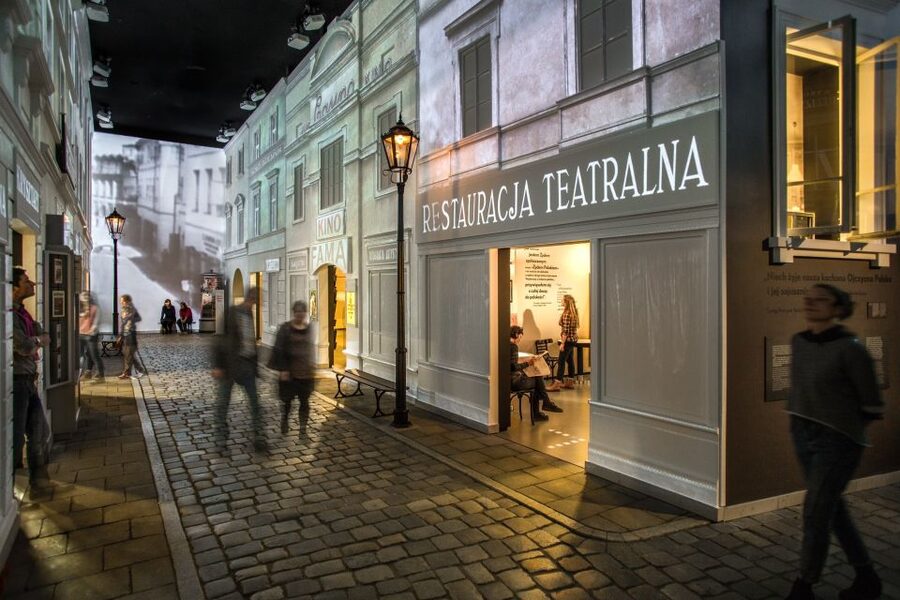
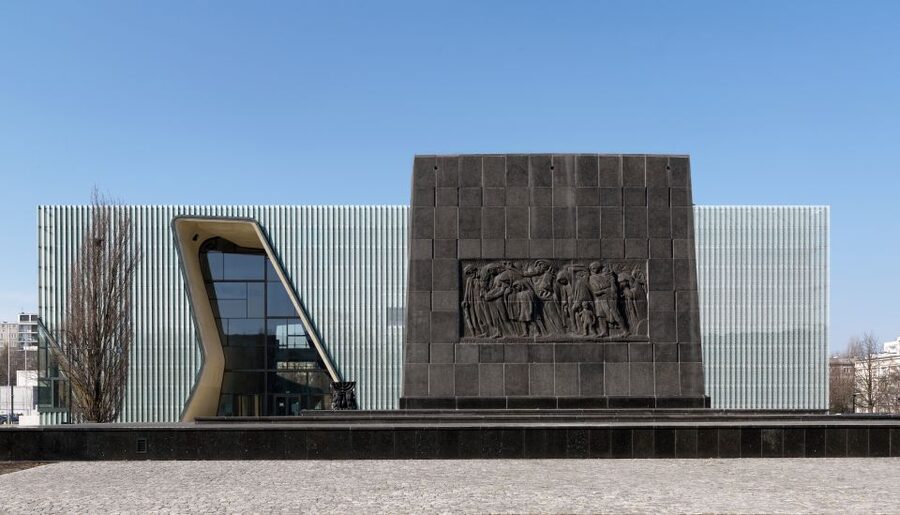
The building itself is modern and spacious, with the permanent exhibition arranged below the main level. Its design uses sound, light, large-scale scenes, documents, objects, and digital material rather than relying on rows of display cases. The result is easier to follow than a traditional history museum, although the amount of reading can still tire you.
More History Tours in Warsaw
- Warsaw: Chopin Concert at Historical Venue in Old Town
★ 4.7 · 445 reviews - Small-Group Historical Guided Tour of Warsaw with pick up/drop off. Public Tour.
★ 4.5 · 343 reviews - Warsaw: Jewish History Guided Walking Tour in English
★ 4.7 · 324 reviews
Gallery One: the first Jewish communities in Poland
The opening section introduces the arrival and settlement of Jewish communities in Poland. You learn how Jewish life took root, how communities organized themselves, and how their relationship with surrounding authorities and residents developed.
This beginning matters because it corrects a common mistake: treating Polish Jewish history as something that began with the Holocaust. The museum starts with people building lives, institutions, and traditions. That gives the rest of the visit a human scale.
You can expect a mixture of visual material, recorded narration, written explanation, and historical objects. Some displays invite you to press buttons or interact with the setting. These activities are not merely decoration. They help you understand how a community worked rather than asking you to memorize dates.
If you read every panel, this section can take longer than expected. I would keep your pace flexible. The early galleries contain important background, but you should avoid spending all your energy here if you especially want time for the 19th and 20th-century sections.
Gallery Two: community, religion, and daily life
The next parts of the route focus on Jewish communities and the structures that supported them. Religious practice, local organization, work, family life, and social relationships appear alongside the wider story of Poland.
This is where the museum feels especially useful for anyone who knows the Holocaust mainly through wartime photographs. You get a fuller sense of ordinary life: people worshipped, traded, studied, raised children, argued about politics, and took part in public life. Jewish identity was not a single fixed experience, and the exhibits show differences between places, periods, and individuals.
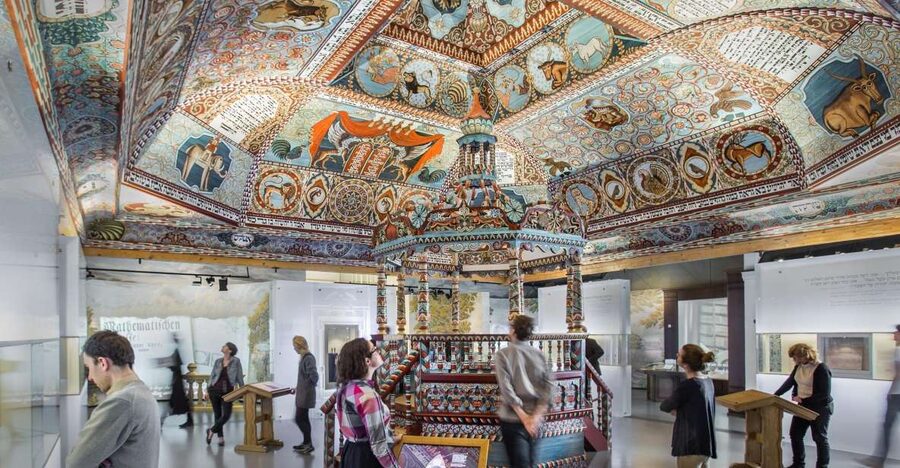
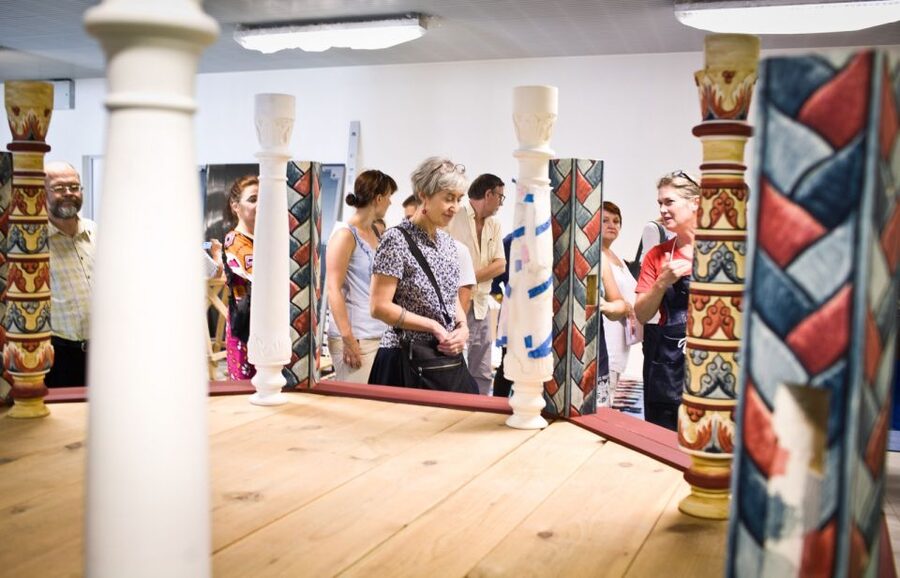
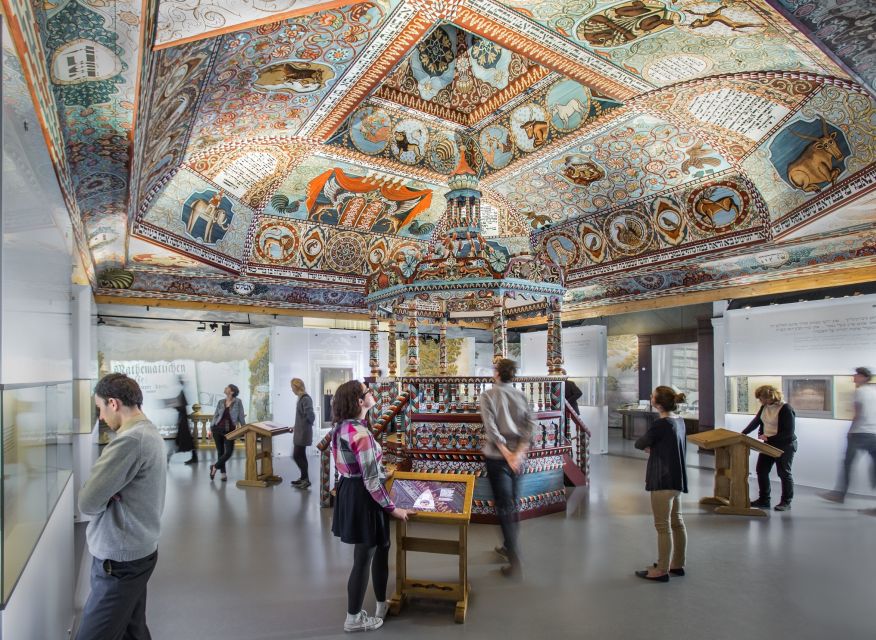
One of the visual highlights is the reconstructed synagogue ceiling. It gives the exhibition a strong sense of place and shows how religious art and community buildings carried meaning. Allow time to look upward and around you instead of moving straight from one text panel to the next.
The museum also introduces individual Jewish figures and their contributions to Polish society. This helps connect large historical changes to real people. I found this approach more useful than a simple list of famous names because it shows Jewish life as varied and changing.
Gallery Three: political change and the Polish Jewish experience
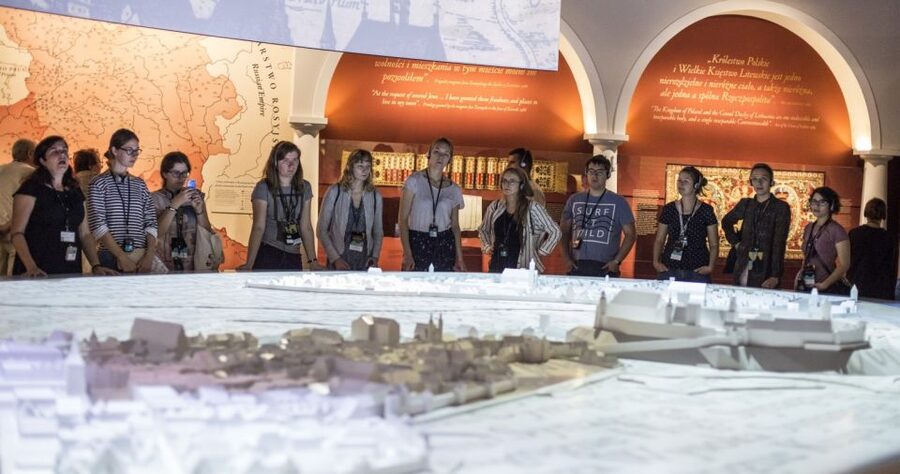
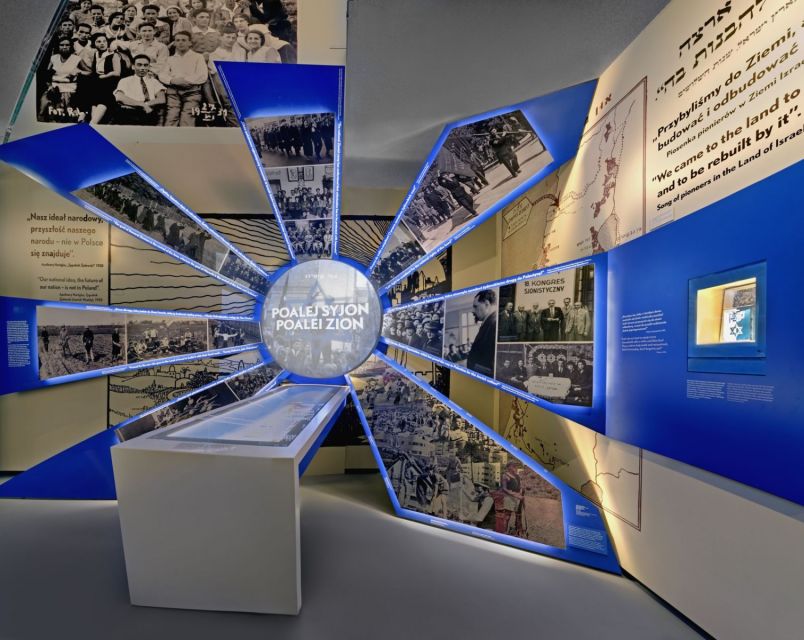
As you move into later centuries, the museum explains how Jewish communities responded to political, economic, and social change. Industrialization, modernization, urban growth, and new political ideas altered the choices available to Jewish people in Poland.
This section asks questions rather than offering one simple version of Jewish identity. Some people sought modernization while maintaining religious tradition. Others joined new political movements or debated the place of Jews within Polish society. These conflicts are valuable because they show that Jewish communities were not politically or socially uniform.
You may find this part more demanding than the earlier galleries. There is a lot of written information, and the audio guide adds another layer. If you listen to every recording while reading every panel, the pace slows sharply.
My practical advice is to use the audio guide selectively. The narration is clear and helpful, and its location feature is particularly convenient. But one visitor found it distracting to hear commentary while trying to read the wall text, and I understand that problem. You may prefer to listen first, then read only the displays that catch your attention.
More Museums in Warsaw
- Warsaw: Polish Vodka Museum Tour with Tasting
★ 4.6 · 788 reviews - Warsaw: Museum World of Illusion Entry Ticket
★ 3.9 · 666 reviews - Krakow: Polish Aviation Museum Skip-the-Line Ticket
★ 4.6 · 200 reviews - Warsaw: Ghetto, Jewish Cemetery & POLIN Museum Private Tour
★ 4.8 · 132 reviews
Gallery Four: Jewish life before the Second World War
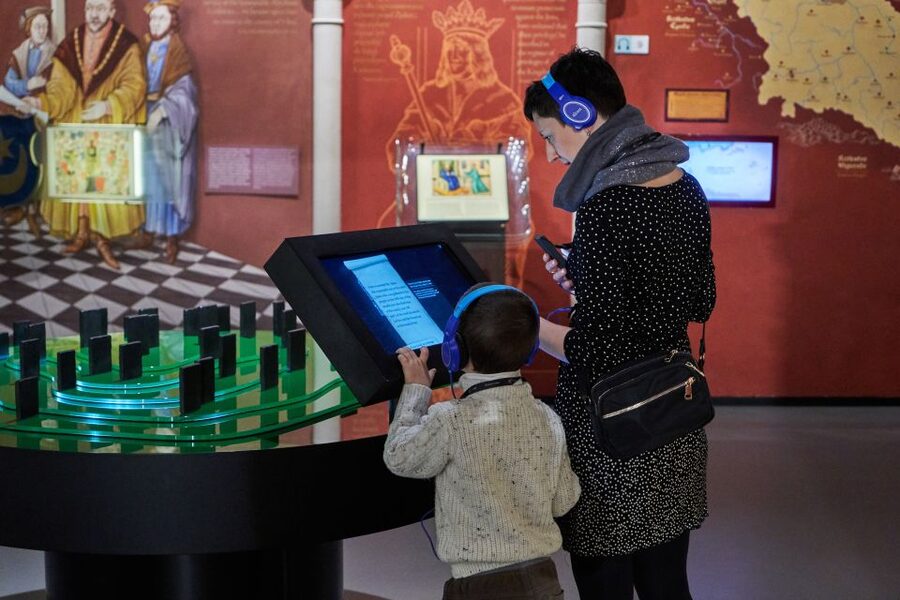
The prewar material shows the scale and variety of Jewish life in Poland before the Nazi occupation. The museum explains how Jewish people lived in towns and cities, took part in commerce and public affairs, and maintained religious and cultural traditions.
This gallery is essential preparation for the wartime sections. The Holocaust did not destroy an abstract population. It destroyed families, neighborhoods, institutions, languages, schools, synagogues, and generations of accumulated memory.
The displays also help you avoid the idea that all Polish Jews lived in the same way. There were differences between regions, classes, religious groups, political parties, and levels of identification with Polish or Jewish culture. The museum’s use of personal stories makes those differences easier to grasp.
You should not rush this section. If you have only two hours, choose a few displays and follow them properly rather than trying to absorb everything. If you have four hours or more, this is one of the places where the extra time pays off.
Gallery Five: the Holocaust and the destruction of Jewish Poland
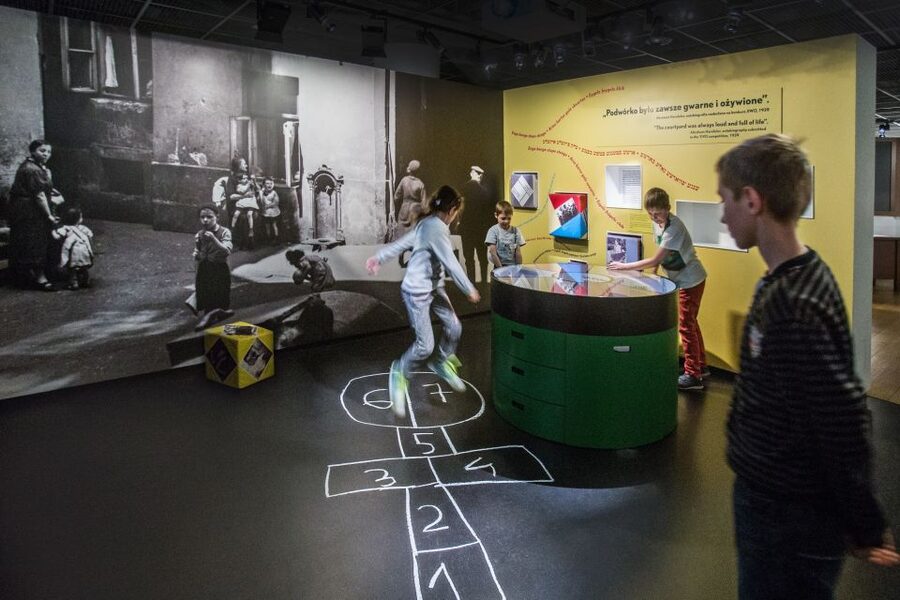
The Holocaust galleries are the most emotionally difficult part of the visit. They explain how Nazi persecution developed, how Jewish communities were confined and attacked, and how the destruction affected political, social, and religious life.
The presentation is serious and direct. It does not need theatrical effects to make its point. Documents, photographs, objects, testimony, and carefully arranged spaces show both the scale of the crime and its effect on individual lives.
You may find this section particularly moving if you have already visited the Warsaw Ghetto Uprising Monument outside. The museum gives the monument more context, explaining the community and history behind the uprising rather than leaving it as an isolated memorial.
The museum also makes an important distinction between Jewish life and Jewish death. The Holocaust section is central, but it is not the whole museum. That choice can be challenging for visitors who arrive expecting a dedicated Holocaust institution, yet it is also what makes POLIN different and valuable.
Give yourself permission to pause. Seating is available in several places, and there is no benefit in forcing yourself through difficult material without a break. You can also leave for lunch and return later the same day, which is useful after this section.
Gallery Six: the postwar period and cultural revival
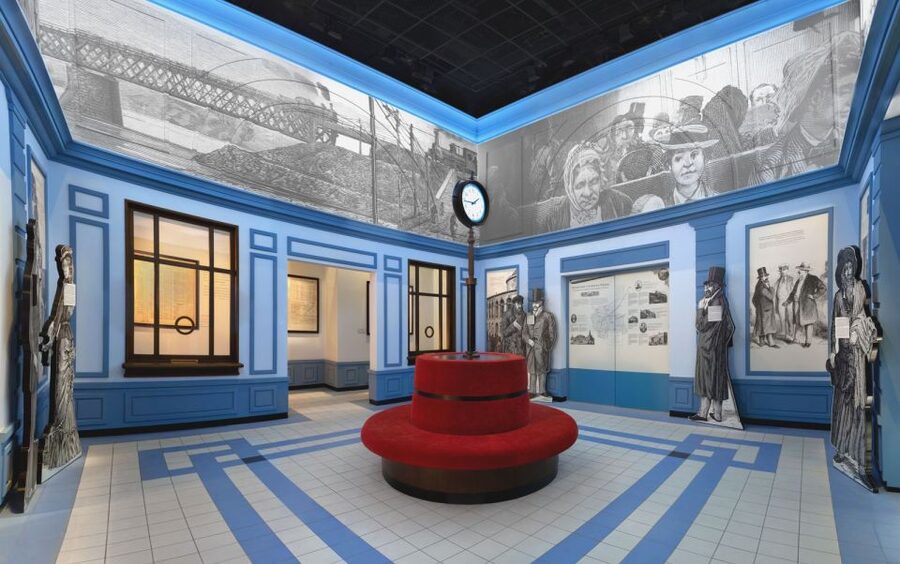
The story does not end in 1945. Later galleries look at what happened to Jewish life after the Second World War, including the effects of the Holocaust on Poland’s political, social, and religious diversity.
This part asks what survival and renewal can mean after a community has suffered such enormous loss. Jewish culture did not simply return to its prewar form. The postwar story includes absence, memory, changing identities, and efforts to rebuild Jewish life in Poland.
I appreciate that the museum includes this later period. It prevents the visit from becoming a memorial only to what disappeared. You see the continuing effort to remember, teach, worship, create, and maintain Jewish culture.
The postwar displays can be easy to miss if you spend too long in the earlier galleries. Keep an eye on the time, especially if the Holocaust section has taken longer than expected. Admission to the permanent exhibition closes two hours before the museum itself closes.
The audio guide and interactive design
The included audio guide is one of the strongest parts of the ticket. English and Polish are available, and the system can recognize your position in the museum and begin the relevant narration. That makes it much easier to follow a large exhibition without constantly checking a map or number.
The commentary is clear, detailed, and easy to follow. It can provide a useful framework for each historical period, especially if you are unfamiliar with Polish Jewish history. Several visitors spent two hours using it and felt they received a solid introduction, while others stayed for five or six hours and used it as a starting point for further reading.
There is a tradeoff. The exhibition contains a great deal of written text, and listening while reading can become tiring. If you are visiting with a family or group, not everyone needs to use the guide in the same way. One person may listen while another reads, then you can compare notes.
The interactive displays work well for different ages. Buttons, multimedia features, visual reconstructions, and audio material make the history easier to approach than a long sequence of labels. Children aged 12 or younger must remain supervised by an adult, and children aged seven or younger can enter free.
How long should you allow?
The official estimate for the core exhibition is about two hours. That is possible if you keep moving and make selective choices.
I would plan three hours as a sensible minimum for a first visit. That gives you time to listen to parts of the audio guide, read important panels, pause in the Holocaust galleries, and see the reconstructed synagogue ceiling without racing.
Allow four to five hours if you are a serious history reader. Some people have spent nearly six or seven hours inside, especially when they tried to read most of the material. The museum has seating, and you can take a lunch break without losing access, so a half-day visit is practical.
The main challenge is museum fatigue. The exhibition is well designed, but 1,000 years is still a lot of history. Wear comfortable shoes, use the rest areas, and do not feel obliged to complete every interactive element.
Price, access, and practical details
At about $12 per person, the ticket offers good value. It includes the permanent exhibition, the audio guide, and access to a temporary exhibition when one is available. A guided tour is not included, so you should not expect a live guide to lead you through the galleries.
Present your voucher at the POLIN Museum of the History of Polish Jews. Electronic scanning is required before entering the core exhibition, and oversize luggage is not allowed. Keep your voucher available on your phone, but if you have unreliable mobile data, download or save it before arriving.
The museum is wheelchair accessible. It is closed on Tuesdays, and the ticket is valid for one day. You may enter at your convenience during that day, subject to opening hours and the two-hour cutoff before closing.
The museum restaurant is another practical advantage. It uses informal cafeteria-style service, with generous portions and good-quality food. That makes it easier to treat POLIN as a half-day stop rather than trying to squeeze it into a hurried morning.
Free cancellation up to 24 hours before the visit and a reserve-now, pay-later option add flexibility. Still, the museum itself is the reason to book, not the booking arrangement. If your dates are fixed, reserving ahead is sensible, especially during a busy Warsaw visit.
Who will enjoy POLIN most?
You should make time for this museum if you care about Polish history, Jewish history, the Holocaust, religion, migration, or how communities change under pressure. It is also a strong choice if you prefer museums that explain context instead of displaying isolated objects.
Families can use the interactive material to keep younger visitors involved, although the subject becomes increasingly difficult in the wartime galleries. Adults should remain attentive to children, as required by the museum rules.
This may not suit you if you want a short, light museum visit or a purely object-based collection. There is a lot to read and absorb. You may also prefer a live guide if you find audio commentary distracting or want to ask questions as you go.
For most people, the best approach is simple: start with the audio guide, listen to the introductions, then slow down in the periods that matter most to you. You do not need to treat the museum like an exam.
Should you book the POLIN Museum ticket?
Yes, I would book it, especially if you have at least three hours in Warsaw. The $12 price is modest for the amount of material, and the ticket gives you access to a serious, carefully designed museum that explains both Jewish life and its destruction.
Book this experience if you want the full story rather than only a Holocaust memorial. Go early enough to avoid rushing, bring comfortable shoes, and consider returning after lunch if you need a break. If you have only two hours, it is still worthwhile, but choose your galleries carefully.
POLIN is at its best when you let it show you what was lost by first showing you what existed. That is why it belongs on a Warsaw itinerary, even for visitors who have already seen other sites connected with the Second World War.
FAQ
How long does a visit to POLIN Museum take?
The estimated time for the core exhibition is two hours. Allow three to five hours if you want to read more of the displays and use the audio guide carefully.
What does the POLIN Museum ticket include?
The ticket includes access to the permanent exhibition, access to a temporary exhibition if one is available, and an audio guide. A guided tour is not included.
Is the audio guide available in English?
Yes. The museum provides audio content in Polish and English. The system can recognize your location and provide the relevant narration.
Can I leave the museum and return later?
Yes. You may leave to have lunch and return on the same day, as long as your ticket remains valid for that day.
Is POLIN Museum open every day?
No. The museum is closed on Tuesdays. Check the available starting times and opening hours for your chosen date.
Are children allowed to visit POLIN Museum?
Yes. Children aged seven or younger may enter free of charge. Children aged 12 or younger must be supervised by an adult at all times.
Is the museum wheelchair accessible?
Yes. POLIN Museum is wheelchair accessible. Oversize luggage is not allowed, and all visitors must undergo electronic scanning before entering the core exhibition.
Just added in Warsaw
- Deluxe Polish Food Tour Experience in Warsaw★ 5.0 · 19 reviews
- CO2-Offset Arrival Transfer from Warsaw Airport to Warsaw City★ 5.0 · 1 review
- Historical Walking Tour of Jewish Warsaw★ 5.0 · 68 reviews
- Amazing photo walk through the Old town of Warsaw★ 5.0 · 32 reviews
- 8-day tour around Poland by private car★ 5.0 · 2 reviews
- 2 Hour Super Segway City Tour of Warsaw★ 5.0 · 5 reviews
- Electric Scooter Tour: Full Tour – 3-Hours of Magic!★ 5.0 · 3 reviews
- 2h Rental of Motorboat for 10 in Warsaw no License Needed★ 5.0 · 1 review
Historical Tours, compared.


Gdańsk City Sights & History Guided Walking Tour in English
Read our review →

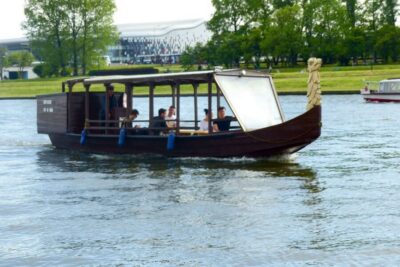

Small-Group Historical Guided Tour of Warsaw with pick up/drop off. Public Tour.
Read our review →
Browse the lists this tour appears in