
REVIEW · HISTORICAL TOURS
Historic City Center Tour Gdansk in German
Gdansk reveals its best stories on foot. I like the German-language guiding and the way the route links grand landmarks with local history. I also like the 150-minute length, long enough to get your bearings without giving your feet a formal complaint. The main tradeoff is that this is a shared public tour, so the pace and group size may not suit everyone.
The route covers the Golden Gate, Arthur’s Court, the Right City Town Hall, St. Mary’s Church, the medieval Crane, and the Polish Post Office in the former Free City of Danzig. Some guides, including Sandra, have been praised for making the material lively and useful, though you should expect a fair amount of dates and church history.
In This Review
- Key points to know before booking
- Why this Gdansk walk is a useful first introduction
- Meeting the guide at the Golden Gate
- The High Gate and the ceremonial city
- Arthur’s Court and the Right City Town Hall
- St. Mary’s Church, the largest brick church
- The medieval Crane on the waterfront
- The Polish Post Office and the Free City of Danzig
- How the German guiding shapes the experience
- Timing, weather, and physical comfort
- Who will get the most from this $26 tour?
- Should you book the Gdansk Historic City Center Tour?
- FAQ
- What language is the tour conducted in?
- How long does the tour last?
- How much does the tour cost?
- Where does the tour meet?
- Is hotel pickup included?
- Which major sights are included?
- Is the tour wheelchair accessible?
- Does the tour run in bad weather?
- Can I cancel for a full refund?
Key points to know before booking
- A German tour through Gdansk’s historic center: The live guide speaks German, making this a practical choice for German-speaking visitors.
- A strong first look at the city: In 150 minutes, you see the major sights around the historic law town and learn how they fit together.
- St. Mary’s Church is the big interior highlight: It is described as the largest brick church in the world, though the length of the church explanation can vary by guide.
- The Crane gives Gdansk its memorable waterfront image: This medieval machine was once powered by human muscle.
- The $26 price covers a shared walking tour: It includes the guide and the walk, but not hotel transfers or a private experience.
- Come prepared for the weather: The tour runs in rain or shine, and winter visitors should dress warmly.
Why this Gdansk walk is a useful first introduction
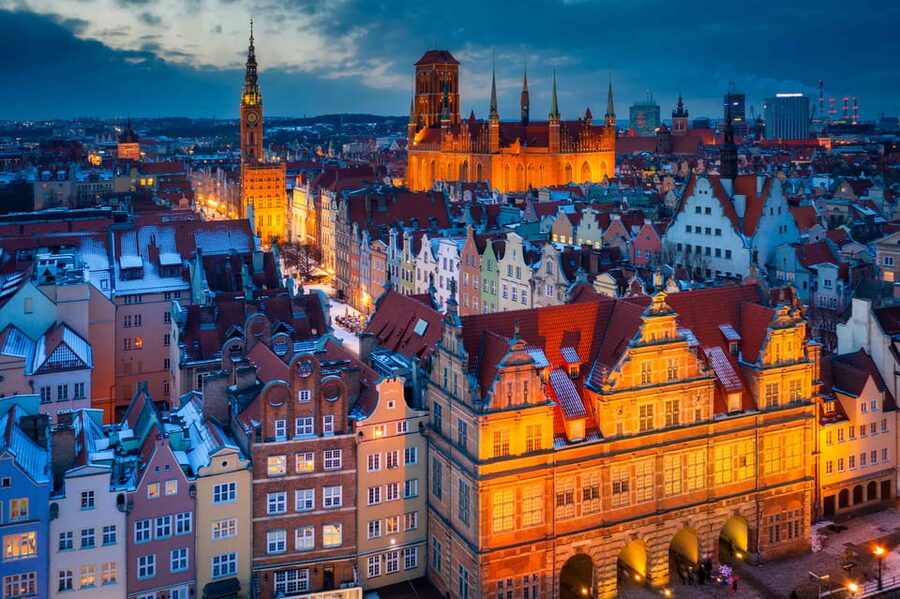
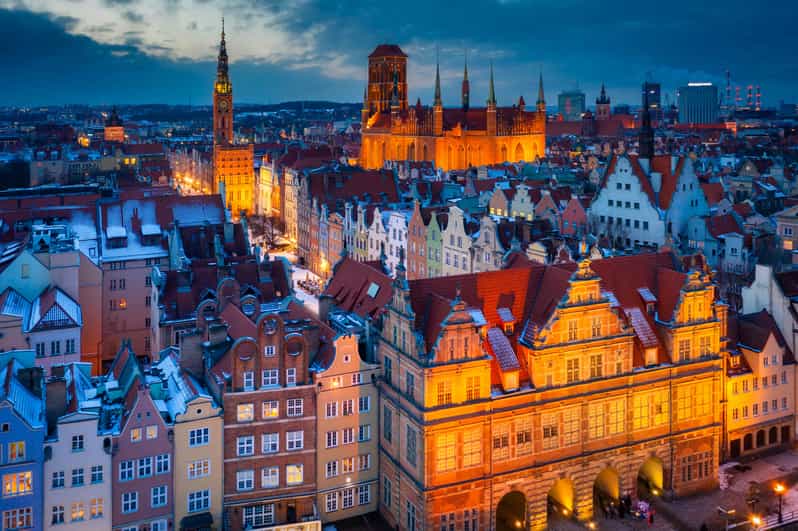
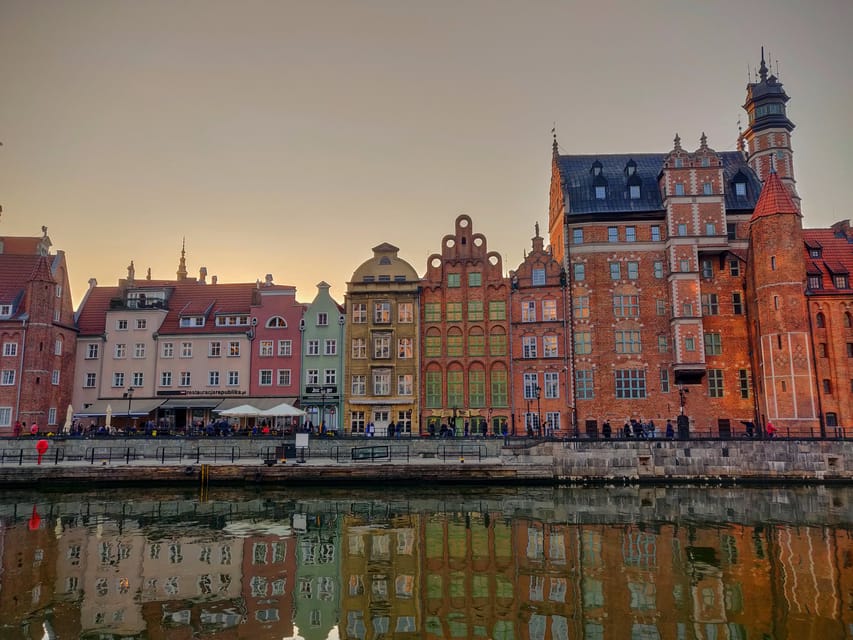
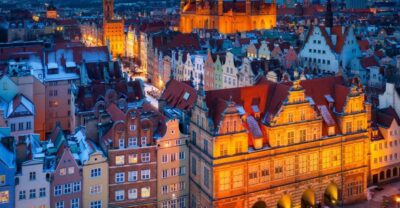
Gdansk can look easy to understand at first glance. The tall, narrow façades, decorated terraces, gates, church towers, and waterfront buildings create a compact postcard scene. But the city’s story is layered, and a first walk helps you see more than pretty architecture.
This tour focuses on the historic center, especially the area once known as the law town. Over two and a half hours, you move through the main ceremonial streets and squares while the guide explains Gdansk’s thousand-year story. That context matters because many buildings make more sense once you know how trade, civic power, religion, and the Free City shaped the place.
I like this format for a first afternoon in Gdansk. You get a broad overview before deciding where to return on your own. The tour is not built around long museum visits or a long list of admission tickets. It is primarily an outdoor walk with a German-speaking guide, which keeps the focus on the city itself.
The advertised price is $26 per person. For that amount, you are paying for the guided route and the guide’s time. It is a fair value if you want an organized introduction and prefer not to spend your first hours sorting out the city’s main sights by yourself.
There is one important point about the price. This is not a private tour. Your booking joins the general walking group, and the fee includes a reservation portion as well as payment for the guide. If you want a smaller, private walk, you need to contact Walkative Tours after booking to ask about arranging one.
More History Tours in Gdańsk
- Gdansk: City Cruise on Historical Polish Boat
★ 4.8 · 2,913 reviews - Gdańsk: Sunset Cruise on a Historic Polish Boat
★ 4.9 · 977 reviews - Gdańsk City Sights & History Guided Walking Tour in English
★ 4.8 · 876 reviews
Meeting the guide at the Golden Gate
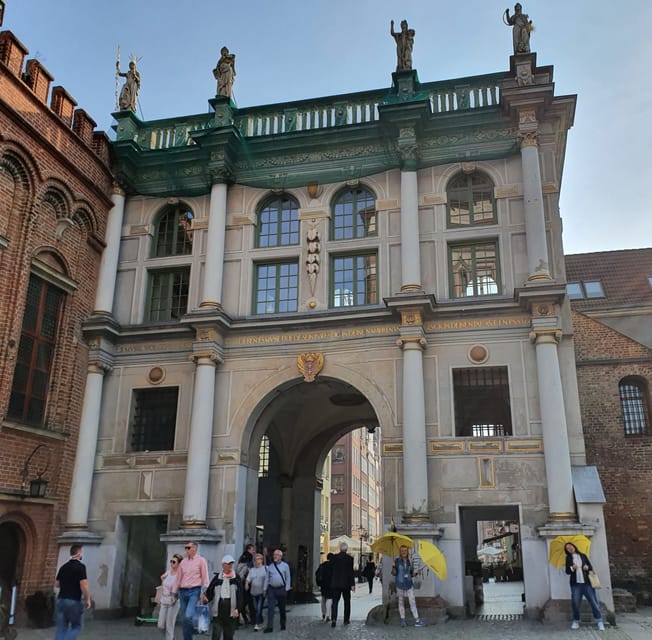
The starting point is the Golden Gate, or Złota Brama. Look for the yellow umbrellas. That detail is simple but useful, since a busy historic center can turn a meeting point into a small search mission.
The Golden Gate is also a sensible place to begin. It marks an important entrance to the old city and introduces the polished architectural character of the route. From here, you enter a sequence of streets lined with slender buildings and decorative terraces.
The opening section should help you get your bearings. A good guide can show how the gate connects to the city’s formal streets rather than treating it as an isolated photo stop. This is where the German commentary adds real value. You can ask questions early, get a feel for the guide’s pace, and understand the basic shape of Gdansk before the route becomes denser with details.
Arrive ready to walk on cobblestones. The tour is wheelchair accessible, but historic paving can still affect comfort and speed. Since the route takes place outside and runs in all weather, shoes with solid support and clothing suited to the forecast are sensible choices.
The High Gate and the ceremonial city
The route also includes the High Gate. Together with the Golden Gate, it helps explain how visitors once entered the city and how Gdansk presented itself to the outside world.
This part of the walk is less about checking off a single monument and more about reading the city’s design. The grand entrances lead toward the important civic streets, where merchants, officials, and residents moved through the old center. The façades make the setting feel refined, but the guide’s historical explanation gives those façades a purpose.
You will probably hear a steady stream of names, events, and dates here. That can be useful if you enjoy political and urban history, but it may feel dense if you prefer a lighter architectural walk. One German-language assessment specifically found that there could be too many historical facts to remember. I would not try to retain everything. Listen for the larger themes and note down the details that interest you.
A walking tour works best when you treat it as an introduction, not an exam. You can always return to the gate later for photographs after the group has moved on.
Arthur’s Court and the Right City Town Hall
Arthur’s Court is one of the route’s most important civic stops. Its name points to the world of merchants, public life, and city prestige. Here, the guide can connect Gdansk’s elegant center with the people and institutions that gave it power.
The Right City Town Hall adds another layer. It represents local government and the importance of the historic center as a place where civic decisions were made. Together, these stops balance the religious focus of St. Mary’s Church with the commercial and political life of the city.
I appreciate this mix because it prevents the tour from becoming a procession of churches. You see how public buildings, merchant spaces, and grand streets worked together. The route becomes more than a collection of attractive façades.
The exact balance depends on the guide. Some guides have been praised for clear explanations, historical background, and helpful suggestions for cafés and restaurants. That practical touch is worth using. If you want a place to eat or stop for coffee afterward, ask during the walk, when the guide can tailor suggestions to your interests.
Something quite different:
- Gdansk: Firearm Shooting Experience with Instructor
★ 4.8 · 866 reviews - Gdansk: Guided Round-Trip Cruise to Westerplatte
★ 4.3 · 865 reviews - Gdańsk: Sightseeing EcoCruise around the Old Town of Gdansk
★ 4.6 · 719 reviews - Main Town Gdańsk Walking Tour
★ 5.0 · 644 reviews
St. Mary’s Church, the largest brick church
St. Mary’s Church is the major religious landmark on the route. It is described as the largest brick church in the world, and its size gives the stop real impact even before the historical explanation begins.
The church also brings the most variation in pacing. One guide may give you a compact overview, while another may spend much longer on church history. A German-language review specifically found that this part went on a little too long. If you prefer architecture and visual details, you may enjoy the extra time. If dates and religious background are not your main interest, this can be the slowest section.
The best way to approach the stop is to decide what you want from it. Pay attention to the scale, the brick construction, and the church’s place in the city. You do not need to memorize every date to appreciate why it matters.
The tour information identifies St. Mary’s as part of the walking route, but it does not promise a separate extended interior visit or admission arrangement. You should therefore think of it as a guided stop within the city walk rather than a dedicated church tour.
The medieval Crane on the waterfront
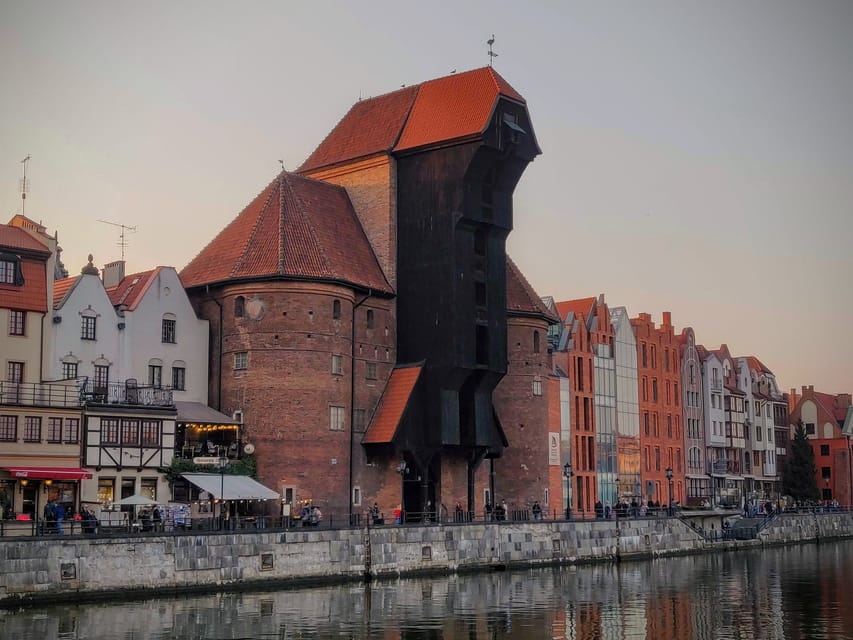
The Crane is the route’s most distinctive piece of working history. It is described as the largest medieval crane in Europe and a city landmark. More interesting still, it was once moved by human muscle power.
That detail gives the monument a practical story. This was not simply decorative waterfront architecture. It was a machine connected to the movement of goods and the working life of the port. A guide can help you picture the effort involved and explain why the Crane became such a powerful symbol of Gdansk.
I find this kind of stop especially valuable because it links engineering with everyday city life. You are not only looking at an old structure. You are learning how the waterfront functioned and why trade mattered so much to the city.
The Crane also gives the walk a change of mood after the formal gates, town halls, and church. The route feels more connected to labor, shipping, and the riverfront. Bring your camera, but listen first. The human-powered mechanism is the detail that makes this stop memorable.
The Polish Post Office and the Free City of Danzig
The Polish Post Office in the Free City of Danzig adds a more modern and politically complex chapter. Its inclusion shows that the walk does not stop with medieval and early civic monuments.
The phrase Free City of Danzig refers to a specific period and political arrangement in the city’s past. The post office allows the guide to move from architecture into questions of identity, administration, and the relationship between Polish and German traditions in Gdansk.
This is a valuable stop for anyone who wants the city’s twentieth-century story included in a first visit. It also helps explain why Gdansk cannot be reduced to one national narrative or one historical period.
Do not expect every stop to receive equal time. A 150-minute walk has to cover several major places, and the guide must keep the group moving. If the post office is especially important to you, ask your guide for a little extra context or make a note to explore the subject later.
How the German guiding shapes the experience

The live tour is offered in German, and the quality of the spoken explanation is central to its value. Recent feedback has been especially positive about Sandra, whose storytelling was described as interesting and engaging even in cold weather.
That point matters. A good outdoor guide has to manage more than facts. The guide needs to keep people together, speak clearly, hold attention, and maintain a pleasant pace when the weather is unpleasant. Sandra appears to have done that well for some groups.
At the same time, this is a history-heavy walk. You may hear many dates, names, and background details in a short period. If you enjoy a serious explanation, that is a strength. If you want mostly photos and short anecdotes, you may find the information load tiring.
I suggest taking a small note on your phone with three headings: city government, religion, and trade. Put only one or two details under each. That gives you a simple framework and keeps the story from becoming a blur of facts.
Timing, weather, and physical comfort
The duration is 150 minutes, or two and a half hours. That is long enough for a meaningful overview but short enough to fit around lunch, a museum visit, or an afternoon train.
The walk takes place rain or shine. There is no promise of indoor shelter throughout the route, so check the forecast before leaving. In winter, dress more warmly than you think you need. Cold weather has already affected the comfort of at least one recent tour, even though the guide kept the explanation engaging.
Cobblestones are part of the setting. The tour is wheelchair accessible, but accessibility does not remove every challenge created by historic streets or weather. If you use a wheelchair, consider contacting the supplier before the walk if you need to confirm route conditions for your specific needs.
There is no hotel pickup or drop-off. You make your own way to the Golden Gate, then return to your accommodation independently after the walk. That keeps the cost down, but you should allow enough time to find the yellow umbrellas.
Cancellation is flexible: you can cancel up to 24 hours before the tour for a full refund. You can also reserve now and pay later, which helps if your schedule is still shifting.
Who will get the most from this $26 tour?
I would choose this walk if you are visiting Gdansk for the first time, want a German-speaking guide, and prefer to understand the city before exploring it alone. It suits adults and older children who can manage a two-and-a-half-hour outdoor walk and who enjoy a fairly serious historical explanation.
It is also a good match for visitors who want to see the major center landmarks without paying for a private guide. The $26 fee is modest for a route that includes the Golden Gate, High Gate, Arthur’s Court, the Right City Town Hall, St. Mary’s Church, the Crane, and the Polish Post Office.
I would hesitate if you dislike group tours or need to control every minute of a visit. The shared format means the guide sets the rhythm, and the most popular sights may receive only a limited amount of time. I would also think twice if you want a relaxed stroll with almost no dates or church history.
The overall score is 4.6 from 455 ratings, which fits the experience described here: strong organization and engaging German commentary, with the main criticism focused on occasional information overload or too much time spent on church history.
Should you book the Gdansk Historic City Center Tour?
Book it if you want a practical first look at Gdansk in German and value clear historical context over a private, highly customized visit. The Crane, St. Mary’s Church, and the city gates give you memorable landmarks, while Arthur’s Court, the town hall, and the Polish Post Office add civic and political depth.
Before booking, accept three things: it is a general group walk, it runs outdoors in all weather, and the guide may cover more dates than you can remember. Wear comfortable shoes, dress for the forecast, meet at the Golden Gate under the yellow umbrellas, and ask for café or restaurant suggestions if you need them.
At $26, this is a sensible way to get oriented. It will not replace a full museum day or a private history lesson, but it can give you the framework to enjoy Gdansk with sharper eyes afterward.
FAQ
What language is the tour conducted in?
The live tour guide speaks German.
How long does the tour last?
The tour lasts 150 minutes, or two and a half hours.
How much does the tour cost?
The price is $26 per person.
Where does the tour meet?
The meeting point is the Golden Gate, called Złota Brama in Polish. Look for the yellow umbrellas.
Is hotel pickup included?
No. Hotel pickup and drop-off are not included.
Which major sights are included?
The route includes the High Gate, Golden Gate, St. Mary’s Church, the Right City Town Hall, Arthur’s Court, the medieval Crane, the Polish Post Office in the Free City of Danzig, and additional sights in the historic center.
Is the tour wheelchair accessible?
Yes, the activity is listed as wheelchair accessible.
Does the tour run in bad weather?
Yes. The tour takes place rain or shine, so you should dress appropriately for the forecast.
Can I cancel for a full refund?
Yes. You can cancel up to 24 hours in advance for a full refund. You can also reserve now and pay later.
Just added in Gdansk
- Wolf’s Lair private tour from Gdansk★ 5.0 · 1 review
- Whisky Tasting in Gdańsk★ 5.0 · 3 reviews
- Transfer from Gdańsk or Airport Gdańsk (GDN) to Kościerzyna★ 5.0 · 1 review
- Westerplatte – 2h private trip by luxury car|★ 5.0 · 4 reviews
- Westerplatte private tour led by Expert-Guide (door to door)★ 5.0 · 5 reviews
- Gdansk EVERYDAY Vodka Tasting Tour★ 5.0 · 6 reviews
- Undercover City Games: Gdynia★ 5.0 · 34 reviews
- VIP transfer from airport Gdansk (GDN) to Hotel in Gdansk / Sopot★ 5.0 · 2 reviews
Historical Tours, compared.


POLIN Museum of the History of Polish Jews Ticket
Read our review →
Gdańsk City Sights & History Guided Walking Tour in English
Read our review →

Small-Group Historical Guided Tour of Warsaw with pick up/drop off. Public Tour.
Read our review →
Browse the lists this tour appears in