
REVIEW · HISTORICAL TOURS
Warsaw History and Reality Walking Tour
Warsaw rewards curious walkers. This 2.5-hour tour links the Mermaid statue, a rooftop garden, the rebuilt Old Town, and major sites along the Royal Route, while guide Mona adds personal stories and overlooked details. I especially like the way it treats Warsaw as a city shaped by both destruction and renewal, not just a pretty collection of restored buildings. I also like the small group size, capped at 10 people, which should make questions and conversation easier.
The main consideration is the price: $114.39 per person is a serious spend for a walking tour with no coffee, tea, or major indoor admission beyond the viewing terrace. You are paying for a private-style experience, strong guiding, and a carefully connected route rather than for a long list of ticketed sights.
In This Review
- What makes this Warsaw walk worth considering
- Starting beside the Vistula with Warsaw’s Mermaid
- The University of Warsaw Library and its unusual roof
- A postwar district built for reconstruction workers
- St. Anne’s Church and Castle Square
- Cobblestones, facades, and the reconstructed Old Town
- Krakowskie Przedmieście and the Royal Route
- Piłsudski Square and the Unknown Soldier
- Mona’s guiding style and the small-group advantage
- Is $114.39 a fair price?
- Timing, weather, and practical planning
- Who should book this Warsaw history walk?
- FAQ
- How long is the Warsaw History and Reality Walking Tour?
- What language is the tour offered in?
- Where does the tour begin?
- Where does the tour end?
- What is included in the price?
- Are coffee and tea included?
- How many people can join the tour?
- Can I cancel for a full refund?
- Should you book it?
What makes this Warsaw walk worth considering
- Warsaw’s Mermaid begins the story: Learn why the city uses a mermaid in its coat of arms, who modeled for the sculpture, and how the figure connects to World War II.
- A rooftop garden changes your view: The University of Warsaw Library terrace combines city scenery, river views, and an unusual piece of modern design.
- Reconstruction is central, not incidental: The Old Town and surrounding streets show how Warsaw rebuilt itself after wartime destruction.
- Mona’s strength is personal storytelling: Her tours are praised for local anecdotes, flexible pacing, restaurant suggestions, and places easy to miss on the main streets.
- The route ends on the Royal Route: Presidential history, Chopin, the Unknown Soldier, and Saxon Garden give the walk a strong finish.
- The group stays small: With a maximum of 10 people, the experience should feel more like a guided conversation than a large procession.
Starting beside the Vistula with Warsaw’s Mermaid
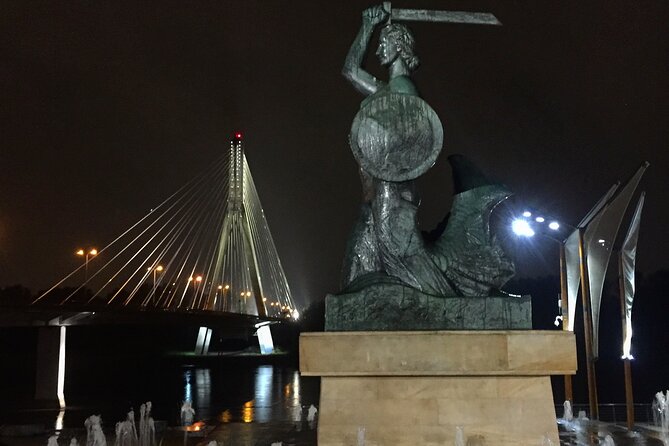
The tour begins at the Mermaid statue on Generała George’a Smitha Pattona Street, close to the Vistula. This is a useful starting point because the Mermaid is not simply a decorative city symbol. You will hear why she appears on Warsaw’s coat of arms, who served as the sculptor’s model, and how the figure connects with the city’s wartime experience.
That opening gives you a better key for reading Warsaw. The city’s symbols often carry several layers at once: civic pride, local identity, and memories of survival. Instead of beginning with a date-heavy lecture, the guide uses one image to open a larger conversation.
Allow a little patience at the start. The statue itself is the focus for roughly 10 minutes, so this is an introduction rather than a long photo stop. If you want a careful photograph or time to admire the river setting, you may need to do that quickly or return later.
More History Tours in Warsaw
- Warsaw: POLIN Museum of the History of Polish Jews Ticket
★ 4.7 · 1,142 reviews - Warsaw: Chopin Concert at Historical Venue in Old Town
★ 4.7 · 445 reviews - Small-Group Historical Guided Tour of Warsaw with pick up/drop off. Public Tour.
★ 4.5 · 343 reviews
The University of Warsaw Library and its unusual roof
The longest pause comes at the University of Warsaw Library, where you spend about 40 minutes. The building combines a working library with a rooftop garden, an awarded design concept shaped in part by the form of the Vistula embankment.
The viewing terrace is included, and this is one of the clearest practical benefits of the tour. From the roof, you can look toward the river and across the city. The garden is open from April through October, so the experience changes with the season. Outside that period, do not assume the full garden visit will be available.
I like this stop because it prevents the tour from becoming a nonstop march through monuments. You get a pause, a modern counterpoint to the rebuilt historic center, and a chance to see Warsaw from above. The stop also helps explain how the city continues to shape itself after its difficult 20th-century past.
The tradeoff is that the library is a working institution, not a traditional sightseeing attraction. If you expect lavish historic interiors, this may feel less dramatic. Its value comes from the design, garden, and city view.
A postwar district built for reconstruction workers
Between the library and St. Anne’s Church, the walk includes Warsaw’s first district rebuilt after World War II. It was intended to house workers involved in rebuilding the Old Town.
This detail is easy to miss if you only follow the most famous streets. It shifts the focus from grand monuments to the practical people who made the city’s return possible. Warsaw’s reconstruction was not only an architectural project. It also required homes, labor, organization, and a place for workers to live.
The stop is especially useful if you want to understand the city as a working community rather than a museum display. The supplied route does not give the district a formal name or specify a long stop, so expect this to be an explanation along the way rather than a separate attraction with an extended visit.
St. Anne’s Church and Castle Square
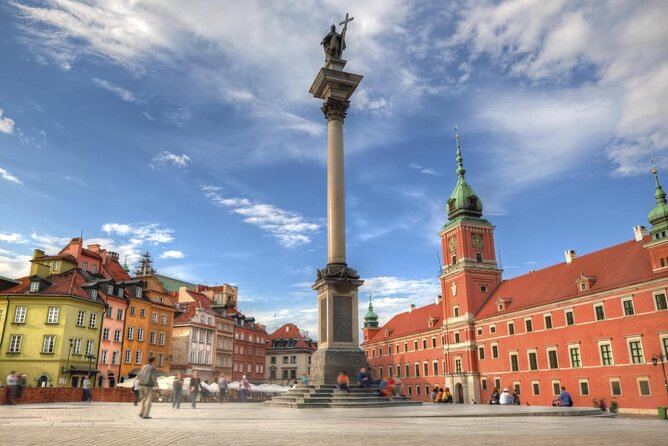
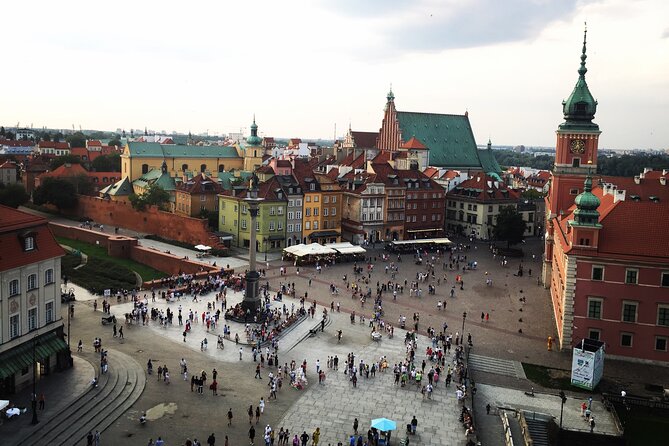
St. Anne’s Church is described as one of Warsaw’s finest Baroque churches. The stop lasts about 15 minutes and also brings you toward Royal Castle Square, with its carefully reconstructed townhouses.
This is a compact but well-placed section of the walk. You get religious architecture, a major civic square, and a first look at the Old Town’s restored streets. The church gives the route a change of scale after the open terrace and postwar housing discussion.
You should also pay attention to the contrast between age and restoration. Warsaw’s Old Town can look convincingly old, but much of what you see was rebuilt after wartime devastation. That does not make it false or unimportant. It makes the story more remarkable, and a guide can help you notice where reconstruction and historical appearance meet.
The short timing means you will not have a long interior visit. Treat St. Anne’s as a focused stop within a larger walk, not as a full church tour.
More Walking Tours in Warsaw
- Warsaw: Old Town Highlights Walking Tour in English
★ 4.7 · 1,516 reviews - Warsaw: Old Town Guided Walking Tour
★ 4.9 · 599 reviews - Half-Day Polish Food Walking Tour with Guide and Dinner
★ 4.5 · 381 reviews - Warsaw: Warsaw Ghetto Private Walking Tour with Hotel Pickup
★ 4.9 · 369 reviews
Cobblestones, facades, and the reconstructed Old Town
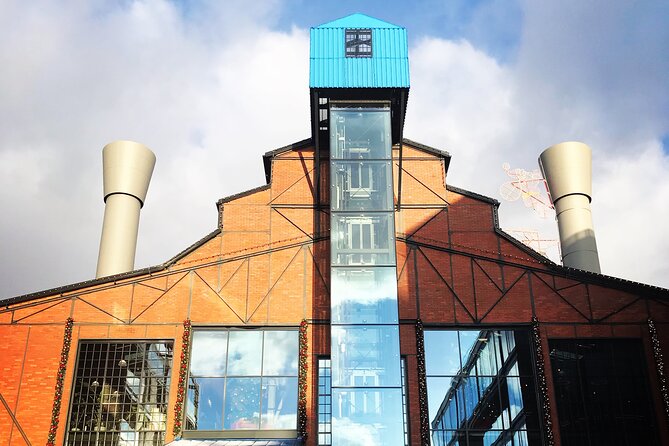
The Old Town section lasts about 30 minutes. You will walk through cobblestone Gothic streets, narrow lanes, churches, and tiered burghers’ houses whose facades were rebuilt to restore the feel of the earlier city.
This is where the walking format makes the most sense. Warsaw’s Old Town is best understood at street level, where small details on facades and the changing shape of lanes matter as much as the major square. The guide points out architectural details and a favorite meeting place for lovers, adding a lighter human note to the wartime story.
I appreciate the emphasis on details. A quick solo walk can leave you with attractive photographs but little sense of why the streets look as they do. Mona’s tours are praised for stories about the people who shaped Warsaw and for extra stops away from the main streets. That suggests the strongest part of this experience may be the commentary between the headline sights.
There is one practical limit: 30 minutes is enough for an introduction, not a full survey of the Old Town. You will not see every church, lane, or museum. If this is your first time in Warsaw, use the walk to mark places you want to revisit at a slower pace.
Krakowskie Przedmieście and the Royal Route
The route then follows Krakowskie Przedmieście, part of Warsaw’s 2.5-mile Royal Route. This grand line connects important buildings and monuments and gives the walk a broader view of the city’s political and cultural past.
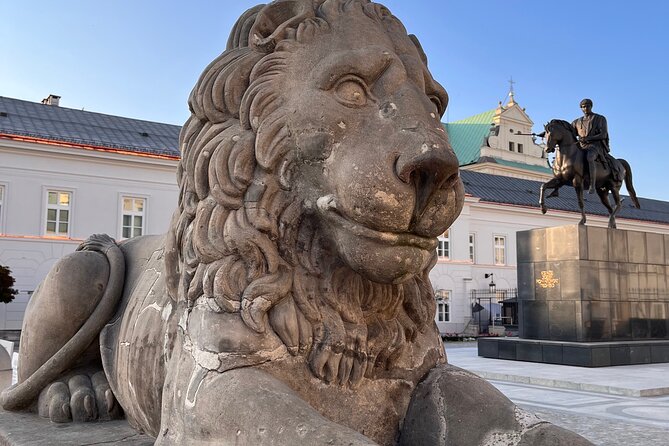
The Presidential Palace is a key stop. This Neoclassical building is the residence of the Polish president, and four lions sculpted by Camillo Laudini guard it. The site also has a Chopin connection: eight-year-old Frédéric Chopin played there publicly for the first time.
These details show why a good guide matters. The palace is easy to photograph and pass by, but the Chopin story gives it a more personal scale. A child performing in a formal political setting is more memorable than another architectural label.
The scheduled stop here is about 10 minutes, so you will likely hear the main story from the outside. The walk is best for context and orientation, not for a palace interior visit.
Piłsudski Square and the Unknown Soldier
The final listed stop is Marshal Józef Piłsudski Square, a large parade ground centered on the Tomb of the Unknown Soldier. It is also a place for meetings, concerts, and public events, with Saxon Garden behind the memorial.
This ending fits the tour’s theme. You move from the city emblem to modern design, worker housing, religious architecture, reconstructed lanes, political power, and finally national remembrance. The Unknown Soldier memorial brings the focus back to sacrifice and public memory.
Saxon Garden offers a softer finish after the formal square. The stop is scheduled for around 10 minutes, enough for an explanation and a look around, but not a long park visit.
The official endpoint is at the Roman Catholic Church of the Visitants on Krakowskie Przedmieście, near the Cardinal Stefan Wyszyński statue. That location is useful because you finish on the Royal Route rather than far from the central sights.
Mona’s guiding style and the small-group advantage
The experience provider is Mona_be_your_guide, and the guide named in the supplied material is Mona, also referred to as Monika. Her strongest qualities are storytelling, flexibility, and local advice.
Her approach appears to go beyond reciting dates. She explains the past through personal lives, city details, and places that can be overlooked on the main route. She has also adapted walks for different groups, added extra stops when appropriate, and offered restaurant recommendations at the end.
That flexibility matters for a small group. A maximum of 10 people leaves more room for questions than a large coach-style tour. It also gives the guide a better chance to adjust the level of detail for a mixed group, from teenagers to adults.
Still, do not assume every tour will be fully private or endlessly customized. The maximum is 10, not one household, and the listed route has a fixed 2.5-hour duration. If you want a completely personal itinerary, ask about that before booking.
Is $114.39 a fair price?
At $114.39 per person, this is expensive compared with a basic city walk. The price makes more sense if you value a small group, a named local guide, detailed interpretation, and the included viewing terrace.
You are not paying mainly for admissions. The itinerary lists free entry at the main stops, while coffee and tea are not included. The cost rests on the guide’s time and ability to connect Warsaw’s symbols, reconstruction, architecture, politics, and personal stories.
I would consider it good value for a first visit if you want to understand the city quickly and prefer conversation over a large group. It is less compelling if you mainly want museum interiors, extended church visits, or a cheap orientation walk.
The tour is also booked, on average, 88 days ahead. That suggests you should plan early if your dates are fixed, especially since confirmation is subject to availability.
Timing, weather, and practical planning
The tour is offered in English and uses a mobile ticket. It begins at the Mermaid statue and ends at the Visitants Church, so plan to arrive at the exact starting point rather than assuming the endpoint is nearby.
Wear shoes suited to cobblestones and a walk of two and a half hours. The route includes open squares, streets, a rooftop terrace, and garden space. Since the experience requires good weather, poor conditions can lead to a different date or a full refund.
The rooftop garden is open from April through October. If that feature matters to you, those months are the safest choice, though the listing does not promise that every rooftop element operates identically on every date.
Most people can participate, and service animals are allowed. The tour is near public transportation, but the supplied details do not specify a particular bus, tram, or metro line, so check the meeting location in your map app before leaving.
Free cancellation is available up to 24 hours before the start time. Cancellations or changes made inside that window are not refunded or accepted, and the local time governs the cutoff.
Who should book this Warsaw history walk?
I would recommend it most strongly to first-time visitors who want a clear introduction to Warsaw’s complicated past. It also suits repeat visitors who have seen the main streets but want local stories and overlooked corners.
The tour works well for people who enjoy architecture, urban history, national memory, and personal anecdotes. It may also suit families or mixed-age groups because Mona has been praised for adjusting explanations to different interests.
You may want another format if you dislike walking, need long indoor visits, or want a low-cost tour. The route covers a lot in 150 minutes, and the short stops favor a broad picture over slow exploration.
FAQ
How long is the Warsaw History and Reality Walking Tour?
The tour lasts approximately 2 hours and 30 minutes.
What language is the tour offered in?
The tour is offered in English.
Where does the tour begin?
It begins at the Mermaid’s Statue on Generała George’a Smitha Pattona Street in Warsaw.
Where does the tour end?
It ends at the Roman Catholic Church of the Visitants on Krakowskie Przedmieście 34, near the Cardinal Stefan Wyszyński Statue.
What is included in the price?
An entrance ticket for a viewing terrace is included.
Are coffee and tea included?
No. Coffee and tea are not included.
How many people can join the tour?
The tour has a maximum of 10 participants.
Can I cancel for a full refund?
Yes, if you cancel at least 24 hours before the experience start time. Poor weather or failure to meet the minimum number of participants can also lead to an alternative date or a full refund.
Should you book it?
Book this walk if you want Warsaw explained through people, rebuilding, and public memory, not simply a checklist of monuments. Mona’s personal style, small groups, local recommendations, and willingness to add context are the main reasons to choose it.
Skip it if $114.39 feels too high for a mostly outdoor route with free-entry stops. For the right visitor, though, the tour offers a useful first framework for Warsaw: start with the Mermaid, look over the city from the library roof, walk the reconstructed Old Town, and finish with the Royal Route and the Unknown Soldier. That is a lot of Warsaw in one carefully packed afternoon.
Just added in Warsaw
- Wroclaw Small-Group Tour with Lunch from Warsaw★ 5.0 · 2 reviews
- World War II Warsaw Old Town, Military Cemetery Walking Tour★ 4.7 · 3 reviews
- Warsaw: Wolf’s Lair & Swieta Lipka Small-Group Tour + Lunch★ 5.0 · 3 reviews
- Wilanów Palace: 2-Hour Guided Tour with Entrance Tickets★ 4.8 · 8 reviews
- Warsaw Zoo Skip-the-Line Entry Ticket with Private Transport★ 4.8 · 3 reviews
- Warsaw: Private Vodka Tasting Night with Snacks and Pickup★ 5.0 · 7 reviews
- Warsaw Private Wilanow Palace & Garden Tour★ 4.6 · 30 reviews
- Warsaw Wolf’s Lair with St. Lipka and Mamerki Private Guided★ 4.2 · 3 reviews
Historical Tours, compared.

POLIN Museum of the History of Polish Jews Ticket
Read our review →
Gdańsk City Sights & History Guided Walking Tour in English
Read our review →

Small-Group Historical Guided Tour of Warsaw with pick up/drop off. Public Tour.
Read our review →Browse the lists this tour appears in