
REVIEW · HISTORICAL TOURS
Warsaw Historic Heart Walking Tour – must-see & hidden gems
Warsaw rewards the curious. This two-hour walk links the city’s best-known sights with quieter corners, including the Royal Castle, St. John’s Cathedral, Kanonia, and a lookout point in the Old Town. I like the short 1.5-kilometer route because it gives you a useful first look without wearing out your feet.
I also like the focus on stories: Warsaw as the phoenix city, the legend of its mermaid symbol, Maria Skłodowska-Curie’s birthplace, and the Old Town’s place on the UNESCO World Heritage list. The main consideration is that Royal Castle and Maria Curie Museum admission are not included, so this is primarily a guided outdoor walk, with museum and castle visits requiring extra planning.
In This Review
- Key points at a glance
- Why this short Warsaw walk works
- Starting at Sigismund’s Column and the Royal Castle
- St. John’s Archcathedral and the stories behind Warsaw
- Kanonia, the quiet corner behind the cathedral
- Old Town Market Square and its colorful houses
- The Barbican and Warsaw’s rebuilt walls
- Maria Skłodowska-Curie’s Warsaw birthplace
- Ending at the Warsaw Uprising Monument
- What the $32 price gets you
- Who will get the most from this tour
- Practical details before you go
- Should you book the Historic Heart of Warsaw walk?
- FAQ
- How long does the Historic Heart of Warsaw tour last?
- How far does the walking route go?
- Where does the tour begin?
- Where does the tour end?
- Is the Royal Castle admission included?
- Is entry to the Maria Skłodowska-Curie Museum included?
- What language is the tour conducted in?
- Is the tour wheelchair accessible?
Key points at a glance
- A compact 1.5-kilometer route: You cover the historic center in about two hours, with little distance between stops.
- Royal Castle and Sigismund’s Column: The walk begins at one of Warsaw’s most important ceremonial spaces.
- Kanonia behind St. John’s Cathedral: This small square offers a quieter change from the main Old Town streets.
- Old Town Market Square and the Barbican: You see the city’s familiar postcard scenes while learning why the rebuilt Old Town matters.
- Maria Skłodowska-Curie’s birthplace: The tour connects Warsaw’s streets with the life of a double Nobel Prize winner.
- Useful planning help: You receive visual aids, a Warsaw information pack, and suggestions for eating, drinking, and further sightseeing.
Why this short Warsaw walk works
Warsaw can feel confusing at first. Its historic center looks old, but much of it was rebuilt after the Second World War. This tour gives you the basic story before the city’s details start to blur together.
The route is easy to manage. At roughly 1.5 kilometers, it suits a first morning in Warsaw, a short afternoon between other plans, or a visitor who prefers a focused walk rather than a long city march. You move from the Royal Castle area through the cathedral quarter, Old Town Market Square, the Barbican, and on toward the Warsaw Uprising Monument.
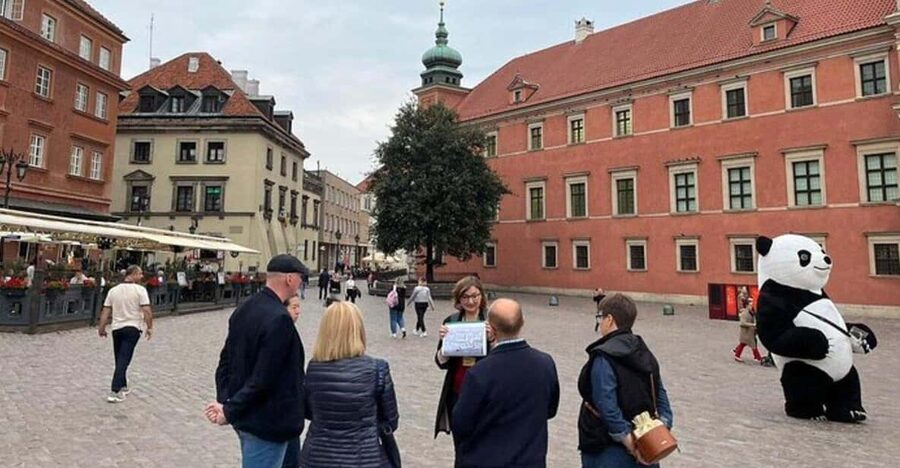
The guide speaks English, and the tour is offered privately or in small groups. That matters because a small group makes it easier to ask about Polish history, local customs, or places to eat later. The exact feel will depend on the group arrangement, but the format is designed for conversation rather than a large crowd following a flag.
Look for a guide carrying a white and green umbrella at the meeting point. That simple detail can save time in a busy square.
More History Tours in Warsaw
- Warsaw: POLIN Museum of the History of Polish Jews Ticket
★ 4.7 · 1,142 reviews - Warsaw: Chopin Concert at Historical Venue in Old Town
★ 4.7 · 445 reviews - Small-Group Historical Guided Tour of Warsaw with pick up/drop off. Public Tour.
★ 4.5 · 343 reviews
Starting at Sigismund’s Column and the Royal Castle
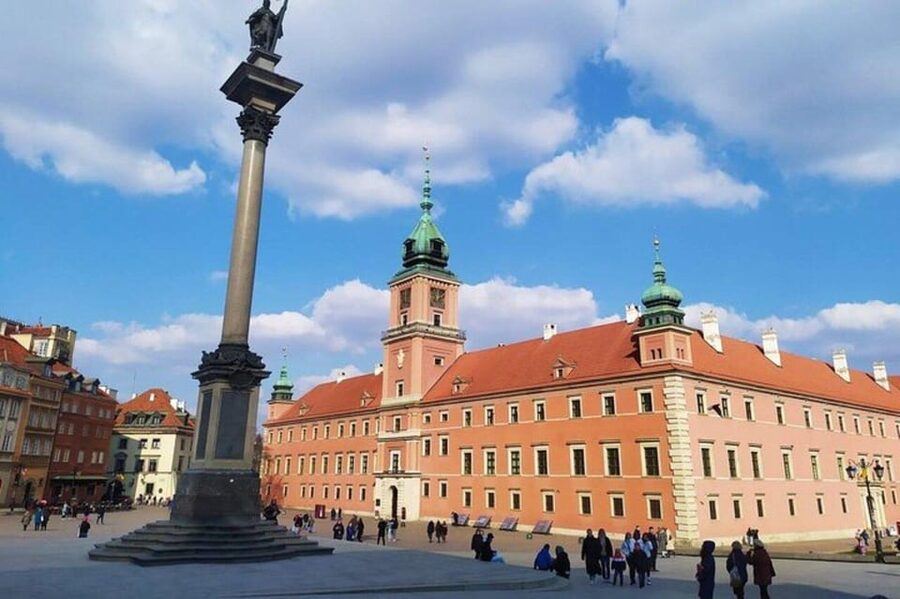
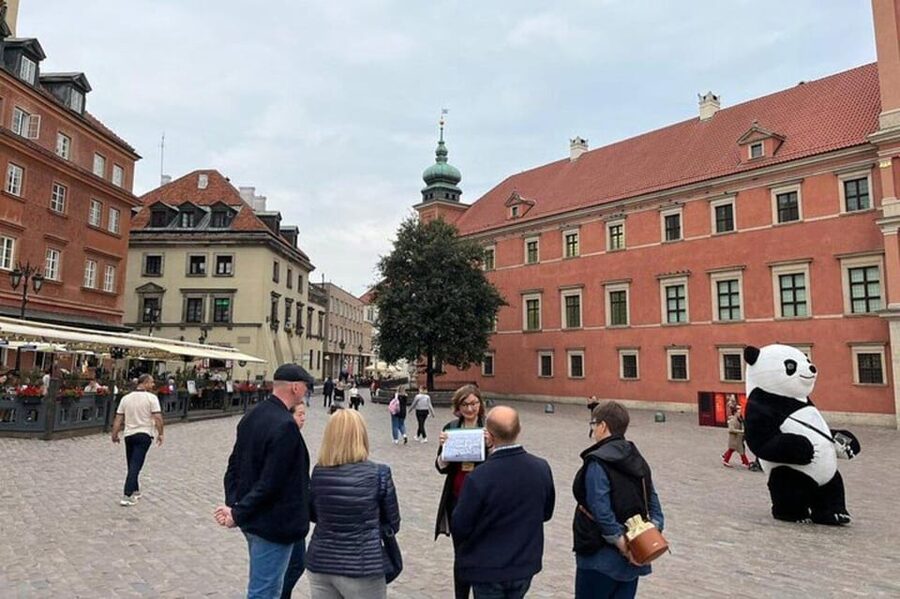
The tour begins at the Column of Sigismund III Vasa, beside the Royal Castle. This is an effective starting point because the setting immediately introduces Warsaw’s political past.
The Royal Castle is more than a grand building for photographs. It was a witness to the changing fortunes of Warsaw and the Polish state. From here, the guide explains the capital’s story and why Warsaw has earned the nickname phoenix city. The image is apt: the city suffered destruction, then rebuilt its historic center and public identity.
You should expect to see the castle as part of the outdoor route, not to tour its interior. Admission to the Royal Castle is not included, so check your schedule if you want to add an inside visit before or after the walk. A separate ticket and extra time are needed.
The square around the column is also a good place to understand Warsaw’s scale. You are close to the Old Town, yet the setting feels formal and spacious. It provides a clear orientation point before the narrower streets begin.
St. John’s Archcathedral and the stories behind Warsaw
The next stop is St. John’s Archcathedral, where the guided portion lasts about 15 minutes. The cathedral adds a different mood to the route. After the open space around the castle, you enter one of the city’s important religious and historic sites.
The tour’s advertised stories include why famous people in Warsaw were once placed on pedestals, quite literally. This gives the guide room to explain how monuments work in the city, not just point out their names. I appreciate that approach because a statue means little if you do not know why it was placed there.
The cathedral stop is also useful for visitors who want a simple explanation of Warsaw’s old center. The Old Town is not merely a cluster of picturesque streets. Its rebuilt form and careful restoration helped earn UNESCO World Heritage status. Your guide can connect the buildings you see with the larger question of how a city preserves its identity after near destruction.
The 15-minute timing keeps the stop moving. If you want a long interior visit or time for quiet reflection, you may need to return later on your own.
Kanonia, the quiet corner behind the cathedral
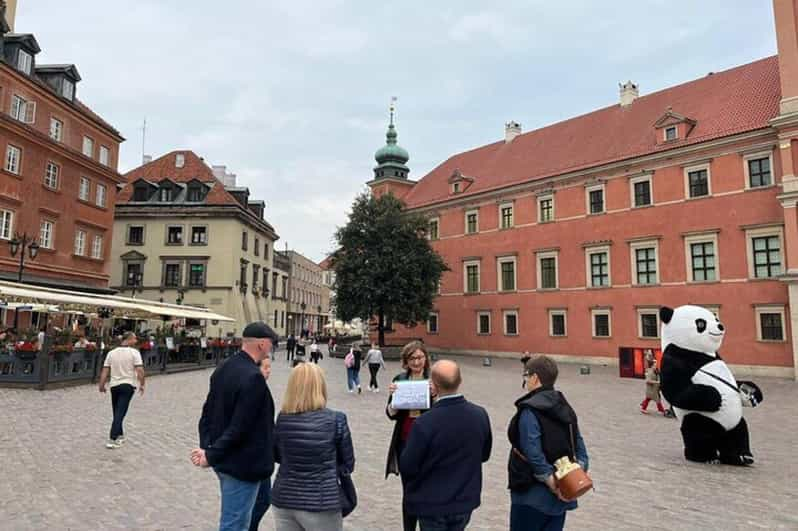
Kanonia is one of the most appealing stops on this walk. It is a small square behind the cathedral, and the route treats it as a quieter corner away from the main flow of the Old Town.
The value here is contrast. Warsaw’s Old Town Market Square is the place most people expect to see. Kanonia gives you a less obvious view of the historic center, with a more intimate feel and a chance to notice the arrangement of the old buildings.
The guide spends about 15 minutes here. That is enough time to hear the local stories and look closely, but not enough for a long independent exploration. I would use this stop to ask questions. The tour is built around stories, and Kanonia is the kind of place where a short explanation can make the architecture more memorable.
This is also the stop tied to the tour’s promise of a secret wish that can come true by counting to three. The exact custom is part of the guide’s storytelling, so listen closely rather than rushing ahead for photographs.
More Walking Tours in Warsaw
- Warsaw: Old Town Highlights Walking Tour in English
★ 4.7 · 1,516 reviews - Warsaw: Old Town Guided Walking Tour
★ 4.9 · 599 reviews - Half-Day Polish Food Walking Tour with Guide and Dinner
★ 4.5 · 381 reviews - Warsaw: Warsaw Ghetto Private Walking Tour with Hotel Pickup
★ 4.9 · 369 reviews
Old Town Market Square and its colorful houses
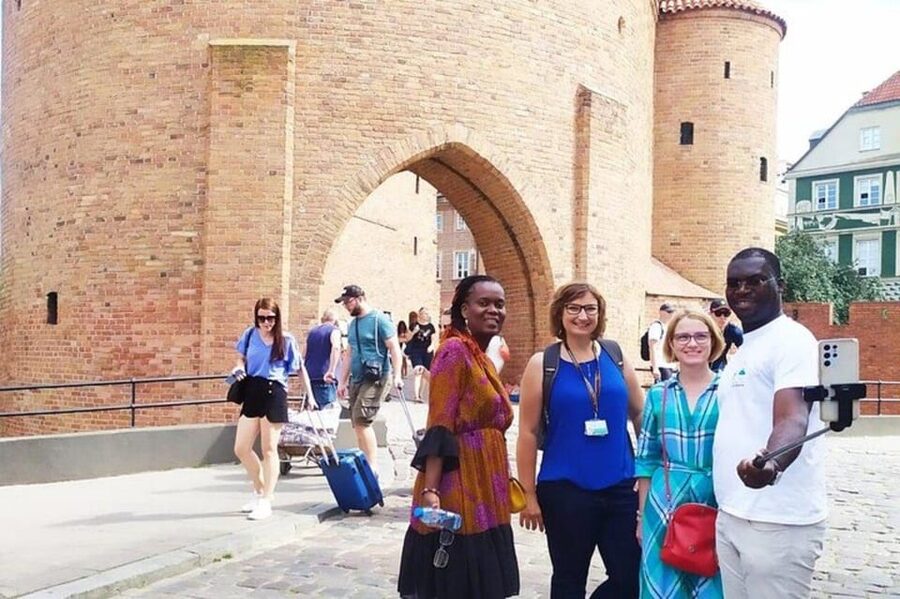
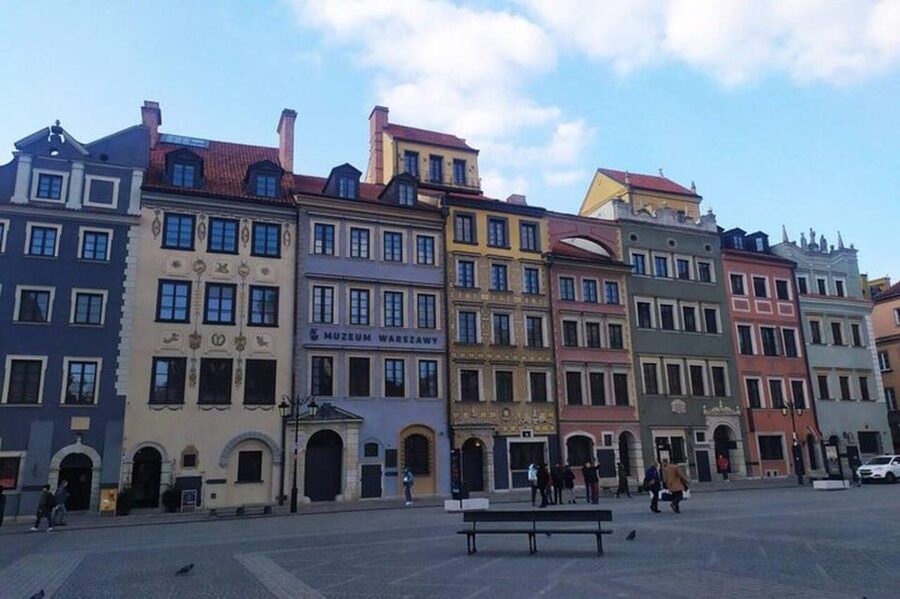
The walk then reaches Rynek Starego Miasta, or Old Town Market Square. This is the visual heart of the route, with colorful tenement houses surrounding the open square.
The market square is photogenic, but the guide’s role is to keep it from becoming just a backdrop. You hear about the symbol of Warsaw and the legend connected with it. The city’s mermaid is central to Warsaw’s identity, and learning the story gives the familiar emblem a stronger sense of place.
The stop lasts about 10 minutes, so expect a concise explanation rather than a long break. You can take photographs, but do not count on free time for a meal or shopping here. The tour keeps a steady pace.
For me, this is where the contrast between appearance and history becomes clearest. The bright façades suggest an untouched medieval quarter. In fact, the Old Town’s survival is tied to an enormous rebuilding effort. That makes the UNESCO designation easier to understand, and it gives the square more weight than its pretty façades alone would provide.
The Barbican and Warsaw’s rebuilt walls
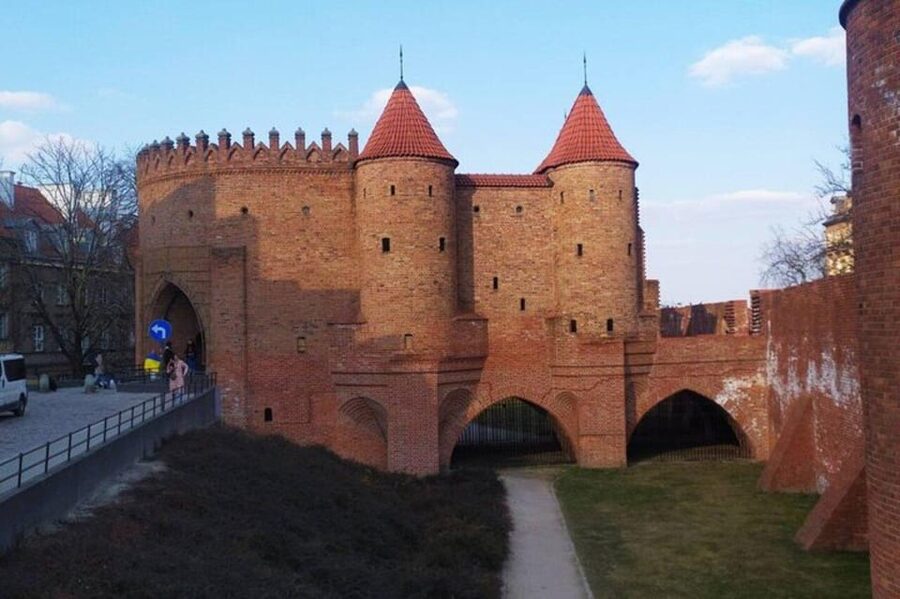
The Warsaw Barbican follows, with another 10-minute guided stop. This defensive structure marks the edge of the old center and adds a change of shape to the route. After squares and façades, you get masonry, gates, and the sense of a fortified town.
The Barbican is a useful place to think about Warsaw’s layers. You are not simply moving from one old building to another. You are following the outline of a city that changed over time and then reconstructed important parts of its historic core.
The stop is short, which works well for a walking tour. You get the main context without turning the experience into a technical architecture lesson. If fortifications are your main interest, you may want to return later and spend more time looking around. The tour gives you a strong introduction, not an exhaustive examination.
Because the route remains compact, you do not need transport between these landmarks. Wear comfortable shoes, but this is not a strenuous hike. The walk is listed as wheelchair accessible, which is useful for visitors who need a route with a manageable distance. Conditions can still vary by pavement and crowd levels, so private booking may be worth considering if mobility needs are a major concern.
Maria Skłodowska-Curie’s Warsaw birthplace
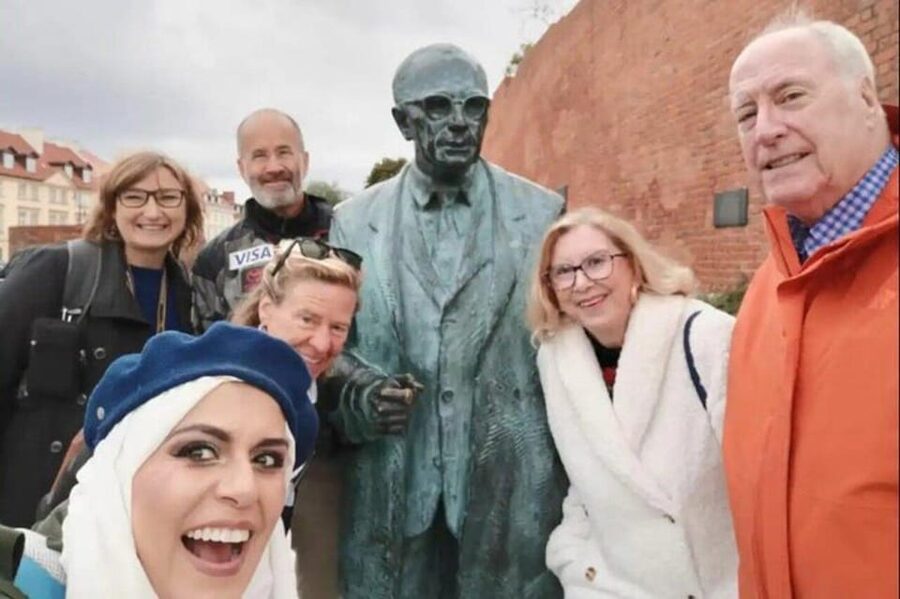
The Maria Skłodowska-Curie Museum is one of the most personal stops. The tour points out her birthplace and gives you about 15 minutes of guided attention.
Maria Skłodowska-Curie is known worldwide as a double Nobel Prize winner, but seeing the Warsaw connection changes the story. It places her early life in the same streets as the royal buildings, churches, and market squares. That link between a famous scientist and an ordinary city address makes the route feel broader than a tour of monuments.
The museum itself requires a separate admission ticket. The walking tour does not include entry, so you should decide in advance if you want to visit inside. If you do, allow additional time beyond the two-hour route.
This stop will appeal especially to visitors interested in science, women’s history, or Polish figures who made an impact beyond the country. It is also a good reminder that Warsaw’s story is not only about kings, battles, and reconstruction. It includes education, ambition, and people who changed the world.
Ending at the Warsaw Uprising Monument
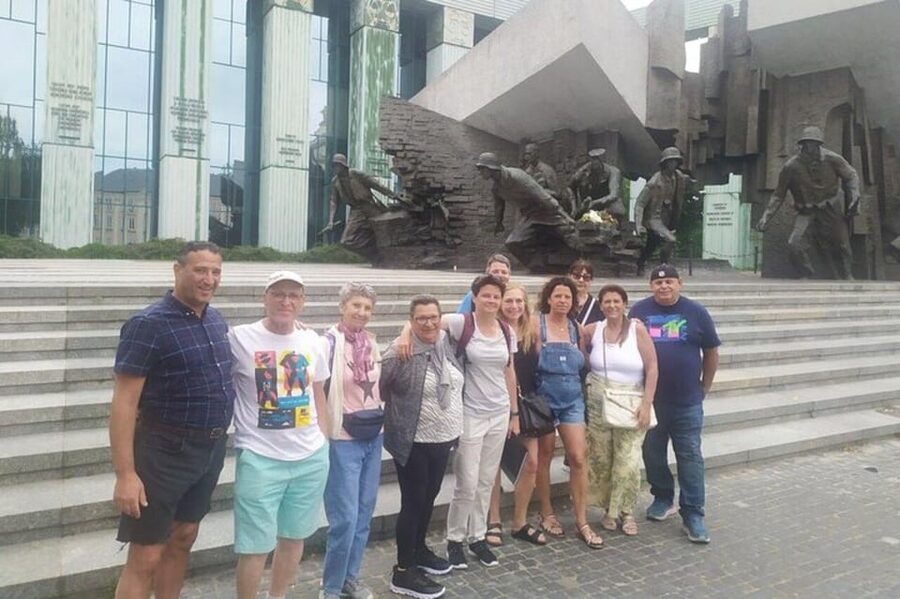
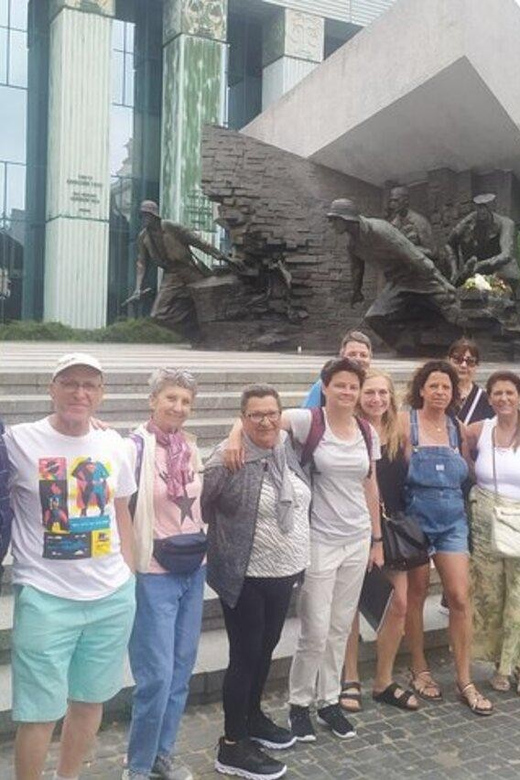
The walk finishes at the Warsaw Uprising Monument. This is a serious and fitting end to a tour about Warsaw’s survival.
By this point, you have heard about the Royal Castle, the Old Town’s rebuilding, the city’s symbols, and its historic institutions. The monument brings the story toward the 20th century and the Warsaw Uprising. The ending helps explain why the city’s phoenix image carries such emotional force.
The finish is also practical. You are no longer at the beginning point, so plan your next move before the tour ends. The supplied information pack includes useful links and suggestions for additional places to visit, eat, and drink, which can help you continue exploring without returning to the starting square.
What the $32 price gets you
At $32 per person, this is not the cheapest way to stroll through Warsaw, but the value depends on how much context you want. You are paying for a live English-speaking guide, a structured route, visual aids, and an information pack that can help with the rest of your stay.
The route covers several major sights in a short period. If you walked alone, you could see the same streets, but you would need to research the Royal Castle, the cathedral, Kanonia, the mermaid legend, UNESCO status, Maria Curie, and the Warsaw Uprising yourself. The tour saves that preparation time.
The price does not cover entry to the Royal Castle or Maria Skłodowska-Curie Museum. That is not unusual for a walking tour, but you should include those costs if you plan to go inside. The main benefit is the guided connection between places, not bundled admission.
Private and small-group options make the price easier to justify for couples, families, or friends who want to ask many questions. Solo visitors should compare the available group format and decide if the extra guidance is worth the cost.
Who will get the most from this tour
I would choose this walk if you are visiting Warsaw for the first time and want a clear introduction to the Old Town. It is especially useful if you enjoy history in manageable portions rather than long museum lectures.
It also suits you if you want:
- A short route with major landmarks and less obvious corners
- An English-speaking guide
- A story-led introduction to Warsaw’s destruction and rebuilding
- Suggestions for places to eat, drink, and visit afterward
- A private or small-group setting
- A wheelchair-accessible activity with a modest walking distance
You may want something else if your main goal is extended interior sightseeing. The castle and Curie museum require separate tickets, and each guided stop is brief. This experience is best viewed as a strong orientation walk, not a full museum tour.
Book for a time when you can continue exploring afterward. Two hours gives you the framework. The Royal Castle, museum, and Old Town streets can fill the rest of your day.
Practical details before you go
The tour lasts approximately two hours and covers about 1.5 kilometers. Starting times vary, so check availability when booking.
Cancellation is free up to 24 hours before the activity for a full refund. You can also reserve now and pay later, which helps if your Warsaw schedule is still changing.
The tour is conducted in English. At the meeting point, look for the white and green umbrella. Bring your questions, especially if you want advice about food, drinks, or further sights, since recommendations are part of the information provided with the experience.
Should you book the Historic Heart of Warsaw walk?
Book it if you want Warsaw’s Old Town to make sense quickly. The combination of royal history, cathedral streets, Kanonia, the market square, the Barbican, Maria Skłodowska-Curie, and the Warsaw Uprising Monument gives you a well-shaped introduction in only two hours.
I would be more cautious if you expect entry into every major site. You will need separate tickets for the Royal Castle and Maria Curie Museum, and the walk keeps each stop focused. For most first-time visitors, though, the compact route and story-led approach offer good value, especially when you use the included recommendations to plan the rest of your stay.
FAQ
How long does the Historic Heart of Warsaw tour last?
The tour lasts approximately two hours.
How far does the walking route go?
The route covers approximately 1.5 kilometers.
Where does the tour begin?
It begins at the Column of Sigismund III Vasa, beside the Royal Castle.
Where does the tour end?
The tour ends at the Warsaw Uprising Monument.
Is the Royal Castle admission included?
No. Entry to the Royal Castle is not included in the tour price.
Is entry to the Maria Skłodowska-Curie Museum included?
No. The museum entry ticket is not included.
What language is the tour conducted in?
The live tour guide speaks English.
Is the tour wheelchair accessible?
Yes. The activity is listed as wheelchair accessible.
Just added in Warsaw
- Wroclaw Small-Group Tour with Lunch from Warsaw★ 5.0 · 2 reviews
- World War II Warsaw Old Town, Military Cemetery Walking Tour★ 4.7 · 3 reviews
- Warsaw: Wolf’s Lair & Swieta Lipka Small-Group Tour + Lunch★ 5.0 · 3 reviews
- Wilanów Palace: 2-Hour Guided Tour with Entrance Tickets★ 4.8 · 8 reviews
- Warsaw Zoo Skip-the-Line Entry Ticket with Private Transport★ 4.8 · 3 reviews
- Warsaw: Private Vodka Tasting Night with Snacks and Pickup★ 5.0 · 7 reviews
- Warsaw Private Wilanow Palace & Garden Tour★ 4.6 · 30 reviews
- Warsaw Wolf’s Lair with St. Lipka and Mamerki Private Guided★ 4.2 · 3 reviews
Historical Tours, compared.

POLIN Museum of the History of Polish Jews Ticket
Read our review →
Gdańsk City Sights & History Guided Walking Tour in English
Read our review →

Small-Group Historical Guided Tour of Warsaw with pick up/drop off. Public Tour.
Read our review →Browse the lists this tour appears in