
REVIEW · HISTORICAL TOURS
Historical Walking Tour of Jewish Warsaw
The city remembers in fragments. This three-hour walk through Jewish Warsaw connects those fragments, from Nożyk Synagogue and a surviving ghetto wall to Miła 18 and Umschlagplatz. I especially like the small group of no more than 10 and the use of maps, photographs, and other visual aids. I also like that the walk covers both Jewish life before the war and the destruction that followed, rather than treating the ghetto as a single isolated story.
The main drawback is simple: there is a lot of walking, often across hard city surfaces, and much of the former ghetto has vanished. You need sturdy shoes and a willingness to learn from memorials, street plans, and your guide’s explanation instead of expecting a preserved historic district.
In This Review
- Key points at a glance
- Starting at Sienna 53 in modern Warsaw
- Nożyk Synagogue and the last visible traces
- Two hours through the former Warsaw Ghetto
- Memorials that require attention, not spectacle
- The final stretch to Karski and Umschlagplatz
- What the $28.87 price delivers
- Walking conditions and group pace
- Who will get the most from this walk
- Should you book the Jewish Warsaw walk?
- FAQ
- How long does the Historical Walking Tour of Jewish Warsaw last?
- Where does the tour begin?
- Where does the tour end?
- Is the tour offered in English?
- How large is the group?
- Is the Nożyk Synagogue entrance included?
- How much does the tour cost?
- Is the tour suitable for people who have difficulty walking long distances?
- Are service animals allowed?
- Can I cancel for a full refund?
Key points at a glance
- Three hours from Sienna Street to Umschlagplatz: The route crosses a large section of former Jewish Warsaw and ends at one of its most painful sites.
- A rare surviving synagogue: Nożyk Synagogue is the only Warsaw synagogue that survived the war and still exists today. Entry costs 20 PLN.
- History brought to life with visual aids: Maps and old photographs help you picture streets and buildings that no longer remain.
- A maximum of 10 people: The small group makes it easier to hear, ask questions, and keep a steady pace.
- A serious, carefully handled subject: The tour addresses Jewish life, resistance, deportation, and Poland’s wartime experience without turning the Holocaust into spectacle.
- Plan for distance and weather: Bring good walking shoes and an umbrella. The tour is not a good fit if long walks are difficult.
Starting at Sienna 53 in modern Warsaw
The meeting point is at Sienna 53, on the corner with Jana Pawła II Avenue, near Baguette Mi, a banh mi bistro. That is a practical place to begin because you are starting in today’s city, not at a preserved museum entrance. Your guide gives a short introduction before leading you into a part of Warsaw where the past often appears in small, easy-to-miss traces.
The mobile ticket makes arrival straightforward, and the location is near public transportation. Still, give yourself time to find the corner. One person arrived late after being misled by Apple Maps and another Flying Tiger location, although the guide helped reconnect them with the group. I would not count on that happening every time, so check the meeting point carefully before setting out.
Warsaw’s Jewish district was almost completely destroyed during World War II. That fact shapes the whole experience. You are not walking through a continuous old neighborhood with intact synagogues, shops, and apartment blocks. Instead, the guide helps you read a modern street plan, memorials, surviving structures, and empty spaces.
That may sound less dramatic than entering a preserved medieval quarter. In practice, it asks more of you, but it can also give you a clearer sense of what was lost.
More History Tours in Warsaw
- Warsaw: POLIN Museum of the History of Polish Jews Ticket
★ 4.7 · 1,142 reviews - Warsaw: Chopin Concert at Historical Venue in Old Town
★ 4.7 · 445 reviews - Small-Group Historical Guided Tour of Warsaw with pick up/drop off. Public Tour.
★ 4.5 · 343 reviews
Nożyk Synagogue and the last visible traces
Nożyk Synagogue is one of the first major stops. It is the only Warsaw synagogue that survived the war and remains today, making it an important physical link to the city’s Jewish past. The stop itself lasts about 10 minutes, so expect an introduction rather than a long visit.
Admission is not included. The stated entry fee is 20 PLN, so bring enough local currency or be ready to pay as required at the site. Since the synagogue is the only paid stop listed, the extra cost is modest, but you should include it when comparing the total price.
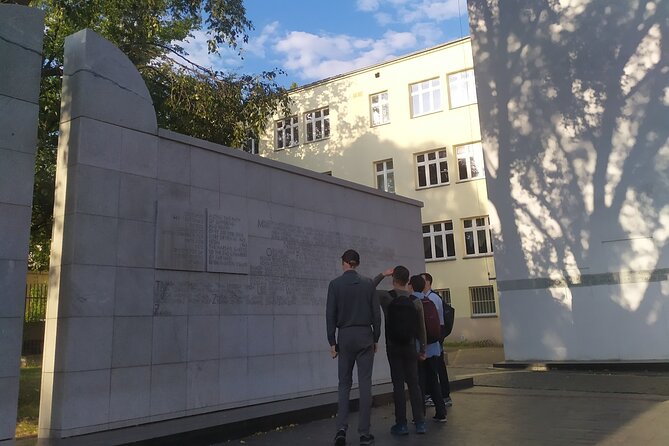
Next comes a fragment of the ghetto wall. Only a few sections remain, and this is one of the places where scale becomes difficult to grasp. A short stretch of brick cannot show you the full size or human cost of the ghetto, but it gives the story a physical anchor.
Your guide’s visual materials matter here. Old photographs and maps can help you imagine the boundaries and streets that were later erased. Without that support, you might pass the wall, take a quick picture, and miss its meaning.
Two hours through the former Warsaw Ghetto
Most of the tour is spent walking through the former Warsaw Ghetto, with about two hours and five minutes devoted to the area. This is the heart of the experience, and it is also where expectations matter most.
You will see the Jewish Ghetto memorial, the courthouse on Solidarności Street, the Muranów residential district, the site connected with the discovery of Ringelblum’s archive, and the Church of St. Augustine. The route also includes the Heroes of the Jewish Ghetto memorial and Miła 18, the site of Anielewicz’s Bunker.
Several of these places are memorials or locations rather than intact wartime buildings. The former ghetto was almost entirely destroyed, and modern housing now occupies much of the area. If you want room after room of original interiors, this walk will disappoint you. The POLIN Museum is a better choice for that kind of detailed indoor presentation.
But the street tour offers something the museum cannot. It lets you move through the actual area where these events took place. You see how far the route covers, how the memorials relate to one another, and how ordinary city life now surrounds places linked to catastrophe.
The guide’s role is central. The strongest part of this walk is not a single dramatic ruin. It is the explanation that joins scattered evidence into a story about Jewish life in Warsaw before the occupation, life under Nazi rule, resistance within the ghetto, and the deportations that followed.
Several guides receive especially warm praise for their presentation. Aga, Agnieszka, Aggie, and Oliwia are named as friendly, clear, and deeply prepared. Oliwia is described as particularly good at combining facts, compassion, photographs, maps, and personal recommendations. Names and staffing can change, so you should not assume a particular guide will lead your departure, but the feedback points to a clear strength of this company: the quality of its guides.
Memorials that require attention, not spectacle
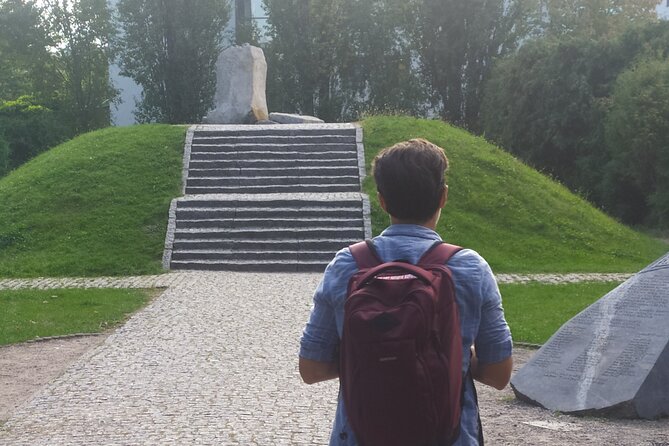
The Heroes of the Jewish Ghetto memorial is one of the route’s major points. It commemorates the people who fought in the Warsaw Ghetto Uprising and gives the walk a strong visual center. The nearby Miła 18 memorial marks Anielewicz’s Bunker, a place tied to the uprising and its leaders.
These sites can be visited quickly, but rushing would miss the purpose of the walk. I would take time to listen, look at the guide’s photographs, and notice how the memorials sit within present-day Warsaw. The tour is not designed as entertainment, and that is appropriate here. Guides are praised for being factual, humane, and serious when discussing a distressing chapter of history.
The route also includes places that broaden the story beyond the ghetto’s most famous monuments. The courthouse on Solidarności Street, the Muranów district, and the Church of St. Augustine help show how the neighborhood functioned and how wartime events affected the wider city.
The company also addresses a subject that can be politically sensitive: the German occupation, the German concentration camps, and Poland’s own wartime experience as a country under occupation. A guide may make careful distinctions between Nazi Germany and the Polish population, while also discussing the actions and suffering of people in Poland. That approach is historically important, though one person found the presentation too defensive and wanted a stronger expression of outrage.
I would view the tour as a serious historical lesson, not a performance of emotion. You may prefer a guide who speaks with visible anger, or you may value a measured presentation supported by evidence. The company provides maps, photographs, and references to help place the subject in context, and you can ask questions during the walk.
More Walking Tours in Warsaw
- Warsaw: Old Town Highlights Walking Tour in English
★ 4.7 · 1,516 reviews - Warsaw: Old Town Guided Walking Tour
★ 4.9 · 599 reviews - Half-Day Polish Food Walking Tour with Guide and Dinner
★ 4.5 · 381 reviews - Warsaw: Warsaw Ghetto Private Walking Tour with Hotel Pickup
★ 4.9 · 369 reviews
The final stretch to Karski and Umschlagplatz
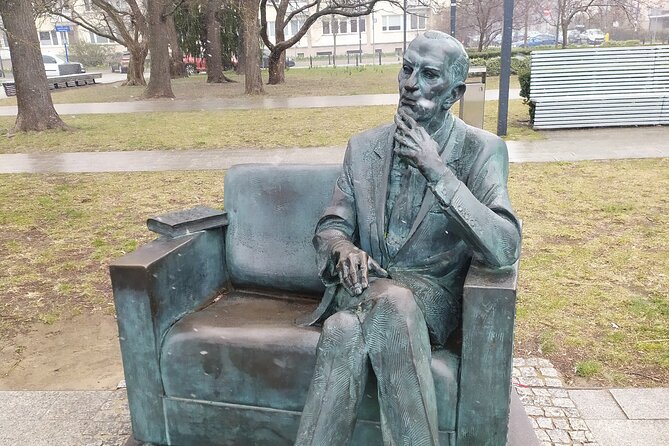
The stop at the Jan Karski bench, or Ławeczka Jana Karskiego, adds another set of memorials connected with the Jewish struggle in Warsaw. The stop lasts about 15 minutes and helps connect the ghetto story with people who resisted, witnessed, or carried information about the destruction.
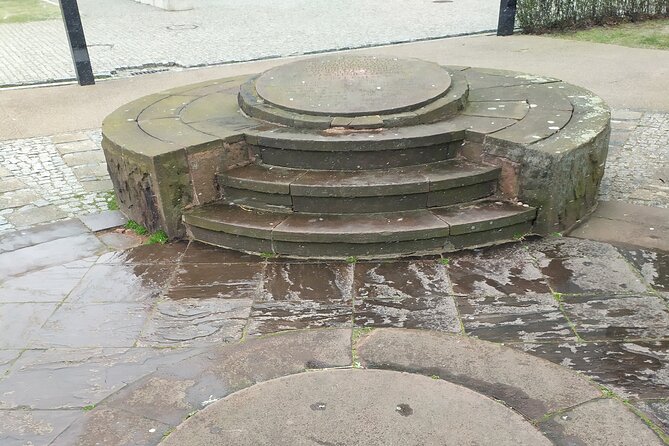
The walk then continues to Umschlagplatz, the final stop. This is the place from which 300,000 Jews were transported to Treblinka. The tour ends at the Umschlagplatz Monument on Stawki 10, rather than returning to the starting point.
That one-way route matters. You finish north of the starting location, so plan your next move before the tour begins. The route is near public transportation, and one guide helped a participant find the correct tram afterward, but the activity itself does not include transport.
Umschlagplatz is a quiet and stark ending. After several hours of learning how the ghetto operated and how people resisted, you arrive at the point associated with mass deportation. The sequence gives the tour a clear shape, moving from surviving religious life and physical remnants toward the ghetto’s destruction.
What the $28.87 price delivers
At $28.87 per person, this is fairly priced for a three-hour guided walk with a maximum of 10 people. You are paying for a focused route, a guide who can explain what is no longer visible, and visual materials that turn an empty street corner into a historical location.
The value is strongest if you would otherwise walk through Muranów without recognizing the sites. The ghetto’s remains are easy to overlook. A fragment of wall, a memorial, or an ordinary-looking building has limited meaning until someone explains its place in the larger story.
The price does not include the 20 PLN synagogue admission. It also does not include food, drinks, or transportation after the tour. The company does provide a pre-tour information pack with frequently asked questions and useful links, along with recommendations for other places to visit and places to eat or drink. That adds practical value, especially if you are building a short Warsaw visit around Jewish history.
I would pair this walk with POLIN, but not necessarily on the same day if you tire easily. Several hours in a museum followed by three hours on foot can make for a very long day. The walk and the museum serve different purposes: the museum explains Jewish life in Poland across centuries, while this tour places you in the streets of the former ghetto.
Walking conditions and group pace
The advertised duration is about three hours, and the route covers a substantial distance. People who have trouble walking long distances should choose another activity or ask for more details before booking. The route may include cobblestones and exposed stretches, so sturdy shoes are more useful than stylish ones.
Bring an umbrella. It is practical advice repeated by more than one person, and the walk does not appear to be built around indoor shelter. There are breaks, and guides have been praised for stopping in shady seating areas and keeping a pace that lets the group stay together.
A group of 10 is small enough for a personal feel without requiring a private-tour price. You can ask questions, see the visual aids, and hear the guide without competing with a crowd. A guide may also adjust the pace or extend the tour slightly if the group needs more time, though you should not assume the official three-hour schedule will always stretch.
Service animals are allowed, and most people can participate. The walk is near public transportation, but it is not described as wheelchair-friendly or suitable for anyone unable to manage a long distance on foot.
Who will get the most from this walk
I would choose this tour if you want a guided introduction to the Warsaw Ghetto, especially if you have limited time in Warsaw and want to see the main memorials in one route. It also suits anyone who wants context for the city’s wartime history before visiting POLIN or other museums.
You will get the most from it if you are comfortable with a sober subject and with using imagination alongside physical evidence. The tour cannot show you an intact ghetto street. It can show you where key places were, what remains, and how the city remembers them.
History students, families with older children, Jewish visitors tracing personal or communal connections, and people interested in World War II will find plenty to consider. The guides also add small details about Polish culture and present-day memory, which can make the experience feel less like a list of dates.
I would skip it if your main goal is a relaxed sightseeing stroll or a large number of preserved buildings. The route is serious, physically demanding, and at times emotionally heavy. You should also avoid booking a museum visit immediately afterward unless you are happy spending most of the day on your feet.
Should you book the Jewish Warsaw walk?
Yes, if you want the former ghetto explained rather than simply photographed. The strongest reasons to book are the small group, the visual aids, the well-regarded guides, and the route’s coverage of Nożyk Synagogue, the wall fragment, Miła 18, the major memorials, and Umschlagplatz.
Go with realistic expectations. You will see fewer original buildings than you may hope, and much of the experience depends on listening carefully. Wear solid shoes, carry an umbrella, allow for the 20 PLN synagogue fee, and leave room in your schedule for a one-way finish at Umschlagplatz.
At this price, it is a worthwhile introduction to Jewish Warsaw and the ghetto’s history. It works best as a street-based companion to POLIN, not as a replacement for the museum.
FAQ
How long does the Historical Walking Tour of Jewish Warsaw last?
The tour lasts approximately three hours.
Where does the tour begin?
It begins at Sienna 53, 00-820 Warszawa, on the corner with Jana Pawła II Avenue, near Baguette Mi.
Where does the tour end?
It ends at the Umschlagplatz Monument at Stawki 10, 00-178 Warszawa.
Is the tour offered in English?
Yes. The tour is offered in English.
How large is the group?
The tour has a maximum of 10 participants.
Is the Nożyk Synagogue entrance included?
No. Entry to Nożyk Synagogue costs 20 PLN and is not included in the tour price.
How much does the tour cost?
The listed price is $28.87 per person.
Is the tour suitable for people who have difficulty walking long distances?
No. The tour is not recommended for people who have problems with long walks.
Are service animals allowed?
Yes. Service animals are allowed.
Can I cancel for a full refund?
Yes. You can cancel at least 24 hours before the local start time for a full refund. Cancellations or changes made less than 24 hours before the start are not refunded or accepted.
Just added in Warsaw
- Deluxe Polish Food Tour Experience in Warsaw★ 5.0 · 19 reviews
- CO2-Offset Arrival Transfer from Warsaw Airport to Warsaw City★ 5.0 · 1 review
- Amazing photo walk through the Old town of Warsaw★ 5.0 · 32 reviews
- 8-day tour around Poland by private car★ 5.0 · 2 reviews
- Electric Scooter Tour: Full Tour – 3-Hours of Magic!★ 5.0 · 3 reviews
- 2h Rental of Motorboat for 10 in Warsaw no License Needed★ 5.0 · 1 review
- 2 Hour Super Segway City Tour of Warsaw★ 5.0 · 5 reviews
- Rental of Motorboat for 5 on Vistula in Warsaw no Licenses Needed★ 5.0 · 3 reviews
Historical Tours, compared.

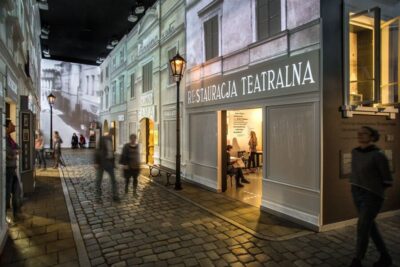
POLIN Museum of the History of Polish Jews Ticket
Read our review →
Gdańsk City Sights & History Guided Walking Tour in English
Read our review →



Small-Group Historical Guided Tour of Warsaw with pick up/drop off. Public Tour.
Read our review →Browse the lists this tour appears in