
REVIEW · JEWISH QUARTER TOURS
Warsaw: Jewish Heritage 4-Hour Private Tour
Warsaw’s Jewish story is both vast and painfully human. This private four-hour tour links the city’s major Jewish heritage sites, from the former ghetto and Umschlagplatz to the Jewish Cemetery, Nożyk Synagogue, and Próżna Street. I like the private format, which lets your guide adjust the pace and conversation to your interests. I also like the included transportation, since these sites are spread across Warsaw and a car saves valuable time.
The subject is difficult, and the schedule is full. You will spend much of the tour dealing with persecution, deportation, and death, so this is not a light sightseeing outing. Admission fees are not included, and four hours gives you a strong introduction rather than enough time for every museum and memorial.
In This Review
- Key points at a glance
- Why this four-hour tour matters
- Meeting your guide and covering Warsaw by car
- The former ghetto and the Ghetto Heroes Monument
- Walking the Memorial Route of Martyrdom and Struggle
- Umschlagplatz, the departure point
- The Jewish Cemetery on Okopowa Street
- Chłodna Street and the Footbridge of Remembrance
- Fragments of the ghetto wall
- Nożyk Synagogue and Próżna Street
- Adding POLIN Museum after the tour
- What the $42 price gets you
- Who should book this experience?
- Should you book the Warsaw Jewish Heritage Tour?
- FAQ
- How long does the Warsaw Jewish Heritage Tour last?
- Is this a private tour?
- Is hotel pickup included?
- Is transportation included?
- What languages are available?
- Does the tour visit the former Warsaw Ghetto?
- Does the tour stop at Umschlagplatz?
- Is the Jewish Cemetery included?
- Are admission fees included in the price?
- Can the tour include POLIN Museum?
- How much does the tour cost?
- Can I cancel for a full refund?
Key points at a glance
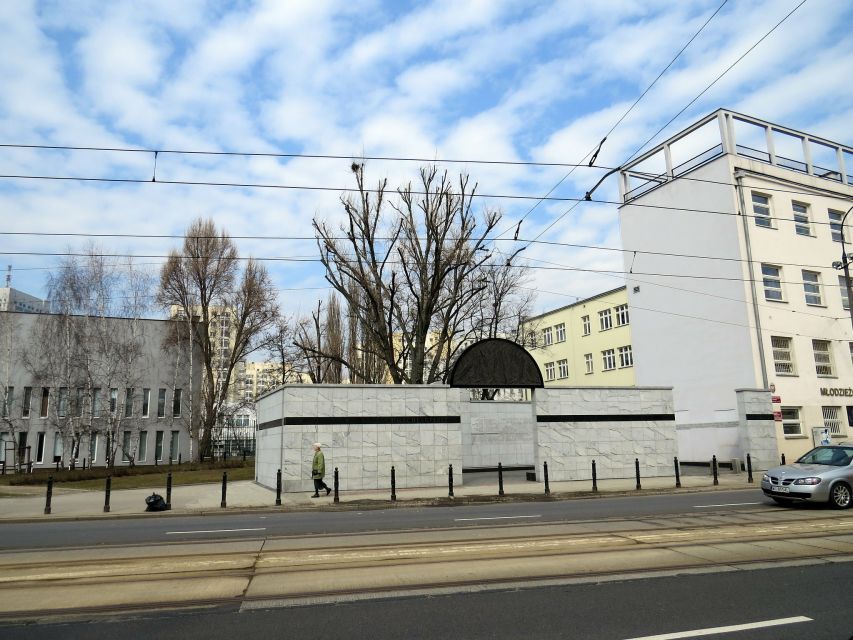
- The Umschlagplatz memorial marks the departure point for Jews sent to extermination camps, with more than 400 names carved into its walls.
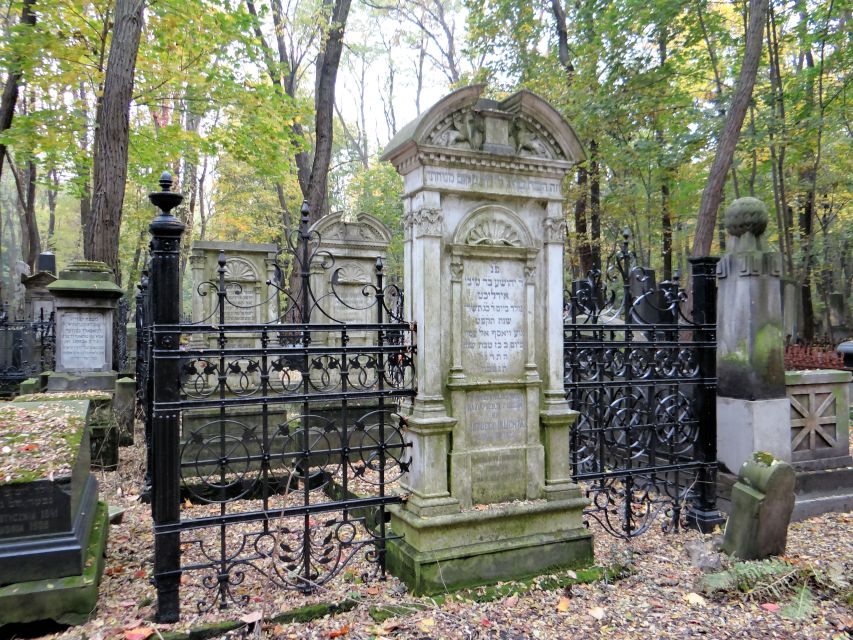
- The Jewish Cemetery on Okopowa Street is one of Europe’s largest Kirkuts and includes the symbolic grave of Janusz Korczak.
- The Memorial Route connects the Ghetto Heroes Monument with stones commemorating key figures and events.
- The Footbridge of Remembrance recalls the bridge that once linked the small and large ghettos across Chłodna Street.
- Nożyk Synagogue survived the Holocaust and offers a rare link to Warsaw’s prewar Jewish community.
- Hotel pickup and private transport make it easier to cover a large area in four hours without wasting time finding each location.
Why this four-hour tour matters
Before World War II, Warsaw was one of the great centers of Jewish culture in Europe. Only New York had a larger Jewish population, and Jewish life shaped the capital’s streets, businesses, religious buildings, publishing, theater, art, and political life.
That context matters. The tour is not only about the Holocaust, though the Holocaust naturally occupies much of the route. Your guide also helps you picture the Jewish Warsaw that existed before the war, a city where Jewish traditions were part of daily life rather than a distant historical footnote.
The private setup is useful here. A good guide can explain the difference between a memorial, a surviving building, and a reconstructed site. You can ask questions without holding up a group, and you can spend more time at a place that affects you most.
The experience has earned a 4.9 rating from 26 ratings, with repeated praise for clear explanations, sensitivity, flexibility, and personal warmth. Guides named in the feedback include Wojciech and Ziggy. One particularly useful feature is the guide’s ability to adapt the route to your pace and interests. Another visitor arranged to finish at POLIN Museum, then spent several more hours there.
More History Tours in Warsaw
- Warsaw: POLIN Museum of the History of Polish Jews Ticket
★ 4.7 · 1,142 reviews - Warsaw: Chopin Concert at Historical Venue in Old Town
★ 4.7 · 445 reviews - Small-Group Historical Guided Tour of Warsaw with pick up/drop off. Public Tour.
★ 4.5 · 343 reviews
Meeting your guide and covering Warsaw by car
Your guide meets you in your hotel lobby, holding a sign with your name. Transportation is included, which is important because the route crosses several parts of the city rather than staying in one compact district.
This is a private group, not a shared coach outing. That means you have more control over the rhythm of the day. If your group wants more explanation at a memorial, or prefers to move along after a difficult stop, you can discuss that directly with the guide.
The tour lasts four hours, so expect a steady schedule. You will see many locations, but you will not have unlimited time at each one. The best approach is to treat this as a guided orientation to Warsaw’s Jewish heritage, then add the POLIN Museum or another site afterward if your schedule allows.
Guiding is available in Spanish, English, German, Russian, Polish, French, Italian, and Portuguese. When booking, choose the language that will let you discuss complex and emotional subjects most easily.
The former ghetto and the Ghetto Heroes Monument
The tour enters the area of the former Warsaw Ghetto, where the guide explains what happened during the German occupation and how the ghetto uprising unfolded in 1943.
The Ghetto Heroes Monument commemorates those who fought and died. The scale of the response is central to understanding the uprising. A few hundred Jewish fighters resisted German forces equipped with heavy artillery and dive bombers. The memorial gives the story a physical focus, but the guide’s explanation supplies the human and political context.
I find this stop especially valuable early in the route because it establishes the difference between remembering resistance and reducing the ghetto story to one final act of defiance. The tour also addresses the ordinary lives that existed before the uprising: families, religious communities, workers, writers, children, and neighbors whose world was destroyed.
The setting can feel more open and modern than a first-time visitor expects. Much of prewar Warsaw was destroyed, and the ghetto area has changed greatly. Do not expect an intact historic quarter. Instead, rely on the memorials, street markers, and your guide to connect the present city with what once occupied it.
Walking the Memorial Route of Martyrdom and Struggle
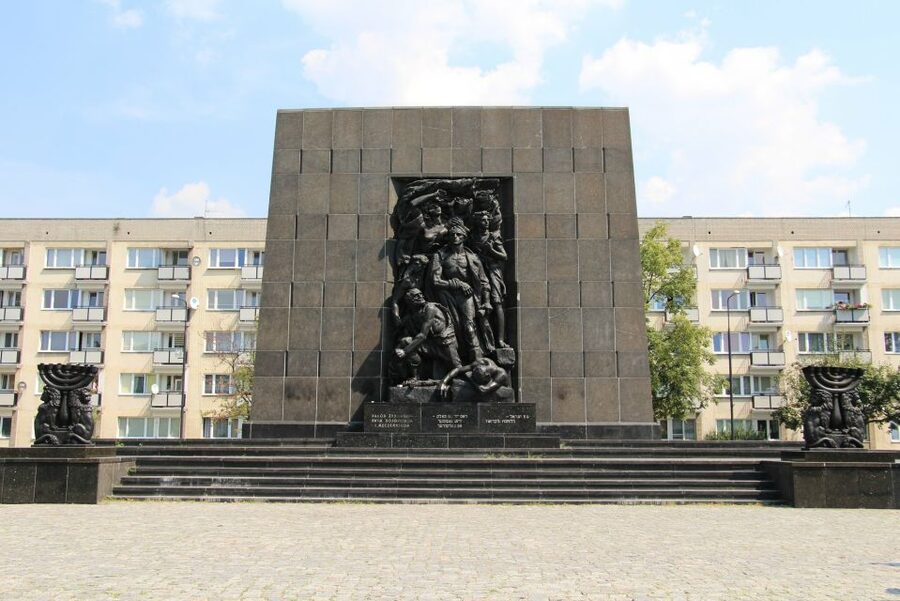
From the Ghetto Heroes Monument, you follow the Memorial Route of the Martyrdom and Struggle of Jews. Commemorative stones along the route recall important figures and events connected with the Warsaw Ghetto.
This walk adds detail to the larger monument. Rather than hearing one broad account, you encounter a sequence of reminders tied to people and moments. It gives your guide room to explain how individuals responded to impossible conditions, and it lets you pause at the places that interest you.
The route also helps you see how Warsaw remembers a past that is no longer visible in its original form. Streets and buildings may look ordinary, but a memorial stone or marker can change how you read the space around it.
Wear comfortable shoes. The tour includes walking between memorials and through the cemetery, although the included vehicle reduces the amount of distance you must cover on foot.
More Jewish heritage tours in Warsaw:
- Warsaw: Warsaw Ghetto Private Walking Tour with Hotel Pickup
★ 4.9 · 369 reviews - Private Tour: Warsaw’s Jewish Heritage by Retro Fiat
★ 5.0 · 208 reviews - Warsaw: Ghetto, Jewish Cemetery & POLIN Museum Private Tour
★ 4.8 · 132 reviews - Warsaw: Jewish Heritage & Holocaust Walking Tour
★ 4.7 · 119 reviews
Umschlagplatz, the departure point
At Umschlagplatz, the tone becomes especially somber. This was the assembly and departure point for Jews deported to extermination camps. The memorial’s form recalls the walls of the ghetto and a railway wagon, while more than 400 victim names are engraved on its walls.
Your guide will explain the role of the site and give you time to pay tribute. The supplied description specifically invites visitors to pray for those who were sent away and never returned. You do not need a religious background to understand the importance of this pause. It is a place for silence as much as information.
This is one of the tour’s most powerful stops, but it may also be one of the hardest. If you are traveling with children or anyone sensitive to Holocaust memorials, keep the emotional weight in mind when planning the rest of your day.
The memorial is more meaningful when you know what to look for. Ask your guide about the names, the design, and how the site relates to the ghetto boundaries. Because the visit is private, you can ask these questions without worrying about a fixed group schedule.
The Jewish Cemetery on Okopowa Street
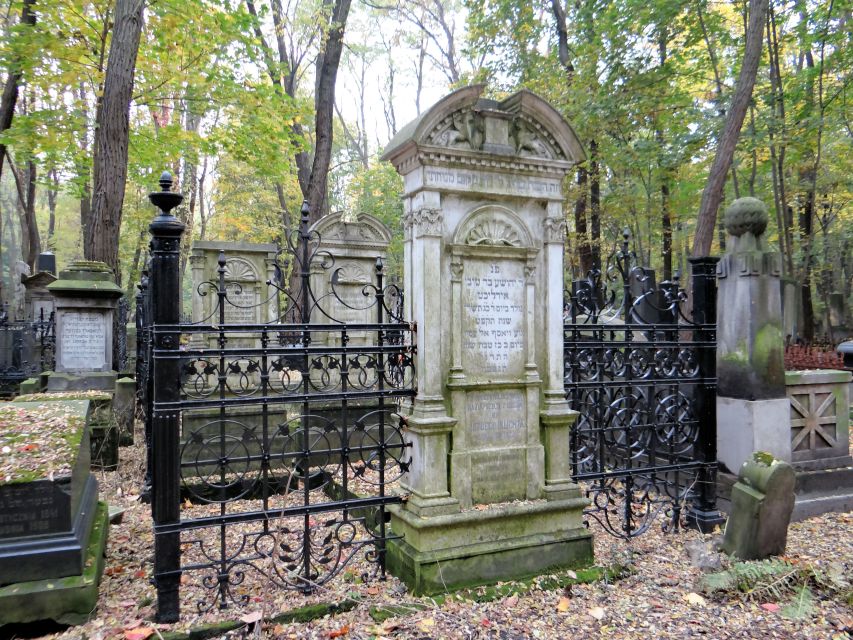
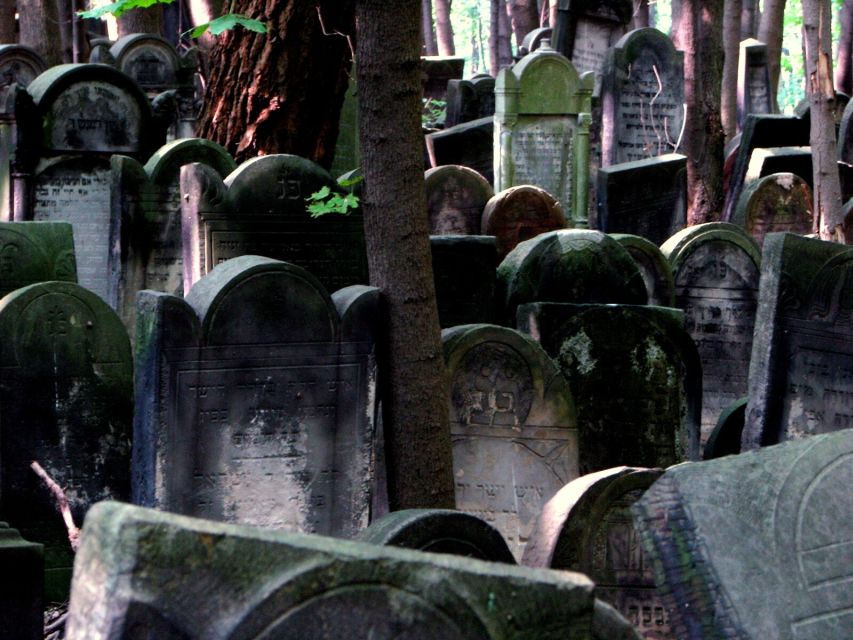
The Jewish Cemetery on Okopowa Street is one of the largest Kirkuts in Europe. It provides a different kind of encounter from the ghetto memorials, since it reflects the life of a Jewish community before and beyond the war as well as the losses caused by it.
Many notable people are buried here, including Ludwik Zamenhof, the founder of Esperanto, and the writer Ischok Leib Perec. Their graves help show the range of Jewish intellectual and cultural life connected with Warsaw.
The cemetery also includes a symbolic grave for Janusz Korczak. Korczak was a protector of children who was murdered at Treblinka with the children in his care. This detail gives the cemetery visit a personal focus, particularly for people interested in education, children’s welfare, or the moral choices made during the war.
Allow yourself time to absorb the setting. The cemetery is not simply a list of famous graves. It is a place where names, inscriptions, memorials, and the remaining traces of a community convey what statistics cannot.
The tour price does not include admission fees, so check the current cemetery arrangements when planning. The supplied information confirms the visit, but not the exact entry procedure or any restrictions on access.
Chłodna Street and the Footbridge of Remembrance
On Chłodna Street, you see the Footbridge of Remembrance, a wooden bridge that recalls the structure once used to connect the small and large sections of the ghetto.
Today, the bridge includes a multimedia art installation. It is not the original wartime bridge, but a modern memorial that helps you picture the physical separation imposed on the ghetto’s residents.
This stop is useful because it turns an administrative detail into something you can imagine spatially. A line on a map can feel abstract. A bridge over a real street makes the division easier to understand.
The installation also shows how Warsaw uses contemporary art to address events that left few surviving buildings. Your guide can explain what you are seeing and how the bridge relates to the wider ghetto system.
Fragments of the ghetto wall
The tour stops at surviving fragments of the Jewish Ghetto wall and at iron slabs set into pavements to mark the former ghetto boundaries.
These are modest traces, but that is part of their force. You may be walking through an ordinary part of modern Warsaw when a pavement marker indicates that the boundary once ran beneath your feet. The wall fragments offer a direct physical link to the system that confined the Jewish population.
This is also where a guide adds real value. Without context, a wall fragment or metal plate can be easy to miss. With an explanation of the ghetto’s size and changing boundaries, the markers become a map of imprisonment laid across the modern city.
Do not expect a single preserved district with every building intact. Warsaw’s wartime destruction and postwar rebuilding mean that the Jewish past is often marked by fragments and memorials rather than complete streetscapes.
Nożyk Synagogue and Próżna Street
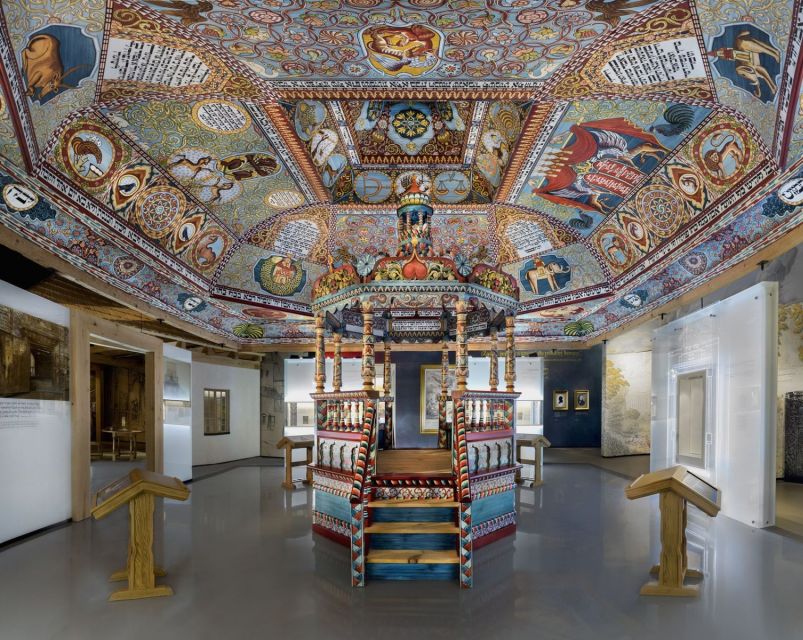
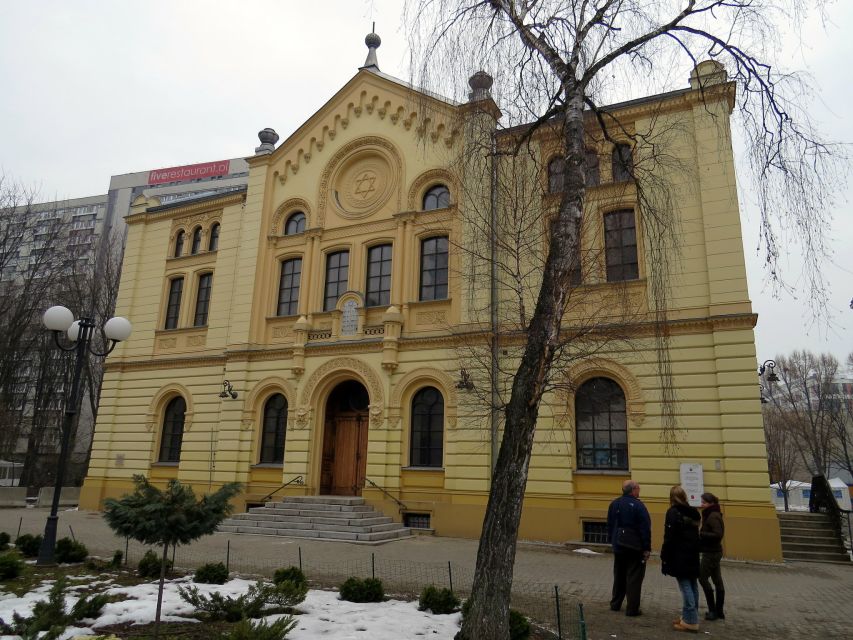
Nożyk Synagogue, built in the Neo-Romanesque style, survived the Holocaust period. It is one of the most important surviving religious buildings tied to Warsaw’s Jewish community.
The synagogue offers a welcome shift from sites of death and destruction. It reminds you that Jewish Warsaw was not defined only by the ghetto or the Holocaust. It had religious institutions, architecture, customs, and a daily community life that continued for generations.
The tour also visits Próżna Street, where something of the atmosphere of Jewish Warsaw has been preserved. The word atmosphere needs a little care here. You will not find a fully intact prewar neighborhood, but the street retains a strong connection to the city’s Jewish past and helps place the story in an urban setting rather than only at isolated memorials.
Ask your guide about the synagogue’s history and current use. The tour price excludes admission, and the supplied details do not confirm whether an interior visit is always included, so check what is planned for your date.
Adding POLIN Museum after the tour
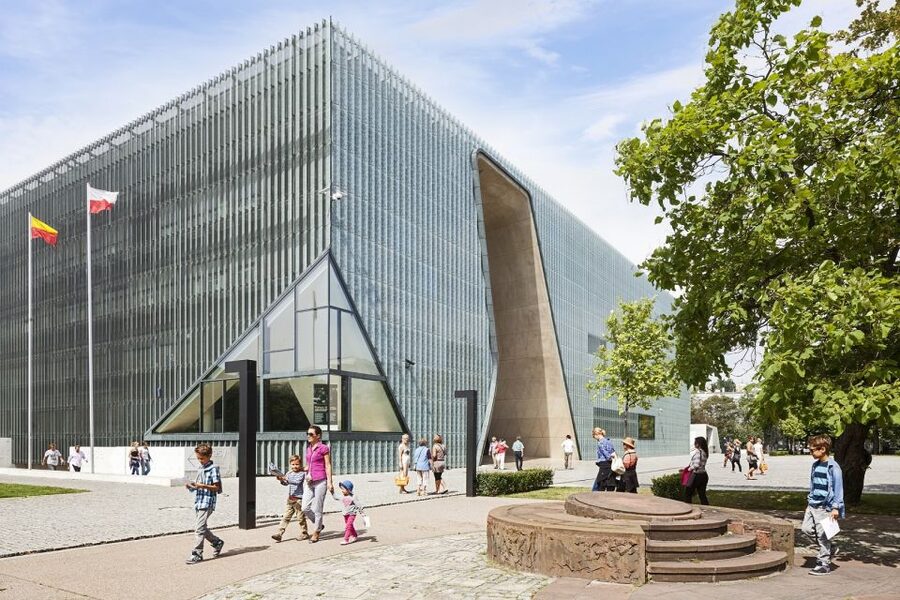
If you have more time, ask your guide about continuing to POLIN Museum of the History of Polish Jews. The tour can provide the background needed to make a museum visit more useful, and one visitor arranged to be dropped off there after the guided portion.
POLIN is not included in the tour price, and the available information does not specify an admission arrangement. Plan it as a separate museum visit rather than assuming the four-hour tour includes entry.
The timing works well for visitors who want both a guided outdoor route and a longer indoor look at Jewish life in Poland. The tour gives you places, names, and events. The museum can then help expand that framework at your own pace.
What the $42 price gets you
At $42 per person, the tour is reasonably priced for a private four-hour experience with a local guide and transportation. The value depends on your group size. For one or two people, a private tour costs more than a shared walk, but you receive hotel pickup, a vehicle between sites, and the chance to shape the discussion around your interests.
For a larger private group, the per-person price becomes easier to justify. You also avoid spending time arranging separate taxis between the cemetery, ghetto memorials, synagogue, and other stops.
Admission fees are extra, so include those in your budget if you want to enter paid sites. The main cost covers the guide and transport, not a full day of museum tickets.
Flexible booking helps if your Warsaw plans are still changing. You can reserve now and pay later, and cancellation is free up to 24 hours before the tour. Starting times depend on availability, so check the schedule before building your day around it.
Who should book this experience?
I would choose this tour if you want a serious introduction to Warsaw’s Jewish history and prefer personal explanation over reading plaques alone. It suits first-time visitors, families with older children, and anyone who wants to connect memorials across different parts of the city.
It is also a good choice if you have limited time. Four hours will not cover every Jewish heritage site in Warsaw, but the route includes the central memorials and several important surviving traces.
You may prefer a longer museum visit or a slower walking tour if you want extended time at each location. The schedule is full, and the subject demands concentration. Visitors who find Holocaust memorials emotionally difficult should plan a quiet period afterward rather than scheduling a busy evening.
The guide makes a major difference. Wojciech received particular praise for historical insight, warmth, flexibility, and adapting the tour to the group’s pace. Ziggy was also praised for clear guidance and for helping make a painful subject understandable. These comments suggest that the human side of the tour is one of its strongest features, though guide assignments can vary.
Should you book the Warsaw Jewish Heritage Tour?
Book it if you want private transportation, a flexible guide, and a focused route through Warsaw’s Jewish past. The tour covers the ghetto, resistance, deportation, cemetery, synagogue, street markers, and surviving fragments in a single morning or afternoon.
The main tradeoff is time. Four hours moves quickly, and paid admissions are separate. Still, at $42 per person, the combination of a private guide, hotel pickup, and transport offers solid value, especially for a small group that wants clear historical context.
I would pair it with POLIN Museum if your schedule allows. Taken on its own, this is a moving and practical introduction. Taken with extra museum time, it can become the foundation for a much fuller understanding of Jewish Warsaw.
FAQ
How long does the Warsaw Jewish Heritage Tour last?
The tour lasts four hours.
Is this a private tour?
Yes. It is organized for a private group rather than a shared group.
Is hotel pickup included?
Yes. Your guide waits in the hotel lobby with your name.
Is transportation included?
Yes. Transportation during the tour is included.
What languages are available?
The tour is available in Spanish, English, German, Russian, Polish, French, Italian, and Portuguese.
Does the tour visit the former Warsaw Ghetto?
Yes. The route includes the former ghetto area, the Ghetto Heroes Monument, ghetto wall fragments, boundary markers, Chłodna Street, and the Footbridge of Remembrance.
Does the tour stop at Umschlagplatz?
Yes. Umschlagplatz is included, with time to pay tribute to those deported to extermination camps.
Is the Jewish Cemetery included?
Yes. The tour visits the Jewish Cemetery on Okopowa Street.
Are admission fees included in the price?
No. Entry or admission fees are not included.
Can the tour include POLIN Museum?
If you have more time, your guide can explain what you can discover at POLIN Museum. One possible arrangement is to be dropped off there after the tour, but museum admission is not included.
How much does the tour cost?
The listed price is $42 per person.
Can I cancel for a full refund?
Yes. You can cancel up to 24 hours in advance for a full refund.
Just added in Warsaw
- Wroclaw Small-Group Tour with Lunch from Warsaw★ 5.0 · 2 reviews
- World War II Warsaw Old Town, Military Cemetery Walking Tour★ 4.7 · 3 reviews
- Warsaw: Wolf’s Lair & Swieta Lipka Small-Group Tour + Lunch★ 5.0 · 3 reviews
- Wilanów Palace: 2-Hour Guided Tour with Entrance Tickets★ 4.8 · 8 reviews
- Warsaw Zoo Skip-the-Line Entry Ticket with Private Transport★ 4.8 · 3 reviews
- Warsaw: Private Vodka Tasting Night with Snacks and Pickup★ 5.0 · 7 reviews
- Warsaw Private Wilanow Palace & Garden Tour★ 4.6 · 30 reviews
- Warsaw Wolf’s Lair with St. Lipka and Mamerki Private Guided★ 4.2 · 3 reviews