
REVIEW · HISTORICAL TOURS
Warsaw: Historic Private Tour in Retro Fiat
Warsaw’s past comes alive on four wheels. This private tour gives you a useful first look at the Polish capital from the passenger seat of a 1980s Fiat 125p, with stops for walking and conversation along the way. I like the mix of major sights and less obvious corners, especially the remains of the Jewish ghetto and the Praga district. I also like that the route can be adjusted to your interests, rather than forcing every group through the same fixed script.
The main consideration is pace. Four hours passes quickly when you are covering Old Town, wartime Warsaw, Praga, the Jewish ghetto, and the Communist rebuilding of the city. The tour is also half driving and half walking, so you will need comfortable shoes and enough mobility for several stops.
In This Review
- Key points to know before booking
- Why the retro Fiat makes sense in Warsaw
- Starting with Old Town and a rebuilt capital
- Walking through the remains of the Jewish ghetto
- Crossing into Praga for older, less polished Warsaw
- Understanding the Warsaw Uprising
- Seeing Communist-era Warsaw from the passenger seat
- The guides shape the quality of the day
- What is included for the $105 price
- Timing, comfort, and practical planning
- Who should book this Warsaw tour
- Should you book the retro Fiat tour?
- FAQ
- How long is the Warsaw retro Fiat tour?
- What vehicle is used?
- Is the tour private?
- Is hotel pickup included?
- Is the tour conducted in English?
- Does the tour include walking?
- Can the route be adapted?
- Does the tour visit the Jewish ghetto remains?
- Does the tour visit Praga?
- Are food and drinks included?
Key points to know before booking
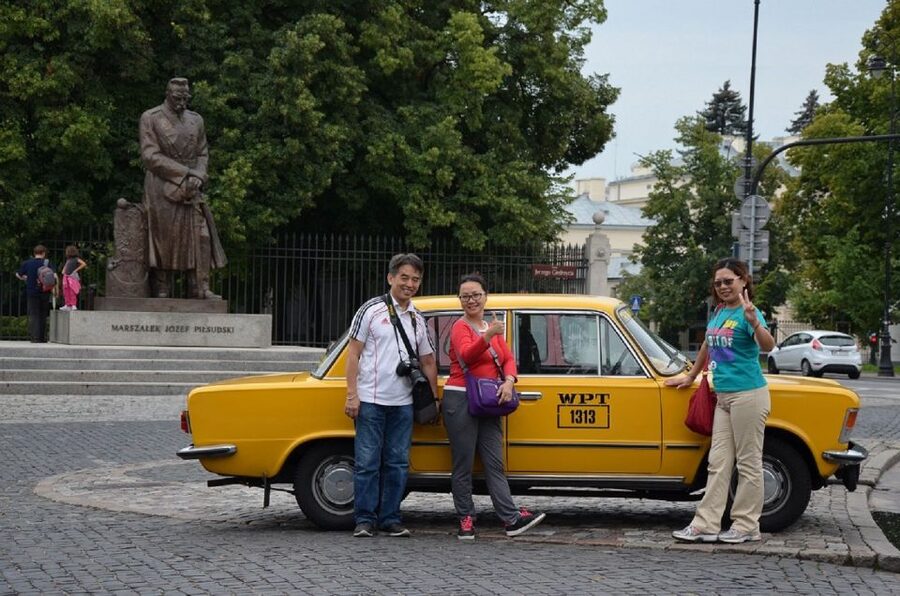
- The Fiat 125p is part of the experience: You ride in a historic 1980s Polish car that attracts attention as it moves through the city.
- The tour covers more than Old Town: You see wartime sites, Jewish ghetto remains, Praga, and Communist-era Warsaw.
- Praga adds a different side of the city: The district includes surviving older buildings and secluded courtyards that are easy to miss on your own.
- Your guide shapes the day: Guides such as Karol, Martin, Olga, Pavel, and Alexander have been praised for clear explanations, humor, and strong local knowledge.
- It suits a short Warsaw stay: Hotel pickup, private transport, and a four-hour route help you cover ground without piecing together taxis and public transport.
- Larger groups use a vintage minivan: Groups of more than four people are driven in a blue historic minivan instead of the Fiat 125p.
Why the retro Fiat makes sense in Warsaw
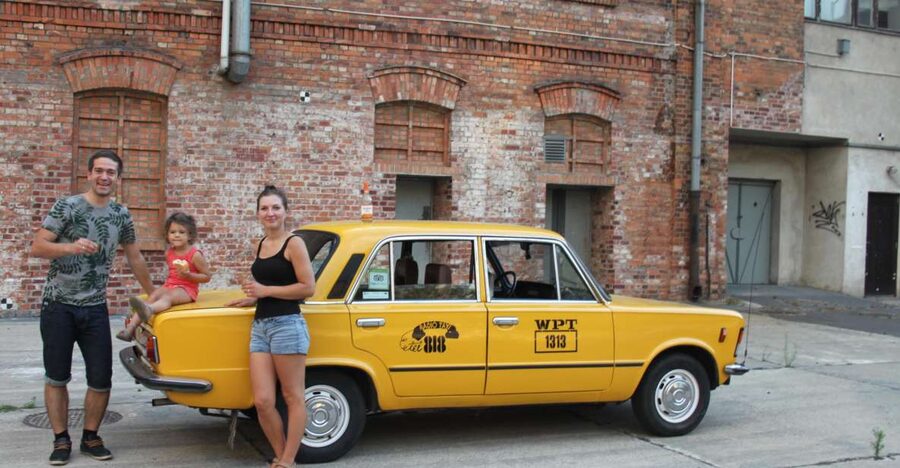
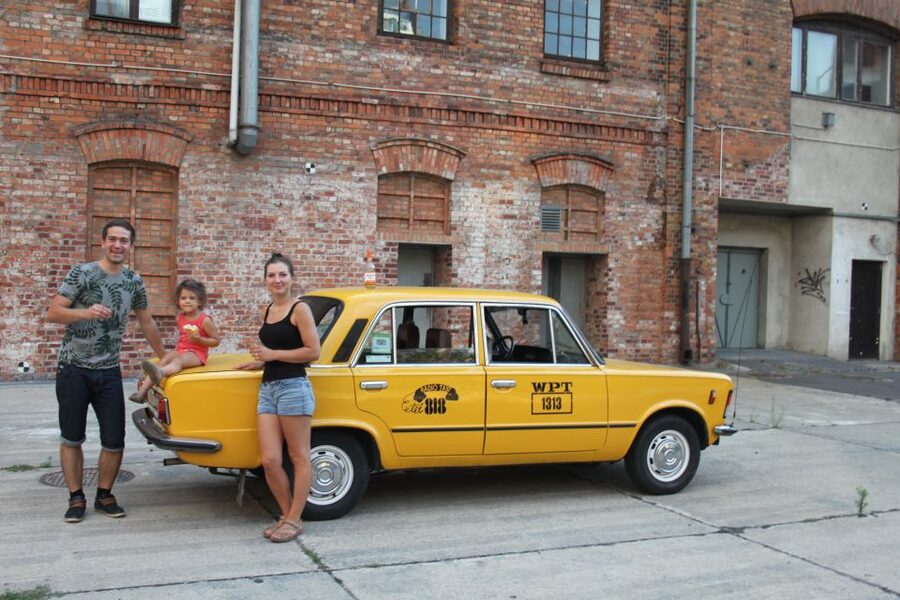
The car is not just a way to get from one stop to the next. The Fiat 125p connects neatly with the period of Polish Communist rule, when cars like this were a familiar part of daily life. You get a moving reminder of the era while learning how Warsaw changed under Soviet influence and Stalin’s postwar rebuilding program.
A private car also saves your legs and your planning time. Warsaw’s sights are spread across several districts, and you can spend a good part of a day walking between them. Here, your guide handles the route while you look out the window, ask questions, and get a sense of how the rebuilt capital fits together.
The car does have limits. A historic 1980s vehicle is part of the charm, but it will not feel like a modern limousine. If your group has more than four people, the experience changes to a blue vintage minivan. That still preserves the old-fashioned character, but it is worth knowing before you book if the Fiat itself is your main reason for going.
More History Tours in Warsaw
- Warsaw: POLIN Museum of the History of Polish Jews Ticket
★ 4.7 · 1,142 reviews - Warsaw: Chopin Concert at Historical Venue in Old Town
★ 4.7 · 445 reviews - Small-Group Historical Guided Tour of Warsaw with pick up/drop off. Public Tour.
★ 4.5 · 343 reviews
Starting with Old Town and a rebuilt capital
The tour includes Warsaw’s Old Town, the city’s best-known historic quarter and a natural place to begin. You can expect to see major landmarks while your guide explains how the area fits into the wider story of wartime destruction and postwar reconstruction.
Old Town looks old, but much of Warsaw was rebuilt after the Second World War. That fact gives the visit extra weight. The streets, façades, and public spaces are not simply preserved remnants. They are part of a huge rebuilding effort that aimed to restore the city after its destruction.
I find this especially useful for first-time visitors. Without that context, you might admire the colorful buildings and move on. With a guide, you can look at Warsaw as a city that was damaged, rebuilt, and reshaped more than once.
The route is not limited to postcard views. You may also stop at sites connected with the Warsaw Uprising, the major civilian armed uprising during the Second World War. These stops add a difficult but essential layer to the visit. The tour does not treat Warsaw as only a pretty old city. It shows you the cost of war and the decisions that followed it.
Walking through the remains of the Jewish ghetto
The Jewish ghetto section is one of the most serious parts of the tour. You visit surviving traces of the former ghetto and learn about the destruction of Warsaw’s Jewish community during the Second World War.
Do not expect a single intact historic quarter. Much of the original area was destroyed, and the experience depends on fragments, locations, and the guide’s explanation. That is precisely why a private guide can help. The remains may not always explain themselves, especially when modern Warsaw surrounds them.
You will do some walking here, so comfortable shoes matter. The tour information describes the day as half walking and half driving, but the balance can be adapted to suit your needs. If this subject is important to you, tell the guide at the start so the timing and emphasis can reflect your interests.
The Jewish ghetto visit is not a light sightseeing stop. It asks for attention and respect. Still, it belongs in a Warsaw introduction because it helps explain the scale of the city’s wartime losses and why certain streets and open spaces feel so different from the polished Old Town.
Crossing into Praga for older, less polished Warsaw
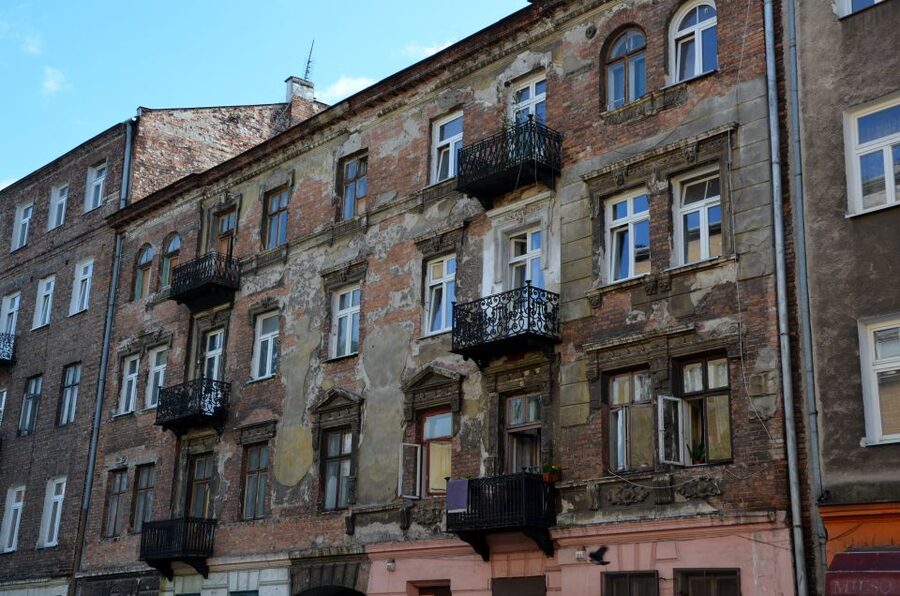
Praga gives the tour its strongest contrast. Located on the east bank of the Vistula, it offers a look at parts of Warsaw that feel different from the carefully restored Old Town. The route may include surviving historic buildings, older courtyards, and small religious memorials.
One particularly useful feature is the chance to visit a secluded courtyard with a Jewish shrine. This is the kind of place you could easily miss if you were exploring only the main streets. A guide who knows the district can make the stop more meaningful by explaining what you are looking at and why it survived.
Praga is also valuable because it broadens your idea of Warsaw. The city is not just rebuilt squares and grand Communist-era avenues. In Praga, you may find a more uneven mix of old structures, worn details, and later changes. That contrast helps you understand the city as a living place rather than a set of restored monuments.
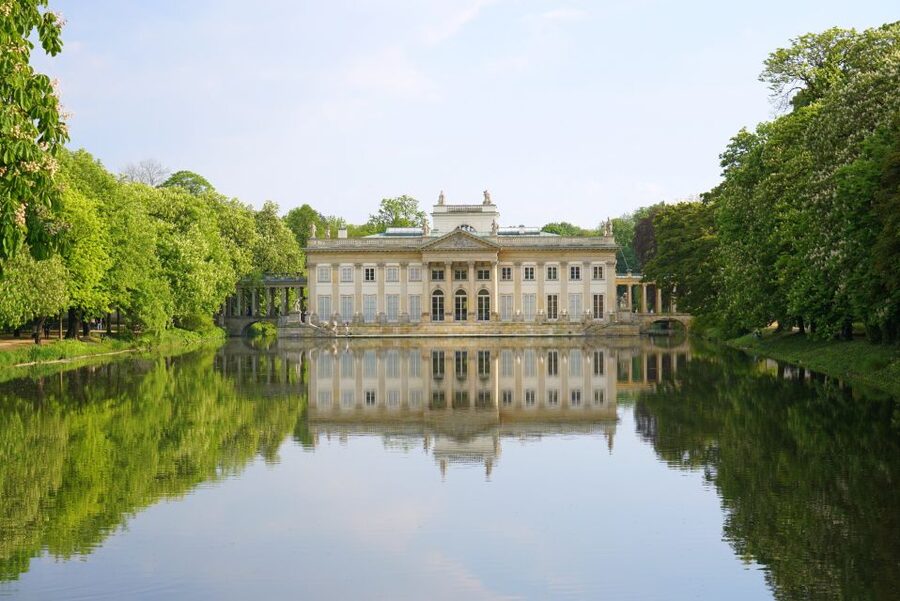
The tour information allows some route changes according to traffic, and the specific balance can also be adapted. In past visits, some people have chosen Praga instead of Łazienki Park, then explored the park independently on another day. That is a sensible choice if you have limited time and want to focus on wartime and Communist-era Warsaw.
Something quite different:
- Warsaw: Chopin Concert in the Old Town
★ 4.8 · 2,287 reviews - Warsaw: Traditional Galar Cruise on The Vistula River
★ 4.6 · 1,640 reviews - Warsaw: Old Town Highlights Walking Tour in English
★ 4.7 · 1,516 reviews - Warsaw Concert: Chopin – Painted by Candlelights with Wine
★ 4.8 · 1,442 reviews
Understanding the Warsaw Uprising
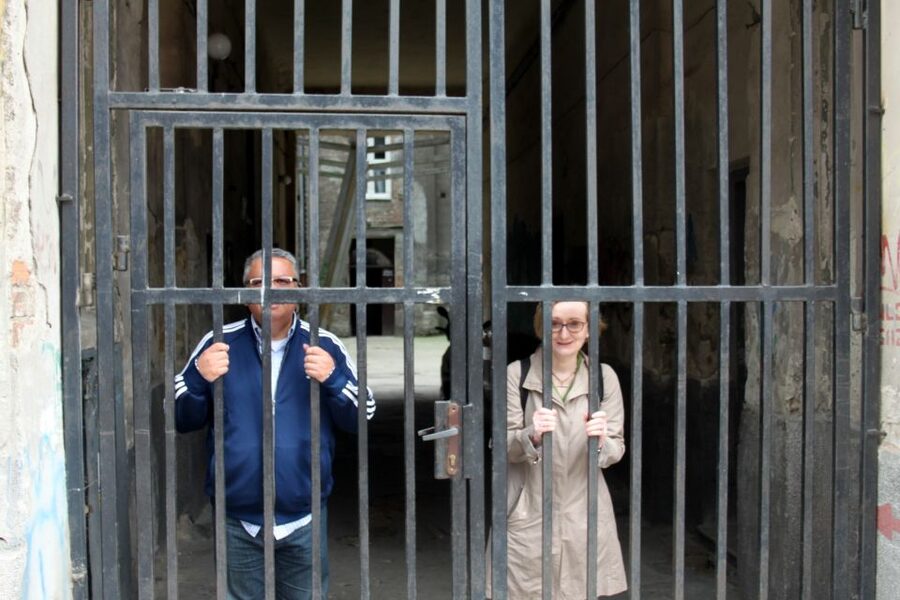
The Warsaw Uprising is a central part of the historical story covered on this route. Your guide takes you to important locations and explains the 1944 uprising, described as the largest armed uprising by civilians during the Second World War.
The value here is not simply reaching another landmark. It is connecting places across the city with a major event. Warsaw’s streets and rebuilt districts make more sense when you understand how the uprising affected the city and its people.
A private setting helps because you can ask direct questions. Guides have been praised for explaining both the facts and the human side of the subject, and for using old photographs to show how certain locations looked before the war. If your guide uses visual material during the stops, it can make the change between prewar and modern Warsaw much easier to grasp.
This part may feel fast if you want a full military or political study. Four hours has to cover several periods, so the tour provides an overview rather than a specialist lecture. If the uprising is your main interest, tell your guide early and ask for extra time at the most important locations.
Seeing Communist-era Warsaw from the passenger seat
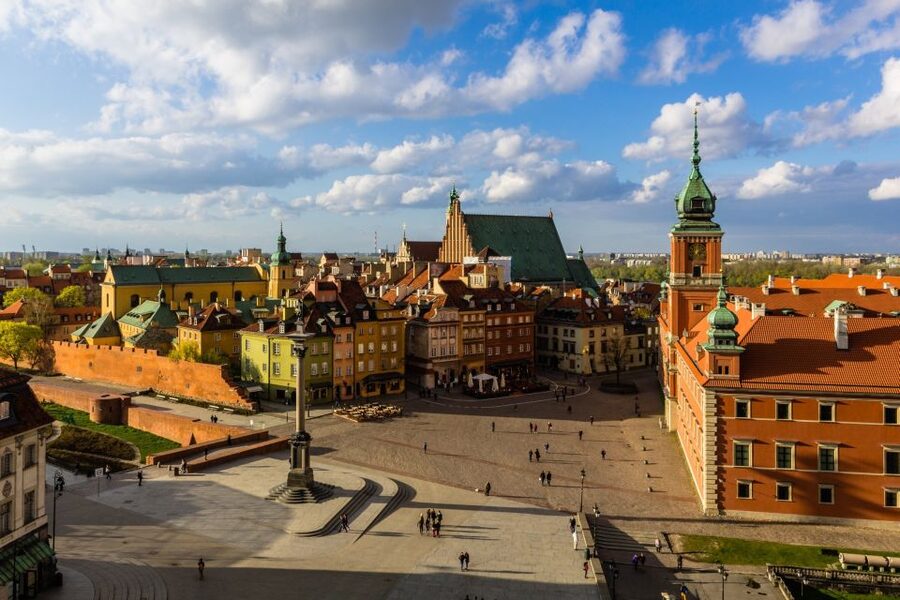
The final historical thread concerns Warsaw under Communist rule and the rebuilding of the capital under Stalin after the war. You will see how the postwar regime shaped the city and how that period remains visible in its streets and buildings.
The Fiat is a fitting vehicle for this section. Riding in a Polish car from the 1980s gives the discussion a physical link to the period. It is a small detail, but it makes the political history feel less abstract.
This part is also where a local guide adds real value. A standard sightseeing route can show you imposing buildings and broad avenues, but it may not explain how the Communist system affected ordinary life or why the city took its present form. The guides on this tour have been praised for answering questions and adding stories about Warsaw beyond the standard facts.
You should expect an overview, not a museum visit devoted only to Communism. The route also includes Old Town, the ghetto remains, Praga, and the Warsaw Uprising. That wide range is helpful for a first visit, but it means each subject receives limited time.
The guides shape the quality of the day
The guide is likely to make the biggest difference. Names associated with this tour include Karol, Martin, Olga, Pavel, Alexander, Jakob, and Jurek. Individual assignments can change, but the strongest feedback consistently points to guides who are friendly, clear, and willing to tailor the route.
Karol has been praised for a funny, engaging approach and for asking what the group had already seen. That kind of preparation matters. If you have already explored Old Town, the guide can put more attention on Praga, the ghetto remains, or Communist Warsaw instead of repeating familiar material.
Martin has led early morning tours and explained sites in clear English, using laminated photographs to show earlier versions of buildings and streets. Pavel has been praised for covering major sights and painful parts of Polish history while keeping the four hours lively. Olga and Alexander have also been noted for answering questions and showing both older and newer parts of the city.
This is a private English-language tour, so you are not sharing the guide with a large coach group. The private format gives you room to slow down, ask for context, or request a different emphasis. It also means the experience depends more on your guide and your own willingness to speak up. Tell the guide what you have already seen and what you most want to understand.
What is included for the $105 price
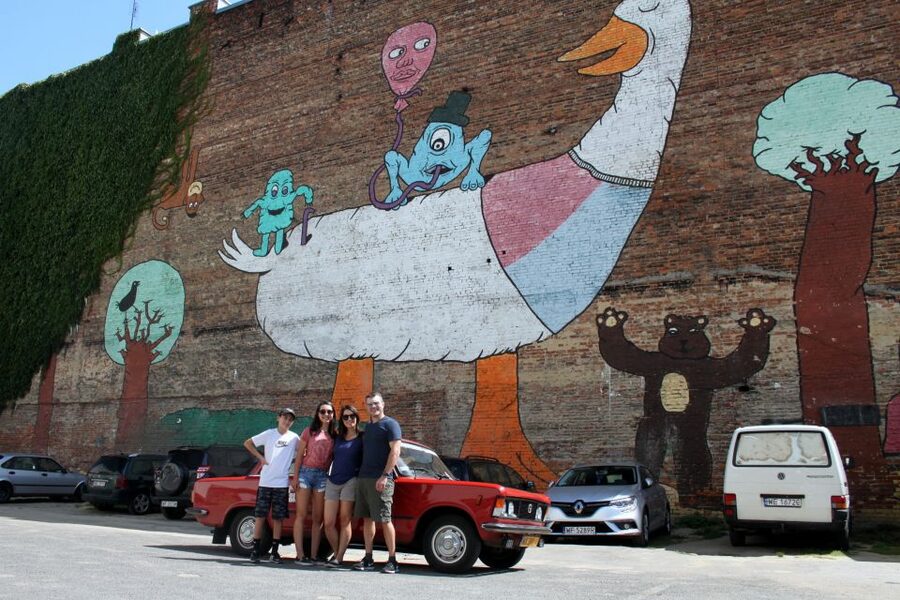
The price is $105 per person. For a private four-hour experience, that can be fair value if you want transport, personal guiding, and a broad introduction in one package.
Included are hotel pickup and drop-off within the city center, the retro Fiat 125p, an English-speaking local guide, photos emailed after the tour, a Polish sweet doughnut, and a complimentary vodka shot. Meals are not included.
I would judge the price against your itinerary rather than against a simple walking tour. If you have only a short stay, the car lets you cover several districts without spending time working out connections. You also receive a private guide, which is useful when your interests do not match a standard group route.
The value is weaker if you prefer slow museum visits or want to explore one district on foot for an entire afternoon. The tour is designed to connect many parts of Warsaw. It gives you orientation and context, then leaves you better prepared to return to the places you want to study more closely.
The doughnut and vodka are small extras, not reasons to book. They add a Polish touch, but the real value is the combination of local explanation and transport.
Timing, comfort, and practical planning
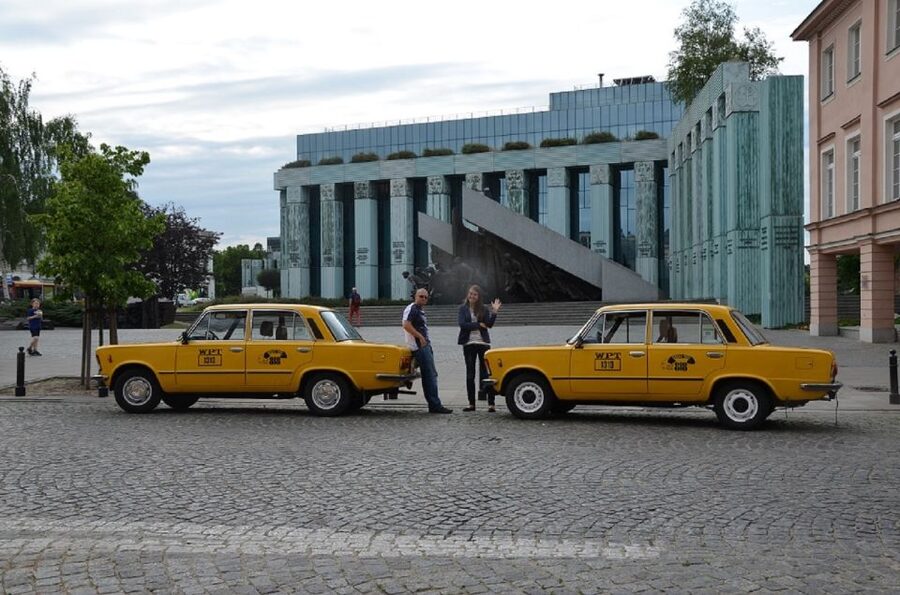
The tour lasts four hours, with starting times based on availability. Hotel pickup is included from your city-center hotel or another centrally located point. Confirm the pickup details when booking, especially if you are staying outside the central area.
Wear comfortable shoes. Even though the Fiat does much of the moving, the experience requires walking at several stops. The walking and driving split can be adjusted, which helps if you need a gentler pace, but you should still expect to leave the car and explore on foot.
Traffic can change the route. Warsaw is a large capital, and the order of stops may shift to keep the tour moving. That is normal for a city drive and not a flaw, but it means you should treat the route as flexible rather than a minute-by-minute schedule.
Pets are not allowed. The tour is offered in English and operates as a private group experience.
Who should book this Warsaw tour
I would recommend it most strongly to first-time visitors, people with only a few days in Warsaw, and anyone who wants historical context without spending the whole day in museums. It is also a good choice if you want to see Praga and the Jewish ghetto remains but do not feel confident finding the less obvious sites alone.
Families and mixed-age groups may like the private format because the walking can be adjusted. Couples and small groups also get the fun of the unusual car without being tied to strangers.
You may want something else if your main goal is a long, detailed study of one subject. The Warsaw Uprising, the Jewish ghetto, Praga, and Communist reconstruction each deserve more time than this route can give. Think of the tour as a strong introduction, not the final word on Warsaw’s past.
Should you book the retro Fiat tour?
Book it if you want to cover a lot of Warsaw in four hours and prefer stories, local context, and a flexible private route to a basic city drive. The strongest reasons are the unusual Fiat, the combination of Old Town with Praga and the Jewish ghetto remains, and the chance to ask your own questions in English.
I especially like it for a first full day in the city. You can use the tour to learn the basic shape of Warsaw, then return later to Łazienki Park, museums, or the areas that caught your interest.
Skip it if you dislike driving-based sightseeing, need long quiet stops, or want a highly focused tour of a single historical subject. For most people seeking a practical and memorable introduction, the $105 price is reasonable, particularly when hotel pickup, private guiding, photos, and transport are included.
FAQ
How long is the Warsaw retro Fiat tour?
The tour lasts four hours.
What vehicle is used?
Groups of up to four people are driven in a historic 1980s Fiat 125p. Groups of more than four people use a blue vintage minivan.
Is the tour private?
Yes. The experience is offered as a private group tour.
Is hotel pickup included?
Yes. Pickup and drop-off are included from hotels or other centrally located points in Warsaw.
Is the tour conducted in English?
Yes. The live tour guide speaks English.
Does the tour include walking?
Yes. The experience is about half walking and half driving, and it requires comfortable shoes.
Can the route be adapted?
Yes. The walking and driving balance can be adjusted to suit your requirements. The route may also change because of traffic.
Does the tour visit the Jewish ghetto remains?
Yes. The route includes the remains of the former Jewish ghetto and an explanation of the history of Warsaw’s Jewish community.
Does the tour visit Praga?
Yes. Praga is one of the main districts included in the experience.
Are food and drinks included?
A Polish sweet doughnut and a complimentary vodka shot are included. Meals are not included.
Just added in Warsaw
- CO2-Offset Arrival Transfer from Warsaw Airport to Warsaw City★ 5.0 · 1 review
- Historical Walking Tour of Jewish Warsaw★ 5.0 · 68 reviews
- Deluxe Polish Food Tour Experience in Warsaw★ 5.0 · 19 reviews
- Amazing photo walk through the Old town of Warsaw★ 5.0 · 32 reviews
- 8-day tour around Poland by private car★ 5.0 · 2 reviews
- 2 Hour Super Segway City Tour of Warsaw★ 5.0 · 5 reviews
- Electric Scooter Tour: Full Tour – 3-Hours of Magic!★ 5.0 · 3 reviews
- 2h Rental of Motorboat for 10 in Warsaw no License Needed★ 5.0 · 1 review
Historical Tours, compared.

POLIN Museum of the History of Polish Jews Ticket
Read our review →
Gdańsk City Sights & History Guided Walking Tour in English
Read our review →

Small-Group Historical Guided Tour of Warsaw with pick up/drop off. Public Tour.
Read our review →Browse the lists this tour appears in