
REVIEW · HISTORICAL TOURS
Skip-the-Line Polin Museum Warsaw Jewish History Tour
Warsaw’s Jewish story deserves time. This private tour combines the POLIN Museum with key sites of the former Jewish Ghetto, giving you both a carefully designed indoor history lesson and a walk through the city streets where that history unfolded. I especially like the licensed private guide and the chance to see the Jewish Cemetery, Ghetto Wall fragment, Nożyk Synagogue, and Ghetto Heroes Monument in one outing. The main caution is time: two hours inside POLIN can introduce the museum well, but you cannot absorb every display in a single visit.
The four-hour option is the stronger choice if you want the full experience. I like that it adds a walking tour through the former ghetto rather than treating the museum as an isolated attraction. The two-hour option focuses on POLIN and selected nearby sights, so check the booking choice carefully: the Warsaw Ghetto walk is not included in the shorter version.
In This Review
- Key points to know before booking
- Why the POLIN Museum works best with a guide
- Starting near the Palace of Culture and Science
- Meeting the Ghetto Heroes Monument
- Walking through the Jewish Cemetery
- Seeing the Ghetto Wall fragment
- Understanding the former Warsaw Ghetto
- Visiting Nożyk Synagogue
- Jewish records at the Historical Institute
- Prozna Street and Grzybowski Square
- What the four-hour schedule feels like
- Is $167.97 a fair price?
- Who should choose this POLIN tour?
- Should you book the four-hour or two-hour option?
- FAQ
- How long is the POLIN Museum Warsaw Jewish History Tour?
- Is the Warsaw Ghetto walking tour included?
- Is the POLIN Museum admission included?
- What does skip-the-line access mean here?
- Is this a private tour?
- Is the Jewish Cemetery admission included?
- Can I enter Nożyk Synagogue?
- Where does the tour start?
Key points to know before booking

- Two hours inside POLIN: The guide leads you through the main exhibition, the ongoing temporary exhibition, and the Heritage Gallery.
- Four hours adds the former Ghetto: You visit monuments, the cemetery, wall remains, synagogue area, and streets tied to wartime Jewish life.
- A private tour means your group alone participates: This allows questions and a pace shaped around your group.
- The Jewish Cemetery takes about an hour: Its carved tombstones and Janusz Korczak memorial make it one of the most meaningful stops.
- Skip-the-line applies to the ticket office: You still pass through the museum entrance and security checks.
- Yulia’s guiding style earned special praise: She summarized POLIN’s large chronological exhibition clearly enough to hold a child’s attention.
Why the POLIN Museum works best with a guide

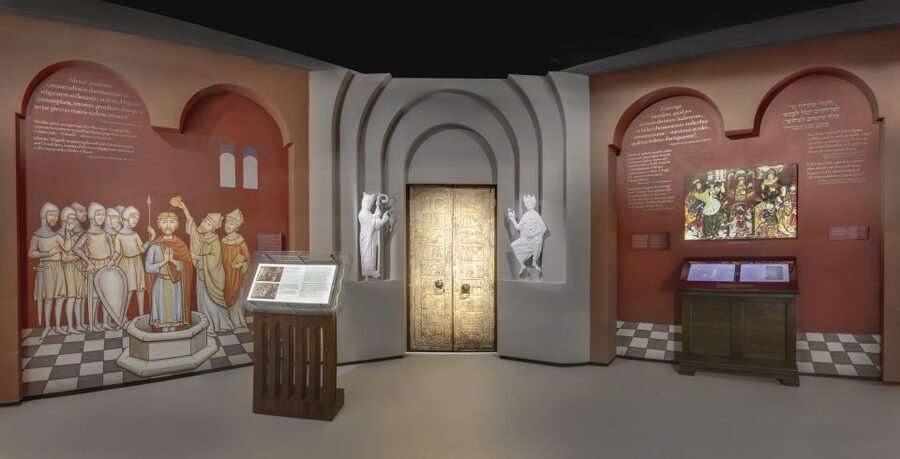
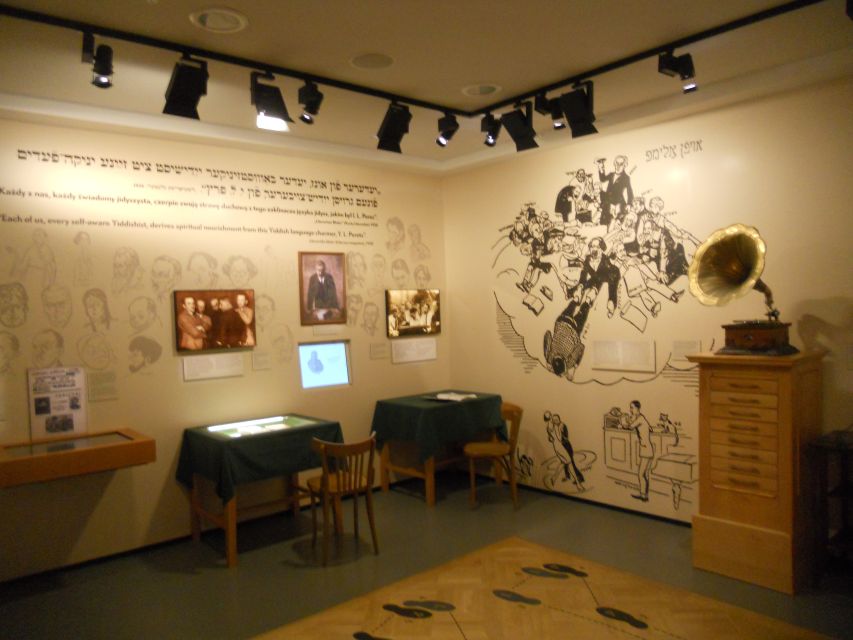
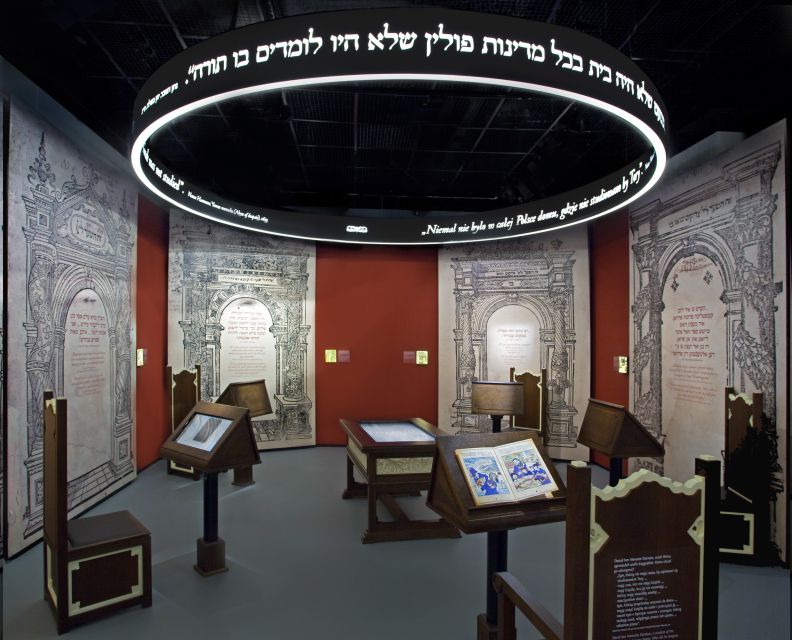
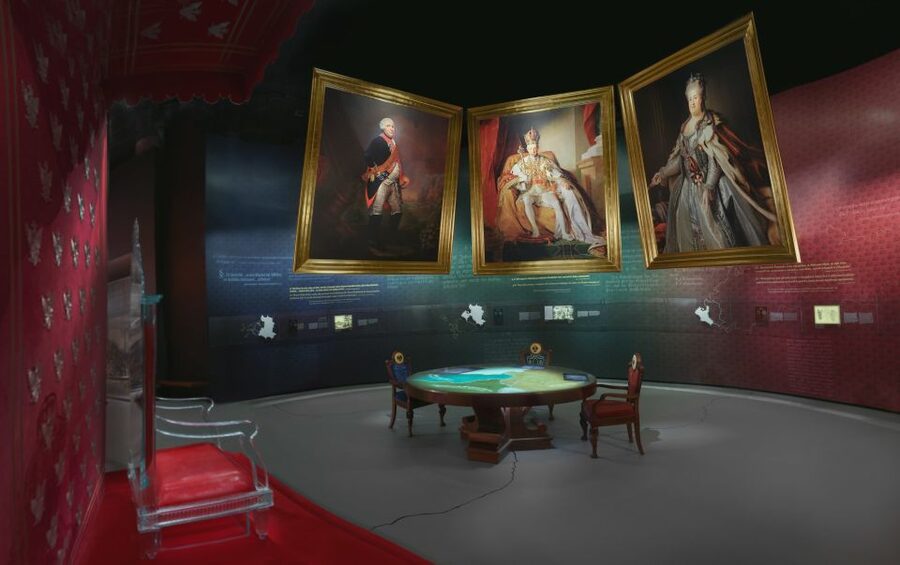
POLIN, the Museum of the History of Polish Jews, tells the story of Jewish life in Poland across a millennium. That scope matters. This is not simply a Holocaust museum, although the Holocaust is an essential part of the visit. The galleries also present Jewish communities, culture, institutions, daily life, and the changing relationship between Polish and Jewish history.
The museum uses artifacts, photographs, documents, films, screens, and objects you can touch. You may find drawers to open and displays that ask you to interact rather than only read labels. That design makes the museum approachable, but it also creates a practical problem: there is a great deal to see.
The two-hour museum portion is therefore best viewed as a guided introduction. Your guide points out the central themes and explains how the galleries connect. You will not have time to read every panel or watch every film, and that is not a flaw in the tour so much as a limit of the clock.
One especially useful detail comes from the experience with Yulia, who guided a four-hour visit. She summarized the major points in two hours, and even a six-year-old in the group stayed interested and asked questions. That suggests this is not a lecture aimed only at specialists. A good private guide can adjust the explanation for adults, children, and mixed groups.
You should still consider returning to POLIN on your own if the subject matters greatly to you. The skip-the-line ticket covers the main exhibition, the ongoing temporary exhibition, and the Heritage Gallery, so you receive a broad museum visit. The guided portion helps you get your bearings, but it does not replace the time needed for a full reading of the displays.
More History Tours in Warsaw
- Warsaw: POLIN Museum of the History of Polish Jews Ticket
★ 4.7 · 1,142 reviews - Warsaw: Chopin Concert at Historical Venue in Old Town
★ 4.7 · 445 reviews - Small-Group Historical Guided Tour of Warsaw with pick up/drop off. Public Tour.
★ 4.5 · 343 reviews
Starting near the Palace of Culture and Science
The Palace of Culture and Science is listed as an opening sight, although the tour meeting point is at Ludwika Zamenhofa 11. The palace is Poland’s tallest building and one of Warsaw’s most recognizable pieces of architecture.
You do not pay an admission charge for this exterior stop. Its value is visual and symbolic. The building reflects the monumental style associated with the Soviet period, and its scale can feel very different from the more intimate memorial sites later in the tour.
Do not expect a long visit here. It functions mainly as a Warsaw landmark and a reminder that this city contains several layers of twentieth-century history. The tour’s real focus begins as you move toward the former Jewish Ghetto and POLIN.
Meeting the Ghetto Heroes Monument
The Ghetto Heroes Monument, or Pomnik Bohaterów Getta, is one of the tour’s most powerful short stops. Allow about 15 minutes. It honors Polish Jews and recalls the persecution and German occupation during the Second World War.
A guide adds useful context here because the monument can otherwise seem like a single solemn object in an open urban space. The tour connects it to the larger story of the Warsaw Ghetto and the 1943 uprising.
The brief timing is appropriate for a memorial. You have enough time to look carefully, listen, and ask questions without turning the stop into a rushed photo break. This is a place where quiet attention matters more than a long checklist.
Walking through the Jewish Cemetery

The Jewish Cemetery, established between 1799 and 1806, receives about an hour. Admission is included, which is important because this is one of the longer and more substantial stops.
The cemetery contains marble and sandstone tombstones known as masebas. Their carved symbols and ornaments provide clues about Jewish identity, family, profession, and religious tradition. The setting is described as scenic and nostalgic, but its real force comes from the names, inscriptions, and visible passage of time.
You will also see the symbolic grave of Janusz Korczak, the famous writer and teacher who died in Auschwitz. This detail gives the cemetery a personal focus. Instead of encountering only broad figures and statistics, you encounter the memory of a person associated with children, education, and moral courage.
Plan for a reflective hour rather than a quick walk. The cemetery is not just another stop on the way to the museum. It gives you a different way to understand Jewish life in Warsaw, through family memorials and surviving markers rather than modern museum displays.
More Museums in Warsaw
- Warsaw: Polish Vodka Museum Tour with Tasting
★ 4.6 · 788 reviews - Warsaw: Museum World of Illusion Entry Ticket
★ 3.9 · 666 reviews - Krakow: Polish Aviation Museum Skip-the-Line Ticket
★ 4.6 · 200 reviews - Warsaw: Ghetto, Jewish Cemetery & POLIN Museum Private Tour
★ 4.8 · 132 reviews
Seeing the Ghetto Wall fragment
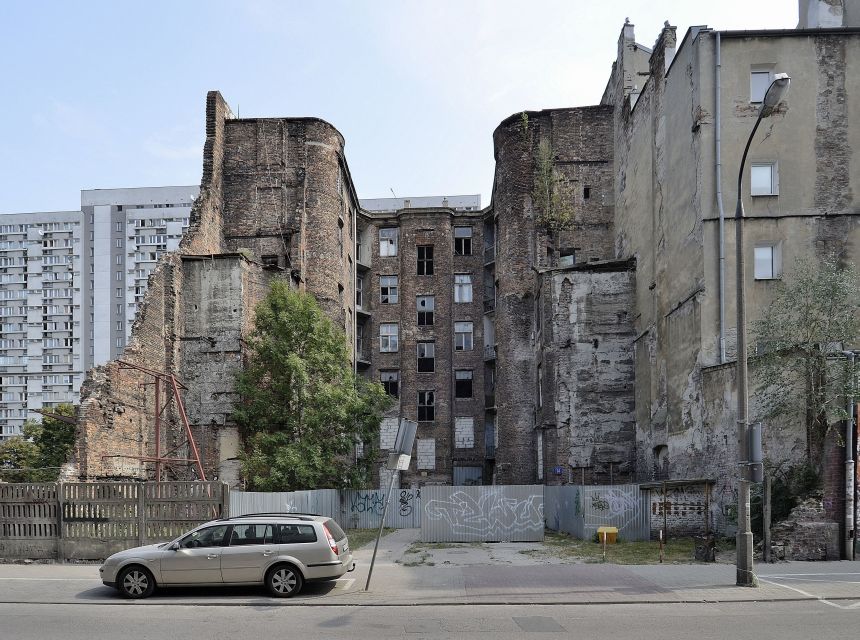
A remaining fragment of the Ghetto Wall offers a small but direct encounter with the physical boundaries imposed on Jewish residents. The stop lasts about 15 minutes and has no separate admission charge.
The wall fragment lets you see its height and touch the construction. The description also points to the unsettling contrast between life inside and outside the Ghetto, including the ordinary sounds of the city beyond the barrier.
That contrast is what makes the stop useful. Numbers can be difficult to grasp. A wall gives the policy a physical form. The former Ghetto occupied only 2.4 percent of Warsaw’s land area, yet more than 450,000 Jews were forced into this confined district between October and November 1940.
The fragment is not a complete district or a preserved open-air museum. Much of the surrounding area is modern Warsaw. A guide is valuable because the visible remains are limited, and the historical setting is not always obvious without explanation.
Understanding the former Warsaw Ghetto
The dedicated Ghetto walk, included only on the four-hour option, takes about 20 minutes at the listed stop. In practice, it works with the surrounding memorials and streets rather than presenting one intact historic quarter.
The Germans established the Warsaw Ghetto in late 1940. More than 450,000 Jews were forced to live in crowded conditions inside a small section of the city. The tour helps you connect the map, the wall fragment, the monuments, and the museum galleries.
This is the part of the experience that turns museum knowledge into place-based understanding. You can hear about forced relocation inside POLIN, then see where the Ghetto once occupied city blocks now mixed with newer buildings and roads.
The walk is not a substitute for a longer study of the Ghetto. Twenty minutes at this particular stop is short, and the four-hour tour has many locations to cover. Still, it gives you a clear framework for understanding the rest of the day.
Visiting Nożyk Synagogue
Nożyk Synagogue is the only surviving synagogue of the roughly 400 that existed in Warsaw before the war. It has been restored and remains a functioning synagogue.
The listed visit lasts about 30 minutes. Admission is not included, and entry is possible on request. That wording matters. You should not assume the synagogue interior is guaranteed as part of every departure.
Even seeing the exterior is important because the building links present-day Jewish life with the prewar Jewish community. The tour does not present Jewish Warsaw as a story that ends in 1945. Nożyk Synagogue gives the route a living connection.
Ask your guide about entry at the start of the tour if this stop is important to you. Since it is an active place of worship, access may depend on the circumstances of the visit. The supplied tour details do not promise admission, so treat the interior as a possibility rather than a certainty.
Jewish records at the Historical Institute
The Jewish Historical Institute holds records, photographs, videos, and artifacts connected with the Warsaw Ghetto during the Nazi occupation. The tour passes this institution as part of its Jewish history route.
There is no separate admission charge listed for this stop. The main value here is context. POLIN tells a large, chronological story, while the institute points toward archival evidence and documentation connected to Warsaw’s Jewish community and wartime experience.
You may not have time for a full independent visit during the tour. If the building captures your interest, note its location and consider returning later, but the supplied details do not specify a separate entrance or extended interior visit as part of this experience.
Prozna Street and Grzybowski Square
Prozna Street appears on the route toward the Uprising Museum area and offers another look at the wartime Jewish district. The stop lasts about 20 minutes and is free.
The street is useful because it preserves a sense of the city’s historical layers. Your guide can explain its connection to Jewish Warsaw and the Nazi occupation while you look at what remains in the present-day streetscape.
Grzybowski Square takes about 15 minutes. The square was part of the Jewish Ghetto during the war, and the surrounding area now includes a Jewish theater and a memorial garden with a fountain.
These stops are not grand museum interiors. They are short urban pauses, and their meaning depends heavily on explanation. I like that the route includes them because they show how difficult it is to read Warsaw’s wartime past from the modern city without help.
What the four-hour schedule feels like
The four-hour version divides the experience into roughly two hours at POLIN and two hours walking through the former Ghetto. That is a sensible balance for a first visit.
You get enough museum time to understand the broad sequence of Polish Jewish history. You also get enough walking time to place several important sites on a map, rather than seeing the museum and leaving without a sense of its Warsaw setting.
Expect a serious subject and a full schedule. The cemetery alone takes about an hour, and the route includes several short memorial stops. Comfortable shoes make sense, although the supplied information does not give a detailed surface or accessibility description.
The private format is helpful here. Only your group participates, so you can ask for clarification, pause at a memorial, or tell the guide when the material is moving too quickly. The guide is fluent in the language selected at booking, and the experience is offered in English.
Is $167.97 a fair price?
At $167.97 per person, this is not a budget walking tour. The value depends on how much you want explained and how many people are in your group.
The fee includes a private tour, a licensed five-star guide, POLIN admission, skip-the-line access at the museum ticket office, and the longer Ghetto walk on the four-hour option. Cemetery admission is included as well. For a group that wants a focused introduction without arranging separate tickets and research, the price can make sense.
The private format also changes the value calculation. A larger family or small group may find the per-person price easier to justify, especially with group discounts available. Solo visitors and couples should compare the cost with a self-guided museum visit and a separate city walk.
The skip-the-line benefit is useful, but keep its limits in mind. It lets you bypass the ticket-office line. You still pass through the museum entrance and security checks, so it does not mean walking straight past every queue.
The two-hour option may be better value if your priority is POLIN and you have limited time. The four-hour option is the better buy if you want the Ghetto sites explained in one connected route.
Who should choose this POLIN tour?
I would recommend it most strongly to first-time visitors who want a clear introduction to Jewish Warsaw, families who benefit from a guide’s questions and explanations, and anyone uncomfortable trying to connect scattered memorials alone.
It also suits people who value a private pace. The experience is not designed for someone who wants to wander silently through every museum display for a full day. It is a guided overview with meaningful stops outside.
Families should note the positive example of a six-year-old staying engaged during the museum and asking questions. That does not guarantee every child will respond the same way, but it shows the guide can make difficult material accessible.
You may prefer a different plan if you already know POLIN well, want several hours for close reading, or need guaranteed synagogue entry. You may also find the four-hour route emotionally demanding. This is a serious history tour, not a light sightseeing loop.
Book at least a day ahead if your plans are firm. The experience is often reserved well in advance, with an average booking lead time of 51 days. Confirmation arrives at booking, and you are asked to check your email the day before for important information.
Free cancellation is available until 24 hours before the local start time. Within 24 hours, the price is not refunded and changes are not accepted.
Should you book the four-hour or two-hour option?
Choose the four-hour tour if you want the full connection between POLIN and the former Ghetto. The cemetery, wall fragment, synagogue area, Ghetto streets, monuments, and museum together create a much more grounded visit.
Choose the two-hour tour if your schedule is tight and your main goal is the museum. Just remember that the Warsaw Ghetto walking tour is not included in that version, and the attraction list changes by option.
At $167.97 per person, I would not book this simply to save time at the museum ticket office. I would book it for the private guide and the way the indoor exhibition is tied to real places across Warsaw.
If you want a thoughtful first encounter with POLIN and the city’s Jewish history, this is a strong choice. If you want to explore every museum display at your own pace, use the tour as an introduction and return to POLIN afterward.
FAQ
How long is the POLIN Museum Warsaw Jewish History Tour?
The experience lasts approximately two to four hours, depending on the option selected. The museum portion takes about two hours, while the four-hour option adds the Warsaw Ghetto walking tour.
Is the Warsaw Ghetto walking tour included?
It is included in the four-hour option. It is not included in the two-hour tour.
Is the POLIN Museum admission included?
Yes. The tour includes skip-the-line tickets to the POLIN Museum. Admission covers the main exhibition, the ongoing temporary exhibition, and the Heritage Gallery.
What does skip-the-line access mean here?
It allows you to skip the line at the museum ticket office. You still need to pass through the museum entrance and security checks.
Is this a private tour?
Yes. Only your group participates in the activity.
Is the Jewish Cemetery admission included?
Yes. Admission to the Jewish Cemetery is included, and the visit lasts about one hour.
Can I enter Nożyk Synagogue?
Entry is possible on request, but admission is not included in the tour price. The tour details do not guarantee access to the interior.
Where does the tour start?
The meeting point is Ludwika Zamenhofa 11, 00-153 Warszawa, Poland. The activity ends at a different location, with the final details provided after booking.
Just added in Warsaw
- Wroclaw Small-Group Tour with Lunch from Warsaw★ 5.0 · 2 reviews
- World War II Warsaw Old Town, Military Cemetery Walking Tour★ 4.7 · 3 reviews
- Warsaw: Wolf’s Lair & Swieta Lipka Small-Group Tour + Lunch★ 5.0 · 3 reviews
- Wilanów Palace: 2-Hour Guided Tour with Entrance Tickets★ 4.8 · 8 reviews
- Warsaw Zoo Skip-the-Line Entry Ticket with Private Transport★ 4.8 · 3 reviews
- Warsaw: Private Vodka Tasting Night with Snacks and Pickup★ 5.0 · 7 reviews
- Warsaw Private Wilanow Palace & Garden Tour★ 4.6 · 30 reviews
- Warsaw Wolf’s Lair with St. Lipka and Mamerki Private Guided★ 4.2 · 3 reviews
Historical Tours, compared.

POLIN Museum of the History of Polish Jews Ticket
Read our review →

Gdańsk City Sights & History Guided Walking Tour in English
Read our review →



Small-Group Historical Guided Tour of Warsaw with pick up/drop off. Public Tour.
Read our review →Browse the lists this tour appears in