
REVIEW · JEWISH QUARTER TOURS
Jewish heritage in Warsaw
Warsaw’s Jewish story is written in stone. This private, five-hour tour links the former ghetto, Jewish Cemetery, Nozyk Synagogue, Umschlagplatz, and several less familiar sites, making it a useful way to understand a community that shaped Warsaw before World War II and endured terrible destruction during it. I especially like the hotel pickup and drop-off and the chance to see several important places without piecing together public transport routes. The tour also includes places tied to The Pianist, adding a film connection to the historical setting.
The main concern is the vehicle. One customer found the car extremely cramped and ended the tour in real discomfort. At $270 per group of up to four, the cost can be fair for a small private group, but you should confirm the vehicle size if legroom matters to you. The tour is led by Renata Kopczewska, and the strongest praise goes to the guide’s command of the subject and ability to answer questions.
In This Review
- Key points at a glance
- What this private Warsaw tour is trying to do
- The former Warsaw ghetto and the Mila 18 memorial
- Jewish Cemetery: names, symbols, and broken stones
- Umschlagplatz and the last railway journey
- Nozyk Synagogue, Warsaw’s surviving synagogue
- Praga Północ and the Jewish buildings that remain
- The Jewish Historical Institute and the traces of fire
- How the guide and vehicle affect the experience
- Timing, physical effort, and admission costs
- Who will get the most from this tour?
- Should you book Jewish Heritage in Warsaw?
- FAQ
- How long does the Jewish heritage tour last?
- How much does the tour cost?
- Is hotel pickup and drop-off included?
- Is this a private tour?
- Which major sites are included?
- Is the Jewish Cemetery open on Saturdays?
- Is Nozyk Synagogue open on Saturdays?
- Are museum entrance fees included?
Key points at a glance
- Six meaningful stops in about five hours: The route covers major memorials, a working synagogue, the Jewish Cemetery, Praga Północ, and the Jewish Historical Institute.
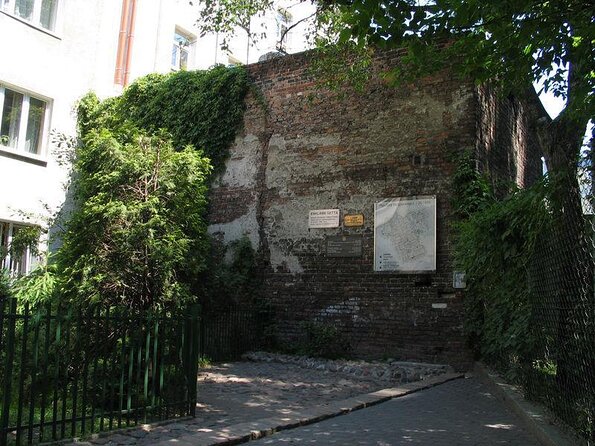
- The former ghetto is more than one memorial: You see the Rappaport monument, Mila 18, Umschlagplatz, and the Shmul Zygelbojm memorial.
- Nozyk Synagogue survived World War II: It remains active, giving you a chance to see a living place of worship, not only a historical marker.
- The Jewish Cemetery rewards careful attention: Preserved matzevot, mass graves, and memorial stones reveal the community’s public life and its wartime losses.
- Transport is included: A driver-guide collects you at your hotel and returns you afterward, a real help when the sites are spread across Warsaw.
- Plan around Saturday closures: The cemetery is closed on Saturdays, while Nozyk Synagogue is open then only for prayers, with no admission fee.
What this private Warsaw tour is trying to do
This is not simply a drive past Holocaust memorials. Its route connects the prewar Jewish community, wartime persecution, resistance, deportation, destruction, and the remains of Jewish life in present-day Warsaw.
That range gives the tour its value. You see sites that are physically modest but historically weighty. Some are marked by a monument or a wall. Others are buildings still used for another purpose. A guide matters here because you can easily pass them without understanding what happened there.
The experience is private, so only your own group participates. That makes it easier to ask questions and adjust the pace of conversation. The tour lasts about five hours, including travel between stops, and hotel pickup and drop-off are included. You do not need to work out how to reach the cemetery, Praga Północ, or the memorials on your own.
The tour costs $270 per group of up to four people. For four people, that works out to $67.50 each. For two people, it is $135 each, and for one person the price is much harder to justify. I see the best value for a family or small group that wants private transport and a focused guide rather than a general city tour.
More History Tours in Warsaw
- Warsaw: POLIN Museum of the History of Polish Jews Ticket
★ 4.7 · 1,142 reviews - Warsaw: Chopin Concert at Historical Venue in Old Town
★ 4.7 · 445 reviews - Small-Group Historical Guided Tour of Warsaw with pick up/drop off. Public Tour.
★ 4.5 · 343 reviews
The former Warsaw ghetto and the Mila 18 memorial
The first part of the route focuses on the former Warsaw ghetto, which was destroyed after the ghetto uprising. Today, the area is marked by several memorials and surviving traces rather than by an intact historic quarter.
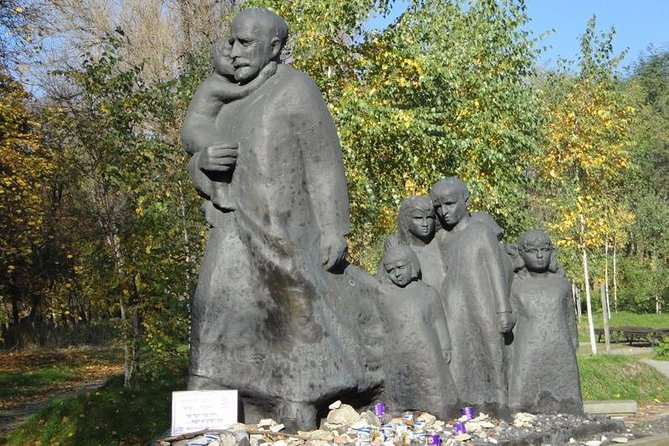
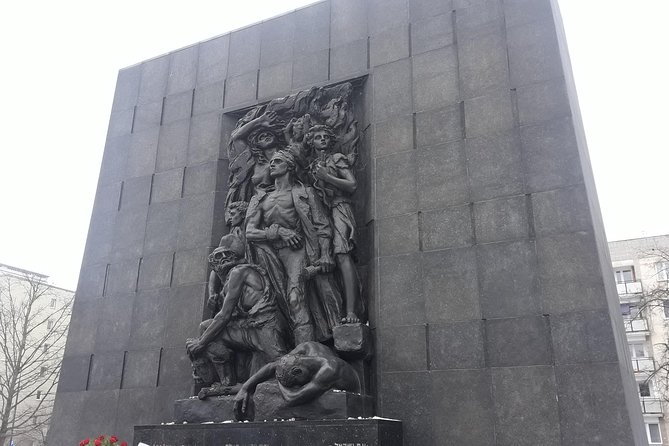
The Rappaport monument, dedicated to the Heroes of the Ghetto, is the central symbol. It commemorates the people who fought in the uprising, though the wider area also points to the many civilians caught in the ghetto’s brutal conditions and eventual destruction.
Mila 18 is another important stop. The address is linked to the bunker used by Jewish resistance fighters during the uprising. The site asks you to picture a neighborhood that no longer exists, with the guide supplying the context that the bare location cannot provide by itself.
You also see the Shmul Zygelbojm memorial. Zygelbojm, a Jewish member of the Polish government-in-exile, protested the destruction of Polish Jewry and took his own life in London after learning that his appeals had not stopped the killing. This is a smaller memorial, but it broadens the story beyond the streets of Warsaw.
The tour also points out filming locations connected with The Pianist. If you know the film, these places add another layer. If you do not, the locations still help connect the city’s wartime story to a widely known account of survival.
Allow about an hour here. That is enough time for a guided explanation and several stops, but not enough for long independent visits at every memorial. If you want to read every plaque slowly or take extensive photographs, the schedule may feel tight.
Jewish Cemetery: names, symbols, and broken stones
The Jewish Cemetery, known in Polish as Cmentarz Żydowski, gives you a different view of Warsaw’s Jewish past. Instead of a single memorial, you see rows of preserved matzevot, the traditional Jewish gravestones, carrying names and inscriptions that point to the community’s work in literature, science, and art.
This is one of the most valuable parts of the route because it restores individual identity. Memorials often speak in large numbers. A cemetery brings you back to people, families, occupations, and dates.
The grounds also contain mass graves from World War II. Symbolic stones commemorate people who were killed at the Treblinka extermination camp. Those stones link the cemetery to the deportations from the ghetto and to the wider system of murder that destroyed Warsaw’s Jewish population.
You should allow about 45 minutes. Admission is not included, and the cemetery is closed on Saturdays. That closure matters, so check your day before booking. The tour requires a moderate level of physical fitness, and you should expect some walking on cemetery grounds.
I would not treat this as a quick photo stop. The meaning is in the details, and a guide can explain the symbols and names that might otherwise seem difficult to read. At the same time, the cemetery is a serious place. Dress and behave with the same care you would bring to any memorial site.
Umschlagplatz and the last railway journey
Umschlagplatz was the site of the former railway loading area from which about 300,000 Jews from the Warsaw ghetto were deported to Treblinka in the summer of 1942.
The memorial is designed as a stark, enclosed space. Its wall carries 300 first names in alphabetical order, a symbolic list of people who began their final journey from this place. The design gives the site a human scale, even though the number of deportees is almost impossible to grasp.
The visit lasts about 15 minutes. That may sound brief, but this is not a museum with rooms of material to study. It is a place for a quiet explanation and reflection. I appreciate its inclusion because it connects the ghetto story to the railway deportations, rather than leaving the history at the uprising alone.
Admission is free. You will likely find the guide’s explanation especially useful here, since the site itself offers less information than a full museum exhibition.
More Jewish heritage tours in Warsaw:
- Warsaw: Warsaw Ghetto Private Walking Tour with Hotel Pickup
★ 4.9 · 369 reviews - Private Tour: Warsaw’s Jewish Heritage by Retro Fiat
★ 5.0 · 208 reviews - Warsaw: Ghetto, Jewish Cemetery & POLIN Museum Private Tour
★ 4.8 · 132 reviews - Warsaw: Jewish Heritage & Holocaust Walking Tour
★ 4.7 · 119 reviews
Nozyk Synagogue, Warsaw’s surviving synagogue
Nozyk Synagogue is the only synagogue in Warsaw that survived World War II. Built at the beginning of the 20th century, it still functions as a synagogue today.
That living role is what makes the stop special. You are not looking only at a preserved shell or a memorial building. You are seeing a place that remains connected to Jewish religious life in Warsaw.
The visit is listed at about 15 minutes, with an admission fee generally not included. On Saturdays, it is open only for prayers, and no admission fee is charged then. This means the experience can vary depending on your day and timing. You should not assume that a standard sightseeing visit will be possible on the Sabbath.
The short stop works well as part of a wider tour, but it is not enough for an extensive architectural visit. The value comes from placing the synagogue within the story of the city, especially after seeing the former ghetto and the cemetery.
Praga Północ and the Jewish buildings that remain
Praga Północ was not destroyed as thoroughly as central Warsaw, so several Jewish-related buildings survived. This part of the tour gives you a welcome change of mood and setting.
You see a former student dormitory where Menachem Begin lived as a student. Begin later became prime minister of Israel, but here the point is more personal: the building connects a major political figure to his early years in Warsaw.
The route also includes a former shelter for poor people and orphans, now used as a puppet theater. A former mikveh, or ritual bath, also survives, though it is now a high school.
These buildings are not presented as a perfectly preserved Jewish district. They have changed function, and that is precisely why the stop is useful. You see how the city’s Jewish past can survive in fragments, sometimes behind a different use and without an obvious sign.
Allow about 30 minutes. This is partly a sightseeing drive and partly a guided explanation, so expectations matter. You are not visiting a large museum devoted to Praga’s Jewish community. You are seeing surviving structures and learning what they once meant.
The Jewish Historical Institute and the traces of fire
The Jewish Historical Institute occupies a former Judaistic Library near the site of the Great Synagogue. The library survived World War II, while the nearby Great Synagogue was blown up by German forces.
Inside, traces of the fire can still be seen on the floor. That physical mark gives the building a powerful connection to the destruction around it. The site is not only about objects in display cases. The building itself carries evidence of what happened.
You can also see a map of prewar Poland showing former shtetls, the small Jewish towns that once formed an important part of Jewish life across the region. An exhibition presents the archives of the Warsaw ghetto, which survived in extraordinary circumstances.
This is the stop where the tour becomes most museum-like. Allow about 45 minutes, and remember that museum admission is not included. If you want to read every document in depth, you may need more time than the group schedule allows. Still, the visit adds essential evidence and voices to the outdoor memorials.
I find this balance important. The memorials show where events happened. The Jewish Historical Institute helps you understand the people, records, and communities behind those events.
How the guide and vehicle affect the experience
The guide is central to this tour. The most positive feedback focuses on clear explanations, strong command of the subject, friendly manner, and willingness to answer questions. One especially positive account credits Renata with visiting every significant World War II Jewish site on the route and covering more places than expected during the five hours.
The experience provider is Renata Kopczewska. Your assigned guide may depend on the booking, so confirm if having Renata specifically is important to you.
The driver-guide format saves time. You do not need to navigate between areas, and you can ask questions while moving through Warsaw. Pickup and return to your hotel also make the tour convenient for anyone who wants a structured morning or early afternoon.
The vehicle deserves more attention than the sales description might suggest. One person reported that the car was as small as possible, with almost no legroom, and said the cramped seating caused real pain by the end. That is a serious drawback for anyone tall, older, or prone to discomfort.
I would send a message before booking to ask what vehicle will be used for your group of four. The tour is private, but private does not automatically mean spacious. If the vehicle is small, a group of four may find the ride less comfortable than expected.
Timing, physical effort, and admission costs
The advertised duration is approximately five hours. The listed operating hours are Monday through Sunday from 9:00 a.m. to 1:00 p.m., which does not fully match a five-hour tour. I would confirm the exact start time when booking rather than assume every departure follows the same schedule.
The tour requires moderate physical fitness. You will move through memorial areas, the cemetery, and museum or religious sites. The route is not described as strenuous, but the cemetery and outdoor stops mean you should be prepared for walking and standing.
The following costs are not included:
- Lunch
- Admission to the Jewish Cemetery
- Admission to Nozyk Synagogue when an entrance fee applies
- Admission to the Jewish Historical Institute
The tour price covers hotel transport, the driver-guide, and fuel surcharge. That makes the fee easier to assess. You are paying for a private half-day route with transport and specialist interpretation, not simply for a car ride.
For four people, I consider $270 reasonable if you want privacy and convenience. For two people, the value depends on how important the subject is to you. If you are comfortable planning public transport and museum visits on your own, a self-guided day can cost less. You will give up the benefit of having one person explain the connections between each place.
Who will get the most from this tour?
I would recommend it most strongly to:
- First-time visitors who want a clear introduction to Jewish Warsaw
- Families or friends sharing the $270 group price
- People who prefer a private guide to a large scheduled group
- Anyone interested in World War II, The Pianist, memorials, and Jewish history
- Visitors who want hotel transport instead of planning several cross-city journeys
It may be less suitable if you want a slow museum study day. The five-hour route covers a lot, but the time at each stop is limited. It may also be a poor fit if you need generous legroom and do not confirm the vehicle in advance.
The emotional weight should also be clear before you book. Much of the tour concerns deportation, murder, destroyed neighborhoods, and mass graves. No entertainment framing can soften that subject, though the route also includes evidence of survival, continuing worship, scholarship, and cultural life.
Should you book Jewish Heritage in Warsaw?
Book this tour if you want to cover a wide range of Jewish heritage sites in one private outing and value a guide who can explain the connections between them. The strongest part is the combination of major places, such as the ghetto memorials and Umschlagplatz, with quieter sites like Praga Północ and the Jewish Cemetery.
I would book for a group of three or four, confirm the vehicle size, check Saturday closures, and ask about the exact start time. If the answers suit your needs, the tour offers a thoughtful and efficient introduction to Jewish Warsaw. If you prefer long visits inside museums or need a larger vehicle, plan a different format.
FAQ
How long does the Jewish heritage tour last?
The tour lasts approximately five hours.
How much does the tour cost?
The price is $270 per group of up to four people.
Is hotel pickup and drop-off included?
Yes. Hotel pickup and drop-off are included, along with a driver-guide and fuel surcharge.
Is this a private tour?
Yes. Only your group participates in the activity.
Which major sites are included?
The route includes the former Warsaw ghetto, the Jewish Cemetery, Umschlagplatz, Nozyk Synagogue, Praga Północ, and the Jewish Historical Institute.
Is the Jewish Cemetery open on Saturdays?
No. The Jewish Cemetery is closed on Saturdays.
Is Nozyk Synagogue open on Saturdays?
On Saturdays, Nozyk Synagogue is open only for prayers, and no admission fee is charged then.
Are museum entrance fees included?
No. Entrance fees to museums are not included, and lunch is also not included.
Just added in Warsaw
- Wroclaw Small-Group Tour with Lunch from Warsaw★ 5.0 · 2 reviews
- World War II Warsaw Old Town, Military Cemetery Walking Tour★ 4.7 · 3 reviews
- Warsaw: Wolf’s Lair & Swieta Lipka Small-Group Tour + Lunch★ 5.0 · 3 reviews
- Wilanów Palace: 2-Hour Guided Tour with Entrance Tickets★ 4.8 · 8 reviews
- Warsaw Zoo Skip-the-Line Entry Ticket with Private Transport★ 4.8 · 3 reviews
- Warsaw: Private Vodka Tasting Night with Snacks and Pickup★ 5.0 · 7 reviews
- Warsaw Private Wilanow Palace & Garden Tour★ 4.6 · 30 reviews
- Warsaw Wolf’s Lair with St. Lipka and Mamerki Private Guided★ 4.2 · 3 reviews