
REVIEW · HISTORICAL TOURS
Historic Poznan: Exclusive Private Tour with a Local Expert
Poznan reveals itself one layer at a time. This private walking tour links the city’s oldest church, medieval defenses, royal landmarks, wartime memories, and political monuments in about two hours, with a local guide shaping the pace and focus for your group.
I like the small group of up to eight people, which should make it easier to ask questions and hear the guide in busy parts of the Old Town. I also like the route’s range: you move from Poznan Cathedral and medieval walls to the Imperial Castle, the Enigma cryptologists’ monument, and Park Cytadela.
The main consideration is the long point-to-point walk. You begin at Poznan Cathedral and finish at Park Cytadela, with no transport, museum admission, or monument entry included. The tour is not recommended for people with impaired mobility, and two hours may feel brisk if you want extended time inside each place.
In This Review
- Key points to know before booking
- Starting on Ostrów Tumski at Poznan Cathedral
- Tracing the 13th-century defensive walls
- Royal power around the castle and Market Square
- The Parish Church and the woman in black
- Imperial Castle, occupation, and the Enigma codebreakers
- The June 1956 Monument and modern Polish independence
- Army Monument and the final walk to Park Cytadela
- What the private format really adds
- Is $186.17 per person a fair price?
- Who should book this Poznan walking tour?
- Booking, timing, and cancellation advice
- Should you book Historic Poznan?
- FAQ
- How long is the Historic Poznan private tour?
- Where does the tour begin?
- Where does the tour end?
- How many people can join the private tour?
- What sights are included?
- Are entry tickets included?
- Can the itinerary change?
- Is cancellation free?
Key points to know before booking
- Poznan Cathedral begins the story in 968: You start on Ostrów Tumski, the oldest part of the city and the place tied to Poznan’s early Christian history.
- The route covers several eras in one walk: Medieval defenses, the Royal Castle, the colorful Market Square, German occupation, communist-era protest, and wartime codebreaking all appear.
- Your guide is Filip: The only published comment gives Filip particular credit for making the experience engaging and enjoyable.
- It is private and adjustable: The itinerary can change with your interests, walking pace, and weather conditions.
- The walk ends at Park Cytadela: This gives the tour a reflective finish among military monuments and the famous headless sculptures.
- The price rewards group sharing: At $186.17 per person, the cost is high for a two-hour tour if you are alone, but group discounts and private access can improve the value for a small party.
Starting on Ostrów Tumski at Poznan Cathedral
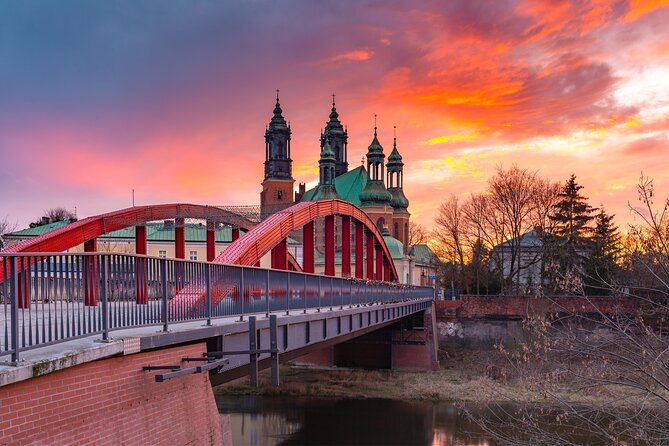
Your meeting point is Poznan Cathedral at Ostrów Tumski 17. This island area is the oldest part of the city, so beginning here gives the tour a clear starting point instead of dropping you into the middle of the Market Square with no context.
The cathedral was first constructed in 968, making it one of the oldest churches in Poland. That date matters because it places Poznan near the beginning of Poland’s Christian state. Your guide can use the building and its setting to explain how the city grew from an early religious and political center into the urban place you see today.
I like this opening because it gives the rest of the walk a useful timeline. You are not simply checking off famous buildings. You are starting with early Poland, then watching Poznan change as power moved through royal, German, wartime, and modern Polish periods.
The tour does not list an interior admission ticket, and entry fees are not included. If your guide takes you into a museum, church area, or monument that requires payment, you should expect to cover that yourself. The description promises a look at the cathedral, not a guaranteed extended indoor visit, so keep your expectations focused on guided sightseeing and local explanation.
More History Tours in Poznan:
- Poznan: Private Jewish Heritage Tour
★ 5.0 · 5 reviews - Gdansk: City Cruise on Historical Polish Boat
★ 4.8 · 2,913 reviews - Warsaw: POLIN Museum of the History of Polish Jews Ticket
★ 4.7 · 1,142 reviews
Tracing the 13th-century defensive walls
The next historical layer is Poznan’s medieval defense system. Parts of the city walls date to the 13th century, and seeing them after the cathedral helps explain the move from an early religious settlement to a protected urban center.
Walls can be easy to overlook when you walk through a modern city. A guide adds value here by pointing out what remains, what the defenses were meant to protect, and how the older city fits into Poznan’s later streets.
This is also where the private format may help. With only your group, you can ask for more detail about the walls or keep moving if medieval fortifications are not your main interest. The itinerary is not rigid, and the guide is expected to adapt to your pace.
Do not expect a full medieval fortress visit. The tour includes a look at defensive walls, not a separate museum program. That distinction matters if you want detailed architectural study. For a first introduction to Poznan, though, this stop connects the city’s physical layout to its past.
Royal power around the castle and Market Square
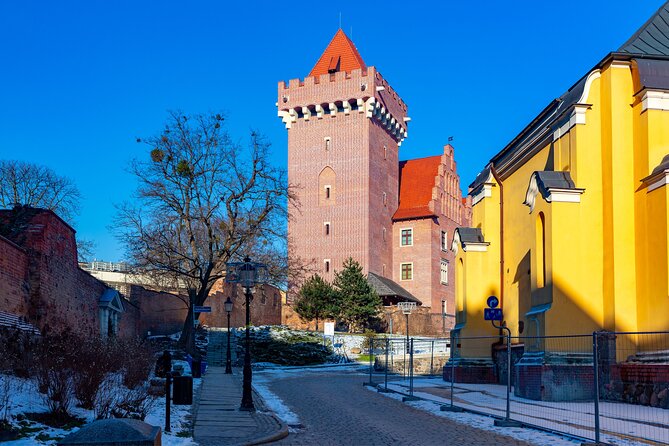
The Royal Castle brings you into Poznan’s imperial past. The stop is less about a single photograph and more about the changing authority that shaped the city. Your guide can help separate the medieval royal story from the later imperial period, which is useful in a place where several political eras overlap.
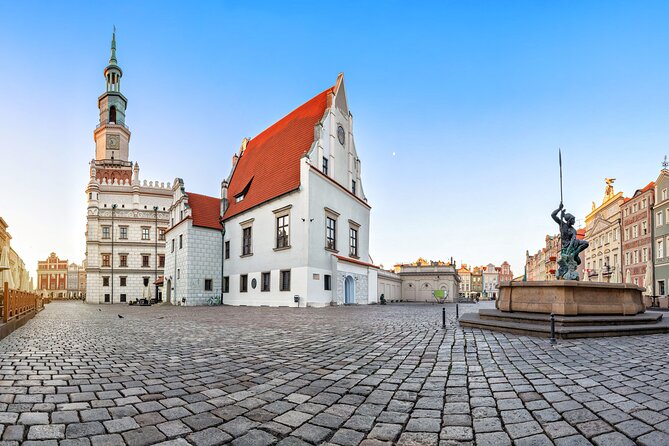
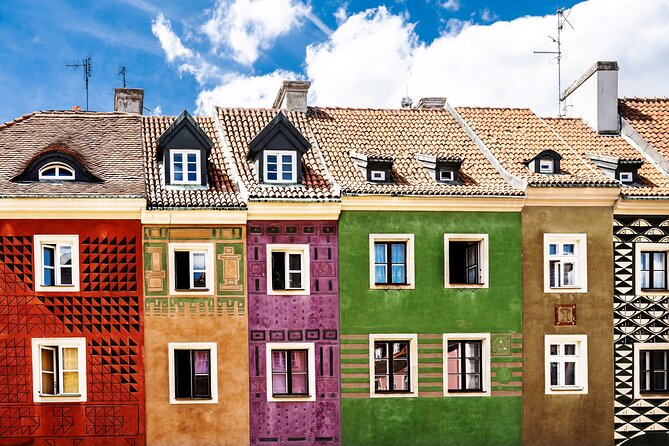
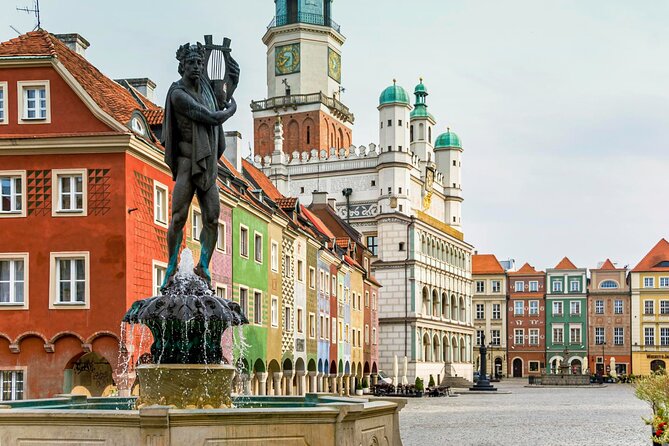
The walk then reaches the colorful Old Market Square. This is one of the best places to pause because several important monuments sit close together, including the Town Hall and the Pillory.
The Town Hall gives the square its main visual focus, while the Pillory points to an older system of public punishment. Those two sights show different sides of civic life: government, law, ceremony, and control. A local guide can make those connections quickly, without asking you to memorize dates from a plaque.
I would allow yourself enough time to look up and around here. The square has visual appeal, but the value of the stop is in understanding what its buildings represented. Since this is a private tour, you can ask the guide to explain the monuments that catch your eye rather than following a fixed script.
The tradeoff is that a two-hour route covers a great deal. The Market Square is included as a walking stop, but the experience does not promise a long break, a meal, or time to enter every building. If you want photographs, tell the guide early so the pace works for you.
The Parish Church and the woman in black
The Parish Church adds another layer to Poznan’s religious and educational past. The site was formerly connected with the Jesuits College, making it more than a quick church stop.
The itinerary also includes the legend of the woman in black. That small piece of local folklore can make the walk feel less like a lecture. A city’s identity is shaped not only by major rulers and wars, but also by stories repeated around its streets and buildings.
I appreciate this kind of stop because it breaks up the political timeline. After the cathedral and castle, the Parish Church shows how faith and education influenced daily life. The woman in black adds a touch of mystery without turning the whole tour into a ghost walk.
Again, there is no included entry ticket listed for the church. You should treat this as a guided exterior or general sightseeing stop unless your guide confirms otherwise. The exact order can change with weather and your group’s interests.
A few more in Poznan
- Poznań Experience 2-Hours Guided Walking Tour
★ 5.0 · 155 reviews - Undercover City Games: Poznan
★ 5.0 · 88 reviews - Old Town Poznan: Guided Walking Tour in English
★ 4.6 · 78 reviews - Poznań: Private or Public Highlights Tour with a local guide
★ 5.0 · 66 reviews
Imperial Castle, occupation, and the Enigma codebreakers
The Imperial Castle is one of the tour’s most striking historical contrasts. It is associated with Germany’s imperial presence and later with Adolf Hitler’s residence during the German occupation. That makes it an important place for discussing the difficult 20th-century history of Poznan.
The castle can also be emotionally heavier than the earlier stops. You are moving from royal and religious landmarks into occupation, dictatorship, and war. A good guide needs to keep the facts clear and the tone measured. The tour is presented as an informative walk, not a dramatic performance, which suits this subject.
Nearby, you may see the monument to the cryptologists who helped decrypt Enigma messages during the Second World War. This is a particularly worthwhile inclusion because it connects Poznan to a major wartime story that many people associate only with Britain and the later stages of the war.
The monument honors the people who worked on breaking Enigma messages. It gives the tour a specific human focus after the broader story of the castle and occupation. If this subject interests you, ask Filip for more detail. His published feedback specifically praises the engaging way he presents Poznan’s past, and this stop offers a natural place for questions.
The tour does not include museum tickets or monument entry fees. You may see the cryptologists’ monument from the public route, but the information provided does not promise an indoor exhibition or a long visit at the castle.
The June 1956 Monument and modern Polish independence
The Poznan June 1956 Monument brings the route into modern political history. Its meaning is tied to Poland’s struggle for independence and to the events remembered in Poznan in June 1956.
This is an important counterweight to the royal and imperial sights. The city’s story is not only about rulers, castles, and churches. It also includes people challenging political power and remembering the cost of that resistance.
For you, the value of this stop depends on how much context the guide provides. The monument itself may be easy to pass without understanding its meaning. A local guide can explain why it matters and how it fits into Poland’s long effort to regain and protect independence.
I would treat this as one of the stops where questions improve the experience. Ask about the date, the monument’s symbols, and its place in Poznan’s public memory. Because the tour is private, you have more room for that kind of conversation than you would on a large scheduled group walk.
Army Monument and the final walk to Park Cytadela
The Army Monument continues the tour’s focus on military memory. You will learn what it represents before moving toward Park Cytadela, where the experience ends.
Park Cytadela is more than a green stopping point. It has historical importance, and its monuments include the striking headless sculptures. The final section asks you to think about how a city remembers war, loss, and the people connected with its military past.
Ending here gives the walk a different mood from the Market Square. The route begins with a cathedral and early state history, passes through royal and imperial power, then reaches monuments tied to war, protest, and remembrance. That broad arc is the tour’s strongest feature.
The end point is aleja Armii Poznań in Park Cytadela, not the original meeting point. Plan your day around that fact. You are told that the rest of Poznan awaits after the walk, but no return transport is included. The tour is near public transportation, so you can continue by local transit, provided you arrange your next step yourself.
What the private format really adds
This is an exclusive private tour, so only your group participates. The maximum group size is eight, and the itinerary can be tailored around your interests and walking speed.
That flexibility matters more here than it would on a short single-site visit. The route includes religion, architecture, royal power, occupation, codebreaking, independence, and military memory. You may want more time at the Imperial Castle, while another group may prefer the Market Square or the Enigma monument.
The tour is hosted by an independent local, and Filip is the guide named in the published feedback. The only available comment gives him heartfelt praise for making the journey through Poznan’s history engaging and enjoyable. That is useful evidence, but it is still only one comment, so I would not treat it as proof of a uniform experience with every possible guide.
Weather can change the stops, and the itinerary may vary. That is reasonable for a walking tour, especially one that ends outdoors at Park Cytadela. Wear shoes suited to city walking and check the weather before you go. The tour does not include transportation tickets, museum admission, monument entry fees, or personal expenses.
Is $186.17 per person a fair price?
At $186.17 per person, this is not a budget walking tour. For one person or a couple, the cost is high for approximately two hours, particularly because paid entries and transport are extra.
The value improves if you are sharing the private experience with a larger party and can use the available group discount. A group of up to eight can also split the cost in a way that makes private guiding more attractive than booking several separate activities.
What you are paying for is not admission. You are paying for a private guide, a flexible route, direct conversation, and a carefully connected look at Poznan’s major historical periods. If you like asking questions, want to set the pace, or are visiting for a short time, that can be worthwhile.
If your priority is simply seeing the Old Market Square and cathedral at the lowest possible cost, a standard public walk may suit you better. If you want a local to connect the monuments and adjust the route for your group, the price is easier to defend.
Who should book this Poznan walking tour?
I would recommend it most for first-time visitors who want a quick orientation with real historical context. It also fits families or small groups that prefer a private conversation over a large scheduled group.
It is a good match if you are interested in:
- Poznan’s early Christian and medieval beginnings
- Royal and imperial architecture
- The Second World War and Enigma codebreaking
- Poland’s independence movement
- Military monuments and public memory
- A flexible walking pace
I would be more cautious if you have impaired mobility, dislike long point-to-point walks, or want guaranteed interior visits. Most people can participate, and service animals are allowed, but the experience is not recommended for people with impaired mobility.
The route is also not ideal if you have only one narrow interest. Someone focused solely on church interiors, for example, may find the many outdoor monuments less satisfying. This tour works best when you enjoy seeing how different chapters fit together.
Booking, timing, and cancellation advice
You receive confirmation when booking, and the experience uses a mobile ticket. The starting point is Poznan Cathedral, while the ending point is Park Cytadela, so allow time to reach the first location and plan how you will leave the last one.
Free cancellation is available if you cancel at least 24 hours before the local start time. Inside that 24-hour window, the amount paid is not refunded, and changes are not accepted. That rule is worth noting because weather may affect the route, even though the tour itself can adapt its stops.
Should you book Historic Poznan?
Book this tour if you want a private, flexible introduction to Poznan and value a guide who can link the cathedral, castle, wartime sites, political monuments, and Cytadela in one compact route. The praised experience with Filip suggests that an engaging guide can make the history easier to follow and more enjoyable.
Skip it if $186.17 per person feels too steep for two hours, or if you need an accessible route with guaranteed indoor visits. For a small group that wants personal attention and a broad look at Poznan’s past, the format offers solid value. For a solo visitor seeking the cheapest way to see the main sights, it is harder to justify.
FAQ
How long is the Historic Poznan private tour?
The tour lasts approximately two hours.
Where does the tour begin?
It begins at Poznan Cathedral, Ostrów Tumski 17, 61-001 Poznan, Poland.
Where does the tour end?
The experience ends at Park Cytadela on aleja Armii Poznań, 61-001 Poznan, Poland.
How many people can join the private tour?
The small private group can include up to eight people.
What sights are included?
The route includes Poznan Cathedral, the 13th-century defensive walls, the Royal Castle, Old Market Square, the Pillory, Town Hall, the Parish Church, the former Jesuits College, the Imperial Castle, the cryptologists’ monument, the Poznan June 1956 Monument, the Army Monument, and Park Cytadela.
Are entry tickets included?
No. Transportation tickets, museum admission, monument entry fees, and personal expenses are not included.
Can the itinerary change?
Yes. The itinerary can adapt to your interests and walking pace, and stops may vary depending on weather conditions.
Is cancellation free?
You can receive a full refund if you cancel at least 24 hours before the experience’s local start time. Cancellations or changes made within 24 hours are not accepted for a refund.
Just added in Poznan
- Explore the Instaworthy Spots of Poznan with a Local★ 5.0 · 1 review
- The Best of Poznan 4 Hour Guided Private Walking Tour★ 5.0 · 7 reviews
- Private walking city tour in Poznan★ 4.0 · 9 reviews
- The Birthplace of Poland: A Self-Guided Audio Tour of Poznań★ 4.5 · 13 reviews
- Private 3-hour Poznan Old Town Tour★ 5.0 · 5 reviews
- Poznan private tailor made tour with a local guide-driver★ 5.0 · 6 reviews
- Poznan: Srodka District and Cathedral Island Private Walking Tour★ 5.0 · 1 review
- Palace, Castle and Ancient Oaks – Rogalin and Kórnik guided tour from Poznan★ 5.0 · 4 reviews
Historical Tours, compared.

POLIN Museum of the History of Polish Jews Ticket
Read our review →
Gdańsk City Sights & History Guided Walking Tour in English
Read our review →

Small-Group Historical Guided Tour of Warsaw with pick up/drop off. Public Tour.
Read our review →Browse the lists this tour appears in