
REVIEW · JEWISH QUARTER TOURS
Poznan: Private Jewish Heritage Tour
Jewish Poznań is a story of traces. This private three-hour walk links former synagogues, cemeteries, wartime memorials, and the city streets that once supported a large Jewish community. I like the personal format, and I like that the route reaches places you could easily miss alone. The main drawback is that the Jewish sites are scattered, so you should expect plenty of walking.
The tour also deals with painful subjects, including forced labor and the Holocaust. That makes a strong guide essential. Martin, Matteusz, and the French-speaking guide praised in the tour feedback all brought warmth, patience, and a willingness to answer difficult questions. Check the meeting point carefully, too: the address is Stawna 10, but the exact synagogue location has caused some confusion.
In This Review
- Key points to know before you book
- Starting at Stawna 10 and finding the former Jewish quarter
- Akiva Eger Square and the memory of a major religious figure
- From the old quarter to wartime Poznań
- The cemetery stops and what remains today
- Why a private guide changes the experience
- Is the $16 price good value?
- Walking, access, and the right pace
- What this tour does especially well
- Who should book this Poznań Jewish heritage walk?
- FAQ
- Where does the tour meet?
- How long does the tour last?
- Is this a private tour?
- What languages are available?
- What places are included?
- Does the tour discuss the Holocaust?
- Does the tour visit a Jewish cemetery?
- Are entrance fees included?
- Is the tour wheelchair accessible?
- Can I cancel for a full refund?
- Should You Book This Tour?
Key points to know before you book
- Three hours with a private guide: You get a focused walk rather than a large group, with time to ask questions and adjust the conversation to your interests.
- A scattered Jewish heritage route: Former synagogues, cemeteries, memorials, and wartime sites lie across Poznań, so comfortable shoes matter.
- The former Jewish quarter comes first: Stawna Street, the New Synagogue, the community headquarters, and Akiva Eger Square set the scene.
- Holocaust history is part of the route: You visit sites linked with forced labor and the German occupation, including a memorial to the victims of the Jewish labor camp.
- A private format suits family research: The guide can spend more time on your connection to Poznań and its surrounding area.
- The price is unusually low: At $16 per person, the tour offers strong value, especially for two or more people sharing a private guide.
Starting at Stawna 10 and finding the former Jewish quarter
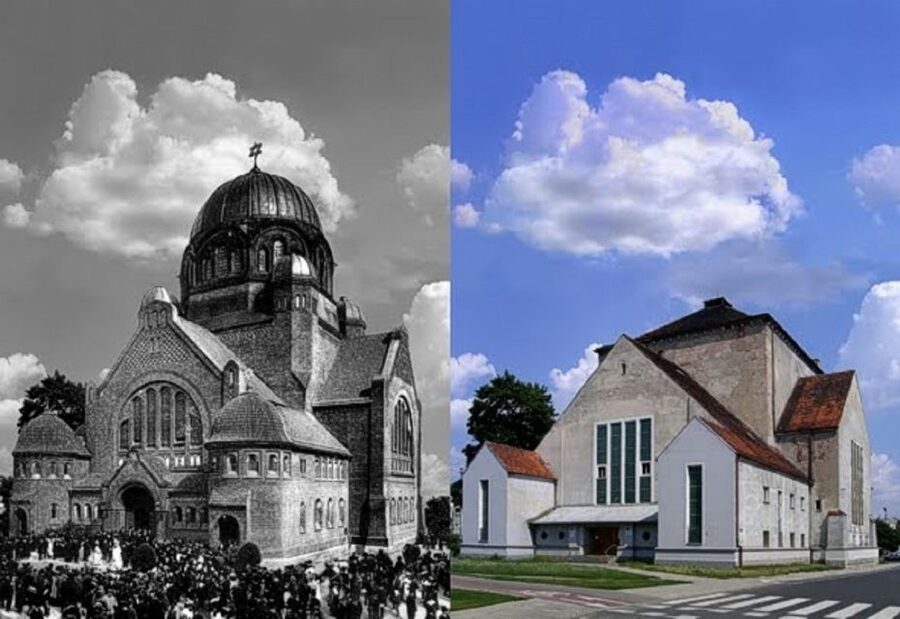
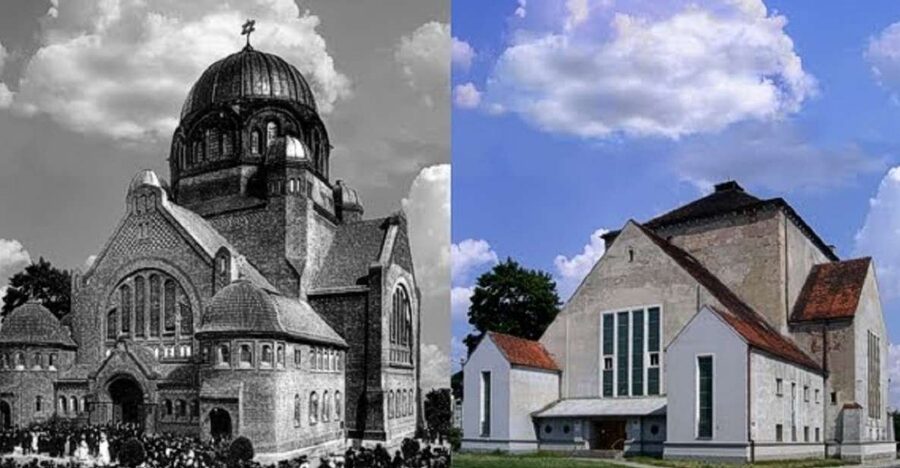
Your guide waits by the New Synagogue on Stawna 10 with your name. Be ready on time, and look closely at the exact building. One practical wrinkle is worth knowing: the meeting instructions have been described as confusing because Stawna 10 is associated with the old synagogue, while the guide may be waiting about 50 meters away by the New Synagogue, a building that has been abandoned for some time.
That small detail can make the first few minutes awkward, especially if you arrive in a busy part of the city and are not sure which building is intended. I would confirm the precise meeting spot before setting out. Once you meet, the private arrangement should make the rest of the walk easier.
The tour begins in the former Jewish quarter, once the center of social and religious life for Poznań’s Jewish community. This is a useful starting point because the subject becomes tied to real streets and buildings rather than a list of dates. You can begin to picture where people worshipped, worked, met friends, and organized community life.
Your guide introduces the former headquarters of the Jewish community, the New Synagogue, and Akiva Eger Square. These places help explain how Jewish life was organized in the city over several centuries. I especially like this opening because it gives the later cemetery and wartime stops a human setting.
More Jewish heritage tours in Poznan:
- Krakow: Schindler’s Factory & Ghetto Guided Tour
★ 4.7 · 1,694 reviews - Krakow: Jewish Quarter and Former Ghetto Tour
★ 4.9 · 1,441 reviews - Krakow: Bike Tour of Old Town, Jewish Quarter and the Ghetto
★ 4.9 · 1,155 reviews
Akiva Eger Square and the memory of a major religious figure
Akiva Eger is one of the names that gives this route its personal scale. The tour explains who he was and takes you to his grove in the Jewish cemetery. You are not simply passing a monument with an unfamiliar name. You are given a person to remember and a place connected with him.
The cemetery stop also shows why this tour works better with a guide than with a map alone. Jewish heritage in Poznań is not gathered in one easy-to-read museum complex. Important traces are spread out, and some are easy to overlook unless someone points them out and explains their meaning.
At Wolności Square, the guide discusses its earlier use as a place of eternal rest for Poznań’s Jews. The modern city has changed around these sites, and that contrast is part of the experience. You may find that the walk asks you to look at familiar public spaces in a different way.
This is also where a private tour earns its keep. You can pause for family questions, ask about names and dates, or request more detail about a particular branch of your own research. Elana, who had a family connection to the area, found that Martin’s explanations gave added meaning to the places around Poznań and its surroundings.
From the old quarter to wartime Poznań
The route then moves beyond the former quarter toward sites connected with the German occupation. This section changes the tone. The earlier stops focus on community, faith, and daily life. The later ones confront persecution, forced labor, and the destruction of Jewish life.
You visit the City Stadium, identified as a place connected with the tragic fate of Jews during the occupation. The route also includes the Square of the Righteous Among the Nations. These stops widen the story beyond the Jewish community itself and show how the city remembers both victims and people who helped others.
The Monument to the Victims of the Labor Camp for Jews in Poznań is one of the most serious points on the walk. The tour explains the forced labor camp and its place in Holocaust history. You should expect this part to be sober rather than theatrical. The value lies in having someone provide context at the site, especially when little physical evidence remains.
One guide-led visit also included Fort VII and a walk around Poznań. Fort VII is linked with the city’s wartime history and gives the experience an additional historical stop. Because the exact route may vary with the guide and timing, ask at the start if Fort VII is part of your planned itinerary.
The distance between sites is an important consideration. One French-speaking participant noted that much of Poznań’s Jewish heritage is scattered across the city, so the walk covers more ground than a compact old-town stroll. You will also pass other historic places that are not exclusively Jewish. That can be a benefit if you want a broader city walk, but it may disappoint you if you expect every minute to focus on a synagogue or cemetery.
The cemetery stops and what remains today
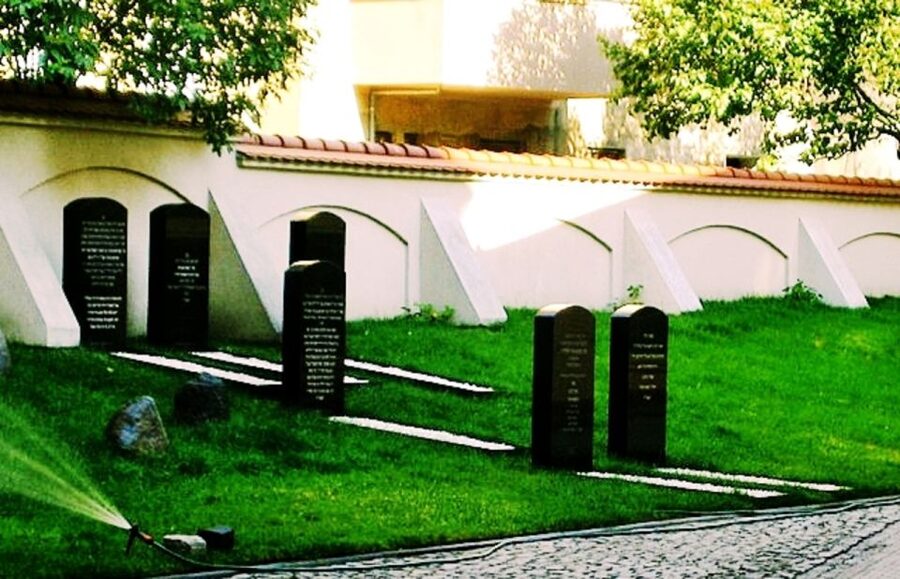
The new Jewish cemetery is another key stop. Here, the guide helps connect surviving burial grounds and memorial markers with the wider story of Poznań’s Jewish population. The cemetery is not treated as a quick photo stop. It forms part of the explanation of how a community continued through generations and how war and persecution broke that continuity.
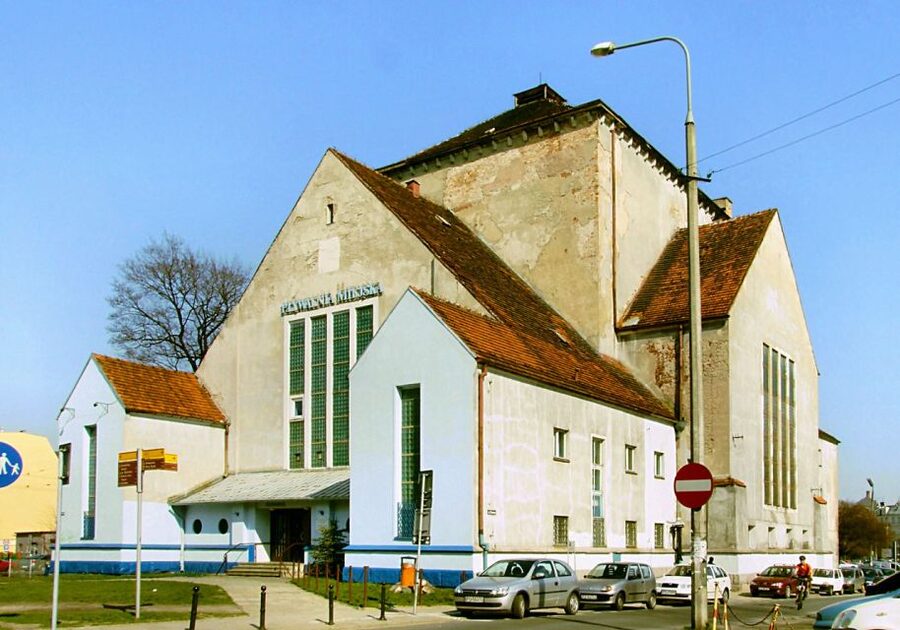
You also hear about the former synagogues and see the remains of Jewish religious sites. The synagogue destroyed by the Germans during the Second World War is a central reminder of what was lost. The physical remains may be limited, but that absence is itself part of the story.
I would set your expectations correctly. Poznań does not offer a preserved Jewish quarter on the scale of Kraków’s Kazimierz. Much of the material heritage has disappeared, been damaged, or been absorbed into the modern city. That is why the guide matters so much. The experience depends less on grand buildings and more on connecting small clues.
Cheryl’s experience captures the practical value of this route. She was able to see old-town sites, former synagogues, and cemeteries that would have been difficult to locate alone. You should expect the guide to take you to places that are not always obvious from a standard sightseeing map.
More History Tours in Poznan:
- Historic Poznan: Exclusive Private Tour with a Local Expert
★ 5.0 · 1 review - Gdansk: City Cruise on Historical Polish Boat
★ 4.8 · 2,913 reviews - Warsaw: POLIN Museum of the History of Polish Jews Ticket
★ 4.7 · 1,142 reviews - Gdańsk: Sunset Cruise on a Historic Polish Boat
★ 4.9 · 977 reviews
Why a private guide changes the experience

This is not a scripted coach tour. The group is private, and the guide can shape the conversation around your questions. That suits families tracing Jewish roots, visitors studying Polish Jewish history, and anyone who wants a serious conversation rather than a quick introduction.
Martin received especially warm praise for showing how the Jewish story fits into the area around Poznań. Matteusz was praised for his extensive research, his passion for the subject, and his openness to questions on Poland and Jewish history. One particularly unusual extra was a drone video of the area at the end of the visit. You should not book expecting that surprise, but it shows the kind of personal touch a private guide may add.
The guides can lead the tour in English, Spanish, German, Russian, Polish, French, or Italian. Language choice matters on a subject with many names, historical terms, and delicate points. If you speak French, the guide described in the feedback was noted for excellent French and for adapting the explanations to what the participant had already seen.
That adaptability is useful in Poznań. You may arrive knowing a great deal about your family, or you may know almost nothing beyond a surname. A private guide can avoid wasting time on material you already understand and spend more time on the places that matter to you.
Is the $16 price good value?
At $16 per person, this is inexpensive for a private three-hour walking tour. The value is strongest if you are traveling with a companion or small private group, since you are paying for a guide who can answer your questions directly rather than for a standard group presentation.
The price does not include entrance fees. The supplied details do not identify any required paid entrances, so ask the guide what, if anything, you may need to pay on the day. Much of the experience is an outdoor walk through streets, squares, cemeteries, and memorial locations.
I see the low price as a reason to consider this tour early in your Poznań visit. The guide can tell you what else to see on your own afterward, which may help you plan the rest of your stay. It is not simply three hours of sightseeing. It can also serve as a map for further exploration.
Still, price should not be your only measure. The tour asks for three hours and a good deal of walking, and the emotional subject matter may feel heavy. If you want a short, polished visit to one preserved synagogue, this is not the best match. If you want context and a route through dispersed sites, the cost is hard to fault.
Walking, access, and the right pace
The activity is listed as wheelchair accessible, but the route covers multiple parts of the city and includes cemeteries and outdoor memorial areas. If you use a wheelchair or have limited mobility, contact the provider in advance to confirm the current surface conditions and any route adjustments.
Comfortable footwear is sensible for everyone. The walk can take you from the former Jewish quarter to squares, the City Stadium, the labor camp memorial, and the new cemetery. The route is not presented as a short loop around Stawna Street.
The three-hour length is enough to cover the main story without turning the tour into a full-day commitment. I would avoid scheduling it immediately before a fixed appointment, since walking time between scattered sites can make the pace feel less predictable.
You should also leave room for questions. The strongest part of the experience is the guide’s explanation, not rushing from marker to marker. Matteusz’s willingness to discuss a wide range of subjects and Martin’s attention to a family connection both suggest that the private format works best when you take advantage of it.
What this tour does especially well
The strongest feature is the human guidance. Poznań’s Jewish heritage is partly visible and partly absent, so a guide has to explain both what remains and what was destroyed. The best moments are likely to come when a place, name, or cemetery marker suddenly connects with the larger story.
The second strength is the route’s range. You move from the former Jewish quarter and religious institutions to cemeteries, public squares, the Righteous Among the Nations memorial, and Holocaust sites. That prevents the experience from becoming only an architectural walk.
The third strength is flexibility. You can ask about your own family, request clarification, and discuss Poland’s wider past. A private group also avoids the stop-and-go feel of a large party.
The main weakness is the condition of the heritage itself. You will not find a fully intact Jewish district, and some sites may consist of remains, memorials, or historical locations rather than complete buildings. The tour asks you to use imagination and listen carefully.
Who should book this Poznań Jewish heritage walk?
I would recommend it most strongly to anyone with family links to Poznań or Greater Poland. The private format gives you a fair chance to connect names, cemeteries, and neighborhoods with your own research, even if you arrive with only partial information.
It also suits history-focused visitors who want the Holocaust and wartime material treated with care. The route does not stop at pleasant old-town views. It addresses forced labor, destroyed synagogues, the German occupation, and the loss of a major community.
You should book it if you enjoy walking and want a guide to show you sites you might not find alone. You should think twice if you want a compact route, a preserved historic quarter, or a tour built mostly around interiors.
Book with two practical notes in mind. Confirm the exact Stawna 10 meeting location, and ask how much walking your version of the route will involve. Free cancellation up to 24 hours before the start and the reserve-now, pay-later option also make it easier to fit the tour into a changing Poznań schedule.
FAQ
Where does the tour meet?
The meeting point is by the New Synagogue at Stawna 10 in Poznań. Your guide waits with your name, but you should confirm the exact building because the old and New Synagogue locations have caused some confusion.
How long does the tour last?
The tour lasts three hours.
Is this a private tour?
Yes. The activity is arranged for a private group.
What languages are available?
The guide can lead the tour in English, Spanish, German, Russian, Polish, French, or Italian.
What places are included?
The route includes the former Jewish quarter, the Jewish community headquarters, the New Synagogue, Akiva Eger Square, Wolności Square, the City Stadium, the Square of the Righteous Among the Nations, the monument to victims of the Jewish labor camp, and the new Jewish cemetery.
Does the tour discuss the Holocaust?
Yes. The tour covers the forced labor camp for Jews and the history of the Holocaust during the German occupation.
Does the tour visit a Jewish cemetery?
Yes. The route includes the Jewish cemetery, Akiva Eger’s grove, and the new Jewish cemetery.
Are entrance fees included?
No. Entrance fees are not included in the price.
Is the tour wheelchair accessible?
Yes, the activity is listed as wheelchair accessible.
Can I cancel for a full refund?
Yes. You can cancel up to 24 hours in advance for a full refund. You can also reserve now and pay later.
Should You Book This Tour?
Book it if you want Poznań’s Jewish past explained across the city rather than presented in one preserved building. At $16 per person, the private guide, flexible conversation, cemetery visits, and wartime memorials offer strong value.
Go in expecting a thoughtful walking tour, not a polished museum circuit. Confirm the meeting point, wear comfortable shoes, and allow the guide time to explain what has vanished as well as what remains. For family research and serious local history, this is one of the more useful ways to see Poznań.
Just added in Poznan
- Explore the Instaworthy Spots of Poznan with a Local★ 5.0 · 1 review
- The Best of Poznan 4 Hour Guided Private Walking Tour★ 5.0 · 7 reviews
- Private walking city tour in Poznan★ 4.0 · 9 reviews
- The Birthplace of Poland: A Self-Guided Audio Tour of Poznań★ 4.5 · 13 reviews
- Historic Poznan: Exclusive Private Tour with a Local Expert★ 5.0 · 1 review
- Private 3-hour Poznan Old Town Tour★ 5.0 · 5 reviews
- Poznan private tailor made tour with a local guide-driver★ 5.0 · 6 reviews
- Palace, Castle and Ancient Oaks – Rogalin and Kórnik guided tour from Poznan★ 5.0 · 4 reviews