
REVIEW · JEWISH QUARTER TOURS
Krakow: Jewish Quarter and Former Ghetto Tour
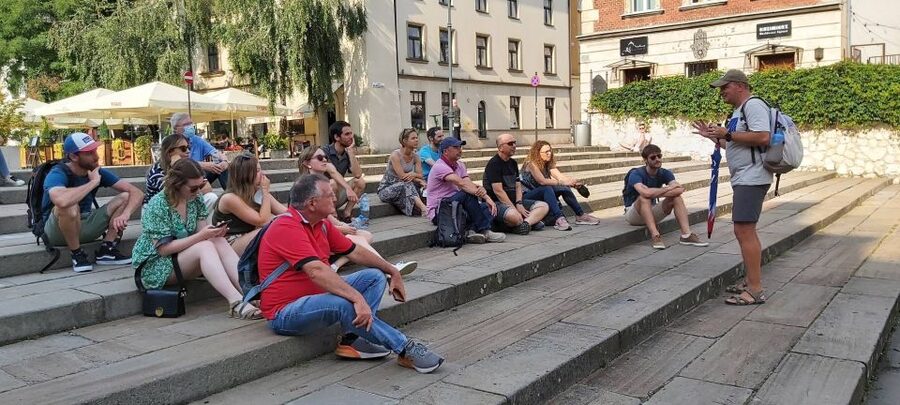
Kazimierz reveals more when someone tells its story. This 2.5-hour walk connects Krakow’s Jewish quarter with the former ghetto, adding the human detail that streets and buildings cannot provide on their own. I especially like the mix of Jewish culture, prewar life, and Holocaust history, plus the chance to see filming locations from Schindler’s List. The main drawback is the steady walking and the amount of information packed into 150 minutes.
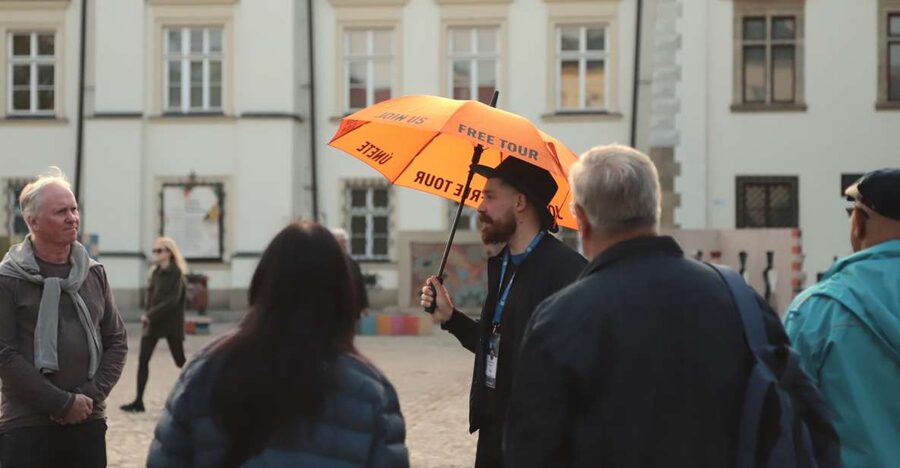
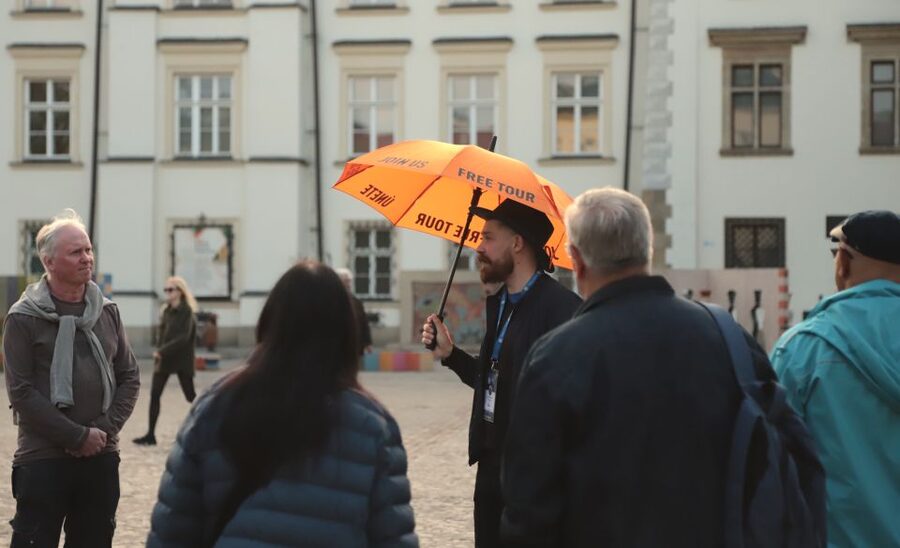
The tour begins at the Old Synagogue on Szeroka Street, with guides under an orange umbrella. Guides such as Bart, Magda, Matt, Slavek, Emily, and Chris have earned praise for clear storytelling, strong voices, and thoughtful answers. I would wear warm layers in cold weather, comfortable shoes in every season, and stay close to the group at photo stops.
In This Review
- Key points at a glance
- Why Kazimierz needs a walking tour
- Starting at the Old Synagogue on Szeroka Street
- Synagogues, customs, and the people of Kazimierz
- The Jewish cemetery and the value of quiet places
- Crossing into the former ghetto
- Schindler’s List filming locations
- The pace, length, and guide quality
- Is $19 good value?
- Who should book this Krakow walk?
- Should you book it?
- FAQ
- How long does the Jewish Quarter and Former Ghetto Tour last?
- Where does the tour begin?
- What language is the tour conducted in?
- What places are included on the walking tour?
- Is the tour wheelchair accessible?
- What is included in the price?
Key points at a glance
- Old Synagogue meeting point: Start at ul. Szeroka 24, in the heart of Kazimierz.
- Jewish life before the war: Learn how Kazimierz grew into a major center of Jewish prosperity and culture.
- Historic religious sites: See the synagogue described as Poland’s oldest and among Europe’s oldest.
- Jewish cemetery: Visit a quiet, meaningful place that adds context beyond the main streets.
- Former ghetto memorials: Reach Heroes of Ghetto Square and a Holocaust memorial tied to Krakow’s wartime story.
- Schindler’s List locations: See places used in the film and understand how the real setting shaped its scenes.
Why Kazimierz needs a walking tour
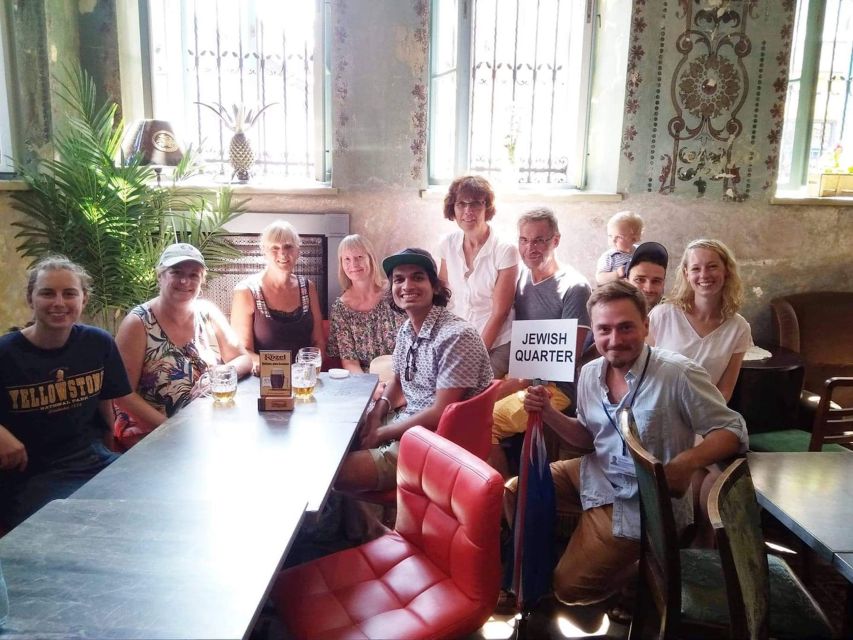
Kazimierz was founded as a separate city on an island near Krakow. It was intended to rival its larger neighbor, but its lasting importance came from the Jewish community that settled there, especially as Jews faced persecution in parts of Western Europe during the Middle Ages.
Over time, Kazimierz became a place of Jewish religious, commercial, and family life. Its small streets and synagogues are still visible, but a casual walk can leave you with only fragments. You may notice a handsome facade or a Hebrew inscription without understanding what it meant to the people who lived there.
That is where this tour earns its modest $19 price. You are not simply being led from one photo stop to another. The guide explains how the area functioned, introduces Jewish traditions, and places the wartime destruction against the much longer story that came before it.
I like that the route does not treat Jewish Krakow as only a Holocaust story. You hear about Ashkenazim and Sephardim, Jewish customs, famous residents, and the life of the quarter before World War II. The result is more respectful and more useful than a quick circuit of memorials.
More Jewish heritage tours in Krakow:
- Krakow: Schindler’s Factory & Ghetto Guided Tour
★ 4.7 · 1,694 reviews - Krakow: Bike Tour of Old Town, Jewish Quarter and the Ghetto
★ 4.9 · 1,155 reviews - Krakow: Kazimierz Jewish Quarter Walking Tour
★ 4.8 · 571 reviews
Starting at the Old Synagogue on Szeroka Street
The meeting point is easy to identify: stand in front of the Old Synagogue at ul. Szeroka 24 and look for the orange umbrella. This is a sensible starting place because Szeroka Street gives you an immediate sense of Kazimierz as a historic Jewish center.
The tour highlights the Old Synagogue as the oldest synagogue in Poland and one of the oldest in Europe. Other information for the experience describes it as the second oldest synagogue in Europe, so the safest way to understand the claim is that you are beginning beside one of the continent’s very old and important Jewish religious buildings.
The key value is not simply the age of the structure. Your guide can explain how a synagogue served as a place of worship, learning, community decisions, and social life. That broader explanation helps you read the quarter as a living neighborhood, rather than a collection of old walls.
You should not assume the walking tour includes a separate museum visit or an extended interior tour. The advertised experience is a guided walk, and food and drinks are not included. If you want more time inside any religious building or museum, plan a return visit after the walk.
Synagogues, customs, and the people of Kazimierz
The route brings Jewish heritage into focus through several kinds of stories. You learn the difference between Ashkenazim and Sephardim, two major Jewish cultural traditions, and how Jewish communities developed distinct customs, languages, and regional identities.
The guide also introduces notable people connected with Jewish history in Poland and Krakow. Names associated with the tour include Helena Rubinstein, Roman Polanski, Ludwick Zamenhof, and Maximilian Faktorowicz. These figures make the past feel less distant. They show that Jewish life in the region produced artists, business leaders, language innovators, and people whose work reached far beyond Krakow.
I find this part especially valuable because it prevents the quarter from becoming a memorial zone only. Before the catastrophe of World War II, this was a place where people worked, worshipped, raised children, argued, celebrated, and built businesses. The tour’s strongest guides keep that ordinary life in view while still treating the later tragedy with care.
Bart has received repeated praise for his clear delivery, broad background in history and archaeology, and ability to add dry humor without making the subject feel cheap. Magda is also praised for her warmth, patience, and ability to stop for questions. The guide assigned to your departure can vary, but the experience depends heavily on that person’s storytelling.
The Jewish cemetery and the value of quiet places
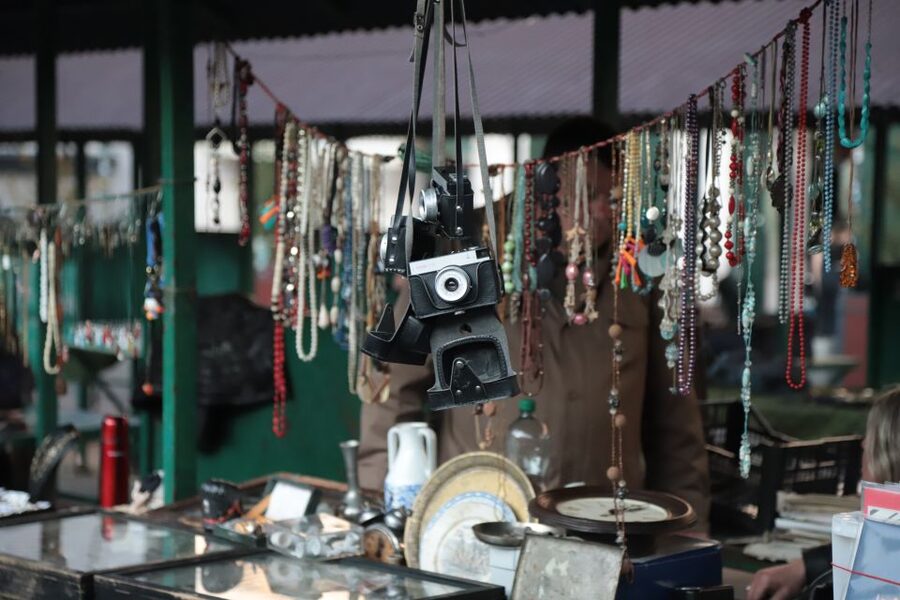
The Jewish cemetery is one of the stops that adds emotional weight without needing a dramatic presentation. Cemeteries make history personal. Names, stones, and the arrangement of graves remind you that this was a community of real families, not an abstract chapter in a textbook.
Your guide can help explain what you are seeing and why the cemetery matters within Krakow’s Jewish story. That context is important because you might otherwise walk through quietly without recognizing the religious or historical meaning of the site.
Allow yourself a little stillness here. This is not the kind of stop that works well if you rush from one explanation to the next. One past participant found the tour’s information slightly rushed overall, particularly because there was always another place to reach. That is a fair point. The cemetery deserves your attention, so keep your questions focused and make note of anything you want to investigate later.
The tour is wheelchair accessible, which is useful for many visitors. Still, the experience is a walking tour lasting 150 minutes, and conditions can vary along city streets. If mobility is a serious concern, it is sensible to confirm the practical route details before booking.
A few more in Krakow
- From Krakow: Auschwitz-Birkenau Guided Tour & Hotel Pickup
★ 4.5 · 33,358 reviews - From Krakow: Auschwitz-Birkenau Guided Tour & Hotel Pickup
★ 4.5 · 29,340 reviews - Krakow: Auschwitz Guided Tour with Optional Hotel Pickup
★ 4.5 · 15,280 reviews - Krakow–Zakopane: Cable Car, Chocholow Baths, Cheese & Vodka
★ 5.0 · 10,720 reviews
Crossing into the former ghetto
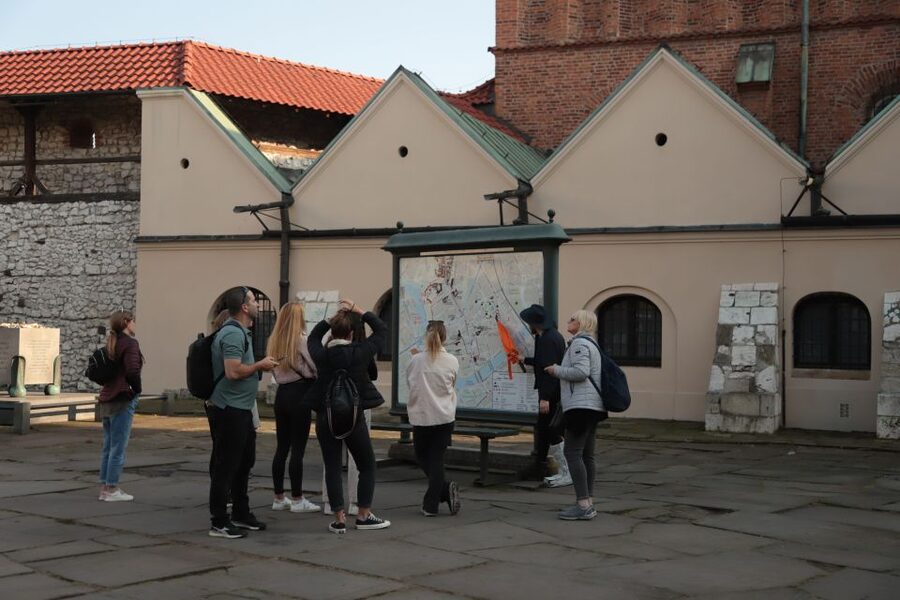
The second half of the experience turns toward Krakow’s former ghetto and the wartime persecution of the city’s Jews. This change in subject can feel stark, but it reflects the actual history. The neighborhood first grew through Jewish community life, then was transformed by Nazi occupation, displacement, and murder.
The guide’s role here is crucial. The best departures, as reflected by the strong feedback for Bart, Emily, Magda, Matt, and others, explain the events in a calm and organized way. You get dates, places, and names, but also the human meaning of what happened.
Expect the tone to become more serious. This is not a light sightseeing walk, even though some guides use gentle humor earlier to keep the group attentive. The Holocaust material can be distressing, and the tour handles it as an important part of understanding Krakow rather than as a sensational attraction.
Heroes of Ghetto Square is one of the central memorial stops. The square commemorates the people who lived in the ghetto and the terrible fate forced upon them. The memorial’s physical design gives the guide a chance to explain deportation, loss, and the destruction of families in a place connected to those events.
You will also see a Holocaust memorial. Together, the square and memorial move the story from general wartime history to specific places in the city. That is one of the main reasons I would choose a guided walk instead of simply following a map. You can look at a monument on your own, but you may miss the details that connect it to the surrounding streets.
Schindler’s List filming locations
Film lovers have an extra reason to book this route. The tour traces locations used in Schindler’s List, linking the movie’s visual memory with the actual streets of Krakow.
This does not mean you should expect a film studio attraction or a guaranteed visit inside a museum. The appeal is seeing the real places and understanding how the film used them to present the city’s Jewish quarter and ghetto. If you have watched the movie recently, the locations may be especially striking.
One practical warning comes from a photo stop near Schindler-related sites. It is easy to pause for pictures, walk out, and lose sight of the guide among other groups. Stay alert when the group moves, especially if you are traveling alone. An orange umbrella identifies the group at the meeting point, but keeping close during the walk is the better plan.
The film connection should support the history, not replace it. This tour works best when you treat Schindler’s List as an entry point and then listen to the wider story of the people who lived in these places.
The pace, length, and guide quality
At 150 minutes, the walk is long enough to cover both Kazimierz and the former ghetto without taking up an entire day. Several guides have been praised for keeping the pace comfortable, making frequent stops, and speaking loudly enough for the group to hear.
You should still expect a lot of walking. Comfortable shoes matter, and cold weather deserves serious preparation. One person found the tour ran closer to three hours and felt slightly rushed because there was so much to absorb while continuing to move. That is the tradeoff: you cover a great deal, but you do not have unlimited time at each location.
The guide makes a major difference. Bart is repeatedly singled out for his passion, strong voice, historical background, and engaging delivery. Matt is praised for bringing the subject to life. Emily is described as an excellent storyteller who keeps the group engaged. Magda receives high marks for warmth and for answering questions carefully. Slavek is praised for friendliness and clear explanations, while Chris is remembered for a personal, thoughtful approach.
Those names are useful when checking the departure details, but you cannot assume a particular guide will lead your tour. The consistent pattern is more important: this experience is at its best with a guide who can balance facts, personal stories, and a respectful tone.
Is $19 good value?
At $19 per person, I consider this strong value if you want historical context rather than a self-guided stroll. The price covers an experienced local guide and the 2.5-hour walking tour. It does not cover meals, drinks, or separate admission to attractions.
You are paying for interpretation. Kazimierz is easy to reach and pleasant to wander, but the most important details are not always visible. A guide can show you buildings you might pass without a second glance, explain why a street matters, and connect the Jewish quarter to the former ghetto.
There is also a practical value in the route design. You do not need to work out how the different districts and memorials fit together. The walk gives you a clear framework, then points out places you can revisit at your own pace.
Some people prefer a free walk followed by a voluntary tip. That option may exist in the same city, but this paid booking gives you a known price and a reserved place. If you value planning certainty and want to support a professionally arranged tour, $19 is reasonable.
Free cancellation up to 24 hours before the start and the option to reserve now and pay later make the booking less rigid. Those are useful safeguards, but the real value depends on your interest in history. If you want only landmark photos, the price may feel unnecessary. If you want to understand what you are seeing, it is money well spent.
Who should book this Krakow walk?
I would recommend it to first-time visitors who want a clear introduction to Jewish Krakow. It also suits anyone who has already wandered through Kazimierz and felt they were seeing only the surface.
The tour is a strong choice for:
- People interested in Jewish culture, religion, and prewar community life
- Visitors who want Holocaust history tied to actual places
- Film fans curious about Schindler’s List locations
- Solo visitors who want an organized route and a guide to answer questions
- Anyone who prefers a local English-speaking guide to reading plaques alone
It may be less suitable if you dislike emotionally serious subjects or cannot comfortably walk for 2.5 hours. Families should also consider the age and attention span of children, since the Holocaust portion is difficult and the amount of information is substantial.
Bring water if you need it, dress for the forecast, and avoid scheduling something immediately afterward. The tour can run longer than the stated 150 minutes, and you may want time afterward to process what you have heard.
Should you book it?
Book this tour if you want Krakow’s Jewish quarter explained as a community first, a place of tragedy second, and a film setting third. That order matters. It gives you a fuller and more human understanding of Kazimierz, the cemetery, the ghetto, and Heroes of Ghetto Square.
I would choose it over walking the area alone, particularly on a first visit. The price is fair, the route covers a lot, and the strongest guides, especially Bart, Magda, Matt, Emily, Slavek, and Chris, bring care and clarity to difficult material.
Skip it only if you are short on time, unwilling to walk, or looking for a light sightseeing outing. For everyone else, wear good shoes, stay with the group at photo stops, and allow the history to take the time it deserves.
FAQ
How long does the Jewish Quarter and Former Ghetto Tour last?
The tour is scheduled to last 150 minutes, or 2.5 hours. One departure has been known to run closer to three hours, so avoid booking another activity immediately afterward.
Where does the tour begin?
The meeting point is in front of the Old Synagogue at ul. Szeroka 24 in Krakow. Look for the guides holding an orange umbrella.
What language is the tour conducted in?
The tour is conducted in English with a live English-speaking guide.
What places are included on the walking tour?
The experience includes the Old Synagogue area, Jewish synagogues and streets, the Jewish cemetery, a Holocaust memorial, Heroes of Ghetto Square, and filming locations connected with Schindler’s List.
Is the tour wheelchair accessible?
Yes, the activity is listed as wheelchair accessible. It is still a 2.5-hour walking experience, so you may wish to confirm route details if you have specific mobility needs.
What is included in the price?
The $19 price includes an experienced local guide and the 2.5-hour walking tour. Food and drinks are not included.
Just added in Krakow
- Auschwitz-Birkenau – Skip the Line Tickets★ 3.5 · 29 reviews
- Auschwitz-Birkenau: Fast-Track Ticket & Guided Tour No Transfers★ 3.5 · 17 reviews
- Zakopane & Sleigh Ride with Bonfire – Group Tour from Kraków★ 5.0 · 2 reviews
- Sleigh Ride & Bonfire in Zakopane with Funicular – Private Trip★ 5.0 · 48 reviews
- Thermal Baths & Zakopane – Private Trip from Krakow★ 5.0 · 1 review
- Zakopane & Gubalowka Funicular – Private Winter Tour from Krakow★ 5.0 · 10 reviews
- stag dog chase Krakow prank★ 5.0 · 4 reviews
- Divine Mercy Sanctuary – Private Tour from Krakow★ 5.0 · 4 reviews