
REVIEW · HISTORICAL TOURS
Wroclaw: Third Reich and World War Two Historical Tour
Wroclaw’s wartime story is written in fragments. This two-hour walking tour makes sense of them, linking the Old Town with German rule, Jewish life, the Holocaust, and the destruction of 1945. I especially like the expert historical guidance and the route from Monopol Hotel to Cathedral Island, which gives the tour a clear shape.
I also like that the tour does not stop at battlefield facts. It asks you to picture daily life in wartime Wroclaw and explains how the city changed after the war. The main drawback is simple: so much of the city was damaged or destroyed that you will often be hearing about lost buildings rather than looking at intact wartime sites. Bring good walking shoes, too.
In This Review
- Key points to know before you book
- Why Wroclaw needs a wartime walking tour
- Starting outside Hotel Monopol
- Old Town, German Wroclaw, and the wartime city
- The former Gestapo building and Wolności Square
- Jewish heritage at the White Stork Synagogue
- The Dietrich Bonhoeffer Memorial and University Church
- Ossolineum Garden, Sand Island, and Cathedral Island
- What the destruction of 1945 means for sightseeing
- Guide quality and the value of questions
- Is $31 a fair price for two hours?
- Weather, walking, and who should book
- Should you book Wroclaw’s World War Two tour?
- FAQ
- Where does the tour begin?
- Where does the tour finish?
- How long does the tour last?
- What language is the tour conducted in?
- What is included in the price?
- Are food and drinks included?
- Is the tour wheelchair accessible?
- What happens if it rains?
- Can I cancel my booking?
- Does the tour always operate?
Key points to know before you book
- A two-hour walk through Wroclaw’s Old Town: The route begins outside Hotel Monopol and finishes at Cathedral Island.
- A city that changed countries: You learn how Wroclaw belonged to Germany until the end of World War Two, then became part of postwar Poland.
- A serious look at Jewish Wroclaw: The White Stork Synagogue and Holocaust stories give the tour a human focus.
- The former Gestapo building: This is one of the route’s clearest links to German wartime control.
- Strong guide-led interpretation: Mihael, also referred to as Michal, receives high praise for detailed explanations and thoughtful answers.
- Good value at $31: The price includes a licensed guide and fees, but not food, drinks, or hotel transfers.
Why Wroclaw needs a wartime walking tour
Wroclaw can feel like a handsome old European city, but its twentieth-century story is far from tidy. The city was known as Breslau while under German rule, and its identity shifted sharply after World War Two. This tour gives you the background needed to read the streets with more care.
The walk focuses on the years before, during, and after the war. You hear about German control, the city’s Jewish community, the Holocaust, the siege from February to May 1945, and the rebuilding that followed. That last part matters. Wroclaw is not simply an old German city preserved in Poland. It is a city rebuilt after severe destruction and reshaped by a new population and political order.
I like this approach because it avoids treating the war as a remote chapter. The guide connects grand events with ordinary life. You are encouraged to imagine what residents saw, feared, and endured as the city became a wartime fortress and then a ruin.
Still, you should set your expectations correctly. This is not a museum tour packed with original wartime interiors. Much of what you see today was repaired, rebuilt, or changed after 1945. The value comes from the guide’s explanation and from understanding the gaps.
More History Tours in Wrocław
- Best of Wroclaw 3-Hour History and Culture Walking Tour
★ 4.9 · 49 reviews - Wroclaw: Private Tour by smal Historic Tram (1,5h, 16 seats)
★ 4.8 · 24 reviews - UNESCO World Heritage-listed Church of Peace Day Tour from Wroclaw
★ 4.5 · 14 reviews
Starting outside Hotel Monopol
The meeting point is outside the main entrance of Hotel Monopol. Your guide carries a sign marked World War Two Tour, which keeps the start fairly easy to identify.
Hotel Monopol is a useful central starting point because the walk moves directly into Wroclaw’s Old Town. There is no hotel pickup, so you need to reach the meeting point yourself. The tour also does not include food or drinks, so grab water before setting off, especially if you prefer not to search for a shop during the walk.
The guide leads in English. The tour requires at least four participants to operate, so the start depends on reaching that minimum. It is worth checking the current departure time when you book, since the activity runs at selected times rather than on a schedule stated here.
Old Town, German Wroclaw, and the wartime city
The first part sets out the city’s political and cultural background. You learn that Wroclaw belonged to Germany until the end of World War Two, a fact that helps explain the city’s architecture, place names, and complicated postwar identity.
This introduction is not just a date list. It prepares you for the central question of the walk: how does a city recover when its population, borders, and political identity all change at once?
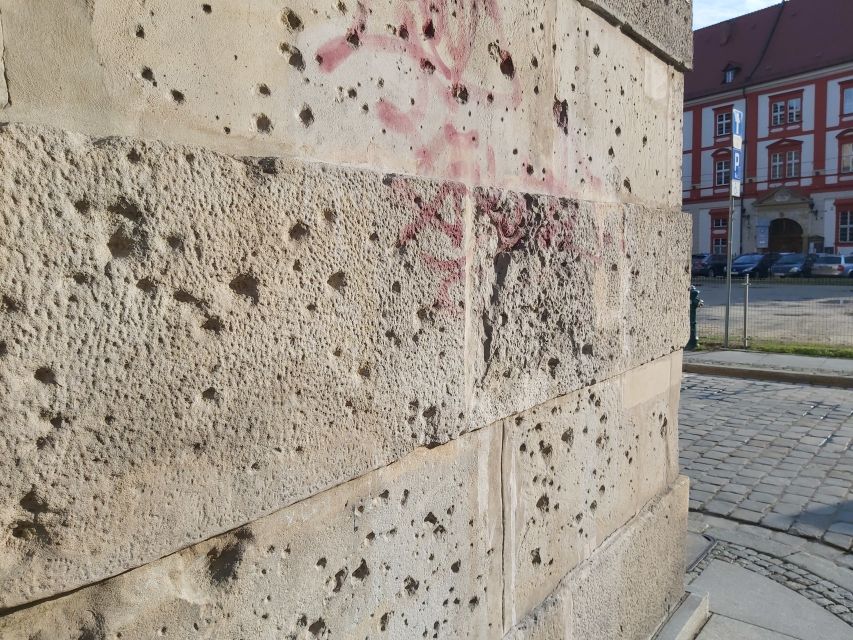
The siege between February and May 1945 is a major part of the story. Most of Wroclaw’s buildings were damaged or destroyed during this period, leaving a city that needed large-scale repair after the fighting ended. As you walk, the guide points out the partially rebuilt infrastructure and explains why the present-day city cannot always reveal its wartime past at a glance.
This is where the tour may feel different from a standard sightseeing walk. You are not being taken from one perfectly preserved monument to another. Instead, you are learning to notice what is missing, what was rebuilt, and what changed purpose.
A recent rating describes the tour as very informative, while also warning that there is a fair amount of walking. That is useful advice. Two hours is not a long time, but a history walk can feel demanding if you are wearing poor shoes or trying to keep up in snow or rain.
The former Gestapo building and Wolności Square
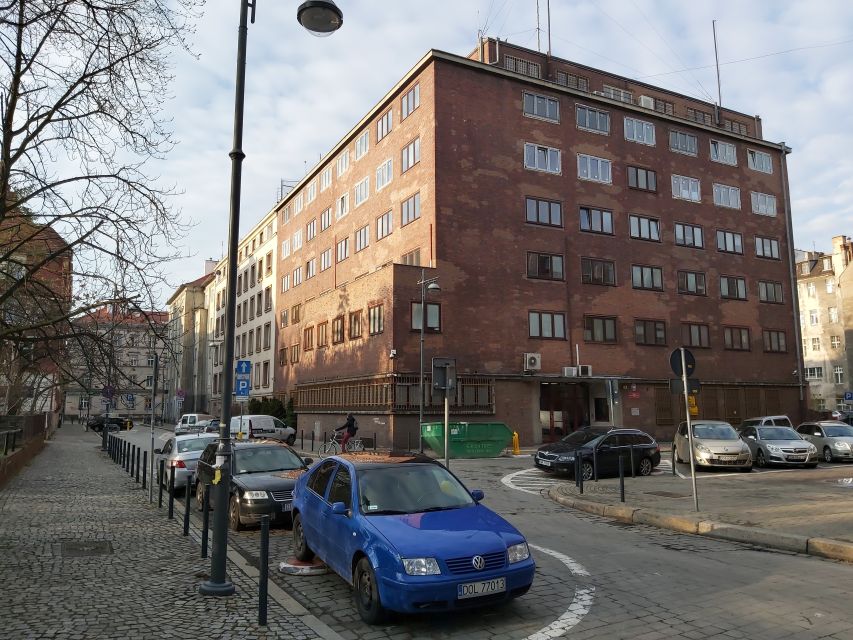
The former Gestapo building gives the tour one of its strongest physical links to wartime repression. Seeing the site helps turn the discussion of German rule into something more concrete. The guide’s explanation is important here, since the building itself may not provide every detail you want.
Wolności Square adds another layer to the route. As with several stops, its value depends less on a single preserved wartime object and more on how the guide places the square within the city’s changing story.
You may find this part especially useful if you want a broad civic history rather than a narrowly military tour. The focus includes administration, occupation, daily life, and the forces that shaped the city before and during the final years of the war.
The guide’s role makes a real difference. Mihael has been praised for detailed knowledge, clear communication, and a willingness to answer questions. He also offers suggestions for books and further study, which is a nice touch if you want to continue exploring after the walk.
Something quite different:
- Wroclaw: E-Car Tour and Audio Guide
★ 4.6 · 1,738 reviews - Wroclaw: 2-Hour Private Guided Tour by Electric Car
★ 4.8 · 805 reviews - Wrocław: Old Town and Ostrów Tumski Walking Tour in English
★ 4.8 · 311 reviews - Wroclaw: Private Old Town Guided Walking Tour (2 hours)
★ 4.8 · 275 reviews
Jewish heritage at the White Stork Synagogue
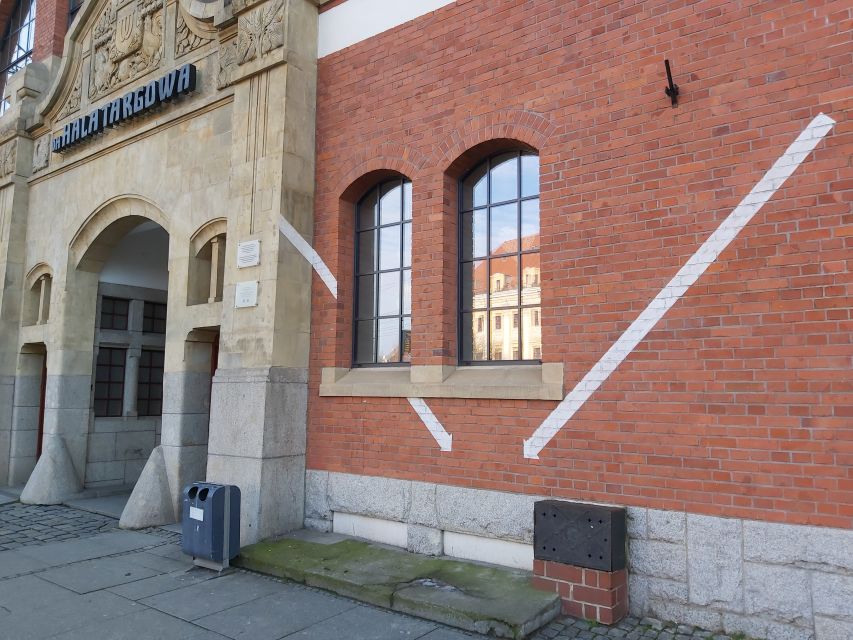
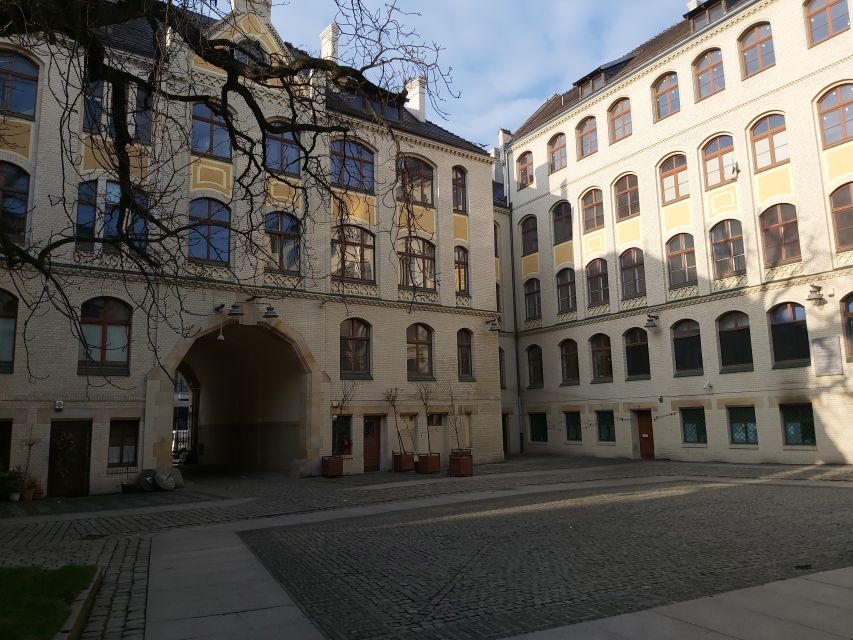
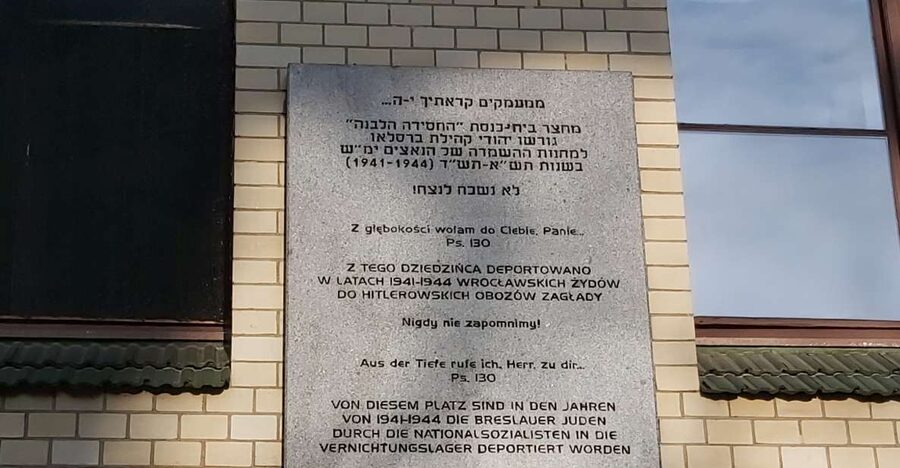
The White Stork Synagogue is one of the route’s most important stops. Here, the tour turns from general wartime history to the Jewish heritage of Wroclaw and the Holocaust.
That shift gives the walk a human center. You are not only hearing how borders moved or buildings fell. You are learning about a community that formed part of the city’s life and suffered under Nazi persecution.
The synagogue also helps you understand why Wroclaw’s past cannot be described only through its German and Polish identities. Jewish history is another essential part of the city’s story, and the tour gives it proper space.
This section may be emotionally heavy. The subject is serious, and the guide’s job is to explain rather than entertain. I would choose this tour when you are ready for a thoughtful historical walk, not when you want a light introduction to Wroclaw.
The Dietrich Bonhoeffer Memorial and University Church
The route continues to the Dietrich Bonhoeffer Memorial and the University Church. These stops broaden the discussion beyond military events and city damage.
The Bonhoeffer Memorial connects Wroclaw with the moral and religious questions raised by Nazi rule. The University Church adds another setting in which the guide can discuss the city’s religious and intellectual life.
The supplied information does not promise entry to every monument, and operating hours can change. Think of these locations primarily as landmarks on a guided outdoor route. If a site is closed, the guide can still explain its importance, but you should not book the tour expecting a full indoor visit at every stop.
That flexibility is part of the practical reality of a walking tour. The route is designed around the city and its landmarks, while opening hours may shift.
Ossolineum Garden, Sand Island, and Cathedral Island
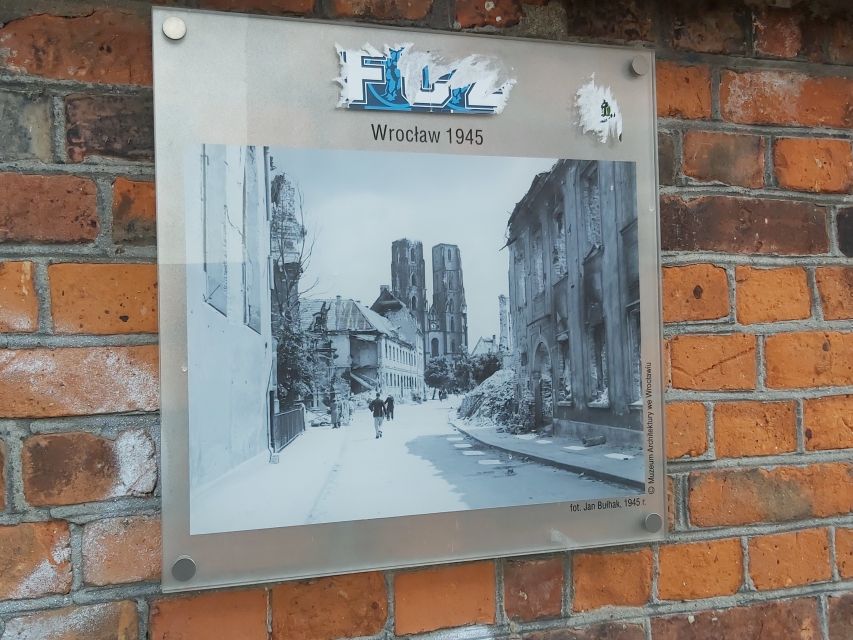
The later part of the walk moves toward the Ossolineum Garden, Sand Island, and Cathedral Island. This gives the route a change of setting after the denser Old Town streets and central squares.
The Ossolineum Garden offers another historical reference point, while Sand Island and Cathedral Island help show the wider shape of Wroclaw. The guide continues to connect places with the city’s wartime damage and postwar transformation.
Finishing at Cathedral Island is practical. You do not return to Hotel Monopol, so plan your next step from the eastern end of the route. The endpoint also gives the tour a sense of progress: you have crossed part of the historic center while moving through several periods of Wroclaw’s past.
For some people, the final section may be the most enjoyable because it combines history with a broader view of the city. For others, the amount of walking may become noticeable by this point. One rating specifically advises you to allow for a fair bit of walking, and that is worth taking seriously.
What the destruction of 1945 means for sightseeing
One of the most useful lessons on this tour is that absence can be historical evidence. Wroclaw’s wartime destruction means you will not always find a preserved building at the exact point where a dramatic event occurred.
A rating from the Netherlands makes this point plainly: despite Wroclaw’s important World War Two history, there is not always much left to see because so much was destroyed. That is not a criticism of the guide. It is a warning about the kind of experience you are buying.
If you want restored streets, original structures, and a long list of objects from the war, this may feel thin. If you want help understanding why the city looks as it does today, the lack of surviving buildings becomes part of the story.
The tour is strongest when you treat the guide as an interpreter of a damaged city. You will hear how the destruction affected the physical center and how the city rebuilt itself after the war. The walk helps you read modern Wroclaw as a place shaped by loss, repair, and change.
Guide quality and the value of questions
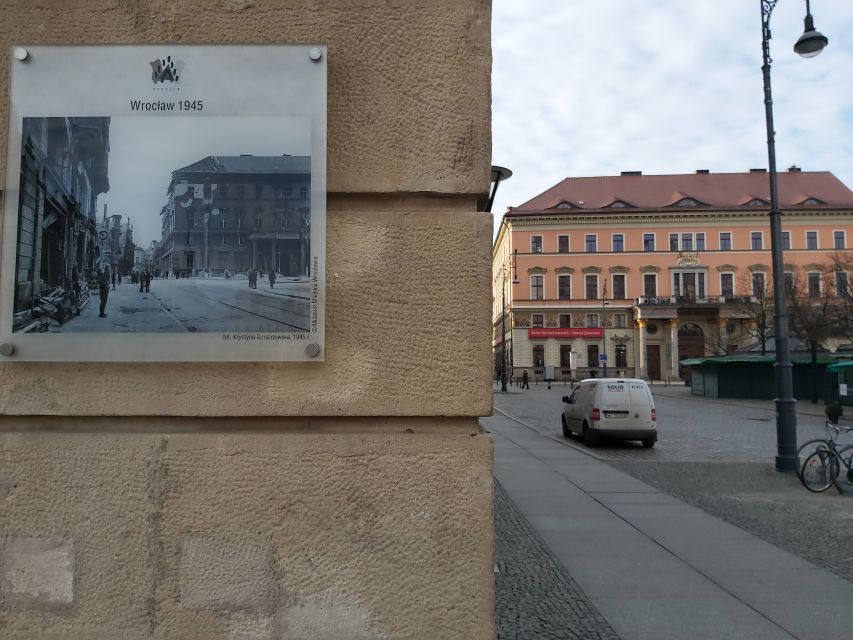
The guide is the main reason to book this experience. The strongest praise centers on clear communication, detailed historical explanations, and a friendly manner.
Mihael is singled out for having detailed knowledge and for answering questions. Another rating calls him very prepared and engaging. That combination matters. A guide can know many facts and still make a poor tour if the information arrives as a lecture. Here, the feedback points to a guide who can explain the subject and respond to the people in the group.
The experience may also change with group size. One rating notes that the guide allowed plenty of time, while suggesting the pace could feel different with a larger group. I would use that as a practical tip: ask questions when you can, but do not assume every group will move at the same pace.
English is the stated language. One German-speaking participant expressed interest in a German version, but this tour is advertised in English. If you need another language, confirm it before booking rather than assuming it is available.
Is $31 a fair price for two hours?
At $31 per person, this tour offers fair value if you want historical interpretation rather than a long list of admissions. The price includes a licensed tour guide, fees, and taxes. It does not include drinks, food, or transportation to and from your hotel.
You are paying for a focused walking route and an informed guide. For a two-hour private-style history lesson in the city center, that is a reasonable price, especially if you ask questions and use the walk to plan further sightseeing.
The value is weaker if you mainly want to enter buildings or see original wartime interiors. The description does not promise museum admissions, and monument opening hours can change. Much of the experience takes place outdoors.
Free cancellation up to 24 hours before the start adds useful flexibility. You can also reserve now and pay later, which helps if your Wroclaw plans are still shifting.
Weather, walking, and who should book
The tour runs rain or shine. Wroclaw’s weather can make a serious difference to a two-hour walk, as shown by a rating describing snow that made the experience harder to enjoy. Wear shoes with a firm sole and bring weather protection.
The tour is wheelchair accessible, but the route is still an outdoor city walk. If you use a wheelchair, you may want to confirm the current route and conditions when booking, especially because monuments and operating hours can change.
I would recommend this tour to you if:
- You want context for Wroclaw’s German, Jewish, and Polish past.
- You prefer a guide-led history walk to sightseeing on your own.
- You are willing to listen carefully where few wartime buildings survive.
- You want to ask questions about the Holocaust, German rule, and postwar change.
- You have two hours and are comfortable walking between central landmarks.
I would choose another activity if you want a relaxed architecture tour, a food experience, or a museum-heavy visit. The subject is serious, the walking is real, and the visible evidence can be limited.
Should you book Wroclaw’s World War Two tour?
Book it if you want the city’s difficult history explained by a strong English-speaking guide. The best parts are the connections between German rule, Jewish heritage, wartime destruction, and postwar rebuilding. The former Gestapo building, White Stork Synagogue, and Cathedral Island give the route a clear historical arc.
Skip it if you need a large number of preserved wartime sites or dislike learning through places that have been rebuilt. At $31, it is a sensible choice for history-minded visitors who understand that Wroclaw’s most important wartime evidence is often found in the story, not the stone.
FAQ
Where does the tour begin?
Meet your guide outside the main entrance of Hotel Monopol in Wroclaw. The guide will hold a sign saying World War Two Tour.
Where does the tour finish?
The walk finishes at Cathedral Island in Wroclaw.
How long does the tour last?
The guided walking tour lasts two hours.
What language is the tour conducted in?
The live tour guide speaks English.
What is included in the price?
The price includes a licensed tour guide and all fees and taxes.
Are food and drinks included?
No. Food and drinks are not included.
Is the tour wheelchair accessible?
Yes, the activity is listed as wheelchair accessible.
What happens if it rains?
The tour takes place rain or shine. Check the forecast and dress for the conditions.
Can I cancel my booking?
Yes. You can cancel up to 24 hours in advance for a full refund.
Does the tour always operate?
The tour requires at least four participants to operate. Monument operating hours can also change.
Just added in Wroclaw
- From Wrocław: Świdnica Church of Peace Private Tour★ 4.7 · 3 reviews
- Segway Tour Wroclaw: Full Tour (Old Town + Ostrów Tumski)★ 4.8 · 15 reviews
- From Wroclaw: Polish Pottery and Jawor Church of Peace Tour★ 4.4 · 4 reviews
- Cathedral & Old Town★ 5.0 · 9 reviews
- Oder river cruise and walking tour of Wroclaw★ 4.8 · 5 reviews
- Night tour through Wroclaw★ 4.9 · 38 reviews
- Wrocław: Polish Craft Beer Walking Tour with Tastings★ 4.1 · 3 reviews
- Legends of Old Town 1 Hour Walking Tour in Wroclaw (English)★ 4.9 · 20 reviews
Historical Tours, compared.

POLIN Museum of the History of Polish Jews Ticket
Read our review →
Gdańsk City Sights & History Guided Walking Tour in English
Read our review →

Small-Group Historical Guided Tour of Warsaw with pick up/drop off. Public Tour.
Read our review →Browse the lists this tour appears in