
REVIEW · JEWISH QUARTER TOURS
Warsaw Daily Jewish Ghetto Guided Tour with Jewish Cemetery
Warsaw’s past is written into its streets. This three-hour tour makes that difficult history easier to understand through Muranów’s former Jewish Ghetto, the Warsaw Ghetto Uprising, and the Polish-Jewish community that once shaped the district. I like the small group limit of 15 and the chance to visit the Jewish Cemetery with a licensed English-speaking guide. The main drawback is that the cemetery is closed on Saturdays, when the tour visits All Saints Church instead.
Guides Anna and Ewa have received especially warm praise for combining clear historical detail with personal stories and an approachable manner. At $131 per person, this is not a cheap walk, but the price includes the guide, cemetery entry, and a focused route through one of Warsaw’s most important historical areas. You should arrive ready for a serious, respectful experience rather than a light sightseeing stroll.
In This Review
- Key points to know before booking
- Starting at the InterContinental Hotel
- Muranów and the closed ghetto
- Seeing the ghetto wall remains
- Nozyk Synagogue, Warsaw’s surviving prewar synagogue
- The 1943 uprising and the Holocaust story
- Entering the Jewish Cemetery
- Is $131 a fair price?
- Who will get the most from this tour?
- Should you book the Warsaw Ghetto tour?
- FAQ
- How long does the Warsaw Jewish Ghetto tour last?
- Where is the meeting point?
- What language is the tour offered in?
- How many people can join the group?
- Is the Jewish Cemetery included?
- What happens if I book the tour on a Saturday?
- What places are visited during the tour?
- Is the tour wheelchair accessible?
- Can I cancel my booking?
Key points to know before booking
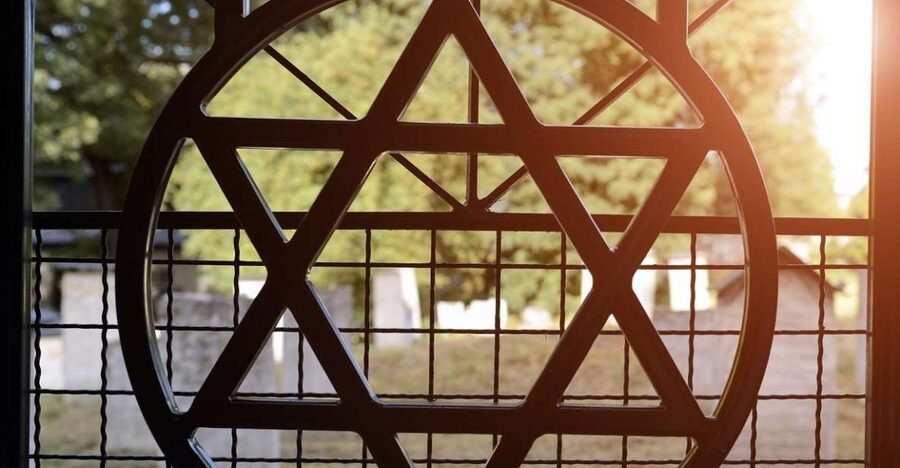
- Muranów was the site of Europe’s largest Jewish Ghetto: More than 400,000 Jews were forced into a closed area of about four square kilometers.
- You will see surviving physical traces: The route includes authentic sections of the ghetto wall, old houses, and the Nozyk Synagogue.
- The Warsaw Ghetto Uprising receives proper attention: Your guide explains the events of 1943 within the wider story of Nazi persecution and the Holocaust.
- The Jewish Cemetery adds a human scale: Its graves connect you with religious leaders, political activists, artists, cultural figures, and unnamed victims.
- The group is capped at 15 people: That makes it easier to hear the guide and ask questions than on a larger coach-style tour.
- Saturday changes the final stop: The Jewish Cemetery is closed that day, so the route uses All Saints Church, a site linked to Jewish history in Warsaw.
Starting at the InterContinental Hotel
The meeting point is in front of the InterContinental Hotel at Emilii Plater 49, 00-125 Warsaw. Do not go inside the hotel. You meet the guide outside, and arriving on time matters because a late arrival may mean missing the tour.
This location is central and easy to identify, but you should still check the meeting instructions sent the day before. Warsaw is a walkable city in many areas, yet a busy sightseeing schedule can make even a central meeting point harder to reach than expected.
The tour lasts three hours. That is enough time for a serious introduction to the ghetto and the cemetery without turning the outing into an all-day commitment. You will spend much of the time walking and listening, so comfortable shoes and a quiet, attentive mindset are sensible choices.
The group limit of 15 is one of the tour’s strongest practical features. The former ghetto is not a single preserved museum complex with a simple route. It is a modern city district layered over a destroyed community. A smaller group helps the guide point out details that might be missed in a large crowd.
More Jewish heritage tours in Warsaw:
- Warsaw: Warsaw Ghetto Private Walking Tour with Hotel Pickup
★ 4.9 · 369 reviews - Private Tour: Warsaw’s Jewish Heritage by Retro Fiat
★ 5.0 · 208 reviews - Warsaw: Ghetto, Jewish Cemetery & POLIN Museum Private Tour
★ 4.8 · 132 reviews
Muranów and the closed ghetto
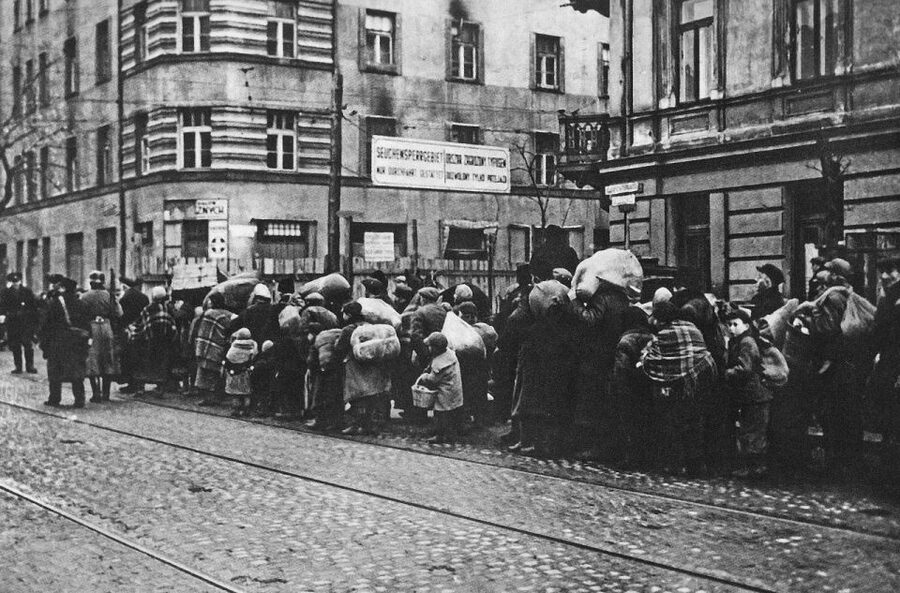
The first major part of the route focuses on Muranów, the district where the Warsaw Ghetto was created during the German occupation of Poland. More than 400,000 Jews from Warsaw were forced into roughly four square kilometers behind a closed boundary.
The numbers are hard to grasp in isolation. A guide can make them more meaningful by showing you the streets and remaining structures where families were confined. The tour explains the creation of the ghetto, the conditions inside it, and the Nazi plan that led to the Holocaust.
About 100,000 people died inside the ghetto from hunger, disease, exhaustion, and related conditions. More than 300,000 were killed at Treblinka, the nearby extermination camp. Those figures are central to the tour, but the route also connects them to individual lives and the wider Polish-Jewish community.
You should expect difficult subject matter. This is not a tour that softens the facts for comfort, and that is part of its value. At the same time, the guide’s role is not simply to recite dates. Anna, for example, was praised for adding stories about events and giving the tour a personal touch. Ewa was also described as clear, personable, and well prepared.
That combination matters in a place where much of the original district was destroyed. You are not just looking at ruins. You are trying to understand how a functioning community was forced into confinement, suffered mass death, and resisted its persecutors.
Seeing the ghetto wall remains
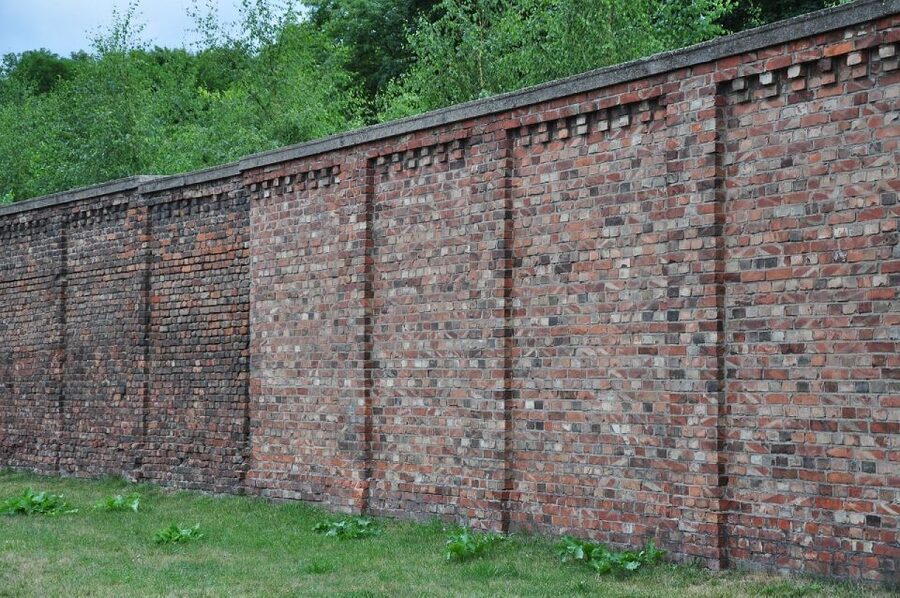
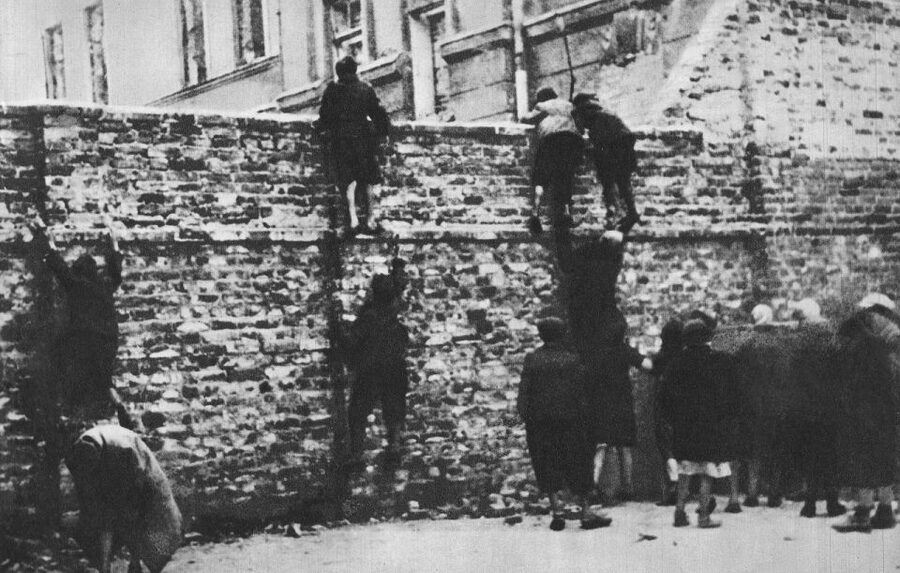
The surviving ghetto wall sections are among the most important physical stops. They offer a direct reminder that the ghetto was a sealed area, not merely a neighborhood where Jewish residents happened to live.
The remains are not a grand monument. They can be easy to overlook without a guide, particularly in a city rebuilt after wartime destruction. Your guide explains what the wall marked and why these fragments matter.
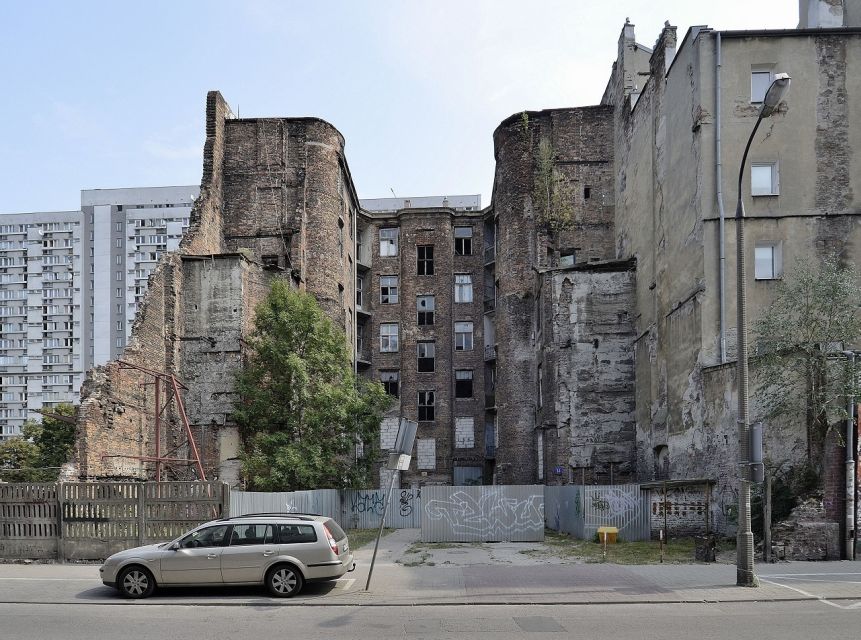
You will also see old houses connected with the former ghetto area. Their presence helps you picture the dense urban conditions behind the walls. Do not expect an intact wartime district. Warsaw suffered enormous destruction, and the modern city now surrounds these traces. The contrast can feel jarring, but it also shows why a guided walk is useful.
The tour places these fragments within the story of persecution, deportation, and death. It also moves toward the Warsaw Ghetto Uprising of 1943, when Jewish fighters resisted the German effort to clear the ghetto. You will learn about the people who took part and the circumstances that made the uprising both courageous and desperate.
This part is especially valuable if you know only the broad outline of the Holocaust. The guide can show how the uprising grew out of earlier confinement, starvation, deportations, and the recognition that survival was becoming nearly impossible.
Nozyk Synagogue, Warsaw’s surviving prewar synagogue
Nozyk Synagogue is a key stop because it is described as the oldest synagogue in Warsaw and the only surviving prewar synagogue in the city. That makes it more than an architectural sight. It is a rare surviving link to Jewish religious life before the war.
The synagogue helps widen the story beyond persecution. Before the ghetto, Warsaw had a large and important Jewish population with its own religious institutions, political movements, schools, businesses, writers, artists, and community leaders.
You should pay attention to how the guide connects the building to the wider Polish-Jewish heritage. The tour is not only about a place where terrible events happened. It also recognizes the community that lived, worshiped, worked, and created culture there.
The available details do not promise a long interior visit or a particular synagogue service, so you should think of Nozyk Synagogue primarily as a guided historical stop. Your guide’s explanation is likely to be more important than the amount of time spent inside or outside the building.
A few more in Warsaw
- Warsaw: Chopin Concert in the Old Town
★ 4.8 · 2,287 reviews - Warsaw: Traditional Galar Cruise on The Vistula River
★ 4.6 · 1,640 reviews - Warsaw: Old Town Highlights Walking Tour in English
★ 4.7 · 1,516 reviews - Warsaw Concert: Chopin – Painted by Candlelights with Wine
★ 4.8 · 1,442 reviews
The 1943 uprising and the Holocaust story
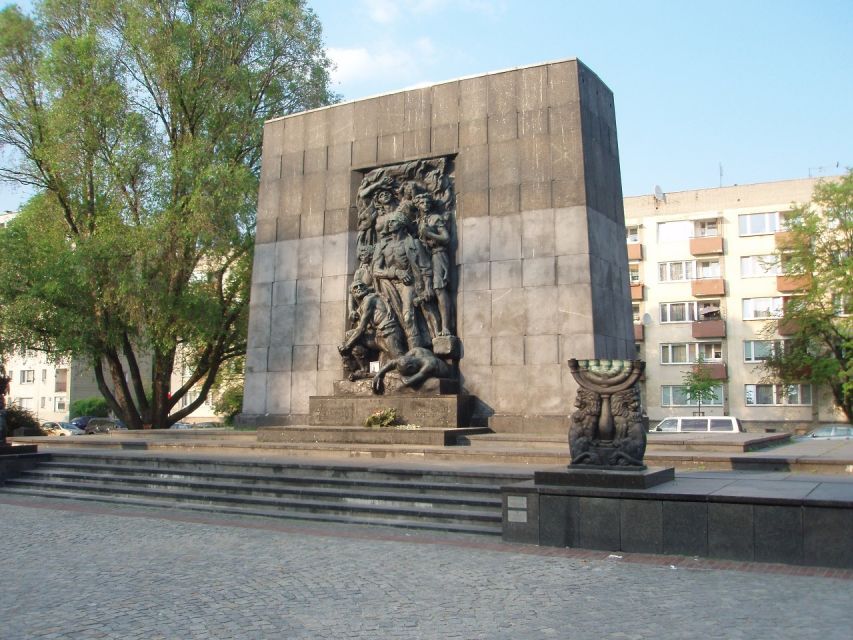
A major strength of the tour is its effort to place the Warsaw Ghetto Uprising inside the larger Nazi persecution of Jews in German-occupied Poland. You will hear about the ghetto’s creation, the Final Solution, the Holocaust, and the uprising’s heroes.
That structure helps prevent the uprising from becoming an isolated dramatic episode. It was the result of years of escalating persecution and the destruction of ordinary life. The tour gives you the background needed to understand why resistance took the form it did and why the outcome was so tragic.
The guide-led format is important here. A plaque can name an event, but it cannot easily explain how policy, confinement, hunger, deportations, and armed resistance fitted together. A good guide also gives you space to think, rather than rushing from one photo stop to the next.
The experience has a high rating of 4.9 from eight recorded ratings, with particular praise for Anna and Ewa. That is a small sample, so I would not treat the score as a guarantee. Still, the repeated emphasis on clear explanations and a friendly manner is useful when choosing a tour built around painful material.
Entering the Jewish Cemetery
The Jewish Cemetery is intended as the final stop and gives the tour a quieter, more personal close. Inside, you hear about Polish-Jewish spiritual leaders, political activists, honored creators of Jewish culture, and thousands of unnamed victims of the ghetto.
This stop adds names, graves, and physical memorials to the larger numbers discussed in Muranów. It also shows the breadth of Jewish life in Warsaw. The cemetery is not only a place of mourning. It records religious, political, and cultural figures who helped shape the community.
Entrance tickets are included, which is useful because the cemetery is a separate heritage site rather than simply an open city street. The guide’s commentary also helps you understand what you are seeing, especially if you are not familiar with Jewish burial traditions or the major figures connected with Warsaw.
The cemetery is closed on Saturdays. On that day, the tour visits All Saints Church instead. The church is closely related to Jewish history and offers its own stories and attractive architecture, but it is not an identical substitute for the cemetery. If entering the cemetery is your main reason for booking, choose a non-Saturday date.
One recorded experience was very positive overall but noted that the cemetery was not visited. That is a useful warning. Check the date carefully and read the information sent the day before so you know which final stop applies.
Is $131 a fair price?
At $131 per person, this tour sits in the premium range for a three-hour walking experience. The value depends on what you want from your visit.
If you simply want to locate a few wall fragments and take photographs, the cost may feel high. You are paying for a short route through a city district, not a full-day excursion with transport or several major museum entries.
If you want a structured explanation of the ghetto, the uprising, the Holocaust, and Polish-Jewish heritage, the price becomes easier to defend. It includes a licensed five-star guide, a small group of up to 15, and entry to the Jewish Cemetery. The guide is the main purchase here.
A smaller group can also improve the experience. You are more likely to hear the explanation clearly, stay close to the route, and ask a question without interrupting a large crowd. One booking even resulted in a private-feeling experience for only two people, though you should not assume that will happen on your date.
The tour also offers free cancellation up to 24 hours before the start and a reserve-now, pay-later option. Those policies add flexibility, but they do not change the central question: are you paying for facts you could gather elsewhere, or for a thoughtful guide who can connect the places into one understandable story?
Who will get the most from this tour?
I would recommend this experience to you if you want historical context rather than a quick photo walk. It suits first-time visitors to Warsaw who want to understand how the war changed the city and destroyed its Jewish community.
It is also a good choice if you prefer a small group. The 15-person limit is more personal than a 30-person outing, and the guide can keep the group together more easily in the streets of Muranów.
You should be comfortable with serious material. The tour deals directly with starvation, disease, mass death, extermination, and the Holocaust. It is not designed as casual entertainment, and children or younger participants may need a separate conversation about the subject before joining.
The tour is listed as wheelchair accessible, which is important for planning. Because the route includes outdoor streets and a cemetery, you should still confirm the practical details for your own needs before booking.
English is the listed language, and a live guide leads the tour. If you want a self-guided experience or a visit focused mainly on architecture, this may feel too intense and too dependent on spoken explanation.
Should you book the Warsaw Ghetto tour?
Book it if you want a focused, guide-led account of Warsaw’s Jewish past, the ghetto’s destruction, and the 1943 uprising. The small group, included cemetery entry, and strong praise for guides Anna and Ewa make this a serious option for a short visit.
Choose a date other than Saturday if the Jewish Cemetery matters to you. If you are mainly looking for a low-cost walk or a broad overview of Warsaw, $131 may be more than you need to spend.
For the right visitor, the value is not in the number of stops. It is in having someone explain why a wall fragment, a synagogue, a cemetery grave, and a rebuilt street belong to the same story.
FAQ
How long does the Warsaw Jewish Ghetto tour last?
The tour lasts three hours.
Where is the meeting point?
Meet the guide in front of the InterContinental Hotel at Emilii Plater 49, 00-125 Warsaw. Do not enter the hotel, as it is only the meeting point.
What language is the tour offered in?
The tour is offered in English with a live guide.
How many people can join the group?
The group can include up to 15 participants.
Is the Jewish Cemetery included?
Yes. The tour includes entrance to the Jewish Cemetery, except on Saturdays when the cemetery is closed.
What happens if I book the tour on a Saturday?
The tour visits All Saints Church instead of the Jewish Cemetery. The church is closely connected with Jewish history in Warsaw.
What places are visited during the tour?
The route includes the former Jewish Ghetto in Muranów, remains of the ghetto walls, Nozyk Synagogue, and the Jewish Cemetery when it is open.
Is the tour wheelchair accessible?
The activity is listed as wheelchair accessible.
Can I cancel my booking?
You can cancel up to 24 hours in advance for a full refund. You can also reserve your place and pay later.
Just added in Warsaw
- Wroclaw Small-Group Tour with Lunch from Warsaw★ 5.0 · 2 reviews
- World War II Warsaw Old Town, Military Cemetery Walking Tour★ 4.7 · 3 reviews
- Warsaw: Wolf’s Lair & Swieta Lipka Small-Group Tour + Lunch★ 5.0 · 3 reviews
- Wilanów Palace: 2-Hour Guided Tour with Entrance Tickets★ 4.8 · 8 reviews
- Warsaw Zoo Skip-the-Line Entry Ticket with Private Transport★ 4.8 · 3 reviews
- Warsaw Private Wilanow Palace & Garden Tour★ 4.6 · 30 reviews
- Warsaw Wolf’s Lair with St. Lipka and Mamerki Private Guided★ 4.2 · 3 reviews
- Warsaw: Private Vodka Tasting Night with Snacks and Pickup★ 5.0 · 7 reviews