
REVIEW · JEWISH QUARTER TOURS
Warsaw: 2-Hour Tour of Daily Life in the Ghetto Warsaw
Warsaw’s empty spaces still tell the story. This two-hour walking tour makes the former ghetto easier to understand through preserved street fragments and wall remains, rather than through dates alone. I like the stop at Mila 18 and the former Footbridge site, where ordinary streets become evidence of a vanished world.
I also like the attention given to daily life, not only the 1943 uprising. You hear about hunger, disease, forced movement, blackmail, resistance, and the Oneg Shabbat archive, which was hidden in metal cases and milk cans. The main consideration is that this is a serious, emotionally demanding tour, and getting around includes public transport.
In This Review
- Key points to know before you book
- Why this two-hour tour matters
- Starting with the last streets and wall remains
- Chłodna Street and the former Footbridge
- Mila 18 and the 1943 uprising
- Umschlagplatz and the machinery of deportation
- The surviving synagogue and Jewish memory
- Oneg Shabbat and the archive hidden in milk cans
- The guide makes the difference
- Timing, walking, and what to bring
- Should you add the POLIN museum?
- Is $76 a fair price?
- Who should book this experience?
- My verdict
- FAQ
- How long is the Warsaw Ghetto tour?
- What languages are available?
- Where does the tour meet?
- Does the tour use public transportation?
- Are public transport tickets included?
- Is museum admission included?
- How much time should I allow for the POLIN museum?
- Is the museum open every day?
- Are children allowed on the tour?
- Can I cancel the booking?
Key points to know before you book
- The tour visits Mila 18, the bunker site linked to the Warsaw Ghetto Uprising.
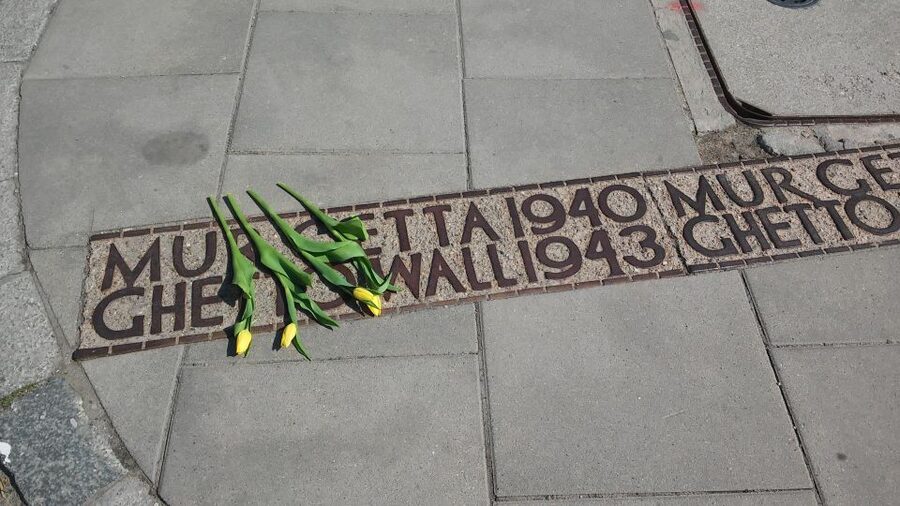
- You see a surviving section of the ghetto wall and the last preserved street associated with the ghetto.
- The former Footbridge over Chłodna Street shows how the ghetto was physically divided.
- Umschlagplatz explains the deportations of more than 300,000 people to Treblinka.
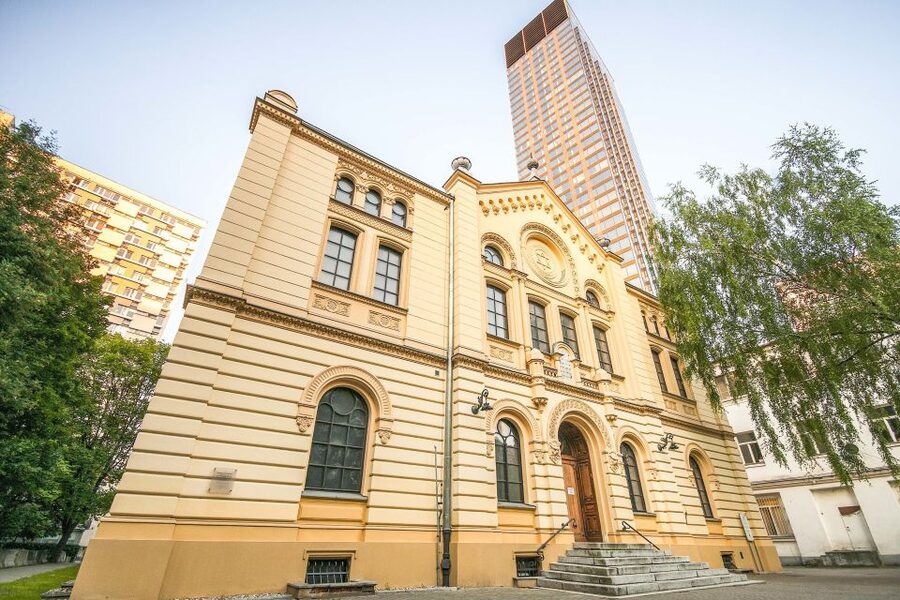
- A surviving synagogue is included, along with the symbolism of the nearby Jewish memorial sites.
- The tour usually ends at POLIN, giving you the option to add its core exhibition, which needs about 2.5 hours.
Why this two-hour tour matters
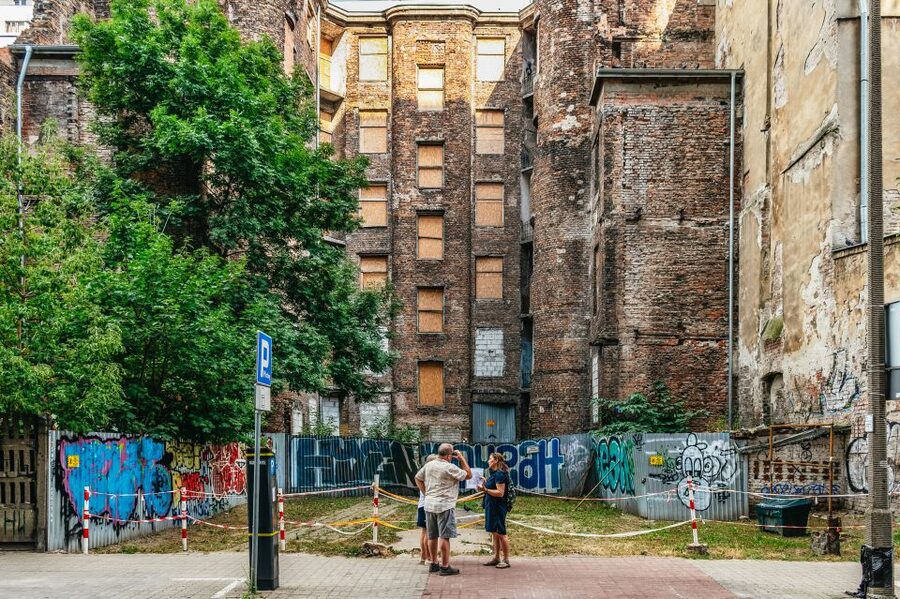
The Warsaw Ghetto is easy to misunderstand if you only visit monuments. Much of the district was destroyed after the 1943 uprising, and modern streets now cover places where hundreds of thousands of people were confined. A guided walk helps you connect the few surviving traces with the larger story.
In 1940, the Nazis forced about 460,000 Jews from Warsaw and nearby areas into roughly four square kilometers. Around 100,000 people died from hunger, exhaustion, and disease. More than 300,000 were deported to Treblinka.
Those numbers are vast and hard to grasp. The guide’s job is to bring the scale down to street level. You learn how people tried to find food, maintain family life, respond to Nazi orders, and deal with fear, disease, indifference, and blackmail.
That focus on daily problems is one of the best reasons to choose this experience. The tour is not just a march from one memorial to the next. It explains how the ghetto functioned, how people were controlled, and why armed resistance eventually broke out.
The subject is painful, so you should allow yourself some quiet time afterward. This is not a light sightseeing stop to fit between lunch and shopping. It asks for attention, but the two-hour length keeps the visit focused.
More Jewish heritage tours in Warsaw:
- Warsaw: Warsaw Ghetto Private Walking Tour with Hotel Pickup
★ 4.9 · 369 reviews - Private Tour: Warsaw’s Jewish Heritage by Retro Fiat
★ 5.0 · 208 reviews - Warsaw: Ghetto, Jewish Cemetery & POLIN Museum Private Tour
★ 4.8 · 132 reviews
Starting with the last streets and wall remains
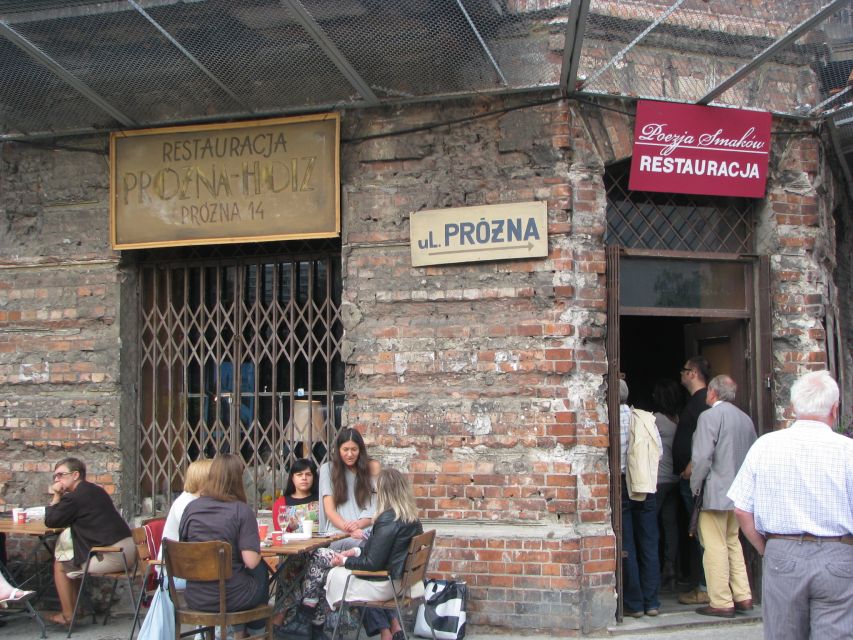
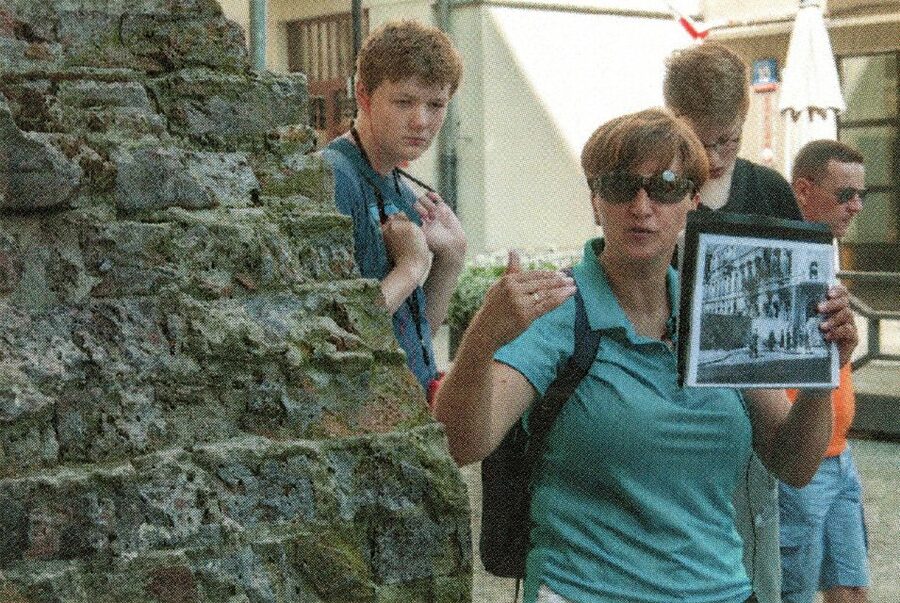
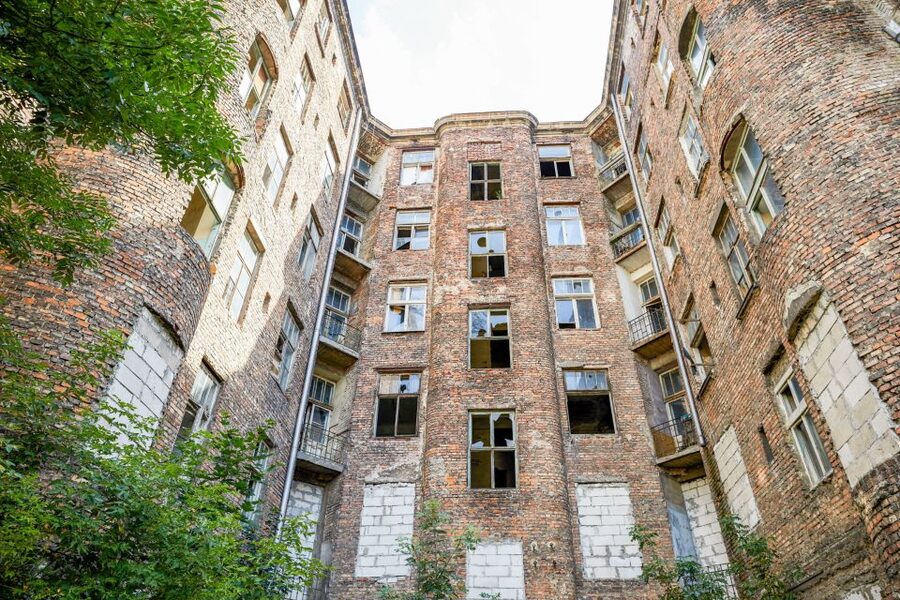
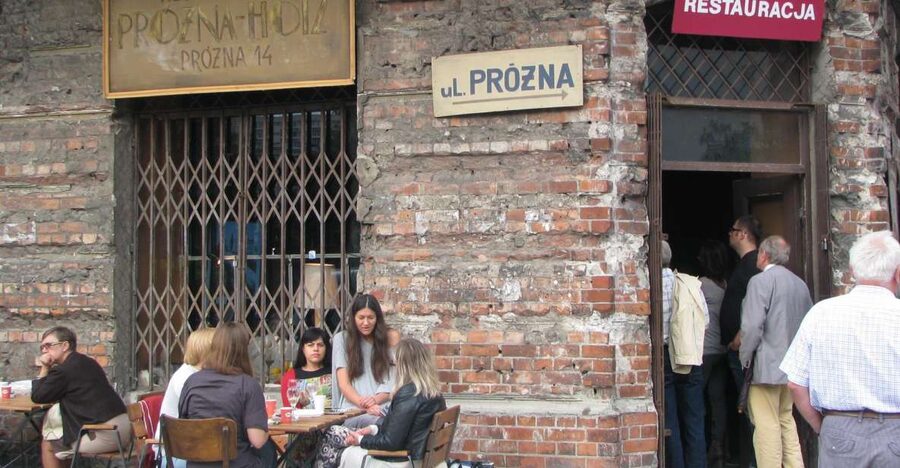
The walk includes the last preserved street of the ghetto and surviving sections of the ghetto wall. These fragments are modest. You will not find a vast walled district waiting intact, and that is precisely why a guide is useful.
Without explanation, a short wall section or old street line might seem easy to miss. With context, it becomes a physical marker of confinement. You can begin to picture the sharp limits placed on people who had been forced into the area.
The guide also helps separate original remains from the rebuilt city around them. Warsaw suffered enormous destruction during the war, and the ghetto area was later transformed. The result is a tour of absence as much as presence. You see what survived, but you also learn why so little remains.
I recommend paying close attention to the transitions between stops. The modern city continues around you, which can feel jarring. That contrast is part of the lesson: the ghetto no longer exists as a district, but its locations remain part of Warsaw’s streets.
Because the tour is conducted on foot with public transport, wear comfortable shoes and allow time for movement between sites. Public transport tickets are not included, so keep that small extra cost in mind.
Chłodna Street and the former Footbridge
The former Footbridge over Chłodna Street is one of the tour’s most memorable locations. The bridge once connected sections of the ghetto above a street that remained outside its boundaries.
This stop helps you understand that the ghetto was not simply one sealed block. Its internal divisions affected how people moved and how daily life worked. A bridge that might sound like a minor construction detail becomes a powerful symbol of separation.
The location is also linked to the world shown in Roman Polanski’s film The Pianist. You will hear about real places connected with the film’s main character, which gives the story a familiar point of entry without turning the tour into a movie-location visit.
That distinction matters. The film can help people picture wartime Warsaw, but the tour places the story within the wider experience of the ghetto. You learn about many lives, not only one dramatic personal story.
Mila 18 and the 1943 uprising
At 18 Mila Street, you visit the location of the bunker known as Mila 18. This site is tied to the Warsaw Ghetto Uprising, which began in 1943 when the Nazis attempted to destroy the ghetto completely.
The uprising was not a military match between equal forces. The people resisting had few weapons and faced overwhelming power. The guide explains why resistance developed, including the pressure created by deportations, the destruction of families, and the attempt to liquidate the remaining ghetto population.
Mila 18 is important because it links the uprising to a specific place. You are not only hearing about resistance as an abstract idea. You are standing at a location connected to those who chose to fight under nearly impossible conditions.
The tour also covers what followed. In revenge, the Nazis destroyed the ghetto area. That destruction explains why the modern visit can feel fragmented. The absence of buildings is not a gap in the tour. It is part of the historical record.
A few more in Warsaw
- Warsaw: Chopin Concert in the Old Town
★ 4.8 · 2,287 reviews - Warsaw: Traditional Galar Cruise on The Vistula River
★ 4.6 · 1,640 reviews - Warsaw: Old Town Highlights Walking Tour in English
★ 4.7 · 1,516 reviews - Warsaw Concert: Chopin – Painted by Candlelights with Wine
★ 4.8 · 1,442 reviews
Umschlagplatz and the machinery of deportation
Umschlagplatz was the place from which Jews were deported to Treblinka. The stop gives you a clearer sense of how the Nazi system moved people from confinement toward extermination.
The figure is staggering: more than 300,000 people were sent from the ghetto to Treblinka. A guide can connect that number with the physical location, making it easier to understand the process as a sequence of forced removals rather than a distant statistic.
The site also helps explain the terror of everyday life. People faced hunger and disease inside the ghetto, but deportation added constant fear. Families had to make impossible choices while Nazi orders and armed control shaped every part of their lives.
The guide discusses indifference, blackmail, and resistance alongside the deportations. That balance is important. It avoids presenting the ghetto as a simple story with only two groups of people. Human behavior under terror was complicated, and the tour addresses that difficult reality.
The surviving synagogue and Jewish memory
The tour includes a look at the only synagogue described as having survived the war. Its survival gives you a rare physical link to Jewish life in Warsaw before and during the destruction of the ghetto.
This stop broadens the visit beyond persecution and death. You learn that the ghetto was also a place where people tried to preserve religious practice, community ties, culture, and personal dignity under extreme conditions.
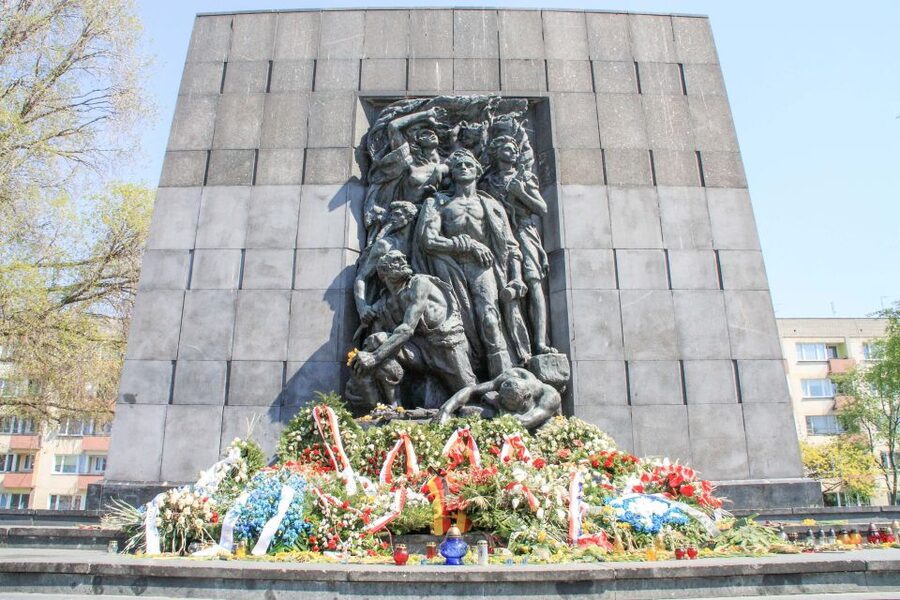
The synagogue is part of a larger set of memorial locations. The tour explains the symbolism of the Monument to the Ghetto Heroes and introduces the Museum of the History of Polish Jews, commonly known as POLIN.
I find this combination useful because the monuments can otherwise seem disconnected. The guide links the places together, showing how each one remembers a different part of the story: daily life, deportation, resistance, destruction, and Jewish life.
The tour does not include museum admission or a full museum visit. It usually ends at the Jewish museum, so you can continue independently if the opening hours suit your schedule.
Oneg Shabbat and the archive hidden in milk cans
One of the most distinctive parts of the tour is the story of the Warsaw Ghetto Underground Archive. The secret organization Oneg Shabbat gathered documents and testimonies about life inside the ghetto.
The archive was hidden in metal cases and milk cans, then buried so the record might survive even if the people collecting it did not. It later entered UNESCO’s Memory of the World register, which recognizes important documentary records preserved by humanity.
This material changes how you think about historical evidence. The archive was not created only by officials or outside observers. It recorded the experiences, observations, and suffering of people living inside the ghetto.
For you, this means the tour is about more than what happened to the ghetto. It is also about who worked to preserve the truth. The guide explains why documenting daily life mattered, especially when the Nazis were trying to control both the population and the story told about them.
This is a strong reason to listen closely even if you already know the basic outline of the Holocaust. The archive adds human detail and shows the deliberate effort required to leave a record behind.
The guide makes the difference
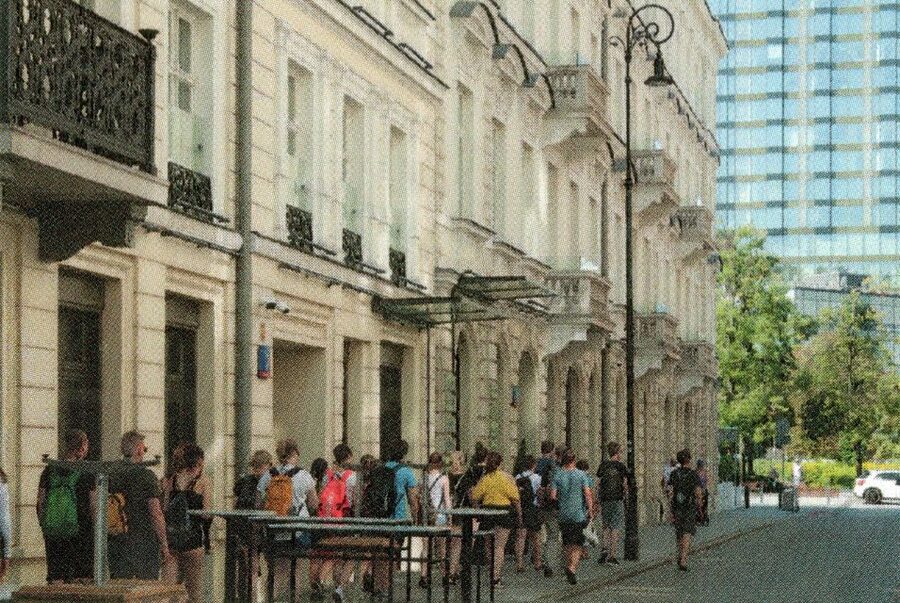
The experience is offered in English or German and includes a licensed guide. Groups of up to 20 people can receive headsets, which should make it easier to hear in city streets and at outdoor memorials.
One guide who has received especially strong praise is Marzena. She is described as professional, warm, clear, detailed, and willing to answer questions. Those qualities matter on a subject where careless wording can flatten the story or make the walk feel rushed.
You should feel free to ask questions, but remember that the tour lasts only two hours. The guide has a lot to cover: the ghetto’s creation, daily life, the archive, deportations, the uprising, memorial symbolism, and the locations linked with The Pianist.
A good guide keeps the pace moving without turning the visit into a lecture. Marzena’s reported approach, including clear answers and a welcoming manner, sounds well suited to this balance.
The headsets are a practical plus for a group tour. They also mean you can focus on the guide instead of trying to stand shoulder to shoulder near every stop.
Timing, walking, and what to bring
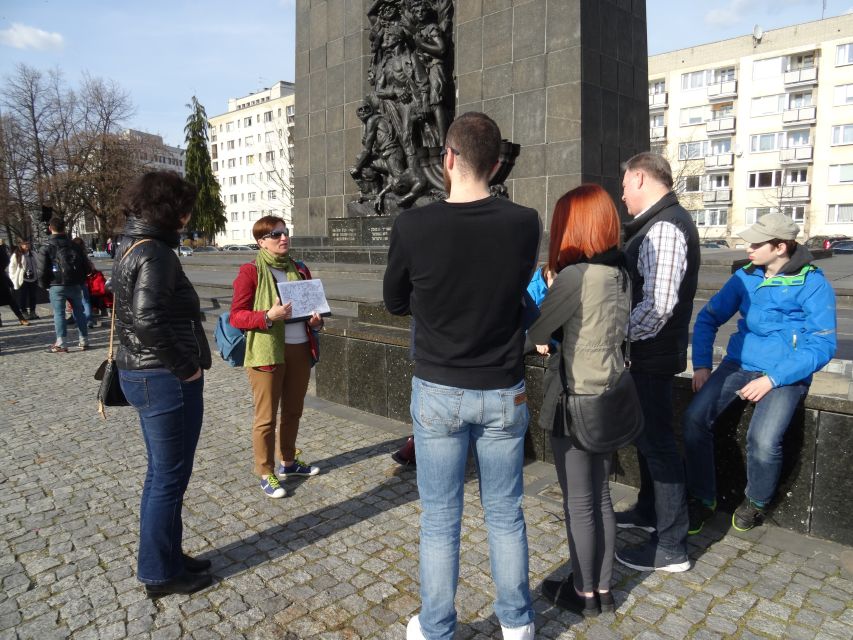
The tour lasts two hours and combines walking with public transport. Starting times vary, so check the available departure when you book.
You should wear comfortable shoes and bring only what you need. Large bags, oversize luggage, pets, smoking, alcohol, and drugs are not allowed. Children under 12 are not considered suitable for the activity, which is understandable given the subject matter and the amount of walking.
Public transport tickets are not included. Lunch is also not included, though the short duration means you can easily arrange food before or after the walk.
The meeting point is identified by a guide holding a PolinTours sign. If you are meeting in a busy part of Warsaw, arrive a little early so you are not trying to find the sign at the last moment.
The tour is offered with free cancellation up to 24 hours before the start, and you can reserve now and pay later. Those options are helpful if your Warsaw schedule is still shifting, but the main planning issue is the museum timing.
Should you add the POLIN museum?
The tour usually ends at POLIN, but the museum visit is not simply an extra ten minutes indoors. The core exhibition needs about 2.5 hours, according to the stated guidance, so plan it as a separate block of time.
The museum is open from 10:00 a.m. to 6:00 p.m. on Monday, Wednesday, Thursday, Friday, and Sunday, with the last entrance at 4:00 p.m. It is closed Tuesday. On Saturday, it is open from 10:00 a.m. to 8:00 p.m., with the last entrance at 6:00 p.m.
Audio guides are available in English and other languages. If you want to visit the core exhibition, check the hours before booking the walking tour. A late tour may leave too little time for the museum, especially on days with an early last entrance.
I would not treat the museum as compulsory for enjoying the walk. The outdoor tour has its own purpose and gives you a clear geographic introduction. But if you have the time, adding the museum can give you a much wider account of Jewish life in Poland.
Is $76 a fair price?
At $76 per person, this is not the cheapest way to spend two hours in Warsaw. You also need to pay for public transport, and museum entrance is not included.
The value comes from the licensed guide, the carefully connected locations, and the difficult context that is hard to assemble on your own. You are paying for interpretation, not just transportation to a few memorials.
I consider the price fair for visitors who want a focused, serious introduction and who value having their questions answered. It is less compelling if you prefer to walk independently, already know the ghetto’s history well, or plan to spend most of your time inside POLIN.
The group size can reach 20 people, so this is not a private walk. Headsets help, but you should not expect the intimacy or flexibility of a one-to-one guide.
Who should book this experience?
I would recommend it to adults and children over 12 who want a grounded introduction to Warsaw’s Jewish history. It suits first-time visitors who need help finding the scattered remains and people who have seen The Pianist and want to understand its real locations.
It is also useful if you plan to visit POLIN. The walk gives you a physical orientation before the museum presents the wider historical story.
You may want to skip it if you are looking for a cheerful city tour, dislike walking combined with public transport, or have only a short emotional window for Holocaust history. The subject is heavy, and the tour does not soften it with unrelated sightseeing.
My verdict
I would book this tour if you want to understand how the Warsaw Ghetto worked as a place where people lived, suffered, documented events, and resisted. The preserved wall, Footbridge site, Mila 18, Umschlagplatz, synagogue, and archive story create a strong two-hour route.
Book it with comfortable shoes, a transit ticket plan, and enough time afterward to think. Add POLIN if its opening hours fit your schedule. For a focused introduction led by a licensed guide, the $76 cost is reasonable, especially when the alternative is trying to piece together these scattered places alone.
FAQ
How long is the Warsaw Ghetto tour?
The tour lasts two hours.
What languages are available?
The tour is offered in English and German.
Where does the tour meet?
The guide waits at the meeting point with a sign marked PolinTours.
Does the tour use public transportation?
Yes. The experience combines walking with public transport.
Are public transport tickets included?
No. Public transport tickets are not included in the price.
Is museum admission included?
No. Entrance fees are not included. The tour usually ends at the Jewish Museum, where you may continue independently.
How much time should I allow for the POLIN museum?
The core exhibition is recommended as a visit of at least 2.5 hours.
Is the museum open every day?
No. The museum is closed on Tuesday. It opens from 10:00 a.m. to 6:00 p.m. Monday, Wednesday, Thursday, Friday, and Sunday, and from 10:00 a.m. to 8:00 p.m. Saturday. Last entrance times apply.
Are children allowed on the tour?
Children under 12 are not considered suitable for this activity.
Can I cancel the booking?
Yes. You can cancel up to 24 hours in advance for a full refund. You can also reserve and pay later.
Just added in Warsaw
- Wroclaw Small-Group Tour with Lunch from Warsaw★ 5.0 · 2 reviews
- World War II Warsaw Old Town, Military Cemetery Walking Tour★ 4.7 · 3 reviews
- Warsaw: Wolf’s Lair & Swieta Lipka Small-Group Tour + Lunch★ 5.0 · 3 reviews
- Wilanów Palace: 2-Hour Guided Tour with Entrance Tickets★ 4.8 · 8 reviews
- Warsaw Zoo Skip-the-Line Entry Ticket with Private Transport★ 4.8 · 3 reviews
- Warsaw: Private Vodka Tasting Night with Snacks and Pickup★ 5.0 · 7 reviews
- Warsaw Private Wilanow Palace & Garden Tour★ 4.6 · 30 reviews
- Warsaw Wolf’s Lair with St. Lipka and Mamerki Private Guided★ 4.2 · 3 reviews