
REVIEW · JEWISH QUARTER TOURS
Private tour: Jewish heritage in Warsaw
Warsaw’s past is written into its streets. This private walk through Muranów links memorials, surviving wall fragments, street art, and the city’s only synagogue to the history of the Jewish community. I like the personal format, which gives you room to ask questions, and I like that the route includes lesser-known traces alongside the major memorials. The main consideration is that much of the experience takes place outdoors, so weather and walking comfort matter.
The guide named Anna receives especially warm praise for clear explanations, thoughtful treatment of difficult subjects, and a broad view that reaches beyond wartime events into Poland’s communist period. The tour is listed at about two and a half hours, though one account describes a three-hour walk, so I would keep part of the afternoon free.
In This Review
- Key points to know before you book
- Why Muranów is the right place to begin
- The Monument to the Ghetto Heroes and the uprising
- Umschlagplatz and the deportations to Treblinka
- Two surviving wall fragments in a backyard
- Nożyk Synagogue and the surviving Jewish presence
- Why the private format matters
- Anna’s guiding style and the tone of the walk
- Timing, walking, and practical planning
- Cancellation and booking flexibility
- Who will get the most from this tour
- Should you book the Jewish heritage walk in Warsaw?
- FAQ
- Where does the Jewish heritage tour begin?
- Where does the tour end?
- How long does the tour last?
- How many people can join the private tour?
- What places are visited?
- Is admission to Nożyk Synagogue included?
- Is the tour close to public transportation?
- Can I cancel for a full refund?
Key points to know before you book
- Muranów was built over the former Warsaw Ghetto: The neighborhood itself becomes part of the lesson, not just a backdrop for monuments.
- The route visits the start of the Ghetto Uprising: At the Monument to the Ghetto Heroes, your guide explains the deportations of 1942 and the uprising of 1943.
- Small traces carry great weight: A backyard preserves two fragments of the ghetto wall, an easy-to-miss stop without a guide.
- Street art adds a modern voice: Murals and other works honor people who once lived in the district, many of them Polish Jews.
- Nożyk Synagogue is the only Warsaw synagogue to survive World War II: Admission is not included, so plan for that extra cost if entry is available during your visit.
- A private group of up to 10 keeps the pace flexible: You can ask questions freely and request a short drink stop, a useful perk on a warm day.
Why Muranów is the right place to begin
The meeting point is Kino Muranów, at General Władysław Andersa 5. That location puts you directly in the district rather than beginning with a long transfer from another part of Warsaw.
Muranów is important because it was rebuilt on the ruins of the former Warsaw Ghetto. You are not simply moving from one isolated memorial to another. The buildings, streets, open spaces, and newer public art all sit within a neighborhood shaped by what happened here.
I find that this setting makes the history harder to keep at arm’s length. A monument can feel separate from daily life. Muranów does not allow that separation as easily. You are walking through a working city while learning about the people who lived in the same area before the war.
The first part of the walk lasts about 40 minutes and includes street art dedicated to the former Jewish community. These pieces help connect the past to present-day Warsaw, especially for visitors who might otherwise see only a rebuilt neighborhood with few visible clues.
That said, the street art is not described as a formal gallery visit, and exact works may vary. Think of this as a guided search through the district, with Anna pointing out details you could easily pass without noticing.
More History Tours in Warsaw
- Warsaw: POLIN Museum of the History of Polish Jews Ticket
★ 4.7 · 1,142 reviews - Warsaw: Chopin Concert at Historical Venue in Old Town
★ 4.7 · 445 reviews - Small-Group Historical Guided Tour of Warsaw with pick up/drop off. Public Tour.
★ 4.5 · 343 reviews
The Monument to the Ghetto Heroes and the uprising
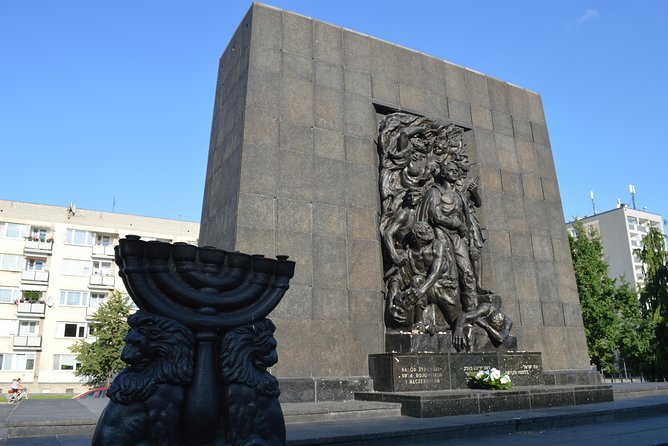
The Monument to the Ghetto Heroes is the emotional center of the walk. The tour spends about 20 minutes here, at the place associated with the beginning of the Warsaw Ghetto Uprising.
Your guide explains the deportations of 1942, when thousands of Jewish residents were sent to the Treblinka death camp. She then places the 1943 uprising in context, describing the armed resistance against the Nazis and the desperate conditions in which Jewish insurgents fought.
This is a short stop on paper, but it is not a quick photo opportunity. The value comes from having someone explain what you are looking at and how the monument relates to the surrounding area. I would expect a serious tone here, with time for questions rather than a rushed list of dates.
The memorial is also a useful place to ask about the difference between the ghetto’s destruction and the later rebuilding of Warsaw. Anna has been praised for explaining not only the wartime period but also later chapters of Polish history, including communism. That wider view can help you understand why the city sometimes feels both old and newly made.
If you prefer a light sightseeing walk, this may feel intense. If you want historical context handled with care, it is likely to be one of the strongest parts of the experience.
Umschlagplatz and the deportations to Treblinka
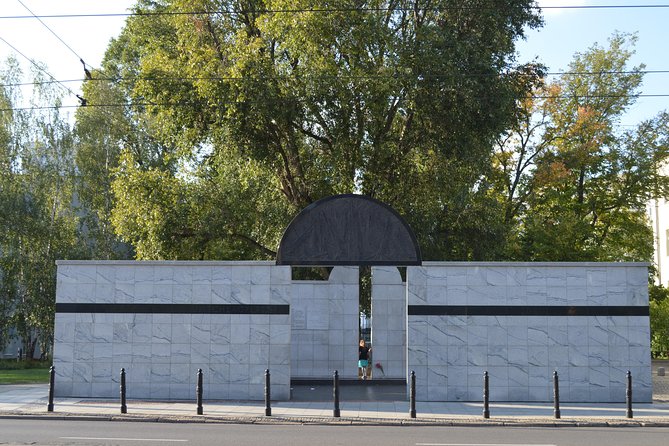
The next stop is Umschlagplatz, the site from which thousands of people were deported to Treblinka in 1942. Today, a memorial marks the place.
The name is closely tied to the process of forced deportation. Here, the tour shifts from resistance and memorial sculpture to the machinery of removal. Your guide can explain the site’s role and help you understand why this memorial is different in mood from the Monument to the Ghetto Heroes.
The scheduled visit lasts about 20 minutes. That gives you time to listen and look around, though the subject may leave you wanting to ask more. Because this is a private tour, you do not have to save your questions for the end or worry about slowing a larger group.
I would not plan another major activity immediately after this stop. Even though the walk continues, you may want a quiet pause later to process what you have heard.
Two surviving wall fragments in a backyard
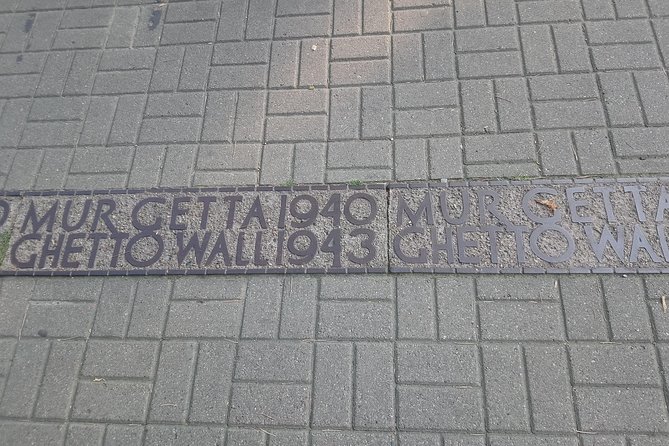
One of the most useful stops is also one of the least obvious. The tour visits two fragments of the ghetto wall hidden in a backyard, with about 15 minutes set aside for the stop.
This is where a guide earns the fee. A major memorial usually announces itself. A wall fragment in a courtyard does not. Without someone directing you to it and explaining its significance, you could walk through the neighborhood and never know it was there.
The stop also shows the uneven way history survives in a modern city. Some traces are formal and carefully designed. Others sit in ordinary spaces, tucked behind buildings and easy to overlook.
You should be ready for a route that feels urban rather than polished for sightseeing. The backyard setting may be less dramatic than a large memorial, but that is part of its power. The fragment is a physical remnant in a place where everyday life has continued.
More Jewish heritage tours in Warsaw:
- Warsaw: Warsaw Ghetto Private Walking Tour with Hotel Pickup
★ 4.9 · 369 reviews - Private Tour: Warsaw’s Jewish Heritage by Retro Fiat
★ 5.0 · 208 reviews - Warsaw: Ghetto, Jewish Cemetery & POLIN Museum Private Tour
★ 4.8 · 132 reviews - Tour of the Warsaw Ghetto
★ 5.0 · 119 reviews
Nożyk Synagogue and the surviving Jewish presence
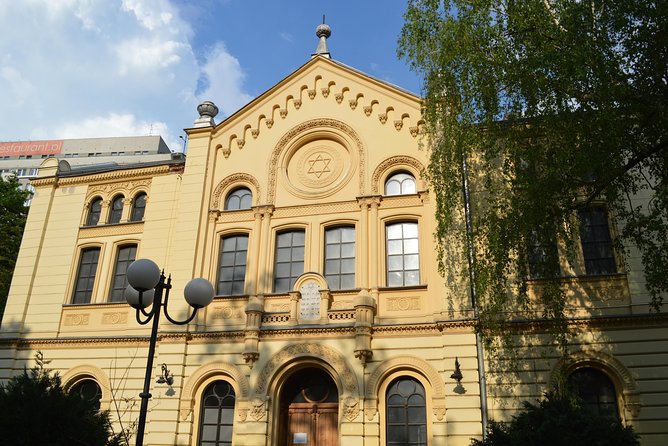
The final listed stop is Nożyk Synagogue, described as the only synagogue in Warsaw to survive World War II. The visit lasts about 15 minutes and brings the walk to Plac Grzybowski.
This is an important contrast to the memorial sites. The tour is not only about destruction and loss. Nożyk Synagogue represents continuity and the presence of Jewish life in Warsaw before and after the war.
Admission is not included in the tour price. The supplied details do not state the entry fee or guarantee interior access at a particular time, so you should treat the synagogue visit as a stop at the building unless your booking arrangements confirm entry.
The walk ends at Plac Grzybowski, a practical location for continuing your time in central Warsaw. It also gives the route a clear finish rather than returning you to the starting cinema.
Why the private format matters
The price is $161.95 per group, with up to 10 people included. That figure looks quite different depending on how many people are in your party. For two people, it is a costly private walk. For a group of six to 10, the per-person price becomes much more reasonable.
The real benefit is not luxury. It is control. You can ask about a family connection, a monument, a term you do not understand, or the transition from wartime Poland to the communist era. You are not competing with a large group for the guide’s attention.
The group size also helps with pacing. Anna has been praised for answering questions clearly and for adjusting the walk to include a cool drink stop during warm weather. That small detail tells you something useful about the style: the guide appears willing to respond to the needs of the group rather than force every minute into a rigid script.
I would especially consider this tour if you are traveling with family or friends who want different levels of historical detail. One person can ask a basic question while another explores a more complex issue, without the pressure of a crowded group.
The tradeoff is simple: you pay for privacy. If you are happy with a large scheduled walk and do not expect much conversation, a cheaper group option might suit you better.
Anna’s guiding style and the tone of the walk
The strongest praise focuses on Anna’s historical understanding and calm, thoughtful approach. Her explanations have been described as clear and broad, reaching beyond the ghetto to life in Poland during different periods.
That matters here. Warsaw’s Jewish history cannot be reduced to a short sequence of wartime dates. The city’s Jewish community was part of daily Polish life before the war, and the district’s later rebuilding and political history affect how the sites are understood today.
The tone also appears to be direct. One account describes the experience as a look back at history without avoiding difficult subjects. That is a good fit for this route. The memorials deal with deportation, murder, resistance, and survival. A guide who softens every hard fact would do the subject a disservice, while a guide who turns the walk into a lecture could lose the human side.
Anna’s willingness to answer questions is a major advantage. I would use the private setting to ask about anything that seems unclear, especially the relationship between the ghetto sites and the modern streets around them.
There is one small point to note: the feedback uses both Anna and Ana. The main descriptions identify the guide as Anna, but you should check your confirmation if the guide’s name matters to your meeting plans.
Timing, walking, and practical planning
The tour is listed at approximately two hours and 30 minutes. The stops total about one hour and 50 minutes, leaving the rest for walking between them, discussion, and transitions.
One account refers to a three-hour guided tour. That may simply reflect a relaxed pace and questions, but I would not schedule a train, meal reservation, or museum entry immediately after the advertised finish.
The route is in an urban district and uses several outdoor locations. The details do not provide a full accessibility description, but most people can participate, and the tour is near public transportation. Service animals are allowed.
Wear comfortable shoes and bring water, especially in warm weather. The ability to stop for a cool drink is helpful, but you should not assume that refreshments are included. The mobile ticket makes the booking easy to carry on your phone.
The tour begins at Kino Muranów and ends at Plac Grzybowski. Since the start and finish are different, think of it as a useful one-way walk through the district. You will not need to return to the cinema unless you have left something there.
Cancellation and booking flexibility
Free cancellation is available if you cancel at least 24 hours before the experience start time. You receive a full refund within that deadline.
Changes or cancellations made less than 24 hours before the start are not accepted for a refund. The cut-off follows local Warsaw time, so check the time carefully if you are booking from another country.
Confirmation is provided when you book. Because the tour is often reserved well in advance, with an average booking lead time of 63 days, early planning may be wise if your Warsaw dates are fixed. That does not mean you must book that far ahead, but it suggests that the private format can fill before a last-minute trip.
Who will get the most from this tour
I would choose this walk if you want more than a checklist of memorials. It suits you especially well if you:
- Want a guided introduction to Warsaw’s Jewish history
- Prefer private conversation to a large group
- Need clear explanations of difficult historical subjects
- Like finding small details, including street art and wall fragments
- Are traveling with family or friends and want to ask many questions
- Want the guide to connect wartime events with later Polish history
It may be less suitable if you want a short, light sightseeing outing or a tour centered on indoor attractions. The route is serious, mostly outdoors, and built around memorial places rather than entertainment.
You should also consider the cost carefully. At $161.95 for up to 10 people, it is strong value for a larger group. For one or two people, the price is harder to justify unless personal attention and historical discussion are your main priorities.
Should you book the Jewish heritage walk in Warsaw?
Book it if you want the Muranów district explained by a guide who can connect major memorials with overlooked traces, modern street art, and Poland’s later history. The private format, thoughtful guiding style, and visit to the hidden wall fragments give it more substance than a simple monument-to-monument walk.
I would make room for it early in your Warsaw stay if the city’s Jewish history is central to your trip. You will gain context that can change how you see the rest of Warsaw. Just allow around three hours, prepare for an outdoor walk, and remember that synagogue admission is not included.
For a group of friends or family, the price is quite reasonable. For a couple, it is a deliberate spend, but a worthwhile one if you value conversation, flexibility, and careful treatment of painful history.
FAQ
Where does the Jewish heritage tour begin?
The tour begins at Kino Muranów, General W. Andersa 5, 00-147 Warszawa, Poland.
Where does the tour end?
The tour ends at Plac Grzybowski in Warsaw.
How long does the tour last?
The advertised duration is approximately two hours and 30 minutes. One account describes a three-hour guided walk, so allow extra time.
How many people can join the private tour?
The private tour is available for one group of up to 10 people. Only your group participates.
What places are visited?
The route includes Kino Muranów and the Muranów district, the Monument to the Ghetto Heroes, Umschlagplatz, two fragments of the ghetto wall in a backyard, and Nożyk Synagogue.
Is admission to Nożyk Synagogue included?
No. Admission to Nożyk Synagogue is not included in the tour price.
Is the tour close to public transportation?
Yes. The experience is near public transportation.
Can I cancel for a full refund?
Yes, if you cancel at least 24 hours before the experience start time. Cancellations made less than 24 hours before the start are not refunded.
Just added in Warsaw
- Warsaw Highlights by Bike with Breathtaking Sceneries★ 5.0 · 28 reviews
- From Warsaw: Krakow and Auschwitz Day Tour by Train★ 3.5 · 2 reviews
- Delicious Warsaw Vodka and Culture Tour★ 5.0 · 11 reviews
- Explore Warsaw’s Art and Culture with a Local★ 5.0 · 1 review
- Łódź – 1-day tour to the most surprising Polish city (from Warsaw)★ 5.0 · 4 reviews
- 2-Hour Breakfast Experience in a Home from Warsaw★ 5.0 · 5 reviews
- Day tour from Warsaw to Chopin’s birthplace and trough Mazovia’s highlights★ 5.0 · 1 review
- Electric Scooter Tour: Old Town Tour – 1,5-Hour of Magic!★ 5.0 · 45 reviews