
REVIEW · JEWISH QUARTER TOURS
Past Meets Present in Warsaw’s Jewish Ghetto
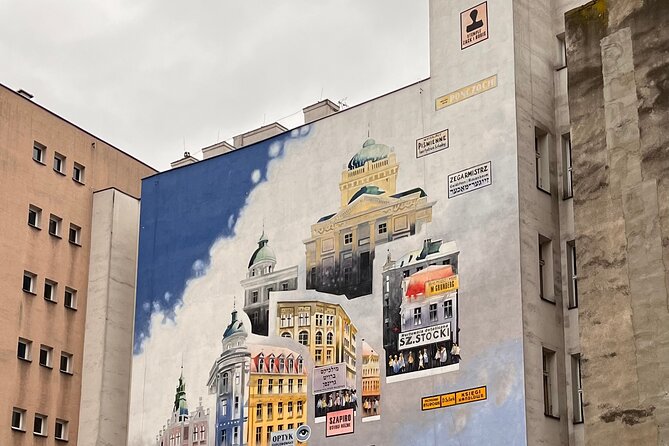
Warsaw remembers in powerful ways. This 2.5-hour walking tour connects Jewish life before World War II with the Warsaw Ghetto Uprising, its memorials, and the city’s effort to keep those stories visible. I like the small maximum of 10 people, which gives the certified guide room to explain difficult events without turning the walk into a loud procession. I also like that the route uses real streets, squares, gardens, and monuments rather than relying only on museum displays.
The price is $112.43 per person, a serious sum for a two-and-a-half-hour walk. Still, every listed stop has free admission, and the value depends heavily on the guide. Mona is singled out for her gentle manner, personal warmth, and clear command of the subject. The main drawback is physical: this is a substantial walking tour, and it is not recommended if you have mobility or walking problems.
What makes the experience especially useful is its emotional range. You will hear about Jewish social life, forced removal, resistance, death, and the continued life of Warsaw today. The walk is heartbreaking at times, but it also leaves room for courage, remembrance, and hope.
In This Review
- Six details that shape the experience
- Starting at Bankowy Square
- Jewish records at Żydowski Instytut Historyczny
- From Nalewki Street to Długa
- A pause in Krasiński Garden
- The Ghetto Heroes Monument at POLIN
- Mila 18 and the Anielewicz Mound
- Umschlagplatz and the road to Treblinka
- Willy Brandt’s tribute at the final square
- What $112.43 really buys you
- Walking demands and practical planning
- Who will get the most from this walk?
- Should you book Past Meets Present in Warsaw’s Jewish Ghetto?
- FAQ
- How long does the Warsaw Jewish Ghetto tour last?
- What language is the tour offered in?
- How many people can join the tour?
- Where does the tour begin and end?
- Are entrance tickets included?
- Can I cancel for a full refund?
Six details that shape the experience
- A small group capped at 10 people: This is a better setup for sensitive questions and quiet memorial stops than a large city tour.
- Mona may guide the walk: Her gentle, personable style and strong command of the subject received especially high praise.
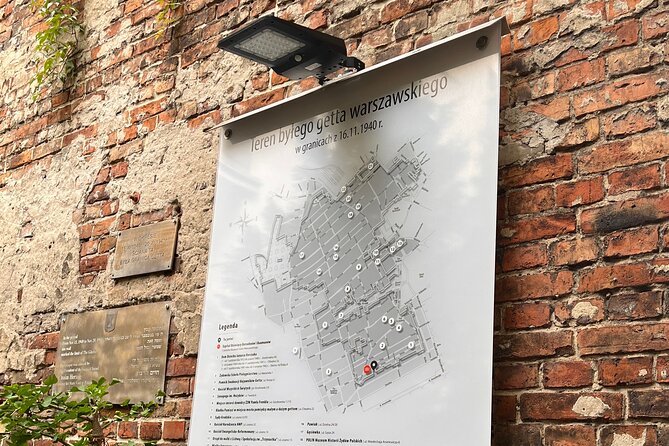
- The route covers seven meaningful places: You move from Jewish archives and former streets to the Ghetto Heroes Monument, Mila 18, Umschlagplatz, and Willy Brandt Square.
- All listed stops are free to enter: You are paying for the guide’s interpretation, organization, and historical context rather than admission tickets.
- The tour ends with coffee suggestions: The finish at Willy Brandt Square includes recommendations for where to continue your time in the neighborhood.
- Free cancellation is available up to 24 hours ahead: That gives you some flexibility, but late cancellations and changes are not refunded or accepted.
Starting at Bankowy Square
The meeting point is the Monument of Słowacki at Bankowy Square, written in the booking details as Monument of Slowackiplac Bankowy, 00-142 Warszawa. You should allow enough time to locate the exact monument and arrive ready for a walking tour. The experience is offered in English and uses a mobile ticket.
The route begins outside the main memorial zone, which is useful. You first get a sense of the surrounding city before moving into places tied directly to the former Jewish quarter and the wartime ghetto. This arrangement helps the history unfold rather than presenting the most famous monument immediately.
The group can include up to 10 people. That is small enough for direct conversation, though the experience is not guaranteed to be private. One strong account describes a private tour with Mona, but you should treat that as a possible format rather than a promise. The advertised group size is the safer expectation.
More Jewish heritage tours in Warsaw:
- Warsaw: Warsaw Ghetto Private Walking Tour with Hotel Pickup
★ 4.9 · 369 reviews - Private Tour: Warsaw’s Jewish Heritage by Retro Fiat
★ 5.0 · 208 reviews - Warsaw: Ghetto, Jewish Cemetery & POLIN Museum Private Tour
★ 4.8 · 132 reviews
Jewish records at Żydowski Instytut Historyczny
The first stop is the Żydowski Instytut Historyczny, or Jewish Historical Institute. The building once served as one of the centers of Jewish social life inside the Warsaw Ghetto. Today, it holds an important archive of Jewish documents.
The stop lasts about 15 minutes, and admission is listed as free. You should not expect a long museum visit here. The value comes from the guide explaining what the building represented during the war and why preserving documents matters after so much of a community was destroyed.
This is a thoughtful place to begin because it shifts attention away from statistics alone. A ghetto was not simply a place of confinement. It was also a setting where people tried to maintain education, religion, work, family life, records, and human dignity under impossible conditions.
If you want to spend serious time inside the institute, ask about that before booking or plan a separate visit. The short tour stop is designed for orientation and context, not a full archive visit.
From Nalewki Street to Długa
The next part reaches the former crossing of Nalewki Street and Długa Street, an area once known as the liveliest part of the northern Jewish quarter. Shops, small factories, and market stalls filled the streets before the war.
The stop takes around 10 minutes. Today, you will need to use your imagination, guided by the explanation, because the prewar city has been altered by war and reconstruction. That contrast is one of the walk’s strongest features. You are not just hearing that a neighborhood existed. You are being shown where ordinary commerce and daily life once took place.
I find this kind of stop more useful than a string of grand memorials. It reminds you that the people caught in the Holocaust were not only victims in a historical account. They were shopkeepers, workers, parents, neighbors, and members of a functioning community.
The short time here may feel abrupt if street history interests you most. Still, the stop works well as part of a larger route, especially because the tour later turns toward resistance and deportation.
A pause in Krasiński Garden
Krasiński Garden offers about 20 minutes of breathing room. It was a place of rest for Warsaw residents and, during World War II, remained outside the Ghetto.
This detail gives the garden unusual importance. A green public space can look harmless today, but its position beside the sealed-off Jewish district made it part of the wartime geography. The tour uses the garden to show that the Ghetto was not an isolated universe. It existed next to other parts of Warsaw, separated by rules, barriers, and persecution.
The pause also helps pace the walk. The subject is heavy, and a quiet garden gives you time to absorb what you have heard before reaching the main memorials. I would not treat this as a sightseeing break detached from the history. Its location is the point.
You should also expect the tour to keep moving. The garden is not presented as a long leisure stop, and the guide’s time is limited. Use the pause to ask questions, collect your thoughts, and prepare for the most solemn parts of the route.
A few more in Warsaw
- Warsaw: Chopin Concert in the Old Town
★ 4.8 · 2,287 reviews - Warsaw: Traditional Galar Cruise on The Vistula River
★ 4.6 · 1,640 reviews - Warsaw: Old Town Highlights Walking Tour in English
★ 4.7 · 1,516 reviews - Warsaw Concert: Chopin – Painted by Candlelights with Wine
★ 4.8 · 1,442 reviews
The Ghetto Heroes Monument at POLIN
At the square beside the POLIN Museum, you reach the Monument to the Ghetto Heroes. The tour allows about 30 minutes here, making it one of the central stops.
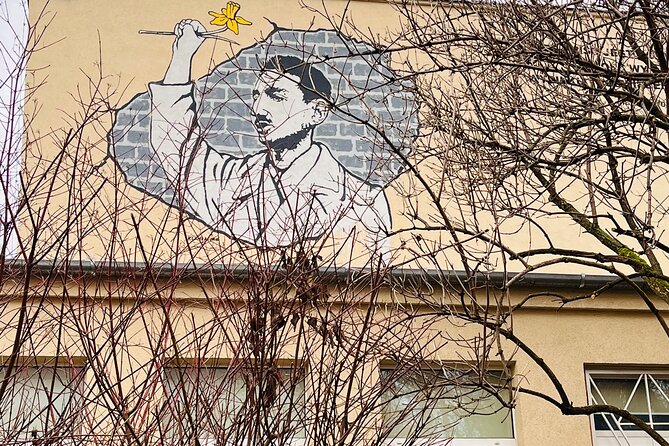
This is one of the most important places in Warsaw for commemorating the Jews of the Ghetto. It is also closely tied to the annual tradition of placing yellow daffodils at the monument on the anniversary of the Ghetto Uprising. That small flower has become a visible act of remembrance across the city.
The monument gives the guide room to explain the uprising and the people who resisted, while also addressing the enormous human cost of the Ghetto. It is a good place to slow down. You are not simply checking off a famous Warsaw sight. You are confronting how a city chooses to remember an event that shaped its identity.
The nearby POLIN Museum is not included as an admission stop. If you want a full museum visit, set aside separate time. This walking tour provides outdoor context and interpretation, but it does not replace the museum’s galleries.
The square can feel more formal than the earlier street stops. That is appropriate, but it also means the experience becomes more solemn from this point onward. Mona’s gentle approach is especially valuable here. The subject calls for care, not theatrical storytelling.
Mila 18 and the Anielewicz Mound
The stop at Mordechaja Anielewicza Street lasts about 30 minutes. At Mila 18, you see the Anielewicz Mound, which commemorates the deaths of the leaders of the Warsaw Ghetto Uprising.
Mordechai Anielewicz was a leader of the uprising, and the mound marks a place associated with the final days of the resistance. The stop gives the tour a human center. Instead of discussing resistance as an abstract military episode, the guide can connect it to individual choices, leadership, fear, and the struggle to survive.
You should be ready for a quiet and reflective visit. There is no need for a dramatic presentation here. The location carries weight because of what happened to the people who gathered and died there.
Thirty minutes is a useful amount of time for this stop, particularly if you have questions. The small group limit matters most here. In a group of 10 or fewer, you have a better chance of hearing the guide clearly and asking about the uprising without disrupting the mood.
One account praised Mona for explaining both the history and the emotion of the uprising, while recognizing the struggle for human survival. That is a good description of what this stop needs to offer. Dates and names matter, but so does the human scale.
Umschlagplatz and the road to Treblinka
The tour then reaches Umschlagplatz, with about 15 minutes at the monument. This marks the departure point for Jews transported from Warsaw to the Treblinka extermination camp. The number connected with these deportations is about 300,000 Jewish people who died there.
This is likely the most difficult stop on the route. Umschlagplatz was not simply a railway location. It was the place where people were gathered and forced onto transports, often without knowing the full fate awaiting them.
The monument provides a physical point for understanding deportation. You can stand in the place where families were separated from their homes and sent toward murder. That direct connection between a present-day street and a past crime is one reason a guided walk can be so effective.
The stop is shorter than the Ghetto Heroes Monument and Mila 18, but that does not make it less important. Fifteen minutes may be enough for the guide to explain the site while allowing the group to remain respectful. You may find that you need quiet afterward.
This is also where the tour’s subject matter becomes particularly stark. If you prefer a lighter introduction to Warsaw, choose a different walk first. This experience is designed for people willing to face painful history directly.
Willy Brandt’s tribute at the final square
The route ends at the Willy Brandt Monument and Square, listed as Skwer Willy’ego Brandta. The stop lasts about 15 minutes and recalls Willy Brandt’s tribute to the murdered Jews of Warsaw and to all victims of World War II.
Ending here gives the tour a wider frame. The walk has focused heavily on Jewish Warsaw and the Ghetto, but the final memorial also asks you to consider how later generations respond to wartime crimes. Brandt’s gesture became an important symbol of remembrance and responsibility.
The ending is not a return to the starting point. You finish near Mordechaja Anielewicza Street, at Willy Brandt Square, where the guide offers recommendations for a coffee in the neighborhood. That practical touch is welcome after a demanding walk. It gives you a chance to sit, think, and continue exploring at your own pace.
Because the tour ends away from Bankowy Square, check your plans for afterward. The start and finish are different, so do not assume you will be back near your hotel or original meeting point.
What $112.43 really buys you
At $112.43 per person, this is not a bargain walking tour. The listed stops are free, and coffee or tea is not included. You are paying for the certified English-speaking guide, the route, and the meaning added to each location.
The value improves if your group is small and the guide is as strong as Mona. A guide who can explain Jewish life before the war, the structure of the Ghetto, the uprising, the deportations, and later memorials in a clear and sensitive way can turn disconnected sites into a coherent story.
The price is harder to justify if you only want a quick look at monuments or if you already have a strong grasp of Warsaw’s Jewish history. You might get more from a museum visit or a less expensive general city walk. On the other hand, the tour saves you from piecing together seven significant locations on your own.
I would judge the cost by your priorities. If careful interpretation and the chance to ask questions matter to you, the fee can be reasonable, especially with a group of only 10 or fewer. If you mainly want photos and a short introduction, it is likely too expensive for the time.
Walking demands and practical planning
The experience lasts about two hours and 30 minutes and is built around walking between outdoor sites. The provider specifically says it is not recommended for people with mobility or walking problems. Most people can participate, and the route is near public transportation, but no special transport between stops is included in the details provided.
Wear comfortable shoes and plan for changing weather. You should also leave room in your day for the emotional pace of the subject. This is not a tour to squeeze between two rushed attractions.
Service animals are allowed. The experience is offered in English, and confirmation is sent within 48 hours of booking, subject to availability. Free cancellation is available if you cancel at least 24 hours before the start time. Late cancellations and changes made within 24 hours are not accepted for a refund.
The walk ends with coffee recommendations, but coffee or tea is not part of the price. That is a small distinction, yet useful to know when planning your afternoon.
Who will get the most from this walk?
I would recommend this experience to you if you want a focused introduction to Jewish Warsaw and the Ghetto Uprising, rather than a broad tour of every major Warsaw sight. It suits history-minded visitors, people making a first visit to Warsaw, and anyone who wants to understand how the city’s wartime past is marked today.
It also suits you if you prefer conversation over a large scripted group. Mona’s style, described as gentle, personable, and highly informed, seems particularly well matched to the subject. The tour can be moving without becoming theatrical.
You may want to skip it if you have difficulty walking, need a fully accessible route, or prefer not to spend several hours with painful wartime history. You should also look elsewhere if your main goal is to visit the POLIN Museum interiors, since the museum is used as a landmark and memorial setting rather than a full included visit.
Should you book Past Meets Present in Warsaw’s Jewish Ghetto?
Book this tour if you want Warsaw’s Jewish history explained at the places where it happened, with enough time for questions and reflection. The combination of a small group, free-entry memorial sites, a certified guide, and a route that includes both everyday Jewish life and the uprising gives the walk real purpose.
The decision turns on the price and the walking. At $112.43, it is a premium short tour, but a strong guide can make the difference between seeing monuments and understanding them. If Mona leads your group, her gentle, personal approach may be exactly what this subject requires.
I would choose it for a serious first look at the Ghetto and its memory. I would not choose it as a casual sightseeing stroll, and I would plan a quiet coffee afterward.
FAQ
How long does the Warsaw Jewish Ghetto tour last?
The tour lasts approximately two hours and 30 minutes.
What language is the tour offered in?
The tour is offered in English.
How many people can join the tour?
The group has a maximum of 10 travelers.
Where does the tour begin and end?
It begins at the Monument of Słowacki at Bankowy Square in Warsaw and ends at Willy Brandt Square near Mordechaja Anielewicza Street.
Are entrance tickets included?
All listed stops have free admission. Coffee and tea are not included.
Can I cancel for a full refund?
Yes. You can cancel for a full refund at least 24 hours before the experience starts. Cancellations or changes made less than 24 hours before the start time are not refunded or accepted.
Just added in Warsaw
- Wroclaw Small-Group Tour with Lunch from Warsaw★ 5.0 · 2 reviews
- World War II Warsaw Old Town, Military Cemetery Walking Tour★ 4.7 · 3 reviews
- Warsaw: Wolf’s Lair & Swieta Lipka Small-Group Tour + Lunch★ 5.0 · 3 reviews
- Wilanów Palace: 2-Hour Guided Tour with Entrance Tickets★ 4.8 · 8 reviews
- Warsaw Zoo Skip-the-Line Entry Ticket with Private Transport★ 4.8 · 3 reviews
- Warsaw: Private Vodka Tasting Night with Snacks and Pickup★ 5.0 · 7 reviews
- Warsaw Private Wilanow Palace & Garden Tour★ 4.6 · 30 reviews
- Warsaw Wolf’s Lair with St. Lipka and Mamerki Private Guided★ 4.2 · 3 reviews