
REVIEW · MUSEUMS IN GDAńSK
Museum of the Second World War Gdansk Private Tour & Tickets
History here feels close.
Gdansk’s wartime story becomes easier to follow when a guide connects the Museum of the Second World War with nearby memorials, the Polish Post Office, and the shipyard. I like the private format, which gives you room to ask questions, and I like the blend of museum exhibits with outdoor sites tied to Poland’s fight against Nazi rule and later communism. The main drawback is the price: at $153.49 per person, this is a serious spend, especially for a two-hour option.
The guide’s undivided attention should suit anyone who wants more than labels and display cases. One especially praised guide, Małgorzata, was described as punctual, clear, passionate about Polish history, and generous with her time. Just remember that the museum ticket skips the ticket-office line, not every entrance queue, and your timed arrival matters.
In This Review
- Key points to know before booking
- Why Gdansk is the right place for this tour
- Meeting at the Pilecki monument
- Inside the Museum of the Second World War
- The Polish Post Office and the first days of war
- St. James Church and the shipyard memorial
- The European Solidarity Centre and BHP Hall
- Finishing at the Imperial Shipyard
- Two hours or four hours?
- Is $153.49 per person good value?
- Practical details that can save you trouble
- Who should book this Gdansk history tour?
- Should you book it?
- FAQ
- Where does the tour start?
- Where does the tour finish?
- How long does the experience take?
- Are museum tickets included?
- Does skip-the-line access avoid every queue?
- Is the tour private?
- Is hotel pickup available?
- Is the tour offered in English?
- Is the four-hour tour physically demanding?
- Can I cancel for a refund?
Key points to know before booking
- The museum is the main event: You get admission to the permanent exhibition at the Museum of the Second World War.
- The four-hour option adds much more: It includes the Polish Post Office memorial, St. James Church, shipyard memorials, the European Solidarity Centre area, BHP Hall, and the Imperial Shipyard.
- You meet at a clear landmark: The starting point is the monument to Witold Pilecki in front of the museum.
- It is a true private tour: Only your group takes part, so the guide can adjust the pace and answer your questions.
- Old Town pickup has limits: Hotel pickup is available only for accommodation in Gdansk Old Town, and only with the extended option.
- Good shoes matter: The four-hour walk can include uneven surfaces and steps, and the tour runs in all weather.
Why Gdansk is the right place for this tour
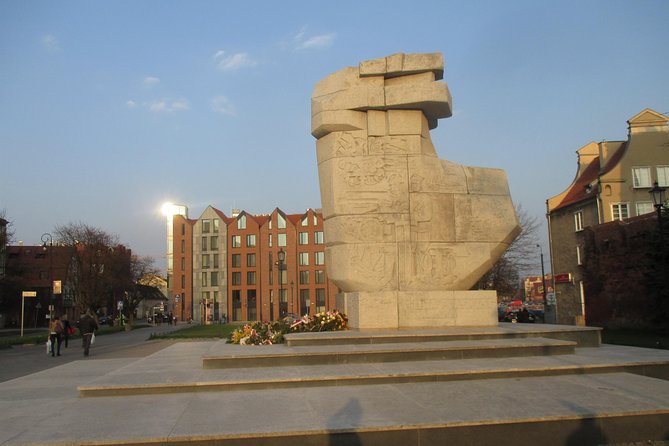
Gdansk is not simply a backdrop for World War II history. It is one of the places where the war began, where occupation reshaped daily life, and where later political resistance helped change Poland.
That makes this tour useful for putting separate events into one clear sequence. You start with the war itself, then move toward the post-war struggle against communist rule. The result is a broader view of Gdansk than you would get from visiting the museum alone.
I especially like that the experience includes both Polish suffering and Polish resistance. The museum presents the global war, but the surrounding walk brings the story back to local streets, workers, memorials, and institutions.
The Jewish community of Gdansk is also part of the subject matter. The information provided does not give a separate Jewish-history stop, so you should not expect a dedicated synagogue visit or standalone Jewish heritage walk. Still, the guide can help explain the place of Gdansk’s Jewish community within the city’s wartime story, and a private format gives you the chance to ask about it directly.
More Museums in Gdańsk
- Gdansk: Private Communism Tour with Solidarity Center Museum
★ 5.0 · 28 reviews - Gdansk Private WWII Tour with Museum of the Second World War
★ 4.9 · 22 reviews - Gdansk Private Communism Tour with Solidarity Center Museum
★ 5.0 · 14 reviews
Meeting at the Pilecki monument
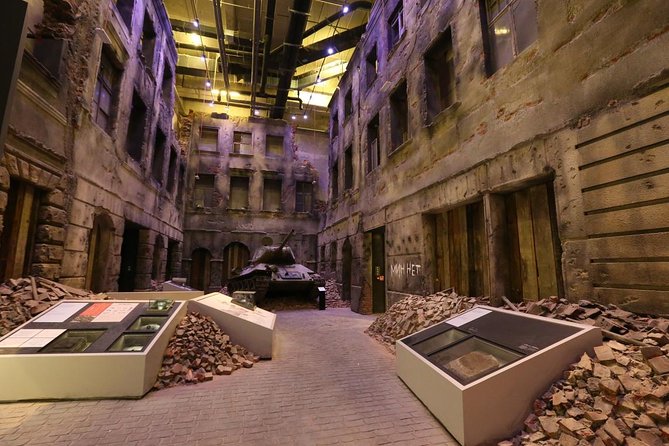
The tour begins at Plac Władysława Bartoszewskiego 1, outside the Museum of the Second World War. Look for the monument to Witold Pilecki, a clear meeting landmark in front of the building.
The meeting itself is listed as about 10 minutes, with no admission charge. Arrive early enough to find the monument and settle in before your timed museum entry. This matters because the museum ticket is booked for a specific date and time.
Pickup is possible only for hotels and accommodation in Gdansk Old Town, within about 1.5 kilometers of the meeting point. It is offered only with the extended tour. If you stay elsewhere, plan to reach the museum on your own using Gdansk’s nearby public transport connections.
Inside the Museum of the Second World War
The museum visit takes about two hours. Its permanent exhibition uses artifacts, papers, photographs, and interactive displays to explain World War II on a broad scale, while keeping Poland’s experience at the center.
This is where the private guide earns the fee. A large museum can easily become a march from case to case. Your guide can explain why an object matters, place Polish events into the wider war, and slow down when a subject catches your attention.
The tour description presents the museum as one of the most wide-ranging WWII exhibitions in the world. That means you should expect a substantial visit, not a quick room of photographs. Two hours is enough for a guided introduction, but it is not likely to satisfy someone who wants to read every caption and inspect every display at leisure.
That is an important tradeoff. With a private guide, you get direction and interpretation. You give up some freedom to wander without a plan. If you are the sort of museum visitor who reads every label, ask in advance if the guide can leave time for independent browsing.
The subject matter is sober. One review describes the experience as informative and serious, with a guide who explained the exhibition clearly and showed strong feeling for Polish history. That tone is appropriate here, but it also means this is not a light sightseeing stop to squeeze between cafés.
The Polish Post Office and the first days of war
The extended tour continues on foot to the Defenders of the Polish Post Office memorial. This stop honors the people who fought in one of the first battles of World War II.
The memorial gives you a more immediate sense of the opening days of the conflict. Instead of viewing the war only through maps and objects, you are connected to a specific place and a specific act of resistance.
The walking section is listed as about 50 minutes and also includes the Church of St. James and the Monument to the Fallen Shipyard Workers. The guide links Nazi occupation with the later fight against communism, which helps show that Poland’s struggle did not end in 1945.
Expect a guided walk rather than a sightseeing stroll. The emphasis is on meaning and context, not on checking off attractive buildings. If you have a strong interest in military history, ask your guide to focus on the early war events. If political history matters more to you, the shipyard portion may be the highlight.
Something quite different:
- Gdansk: City Cruise on Historical Polish Boat
★ 4.8 · 2,913 reviews - Gdańsk: Sunset Cruise on a Historic Polish Boat
★ 4.9 · 977 reviews - Gdańsk City Sights & History Guided Walking Tour in English
★ 4.8 · 876 reviews - Gdansk: Firearm Shooting Experience with Instructor
★ 4.8 · 866 reviews
St. James Church and the shipyard memorial
The Church of St. James forms part of the post-museum walk, although the supplied information does not promise a special interior visit or a separate admission. Treat it as a historical point along the route rather than a guaranteed extended church tour.
The Monument to the Fallen Shipyard Workers shifts the subject toward workers and political opposition. It helps explain how Gdansk’s shipyard became connected not only with wartime industry, but also with Poland’s later fight for freedom.
This is one of the strongest reasons to choose the four-hour version. You get to see how occupation, industry, labor, and political resistance fit together. The history is not boxed inside the museum. It continues outdoors, in the places where people organized, worked, suffered, and remembered.
The route includes some uneven surfaces and steps. Comfortable shoes are a must, and you should dress for rain or cold because the tour operates in all weather. The guide can adjust the pace, but the walk still requires moderate mobility.
The European Solidarity Centre and BHP Hall
The tour also stops near the European Solidarity Centre, which focuses on Poland’s path toward independence. The route includes the historic BHP Hall, where the August Agreements were signed.
The August Agreements are linked to the shipyard workers’ movement and the wider struggle against communist rule. Seeing the hall gives the post-war section a strong physical anchor. You are not just hearing about political change in the abstract. You are visiting a place tied to an important agreement.
The tour also points out the Obrońca mural, dedicated to those who defended Poland, and a preserved World War II air raid shelter. These details broaden the visit beyond the main museum. They show how wartime memory and later political memory share the same city.
The information provided does not state that admission to the European Solidarity Centre itself is included. The stop may involve the site, nearby areas, or specified spaces along the route. If entering the full center is important to you, confirm exactly what your chosen option covers before paying.
Finishing at the Imperial Shipyard
The final part leads toward the Imperial Shipyard, where wartime industry remains part of the story. The route ends back at the original meeting point.
The shipyard stop helps close the loop. The museum explains the war’s large forces and consequences. The memorials show local courage and loss. The shipyard connects war production with the later labor movement and political change.
I like this ending because it leaves you with a living part of Gdansk rather than one final display case. At the same time, do not expect every building or industrial area to be open for a detailed interior visit. The supplied details promise a stop at the Imperial Shipyard, not a separate factory tour.
Two hours or four hours?
The choice between the options changes the shape of the experience.
The two-hour version centers on the Museum of the Second World War. It is the better fit if you have limited time, want a focused museum visit, or prefer not to spend several hours walking outside. It also keeps the day easier if you have another fixed booking afterward.
The four-hour version adds the outdoor history of the Polish Post Office, St. James Church, the shipyard workers’ monument, the European Solidarity Centre area, BHP Hall, the mural, the air raid shelter, and the Imperial Shipyard. Choose it if you want a connected story about World War II and post-war communism.
The longer option is not simply a longer museum visit. It is a walking tour with the museum as its foundation. You will get more context, but you also need more stamina and flexibility.
The itinerary can be adjusted to your group’s pace and interests. Since only your group participates, you can ask for more explanation about the Jewish community, the first days of the war, resistance, or communist-era opposition. The exact number of attractions depends on the option you select, so read the chosen package carefully.
Is $153.49 per person good value?
The cost is high for a museum visit, but this is not priced like ordinary admission. You are paying for a private licensed guide, skip-the-line ticket-office access, and, with the longer choice, several hours of guided walking.
For two people, the price buys privacy and the chance to ask as many questions as time allows. For a larger group, the private format may make more sense if group discounts apply. The listing says discounts are available, but it does not state the exact rates, so check the total before booking.
The value is strongest for history-focused visitors who want interpretation. If you are happy to read the museum on your own, the cost will feel harder to justify. If you want a clear route, local context, and a guide who can connect WWII with communist-era resistance, the private format has a stronger case.
The praised guide service also matters. Małgorzata was singled out for being punctual, professional, clear, and willing to spend time answering questions. That kind of attention is precisely what a private tour should provide, though guide assignments can vary.
Practical details that can save you trouble
Your confirmation arrives at booking, and the operator advises checking your email the day before for important information. Do that, especially because the meeting instructions and timing may be adjusted for your selected option.
The museum ticket is valid for a pre-booked time. You skip the ticket-office line, but not necessarily the queue at the entrance. Arriving late could reduce your museum time, so do not treat the timed admission as flexible.
The tour is offered in English, with a licensed guide fluent in your chosen language. It is a private activity, so strangers will not join your group.
Most people can take part, but the four-hour route includes walking, uneven ground, and steps. If you have a disability or a special request, contact Rosotravel Tours Gdansk before booking. The guide may be able to adapt the route.
Free cancellation is available up to 24 hours before the start time. Changes or cancellations inside that window are not accepted for a refund.
Who should book this Gdansk history tour?
I would recommend it most strongly to first-time visitors who want the city’s wartime story explained in plain language. It is also a good fit for families with older children, history students, and anyone who finds large museums easier with a guide.
The four-hour version suits you if you want the full connection between WWII, Polish resistance, shipyard workers, and the fall of communism. The two-hour option works better if the museum is your main goal.
I would be more cautious if you dislike guided pacing, have only a short attention span for difficult history, or want a cheap museum ticket. The price is not a bargain admission deal, and the subject matter is grim.
Should you book it?
Book this tour if you want a private, guided explanation of Gdansk’s wartime and post-war story, not just entry to a museum. The four-hour option offers the better historical picture, while the two-hour choice is sensible when your schedule is tight.
Before booking, confirm which attractions belong to your selected option, check whether your hotel qualifies for pickup, and arrive early for the timed museum entry. If those details suit your plans, the tour gives you a thoughtful way to connect the museum with the streets, memorials, and shipyards where Gdansk’s history continued.
FAQ
Where does the tour start?
The tour starts at the monument to Witold Pilecki in front of the Museum of the Second World War, at Plac Władysława Bartoszewskiego 1, Gdansk.
Where does the tour finish?
The activity ends back at the original meeting point.
How long does the experience take?
The available options last about two to four hours. The museum visit takes about two hours, while the extended option adds an outdoor walking tour.
Are museum tickets included?
Yes. Skip-the-line tickets to the permanent exhibition at the Museum of the Second World War are included with all options.
Does skip-the-line access avoid every queue?
No. The ticket lets you bypass the ticket-office line, but not necessarily the queue at the museum entrance. Your ticket is valid for a pre-booked date and time.
Is the tour private?
Yes. Only your group participates in the activity.
Is hotel pickup available?
Pickup is available from accommodation in Gdansk Old Town, within about 1.5 kilometers of the meeting point, and only with the extended option. Pickup is not included for accommodation outside that area.
Is the tour offered in English?
Yes. The experience is offered in English, and the guide is fluent in the language selected at booking.
Is the four-hour tour physically demanding?
The extended tour is described as a moderate walking tour with uneven surfaces and some steps. Comfortable shoes and weather-appropriate clothing are recommended.
Can I cancel for a refund?
You can cancel up to 24 hours before the experience begins for a full refund. Cancellations or changes made less than 24 hours before the start time are not accepted.
Just added in Gdansk
- Wolf’s Lair private tour from Gdansk★ 5.0 · 1 review
- Whisky Tasting in Gdańsk★ 5.0 · 3 reviews
- Transfer from Gdańsk or Airport Gdańsk (GDN) to Kościerzyna★ 5.0 · 1 review
- Westerplatte – 2h private trip by luxury car|★ 5.0 · 4 reviews
- Westerplatte private tour led by Expert-Guide (door to door)★ 5.0 · 5 reviews
- Gdansk EVERYDAY Vodka Tasting Tour★ 5.0 · 6 reviews
- Undercover City Games: Gdynia★ 5.0 · 34 reviews
- VIP transfer from airport Gdansk (GDN) to Hotel in Gdansk / Sopot★ 5.0 · 2 reviews
Museums in Gdańsk, compared.

Private Communism Tour with Solidarity Center Museum
Read our review →
Gdansk Private WWII Tour with Museum of the Second World War
Read our review →Gdansk Private Communism Tour with Solidarity Center Museum
Read our review →
Museum of World War II – True Story of a Living Hell
Read our review →Browse the lists this tour appears in