
REVIEW · MUSEUMS IN GDAńSK
Gdansk: Museum of World War II – True Story of a Living Hell
War history becomes personal here. This private Gdansk tour brings you through one of Europe’s most powerful museums, linking political decisions with military events and the daily lives of people caught between Nazi Germany and the Soviet Union. I like the careful storytelling and the chance to explore with a licensed English-speaking guide. I also like that the tour is private, so the pace and focus can suit your group. The main drawback is simple: three hours may still not be enough, and some sections can feel long or repetitive.
The museum is not a quick stop between the Old Town and the waterfront. Its main exhibition fills 20 rooms along a long central corridor, with displays that move from the rise of totalitarian regimes to the war’s final consequences. Bring patience, comfortable shoes, and a willingness to face difficult material. This is serious history, not a light afternoon attraction.
In This Review
- Key points to know before you go
- Why this Gdansk museum deserves serious time
- The first room: how Europe moved toward war
- Twenty rooms along one long central corridor
- From Stalin’s pipe to a Sherman tank
- Recreated streets and the feel of daily life
- Why an audio guide can improve the visit
- Is three hours enough?
- Price, private access, and real value
- Who should book this experience?
- Booking advice and cancellation terms
- Should you book the Gdansk World War II museum tour?
- FAQ
- Where does the tour begin and end?
- How long does the experience last?
- Is this a private tour?
- Is the guide fluent in English?
- Is transportation from my hotel included?
- Can I cancel for a full refund?
Key points to know before you go

- Allow at least three hours: The scheduled visit lasts about 2 hours and 50 minutes, but the exhibition is large enough that you may still want more time.
- The private format matters: Only your group participates, and the guide can tailor the explanation to your interests.
- Start with Danzig’s political story: The city’s position after the Treaty of Versailles helps explain why Gdansk became such an important flashpoint.
- Use the audio equipment if offered: Headsets are praised for making the museum easier to follow without stopping you from reading labels and studying objects.
- Expect a powerful visual route: Film, photographs, recreated streets, shops, documents, and original objects make the war feel close and human.
- Plan for practical comforts: The museum has a cloakroom, café, lifts, and access to public transportation.
Why this Gdansk museum deserves serious time
The Museum of the Second World War is one of those places where the building and the content work together. The route leads you downward from the street-level entrance into the main exhibition, a design choice that gives the visit a weighty tone before you have even reached the first displays.
Your meeting point is in front of the museum at plac Władysława Bartoszewskiego 1. The initial meeting period is listed as about 10 minutes, enough to find your guide, confirm the language, and get ready for the visit. From there, the main museum experience takes up nearly three hours.
I like the way this format gives you an interpreter for a difficult subject. A museum this large can easily become a march from case to case. A good guide helps you understand which details matter, explains the local setting, and gives you a chance to ask questions instead of simply reading labels in silence.
The English-speaking guide is licensed and the tour is designed for your private group alone. That is useful if you have children, older family members, mixed levels of historical interest, or a particular interest in Poland, military technology, civilian life, or political history.
More Museums in Gdańsk
- Gdansk: Private Communism Tour with Solidarity Center Museum
★ 5.0 · 28 reviews - Museum of the Second World War Gdansk Private Tour & Tickets
★ 5.0 · 24 reviews - Gdansk Private WWII Tour with Museum of the Second World War
★ 4.9 · 22 reviews
The first room: how Europe moved toward war
The story begins before the shooting starts. A semi-circular screen presents the rise of totalitarian regimes across Europe, giving you the political background needed to understand what follows.
This opening is important because the museum does not treat the war as a sudden event with no warning. It shows how authoritarian power, territorial ambition, propaganda, and the collapse of political stability shaped the years before 1939. You are asked to look at the machinery that made mass violence possible, not just at the battles that later filled textbooks.
The Danzig story gives the local setting special force. After World War I and the Treaty of Versailles, the city was left in an unusual political position. It was not simply part of the newly restored Polish state, yet it was no longer governed by Germany, which had controlled Poland for more than a century after the partitions.
That political limbo helps explain why Gdansk is such a meaningful place to study the start of the war. The city was not an accidental backdrop. Its status, population, and location were tied to the tensions between Poland and Germany.
Your guide can help connect this local story to the wider European picture. That is one of the strongest reasons to choose a private visit instead of entering alone and trying to work out the context from scattered signs.
Twenty rooms along one long central corridor
The exhibition is arranged in 20 rooms on either side of a long corridor. The corridor itself contains displays about everyday life during the war, while the rooms build the larger political and military narrative around them.
This arrangement gives the museum a clear rhythm. You move from major events and government decisions to the ordinary objects people used, carried, lost, or depended on. A uniform or weapon may explain the mechanics of war, but a household object can show what war did to daily life.
The displays cover Poland, Europe, and events beyond Europe. The scale is large, but the route is easy to understand. You are not given only a Polish account, and you are not given only a military account. The museum brings together geopolitics, combat, occupation, resistance, displacement, persecution, and survival.
Some displays may feel familiar if you have studied the period. Others give the story a sharper local edge. The museum’s strength is the way individual lives appear beside major events. A political decision made far away can be followed by its effect on a family, a street, or a city.
That approach also explains why the visit can feel emotionally tiring. The museum does not soften the violence. Photographs, films, documents, and reconstructed settings show the war’s effect in direct terms. You should not expect a fast, cheerful museum stop.
From Stalin’s pipe to a Sherman tank

The collection includes objects that work at very different scales. You may see a personal item such as Stalin’s pipe, then encounter a major piece of military equipment such as a Sherman tank. An Enigma machine brings the story into the world of code and intelligence.
These objects are effective because they make a huge conflict easier to grasp. The pipe suggests the personal power of a dictator. The tank shows the industrial force behind modern warfare. The Enigma machine points to the hidden contest of information, secrecy, and technical skill.
I like this mix of objects because it avoids making the war seem like an abstract contest between arrows on a map. The museum gives you equipment, documents, images, film, and domestic scenes. Each helps answer a different question: Who made the decisions? How were they carried out? What did people see? How did families live through them?
The visual material is a major part of the visit. Film clips and documentary footage play throughout the exhibition, often alongside photographs and text panels. You can spend a long time in a single room if you stop for every screen, so the guide can help you decide what to watch fully and what to pass by.
Something quite different:
- Gdansk: City Cruise on Historical Polish Boat
★ 4.8 · 2,913 reviews - Gdańsk: Sunset Cruise on a Historic Polish Boat
★ 4.9 · 977 reviews - Gdańsk City Sights & History Guided Walking Tour in English
★ 4.8 · 876 reviews - Gdansk: Firearm Shooting Experience with Instructor
★ 4.8 · 866 reviews
Recreated streets and the feel of daily life
One of the most memorable features is the use of reconstructed daily settings. Streets and shops help you picture the city and its inhabitants as people trying to carry on while war reshaped every part of life.
These scenes are not a substitute for original objects. They give those objects a setting. A household item has more meaning when you can picture the kind of room, shop, or street where it might have been used.
The museum also shows how civilians lived under pressure from two brutal systems. The Polish experience is presented through the Nazi occupation and the later Soviet control that followed, a difficult history that is sometimes reduced to a single chapter in general museum displays.
For me, this is where the museum becomes more than a military collection. The war is shown as a long period of fear, coercion, loss, and adjustment. You see not only armies and leaders, but also people trying to survive systems they did not choose.
The final sections are especially important. If your energy is fading, resist the temptation to leave early. The later part brings the story toward its consequences and helps connect the wartime experience to the political realities that followed.
Why an audio guide can improve the visit
An audio guide is strongly worth considering. It is described as easy to use, and its location-based system can detect where you are in the exhibition. That means you can listen without constantly searching for the correct track.
The headset does not prevent you from reading displays or studying artifacts. You can pause, look around, and return to the narration when you are ready. It is also useful if you want more detail than the guide can provide in a busy room.
The museum offers language support through headphones, with Italian specifically noted among the available options. The private tour itself is offered in English, so confirm the language arrangement if members of your group prefer another form of interpretation.
There is one tradeoff. Audio commentary can make an already long visit feel even longer. If you try to listen to every explanation, read every panel, and watch every video, you will probably run out of energy before the final rooms. I suggest using the audio guide selectively and letting your guide point out the most important sections.
Is three hours enough?
The planned museum portion lasts about 2 hours and 50 minutes. That is a sensible minimum for the main route, not a guarantee that you will see every item closely.
One person can move through the museum in three hours and still miss details. Another can spend that long in only part of the exhibition. The difference depends on how much you read, how many films you watch, and how often you stop to discuss what you are seeing.
The museum itself is large, and several people have found that even three hours did not cover everything. A few sections may also repeat facts or themes. That repetition can reinforce the central message, but it may feel tiring if you are already overloaded.
I would schedule this as the main cultural activity of the day. Do not place it between two tightly timed attractions. Give yourself breathing room before and after, especially if you want to discuss the visit with your group.
There is a café and a staffed cloakroom. Those small services matter during a long museum visit. You can leave outer clothing securely and take a break without abandoning the experience entirely.
Price, private access, and real value
The listed price is $217.08 per person. That is a high price for a museum visit, so the value depends heavily on your group size and how much you want guided context.
You are paying for museum admission, a private tour, a licensed guide fluent in the selected language, expert commentary on World War II in Poland, and a visit tailored to your interests. For a larger private group, the cost may make more sense because the guide’s time is shared only among your party. For one or two people, it is harder to call this a bargain.
The main advantage is not simply getting through the door. The museum is large enough that a guide can save you from losing the main thread. You can ask about Danzig’s political status, the Polish experience, military technology, civilian life, or the relationship between the Nazi and Soviet periods.
Transport is not included. Hotel pickup and drop-off can be arranged for an additional 20 euros, but the basic meeting point is the museum itself. It is near public transportation, so you do not need to buy the transfer if you can reach plac Władysława Bartoszewskiego 1 on your own.
The museum may offer free admission on Tuesdays, and an admission discount has been noted for people aged 60 and over. Those details apply to the museum’s own admission arrangements, so check how they affect a prebooked private tour before assuming they reduce the package price.
Who should book this experience?
I would choose this tour if you want to understand Gdansk through its wartime past, not just see attractive streets and waterfront views. It suits people with a serious interest in history, military affairs, political change, or the experience of civilians under occupation.
Families can benefit from the private format because the guide can adjust the pace and explain difficult material in a suitable way. The subject matter is harsh, though, so parents should decide in advance how much detail is right for younger children.
It is also a good match for visitors who dislike wandering through a large museum without a clear plan. The exhibition is well organized, but its size can be daunting. A guide can keep the visit focused.
You may prefer a shorter independent visit if you have limited time, dislike guided commentary, or mainly want to see the building and a few major objects. The museum offers enough material for a quick overview, but the private tour is built around sustained attention.
Most people can participate, and lifts are available because the main exhibition is below street level. Still, expect a long period on your feet, with plenty of standing in front of displays and screens.
Booking advice and cancellation terms
The tour meets in front of the Museum of the Second World War and returns to that same meeting point. Confirmation is provided when you book, and free cancellation is available up to 24 hours before the experience begins.
Changes or cancellations made less than 24 hours before the start time are not accepted for a refund. The cut-off follows local time in Gdansk, so do not leave the decision until the last evening.
Should you book the Gdansk World War II museum tour?
Book it if you want a serious, carefully explained visit and value having a guide beside you. The private format, strong visual presentation, audio option, and clear attention to Polish civilian life make this far more useful than a quick look at military hardware.
Skip the private tour if $217.08 per person feels too steep or if you plan to rush through Gdansk. You can still visit the museum independently, but you will need to manage the size and emotional weight on your own.
My practical advice is to book this for a day when you can give it at least three hours, use the audio equipment when helpful, and protect time for the final rooms. This is one of the city’s most demanding attractions, but also one of its most valuable. It gives Gdansk’s wartime story a human scale, and that is exactly why the visit stays with you.
FAQ
Where does the tour begin and end?
It begins in front of the Museum of the Second World War at plac Władysława Bartoszewskiego 1 in Gdansk. The activity ends back at the same meeting point.
How long does the experience last?
The tour lasts approximately three hours. The museum portion is scheduled for about 2 hours and 50 minutes, after a short meeting period.
Is this a private tour?
Yes. Only your group participates, and the experience can be tailored to your interests and needs.
Is the guide fluent in English?
Yes. The tour is offered in English with a licensed guide fluent in the selected language.
Is transportation from my hotel included?
No. Hotel pickup and drop-off are not included. Transportation can be arranged on request for an additional 20 euros.
Can I cancel for a full refund?
Yes, if you cancel at least 24 hours before the experience start time. Cancellations or changes made less than 24 hours in advance are not accepted for a refund.
Just added in Gdansk
- Wolf’s Lair private tour from Gdansk★ 5.0 · 1 review
- Whisky Tasting in Gdańsk★ 5.0 · 3 reviews
- Transfer from Gdańsk or Airport Gdańsk (GDN) to Kościerzyna★ 5.0 · 1 review
- Westerplatte – 2h private trip by luxury car|★ 5.0 · 4 reviews
- Westerplatte private tour led by Expert-Guide (door to door)★ 5.0 · 5 reviews
- Gdansk EVERYDAY Vodka Tasting Tour★ 5.0 · 6 reviews
- Undercover City Games: Gdynia★ 5.0 · 34 reviews
- VIP transfer from airport Gdansk (GDN) to Hotel in Gdansk / Sopot★ 5.0 · 2 reviews
Museums in Gdańsk, compared.

Private Communism Tour with Solidarity Center Museum
Read our review →
Museum of the Second World War Gdansk Private Tour & Tickets
Read our review →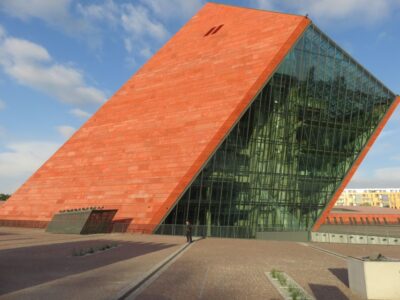
Gdansk Private WWII Tour with Museum of the Second World War
Read our review →Gdansk Private Communism Tour with Solidarity Center Museum
Read our review →Browse the lists this tour appears in