
REVIEW · COMMUNISM TOURS
Gdansk: Private Communism Tour with Solidarity Center Museum
History can feel personal here. This private Gdansk tour connects the fall of communism to the workers, strikes, and ordinary citizens who forced change. I especially like the European Solidarity Centre, where original documents make the story clear, and the visit to Sala BHP, the room where the Gdańsk Agreement was signed.
The private guide is another strong point. Guides such as Małgorzata have been praised for clear explanations, personal stories, and excellent language skills, including French and German. The main drawback is that the full four-hour route is not available on weekends because Gdansk Shipyard is closed Saturdays and Sundays.
In This Review
- Key points to know before booking
- Why Gdansk is the right place to study communism
- Inside the European Solidarity Centre
- Solidarity Square and the 1970 monument
- Sala BHP and the Gdańsk Agreement
- Gdansk Shipyard and the workers’ revolt
- The private guide makes the difference
- What the $184 price means in practice
- Transport, timing, and practical limits
- The Polish vodka finish
- Who should choose this Gdansk experience?
- Should you book the four-hour tour?
- FAQ
- How long does the Gdansk Communism Tour last?
- What does the tour cost?
- Is hotel pickup included?
- Where is the meeting point?
- What museum does the tour visit?
- What can I see at the European Solidarity Centre?
- Does the tour visit Sala BHP?
- Does the tour visit Gdansk Shipyard?
- Which languages are available?
- Can I cancel the booking?
Key points to know before booking
- The original 21 Postulates are on display: See the workers’ written demands from the 1980 Lenin Shipyard strikes.
- The European Solidarity Centre saves you museum time: Skip-the-line entry lets you get inside without waiting for the regular ticket queue.
- The four-hour route goes beyond the museum: You visit Solidarity Square, Sala BHP, and Gdansk Shipyard.
- The guide gives the events a human voice: Personal stories and political context help explain why the strikes mattered.
- Pickup is limited to central Gdansk: Hotel pickup applies only within 1.5 kilometers of the meeting point in Old Town.
- The final Polish vodka shot is part of the longer option: It adds a small PRL-era ritual to a serious history lesson.
Why Gdansk is the right place to study communism
Gdansk is not simply a pretty Baltic port with a medieval center. It was one of the key places where Communist rule in Poland was challenged by workers, families, intellectuals, and religious communities.
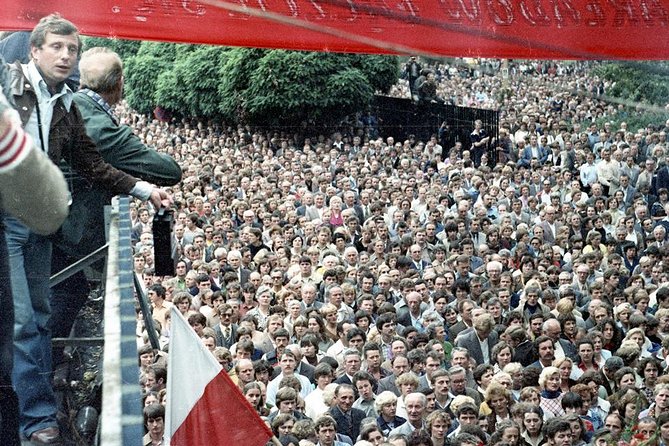
The decisive date is August 31, 1980. On that day, the Gdańsk Agreement ended a major shipyard strike and gave official recognition to the Solidarity trade union. That agreement did not instantly end communism, but it opened a crack that kept widening.
You will hear about the Polish People’s Republic, commonly called PRL, and how daily life worked under that system. The tour focuses on the gap between official Communist promises and ordinary realities, including restricted political choice, worker unrest, and the demand for basic civil rights.
I find this subject easier to understand in Gdansk than in a classroom. The places are close together, and the shipyard remains tied to the story. You are not only looking at old papers behind glass. You are walking through the setting where 17,000 ship builders began organized civil resistance in 1980.
More Museums in Gdańsk
- Museum of the Second World War Gdansk Private Tour & Tickets
★ 5.0 · 24 reviews - Gdansk Private WWII Tour with Museum of the Second World War
★ 4.9 · 22 reviews - Gdansk Private Communism Tour with Solidarity Center Museum
★ 5.0 · 14 reviews
Inside the European Solidarity Centre
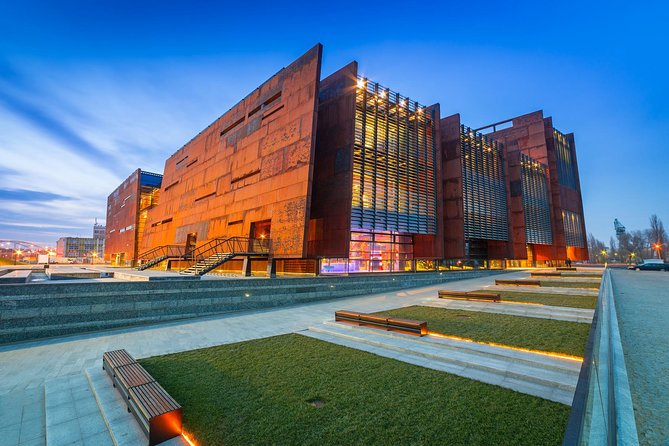
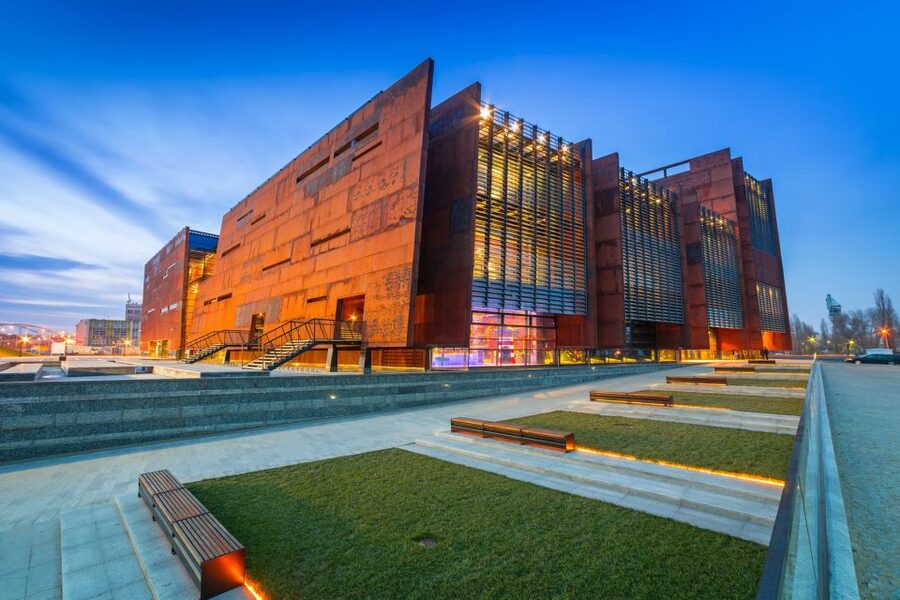
The European Solidarity Centre is the main museum portion of the experience. Your skip-the-line ticket helps you avoid the regular entry wait, which matters during busy periods and keeps the four-hour schedule moving.
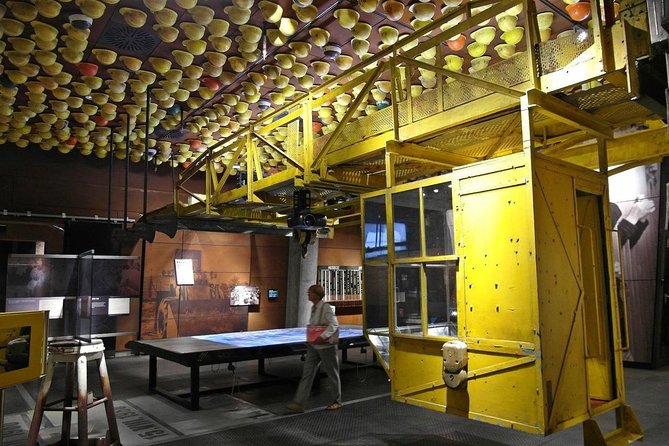
The museum takes you through the Solidarity story in sequence. You begin with the conditions that led to strikes, then follow the workers’ demands, the government response, the growth of the movement, the 1989 round table talks, and Poland’s first pluralistic election since 1947.
The original Tables of 21 Postulates are one of the most important objects here. These were the written demands prepared by striking workers at the Lenin Shipyard, now called Gdansk Shipyard. Seeing the actual demands gives the movement a practical quality. This was not a vague protest. Workers put specific requests on paper and forced the authorities to respond.
The displays also include documents and photographs from the strikes. You will learn about Lech Walesa, Anna Walentynowicz, and other figures who helped lead the movement. A private guide can explain who these people were and how their roles differed, which is useful because the story involves many names and several turning points.
I like having a guide in this museum because the political background is not always obvious from the objects alone. The guide can explain how one event led to another and why a document mattered at the time. Małgorzata, in particular, has been praised for showing visitors the essential exhibits while adding personal stories and social context.
Allow enough attention for the museum. The full route lasts four hours, but the museum itself can absorb much of your interest. If you choose a shorter option, expect less time for the shipyard locations and the wider PRL discussion.
Solidarity Square and the 1970 monument
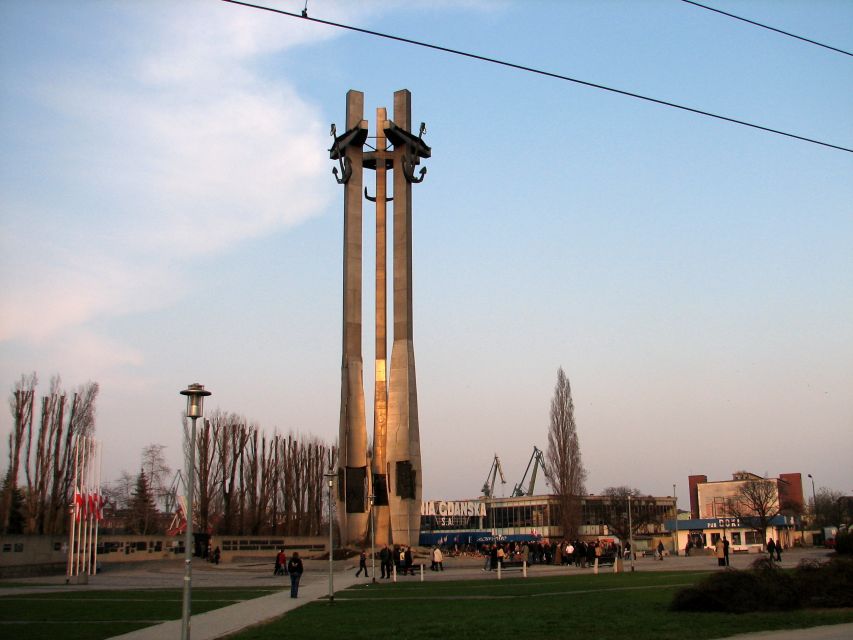
The route continues to Solidarity Square, where you see the Monument to the Fallen Shipyard Workers of 1970. The monument honors workers killed during protests against the Communist government.
This stop adds an important layer to the 1980 story. The later strikes did not happen in isolation. Workers remembered the violence of 1970, and that memory helped shape the mood and demands of the next decade.
Your guide explains the tragedy behind the monument and its place in the Solidarity movement. This is a good moment to ask questions about the relationship between workers and the government, especially if you want to understand why shipyard employees became such a powerful force in Polish politics.
The square is also the stated meeting point, under the monument. If your accommodation is within 1.5 kilometers of that location in Gdansk Old Town, pickup can be arranged. Otherwise, you meet the guide there. That limit is worth checking before you book, especially if your hotel is outside the historic center.
Sala BHP and the Gdańsk Agreement
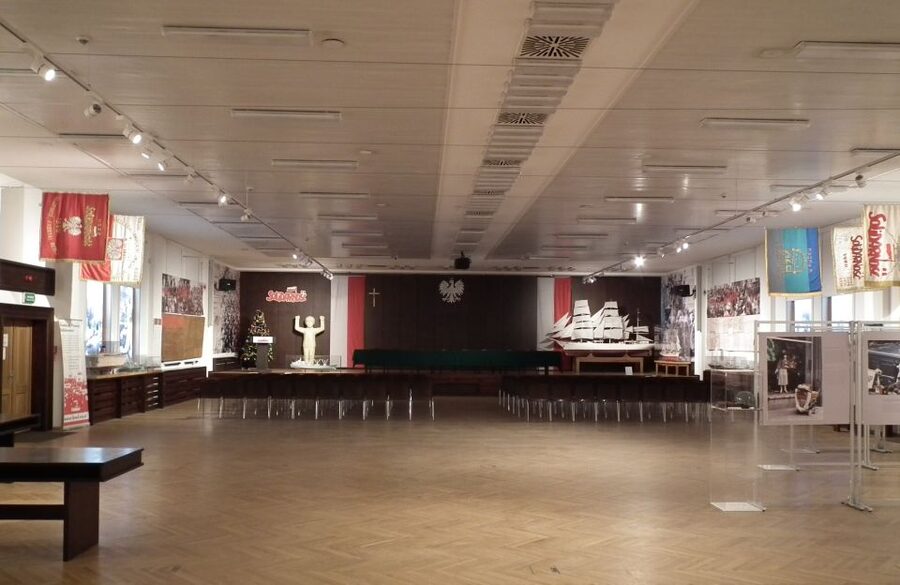
The visit to Sala BHP is one of the strongest reasons to select the four-hour version. This historic room was used by the Gdansk shipyard’s worker protection center, and it is where the Gdańsk Agreement was signed on August 31, 1980.
The date matters because the agreement formally recognized Solidarity. It marked a major civic success in modern Polish history and gave the opposition movement legal space to grow.
A guide can help you picture the pressure surrounding the signing. The room is not only a historic interior. It represents the moment when striking workers and Communist authorities reached an agreement after a confrontation that had drawn national attention.
Sala BHP also helps connect the museum exhibits to a real location. At the European Solidarity Centre, you see the documents and photographs. Here, you visit one of the places where the decisions were made. I would choose the longer route if you want the strongest connection between evidence and place.
More Communism Tours in Gdansk:
- Legendary Private Nowa Huta Communism Tour with Crazy Guides
★ 5.0 · 262 reviews - Private Tour: Warsaw’s Communist History by Retro Fiat
★ 5.0 · 115 reviews - Krakow: Private Nowa Huta Adventure Tour in Communist Cars
★ 4.9 · 114 reviews - Krakow: 3.5-Hour Communism Deluxe Tour by Trabant
★ 4.9 · 84 reviews
Gdansk Shipyard and the workers’ revolt
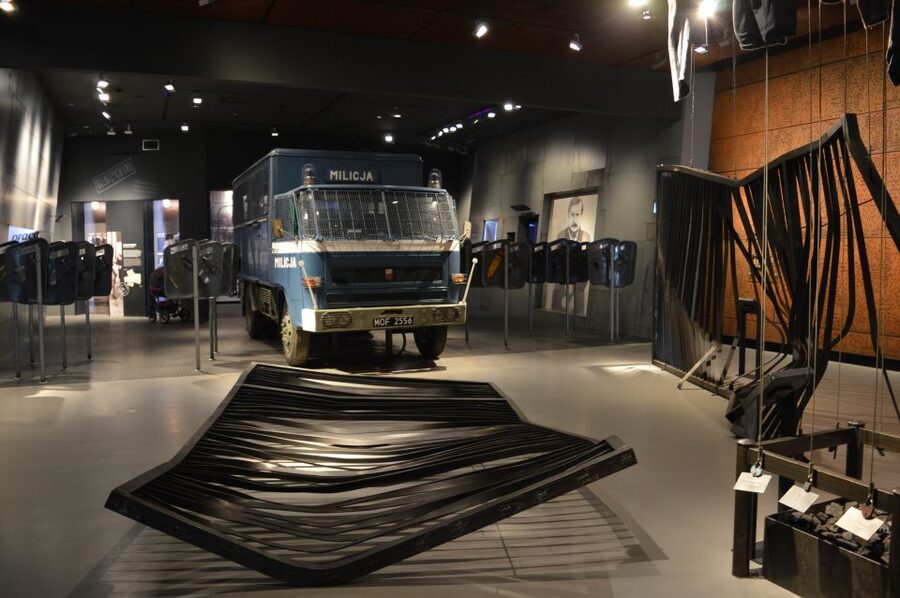
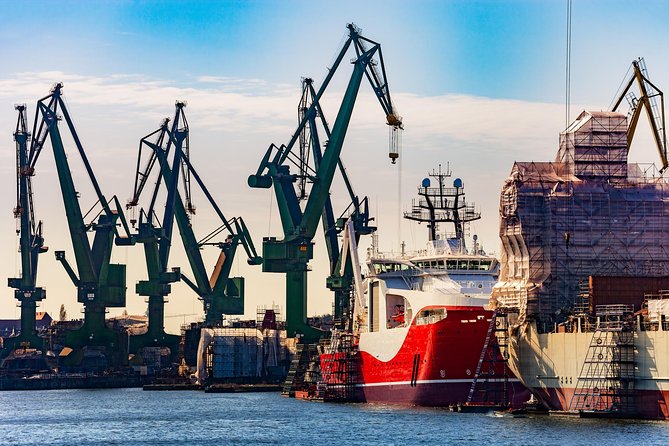
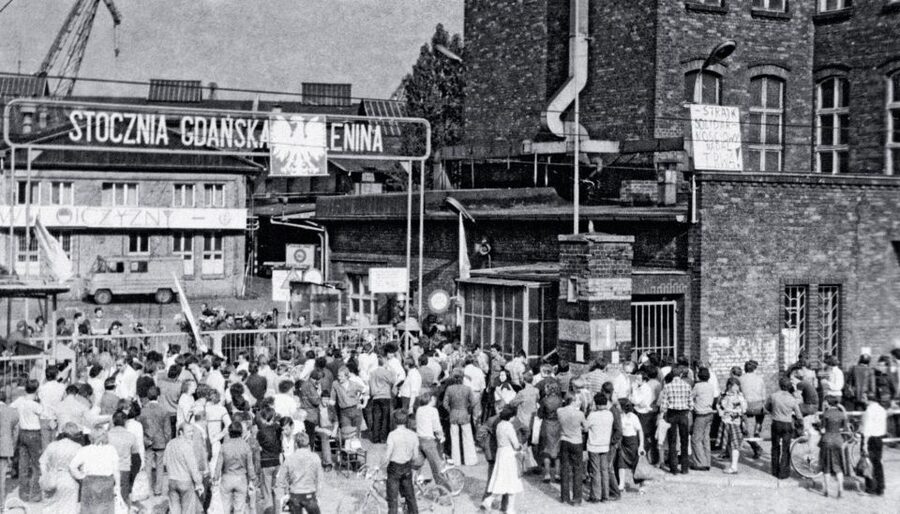
The final major stop is Gdansk Shipyard, known in Polish as Stocznia Gdansk. This is where the 1980 resistance began among the ship builders.
The shipyard area is large and changing, so a private guide is useful. Małgorzata has been praised for knowing the site and its history in detail, which can help you make sense of a district that may not present its story in one neat path.
You should expect this part to feel different from a traditional museum visit. The shipyard is an active historic area rather than a single exhibition room. The value comes from seeing the physical setting connected to the strikes and understanding how the workers’ environment shaped the movement.
There is one firm scheduling issue: Gdansk Shipyard is closed on Saturdays and Sundays. If the shipyard is important to you, book a weekday. The information provided also warns that the itinerary may be changed if pickup conditions or site access do not fit the normal plan.
The private guide makes the difference
A private tour is more expensive than joining a large group, but the format has a clear benefit here. Communism and Solidarity involve political terms, dates, personalities, and social divisions that can be difficult to sort out while reading wall panels alone.
Your guide can adjust the explanation to your interests. You might want more detail about Lech Walesa, the 1989 round table talks, the role of Anna Walentynowicz, or the first pluralistic election since 1947. You can also ask about the human side of PRL life rather than following a fixed commentary.
The guide team offers English, German, Polish, and Russian. The strongest praise has focused on clear explanations, personal stories, and command of the subject. A German-speaking group of 18 people found the presentation entertaining and easy to follow, while a French-speaking visitor specifically praised Małgorzata’s fluency and ability to explain both the museum and shipyard.
That said, private does not always mean slow. Four hours covers several sites, so you should expect a purposeful pace. If you want to read every museum panel, take extensive photographs, or linger at each display, tell your guide at the start and accept that another stop may receive less time.
What the $184 price means in practice
At $184 per person, this is not a budget activity. The value depends on how much you want from the history and how many people are sharing the private guide.
The price includes hotel pickup and drop-off within the stated Old Town area, private transportation, a private Communist-themed tour, a licensed history guide, and skip-the-line entry to the European Solidarity Centre. The four-hour version also includes entry to Sala BHP and Gdansk Shipyard, plus a traditional Polish vodka shot.
For one or two people, the price may feel high compared with a standard museum visit. You are paying for private attention, transport, and interpretation rather than just admission. If you have limited time in Gdansk and want someone to organize the museum and shipyard sites, that convenience adds real value.
The equation improves for a small family or group because the price is listed per person but the experience remains private. A large group of 18 has also used the private format, though you should confirm the exact group arrangements when booking.
The skip-the-line museum entry is useful, but it should not be the main reason to pay this price. The real value is the guide’s ability to connect the museum, monument, Sala BHP, and shipyard into one story.
Transport, timing, and practical limits
The activity lasts four hours, with starting times based on availability. Car transport makes the route easier because the sites are not all experienced as one simple Old Town walk.
Pickup is available only from Gdansk Old Town accommodations within 1.5 kilometers of the meeting point at Plac Solidarności. Provide your accommodation address when booking if you want pickup arranged. If you do not provide it, meet the guide under the Monument to the Fallen Shipyard Workers of 1970.
Check your email the day before. Important instructions may be sent then, including meeting details or changes to the plan.
The activity is wheelchair accessible, but the shipyard’s weekend closure still applies. The available guide languages are English, German, Polish, and Russian. The supplied information also identifies French-language guiding through Małgorzata, so confirm French availability directly before booking if that language is essential.
You can cancel up to 24 hours in advance for a full refund, and you can reserve now while paying later. Those terms are helpful if your Gdansk schedule is still moving.
The Polish vodka finish
The four-hour route ends with a shot of traditional Polish vodka. It is presented as a small PRL-era tradition rather than the main point of the tour.
Some people will enjoy this cultural touch. Others may not drink alcohol, so treat it as an optional extra in spirit, even though it is included in the longer package. The serious historical subject and the informal toast make an amusing contrast, but the tour does not depend on it.
Who should choose this Gdansk experience?
I would recommend this tour if you want more than a quick look at the European Solidarity Centre. It suits you especially well if you:
- Have a strong interest in modern Polish or Eastern European history
- Prefer a private guide to a large scheduled group
- Want to visit both the museum and real Solidarity sites
- Need English, German, Polish, or Russian guiding
- Have only a half day for the Communist-era story
- Want transport between the main locations
- Are comfortable paying more for personal explanations
It may not be the best choice if you only want a general introduction to Gdansk or prefer to explore museums at your own pace. The political history is serious, and the four-hour schedule may feel dense if your main goal is a relaxed sightseeing day.
For the best version, choose a weekday so the Gdansk Shipyard is open. If you are especially interested in the 1980 agreement, make sure Sala BHP is part of your selected four-hour option.
Should you book the four-hour tour?
Book it if Solidarity is a main reason you came to Gdansk. The combination of the original 21 Postulates, the 1970 workers’ monument, Sala BHP, and the shipyard gives you a stronger understanding than the museum alone.
The guide quality is the biggest reason to choose the private format. The experience has earned a perfect 5 rating from 28 reviews, with the strongest praise directed at clear historical explanations, language ability, personal stories, and detailed knowledge of the shipyard.
I would skip it only if $184 per person is beyond your budget or if you plan to spend a full day reading every museum display independently. For most visitors who want the Solidarity story explained clearly and tied to the actual places, this is a focused and worthwhile half-day in Gdansk.
FAQ
How long does the Gdansk Communism Tour last?
The listed experience lasts four hours. The description also refers to a shorter two-hour option focused mainly on the European Solidarity Centre, so check the selected option and availability when booking.
What does the tour cost?
The price is $184 per person.
Is hotel pickup included?
Yes. Pickup and drop-off are included from accommodations in Gdansk Old Town within 1.5 kilometers of the meeting point.
Where is the meeting point?
The meeting point is under the Monument to the Fallen Shipyard Workers of 1970 at Plac Solidarności, 80-001 Gdańsk.
What museum does the tour visit?
The tour visits the European Solidarity Centre. Skip-the-line entry is included.
What can I see at the European Solidarity Centre?
You can see the original Tables of 21 Postulates, along with documents and photographs about the strikes, Solidarity, the 1989 round table talks, and Poland’s first pluralistic election since 1947.
Does the tour visit Sala BHP?
Yes. Sala BHP is included with the four-hour option. It is the historic site where the Gdańsk Agreement was signed on August 31, 1980.
Does the tour visit Gdansk Shipyard?
Yes. Gdansk Shipyard is included with the four-hour option. It is closed on Saturdays and Sundays.
Which languages are available?
The listed guide languages are English, German, Polish, and Russian. French-language guiding has also been provided, so confirm availability if you require French.
Can I cancel the booking?
You can cancel up to 24 hours in advance for a full refund. Reserve now and pay later is also available.
Just added in Gdansk
- Wolf’s Lair private tour from Gdansk★ 5.0 · 1 review
- Whisky Tasting in Gdańsk★ 5.0 · 3 reviews
- Transfer from Gdańsk or Airport Gdańsk (GDN) to Kościerzyna★ 5.0 · 1 review
- Westerplatte – 2h private trip by luxury car|★ 5.0 · 4 reviews
- Westerplatte private tour led by Expert-Guide (door to door)★ 5.0 · 5 reviews
- Gdansk EVERYDAY Vodka Tasting Tour★ 5.0 · 6 reviews
- Undercover City Games: Gdynia★ 5.0 · 34 reviews
- VIP transfer from airport Gdansk (GDN) to Hotel in Gdansk / Sopot★ 5.0 · 2 reviews
Communism Tours, compared.

Legendary Private Nowa Huta Communism Tour with Crazy Guides
Read our review →
Private Tour: Warsaw’s Communist History by Retro Fiat
Read our review →
Private Nowa Huta Adventure Tour in Communist Cars
Read our review →
Communist Krakow – Nowa Huta Walking Tour in English
Read our review →Browse the lists this tour appears in