
REVIEW · COMMUNISM TOURS
Gdansk Private Communism Tour with Solidarity Center Museum
Gdańsk’s shipyards changed Europe. I like the private format, which gives you room to ask questions, and I like the direct connection between the workers’ strikes, Lech Wałęsa, and the fall of communism across Eastern Europe. The tour also combines outdoor sites with the excellent European Solidarity Centre, so the story unfolds in the very places where it happened.
The main drawback is timing. The advertised tour can last two to four hours, but one reported experience finished a four-hour booking after about three hours and felt rushed. The shipyard is closed on Saturdays and Sundays, so you need to plan carefully if you want the full version with Sala BHP and the working shipyard area.
In This Review
- Key points to know before booking
- Why Gdańsk’s shipyards matter
- Meeting the guide at the 1970 workers’ monument
- Anna Walentynowicz and the people behind Solidarity
- Sala BHP and the agreement signed in 1980
- Walking through Gdańsk Shipyard
- The European Solidarity Centre’s strongest exhibits
- Two hours or four hours?
- Is $139.10 per person fair value?
- Who will get the most from this tour?
- Practical advice before you reserve
- Should you book the Gdańsk Solidarity tour?
- FAQ
- Where does the tour begin?
- Can I be picked up from my hotel?
- Where does the tour finish?
- How long does the experience last?
- Is the tour private?
- Which languages are available?
- Does the tour include the European Solidarity Centre?
- What is included in the four-hour option?
- Is Gdańsk Shipyard open every day?
- Can I cancel for a refund?
Key points to know before booking
- The tour begins beneath the Monument to the Fallen Shipyard Workers of 1970, the most important meeting point for understanding the workers’ struggle.
- A private guide leads your group, with tours available in nine European languages and pickup from accommodations in Gdańsk Old Town.
- The four-hour option adds Sala BHP, the shipyard, and Polish vodka, while the shorter options focus more on the museum and key Solidarity sites.
- The European Solidarity Centre holds the original 21 Postulates, the demands written by striking workers in 1980.
- Weekend planning matters, because Gdańsk Shipyard is closed on Saturdays and Sundays.
- The tour costs about $139.10 per person, a high price for a walking tour, but private guiding and museum access improve the value for history-minded visitors.
Why Gdańsk’s shipyards matter
Gdańsk is not simply showing you an old industrial district. This is where a labor dispute grew into a national movement, and where Poland’s opposition to the communist government helped change the political shape of Europe.
After World War II, Poland became part of the Soviet sphere. Political power rested with the communist government, while workers faced shortages, restrictions, censorship, and little ability to challenge official decisions. The shipyards became one of the places where those pressures came to a head.
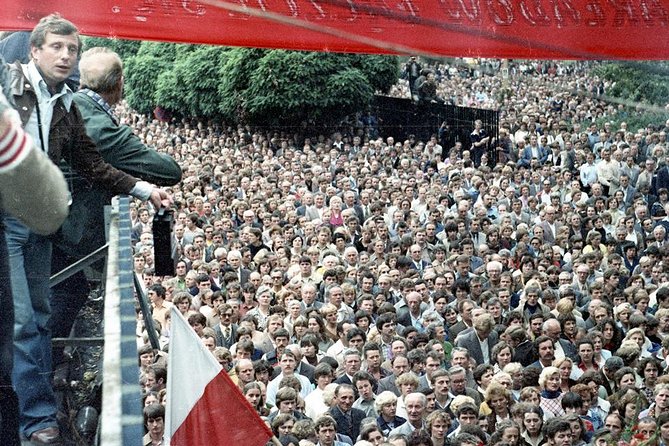
In 1980, about 17,000 shipbuilders at Gdańsk Shipyard began civil resistance. Their demands were not limited to wages. The workers called for the right to form an independent trade union, better working conditions, and basic civil freedoms.
That movement became Solidarity, led by figures including Lech Wałęsa and Anna Walentynowicz. Its influence reached far beyond Gdańsk. The strikes, negotiations, and later political changes helped weaken communist rule in Poland and encouraged opposition movements elsewhere in Eastern Europe.
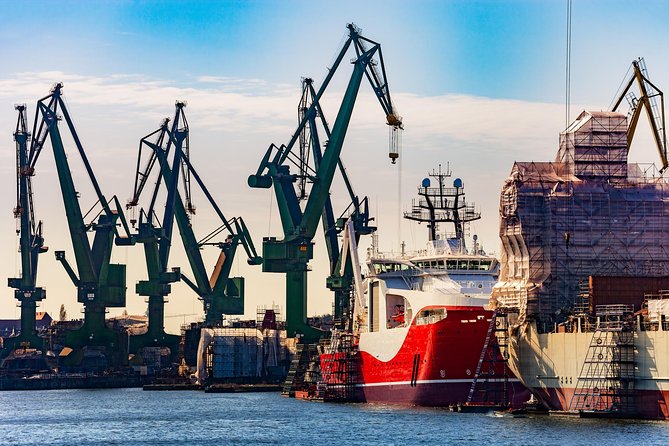
A guide is useful here because the physical setting alone does not tell the full story. The cranes, gates, monuments, and former shipyard buildings become meaningful when you know who gathered there, what they demanded, and what they risked.
More Museums in Gdańsk
- Gdansk: Private Communism Tour with Solidarity Center Museum
★ 5.0 · 28 reviews - Museum of the Second World War Gdansk Private Tour & Tickets
★ 5.0 · 24 reviews - Gdansk Private WWII Tour with Museum of the Second World War
★ 4.9 · 22 reviews
Meeting the guide at the 1970 workers’ monument
The tour starts at the Monument to the Fallen Shipyard Workers of 1970 at Plac Solidarności. Three tall steel crosses rise above the square, each carrying an anchor. The monument honors workers killed during protests in December 1970.
You get about ten minutes at this first stop, which is enough for an introduction and a basic explanation of the monument. It also gives you a clear sense of the physical scale of the site. This is not a tucked-away plaque. It is a major public memorial placed beside the former shipyard, where workers once gathered in large numbers.
The 1970 protests form an important prelude to the Solidarity strikes of 1980. Workers had already shown that the government could face organized resistance, but the deaths also revealed the danger of confronting the state.
If your accommodation is within about 1.5 kilometers of the meeting point, the guide can meet you there in Gdańsk Old Town. Otherwise, you should go directly to the monument. The meeting point is near public transportation, but the information provided does not promise hotel pickup outside the Old Town area.
Anna Walentynowicz and the people behind Solidarity
The next stop is the monument to Anna Walentynowicz. She was a shipyard worker whose dismissal helped trigger the 1980 strike. Her role gives the story a useful correction: Solidarity was not created by one famous man alone.
Lech Wałęsa became the movement’s best-known public figure, but the tour also brings attention to Walentynowicz and other workers who organized, argued, and accepted serious personal risk. That broader view makes the political story more human and less like a simple biography of Wałęsa.
This is also where the guide can explain how the Solidarity strikes affected other parts of Eastern Europe. The tour is designed around questions and discussion, so a private group can pause when a subject catches your interest. A Danish-speaking visitor praised the guide for offering a nuanced explanation and answering many questions well.
The available guides speak one of nine European languages. When booking, choose the language that will let you follow political details comfortably. This is a subject filled with names, dates, institutions, and changing alliances, so language makes a real difference.
Sala BHP and the agreement signed in 1980
The four-hour version includes Sala BHP, a major highlight for anyone who wants more than a brief overview. This building was connected to worker protection at the Gdańsk Shipyard and became the place where the Gdańsk Agreement was signed on August 31, 1980.
That agreement ended the strike and gave official recognition to important worker demands. It also helped establish Solidarity as an independent trade union, something that had been unthinkable under the communist system.
You spend about an hour in this part of the tour, learning more about the Polish People’s Republic, commonly called PRL. The value of Sala BHP is its connection to a specific political turning point. You are not just looking at general communist-era objects. You are at the site where workers and authorities negotiated a new arrangement.
The square outside also connects this agreement to the Monument to the Fallen Shipyard Workers of 1970. A good guide will tie the two events together: the earlier killings, the later strike, and the workers’ determination to demand recognition for those who died.
One caution: the exact access and timing can matter. Since Gdańsk Shipyard is closed on Saturdays and Sundays, the full four-hour route may not operate in the same way on a weekend. Confirm the details for your chosen date before paying for the longer option.
More Communism Tours in Gdansk:
- Legendary Private Nowa Huta Communism Tour with Crazy Guides
★ 5.0 · 262 reviews - Private Tour: Warsaw’s Communist History by Retro Fiat
★ 5.0 · 115 reviews - Krakow: Private Nowa Huta Adventure Tour in Communist Cars
★ 4.9 · 114 reviews - Krakow: 3.5-Hour Communism Deluxe Tour by Trabant
★ 4.9 · 84 reviews
Walking through Gdańsk Shipyard
The final outdoor stop is Stocznia Gdańska, or Gdańsk Shipyard. This is where the 1980 resistance began, making the setting central to the story rather than a decorative backdrop.
The tour information describes the shipyard as the place where 17,000 shipbuilders began civil resistance against the communist regime. Your guide explains how an industrial workforce became the base of a movement that challenged the government and eventually helped Poland move toward democracy.
The site is also where the tour takes a lighter turn. In keeping with a Polish tradition associated with the PRL period, you are offered a shot of traditional Polish vodka. It is a small gesture, not the purpose of the tour, but it gives the walk a local touch and a moment to warm up.
I would treat the shipyard walk as a place for orientation and context rather than a polished museum visit. The power comes from knowing what happened there. If you want a long, detailed examination of exhibits, documents, and political events, the museum portion will give you more.
The outdoor portion can also feel rushed if the guide runs behind schedule. One group reported a guide arriving 20 minutes late and completing the four-hour experience in roughly three hours. That is not a reason to reject the tour outright, but it is a good reason to confirm the start time and ask how much time is planned for each section.
The European Solidarity Centre’s strongest exhibits
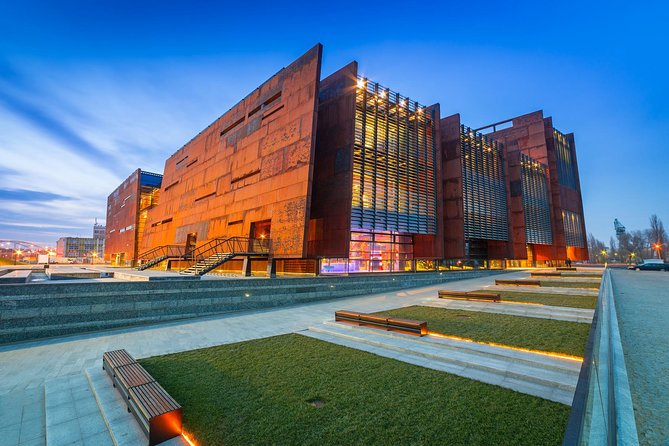
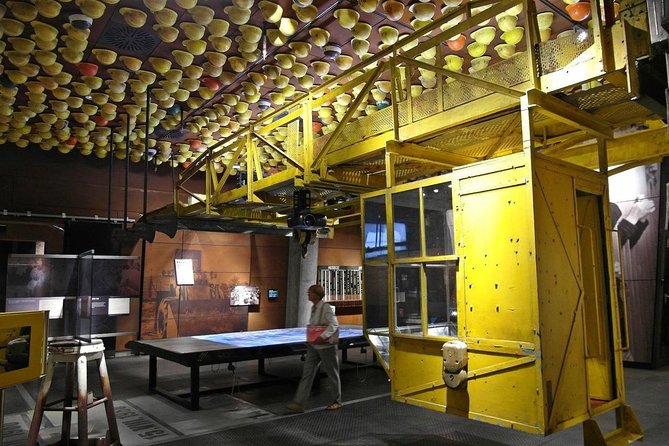
The European Solidarity Centre is the tour’s most substantial stop. The modern museum presents the history of communist-era Poland and the birth of democracy in the Eastern Bloc through photographs, documents, displays, and reconstructed settings.
The original Tables of 21 Postulates are among the most important objects. These are the written demands made by striking workers at the Lenin Shipyard, now Gdańsk Shipyard, in 1980. Seeing the actual tables connects the broad political story to the practical demands of the people who organized the strike.
The museum also follows the movement through later milestones:
- The 1980 strikes and the birth of Solidarity
- The government’s response and the struggle for freedom
- The 1989 Round Table Talks
- Poland’s first pluralistic election since 1947
- The wider collapse of communist authority in Eastern Europe
The guide’s role inside the museum can make a big difference. One visitor praised a guide for adding firsthand accounts to the events shown in the displays. That kind of explanation helps you understand not only what happened, but also how those events felt to people living through them.
You receive skip-the-line admission to the centre on the two-hour and four-hour options. That is useful when time is limited, although it does not mean you will have unlimited time inside. One reported four-hour tour spent too little time at the museum, which is worth keeping in mind if the centre is your main reason for booking.
Two hours or four hours?
The tour is sold in versions lasting about two to four hours, so choosing the right length matters.
The shorter option is better if you want a focused introduction to Solidarity and the museum. It can fit into a crowded Gdańsk sightseeing day and gives you the key outdoor context without committing half a day.
The four-hour version is the stronger choice for serious history enthusiasts. It adds Sala BHP, more time around the shipyard, and the vodka tasting. It should also give you more room for questions and a fuller explanation of the 1970 and 1980 protests.
The problem is that the published duration is approximate. If your schedule is tight, do not place an important train, flight, or restaurant reservation immediately afterward. The tour may finish in two hours, three hours, or close to four depending on the route, guide, access, and pace.
Because this is a private activity, your group is not joined by strangers. That is a real advantage for families, couples, and small groups with different levels of interest. You can ask about Polish politics, Wałęsa, Walentynowicz, or the museum displays without worrying about holding up a large group.
Is $139.10 per person fair value?
At about $139.10 per person, this is not a cheap walking tour. The price makes the most sense when you value three things: a private guide, a chosen language, and a guided museum visit tied directly to the shipyard sites.
For one person or a couple, the cost is substantial. For a private group, the economics may improve, especially since group discounts are available. You are paying for a tailored experience rather than a standard public walk.
The included museum ticket helps, as does hotel pickup within Gdańsk Old Town. Sala BHP, Gdańsk Shipyard access, and the vodka shot are included in the four-hour option. Outside Old Town, pickup is not included, and the route may be changed if the accommodation does not meet the stated distance requirement.
I would book this if you want the political and human story explained by a licensed Gdańsk guide. I would skip it if you prefer to visit museums alone at your own pace or if you only have time for a quick look at the monuments.
Who will get the most from this tour?
This experience suits you if you enjoy modern European history, political change, labor movements, or personal stories connected to major events. It is also a strong choice if you want a local guide who can explain why Gdańsk matters to Poland rather than simply point out buildings.
The private setup works well for families with older children, small groups, and visitors who want to ask many questions. The tour is offered in nine European languages, so you can choose the language that best fits your group.
Most people can take part, and the route is near public transportation. Still, you should allow enough time for outdoor walking and museum visits. The provided information does not give a detailed accessibility description, so ask the operator directly if your group has specific mobility needs.
The tour is less suitable if your main interest is medieval Gdańsk, World War II, or architecture. Its subject is Poland under communism and the rise of Solidarity. You will see an important side of the city, but not a general introduction to all of Gdańsk.
Practical advice before you reserve
Choose a weekday if you want the complete route, since the shipyard is closed on Saturdays and Sundays. Give your accommodation address when booking if you want the guide to meet you at your Gdańsk Old Town address.
If you do not provide the address, meet beneath the Monument to the Fallen Shipyard Workers of 1970 at Plac Solidarności. Check your email the day before, since the operator sends important information before the tour.
Free cancellation is available until 24 hours before the start time. Inside that 24-hour window, you will not receive a refund, and changes are not accepted.
Should you book the Gdańsk Solidarity tour?
Book it if you want context, not just sights. The monuments and shipyard are far more meaningful when a guide explains the 1970 deaths, the 1980 strikes, Anna Walentynowicz’s role, the Gdańsk Agreement, and the later democratic changes.
For the best version, choose a weekday and the four-hour option, then protect the time in your schedule. The museum is excellent, the original 21 Postulates are a major draw, and the private format lets you ask the questions that make the story come alive.
I would be cautious only if your schedule is rigid or if you expect every four-hour booking to last a full four hours. Confirm the timing, arrive at the correct meeting point, and treat the tour as a serious history lesson with a small shot of Polish vodka at the end.
FAQ
Where does the tour begin?
It begins beneath the Monument to the Fallen Shipyard Workers of 1970 at Plac Solidarności in Gdańsk.
Can I be picked up from my hotel?
Pickup is available from accommodations in Gdańsk Old Town located within about 1.5 kilometers of the meeting point. Pickup outside that area is not included.
Where does the tour finish?
The stated ending point is Gdańsk Shipyard at Doki 1, 80-863 Gdańsk.
How long does the experience last?
The tour lasts approximately two to four hours, depending on the option selected.
Is the tour private?
Yes. Only your group participates in the private tour or activity.
Which languages are available?
The tour is available in nine different European languages. You select the language when booking.
Does the tour include the European Solidarity Centre?
Yes. The two-hour and four-hour options include skip-the-line tickets to the European Solidarity Centre.
What is included in the four-hour option?
The four-hour option includes entry to Sala BHP and Gdańsk Shipyard, along with a shot of traditional Polish vodka.
Is Gdańsk Shipyard open every day?
No. Gdańsk Shipyard is closed on Saturdays and Sundays, so weekday booking is important for the full route.
Can I cancel for a refund?
You can cancel at least 24 hours before the start time for a full refund. Cancellations or changes made within 24 hours are not refunded or accepted.
Just added in Gdansk
- Wolf’s Lair private tour from Gdansk★ 5.0 · 1 review
- Whisky Tasting in Gdańsk★ 5.0 · 3 reviews
- Transfer from Gdańsk or Airport Gdańsk (GDN) to Kościerzyna★ 5.0 · 1 review
- Westerplatte – 2h private trip by luxury car|★ 5.0 · 4 reviews
- Westerplatte private tour led by Expert-Guide (door to door)★ 5.0 · 5 reviews
- VIP transfer from airport Gdansk (GDN) to Hotel in Gdansk / Sopot★ 5.0 · 2 reviews
- Gdansk EVERYDAY Vodka Tasting Tour★ 5.0 · 6 reviews
- Undercover City Games: Gdynia★ 5.0 · 34 reviews
Communism Tours, compared.

Legendary Private Nowa Huta Communism Tour with Crazy Guides
Read our review →
Private Tour: Warsaw’s Communist History by Retro Fiat
Read our review →
Private Nowa Huta Adventure Tour in Communist Cars
Read our review →
Communist Krakow – Nowa Huta Walking Tour in English
Read our review →Browse the lists this tour appears in