
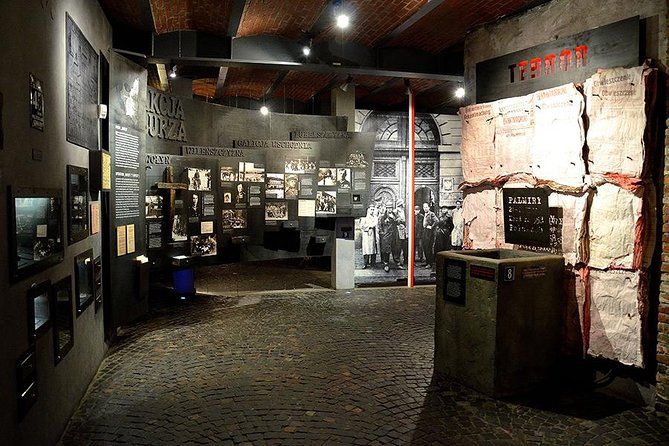
REVIEW · MUSEUMS IN WARSAW
Warsaw Uprising Museum (1944) + POLIN Museum : SMALL GROUP /inc. Pick-up/
Warsaw’s past is impossible to see in just one museum. This four-hour outing pairs the Warsaw Rising Museum with POLIN, the Museum of the History of Polish Jews, giving you two very different views of the city. I like the included admission tickets and the convenient hotel pickup. I also like the wide choice of audio-guide languages. The main drawback is simple: this is transport with museum access, not a fully guided museum tour.
The driver or coordinator helps with tickets, points out sights during the ride, and gets you to both museums without the usual city-center logistics. One important tip: allow time to look around on your own, because the museum visits are guided mainly by audio devices and exhibits rather than by a person walking beside you.
In This Review
- Key points to know before booking
- Two museums, two views of Warsaw
- The Warsaw Rising Museum: a city fighting for freedom
- POLIN Museum: centuries of Jewish life in Poland
- Why the small-group transport matters
- Audio guides and the independent museum visit
- Is $114.28 a fair price?
- Timing, pace, and what to expect
- Who should book this experience?
- Should you book the Warsaw museums combination?
- FAQ
- How long does the experience last?
- Which museums are included?
- Is hotel pickup included?
- Is transportation wheelchair accessible?
- Are audio guides included?
- How many people can join the group?
- Can I cancel for a full refund?
Key points to know before booking
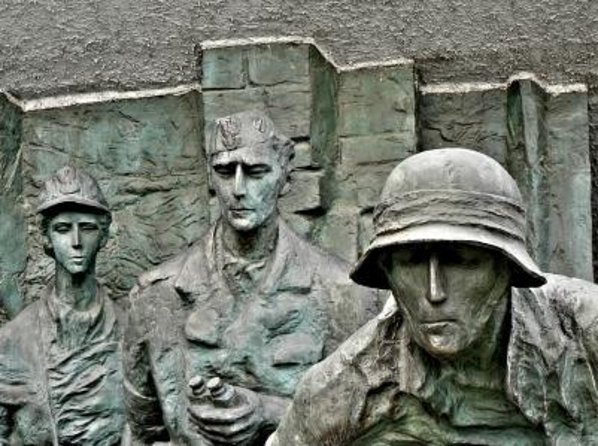
- Two powerful museums in one half-day: You visit the Warsaw Rising Museum and POLIN, each with about 1 hour and 15 minutes inside.
- Hotel pickup and return: A car or van collects you at your hotel or apartment and brings you back after POLIN.
- Small-group transport: Bookings require at least two people, with no more than 15 people in the group.
- Audio guides are included: The Warsaw Rising Museum offers a particularly long list of languages, while POLIN offers English, Polish, German, Hebrew, Yiddish, and several others.
- The driver is not a museum guide: You get help with transport and entry, but most interpretation comes from the displays and audio guides.
- Good for a packed Warsaw schedule: The arrangement saves time moving between two major museums, especially in poor weather or if you want accessible transport.
Two museums, two views of Warsaw
I like this pairing because the museums do not repeat one another. The Warsaw Rising Museum focuses on the doomed 1944 revolt against German occupation and the destruction of the city. POLIN covers centuries of Jewish life in Poland, including culture, religion, work, family, and relations between Jewish and Christian communities.
Together, they help you understand Warsaw as more than a city rebuilt after the Second World War. You see both the catastrophe of 1944 and the long social story that came before it.
The schedule gives each museum roughly 75 minutes. That is enough for a useful first visit, but not enough to absorb every display. Both museums contain a great deal of material, so I would treat this experience as an organized introduction rather than the final word on either institution.
A driver or coordinator handles the route between your accommodation and the museums. During the ride, that person may point out places of interest, but do not expect a traditional walking guide or a detailed lecture inside the galleries.
More Museums in Warsaw
- Warsaw: POLIN Museum of the History of Polish Jews Ticket
★ 4.7 · 1,142 reviews - Warsaw: Polish Vodka Museum Tour with Tasting
★ 4.6 · 788 reviews - Warsaw: Museum World of Illusion Entry Ticket
★ 3.9 · 666 reviews
The Warsaw Rising Museum: a city fighting for freedom
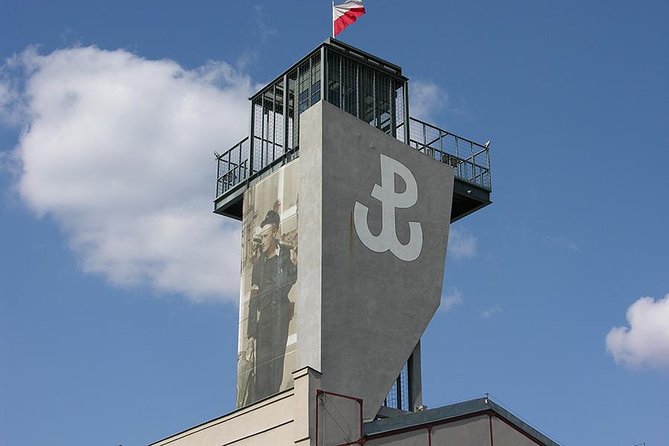
The first stop presents Warsaw in 1944, a year when the city’s physical and human future was at stake. The museum asks why Polish resistance fighters rose against German rule and whether the price of a possible victory was too high.
That question gives the visit its emotional weight. The uprising was not a neat story of triumph. It was a desperate military and political decision, and the museum does not let you forget the enormous cost.
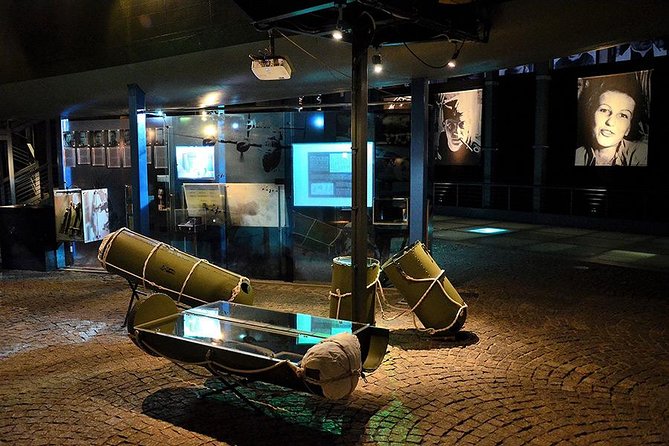
The museum is designed to feel active rather than static. Photographs, films, sounds, documents, and objects place you close to the events. More than 1,000 authentic exhibits and around 1,500 photographs and films are presented across the galleries.
You might find the amount of material overwhelming in 75 minutes. I recommend using the audio guide to choose a clear path instead of trying to read every panel. If you stop at each item, the clock will move faster than you expect.
One memorable feature is a five-minute 3D simulation showing a flight over Warsaw after its destruction. It gives you a stark sense of how thoroughly the city was damaged. The simulation is short, but it helps connect individual stories to the scale of the disaster.
The museum’s greatest strength is its ability to show the uprising as a human event. You are not looking only at military equipment or dates. You are also considering the young people who fought, the civilians caught in the conflict, and the city that was demolished almost building by building.
The possible weakness is the same as the museum’s strength: there is a lot to take in. If you prefer quiet galleries and a small number of carefully chosen objects, this may feel crowded with information. If you want a serious, direct account of wartime Warsaw, it earns your time.
POLIN Museum: centuries of Jewish life in Poland
POLIN changes the pace and the subject. Instead of concentrating on one wartime revolt, it presents the long history of Jews in Poland and their contribution to the country’s culture, economy, science, and daily life.
The museum does not reduce Jewish life to persecution alone. That matters. You encounter stories of work, study, faith, literature, family, neighborhoods, and contact between Jewish and Christian communities.
A virtual library presents major works of Hebrew and Yiddish literature in multimedia form. You can also use a press to print a title page from a 16th-century book. Details like this make the displays active and approachable, rather than a long line of labels to read.
The exhibitions also examine how Polish and Jewish cultures developed alongside one another and, at times, blended together. Family life and neighborly relations receive attention, as do Jewish-Christian connections. These subjects make POLIN especially useful if you want to understand Warsaw’s social past, not only its wartime destruction.
The audio guide can help you choose the sections that matter most to you. Available languages include English, Belarusian, French, German, Hebrew, Hungarian, Italian, Polish, Russian, Spanish, and Yiddish.
Like the first museum, POLIN is too large for a complete visit in 75 minutes. I would not try to conquer every room. Pick a few sections, listen carefully, and leave yourself enough time to look at the building and displays without rushing from one audio stop to the next.
The pairing with the Warsaw Rising Museum is particularly effective. One museum shows the violent breaking point of 1944. POLIN places that moment within a much longer story of Jewish life in Poland. You leave with a broader sense of what Warsaw lost, as well as what its people and institutions have worked to preserve.
Why the small-group transport matters
The maximum group size is 15 people, and transportation is by car or van rather than a bus. That gives the outing a more personal feel and should make hotel pickup less cumbersome.
The pickup service is door to door from your hotel or apartment. When you book, you need to provide the address. On the day, the coordinator waits outside the building entrance with a card showing your name and surname.
That meeting arrangement is practical in a city where apartment entrances and hotel lobbies can be easy to confuse. I would still be ready before the agreed time and watch for the name card rather than waiting inside.
Transport is wheelchair accessible, which is an important advantage for anyone who needs an accessible vehicle. The supplied information confirms accessible transport, but it does not give detailed information about every gallery, entrance, or museum route. If you need specific museum accommodations, ask before booking.
The driver is there to make the day work, not to replace a specialist museum educator. One account describes the coordinator as punctual, helpful, and able to point out sights from the road. Another makes the distinction clear: you are essentially getting a ride, ticket assistance, and audio-guide access.
That distinction should shape your expectations. If you want a private historian to explain every exhibit, this is not the right product. If you want someone else to handle the driving, tickets, and return trip while you explore independently, the setup makes good sense.
Something quite different:
- Warsaw: Chopin Concert in the Old Town
★ 4.8 · 2,287 reviews - Warsaw: Traditional Galar Cruise on The Vistula River
★ 4.6 · 1,640 reviews - Warsaw: Old Town Highlights Walking Tour in English
★ 4.7 · 1,516 reviews - Warsaw Concert: Chopin – Painted by Candlelights with Wine
★ 4.8 · 1,442 reviews
Audio guides and the independent museum visit
Audio guides are included at both stops. The Warsaw Rising Museum offers an unusually broad list of languages, including English, Azerbaijani, Bulgarian, Chinese, Croatian, Czech, Danish, Finnish, French, Georgian, Hebrew, Spanish, Indonesian, Japanese, Macedonian, Dutch, German, Polish, Portuguese, Russian, Romanian, Slovak, Slovenian, Swedish, Ukrainian, Hungarian, and Italian.
POLIN has a shorter but still useful selection, including English, Belarusian, French, German, Hebrew, Hungarian, Italian, Polish, Russian, Spanish, and Yiddish.
For an English-speaking visitor, this means you can follow the displays without paying extra for a private interpreter. It also gives you control over the pace. You can pause, skip, or revisit material instead of keeping up with a group lecture.
The tradeoff is that an audio guide cannot answer your personal questions. You will not be able to ask why a particular object matters or request a different explanation of a complicated event. I see this as the central decision point for the tour.
Ask yourself what kind of museum day you prefer. If you like moving independently and stopping whenever something catches your attention, the arrangement is convenient. If you learn best through conversation, you may prefer booking a separate guide or visiting the museums on your own with more time.
Is $114.28 a fair price?
The listed price is $114.28 per person. That includes museum admission, taxes and fees, the audio guides, transport from your hotel or apartment, the transfer to POLIN, and the return journey from POLIN.
The value depends mainly on how much you would pay for convenience. You are not just buying two tickets. You are paying for a driver, hotel pickup, a prearranged route, and help getting through the entry process. For a visitor with limited time, that can be worth a great deal.
The value is less convincing if you are comfortable using taxis or public transport and arranging museum tickets yourself. One dissatisfied assessment reached exactly that conclusion, saying a taxi and separate admission could cost less. That is a fair criticism, especially for people staying near the museums.
I would think of the price as a convenience premium. It may suit a first-time visitor who wants a simple four-hour plan, a family that does not want to manage local transport, or anyone visiting during bad weather. It may not suit a budget-minded solo visitor, since the booking requires at least two people.
The maximum group size is 15, but the actual group may be smaller. The experience is promoted as small-group transport, not as a private tour. If you need a completely private schedule, confirm that before paying.
Timing, pace, and what to expect
The total duration is about four hours. Each museum receives approximately 1 hour and 15 minutes, with the remaining time used for pickup, transfers, and return transport.
That schedule is efficient but tight. You can get a strong introduction to both places, but you should not expect to read every caption or hear every audio stop. I would avoid adding another major attraction immediately afterward unless you are comfortable moving quickly.
The order begins with the Warsaw Rising Museum and continues to POLIN. That progression works well emotionally and intellectually. The first stop is concentrated, urgent, and focused on a single year. The second opens the frame to centuries of Jewish life and Polish society.
The transport also gives you a break between the museums. After the intensity of the uprising displays, the ride to POLIN provides a moment to reset before taking on another large exhibition.
Admission tickets are included, so you do not need to stand in line to buy them at each museum. The coordinator or driver helps with the ticket process, but the museum visits themselves are largely self-directed.
Who should book this experience?
I would recommend it to you if you want two major Warsaw museums in one organized block and value hotel pickup more than the lowest possible cost.
It is especially suitable for:
- First-time visitors with only a few days in Warsaw
- Couples or families who prefer a prearranged route
- People who want audio interpretation in a specific language
- Anyone who wants accessible transport arranged in advance
- Visitors who prefer exploring museums independently
- People who would rather not navigate between two large institutions
I would hesitate if you want a museum specialist, a private historian, or a slow visit with time for every gallery. I would also compare the cost with taxis and individual museum admission if you are staying close to the city center and are comfortable making your own plans.
Bring patience for large amounts of information. The Warsaw Rising Museum can feel especially dense, while POLIN rewards a slower look at its exhibits. You will get more from both if you accept that this outing is an introduction, not an exhaustive study.
Should you book the Warsaw museums combination?
Book it if your priority is easy transport, included admission, and two serious museums in four hours. The hotel pickup removes much of the day’s practical work, and the audio guides let you explore at your own pace.
Do not book it expecting a traditional guided tour. The driver or coordinator gets you there, helps with tickets, and may point out sights along the way, but the exhibits and audio guides do most of the teaching.
For the right visitor, $114.28 is a reasonable price for a well-organized half-day. For someone focused on saving money or spending several hours in each museum, independent visits may be better. The strongest reason to choose this experience is not a personal guide. It is the combination of two important museums, dependable door-to-door transport, and a clear schedule.
FAQ
How long does the experience last?
The experience lasts approximately four hours, including hotel pickup, transport between the museums, museum visits, and return transportation.
Which museums are included?
The experience includes admission to the Warsaw Rising Museum and the POLIN Museum of the History of Polish Jews.
Is hotel pickup included?
Yes. Door-to-door pickup is offered from your hotel or apartment, followed by return transport from POLIN to your accommodation.
Is transportation wheelchair accessible?
Yes. The provided transport is wheelchair accessible.
Are audio guides included?
Yes. Audio guides are included at both museums. The available languages differ between the Warsaw Rising Museum and POLIN.
How many people can join the group?
A minimum of two people is required per booking, and the maximum is 15 people.
Can I cancel for a full refund?
Yes. You can cancel at least 24 hours before the experience start time for a full refund. Changes or cancellations made less than 24 hours before the start time are not accepted for a refund.
Just added in Warsaw
- Wroclaw Small-Group Tour with Lunch from Warsaw★ 5.0 · 2 reviews
- World War II Warsaw Old Town, Military Cemetery Walking Tour★ 4.7 · 3 reviews
- Warsaw: Wolf’s Lair & Swieta Lipka Small-Group Tour + Lunch★ 5.0 · 3 reviews
- Wilanów Palace: 2-Hour Guided Tour with Entrance Tickets★ 4.8 · 8 reviews
- Warsaw Zoo Skip-the-Line Entry Ticket with Private Transport★ 4.8 · 3 reviews
- Warsaw: Private Vodka Tasting Night with Snacks and Pickup★ 5.0 · 7 reviews
- Warsaw Private Wilanow Palace & Garden Tour★ 4.6 · 30 reviews
- Warsaw Wolf’s Lair with St. Lipka and Mamerki Private Guided★ 4.2 · 3 reviews
Museums in Warsaw, compared.
POLIN Museum of the History of Polish Jews Ticket
Read our review →



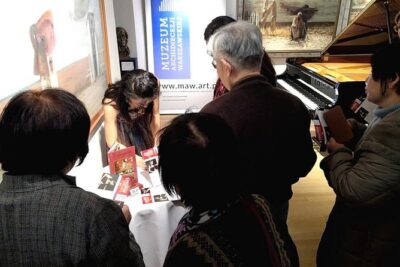
Daily live piano Chopin’s concerts at 6:30 pm in the Warsaw Archdiocese Museum
Read our review →
Browse the lists this tour appears in