
REVIEW · MUSEUMS IN WARSAW
Warsaw: Cold War Museum Entry Ticket
The Cold War gets personal here. I like the museum’s Polish viewpoint and its mix of original maps, uniforms, devices, touch screens, VR games, and film. I also like the space-flight section, especially the hologram of a space station, which gives this serious subject a welcome change of pace.
The main drawback is that the museum presents a strongly pro-Western interpretation, centered on Poland’s role in defeating Soviet communism. That makes the experience clear and forceful, but visitors seeking a fully neutral account should add other Warsaw museums or historical sources. Wheelchair users should also note that this attraction is not suitable for them.
In This Review
- Key things to know before you go
- A Cold War museum in the heart of Warsaw
- What the $12 admission actually buys you
- The exhibition’s Polish view of the Cold War
- Original uniforms, maps, and Cold War devices
- Multimedia tables, touch screens, and the Cold War quiz
- Three VR games with a secret-agent twist
- Space flights and a hologram of a space station
- The autonomous robot guide
- Why the building’s past changes the visit
- Who will get the most from this museum
- Planning your visit near Old Market Square
- Final verdict: should you book it?
- FAQ
- Where is the Cold War Museum located?
- How much does admission cost?
- How long is the ticket valid?
- What does the ticket include?
- Is transportation included?
- Are English-language options available?
- Can I cancel my booking?
- Are pets allowed inside?
Key things to know before you go
- Polish perspective: The exhibition explains the Cold War through Poland’s contribution to the Western victory over Soviet communism.
- More than 50 multimedia elements: Touch screens, multimedia tables, VR goggles, a cinema, and an autonomous robot keep the visit active.
- Three Cold War VR games: You can play the role of an agent working against Soviet invasion plans.
- Space history with a hologram: The space-flight section adds a scientific and visual break from the political displays.
- Easy Old Town location: The museum is about 40 meters from Warsaw’s Old Market Square.
- Good value at $12: Admission covers the exhibitions, all attractions, and the autonomous robot guide, with no separate transport cost included.
A Cold War museum in the heart of Warsaw
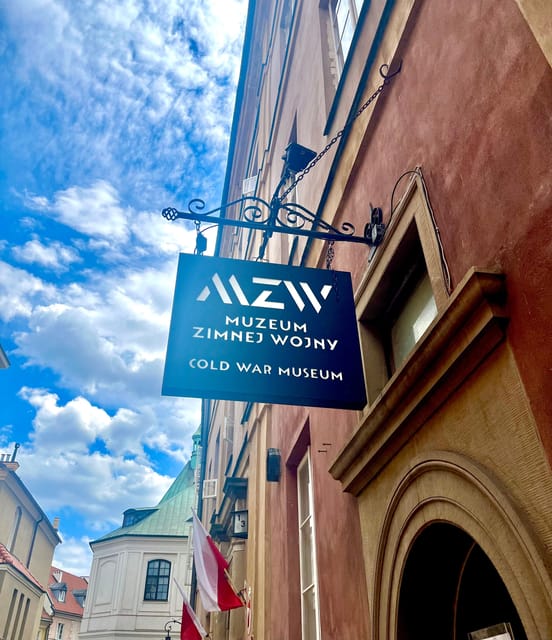
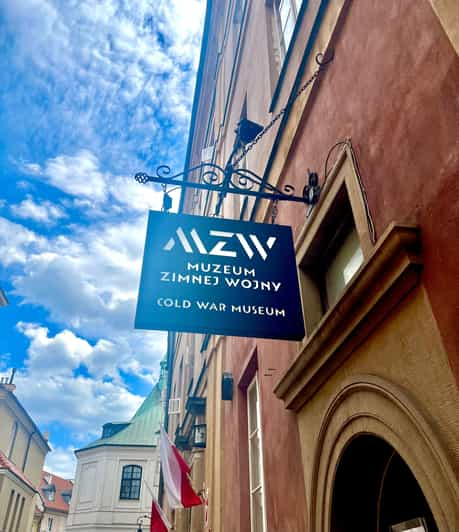
You find the Cold War Museum, or Muzeum Zimnej Wojny, just 40 meters from Old Market Square. That location makes it easy to add to a walk through Warsaw’s Old Town, though the museum itself deals with a much darker chapter than the colorful square outside.
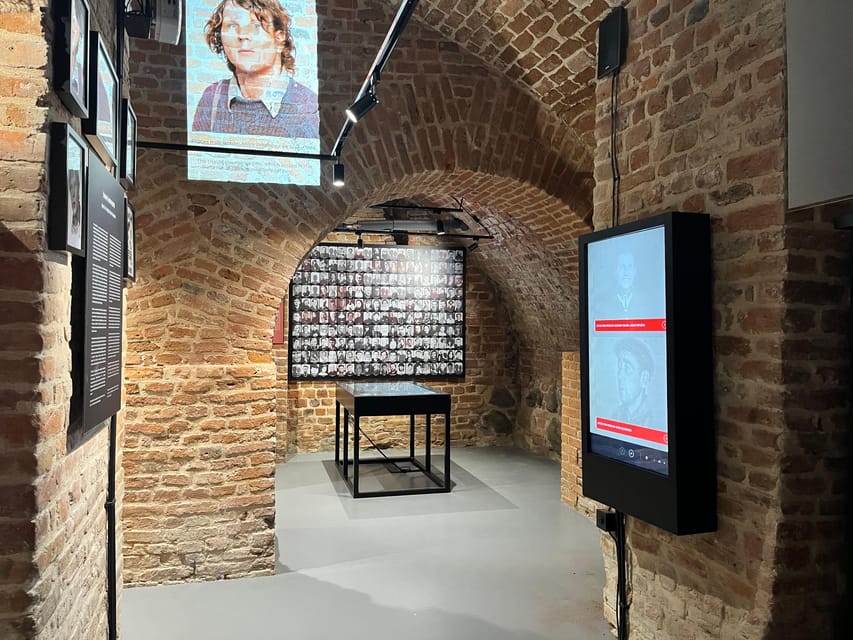
The address matters. During Poland’s communist period, the building housed a communist militia station. It was also the place where high school student Grzegorz Przemyk was beaten to death, making him a well-known victim of martial law.
That history gives the building a serious weight. You are not simply looking at a collection of old objects in a neutral gallery. The site itself is part of the story, and the exhibition connects the architecture with victims, aggressors, survivors, and people who resisted the official version of events.
The museum is designed for Polish and foreign visitors, with English and Polish available. You can enter by showing your ticket at the door. Transportation and a personal guide are not included, but the autonomous robot guide is included with admission.
More Museums in Warsaw
- Warsaw: POLIN Museum of the History of Polish Jews Ticket
★ 4.7 · 1,142 reviews - Warsaw: Polish Vodka Museum Tour with Tasting
★ 4.6 · 788 reviews - Warsaw: Museum World of Illusion Entry Ticket
★ 3.9 · 666 reviews
What the $12 admission actually buys you
At $12 per person, this is a reasonably priced indoor attraction, especially if you use all the included features. Your ticket covers admission to the exhibitions, every attraction within the exhibition, and the autonomous robot guide.
That last point is unusual. Poland has many museums with audio guides, touch screens, or staff-led tours, but this museum is described as the first and only one in the country with an autonomous robot serving as a guide. It is not just a decorative gadget. The robot is intended to help guide you through the museum.
The ticket is valid for three months, but that does not mean the visit lasts three months. It means you have a three-month period in which to use the ticket, subject to available starting times. Check availability before you book, especially if you are arranging a tight Warsaw schedule.
The booking terms are visitor-friendly. You can reserve now and pay later, and cancellation is allowed up to 24 hours before the visit for a full refund. The ticket also lets you skip the ticket line, which is useful in a compact Old Town itinerary.
The value depends on your interests. If you only want a quick look at communist-era objects, $12 may feel a little high. If you use the VR games, the quiz, the space section, the film, and the robot guide, the price becomes easier to justify.
The exhibition’s Polish view of the Cold War
The museum covers the full Cold War period and the countries involved in the struggle between the two blocs. Its central argument is clear: Poland made an important contribution to the victory of the capitalist world over Soviet communism.
That message is part of the experience, not a side note. Much of the exhibition is built around three major figures from the final two decades of the Cold War: President Ronald Reagan, Pope John Paul II, and General Ryszard Kukliński.
For many Polish visitors, these names carry strong political and national meaning. For international visitors, the displays can help explain how Poland connects the global Cold War with its own religious, political, and military story.
I appreciate that the museum does not treat the Cold War as a distant contest between Washington and Moscow alone. Poland appears as an active country with its own risks, choices, heroes, and victims. That gives the subject more human scale.
Still, you should know what kind of museum this is. The wording and selection of people reflect a clear anti-communist and pro-Western viewpoint. The exhibition may be most useful when you see it as a Polish interpretation rather than the final word on every side of the conflict.
Original uniforms, maps, and Cold War devices
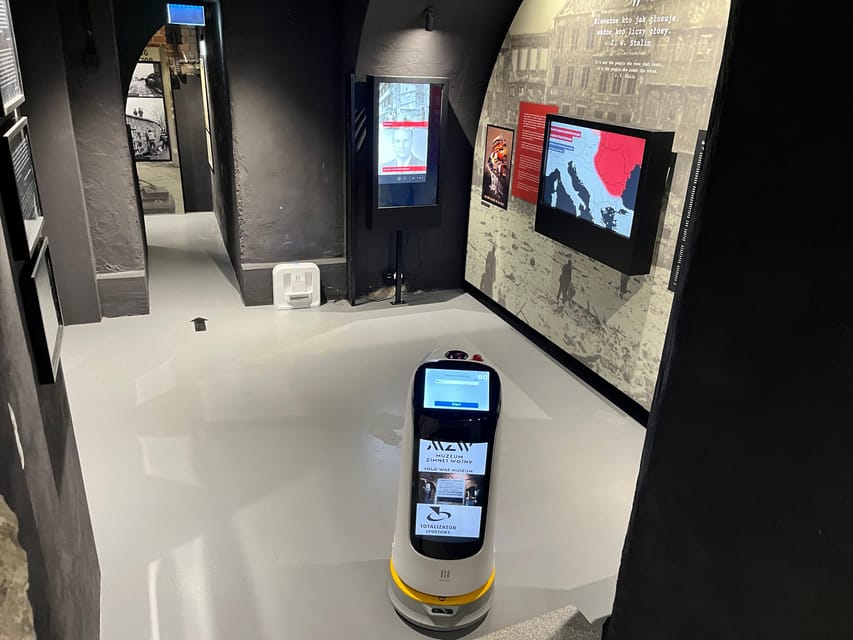
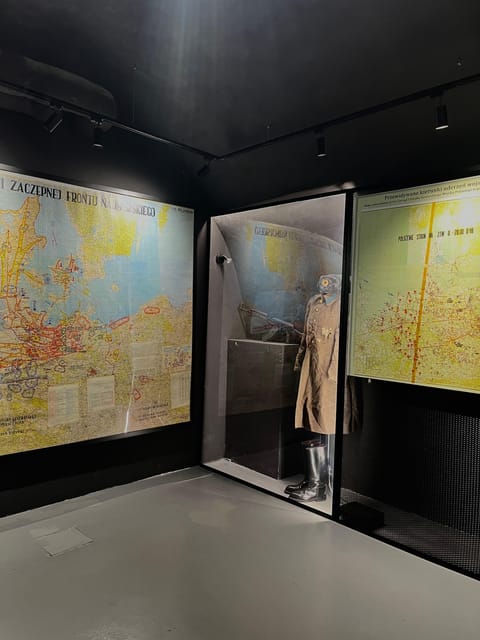
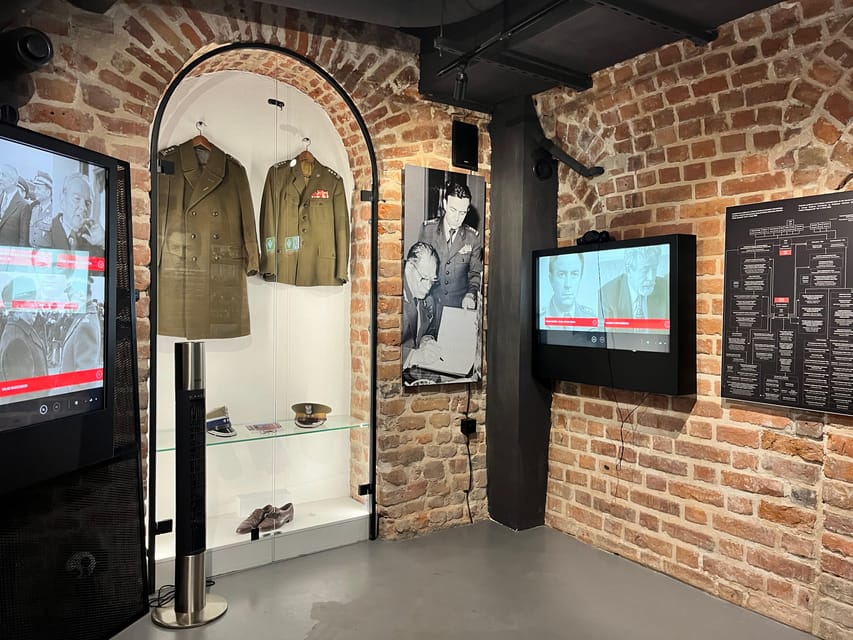
The physical objects provide the backbone of the exhibition. You can see original devices, maps, and uniforms connected with the period. These are useful because they turn broad political ideas into things you can actually inspect.
A map can show how divided Europe was. A uniform can suggest the systems of authority that shaped daily life. An old device can make the era feel practical and mechanical rather than purely ideological.
The displays also help you place the multimedia attractions in context. The screens and VR games are entertaining, but the original objects remind you that this was not a computer simulation for the people who lived through it.
Descriptions cover major figures and events, and the exhibition aims to present the entire Cold War period. You should allow enough time to read rather than rushing from one screen to the next. The museum is not simply a room of props with a few captions attached.
The amount of text may feel heavy if you are visiting with young children or if you know little about the subject. The interactive features help, but the political story still asks for attention. That is a fair trade for a museum trying to explain decades of tension in one visit.
Something quite different:
- Warsaw: Chopin Concert in the Old Town
★ 4.8 · 2,287 reviews - Warsaw: Traditional Galar Cruise on The Vistula River
★ 4.6 · 1,640 reviews - Warsaw: Old Town Highlights Walking Tour in English
★ 4.7 · 1,516 reviews - Warsaw Concert: Chopin – Painted by Candlelights with Wine
★ 4.8 · 1,442 reviews
Multimedia tables, touch screens, and the Cold War quiz
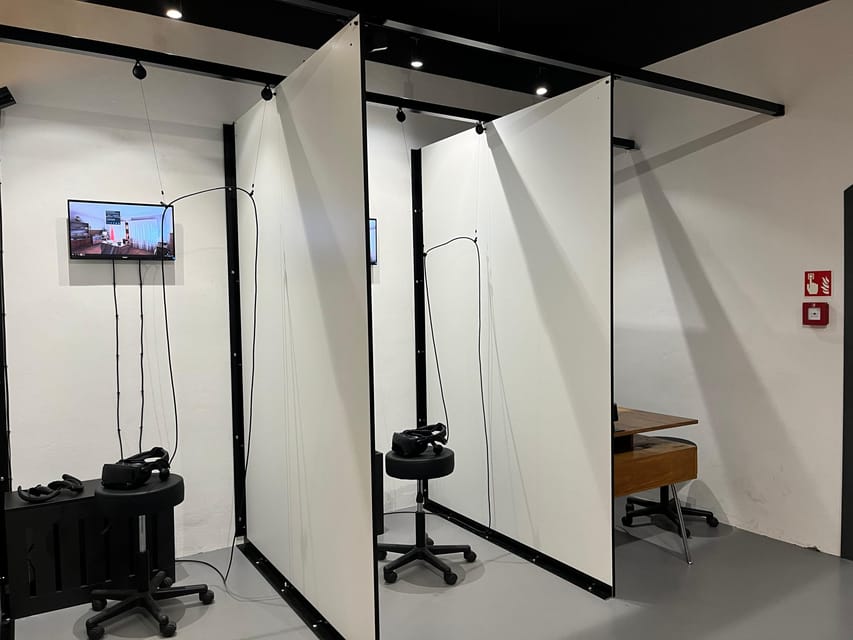
More than 50 multimedia elements are used throughout the museum. These include touch screens, multimedia tables, a cinema, VR goggles, and the robot guide.
The multimedia knowledge quiz is a good way to test what you have picked up. It gives the visit a participatory edge, rather than asking you to stand quietly in front of one panel after another.
You may enjoy the quiz most if you visit with a partner or family member. The information is easier to remember when you have a reason to compare answers and discuss the choices. The museum is open to all ages, and the quiz gives younger visitors a task to follow.
The technology also gives you several ways to approach the material. You can read the main explanations, use the screens for extra information, take part in the quiz, and watch the film. If one format does not hold your attention, another may work better.
Do not expect every interactive feature to replace historical explanation. The museum’s main value still comes from its story, objects, and setting. The technology makes that story more approachable, but it does not remove the need to think about the message being presented.
Three VR games with a secret-agent twist
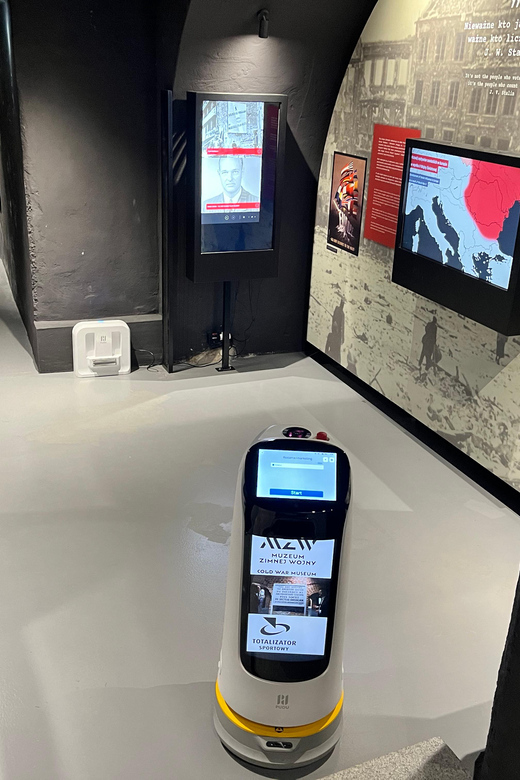
The three VR games are among the most distinctive parts of the visit. They let you feel like a participant in the Cold War by taking on the role of a secret agent.
The games involve efforts to compromise Soviet invasion plans. That gives you a simple mission and a clear reason to use the equipment. You are not only looking at a display about espionage. You are placed inside a small simulation of Cold War decision-making.
One recent assessment praised the chance to use several VR devices and described the experience as playing a Cold War-era secret agent. That is a useful clue for setting expectations: the VR element is a genuine attraction, not a single token headset placed in a corner.
The games will suit visitors who like history with an active element. They may also help families keep children interested in a subject that can otherwise become text-heavy.
The limitation is that VR cannot explain the full political context. Treat it as one part of the visit, not the reason to skip the original objects and written material. The games offer a memorable entry point, while the displays explain what the game cannot.
Space flights and a hologram of a space station
The space-flight section gives the museum a welcome change of subject. The Cold War was also a contest in science, technology, engineering, and national prestige, and the exhibition connects those themes with the history of space flights.
A hologram of a space station adds a strong visual moment. It is the sort of display that can make a technical subject easier to grasp, particularly if you are more interested in spacecraft than political speeches.
This section also helps explain why the Cold War reached far beyond military bases and diplomatic meetings. Space exploration became a public demonstration of national power. Scientific achievements were used to show what each bloc could build and accomplish.
I like this section because it widens the visit. You get political history, personal stories, military material, and science in one place. The shift also breaks up the mood created by the museum’s account of repression and conflict.
The space displays should not be mistaken for a separate space museum. They are part of the Cold War story, and that is their purpose here. If you want a detailed technical account of every mission, this will not be enough by itself.
The autonomous robot guide
The autonomous robot is the museum’s most unusual guide. It can lead you through the exhibition and is included in the ticket price.
For visitors who prefer to explore at their own pace, the robot offers a middle ground between wandering alone and joining a fixed guided tour. You can still look at the objects and use the interactive stations, while the robot provides an added layer of direction.
The available host or greeter languages are English and Polish. The museum also lists English and Polish as its operating languages, which makes the attraction more approachable for international visitors.
I would not book this experience solely for the robot. Its novelty is appealing, but the building, objects, Polish viewpoint, and interactive material are the real reasons to come. Think of the robot as a bonus that makes this museum different from the usual display-and-caption format.
Why the building’s past changes the visit
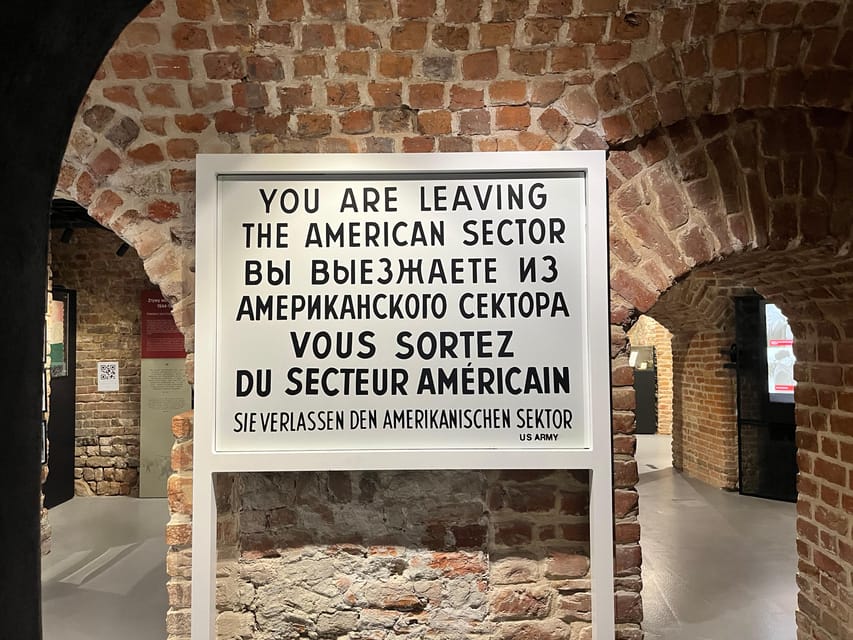
A museum about the Cold War could easily feel abstract. The former militia station keeps the subject tied to a real place and real harm.
The death of Grzegorz Przemyk is especially important to the museum’s setting. He was a high school graduate and a victim of martial law who was beaten to death at this address. His story places the period’s political violence directly inside the building.
That detail may change how you read the rest of the exhibition. Uniforms and devices are no longer just period objects. The maps are not only diagrams. The political choices described in the displays had consequences for people who lived under them.
The museum’s use of architecture, location, and multimedia creates a more emotional visit than a standard Cold War timeline. It also means the experience can feel politically charged. If you prefer museums that avoid strong judgments, keep that in mind before booking.
Who will get the most from this museum
I would recommend this experience to several kinds of visitors:
- Anyone interested in the Cold War, communist Poland, or the division of Europe
- Visitors who want a specifically Polish interpretation of the period
- Families and teenagers who prefer VR, quizzes, and screens to long rows of text
- People interested in Ronald Reagan, Pope John Paul II, or General Ryszard Kukliński
- Visitors looking for a short Old Town activity with indoor exhibits
- Anyone curious about how a museum uses a robot as an autonomous guide
You may enjoy it less if you want a politically neutral account or a fully academic treatment of every country involved. The exhibition has a firm point of view, and that point of view shapes the selection of figures and events.
It is also not suitable for wheelchair users. Four-legged visitors are welcome, making this one of the few museums in Warsaw where dogs and other pets can visit, though the supplied information does not specify any further animal rules.
Planning your visit near Old Market Square
The location is one of the museum’s practical strengths. From Old Market Square, you only need to walk about 40 meters to reach the entrance.
No transportation is included, but that should not be a serious concern for most people already exploring the Old Town. You can combine the museum with other nearby sights rather than setting aside a separate journey across Warsaw.
Show your ticket at the entrance. The skip-the-line feature saves time, though you should still check the available starting time when booking. The ticket remains valid for three months, which gives you flexibility if your plans change.
Smoking, vaping, food, drinks, alcohol, and drugs are not allowed. Those rules are standard for a museum, but they matter if you are fitting this visit between meals or carrying an open drink from the Old Town.
Final verdict: should you book it?
I would book the Cold War Museum if you want history with an active, modern format and a clear Polish point of view. The original devices, maps, uniforms, space-flight displays, hologram, quiz, three VR games, cinema, and autonomous robot give you more to do than a simple object collection.
At $12, the attraction offers good value if you use the interactive features and take time with the historical material. Its strongest qualities are the Polish setting, the connection to the former militia station, and the way it links international events with people such as Reagan, John Paul II, and Ryszard Kukliński.
I would skip it only if you need step-free accessibility or want a carefully balanced account that gives equal weight to every side. For most visitors interested in Warsaw’s 20th-century story, it is a worthwhile Old Town stop, especially on a rainy day when the VR games and robot guide can add some energy to a serious subject.
FAQ
Where is the Cold War Museum located?
The museum is in Mazovia Province, Poland, about 40 meters from Warsaw’s Old Market Square.
How much does admission cost?
The listed price is $12 per person.
How long is the ticket valid?
The ticket is valid for three months. Check availability for the starting times that can be booked.
What does the ticket include?
Admission includes access to the exhibitions, all attractions within the exhibition, and the autonomous robot guide.
Is transportation included?
No. Transportation is not included, so you must make your own way to the museum.
Are English-language options available?
Yes. English and Polish are available, including as host or greeter languages.
Can I cancel my booking?
Yes. You can cancel up to 24 hours in advance for a full refund.
Are pets allowed inside?
Yes. The Cold War Museum is one of the few museums in Warsaw where four-legged visitors are welcome.
Just added in Warsaw
- Wroclaw Small-Group Tour with Lunch from Warsaw★ 5.0 · 2 reviews
- World War II Warsaw Old Town, Military Cemetery Walking Tour★ 4.7 · 3 reviews
- Warsaw: Wolf’s Lair & Swieta Lipka Small-Group Tour + Lunch★ 5.0 · 3 reviews
- Wilanów Palace: 2-Hour Guided Tour with Entrance Tickets★ 4.8 · 8 reviews
- Warsaw Zoo Skip-the-Line Entry Ticket with Private Transport★ 4.8 · 3 reviews
- Warsaw: Private Vodka Tasting Night with Snacks and Pickup★ 5.0 · 7 reviews
- Warsaw Private Wilanow Palace & Garden Tour★ 4.6 · 30 reviews
- Warsaw Wolf’s Lair with St. Lipka and Mamerki Private Guided★ 4.2 · 3 reviews
Museums in Warsaw, compared.
POLIN Museum of the History of Polish Jews Ticket
Read our review →


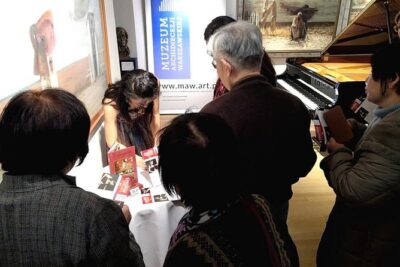
Daily live piano Chopin’s concerts at 6:30 pm in the Warsaw Archdiocese Museum
Read our review →
Warsaw Uprising Museum (1944) : PRIVATE SERVICE /inc. Pick-up/
Read our review →Browse the lists this tour appears in