
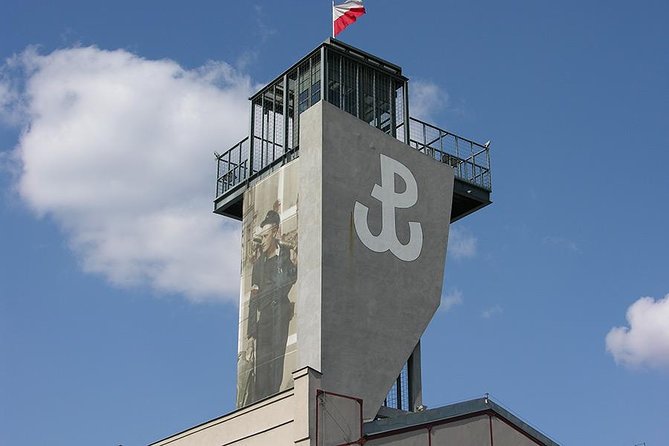
REVIEW · MUSEUMS IN WARSAW
Warsaw Uprising Museum (1944) + POLIN Museum: PRIVATE TOUR /inc. Pick-up/
Warsaw’s past is not quiet. This private four-hour experience links the Warsaw Rising Museum with POLIN, giving you two powerful views of a city shaped by war, survival, and centuries of Jewish life. I like the door-to-door transport and the fact that your group travels alone, and I also like the broad language choice for the audio guides. The main drawback is the pace: about 75 minutes at each museum is useful, but neither collection can be fully absorbed so quickly.
This is a practical choice if you want two major museums in one outing without sorting out taxis or city transport. You should know that the standard visit uses audio guides rather than a dedicated museum guide, and private live guides cost extra if available. The experience requires at least two people and accepts groups of up to six.
In This Review
- Key points at a glance
- Why these two Warsaw museums belong together
- Entering the Warsaw Rising Museum for 75 minutes
- Traveling privately between the museums
- POLIN Museum and the long Jewish story of Poland
- What the $117.11 price delivers
- The pace, group size, and best type of visitor
- Audio guide or private guide?
- Practical details before you reserve
- Should you book this private museum tour?
- FAQ
- How long does the private Warsaw museum tour last?
- Which museums are included?
- Is hotel pickup included?
- How will I find the driver or coordinator?
- Is the vehicle shared with other people?
- What is the maximum group size?
- Are audio guides included?
- Can I book a live museum guide?
- Can I cancel for a full refund?
Key points at a glance
- Two major museums in four hours: Visit the Warsaw Rising Museum and POLIN on the same private outing.
- Private vehicle service: Your group alone receives pickup from your hotel or apartment and return transport to a Warsaw address.
- Audio guides included: English is available, along with a long list of other languages at both museums.
- A strong history pairing: One museum focuses on the 1944 uprising and the city’s wartime destruction; the other follows centuries of Polish Jewish history.
- Small-group format: Bookings require two people and are limited to six, which keeps the transport personal.
- Flexible return point: After POLIN, you can return to your hotel or apartment, or choose another location in Warsaw.
Why these two Warsaw museums belong together
I like this pairing because the museums ask different questions about the same city. The Warsaw Rising Museum concentrates on one terrifying year, 1944, and the decisions that pushed Polish people into open revolt. POLIN reaches across centuries, showing how Jewish communities helped shape Polish culture, business, learning, and daily life.
Put together, the visit gives you more than a wartime stop followed by another museum. You see Warsaw as a place with a long, complicated story, not simply a city defined by its destruction. That wider frame matters. The uprising makes more sense when you understand what kind of city Warsaw had been, and POLIN helps explain the human world that existed before and around the war.
The arrangement is also efficient. You do not need to spend part of the day finding each museum, comparing routes, or working out how to get back afterward. A driver or coordinator handles the transport, while the audio guides let you move at your own pace inside each building.
Still, four hours is a firm limit. The stated museum time is about one hour and 15 minutes at each stop, with the remaining time used for transfers and coordination. I would treat this as a focused introduction, not a full museum day.
More Museums in Warsaw
- Warsaw: POLIN Museum of the History of Polish Jews Ticket
★ 4.7 · 1,142 reviews - Warsaw: Polish Vodka Museum Tour with Tasting
★ 4.6 · 788 reviews - Warsaw: Museum World of Illusion Entry Ticket
★ 3.9 · 666 reviews
Entering the Warsaw Rising Museum for 75 minutes
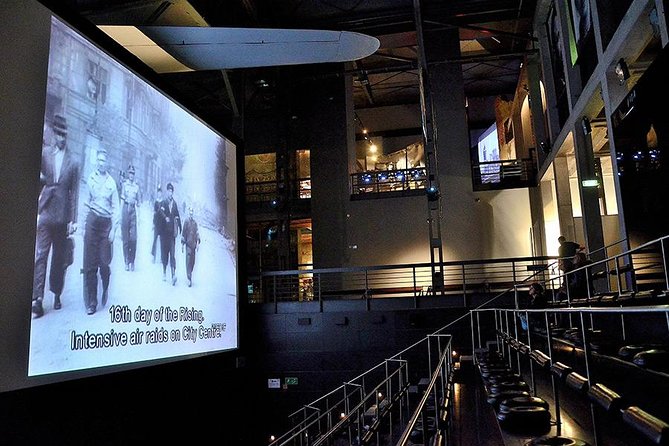
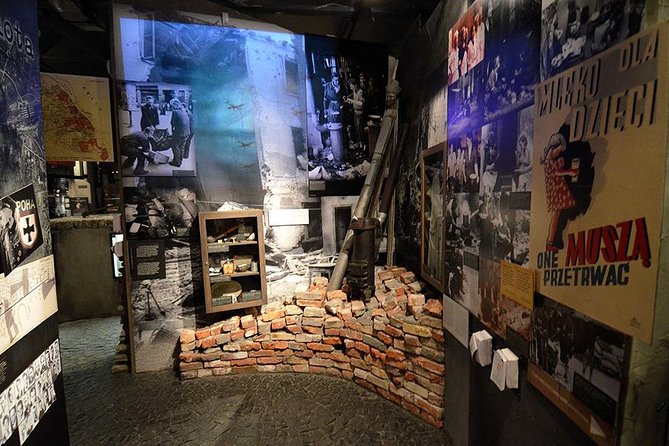
The Warsaw Rising Museum presents 1944 as a turning point for Warsaw and Poland. Before the war, Warsaw was known as the Pearl of the North, a city of grand tenements, rapid growth, technical progress, and a mix of religious and social communities. The museum places that earlier city beside the catastrophe that followed.
The central question is difficult and important: why did Poles rise, and was the cost of a possible freedom too high? You are not being offered a simple victory story. The experience asks you to think about young people making decisions under extreme pressure, with the future of the country placed on their shoulders.
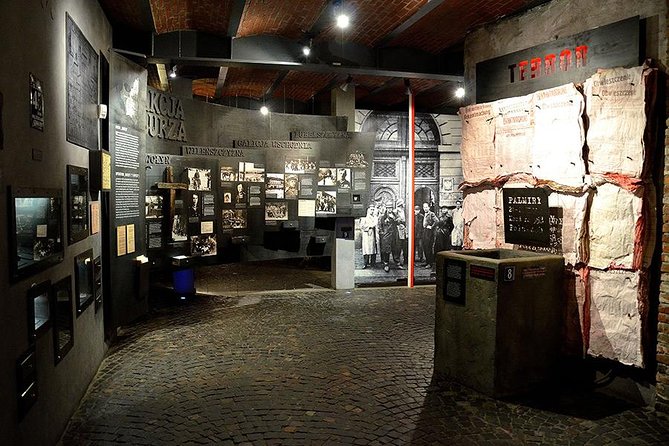
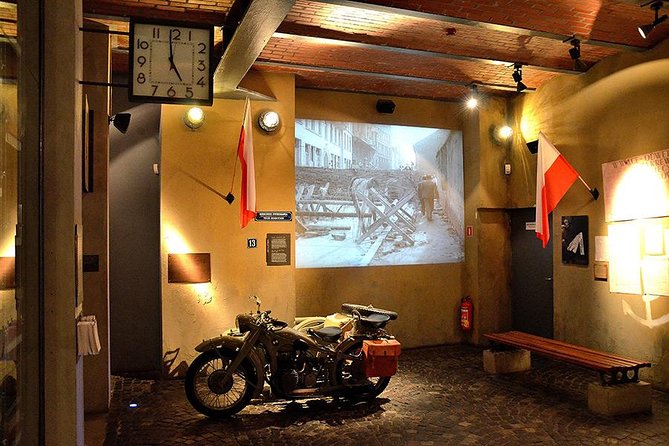
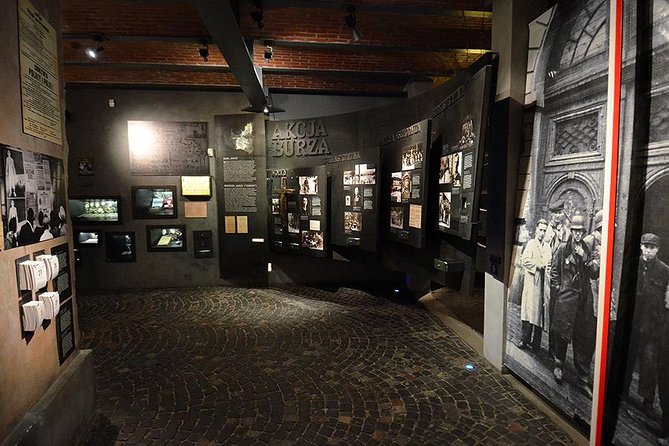
The museum is described as a kind of time machine rather than a conventional collection. That is a useful warning about the tone of the visit. You can expect an experience built to pull you into 1944, rather than a quiet sequence of framed objects and long labels. The subject is emotionally heavy, and the museum’s presentation is designed to make the destruction of Warsaw feel immediate.
Your 75 minutes should be used with a little discipline. Listen to the audio guide, pause for the parts that matter most to you, and do not worry about seeing every display. The museum covers an enormous subject, and trying to absorb every detail in one short visit may leave you remembering very little.
The audio guide is included in the tour price, with English among the available languages. Other listed choices include Polish, German, French, Spanish, Italian, Hebrew, Japanese, Chinese, Ukrainian, Russian, Portuguese, Dutch, Swedish, Finnish, Danish, Czech, Croatian, Hungarian, Romanian, Slovak, Slovenian, Bulgarian, Georgian, Macedonian, Azerbaijani, Indonesian, and several more.
That range is helpful for mixed-language groups. It also means you are not dependent on a live guide explaining everything in English. The limitation is that an audio guide cannot respond to your questions or adjust the story to your interests. If you want a personal explanation from a licensed guide dedicated only to your group, that service costs an additional 99 euros per group if available.
Traveling privately between the museums
Private transport is one of the clearest advantages here. The driver or coordinator collects you at your hotel or apartment, with your group alone in the car or van. You provide the address when booking, and on the day, the coordinator waits outside the building entrance with a card showing your name and surname.
That last detail is small but useful. Hotel and apartment entrances in cities can be confusing, especially when several buildings share similar addresses. Knowing to look outside, before entering the building, gives you a simple meeting plan.
The private format is limited to two to six people. You are not sharing the vehicle with a large group, and you do not need to wait for strangers who are late. For a family, two couples, or a small group of friends, that can make the day calmer and more predictable.
The driver is also described as a coordinator at your disposal. That does not mean you automatically receive a full historical tour in the car or inside the museums. The standard arrangement is transport, coordination, admission, and audio guides. Keep that distinction clear before booking.
After your time at POLIN, the driver takes you back to your hotel or apartment, or to another location in Warsaw that you indicate. This is particularly useful if you want to finish near a restaurant, another sightseeing area, or a different accommodation address.
POLIN Museum and the long Jewish story of Poland
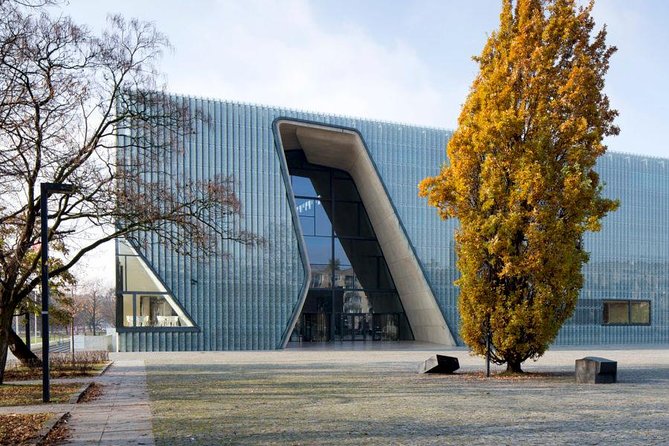
POLIN Museum covers the centuries-old history of Jews in Poland. Its subject is much broader than wartime persecution, though the visit can certainly help you understand the conditions and relationships that shaped modern Warsaw.
The museum describes Jewish contributions to Polish culture, the economy, and science. It also looks at how Jewish and Polish communities lived beside one another, how family and neighborly relationships worked, and how Jewish-Christian relations developed over time. That wider approach gives the visit needed balance and human scale.
I especially like the information about the virtual library. It presents Hebrew and Yiddish literature in multimedia form, including religious, philosophical, moral, and Talmudic works. You can also use a press to print the title page of a 16th-century book. Those details turn literary history into something you can interact with rather than merely read about.
The museum also uses multimedia exhibitions to show daily life and cultural exchange. The point is not that the two communities always lived in harmony. The value is in seeing the full relationship, including family ties, neighborhood life, religious difference, cooperation, and conflict.
Your 75 minutes here will pass quickly. POLIN is not a small collection that you can skim in a few rooms. I would use the audio guide to establish a route and choose the themes that matter most to you. If Jewish history, Polish culture, or the relationship between the two communities is central to your trip, you may wish you had more time.
Audio guides at POLIN are available in English, Polish, German, French, Hebrew, Hungarian, Italian, Russian, Spanish, and Yiddish. The Yiddish option is a particularly fitting addition for this museum, while the Hebrew option may be important for some visitors. As with the first museum, a licensed private guide is an optional extra at 99 euros per group for one to six people, if available.
One published account gives special praise to Tomasz, described as a highly informed guide who helped make POLIN easier to navigate. If Tomasz is assigned to your visit, you may benefit from that personal assistance. Do not assume a named guide is guaranteed, though, since the standard package is built around an audio guide and driver-coordinator.
Something quite different:
- Warsaw: Chopin Concert in the Old Town
★ 4.8 · 2,287 reviews - Warsaw: Traditional Galar Cruise on The Vistula River
★ 4.6 · 1,640 reviews - Warsaw: Old Town Highlights Walking Tour in English
★ 4.7 · 1,516 reviews - Warsaw Concert: Chopin – Painted by Candlelights with Wine
★ 4.8 · 1,442 reviews
What the $117.11 price delivers
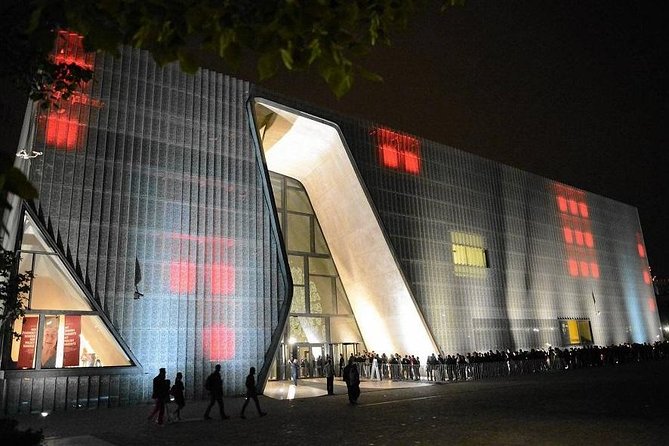
At $117.11 per person, the price needs to be judged against what is included, not just the museum admissions. You are paying for entry to both museums, private transport to the first museum, transport between the two, return transport afterward, taxes and fees, local taxes, and audio guides.
That is a reasonable setup for a small group that values convenience. A pair of visitors can avoid arranging several separate rides and can return to a chosen Warsaw address. For four to six people, the private vehicle arrangement may look better still because the transport cost is spread across more people.
The value is weaker if you are comfortable using public transport, already staying close to both museums, or prefer spending a whole morning at one collection. The tour saves time on planning, but it does not create more museum time. You are still working with two visits of roughly 75 minutes each.
The optional live guides also change the total cost. A dedicated guide at either museum costs an extra 99 euros per group, if available, payable on the day. Add that amount only if you know you want personal commentary and the chance to ask questions. For many visitors, the included audio guides will be enough.
The pace, group size, and best type of visitor
This experience suits you best if you want a clear introduction to two major parts of Warsaw’s past. It works well for first-time visitors with limited time, history-focused couples, families who prefer private transport, and small groups that want to stay together.
It is less suitable if you dislike museums with serious subject matter. The Warsaw Rising Museum deals with death, destruction, and the sacrifice of a young generation. POLIN covers identity, culture, religious relations, and the long experience of Jews in Poland. Neither stop is lightweight sightseeing.
The four-hour length is also worth considering. You will have enough time to get an impression of both museums, but you may need to make choices. If you want to read every panel, examine every multimedia feature, or take long breaks, book separate museum visits instead.
The private format helps with families and older visitors because there is no larger group to keep up with. The information supplied says most people can participate, but it does not provide detailed accessibility information. If you have specific mobility needs, ask the provider before booking.
Audio guide or private guide?
The included audio guides keep the base price under control and give you a large choice of languages. They also let you stop, replay, and move at your own speed. That is useful when a museum has material that deserves a quiet pause.
A private licensed guide offers something different. You can ask why an event mattered, request more detail about a particular community, or connect the museum’s material to the rest of Warsaw. A guide can also help you decide what to see when 75 minutes is not enough for everything.
The extra fee is 99 euros per group at each museum, not 99 euros per person, for the stated group size at POLIN and the same group arrangement at the Warsaw Rising Museum. Availability is not guaranteed, so you should request it when booking rather than wait until the day.
For a first visit, I would choose the live guide if your group has a strong interest in history or includes children who may need explanations. If you mainly want a structured look at both museums, the audio guides and coordinator may be the better value.
Practical details before you reserve
You need to book for at least two people, and the maximum group size is six. Confirmation is sent within 48 hours, subject to availability, so do not assume a last-minute request will be accepted.
Give the provider your complete hotel or apartment address. On the day, wait outside the building entrance and look for the coordinator holding a card with your name and surname. This is more reliable than wandering inside a hotel lobby or searching for a vehicle.
The tour is offered in English, but the audio guide choices are far wider. Check the language options for both museums, since the lists are not identical. At POLIN, Yiddish is available, while the Warsaw Rising Museum lists several additional choices.
Free cancellation is available if you cancel at least 24 hours before the local start time. If you cancel later, the amount paid is not refunded, and changes made within that 24-hour period are not accepted.
Should you book this private museum tour?
Book it if you want two essential Warsaw museums in one carefully arranged outing, especially if private pickup and return matter to you. The combination is thoughtful, the transport is genuinely convenient, and the audio guides make the tour workable for international visitors.
Skip it if you want to spend several hours in one museum or if you prefer a fully guided historical walk with constant conversation. The standard experience is a focused museum visit with transport, not a long private lecture.
For the best result, read a little about the Warsaw Uprising before you go, choose your audio-guide language in advance, and decide if the extra live-guide fee fits your group. If you accept the brisk pace, this is a useful and serious way to meet Warsaw’s wartime story and its centuries-old Jewish heritage in the same half-day.
FAQ
How long does the private Warsaw museum tour last?
The experience lasts approximately four hours. The stated visit time is about one hour and 15 minutes at the Warsaw Rising Museum and one hour and 15 minutes at POLIN, with the remaining time used for transport and coordination.
Which museums are included?
The tour includes the Warsaw Rising Museum, also called the Warsaw Uprising Museum, and the POLIN Museum of the History of Polish Jews.
Is hotel pickup included?
Yes. Door-to-door pickup is included from your hotel or apartment. You must provide the address when booking.
How will I find the driver or coordinator?
The coordinator or driver waits outside the building entrance before entering, holding a card with your name and surname.
Is the vehicle shared with other people?
No. The transport is private, and no other clients travel in the car or van with your group.
What is the maximum group size?
The private tour accepts a maximum of six people. A minimum of two people is required for each booking.
Are audio guides included?
Yes. Audio guides are included at both museums. English is available, along with several other languages, though the exact choices differ between the two museums.
Can I book a live museum guide?
You can request a licensed guide for either museum if one is available. The additional cost is 99 euros per group at each museum, payable on the day, with language choices depending on the museum.
Can I cancel for a full refund?
Yes, if you cancel at least 24 hours before the experience start time. Cancellations or changes made less than 24 hours before the local start time are not accepted for a refund.
Just added in Warsaw
- Wroclaw Small-Group Tour with Lunch from Warsaw★ 5.0 · 2 reviews
- World War II Warsaw Old Town, Military Cemetery Walking Tour★ 4.7 · 3 reviews
- Warsaw: Wolf’s Lair & Swieta Lipka Small-Group Tour + Lunch★ 5.0 · 3 reviews
- Wilanów Palace: 2-Hour Guided Tour with Entrance Tickets★ 4.8 · 8 reviews
- Warsaw Zoo Skip-the-Line Entry Ticket with Private Transport★ 4.8 · 3 reviews
- Warsaw Private Wilanow Palace & Garden Tour★ 4.6 · 30 reviews
- Warsaw Wolf’s Lair with St. Lipka and Mamerki Private Guided★ 4.2 · 3 reviews
- Warsaw: Private Vodka Tasting Night with Snacks and Pickup★ 5.0 · 7 reviews
Museums in Warsaw, compared.
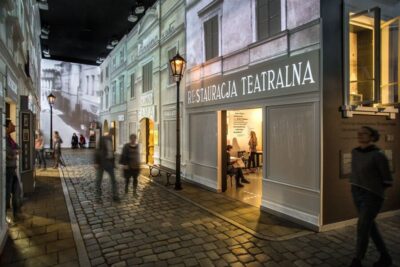
POLIN Museum of the History of Polish Jews Ticket
Read our review →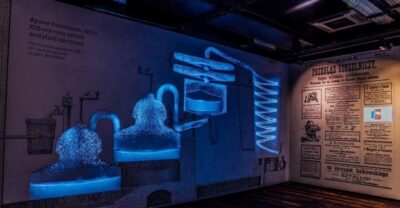



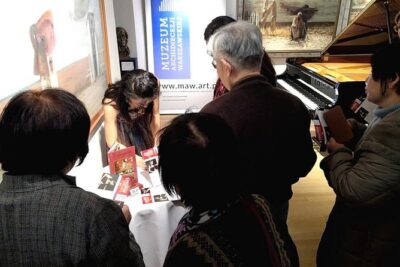
Daily live piano Chopin’s concerts at 6:30 pm in the Warsaw Archdiocese Museum
Read our review →
Browse the lists this tour appears in