
REVIEW · CITY TOURS
Warsaw: the Best of the City Private Tour by Retro Minibus
Warsaw rewards a closer look. This private tour pairs UNESCO-listed Old Town walks with scenic rides in a vintage Żuk minibus, giving you a quick but thoughtful introduction to the city. I like the mix of medieval streets, pre-war Praga, and post-1945 rebuilding. I also like the small-group format, which leaves room for questions instead of forcing you through a fixed script.
The main thing to consider is comfort. These classic minibuses have heating but no air conditioning, and some do not have seat belts, as permitted for historic vehicles. The minibus mainly connects walking stops, so bring good shoes and dress for the weather.
In This Review
- Key points at a glance
- Why this three-hour format works well
- Old Town: Warsaw’s reconstructed medieval heart
- Crossing the Vistula to authentic Praga
- Central Warsaw and the scale of communist rebuilding
- What the vintage Żuk adds to the ride
- Guide quality and the value of a private group
- Is $165 per person a fair price?
- Who should book this Warsaw tour?
- Final verdict: a smart first look at Warsaw
- FAQ
- How long does the tour last?
- Is the tour private?
- What language is the tour conducted in?
- Does the tour include hotel pickup?
- Which areas of Warsaw does the tour visit?
- Is food included?
- Are the vintage minibuses air-conditioned?
- Can children join the tour?
Key points at a glance
- Castle Square and the Royal Route: Begin with Warsaw’s best-known historic sights and the story of the city’s careful reconstruction.
- Praga beyond the tourist center: Cross the Vistula to see surviving pre-war buildings, courtyards, and a neighborhood with a more local feel.
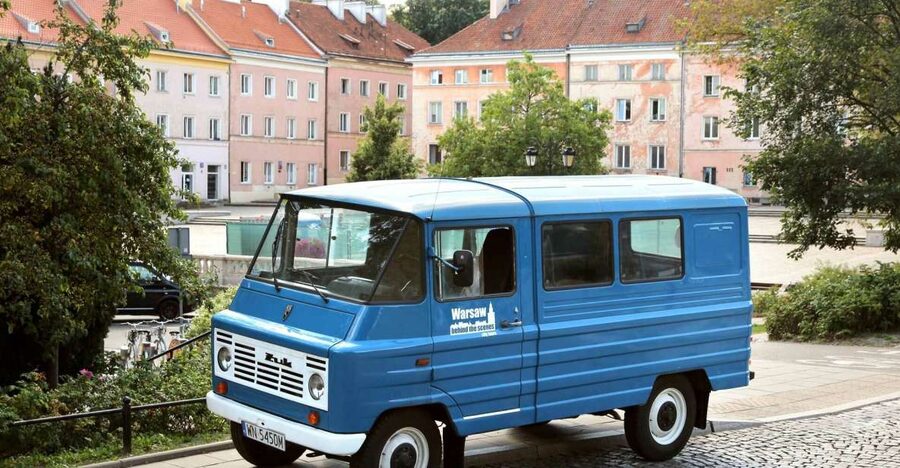
- A vintage Żuk minibus: The old vehicle adds character while saving your feet between separate parts of the city.
- A clear story of three Warsaws: The tour links medieval origins, wartime destruction, communist rebuilding, and modern change.
- Private groups of up to eight: You get a more personal pace and direct access to an English-speaking guide.
- Useful for a short stay: Hotel or apartment pickup within three kilometers of central Warsaw makes this a practical first outing.
Why this three-hour format works well
Warsaw is not a city you understand from one square or one museum. Its story is scattered across districts, and the distance between them matters. Old Town tells you about the royal capital and medieval trade. Praga shows you buildings that escaped much of the wartime destruction. Central Warsaw then reveals the scale of communist rebuilding and the city’s later shift toward modern development.
Trying to cover all three areas on foot would take more time and energy than many first-time visitors have. The Żuk minibus handles the transfers, while the walking sections let you slow down where the details matter. I think that balance is the strongest feature of the tour.
Three hours is enough for an overview, not a complete study of Warsaw. You should expect a guided introduction rather than long museum visits or extended free time. If you want to see the city’s main historical chapters before choosing where to return, the timing makes sense.
The private setup also matters. A group of up to eight people is small enough for questions, and the guide can adjust the conversation to your interests. You are not simply sitting on a bus listening to a recording. The guide is there to explain how the city changed and to connect one stop with the next.
A few more in Warsaw
- Warsaw: Chopin Concert in the Old Town
★ 4.8 · 2,287 reviews - Warsaw: Traditional Galar Cruise on The Vistula River
★ 4.6 · 1,640 reviews - Warsaw: Old Town Highlights Walking Tour in English
★ 4.7 · 1,516 reviews
Old Town: Warsaw’s reconstructed medieval heart
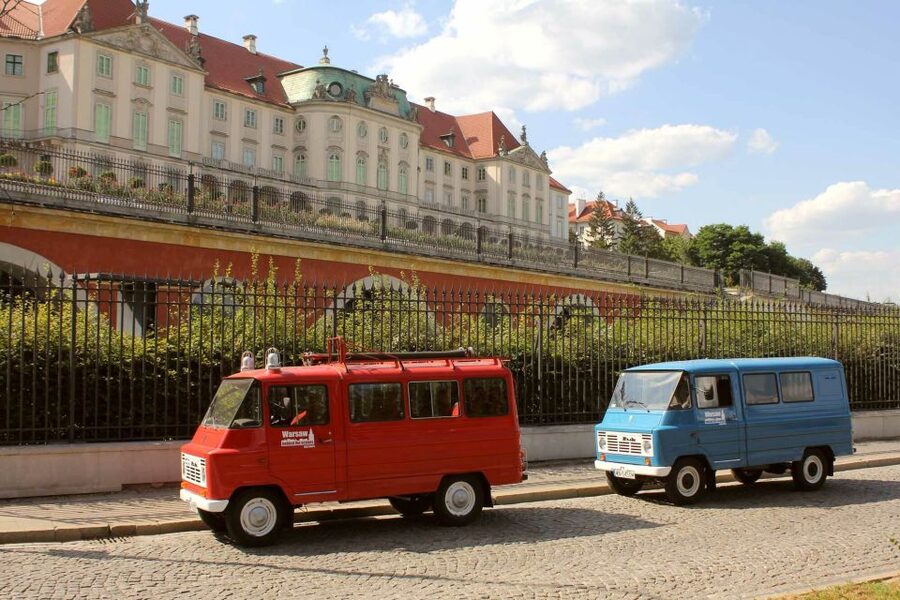
The tour begins in Warsaw’s Old Town, the natural place to start the city’s story. You walk through Castle Square, see the Royal Castle, enter the area around St. John’s Archcathedral, and continue to the colorful Old Town Market Square.
The setting looks old, but much of what you see was rebuilt after World War II. That fact changes the way you read the streets. The restored facades, narrow lanes, and market square are not untouched medieval survivors. They are part of one of Europe’s most remarkable post-war reconstruction efforts.
Your guide explains the older foundations first. Medieval trade routes helped shape Warsaw’s early growth, while royal ambitions later turned the city into a political center. Castle Square gives you a useful visual starting point because it connects the Royal Castle, the Old Town, and the broad routes leading toward central Warsaw.
St. John’s Archcathedral adds another layer. It is tied to the city’s religious and political life, and its location helps show how tightly royal power, worship, and urban life were once linked. You do not need to be a specialist in Polish history to follow the basic story. The value comes from seeing the places while the guide explains why they mattered.
The Old Town Market Square is likely to be one of the prettiest parts of the walk. Its colorful buildings and compact scale make it easy to enjoy, but the guide also places it in context. This was once a center of trade and civic life, then a ruined part of a devastated city, and later a carefully restored historic center.
I would keep your expectations practical here. The walking portion involves historic streets and uneven surfaces, so comfortable footwear is important. You may also encounter crowds in the best-known parts of Old Town, although the private format gives you more freedom to pause for a question or look closely at the buildings.
Crossing the Vistula to authentic Praga
The move to Praga is where this tour becomes more than a standard central-city introduction. Located across the Vistula River, Praga survived World War II largely intact compared with much of central Warsaw. That gives the district a different visual character and makes it useful for understanding what pre-war Warsaw looked like.
Here, you can expect Belle Époque buildings, old courtyards, and a less polished atmosphere than in the reconstructed Old Town. The contrast is the point. In Old Town, the historic appearance was recreated with great care. In Praga, surviving structures offer a more direct link to the city that existed before the war.
Praga was once neglected, but it has become a center for creative and artistic activity. The tour presents that change without reducing the district to a photo stop. You get a sense of a neighborhood that still feels separate from the main sightseeing route and far less shaped by mass tourism.
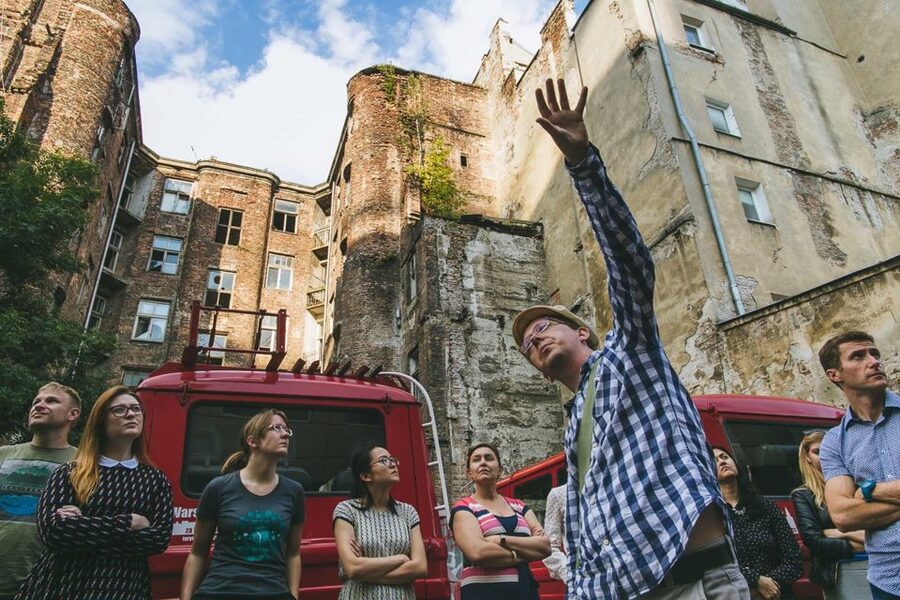
The courtyards are especially important. They are not grand monuments, but they show how ordinary residential life was organized. Details like these can tell you more about a city than another panoramic viewpoint. Your guide can also explain why Praga developed differently from the western side of Warsaw.
This stop may appeal most if you prefer places with an imperfect, lived-in feel. Do not expect every building to be polished or every street to look designed for sightseeing. That is part of Praga’s appeal, but it also means the experience is about atmosphere and context rather than a long list of famous landmarks.
The minibus makes the crossing practical. You are not spending the middle of a short tour navigating public transport or walking a long distance between districts. Instead, the vehicle connects the main parts of the story and allows you to save time for the actual stop.
Central Warsaw and the scale of communist rebuilding
After Praga, the tour returns toward central Warsaw and shifts to the period after 1945. This section explains how rebuilding under communist rule altered the city’s appearance and daily life.
You see monumental buildings, broad avenues, and urban planning shaped by ideology. The scale is very different from Old Town’s compact lanes. Wide roads and large open spaces were not accidental. They reflected the priorities of a political system that favored grand civic statements, organized movement, and monumental public architecture.
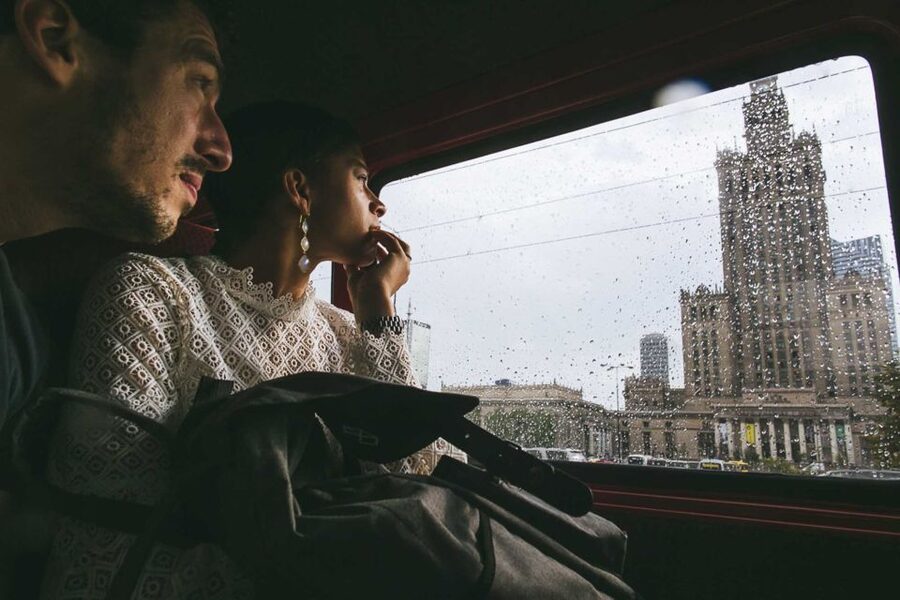
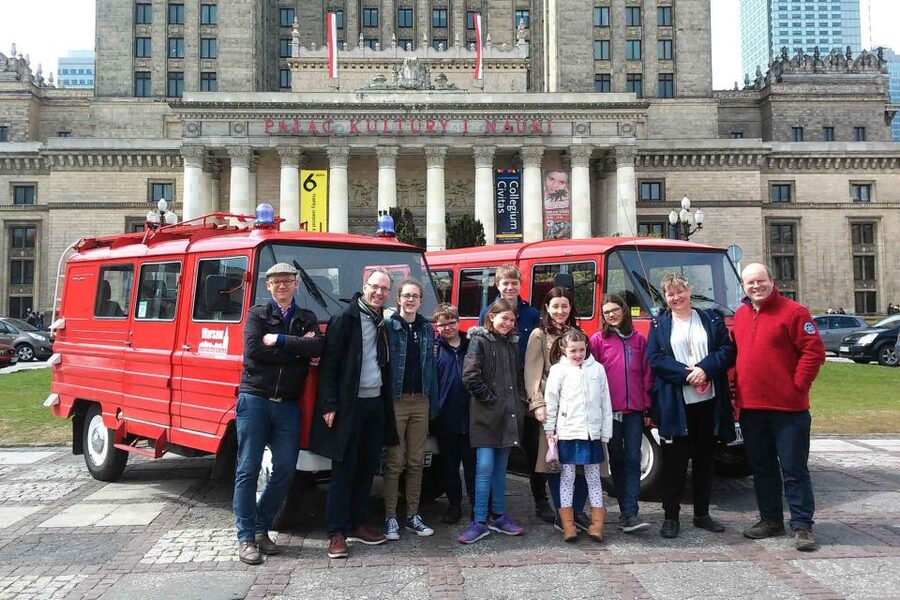
The Palace of Culture and Science is the clearest symbol of this era. It is Warsaw’s most recognizable landmark and remains a complicated presence in the city. For some people, it represents education, culture, and a familiar part of the skyline. For others, it recalls Soviet influence and the political pressure of the communist period.
Seeing it during a wider city tour is more useful than treating it as an isolated photo opportunity. The guide can connect the building with the avenues and surrounding development, helping you understand why central Warsaw looks so different from both Old Town and Praga.
This part of the tour also covers the city’s post-communist transformation. Modern development has added new buildings and new uses to an urban center already shaped by medieval planning, wartime destruction, and socialist reconstruction. In three hours, you will not examine every stage in detail, but you will get a clear framework for making sense of the city as you continue exploring on your own.
I especially like this chronological structure. Many city tours jump between sights. This one gives you a useful sequence: medieval Warsaw, pre-war Warsaw, wartime loss, communist rebuilding, and modern change. That makes the sights easier to remember after the minibus leaves.
Something quite different:
- Warsaw Concert: Chopin – Painted by Candlelights with Wine
★ 4.8 · 1,442 reviews - Warsaw: City Sightseeing Hop-On Hop-Off Bus Tour
★ 3.6 · 1,415 reviews - Warsaw: POLIN Museum of the History of Polish Jews Ticket
★ 4.7 · 1,142 reviews - #1 Pub Crawl Warsaw with Optional Premium 1 Hour Open Bar
★ 5.0 · 790 reviews
What the vintage Żuk adds to the ride
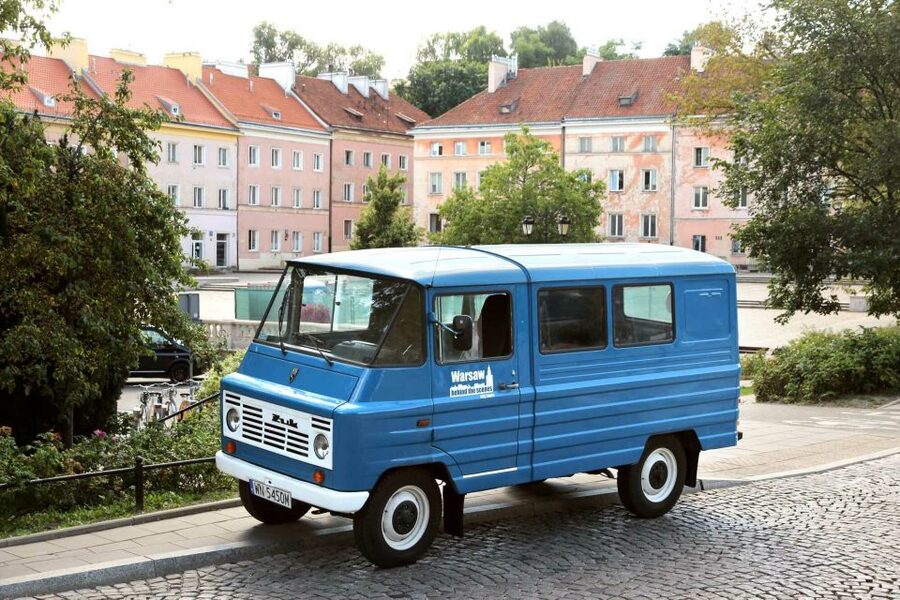
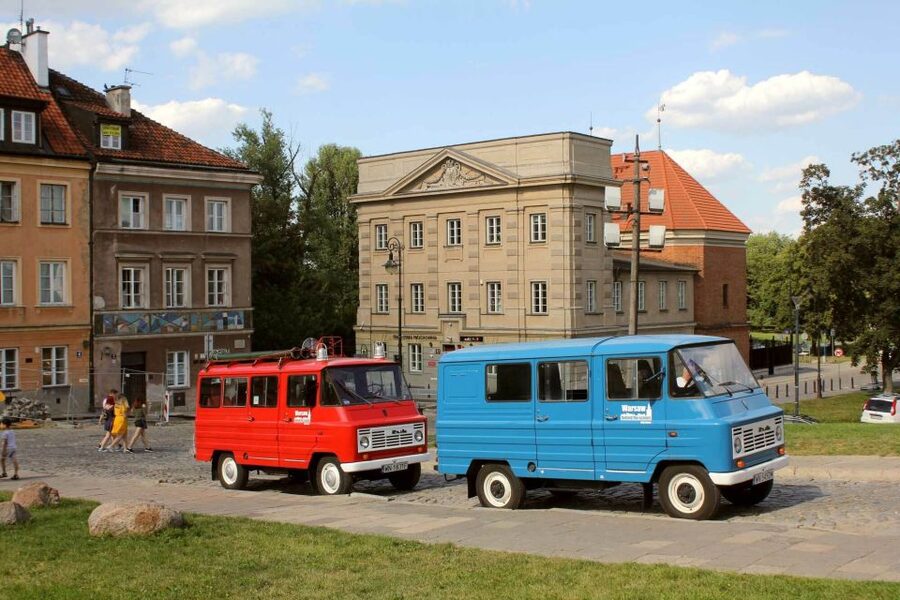
The Żuk is more than ordinary transport. This Polish vintage minibus connects the tour to the country’s recent past and gives the ride a distinct sense of place. It is a fitting vehicle for a city tour that spends so much time discussing change.
Each minibus holds up to eight people, and the operator has a fleet of five vehicles. That capacity keeps the private group small while allowing the tour to operate for several parties at once. You get the benefit of a personal guide without being placed in a large coach group.
The vehicle is used mainly for transfers between the walking stops. That is important when planning your day. You will not spend all three hours seated and watching Warsaw through glass. The tour expects you to walk at each location, then use the Żuk to move efficiently to the next part of the city.
There are a few comfort limits. The historic minibuses are not air-conditioned, so a warm summer departure may feel less comfortable. Some vehicles do not have seat belts, which is allowed for historic vehicles in Poland. Heating is available in winter, but weather-appropriate clothing remains your responsibility.
For children under 150 centimeters, Polish law requires a booster seat. Instant online booking is available for adults and children over that height. If you are bringing a smaller child, contact the operator first to confirm that a suitable booster is available.
Guide quality and the value of a private group
The guide is central to this experience. The strongest praise attached to the tour focuses on clear explanations, interesting stories, a relaxed manner, and a good sense of humor. One booking included a five-hour layover at Chopin Airport, and the company adjusted its arrangements when the flight was delayed. That flexibility is useful evidence for anyone working with a tight schedule.
The tour is conducted in English. A good guide can make the difference between simply seeing Warsaw and understanding why its districts look so different. Here, the subject matter gives the guide plenty to work with: medieval trade, royal power, wartime destruction, reconstruction, communist planning, and modern redevelopment.
The private format also gives you more control than a fixed large-group excursion. You can ask about Polish history, architecture, daily life, or practical suggestions for the rest of your stay. If you are curious about a particular district, it is worth raising that early so the guide can shape the emphasis where possible.
Do keep the limits in mind. A private three-hour tour cannot replace a specialist museum visit, a full architectural walk, or a dedicated exploration of Praga. Its job is to help you understand the city’s basic structure and decide what deserves more of your time.
Is $165 per person a fair price?
At $165 per person, this is not the cheapest way to see Warsaw. The price reflects a private group, hotel or apartment pickup and drop-off, an English-speaking guide, and use of a vintage vehicle. The value improves if you are traveling with several people and can share the experience within the private booking.
For a solo visitor or couple watching every expense, public transport and self-guided walks will cost much less. You would also have more time at each sight. The tradeoff is that you would need to plan the route, interpret the reconstruction story, and manage the travel between Old Town, Praga, and central Warsaw yourself.
I see the price as easier to justify in three situations:
- You have only a short stay and want a structured overview.
- You are traveling with family or friends and value a private vehicle.
- You want personal explanations rather than a large-group tour.
Pickup covers accommodations within three kilometers of central Warsaw. If your vehicle cannot reach the exact address, the operator provides a nearby meeting point. Food and drinks are not included, but a three-hour schedule does not require a meal unless you choose to stop separately.
Free cancellation is available up to 24 hours before departure, and you can reserve now and pay later. Those terms are useful if your Warsaw schedule is still changing, especially during a short connection or a multi-city trip.
Who should book this Warsaw tour?
I would recommend it first to people visiting Warsaw for the first time. The tour gives you a strong mental map and introduces the city’s main historical stages without asking you to spend a full day in a vehicle.
It also suits anyone with limited time. The layover example shows why the private format can work well when every hour matters, though you should still allow enough time for airport procedures and traffic outside the tour itself. The operator’s willingness to adjust for a delayed flight is encouraging, but no city tour can remove the risks of a short airport connection.
The tour is a good match for people who enjoy context. You will get more from it if you want to know why Old Town was rebuilt, why Praga looks different, and what the Palace of Culture represents. If you only want interior visits or long periods at individual attractions, this is not the right structure.
Families can book for children over 150 centimeters without advance arrangements. For smaller children, confirm booster-seat availability before booking. Anyone sensitive to heat should also think carefully about the lack of air conditioning in the vintage vehicles.
Final verdict: a smart first look at Warsaw
I would book this tour if I had three hours, wanted a private introduction, and hoped to see more than the postcard center. The combination of Old Town, Praga, and communist-era central Warsaw gives you a useful view of how the city changed across several centuries.
The best reasons to choose it are the strong historical narrative, the smaller private group, and the unusual Żuk minibus. The main compromises are the price, the limited duration, and the basic comfort of a historic vehicle.
Choose it for orientation and insight, then return on your own to the places that catch your interest. That is where this tour offers its real value: it helps you decide what Warsaw deserves next.
FAQ
How long does the tour last?
The tour lasts three hours.
Is the tour private?
Yes. It is offered as a private group experience, with each vintage minibus accommodating up to eight passengers.
What language is the tour conducted in?
The live tour guide speaks English.
Does the tour include hotel pickup?
Yes. Pickup and drop-off are included for accommodations within a three-kilometer radius of central Warsaw.
Which areas of Warsaw does the tour visit?
The tour includes Warsaw’s Old Town, the Praga district across the Vistula River, and central Warsaw, including the area around the Palace of Culture and Science.
Is food included?
No. Food and drinks are not included.
Are the vintage minibuses air-conditioned?
No. The classic minibuses do not have air conditioning. They do have heating for winter, and some historic vehicles do not have seat belts.
Can children join the tour?
Adults and children over 150 centimeters can book instantly online. Children under 150 centimeters require a booster seat under Polish law, so you should contact the operator in advance to check availability. Unaccompanied minors are not allowed.
Just added in Warsaw
- Wroclaw Small-Group Tour with Lunch from Warsaw★ 5.0 · 2 reviews
- World War II Warsaw Old Town, Military Cemetery Walking Tour★ 4.7 · 3 reviews
- Warsaw: Wolf’s Lair & Swieta Lipka Small-Group Tour + Lunch★ 5.0 · 3 reviews
- Wilanów Palace: 2-Hour Guided Tour with Entrance Tickets★ 4.8 · 8 reviews
- Warsaw Zoo Skip-the-Line Entry Ticket with Private Transport★ 4.8 · 3 reviews
- Warsaw: Private Vodka Tasting Night with Snacks and Pickup★ 5.0 · 7 reviews
- Warsaw Private Wilanow Palace & Garden Tour★ 4.6 · 30 reviews
- Warsaw Wolf’s Lair with St. Lipka and Mamerki Private Guided★ 4.2 · 3 reviews
City Tours, compared.
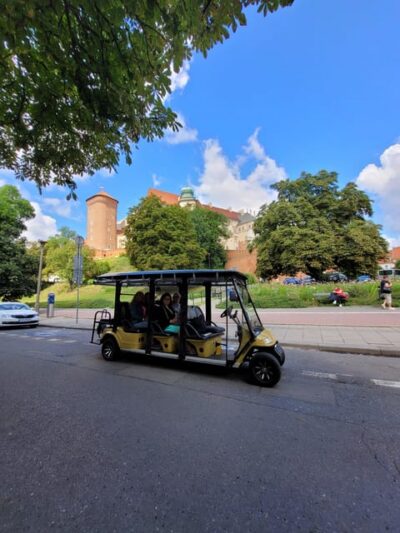
City Sightseeing Tour Eco Electric Buggy Golf Cart
Read our review →
Gdańsk City Sights & History Guided Walking Tour in English
Read our review →
Extended City Sightseeing Tour – Eco Buggy Golf Cart
Read our review →
Browse the lists this tour appears in