
REVIEW · MUSEUMS IN WARSAW
Warsaw: Guided tour of the Cold War Museum
The Cold War still feels close.
At Warsaw’s Cold War Museum, you get more than old uniforms and dusty maps. You get a guided look at Poland’s place inside the Soviet bloc, backed by touch screens, VR games, space-flight displays, a cinema, and an autonomous robot guide. I especially like the museum’s Polish point of view and its focus on General Ryszard Kukliński, a figure many international visitors know little about. The museum’s location also adds weight, since the building once housed a communist militia station connected with the death of Grzegorz Przemyk.
I also like the way the museum gives younger visitors something to do, rather than asking them to read wall panels for two hours. The multimedia quiz and three VR games can make a difficult subject easier to grasp. The main drawback is the museum’s clear political and national perspective, so you should approach it as a Polish interpretation of the Cold War, not as a neutral survey from every side. Wheelchair users should also note that the site is not suitable for them.
In This Review
- Key points to know before you go
- From Old Town Square to a charged address
- A Polish view of the Cold War
- Original uniforms, maps, and Cold War equipment
- More than 50 multimedia stations
- Three VR games put you inside the story
- Space flights and a hologram of a space station
- The guides make the difference
- Why the site works for families
- Price, timing, and practical value
- Who should book the Cold War Museum?
- Should you book this Warsaw tour?
- FAQ
- Where does the Cold War Museum tour meet?
- How long does the guided tour last?
- What languages are available for the live guided tour?
- What is included in the tour price?
- Is the museum suitable for wheelchair users?
- Can I bring food, drinks, or a pet?
Key points to know before you go
- A 90-minute to two-hour guided visit covers the Cold War from its beginnings through the collapse of Soviet power.
- General Ryszard Kukliński, Ronald Reagan, and Pope John Paul II receive special attention in the museum’s story.
- More than 50 multimedia elements include touch screens, VR goggles, a cinema, multimedia tables, and a self-guided robot.
- Three VR games let you take an active role instead of simply viewing objects behind glass.
- The space-flight section includes a hologram of a space station and material on the history of space missions.
- The meeting point is about 40 meters from Old Town Square, making this an easy addition to a central Warsaw walk.
From Old Town Square to a charged address
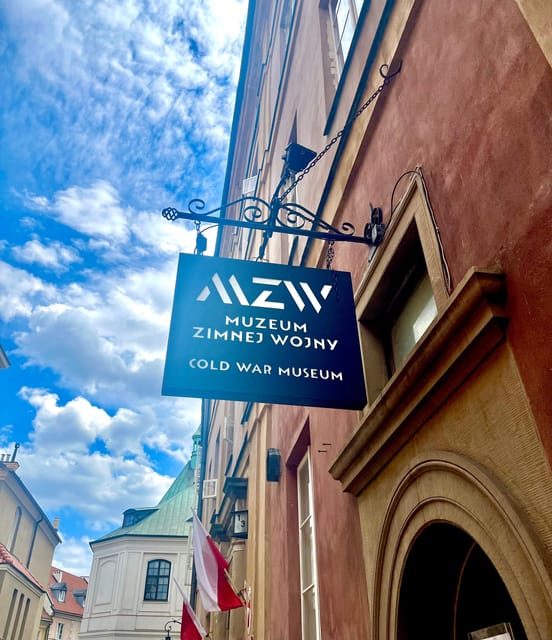
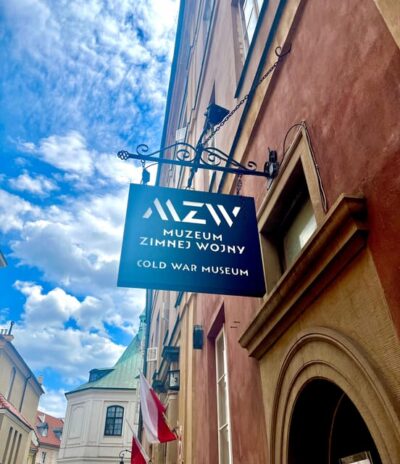
The tour begins near Warsaw’s Old Town Square, at the Registry Office of the Capital City Warsaw. The museum is only about 40 meters from the square, so you will not need a taxi or a long transfer from the historic center.
That short walk matters. Warsaw has many museums spread across the city, and a visit that fits neatly beside Old Town sightseeing is easier to plan. You can explore the square, walk a few steps, and move from the medieval heart of the city into the political struggles of 20th-century Poland.
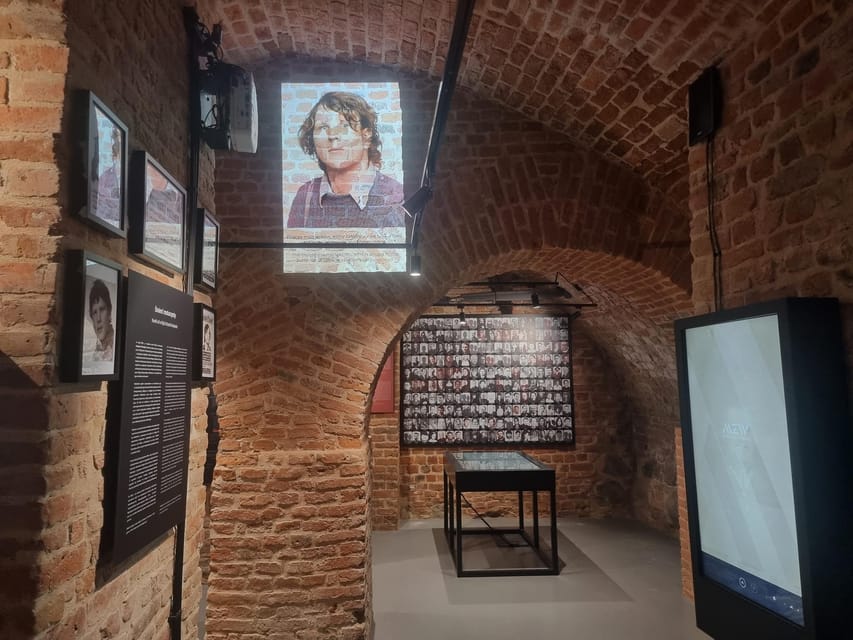
The building itself is part of the experience. During the Polish People’s Republic, this address housed a communist militia station. It was also connected with the beating death of Grzegorz Przemyk, a high school graduate who became a well-known victim of martial law. That detail changes the way you enter the museum. This is not only a display about distant presidents, missiles, and superpower meetings. It is also about state violence in an ordinary Polish building.
I would give yourself a moment before the tour begins to consider that setting. The museum’s story has a physical address, and the address has painful memories attached to it.
More Museums in Warsaw
- Warsaw: POLIN Museum of the History of Polish Jews Ticket
★ 4.7 · 1,142 reviews - Warsaw: Polish Vodka Museum Tour with Tasting
★ 4.6 · 788 reviews - Warsaw: Museum World of Illusion Entry Ticket
★ 3.9 · 666 reviews
A Polish view of the Cold War
The exhibition covers the whole Cold War period, including the countries involved in the struggle between the Western bloc and the Soviet bloc. But its main purpose is to explain Poland’s contribution to the defeat of Soviet communism.
That national focus is important. If you already know the broad American or Western European version of the Cold War, the museum gives you a different center of gravity. Poland appears not merely as a country behind the Iron Curtain, but as a place where political pressure, religious resistance, military secrecy, and public courage all mattered.
The museum gives particular attention to three figures from the final two decades of the Cold War:
- Ronald Reagan, the American president associated with a hard line toward the Soviet Union.
- Pope John Paul II, the Polish-born religious leader whose influence mattered greatly to many people in Poland.
- General Ryszard Kukliński, a Polish military officer whose actions are presented as central to the eventual fall of the Iron Curtain.
Kukliński is likely to be the biggest surprise for many visitors from outside Poland. One American visitor described learning about him for the first time and finding his role especially important. The museum presents him as a Polish and American hero, and that framing gives the tour a strong emotional center.
I find this focus useful because it puts names and choices onto a period that can otherwise feel like a long contest between abstract systems. At the same time, you should know what kind of museum you are entering. Its message is openly supportive of the free world and sharply critical of Soviet communism. The presentation is not designed to give equal moral weight to both blocs.
Original uniforms, maps, and Cold War equipment
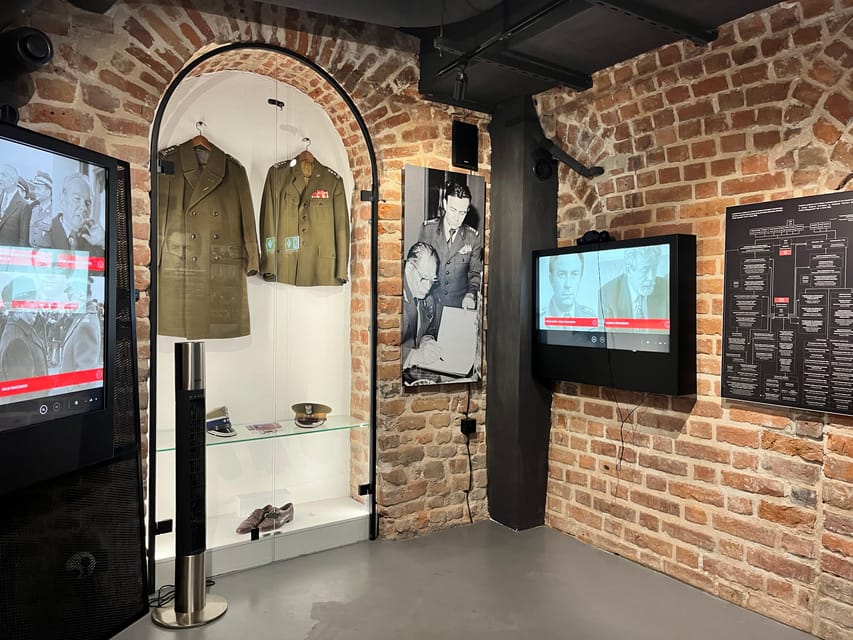
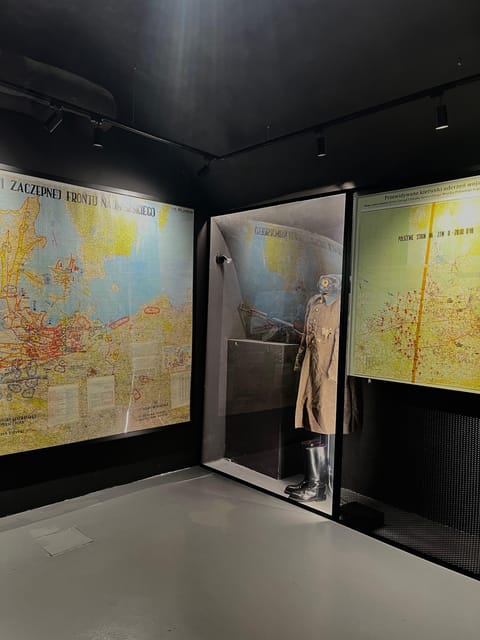
The original objects give the exhibition its physical anchor. You will see devices, maps, uniforms, and other material connected with the Cold War years.
These items help explain how the period worked at ground level. A map can show borders and military pressure. A uniform can point to the people who enforced or resisted a political system. An old device can make the technology of surveillance, communication, or defense feel less remote.
The displays are not meant to replace the guide. They work best when someone explains why an object matters. That is one reason I would choose the guided option rather than treating the museum as a quick independent visit.
A good guide can connect the objects to the larger story: the division of Europe after World War II, Poland’s position in the Soviet bloc, the military and political rivalry between the two sides, and the people who pushed against communist control.
The museum’s material also helps families. Younger children may not follow every political detail, but they can begin with the visible objects and interactive displays. Older children and teenagers can then connect those items to the larger questions of power, fear, loyalty, and resistance.
More than 50 multimedia stations
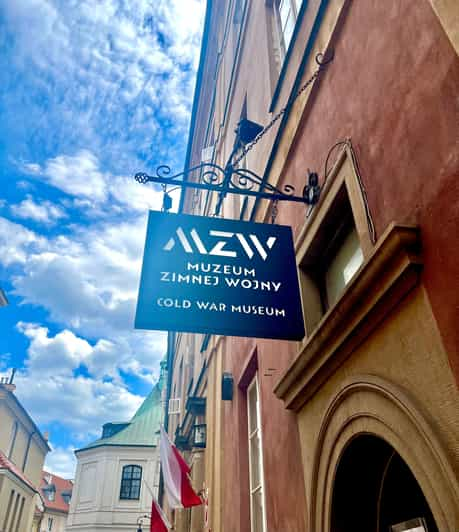
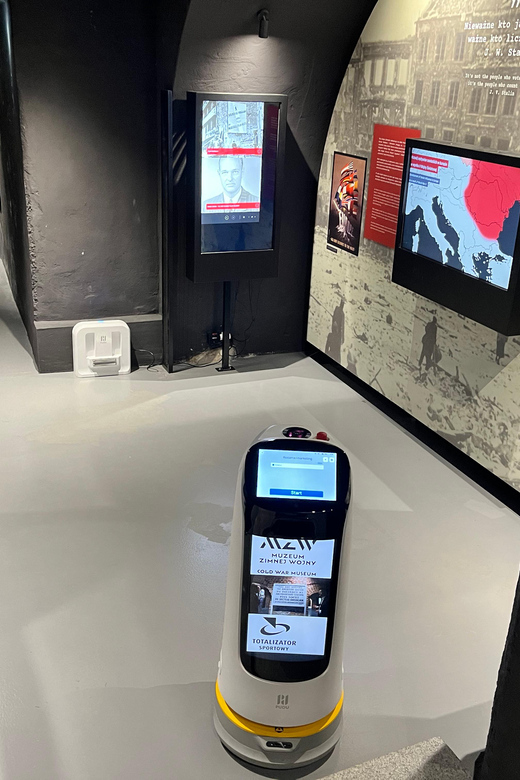
The museum uses more than 50 multimedia elements, including touch screens, multimedia tables, VR goggles, a cinema, and an autonomous robot. That is a lot of technology for a history museum, but here it serves a clear purpose: the Cold War was fought through information, images, threats, secret messages, science, and propaganda.
The multimedia knowledge quiz is a useful part of the visit. It gives you a chance to test what you have understood instead of simply moving from one display to the next. I like this format for families, since a quiz can turn a difficult subject into a shared activity.
The museum is also the first and only institution in Poland described as having a robot that works as an autonomous guide. You should not expect that robot to replace the live guide, but it adds a playful modern touch to an exhibition about old rivalries and technology.
The cinema and touch screens can help break up the visit. Cold War subjects often involve a great deal of terminology and chronology. A short film or interactive map can make those connections clearer than a long block of text.
Still, multimedia is not automatically better. If you prefer quiet galleries and long stretches of careful reading, the museum may feel busy. You will get the most from it if you treat the technology as a tool for understanding, not as the main attraction.
Something quite different:
- Warsaw: Chopin Concert in the Old Town
★ 4.8 · 2,287 reviews - Warsaw: Traditional Galar Cruise on The Vistula River
★ 4.6 · 1,640 reviews - Warsaw: Old Town Highlights Walking Tour in English
★ 4.7 · 1,516 reviews - Warsaw Concert: Chopin – Painted by Candlelights with Wine
★ 4.8 · 1,442 reviews
Three VR games put you inside the story
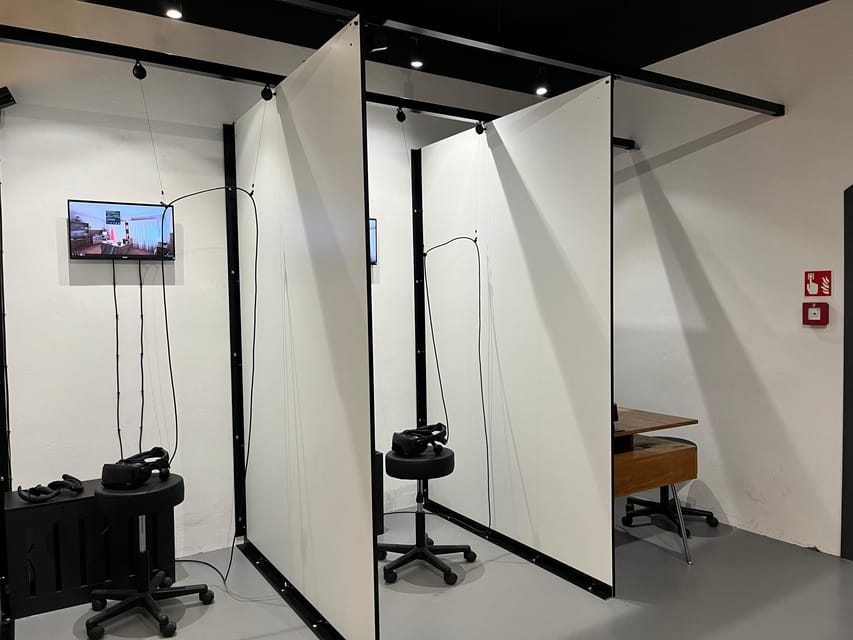
The three VR games are among the tour’s most distinctive features. They let you feel more like a participant in the Cold War, rather than someone standing safely outside it.
That does not mean you will experience a full historical simulation. The supplied information does not specify the exact scenarios, so I would keep expectations sensible. Think of the VR activities as short, interactive ways to approach the period, not as a substitute for the guide’s historical explanation.
For families with school-age children and teenagers, this may be the feature that keeps attention from fading. A 12-year-old and a 16-year-old can engage with a historical subject through play, then ask better questions once the experience has given them something concrete to discuss.
I also see value for adults who already know the basic Cold War timeline. VR can create a different connection to the subject, particularly when the museum asks you to consider uncertainty, military tension, or the pressure of choosing a side.
The practical caution is that technology can create lines or slow the group, especially when everyone wants a turn. The tour lasts between 90 minutes and two hours, so the exact pace may depend on the guide and how much time the group spends with the interactive attractions.
Space flights and a hologram of a space station
The space-flight section adds a welcome change of pace. The Cold War was not fought only through armies and speeches. The United States and Soviet Union also competed in science, engineering, rockets, and national prestige.
You can learn about the history of space flights and see a hologram of a space station. That visual display should appeal to visitors who enjoy science and technology, even if political history is not their favorite subject.
The space race also makes the rivalry easier to understand. Each launch carried a message about what each system could build and what its future might look like. The museum places that competition inside the wider Cold War, where scientific achievement, military power, and public confidence were closely linked.
For children, the hologram offers a clear visual hook. For adults, it shows how the Cold War reached far beyond Europe. The same rivalry that shaped Poland’s daily life also reached orbit.
The guides make the difference
The live guide is central to the experience. Guided tours are offered in Polish and English, and the named guides associated with the visit include Cyprian and Filip.
Cyprian is praised for his strong engagement and broad command of the subject. Filip, who is also the museum’s director, is described as providing a strong survey of Poland after World War II and its movement into the Soviet bloc. His role as director may add useful insight into how the museum’s story was assembled.
I would pay close attention to the guide’s explanation of Poland’s postwar position. The country did not simply wake up one morning as a willing member of the Soviet bloc. The period involved occupation, political control, restricted freedom, religious identity, resistance, and hard choices inside the military and government.
The guide also helps explain why Kukliński matters so much here. Without that context, he may appear as just another name in a display. With it, his story becomes part of the museum’s argument about secrecy, danger, and the long struggle against Soviet control.
Because the museum has a strong Polish perspective, ask questions if you want more context about the American, Soviet, or broader European side. A good tour is not only about receiving information. It is also about understanding how a museum chooses to tell a story.
Why the site works for families
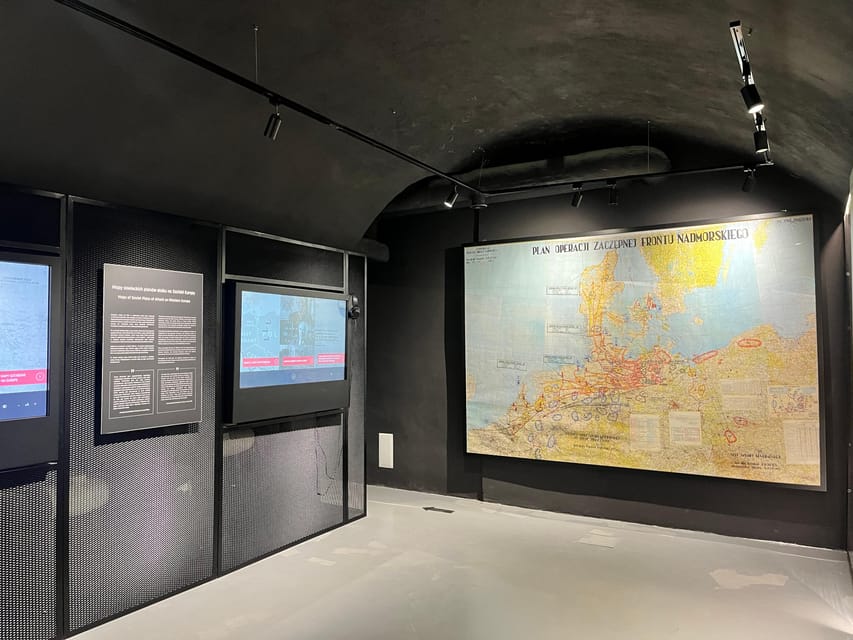
The museum is open to people of different ages and includes attractions aimed at children. The quiz, VR games, touch screens, and robot guide give families several ways to stay involved.
I would consider it a good choice for families with children old enough to discuss the 20th century, especially teenagers. The Cold War includes topics such as fear, military threats, communism, state violence, religion, and political resistance. The interactive features can open the door to those subjects without making the visit feel like a school lecture.
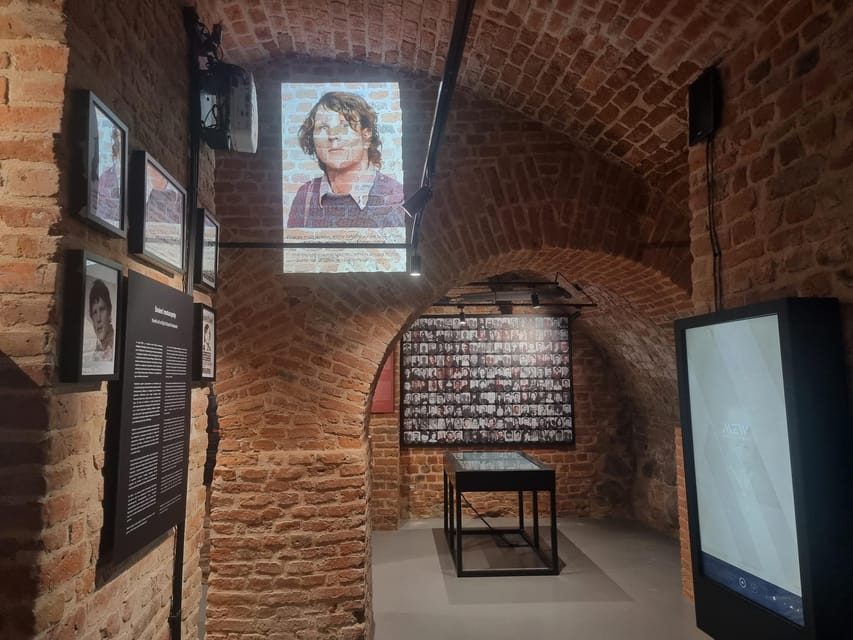
The museum’s subject is not light, though. The story of Grzegorz Przemyk and the broader treatment of victims and survivors may be difficult for younger children. Parents should decide how much detail is suitable for their family.
Four-legged visitors are also welcome, which is unusual among Warsaw museums. Food, drinks, smoking, vaping, alcohol, and drugs are not allowed inside.
Price, timing, and practical value
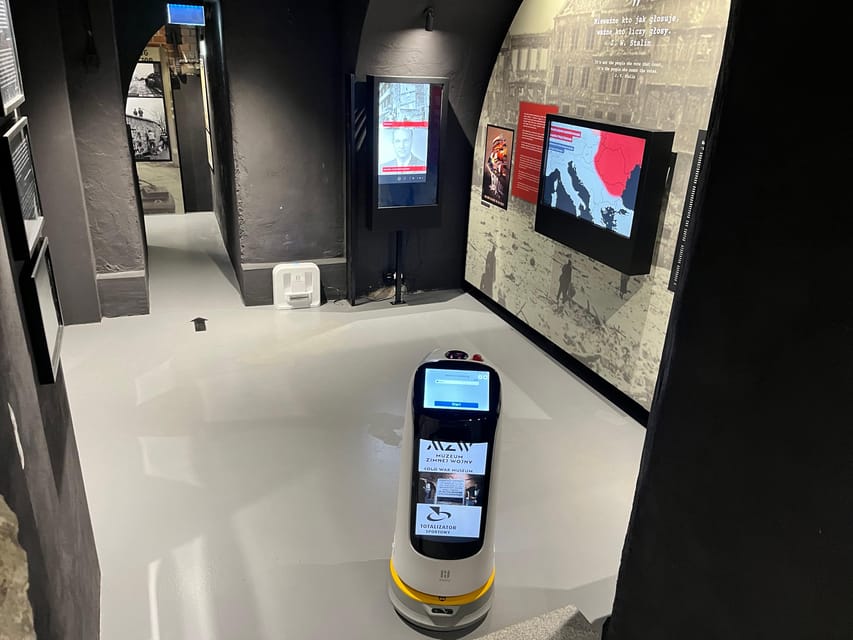
The price is $78 per group of up to 10 people. That makes the value strongest for a family or small group, since the cost is not charged separately to each person within the group.
For one or two people, the price is less of a bargain than it is for a full group. Still, admission, access to all exhibition attractions, and a live guided tour are included. The visit lasts 90 minutes to two hours, which is a useful length for a central Warsaw activity.
You also skip the ticket line, and the meeting point near Old Town Square keeps transport costs low. Free cancellation is available up to 24 hours before the activity, and you can reserve now and pay later, both useful if your Warsaw plans are still changing.
The tour is not suitable for wheelchair users. That is the most important access limitation to consider before booking.
Who should book the Cold War Museum?
I would recommend this tour if you want to understand Warsaw through the political struggles that shaped modern Poland. It is especially useful if you know the Cold War mainly from an American perspective and want to see how the period looked from inside the Soviet bloc.
It is also a good fit for:
- Families with children or teenagers who enjoy interactive displays.
- Visitors interested in Ronald Reagan, John Paul II, or General Kukliński.
- Anyone who likes military history, political history, or the space race.
- People looking for a museum within a short walk of Old Town Square.
- Visitors who prefer a guide to explain objects and dates as they go.
I would hesitate only if you want a completely neutral account of the Cold War or a quiet museum with minimal technology. The exhibition has a strong message, and the multimedia features may not suit every taste.
Should you book this Warsaw tour?
Book it if you want a focused, lively explanation of Poland’s Cold War experience, especially if you are traveling with family or friends who enjoy hands-on exhibits. The museum’s original objects, space displays, VR games, and guided storytelling give the visit more range than a standard collection of documents and photographs.
The best reason to go is the chance to learn about Poland’s role in the fall of Soviet communism, including the little-known story of General Ryszard Kukliński. Choose the English-guided option if that is your preferred language, allow up to two hours, and remember that the museum presents a clearly Polish and pro-Western interpretation.
At $78 for up to 10 people, the tour makes the most financial sense when shared by a group. For the right audience, it is one of Warsaw’s more engaging ways to connect the city’s recent past with the larger story of the Iron Curtain.
FAQ
Where does the Cold War Museum tour meet?
The meeting point is at the Registry Office of the Capital City Warsaw, about 40 meters from Old Town Square.
How long does the guided tour last?
The visit lasts between 90 minutes and two hours, depending on the available starting time and the pace of the tour.
What languages are available for the live guided tour?
The live guide is available in Polish and English.
What is included in the tour price?
Admission to the exhibitions, access to all attractions within the exhibition, and the guided tour are included.
Is the museum suitable for wheelchair users?
No. The activity is not suitable for wheelchair users.
Can I bring food, drinks, or a pet?
Food and drinks are not allowed, and smoking, vaping, alcohol, and drugs are prohibited. Four-legged visitors are welcome at the museum.
Just added in Warsaw
- Wroclaw Small-Group Tour with Lunch from Warsaw★ 5.0 · 2 reviews
- World War II Warsaw Old Town, Military Cemetery Walking Tour★ 4.7 · 3 reviews
- Warsaw: Wolf’s Lair & Swieta Lipka Small-Group Tour + Lunch★ 5.0 · 3 reviews
- Wilanów Palace: 2-Hour Guided Tour with Entrance Tickets★ 4.8 · 8 reviews
- Warsaw Zoo Skip-the-Line Entry Ticket with Private Transport★ 4.8 · 3 reviews
- Warsaw: Private Vodka Tasting Night with Snacks and Pickup★ 5.0 · 7 reviews
- Warsaw Private Wilanow Palace & Garden Tour★ 4.6 · 30 reviews
- Warsaw Wolf’s Lair with St. Lipka and Mamerki Private Guided★ 4.2 · 3 reviews
Museums in Warsaw, compared.
POLIN Museum of the History of Polish Jews Ticket
Read our review →

Daily live piano Chopin’s concerts at 6:30 pm in the Warsaw Archdiocese Museum
Read our review →
Browse the lists this tour appears in