
REVIEW · CYCLING TOURS
Sopot Private City Walking or Bike Tour with a local architect
Sopot rewards a slower look. This private walk or bike tour turns a seaside resort into an open-air lesson in architecture, local characters, and changing fashions. I especially like the use of historical pictures, which let you compare today’s streets with old Sopot, and the chance to leave the main promenade for quiet villas, gardens, and forgotten corners. The main consideration is time: 90 minutes to two hours is enough for a strong introduction, but not enough for every building or museum.
Guide Agnieszka Lasota brings an architect’s eye without burying you in technical terms. Her storytelling, humor, and feel for the group are among the tour’s strongest points. I also like that this is a private tour for up to nine people, so you can ask questions and adjust the pace. The lighthouse stairs may be tiring, and the tour is conducted in English, so confirm the preferred walking or biking format when booking.
In This Review
- Key points to know before you book
- Why Sopot deserves more than a quick pier visit
- Monte Cassino Street and the old road to the water
- Dworek Sierakowskich and a quieter Sopot
- Villas Street and Poland’s Montmartre
- Goyki 3 and the mystery of the Alpine villa
- Spa architecture, parks, and the Haffner monument
- Grand Hotel and the seaside arrival
- Skwer Kuracyjny and the Riviera of the North
- The pier, changing rooms, and fishermen’s houses
- The lighthouse climb and what the timing means
- Walking, biking, and the private-group advantage
- Is $204.04 a fair price?
- Who should book this Sopot tour?
- Should you book it?
- FAQ
- Where does the Sopot tour start?
- Where does the tour end?
- How long does the experience last?
- Is the tour private?
- Is the tour offered in English?
- Can I choose a bike tour instead of walking?
- Is the Sopot Lighthouse climb required?
- Are museum admissions included?
- Can I cancel for a full refund?
Key points to know before you book
- Sopot’s architecture takes center stage: You will see 18th-century guest houses, Alpine-style villas, spa buildings, grand hotels, and fishermen’s cottages.
- Old photographs add real context: Images show how Monte Cassino Street and the seaside district changed over the centuries.
- Agnieszka Lasota is an architect and licensed guide: Her approach focuses on people, buildings, and stories rather than a flood of dates.
- The route mixes famous sights with quiet streets: Expect the pier and Grand Hotel, but also ravines, gardens, studios, and less obvious villas.
- The lighthouse climb is optional: You decide if the view is worth the stairs.
- The group price can work well for families or friends: At $204.04 for up to nine people, the per-person cost drops sharply with a full group.
Why Sopot deserves more than a quick pier visit
Sopot is often treated as an easy add-on from Gdańsk: stroll down Bohaterów Monte Cassino, take a photo at the Crooked House, walk onto the pier, and leave. That plan gives you the postcard version. This tour is better suited to you if you want to understand why the town looks the way it does.
The focus is not only on grand buildings. You will hear how Sopot grew from a small fishing village into a fashionable spa resort, how seaside tourism shaped its streets, and why its villas borrow styles from mountain resorts. The result is a fuller picture of the town, with architecture used as the guide.
The route also helps connect places that can feel separate when visited alone. The pedestrian center leads toward older houses, then into the villa district, parks, beach buildings, and the lighthouse. You are not simply ticking off sights. You are following the town’s growth toward the sea.
More Bike Tours in Gdańsk
- Gdańsk: Highlights Bike Tour
★ 4.9 · 173 reviews - Gdansk Private Bike Tour
★ 5.0 · 36 reviews - Gdansk Private Bike Tour
★ 5.0 · 21 reviews
Monte Cassino Street and the old road to the water
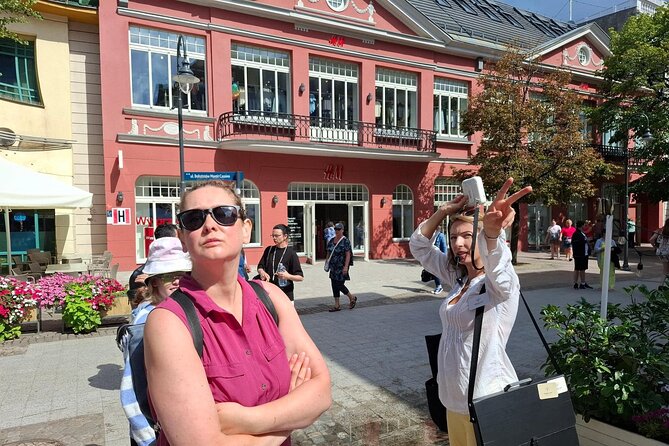
The tour begins outside the McDonald’s at Bohaterów Monte Cassino 21. This is a practical meeting point on Sopot’s best-known pedestrian street, though the restaurant itself is not the attraction. From here, Agnieszka uses old images to show how the center has changed.
Bohaterów Monte Cassino was once the main route from the settlement to the sea. Fishermen used it to reach the water, long before cafés, shops, and holiday crowds took over the street. That simple detail gives the promenade a human scale. You can picture it as a working route rather than only a leisure strip.
The claim that it was Poland’s first pedestrian street gives the stop extra interest. The tour does not treat the street as a glossy shopping corridor. Instead, it asks you to look past the present-day businesses and imagine the road through several periods of Sopot’s life.
The historical images are especially useful here. Architecture can be hard to read when you see only the present version. Old photographs make changes easier to spot and give the guide a way to explain what disappeared, what survived, and how the center became the place you see today.
Dworek Sierakowskich and a quieter Sopot
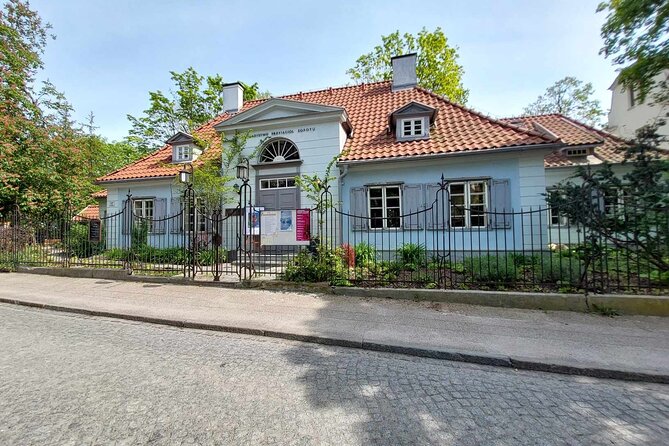
A short stop at Dworek Sierakowskich shifts the mood. This 18th-century building once served as a guest house connected with a large manor. Its back garden and calm setting offer a welcome break from Monte Cassino Street.
The building is also linked to Fryderyk Chopin. A bust marks the connection, since he very probably stayed here during a holiday and played the piano. The wording matters: the stop presents the story with some care rather than treating every local tradition as proven fact.
I like this part of the route because it shows Sopot away from its public face. You get an authentic-feeling location, an older building, and a story about the people who came to the resort. The visit is brief, about six minutes, so expect an introduction rather than a full interior tour.
Villas Street and Poland’s Montmartre
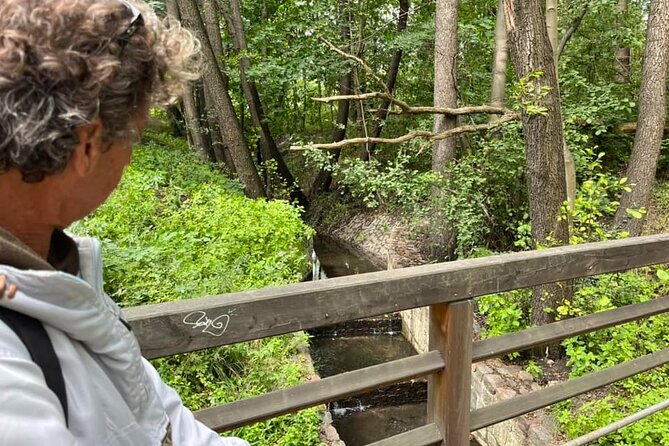
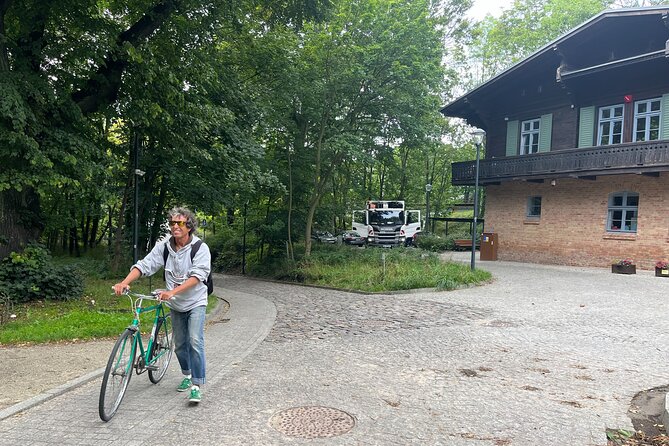
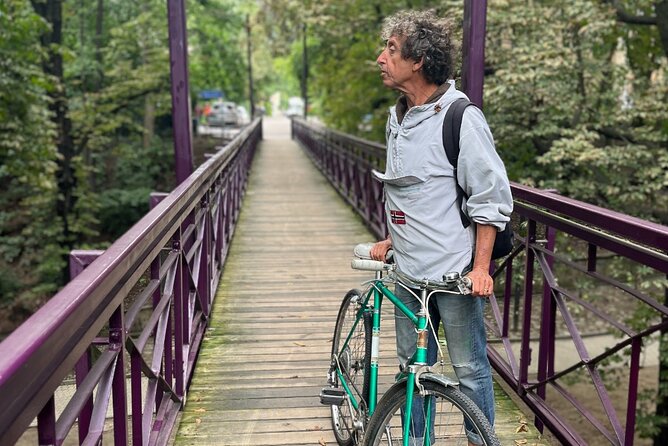
The route then crosses a picturesque bridge over a deep ravine and reaches a street once called Villas Street. The oldest house dates from 1881, and the classical architecture here gives you a clear sense of the resort’s older residential character.
This is the kind of stop that rewards a guide. A row of villas can look pleasant but mute if nobody explains who built them, what styles they chose, and how the neighborhood changed. Agnieszka brings out the stories behind the walls, including the later nickname Poland’s Montmartre.
That nickname points to the street’s artistic reputation in the second half of the 20th century. The route does not reduce Sopot to a spa town or a beach resort. It also presents a place where artists, architects, and unusual residents helped shape the town’s identity.
More Walking Tours in Gdańsk
- Gdańsk City Sights & History Guided Walking Tour in English
★ 4.8 · 876 reviews - Main Town Gdańsk Walking Tour
★ 5.0 · 644 reviews - Discover Gdansk Walking Tour
★ 5.0 · 495 reviews - Gdańsk: Old Town Private Walking Tour with Legends and Facts
★ 4.9 · 245 reviews
Goyki 3 and the mystery of the Alpine villa
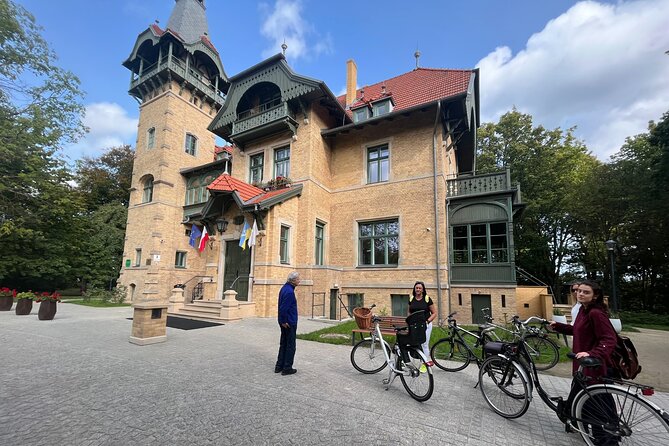
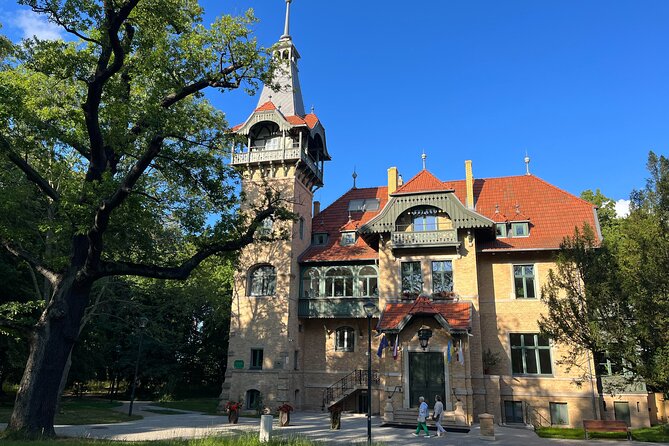
Goyki 3 Art Inkubator occupies one of the area’s most striking villas. Known as the Tower Villa, the late-19th-century building was created by a merchant for his family and has a long, sad story connected with music.
Its Alpine Resort style raises a good question: why build something that recalls the Alps in a seaside town? The answer leads into the wider European fashion for spa resorts that began in the 18th century. Sopot was part of that pattern, borrowing ideas associated with health, leisure, fresh air, and fashionable retreat towns.
You will also hear about the park around the villa and how resort design worked beyond the buildings themselves. This is a strong stop for anyone who enjoys architecture but does not want a lecture filled only with construction dates.
The tour may also pass near the home and studio of Per Oscar Gustav Dahlberg, a Swedish artist who moved to Sopot in 1996 after falling for the town. If you are interested in his graphics or albums about Sopot and Gdańsk architecture, Agnieszka may be able to arrange a meeting. Treat this as a possible extra, not a guaranteed part of the scheduled route.
Dahlberg’s drawings also inspired the design of Sopot’s famous Crooked House. That connection adds a modern note to a route otherwise centered on older villas and spa buildings.
Spa architecture, parks, and the Haffner monument
Sopot is described as having one of Europe’s fullest collections of spa architecture. On the route, that idea becomes practical. You will see how villas, parks, treatment buildings, public spaces, and seaside facilities fit together as parts of a resort town.
The Jan Jerzy Haffner Monument offers a useful change of scale. Haffner, a surgeon who had served in Napoleon’s army, became an early figure in Sopot’s development and is remembered as the town’s godfather. His story helps explain why the settlement became a place for leisure and treatment long before modern tourism took shape.
The setting around the monument includes tennis courts, mature trees, broad parks, and sandy beaches. You get a sense of the town’s appeal through its public spaces, not only through grand facades. The stop itself is short, about three minutes, but the surrounding area gives the guide room to explain how resort life worked.
Grand Hotel and the seaside arrival
The Sofitel Grand Sopot, formerly known as the Grand Hotel, is one of the tour’s most imposing sights. It sits directly by the beach, which makes its position part of the story. The building is not simply an elegant hotel viewed from a distance. The town of Sopot itself decided in the 1920s to invest in such a grand seaside project.
That civic decision says something about the ambitions of the resort. Sopot wanted to attract a fashionable international crowd and present itself as a first-rate destination. Agnieszka uses the hotel to tell stories about the place’s splendor without asking you to admire the facade in isolation.
The stop lasts about 15 minutes, long enough for a proper look and some background. You will not be checking into the hotel or touring every room, so keep expectations realistic. The value is in understanding the building’s place in Sopot’s public image.
Skwer Kuracyjny and the Riviera of the North
Skwer Kuracyjny, the spa square, was created in 1925 and remains one of the key public spaces on the waterfront. Here, the tour returns to old photographs and shows Sopot during its period as the Riviera of the North.
This is where the resort story becomes most theatrical. The square once offered a range of attractions aimed at visitors from across Europe. Old images help you see how much activity and display were concentrated around this part of the coast.
I would pay close attention to the contrast between the square’s present use and its earlier role. Today, you may mainly think of the area as a way to reach the pier and beach. The historical view makes it easier to understand the square as a carefully planned stage for leisure.
The pier, changing rooms, and fishermen’s houses
The famous Sopot pier appears along the way, but the tour is not designed to replace a separate pier visit. You will learn its story and can return afterward to explore it at your own pace. That arrangement is sensible, since walking the pier separately lets you choose how long to spend over the water.
The route ends near the southern changing rooms, built in 1905. Their practical purpose comes with the promise of some amusing stories, a useful reminder that old resort buildings were built for ordinary needs as well as grand ceremonies.
Another possible ending is a plaza surrounded by small fishermen’s houses. These cottages were gently relocated in 1905, giving you a glimpse of the earlier village beneath the later resort town. This is one of the most valuable parts of the route because it keeps Sopot from becoming only a story about wealthy holidaymakers.
The exact ending can vary, so ask where your group will finish. Since the activity ends in a different location from the start, plan your next move before you set off.
The lighthouse climb and what the timing means
The Sopot Lighthouse is the final listed stop. You can climb its steps if you want the view, but the climb is optional. The stated stop lasts about 14 minutes, so there is time for a short visit rather than a long stay.
I would save the lighthouse for the end because it gives you a visual way to bring the route together. From above, you can better appreciate the relationship between the town center, parks, hotel, beach, and pier. If your legs are tired, skipping the stairs does not remove the main value of the tour.
The listed stops add up to roughly 80 minutes, before walking between them and allowing for conversation. That fits the advertised 90-minute to two-hour duration. The route is compact enough for a half-day plan, but it is not a full Sopot museum program.
Walking, biking, and the private-group advantage
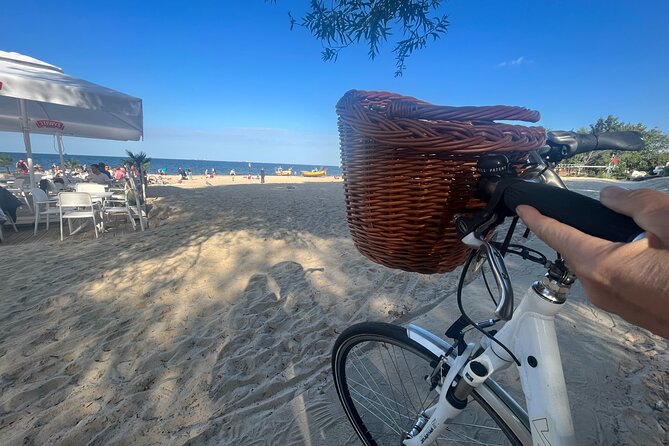
The experience can be arranged as a walking or bike tour. The supplied details do not specify bike rental, so ask directly if you need bicycles rather than assuming they are included. Walking is likely the easier choice if you want to pause often for photographs, building details, and questions.
A private group of up to nine gives you more control than a large scheduled walk. You can ask Agnieszka to explain a building again, discuss an architectural style, or take a short break if the group needs coffee. One particularly useful quality in her guiding is her ability to notice when people need a pause without allowing the tour to lose its shape.
The route is offered in English, and the guide is licensed. Service animals are allowed, public transportation is nearby, and the activity states that most people can participate. Still, the lighthouse stairs, ravine bridge, and extended time outdoors make comfortable shoes and weather-ready clothing sensible.
Is $204.04 a fair price?
The price is $204.04 per group, not per person. For one or two people, that is a serious spend for a 90-minute to two-hour experience. For a family or group of friends, the calculation changes: nine people would pay about $22.67 each, and even four people would pay about $51 each.
The price makes the most sense if you care about Sopot’s architecture and want a private guide rather than a basic orientation walk. You are paying for Agnieszka’s local knowledge, an architect’s perspective, old photographs, route flexibility, and stories that are difficult to gather from plaques alone.
Museums are not included, though you enter a few buildings free of charge. I would use this tour to understand the town, then choose a museum separately if you want indoor exhibits or more time with a particular subject.
The experience has a five-star rating from 19 ratings, with 100 percent recommending it. That is a small sample, but the praise is consistent: strong local detail, unusual places, clear explanations, warmth, and a route that can make familiar Sopot feel new.
Who should book this Sopot tour?
I would choose this experience if you like buildings, local stories, old photographs, and the background behind a resort town. It is also a smart choice if you have already seen the pier and Crooked House and want something less obvious.
Families and small groups get good value from the private pricing. The tour also suits repeat visitors, since the route reaches streets and houses that are easy to miss on a standard promenade walk.
I would think twice if you want a fast checklist of Sopot’s biggest sights, a museum visit, or a long stop inside each building. The tour is mainly outdoors, the lighthouse climb involves stairs, and the time passes quickly because the route covers many themes.
Free cancellation is available if you cancel at least 24 hours before the start time. Changes or cancellations made later are not refunded, and the cut-off follows local time.
Should you book it?
Book this tour if you want Sopot explained by someone who sees both the city and its buildings. Agnieszka Lasota’s architectural training, local stories, historical pictures, and relaxed style give the route more substance than a standard walk down the main street.
For the best value, bring a small group and ask in advance about walking versus biking, the possible artist studio visit, and the exact ending point. Skip the lighthouse stairs if needed, but keep the old villas, changing rooms, and fishermen’s houses on your plan. Those less famous stops are where Sopot’s character comes through most clearly.
FAQ
Where does the Sopot tour start?
The tour starts at Restauracja McDonald’s, Bohaterów Monte Cassino 21, 81-706 Sopot, Poland.
Where does the tour end?
The activity ends at a different location from the starting point. The route may finish near the southern changing rooms or at the plaza surrounded by relocated fishermen’s houses.
How long does the experience last?
The tour lasts approximately one hour and 30 minutes to two hours.
Is the tour private?
Yes. Only your group participates, with a maximum group size of nine people.
Is the tour offered in English?
Yes. The experience is offered in English.
Can I choose a bike tour instead of walking?
The experience is offered as either a private city walking tour or bike tour. The provided details do not state whether bicycle rental is included, so confirm that when booking.
Is the Sopot Lighthouse climb required?
No. Climbing the lighthouse steps is optional, and you can decide whether to do it.
Are museum admissions included?
Museums are not included. The guide suggests visiting any museum separately, although the route enters a few buildings free of charge.
Can I cancel for a full refund?
Yes, if you cancel at least 24 hours before the experience start time. Cancellations or changes made less than 24 hours before the start time are not refunded or accepted.
More Sopot and Baltic Coast Trips
- Sopot: Sunset Yacht Cruise with Welcome Drink
★ 4.7 · 278 reviews - Sopot: Yacht Cruise Around the Bay with Welcome Drink
★ 4.8 · 231 reviews - Highlights of Gdańsk, Gdynia and Sopot 1-day Private Tour
★ 4.9 · 59 reviews - Gdansk Sopot and Gdynia 3 Cities Private Full-Day Tour
★ 5.0 · 56 reviews
Just added in Gdansk
- Wolf’s Lair private tour from Gdansk★ 5.0 · 1 review
- Whisky Tasting in Gdańsk★ 5.0 · 3 reviews
- Transfer from Gdańsk or Airport Gdańsk (GDN) to Kościerzyna★ 5.0 · 1 review
- Westerplatte – 2h private trip by luxury car|★ 5.0 · 4 reviews
- Westerplatte private tour led by Expert-Guide (door to door)★ 5.0 · 5 reviews
- Gdansk EVERYDAY Vodka Tasting Tour★ 5.0 · 6 reviews
- Undercover City Games: Gdynia★ 5.0 · 34 reviews
- VIP transfer from airport Gdansk (GDN) to Hotel in Gdansk / Sopot★ 5.0 · 2 reviews
Cycling Tours, compared.
Complete Cracow Bike Tour (small group of maximum 15 people!)
Read our review →
Half-Day Warsaw City Sightseeing Bike Tour for Small Group
Read our review →
Browse the lists this tour appears in