
REVIEW · CYCLING TOURS
Krakow: 3-Hour Small Group Tour on E-Bike
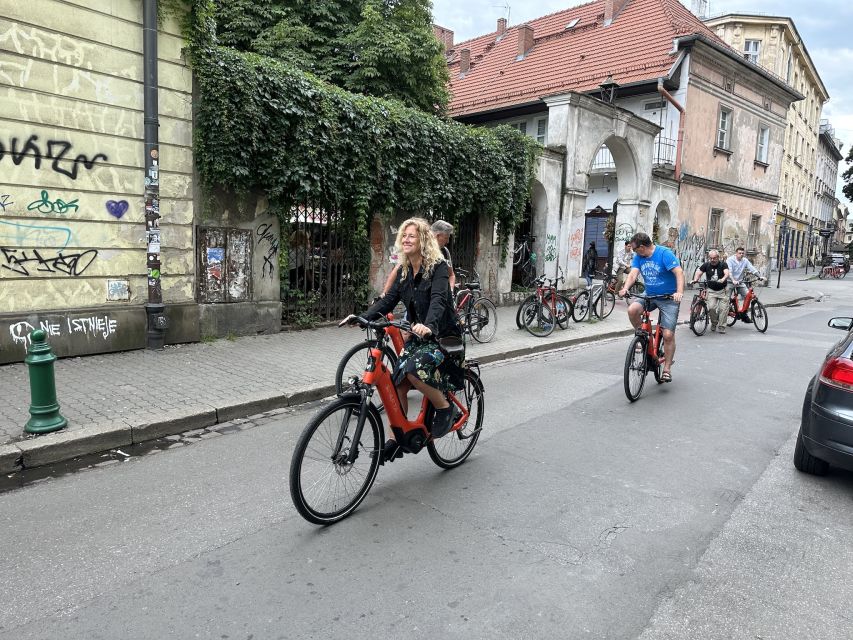
Krakow reveals itself quickly on two wheels. This easy e-bike ride links the Old Town, Kazimierz, and former Jewish ghetto, giving you a useful first look at the city without the strain of a long walking tour. I especially like the comfortable Dutch-style Bosch bikes and the guides, including Chris, Alex, and Krzysztof, who are praised for clear storytelling and good humor. The main caution is traffic and pedestrian congestion: you need to be a confident cyclist, especially around busy squares and shared roads.
The route is flat and gentle, but it is not completely carefree. You still need to watch cars, horse carriages, pedestrians, and other cyclists. I also like the small group limit of 15, since it makes it easier to hear the guide and ask questions. One point to keep in mind is that this is mainly an outdoor sightseeing tour, so you will see places such as Schindler’s Factory and Wawel Castle from outside rather than entering them.
In This Review
- Key points at a glance
- Why an e-bike works so well in Krakow
- Starting on Sławkowska Street
- Old Town: Krakow’s medieval center
- Wawel Hill and the Vistula River
- Kazimierz: markets, synagogues, and old streets
- Across Father Bernatek’s Bridge
- Ghetto Heroes Square and Schindler’s Factory
- How much ground do you cover?
- Guides and the quality of the storytelling
- Is $62 a fair price?
- Who should book it?
- Final verdict: a smart first look at Krakow
- FAQ
- How long does the Krakow e-bike tour last?
- What areas of Krakow does the tour visit?
- Where does the tour start and finish?
- What kind of bikes are provided?
- Are entrance fees included?
- Is the tour suitable for children?
- What is the maximum group size?
Key points at a glance
- Three Krakow districts in one ride: Cover the medieval center, Jewish Kazimierz, and the former World War II ghetto.
- Bosch-powered Sparta e-bikes: The motor assists only while you pedal, with no throttle or hand lever.
- A useful first-day orientation: The route helps you understand where Krakow’s major sights sit before returning on foot.
- Strong local guiding: Guides such as Chris, Alex, Thomash, and Krzysztof are praised for history, humor, and patient answers.
- Mostly flat and relaxed: The ride is suitable for people who cycle occasionally, though city traffic still demands attention.
- A pause in Kazimierz: The mid-tour break gives you time for a drink and questions before the serious history of the ghetto area.
Why an e-bike works so well in Krakow
Krakow is a good city for a bicycle overview. The center has parks, cycle paths, quiet streets, river boulevards, and broad public spaces. An e-bike lets you cover more ground than you could comfortably manage on foot, while still keeping you close to the street life and architecture.
The electric assistance is not a motorized shortcut. You must pedal, and the bike helps reduce the effort. There is no throttle or lever that propels you without pedaling. That makes the ride feel more like cycling than riding a scooter, but it is much kinder to tired legs.
This matters on a three-hour route. You move from the Main Market Square to Wawel, along the Vistula, into Kazimierz, and then across to the former ghetto. Walking that same route would take much longer, and a bus would leave you farther from the smaller streets and local corners.
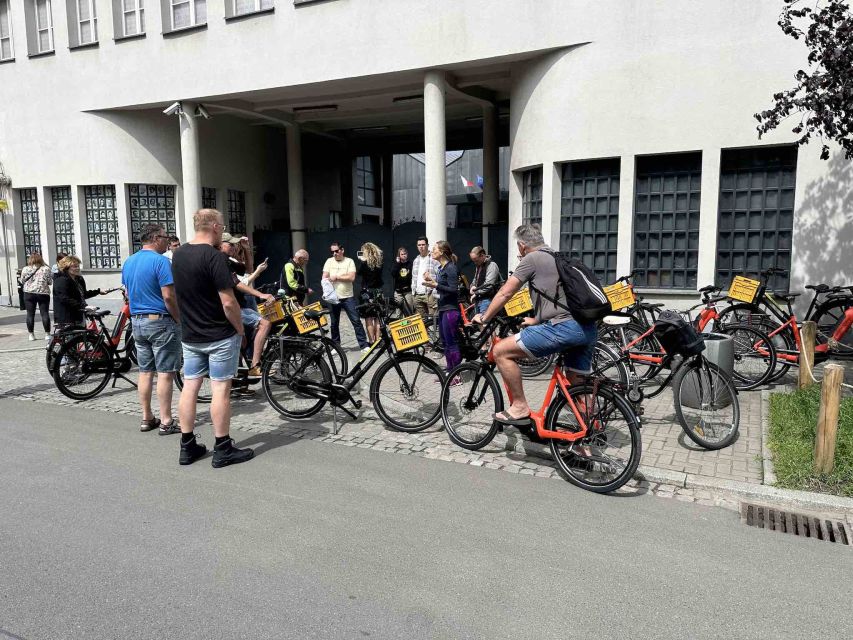
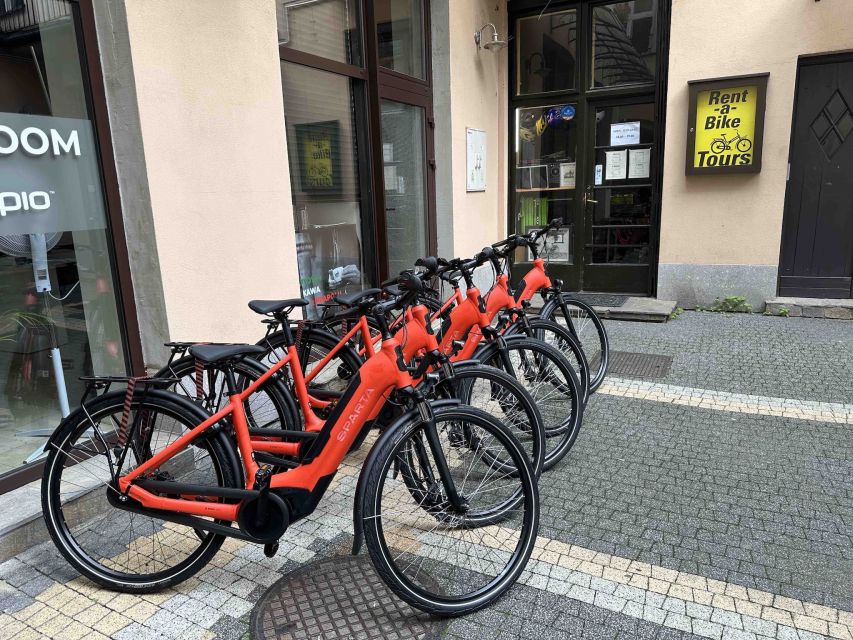
The bicycles are new Bosch e-bikes by Sparta, described as modern Dutch-style bikes. Several riders specifically liked their comfort and ease of use. If you have never used an e-bike, the guide explains the controls during the 10-minute safety briefing before the group leaves.
More Bike Tours in Kraków
- Complete Cracow Bike Tour (small group of maximum 15 people!)
★ 5.0 · 1,322 reviews - Krakow: Bike Tour of Old Town, Jewish Quarter and the Ghetto
★ 4.9 · 1,155 reviews - Highlights of Krakow Bike Tour – Small group
★ 5.0 · 662 reviews
Starting on Sławkowska Street
The meeting point is the bike rental location at Sławkowska 11, in the inner courtyard. The entrance is next to an exchange point, so allow a few minutes to find the courtyard rather than arriving at the last second.
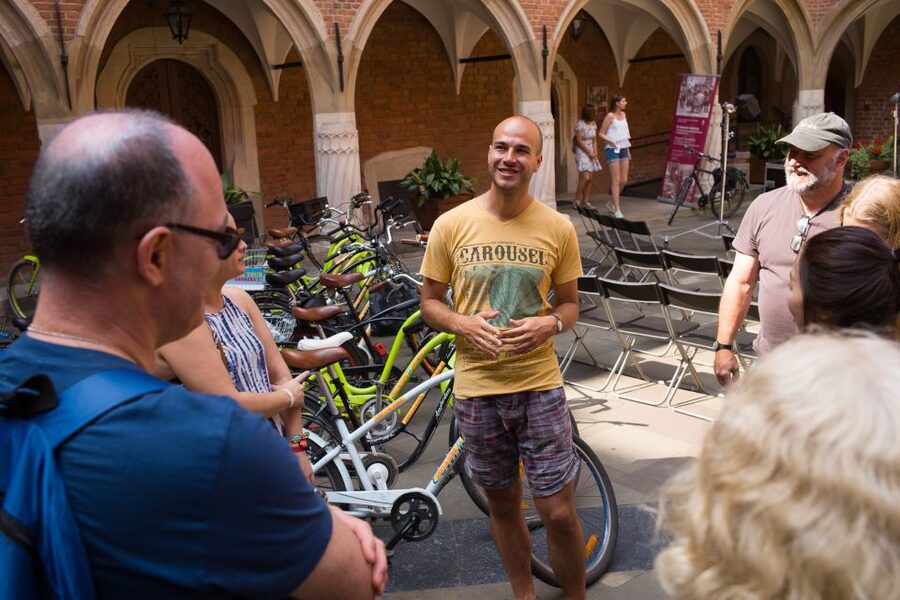
The tour begins with a safety briefing in the Old Town. This is when you should make sure the saddle feels right, test the brakes, and ask how the assistance works. Also check the bell before setting off. One participant found the bells broken, which would be inconvenient around crowds and pedestrians.
The maximum group size is 15. That is not a private tour, but it is small enough for a guide to keep an eye on the group and speak without a microphone. Some departures may be much smaller. One spring departure had only seven people, while another group had eight.
Old Town: Krakow’s medieval center
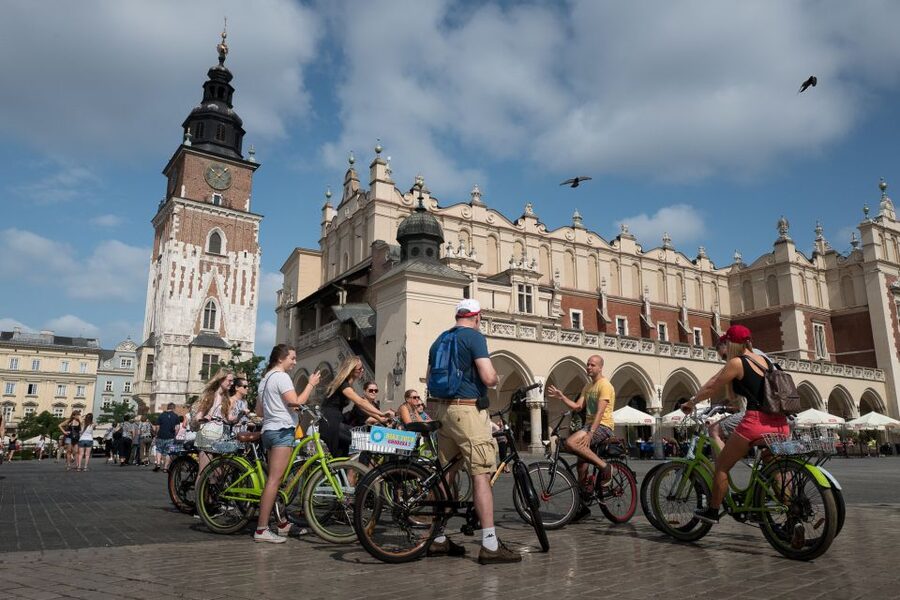
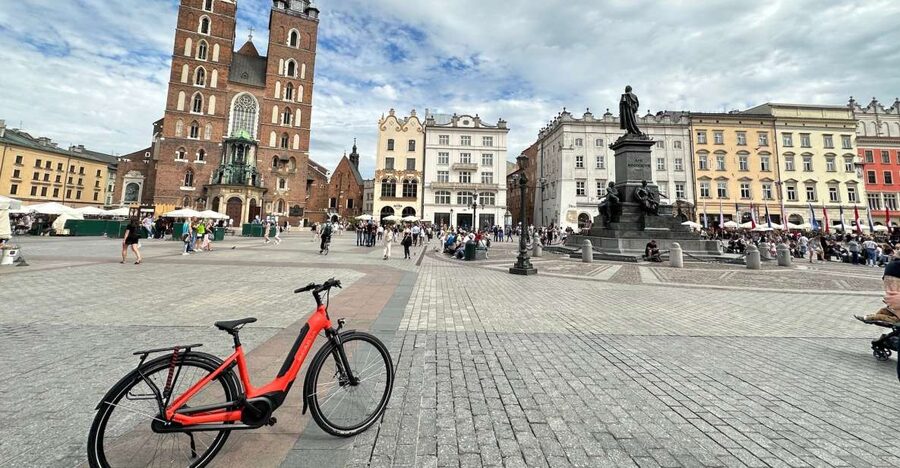
The first part covers the sights that most visitors associate with Krakow. You begin at the Main Market Square, the vast heart of the Old Town, with time for photos and a short explanation from the guide.
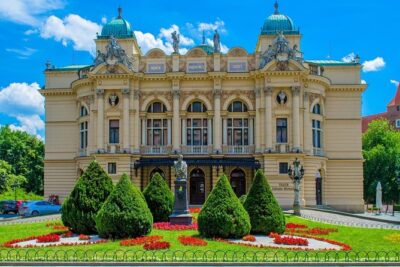
From there, the route passes the Juliusz Słowacki Theatre and Florian Gate. The theatre gives you a look at Krakow’s cultural life, while Florian Gate is one of the best-known remnants of the old city defenses. The nearby fortification remains help you picture the medieval city as a walled settlement rather than simply a collection of pretty streets.
You continue toward the Jagiellonian University quarter. This is a useful stop for understanding Krakow as a university city, not just a destination of churches and castles. The guide also points out Bishop’s Palace, another prominent Old Town landmark.
The ride through this section is not a race. Past participants describe the pace as easy and manageable, including for people who cycle only occasionally. That is important because you stop often for explanations and photographs. You are not expected to pedal hard between major sights.
The drawback is the setting. Krakow’s Old Town can become crowded, especially around the square. You may share space with pedestrians, carriages, and other bikes. The route uses quiet roads and cycle paths where possible, but you still need to slow down and stay alert.
Wawel Hill and the Vistula River
After the Old Town, the tour heads toward Wawel Royal Castle. Wawel is one of Krakow’s defining sights, and the guide explains its place in Poland’s royal story. You stop for photographs and a short talk rather than entering the castle buildings.
The Wawel Dragon statue is a lighter moment in the route. The legendary dragon is one of Krakow’s most recognizable symbols, and the stop breaks up the more formal castle history. It also gives you a memorable photo point near the river.
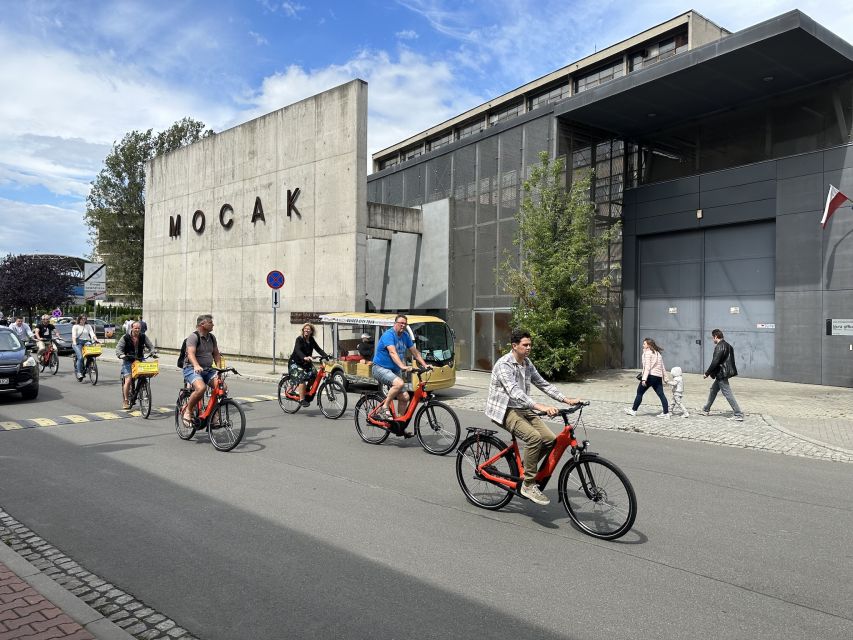
The ride then follows the Vistula boulevards. This is one of the calmer parts of the tour, with scenic views and more room to move. The river section provides a change from stone streets and crowded public squares before you enter Kazimierz.
I see this transition as one of the tour’s best features. You are not simply ticking off isolated sights. You get a sense of how the Old Town connects to the river and how the river leads toward the former Jewish district.
Something quite different:
- From Krakow: Auschwitz-Birkenau Guided Tour & Hotel Pickup
★ 4.5 · 33,358 reviews - From Krakow: Auschwitz-Birkenau Guided Tour & Hotel Pickup
★ 4.5 · 29,340 reviews - Krakow: Auschwitz Guided Tour with Optional Hotel Pickup
★ 4.5 · 15,280 reviews - Krakow–Zakopane: Cable Car, Chocholow Baths, Cheese & Vodka
★ 5.0 · 10,720 reviews
Kazimierz: markets, synagogues, and old streets
Kazimierz was historically Krakow’s Jewish quarter, and it has a distinct character from the medieval center. The route takes you through its old streets and quiet market areas, including Plac Nowy and Szeroka Street.
Plac Nowy is a good place to pause and observe the district’s everyday rhythm. Szeroka Street gives the guide room to explain the former Jewish community and the synagogues that remain part of the area’s identity. The value here comes from context. You see the streets first, then hear how the district changed over time.
The tour also passes through a passage associated with Schindler’s List. This connects the physical city to the films and stories many people know before arriving in Krakow. Your guide can help separate movie images from the actual places and events connected with them.
A break takes place around the Jewish Quarter, usually after more than two hours on some departures. You can get a drink and rest your legs. This is also a useful chance to ask questions, and one guide used the pause to sit with the group and answer them.
The break is simple, but it helps. Three hours on a bicycle is not strenuous with electric assistance, yet you are still sitting, steering, listening, and watching traffic for a long time.
Across Father Bernatek’s Bridge
The route continues across Father Bernatek’s Bridge. This short stop links Kazimierz with Podgórze, the district where the former Jewish ghetto was established during World War II.
The bridge is known for its suspended acrobatic sculptures, which give you an unusual photo opportunity. More important for the tour, it marks the movement from the former Jewish quarter into the area connected with the Holocaust and wartime occupation.
This section changes the mood. The earlier stops focus on royal Krakow, university life, city walls, and Jewish culture. The bridge leads into a much sadder chapter. A good guide needs to handle that shift with care, and the strongest comments about this tour praise the guides for making history clear and human rather than simply listing dates.
Ghetto Heroes Square and Schindler’s Factory
Ghetto Heroes Square is one of the most serious stops. The square commemorates the Jewish people forced into the Krakow ghetto during the Nazi occupation. The empty chair sculptures there create a powerful visual reminder of lives disrupted and belongings left behind.
The guide explains the square and the former ghetto area, giving you a basis for understanding what happened in this part of the city. The tour does not replace a museum visit, but it helps you place that history on the map.
The final major stop is Oskar Schindler’s Factory. You see the former factory building from outside and hear about its connection to Oskar Schindler and the wartime story made famous by the film Schindler’s List.
Entrance fees are not included, and this bicycle tour does not include an indoor visit. One participant specifically wished there had been time to enter some of the buildings along the route. I would treat the tour as an introduction, then return later if you want the full museum experience at Schindler’s Factory or more time inside Wawel.
The return to Sławkowska 11 completes the loop. By then, you have crossed several parts of the city and gained a practical sense of where you may want to spend the rest of your stay.
How much ground do you cover?
The advertised duration is three hours, but the actual outing can run longer. One detailed account describes a ride of roughly 12 kilometers lasting three and a half to four hours. That difference likely comes from the group’s pace, traffic, questions, and time spent at stops.
The listed sightseeing pauses are short, usually 5 to 15 minutes. In practice, you should not plan a tight appointment immediately after the tour. Treat the end time as approximate, especially if your group is interested in asking questions.
You cover a remarkable amount without feeling like you are being pushed through the city. The electric assistance does much of the physical work, while the frequent stops prevent the ride from becoming a blur of passing buildings.
Guides and the quality of the storytelling
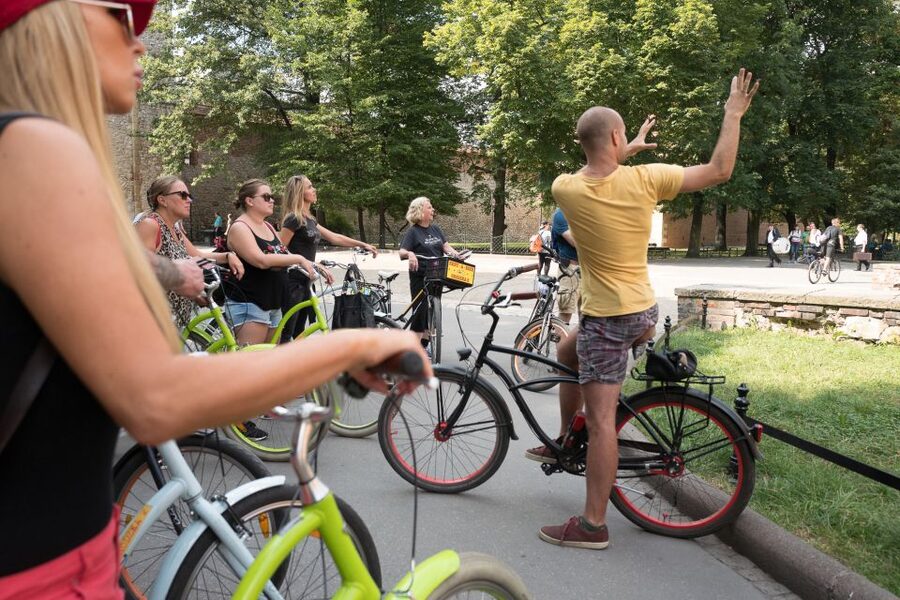
The guide can make or break a city tour, and this is where the experience receives its strongest praise. Chris is repeatedly described as friendly, engaging, and funny. Alex is praised for fluent English, patience, and a strong grasp of Krakow’s past. Krzysztof, also called Kristoff in one account, is described as charming and articulate.
Thomash is praised for making the city come alive and responding closely to the group’s needs. Other guides, including Zee, Margena, Max, and Michael, also receive strong marks for warmth and clear explanations.
The common thread is not just factual information. The guides tell stories, explain how districts developed, and answer questions. That makes a difference in Krakow, where the Old Town, Kazimierz, and the former ghetto can otherwise feel like separate sightseeing zones.
The language is English, and the guides are local. If you want a formal academic lecture, this may feel relaxed. If you want useful history mixed with humor and practical orientation, the format should suit you well.
Is $62 a fair price?
At $62 per person, this is not the cheapest way to see Krakow. You are paying for a three-hour guided experience, a Bosch e-bike, safety instruction, and a route that covers several districts without arranging transport between them.
The value is strongest during a first visit. You see the city’s main zones in one outing, learn how they connect, and can decide where to return for a longer visit. The tour can save you time and reduce the effort of crossing the city on foot.
It is less valuable if you already know Krakow well or mainly want interior visits. Entrance tickets are extra, and most stops are viewed from the street. You are buying orientation, transportation, and storytelling, not a series of museum admissions.
The score of 4.8 from 135 ratings supports the idea that the experience is consistently well received. Still, the practical limits matter more than the number: city cycling, outdoor weather, and a fairly full route.
Who should book it?
I would recommend this tour to first-time visitors who want a broad introduction before choosing where to return. It also suits people who like history but do not want to spend their entire first day inside museums.
It is a good fit for occasional cyclists because the route is flat and the motor reduces effort. You do need to ride confidently, steer around pedestrians, and share roads with cars. The experience is not suitable for children under 15, people who cannot ride a bike, or people with mobility impairments.
Teenagers aged 15 and older can enjoy it, provided they are comfortable cycling in an urban setting. One parent and teenage daughter had a particularly positive experience, stopping at several sights and using the break to ask questions.
Weather deserves attention. The bikes may make hills and distance easier, but they do not make a cold or wet day comfortable. One participant found the experience less enjoyable in cold weather. Dress for three hours outside and check the forecast before choosing your day.
Final verdict: a smart first look at Krakow
You should book this tour if you want to cover Krakow’s main districts efficiently, hear local stories, and keep the physical effort modest. The e-bikes are comfortable, the route is varied, and the guides receive unusually consistent praise for warmth, humor, and clear history.
You should skip it if you dislike cycling near pedestrians and cars, need extensive indoor sightseeing, or want a slow walking tour with long visits at each attraction. For most first-time visitors who can ride confidently, $62 is a reasonable price for a well-rounded introduction to Krakow.
Book it early in your stay if possible. The biggest benefit is not simply seeing the sights. It is learning the city’s shape, then knowing where to spend your time next.
FAQ
How long does the Krakow e-bike tour last?
The stated duration is three hours. Some departures may take three and a half to four hours, depending on the group, stops, questions, and traffic.
What areas of Krakow does the tour visit?
The route covers Krakow’s Old Town, the former Jewish quarter of Kazimierz, and the former World War II Jewish ghetto area in Podgórze.
Where does the tour start and finish?
Both the starting point and return point are at the bike rental location, Sławkowska 11, in the inner courtyard. The entrance is next to an exchange point.
What kind of bikes are provided?
The tour provides new Bosch e-bikes by Sparta. The electric motor assists your effort while you pedal. There is no throttle or lever.
Are entrance fees included?
No. Entrance fees are not included. The route includes photo stops and guided explanations at places such as Wawel Royal Castle and Oskar Schindler’s Factory, but admission is separate.
Is the tour suitable for children?
The tour is not suitable for children under 15. Everyone taking part must be able to ride a bicycle.
What is the maximum group size?
The small group has a maximum of 15 people. The guide speaks English, and the tour includes a safety briefing before departure.
More E-Bikes in Krakow
- 3-Hour E-Bike Tour In Krakow
★ 5.0 · 79 reviews - Krakow: Multilingual Tour On Electric Bikes
★ 4.8 · 9 reviews
Just added in Krakow
- Auschwitz-Birkenau – Skip the Line Tickets★ 3.5 · 29 reviews
- Auschwitz-Birkenau: Fast-Track Ticket & Guided Tour No Transfers★ 3.5 · 17 reviews
- Zakopane & Sleigh Ride with Bonfire – Group Tour from Kraków★ 5.0 · 2 reviews
- Sleigh Ride & Bonfire in Zakopane with Funicular – Private Trip★ 5.0 · 48 reviews
- Thermal Baths & Zakopane – Private Trip from Krakow★ 5.0 · 1 review
- Zakopane & Gubalowka Funicular – Private Winter Tour from Krakow★ 5.0 · 10 reviews
- Divine Mercy Sanctuary – Private Tour from Krakow★ 5.0 · 4 reviews
- stag dog chase Krakow prank★ 5.0 · 4 reviews
Cycling Tours, compared.
Complete Cracow Bike Tour (small group of maximum 15 people!)
Read our review →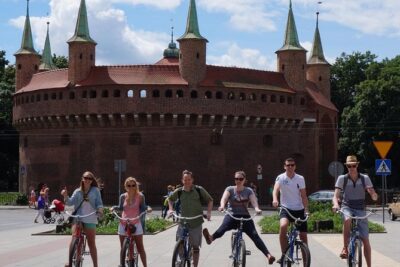
Half-Day Warsaw City Sightseeing Bike Tour for Small Group
Read our review →
Browse the lists this tour appears in