
REVIEW · CYCLING TOURS
Hidden Krakow Bike Tour
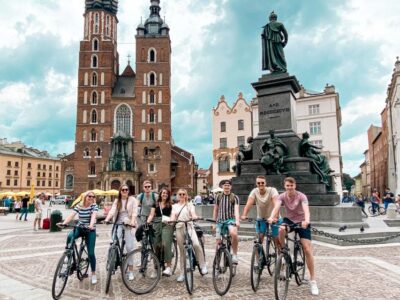
Krakow’s hardest stories are easier to follow on two wheels. I like this tour for its focus on Kazimierz and Podgorze, two districts tied closely to Krakow’s Jewish past and wartime story, and I like the small group limit of 15 people. The comfortable bikes, safe riding, and lively guides such as Bram Hoffman and Nikki add real value.
The main caution is the subject matter. Most of the three hours are devoted to World War II sites connected with the Jewish Ghetto, so this is not a light sightseeing ride. You also need to be ready for an afternoon start at 2 p.m. and a tour conducted in English.
In This Review
- Key points to know before booking
- Why a bike is a smart way to see this side of Krakow
- Starting at Józefa Dietla 59 at 2 p.m.
- Kazimierz and the stop at Skalka Basilica
- Podgorze takes up most of the afternoon
- The guides shape the experience
- Comfortable bikes and a manageable group
- Is $39.32 good value?
- Who will enjoy this ride most
- Booking, cancellation, and practical planning
- Should you book the Hidden Krakow Bike Tour?
- FAQ
- Where does the Hidden Krakow Bike Tour start?
- What time does the tour begin?
- How long does the tour last?
- Where does the tour end?
- Which language is the tour offered in?
- What areas does the tour visit?
- How many people can join the tour?
- Can I cancel for a full refund?
Key points to know before booking
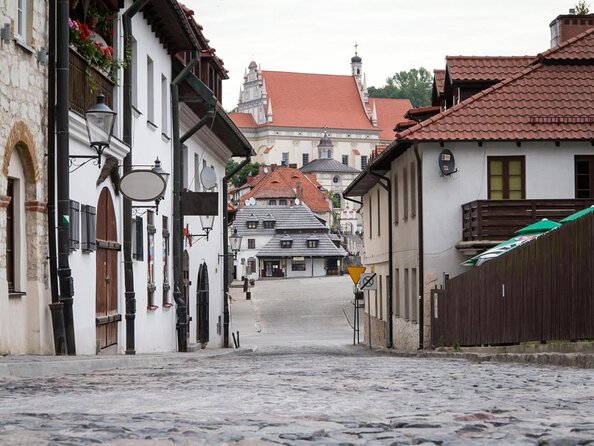
- Three hours on two wheels: You cover two important Krakow districts without spending the whole afternoon on foot.
- A serious focus on wartime history: The route includes Ghetto Heroes Square, part of the former ghetto wall, and a former resistance headquarters.
- A brief Kazimierz visit: The ride stops at Skalka Basilica and includes an introduction to Schindler’s List.
- Small group size: No more than 15 people can join, which makes it easier to hear the guide and ask questions.
- Comfortable, easy-to-ride bikes: The available feedback points to bikes that feel safe and manageable.
- Good flexibility: The $39.32 price includes a mobile ticket, and you can cancel free of charge up to 24 hours before departure.
Why a bike is a smart way to see this side of Krakow
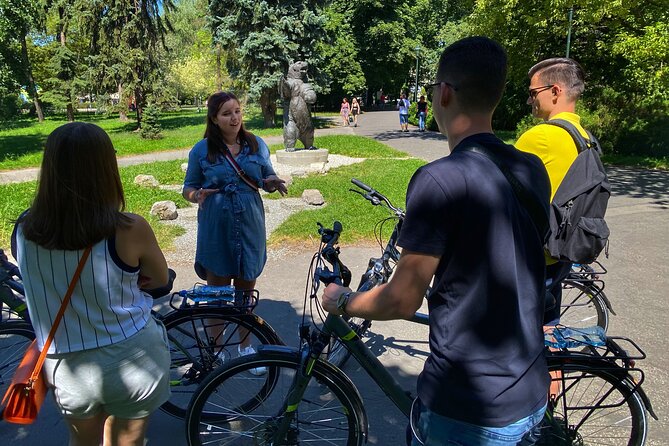
Krakow’s central districts are compact, but the historic points connected with Jewish life and wartime Krakow are spread across more than one neighborhood. A bike lets you move between Kazimierz and Podgorze without spending much of your limited sightseeing time waiting for transport or walking long stretches between stops.
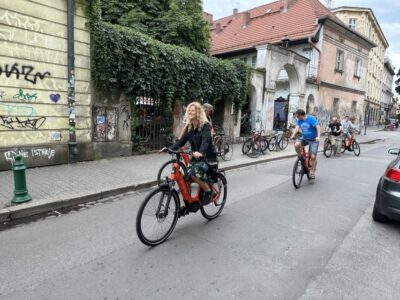
I also like the way cycling changes the pace of a history tour. You are not locked inside a museum for three hours. You move through ordinary streets, cross from one district to another, and see how the past sits alongside modern Krakow. That contrast can make the stories feel more immediate.
This is not a tour built around a long list of postcard views. Its value comes from the guide’s explanations and the route’s subject matter. The ride covers a smaller number of places, then gives those places time and context.
The group limit of 15 is useful here. At busy outdoor sites, a very large group can scatter or make it hard to hear. A group this size is still social, but it should be easier to stay with the guide and follow the explanation.
More Bike Tours in Kraków
- Complete Cracow Bike Tour (small group of maximum 15 people!)
★ 5.0 · 1,322 reviews - Krakow: Bike Tour of Old Town, Jewish Quarter and the Ghetto
★ 4.9 · 1,155 reviews - Highlights of Krakow Bike Tour – Small group
★ 5.0 · 662 reviews
Starting at Józefa Dietla 59 at 2 p.m.
The tour starts and ends at Józefa Dietla 59, in Krakow’s 31-054 postal district. The start time is 2 p.m., so plan your morning accordingly. You can use nearby public transportation to reach the meeting point, which helps if you are staying outside the old center.
Because the ride returns to the same place, you do not need to work out a second pickup point at the end. That is a small but useful detail, especially if you have dinner plans or another activity later in the day.
I would arrive with enough time to check in, get settled on the bike, and listen to the opening instructions. The tour lasts about three hours, and the listed timing gives roughly 15 minutes in Kazimierz and about 2 hours and 45 minutes in Podgorze. That tells you exactly where the emphasis lies.
The experience is offered in English. If you want a tour in another language, this is not the right choice. A mobile ticket is accepted, so you do not need to print a voucher.
Kazimierz and the stop at Skalka Basilica
The first stop is Kazimierz, Krakow’s former Jewish district. The visit includes Skalka Basilica, a notable church in the area, and a short introduction to the film Schindler’s List.
The stop is listed at 15 minutes, so keep your expectations in check. This is an orientation stop rather than a full visit to every major sight in Kazimierz. You will get a quick sense of the district and some film context before the tour moves on.
That brief introduction can be useful if Schindler’s List is part of your reason for visiting Krakow. The film has shaped many people’s understanding of the city’s wartime story, and hearing how it connects with the places around you helps put the movie in a real setting.
At the same time, I would not book this tour expecting a detailed film-location tour. The information provided promises a short introduction, not a full analysis of the movie or a long list of filming spots.
Kazimierz also gives the ride an important starting point. You begin with the area before the group moves toward Podgorze and the former Jewish Ghetto. That order helps you see the districts as connected parts of Krakow’s story, rather than as isolated stops.
Podgorze takes up most of the afternoon
The tour gives about 2 hours and 45 minutes to Podgorze, the district associated here with the Jewish Ghetto during World War II. This is the heart of the experience and the reason to choose this tour over a general city bike ride.
The route visits several locations tied to the war, including Ghetto Heroes Square, a surviving section of the wall that once surrounded the ghetto, and the former headquarters of the resistance. These are not just names on a map. Together, they show how the ghetto was organized, controlled, and resisted.
Ghetto Heroes Square is especially important because it gives the tour a clear place to pause and discuss the people affected by the ghetto system. The remaining wall offers a physical reminder of the boundaries imposed on the Jewish population. A former resistance headquarters adds another layer, showing that the story was not only about forced confinement but also about opposition and courage.
The long stop in Podgorze allows the guide to explain connections between the sites. That is a major strength. If you visited each place alone, you might see a square, a wall fragment, and a building without understanding how they fit together. On a guided route, the movement between places becomes part of the lesson.
This section may feel emotionally heavy. That is not a flaw, but it matters when choosing your afternoon. The tour asks you to pay attention to difficult history, and the length of the Podgorze visit means the subject is treated as the main event rather than a quick mention.
Something quite different:
- From Krakow: Auschwitz-Birkenau Guided Tour & Hotel Pickup
★ 4.5 · 33,358 reviews - From Krakow: Auschwitz-Birkenau Guided Tour & Hotel Pickup
★ 4.5 · 29,340 reviews - Krakow: Auschwitz Guided Tour with Optional Hotel Pickup
★ 4.5 · 15,280 reviews - Krakow–Zakopane: Cable Car, Chocholow Baths, Cheese & Vodka
★ 5.0 · 10,720 reviews
The guides shape the experience
The guide matters greatly on a tour like this. Bram Hoffman is praised for being informative and fun while leading a Krakow bike tour, and the bikes were described as comfortable, easy to ride, and safe. Nikki is also specifically associated with explaining World War II and communism during the hidden Krakow ride.
Those details suggest a useful balance. The tour is serious, but it does not need to feel stiff or academic. A guide who can explain difficult events clearly while keeping the group relaxed makes a three-hour ride easier to follow.
I would still remember that guide style can vary from one departure to another. Bram and Nikki are named examples, but the supplied information does not promise that either person will lead your particular date. The strongest reason to book is the route and subject, with the guide’s personality as an added benefit.
The English language format also makes the quality of explanation important. You will want to follow dates, places, and historical connections while riding and stopping outdoors. A small group should help, but staying close to the guide remains your responsibility.
Comfortable bikes and a manageable group
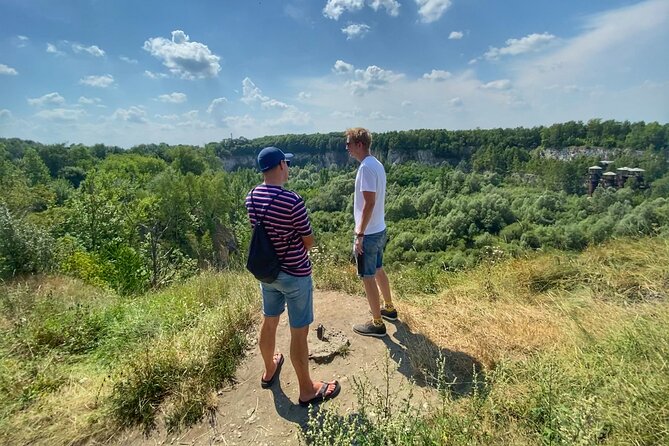
The available feedback is especially positive about the bicycles. They were described as comfortable, easy to ride, and safe, which is exactly what you want on a three-hour city route. You are not signing up for a test of athletic ability.
That said, the tour still requires you to be comfortable cycling for several hours. The information does not specify the exact distance, terrain, bike model, helmet arrangements, or support for people who do not cycle often. If you have concerns about riding, contact Mijn Krakau Tours before booking rather than assuming every detail.
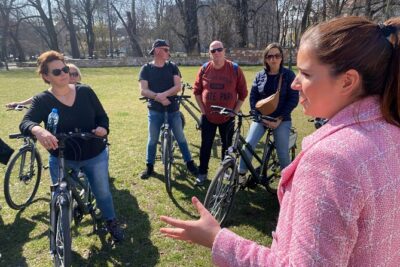
The group maximum is 15 people. This is not a private tour, but it is smaller than a large coach-style outing. I like that size for outdoor history: you can keep moving, yet the guide can still address questions without turning every stop into a formal lecture.
Group discounts are available, which may make the price more appealing if you are booking with family or friends. The tour is also suitable for most participants according to the supplied information, though that broad statement does not provide a detailed accessibility assessment.
Is $39.32 good value?
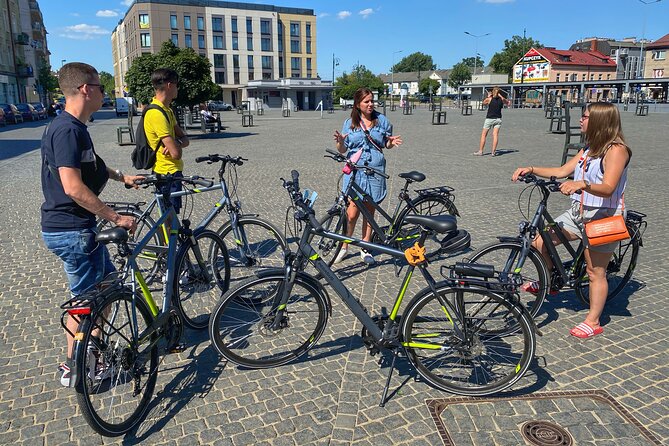
At $39.32 per person, this is reasonably priced for a three-hour guided activity, particularly because it combines equipment, a guide, and transport between districts by bike. You are paying for more than a rental bike. The main purchase is the route and the historical explanation that connects its stops.
The value is strongest if you want to understand Krakow’s wartime past. A casual cyclist looking only for pretty streets may find the tour too focused on history. But if you want context for Kazimierz, Podgorze, the ghetto, and the film connection, the price is easier to justify.
The free admission at the listed stops also keeps the cost simple. There are no additional entry tickets mentioned for Skalka Basilica, Ghetto Heroes Square, the wall remnant, or the former resistance headquarters. This appears to be an outdoor route, so you are not paying for access to a string of paid museums.
The tour is booked around 14 days in advance on average. I would take that as a practical reason to reserve ahead, especially if your Krakow dates are fixed or you want a small group. The price is not so low that you should book without checking your schedule, but it is fair for the amount of guided time.
Who will enjoy this ride most
I would recommend the tour to you if you want an active way to learn about Krakow and do not mind spending most of the afternoon with World War II history. It suits first-time visitors who want a structured introduction to Kazimierz and Podgorze.
It also works well for people who prefer outdoor sightseeing to long museum visits. You get movement, neighborhood views, and stops where the guide can explain what happened in each place.
Film fans may enjoy the short Schindler’s List connection, but you should not choose the tour solely for movie locations. The film is one part of the introduction, while the Jewish Ghetto and wartime sites make up most of the ride.
I would be more cautious about booking it for young children who may not cope well with serious historical topics. The supplied information says most participants can take part, but it does not give a child age range or family-specific format.
You should also think about timing. A 2 p.m. start leaves your morning free, but the tour can occupy a large portion of the afternoon. Since it returns to Józefa Dietla 59, you can plan from there, but allow yourself a little breathing room before a fixed evening booking.
Booking, cancellation, and practical planning
Confirmation is provided when you book, and the mobile ticket is useful if you are organizing your Krakow plans from your phone. The meeting point is near public transportation, and the tour ends at the same location where it begins.
Free cancellation is available until 24 hours before the local start time. If you cancel later, the amount paid is not refunded, and changes made within that final 24-hour period are not accepted.
The tour requires a minimum number of participants. If Mijn Krakau Tours cancels because that minimum is not reached, you will be offered another date or experience, or you can receive a full refund.
I would check the forecast before setting out and wear clothes suitable for three hours outdoors. The supplied information does not list weather arrangements, so ask the operator if poor conditions are a concern.
Should you book the Hidden Krakow Bike Tour?
Book it if you want a focused, thoughtful ride through Kazimierz and Podgorze, with the former Jewish Ghetto receiving most of the attention. The strongest reasons are the clear route, the small group, the comfortable bikes, and the chance to hear World War II and resistance history explained on location.
Skip it if you want a broad tour of Krakow’s main attractions, a long visit inside Kazimierz, or a casual ride with only light commentary. This experience is best when you are ready to listen, think, and keep cycling.
For $39.32, I see solid value in the combination of equipment, guide, and nearly three hours devoted to meaningful places. Reserve ahead if the 2 p.m. English departure fits your plans, and leave enough time afterward to reflect on what you have seen.
FAQ
Where does the Hidden Krakow Bike Tour start?
The tour starts at Józefa Dietla 59, 31-054 Kraków, Poland.
What time does the tour begin?
The start time is 2 p.m.
How long does the tour last?
The tour lasts approximately three hours.
Where does the tour end?
The activity ends back at the starting point on Józefa Dietla 59.
Which language is the tour offered in?
The tour is offered in English.
What areas does the tour visit?
The route visits Kazimierz, the former Jewish district, and Podgorze, including sites connected with the Jewish Ghetto during World War II.
How many people can join the tour?
The tour has a maximum group size of 15 people.
Can I cancel for a full refund?
Yes. You can cancel for a full refund up to 24 hours before the experience start time. Cancellations or changes made less than 24 hours before departure are not refunded.
Just added in Krakow
- Auschwitz-Birkenau – Skip the Line Tickets★ 3.5 · 29 reviews
- Auschwitz-Birkenau: Fast-Track Ticket & Guided Tour No Transfers★ 3.5 · 17 reviews
- Zakopane & Sleigh Ride with Bonfire – Group Tour from Kraków★ 5.0 · 2 reviews
- Sleigh Ride & Bonfire in Zakopane with Funicular – Private Trip★ 5.0 · 48 reviews
- Thermal Baths & Zakopane – Private Trip from Krakow★ 5.0 · 1 review
- Zakopane & Gubalowka Funicular – Private Winter Tour from Krakow★ 5.0 · 10 reviews
- Divine Mercy Sanctuary – Private Tour from Krakow★ 5.0 · 4 reviews
- stag dog chase Krakow prank★ 5.0 · 4 reviews
Cycling Tours, compared.
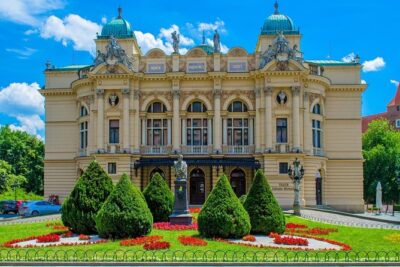
Complete Cracow Bike Tour (small group of maximum 15 people!)
Read our review →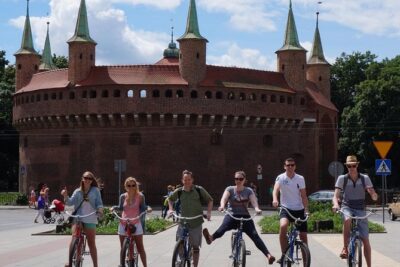
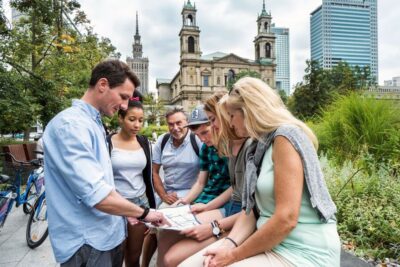
Half-Day Warsaw City Sightseeing Bike Tour for Small Group
Read our review →
Browse the lists this tour appears in