
REVIEW · SCHINDLER'S FACTORY TOURS
Schindler’s Factory and Jewish Ghetto Guided Tour
Kraków’s wartime story reaches far beyond one name. This three-hour tour links Schindler’s Factory with the former ghetto, helping you see how Oskar Schindler’s choices fitted into the wider suffering of occupied Kraków. I especially like the original artifacts and period reconstructions, plus the walk to the preserved ghetto walls and Ghetto Heroes Square. The main drawback is pace: several visitors felt the museum portion moved too quickly for careful reading.
The tour works best when your guide adds human detail to the displays. Guides such as Alicja, Joanna, Magda, Bartholomew, and Phil have been praised for clear explanations and warm, thoughtful storytelling. You should also know that the factory is now a museum, not a preserved working plant, and the Under the Eagle Pharmacy is viewed from outside rather than entered.
In This Review
- Key points to know before you book
- Starting at Schindler’s Factory
- Inside the exhibition, Kraków under occupation
- Why Schindler’s story needs the wider picture
- Walking through the former Kraków Ghetto
- Ghetto Heroes Square and the Chair Memorial
- The Under the Eagle Pharmacy from the outside
- What the guides add to the experience
- Is $57 a fair price?
- Planning the three hours well
- Who should choose this tour?
- Should you book Schindler’s Factory and the Ghetto?
- FAQ
- How long does the Schindler’s Factory and Jewish Ghetto tour last?
- Where is the meeting point?
- What does the price include?
- Are food and drinks included?
- Can I visit the original factory equipment?
- Does the tour enter the Under the Eagle Pharmacy?
- What languages are available?
- How large is the tour group?
- What happens if I arrive late?
Key points to know before you book
- A museum and walking tour in one: Begin inside Schindler’s Factory, then continue through the former Kraków Ghetto.
- The exhibition covers more than Schindler: You’ll learn about Jewish and non-Jewish residents, occupation, forced confinement, deportations, and daily survival.
- Original objects meet reconstructed spaces: Photographs, personal belongings, and recreated streets help make the 1939 to 1945 period easier to understand.
- The ghetto walls are still visible: The surviving fragments offer a direct, sobering reminder of enclosure and separation.
- The group can reach 25 people: That keeps the tour manageable, but a full group may feel crowded inside the museum.
- The language choice matters: Tours run in English, French, Spanish, German, or Italian, with one language used for the whole group.
Starting at Schindler’s Factory
You meet your guide at the main entrance to Schindler’s Factory Museum, on the right-hand side, where they hold a Schindler’s Factory Guided Tour sign. Arrive at least 10 minutes early. Once the group has entered, late arrivals cannot be admitted, and the tickets are not refundable.
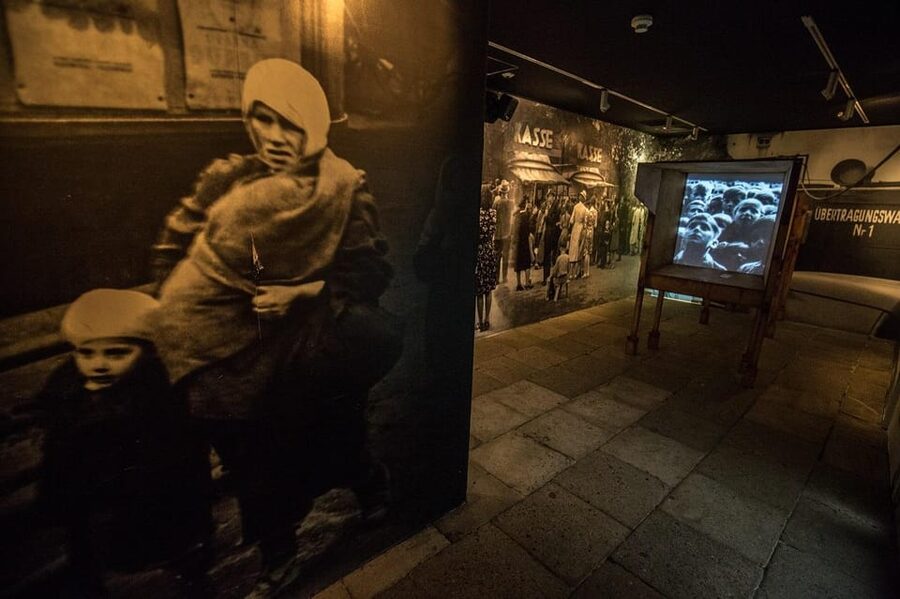
Fast-track admission is included, which is useful at a museum that draws large numbers. The building itself once housed Oskar Schindler’s enamel factory, but you should set your expectations correctly. It no longer contains the original production equipment. Today, it houses the exhibition Kraków under Nazi Occupation 1939 to 1945.
That distinction matters. You are not walking through a preserved factory floor in the usual sense. Instead, you are entering a carefully arranged museum that uses rooms, photographs, objects, sound, and reconstructed settings to explain the city during the war.
I like this approach because it puts Schindler into context. His story is important, but the tour does not treat him as the only subject. You also hear about the people who lived in Kraków before the German occupation, the restrictions imposed during the war, and the pressure placed on both Jewish and non-Jewish residents.
More Schindler Factory tours:
- Krakow: Oskar Schindler’s Factory Entry Ticket & Guided Tour
★ 4.2 · 3,793 reviews - Krakow: Schindler’s Factory Tour with Entrance Ticket
★ 4.5 · 3,182 reviews - Krakow: Schindler’s Factory Skip-the-Line Ticket
★ 4.4 · 3,105 reviews
Inside the exhibition, Kraków under occupation
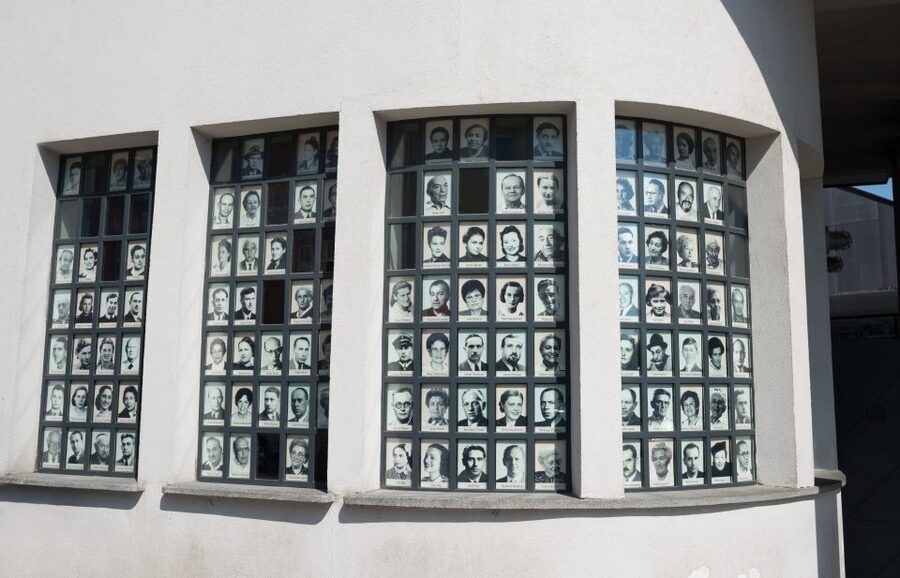
The museum’s central value is its wider view. Schindler employed Jewish workers and used his influence and resources to protect more than a thousand people from deportation. Those workers, often called Schindlerjuden, are part of the story, but the exhibition also shows the circumstances that made their survival so uncertain.
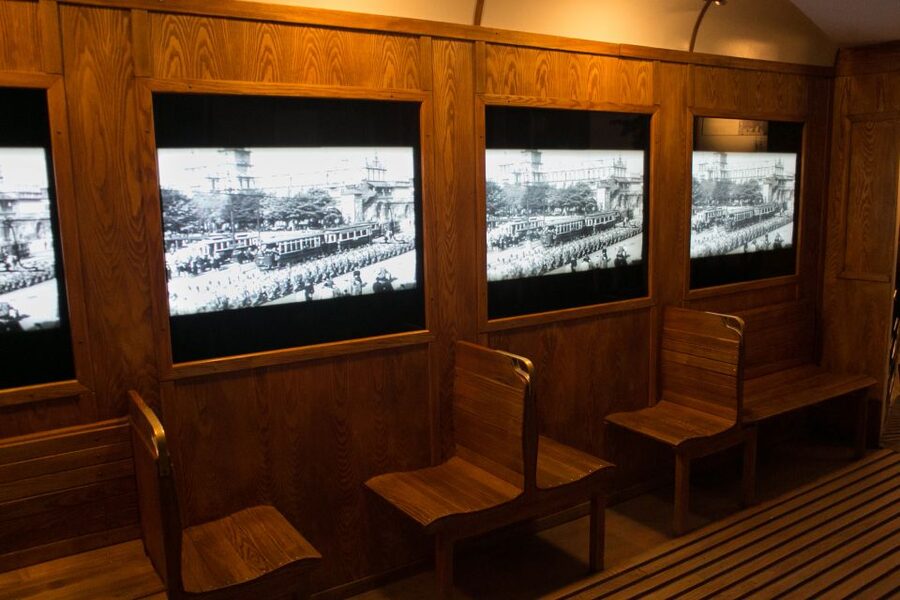
Your guide explains how ordinary routines changed under Nazi rule. Photographs and personal objects help show the loss of freedom in ways that dates and political names alone cannot. Reconstructed streets give the exhibition a physical setting, while the narrow passageways and enclosed layout can make the visit feel deliberately tight and pressured.
This is an emotionally serious museum. It deals with confinement, fear, forced labor, deportation, and the destruction of Kraków’s Jewish population. I would not plan it as a light morning activity before lunch. Give yourself a little quiet time afterward.
The strongest guides make the exhibition easier to follow without turning it into a lecture. Bartholomew was praised for clear English and detailed explanations. Joanna helped connect the factory displays to the later ghetto walk, and Alicja was especially praised for bringing the period’s Polish and Jewish experiences into the conversation.
A good guide also helps you notice details you might pass on your own. The museum can be busy, and the displays contain plenty of photographs and written material. You may understand the broad story on a guided visit but have less time to read every panel.
That is the chief compromise. A private or self-guided visit may let you study the exhibits at your own speed. This tour gives you a clear narrative and fast-track entry, but a full group of up to 25 people can make it harder to pause. Two people specifically felt rushed through the factory section, while another found a group of about 20 made movement inside the museum more difficult.
Why Schindler’s story needs the wider picture
The popular image of Oskar Schindler comes from his decision to protect Jewish workers. That story deserves attention, but it can also become too tidy if separated from the surrounding events.
This tour places his actions inside a city under siege. You learn how a business, a workforce, and official orders interacted during the occupation. You also hear about the people who depended on employers, neighbors, medical workers, and other small networks of help.
The point is not that one person erased the crimes of the period. The point is that individual decisions could affect life and death, even within a system built on terror. The museum’s photographs, objects, and recreated streets help you understand both the scale of the persecution and the personal choices made within it.
I find this balance more useful than a tour focused only on the film connection. You do not need to have seen Schindler’s List, though familiarity with the story may give you a few reference points. The experience is really about Kraków and its residents, not about movie locations.
Walking through the former Kraków Ghetto
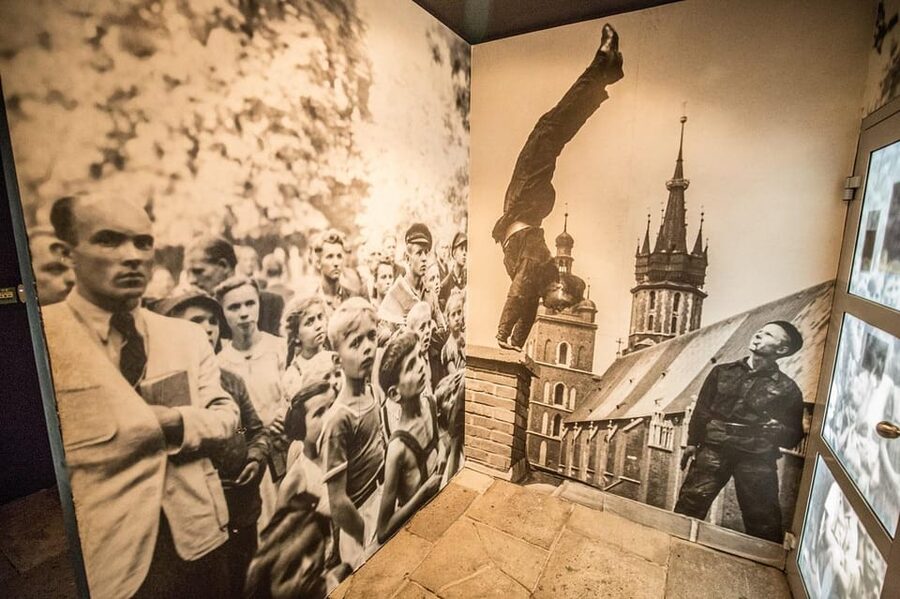
After the museum, the tour moves outdoors into the remnants of the Kraków Ghetto. This shift from indoor displays to ordinary city streets is one of the best parts of the experience. The buildings are not all preserved as they were during the war, so the guide’s explanation is essential.
The first notable stop is Józefińska 41. The address once served several vital purposes inside the ghetto, including an orphanage, welfare offices, and a hospital. Those functions show how residents tried to maintain care and order in a place created for confinement.
This is where the walk adds something the museum cannot fully provide. You are no longer looking only at objects behind glass. You are standing in the district where people were forced to live, work, seek medical help, and wait for news. The modern surroundings can feel jarring, but that contrast is part of the lesson.
The surviving fragments of the ghetto wall are especially powerful. They show the physical reality of the enclosure more clearly than a map can. The walls marked separation, controlled movement, and the removal of people from the ordinary life of Kraków.
Wear comfortable shoes. The outdoor section is a walking tour, and the weather can affect your comfort. One winter participant found the tour very cold, so warm clothing is not optional in the colder months. Rain protection also makes sense when the forecast is poor.
More Jewish heritage tours in Krakow:
- Krakow: Schindler’s Factory & Ghetto Guided Tour
★ 4.7 · 1,694 reviews - Krakow: Jewish Quarter and Former Ghetto Tour
★ 4.9 · 1,441 reviews - Krakow: Bike Tour of Old Town, Jewish Quarter and the Ghetto
★ 4.9 · 1,155 reviews - Krakow: Kazimierz Jewish Quarter Walking Tour
★ 4.8 · 571 reviews
Ghetto Heroes Square and the Chair Memorial
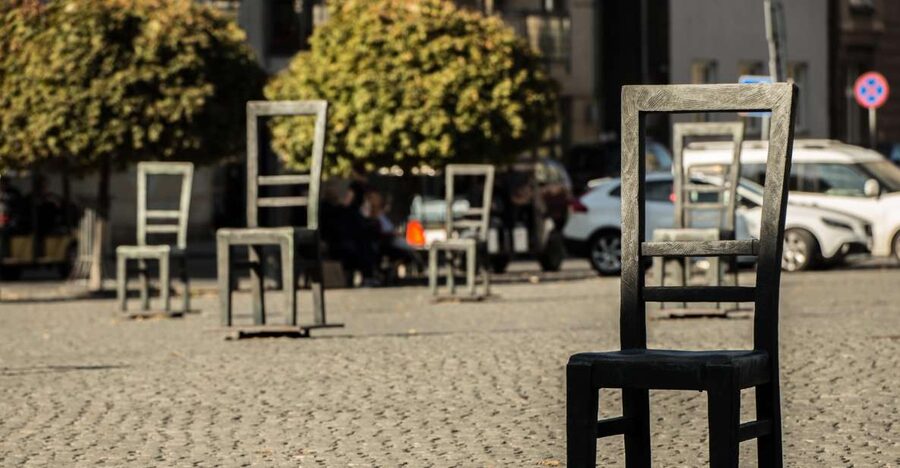
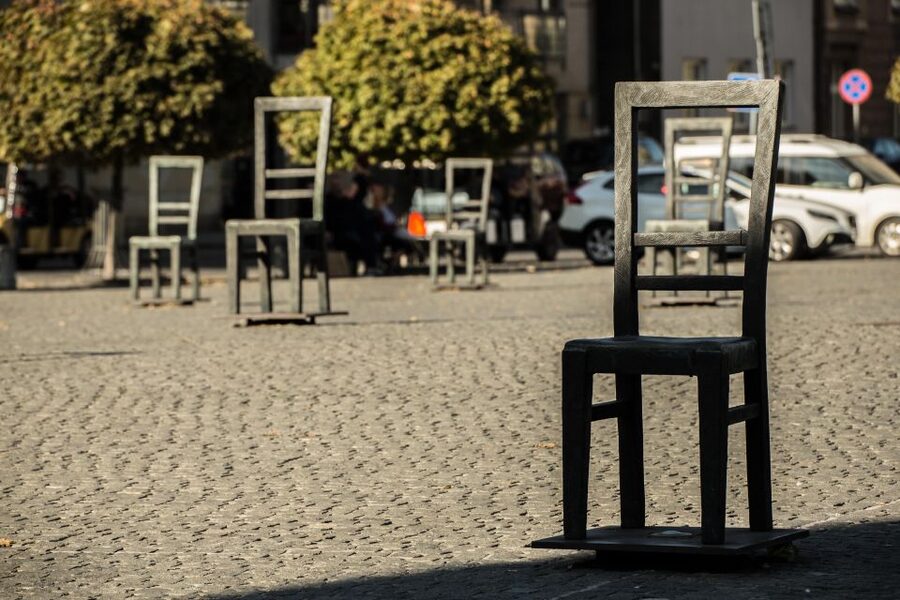
The route continues to Ghetto Heroes Square, now marked by the Chair Memorial. The empty chairs are a simple symbol, but they make the square feel unusually quiet and exposed.
Your guide explains how this open space was used during round-ups and deportations to concentration camps. People were gathered there, separated from their homes and possessions, and forced to wait for what came next.
This stop benefits from a guide who can explain the location without rushing. The square itself does not tell you everything. Without context, you might see it as another urban plaza. With the history explained, its role becomes much harder to ignore.
Some of the information from the factory museum may be repeated here, especially if the same guide is leading both parts. That repetition can help fix key facts in your mind, but it may feel unnecessary if you have just heard the same material indoors. The order of the tour, museum first and ghetto second, generally works well because you arrive at the square with the broader story already in place.
The Under the Eagle Pharmacy from the outside
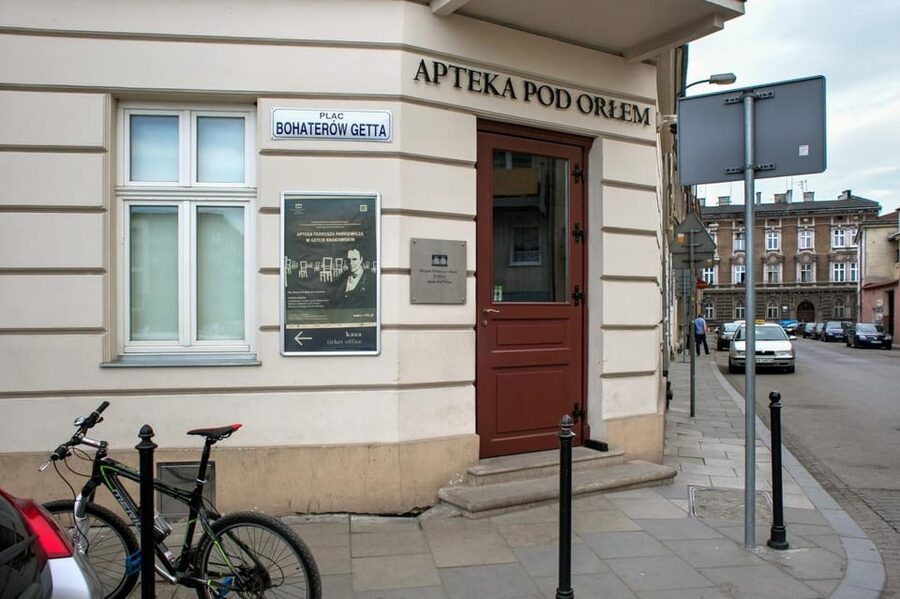
Across from the square is the former Under the Eagle Pharmacy. Tadeusz Pankiewicz and his staff risked their safety to help Jewish residents by providing medicine, shelter, and hope.
The pharmacy’s story is a useful reminder that aid did not always come through grand gestures. Medical care, information, a place to hide, or a trusted person willing to help could matter enormously.
The tour stops at the pharmacy, but admission inside is not included. That is worth knowing before you book. You will hear the story and see the building from outside, but you should not expect a full pharmacy museum visit as part of these three hours.
One person specifically wished for more time at the pharmacy and more detail about individual families during the ghetto walk. I think that is a fair limitation. The stop is meaningful, but the outdoor portion is fairly compact. If you want a longer visit inside the pharmacy, you would need to arrange that separately.
What the guides add to the experience
The guide is the difference between this being a sequence of locations and a connected historical experience. The most praised qualities are clear speech, strong command of the subject, patience, and the ability to answer questions.
That matters in a museum with a lot of material. A guide can explain which details deserve your attention and connect Schindler’s workers to the wider fate of Kraków’s Jewish population. On the walk, the guide gives meaning to addresses and open spaces that might otherwise pass without notice.
English-language guides have received especially warm praise, including Bartholomew, Joanna, Alicja, Magda, and Phil. That does not guarantee who will lead your departure, but it gives you an idea of the standard you can hope for. The multilingual option is useful, though you must select one language at booking, and each group tour is conducted in a single language.
The group limit is 25 people. That is not a tiny group, and the museum’s narrow layout can make a large group feel crowded. Still, a licensed guide and fast-track entry can be worth the trade-off if you want a planned explanation rather than figuring out the museum alone.
Is $57 a fair price?
At $57 per person, this is not the cheapest way to see Schindler’s Factory. The price includes a licensed guide, fast-track museum admission, and the walking tour of the wartime district. It does not include food or drinks.
The value depends on how you like to visit museums. If you prefer to read every label, take your time with photographs, and stop whenever you wish, the guided format may frustrate you. The museum is popular, and the guide needs to keep the group moving.
If you want the history explained in a logical order, the price is easier to justify. You receive the museum context first, then see the ghetto locations connected to it. That saves you from arranging separate tickets, researching each stop, and trying to work out how the sites fit together.
I see this as a good choice for a first visit to Kraków’s wartime sites, especially if you have limited time. It is less suitable for someone who has already studied the subject closely and wants a slow, research-focused museum visit.
Planning the three hours well
The tour lasts three hours, with the exact start time depending on availability and site scheduling. Times are approximate and may change because of museum or location requirements.
Choose your language carefully. English, French, Spanish, German, and Italian are available, but the whole group uses one selected language.
Provide the full names of everyone in your party when booking. The museum issues personalized tickets, and missing names can lead to denied entry. You can reserve now and pay later, and cancellation is available up to 24 hours before the start for a full refund.
Plan for both indoor and outdoor conditions. The museum has narrow passageways and an enclosed layout, while the ghetto section requires walking outside. Bring shoes suited to walking and clothing appropriate for the forecast.
I would also avoid scheduling something demanding immediately afterward. The subject is heavy, and the museum can be crowded. A little spare time gives you room to process what you have seen instead of racing straight to the next attraction.
Who should choose this tour?
I would recommend it to first-time visitors who want a clear introduction to Schindler, the occupation of Kraków, and the former ghetto. It suits adults, history-minded visitors, and anyone who values personal stories alongside major events.
It is also useful for people who want the museum and outdoor sites connected by one narrative. The factory visit explains the background, while Józefińska 41, the wall fragments, Ghetto Heroes Square, and the pharmacy show how that history affected real places.
You may want another option if you read slowly, dislike group pacing, or want extensive time with every exhibit. In that case, an independent museum visit could give you more freedom, though you would lose the guide’s explanations and the organized walk.
Should you book Schindler’s Factory and the Ghetto?
Book this tour if you want strong historical context, a licensed guide, and an efficient way to connect the museum with the former ghetto. The combination is more useful than visiting Schindler’s Factory alone because it moves the story from displays into the streets.
Go in knowing that the factory is now a museum, the pharmacy is viewed from outside, and the group may move quickly through crowded rooms. Arrive early, dress for the weather, and treat the three hours as a serious history visit rather than a casual sightseeing stop.
For most first-time visitors, I think the $57 price is reasonable for the structure, entry, and guiding. If you want maximum freedom inside the museum, skip the group tour. If you want the city’s wartime story explained by someone who can connect the details, this is a worthwhile choice.
FAQ
How long does the Schindler’s Factory and Jewish Ghetto tour last?
The tour lasts three hours. Start times vary, so you need to check availability when booking.
Where is the meeting point?
Meet your guide in front of the main entrance to Schindler’s Factory Museum, on the right-hand side. The guide will hold a Schindler’s Factory Guided Tour sign.
What does the price include?
The $57 price includes a professional licensed guide, fast-track admission to Schindler’s Factory, and the walking tour of the Jewish Wartime District.
Are food and drinks included?
No. Food and drinks are not included in the tour price.
Can I visit the original factory equipment?
No. The building originally functioned as Schindler’s factory, but it is now a museum and no longer contains the original production equipment.
Does the tour enter the Under the Eagle Pharmacy?
No. The tour stops at the Under the Eagle Pharmacy and explains its history, but entry inside is not included.
What languages are available?
Tours are offered in English, French, Spanish, German, and Italian. Each group tour is conducted in one language.
How large is the tour group?
Museum group tours are limited to 25 participants. A group of this size can still feel crowded in the museum’s narrow passageways.
What happens if I arrive late?
You should arrive at least 10 minutes before the start. Once the group has entered, late arrivals cannot be accommodated, and the tickets are non-refundable.
Just added in Krakow
- Auschwitz-Birkenau – Skip the Line Tickets★ 3.5 · 29 reviews
- Auschwitz-Birkenau: Fast-Track Ticket & Guided Tour No Transfers★ 3.5 · 17 reviews
- Zakopane & Sleigh Ride with Bonfire – Group Tour from Kraków★ 5.0 · 2 reviews
- Sleigh Ride & Bonfire in Zakopane with Funicular – Private Trip★ 5.0 · 48 reviews
- Thermal Baths & Zakopane – Private Trip from Krakow★ 5.0 · 1 review
- Zakopane & Gubalowka Funicular – Private Winter Tour from Krakow★ 5.0 · 10 reviews
- Divine Mercy Sanctuary – Private Tour from Krakow★ 5.0 · 4 reviews
- stag dog chase Krakow prank★ 5.0 · 4 reviews