
REVIEW · SCHINDLER'S FACTORY TOURS
Krakow: Schindler’s Factory Tour with Entrance Ticket
History here does not stay behind glass. Schindler’s Enamel Factory gives you a powerful look at Krakow under Nazi rule, with original photographs, objects, reconstructed rooms, and stories about the people who lived through the occupation. I especially like the expert-led storytelling and the chance to walk straight past what can be a long ticket queue. The main thing to understand is that this is more a museum of wartime Krakow than a full biography of Oskar Schindler.
The 90-minute visit is tightly paced and often emotional. I like that Schindler’s role is placed within the wider story of persecution, deportation, the Krakow ghetto, and the destruction of the city’s Jewish community. You should also know that the narrow rooms can feel crowded, especially with the maximum group size of 25.
In This Review
- Key points at a glance
- What this Schindler’s Factory tour really covers
- Entering the former enamel factory
- Krakow before the war
- The occupation through photographs and objects
- The Krakow ghetto and life under Nazi rule
- Schindler’s role and the factory office
- Why the guide is worth paying for
- Is $49 a fair price?
- Who should book this experience?
- Practical advice before you go
- Should you book the Schindler’s Factory tour?
- FAQ
- How long does the Schindler’s Factory tour last?
- What languages are available?
- Does the tour include skip-the-line admission?
- Is Oskar Schindler the main focus of the museum?
- Is the original factory machinery still inside?
- How large can the tour group be?
- Do I need identification?
- What happens if I arrive late?
Key points at a glance
- The museum is about wartime Krakow first: Schindler’s life and factory matter, but the exhibition gives more space to the daily experience of Jewish and non-Jewish residents during the occupation.
- Skip-the-line entry has real value: Queueing outside can take around 90 minutes at busy times, while a booked group enters at its assigned slot.
- Guides make a major difference: Guides such as Anna, Helena, Kinga, Joanna, Dominique, and Agnieszka have been praised for clear explanations and personal stories.
- The setting is deliberately unsettling: Narrow corridors, dim rooms, old photographs, and unusual floor surfaces create a sense of pressure and confinement.
- Expect a brisk 90 minutes: You see the main displays, but you may not have much time to read every panel or study each photograph.
- Bring matching identification: Museum tickets are personalized, and the name on your ticket must match your ID.
What this Schindler’s Factory tour really covers
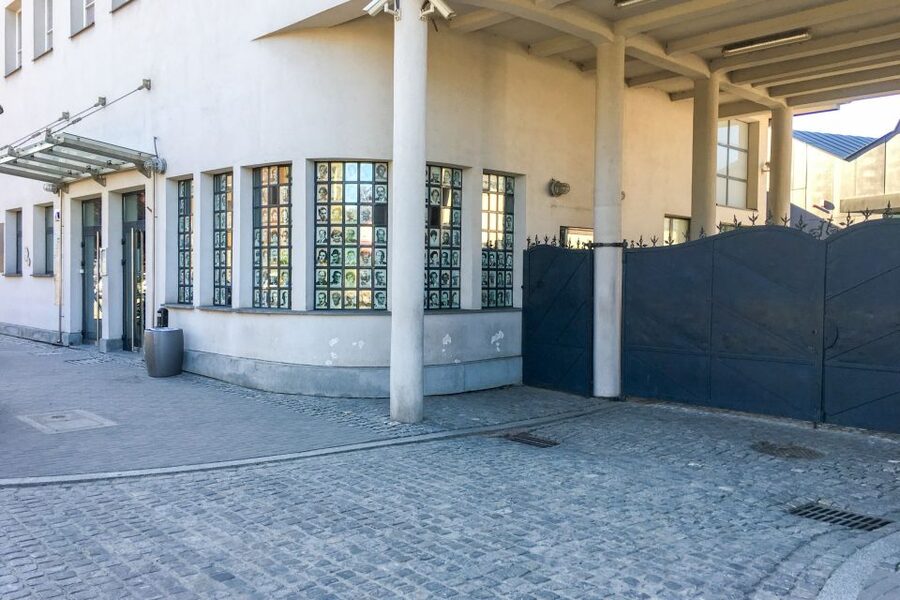
The name can create a false expectation. You might arrive expecting a museum focused mainly on Oskar Schindler, his factory, and the people he saved. Instead, the central subject is Krakow between 1939 and 1945.
That wider focus is a strength. Schindler’s actions make more sense when you first understand the machinery of occupation around him. The exhibition shows how German rule changed work, housing, movement, family life, and public behavior. It also presents what happened to Krakow’s Jewish population, including persecution, forced relocation, deportation, and murder.
You will hear about Schindler as part of this larger story. His enamel factory became a place of relative safety for more than 1,000 Jewish workers. You will also see his office, an important reminder that the building is tied to his story even though the museum no longer contains the original factory machinery.
This distinction matters. If your main goal is to see industrial equipment or reconstruct every detail from the film Schindler’s List, you may leave wanting more. If you want to understand the city and the people around Schindler, the exhibition offers a much fuller picture.
More Schindler Factory tours:
- Krakow: Oskar Schindler’s Factory Entry Ticket & Guided Tour
★ 4.2 · 3,793 reviews - Krakow: Schindler’s Factory Skip-the-Line Ticket
★ 4.4 · 3,105 reviews - Krakow: Schindler’s Factory Tour with Entrance Ticket
★ 4.6 · 1,737 reviews
Entering the former enamel factory
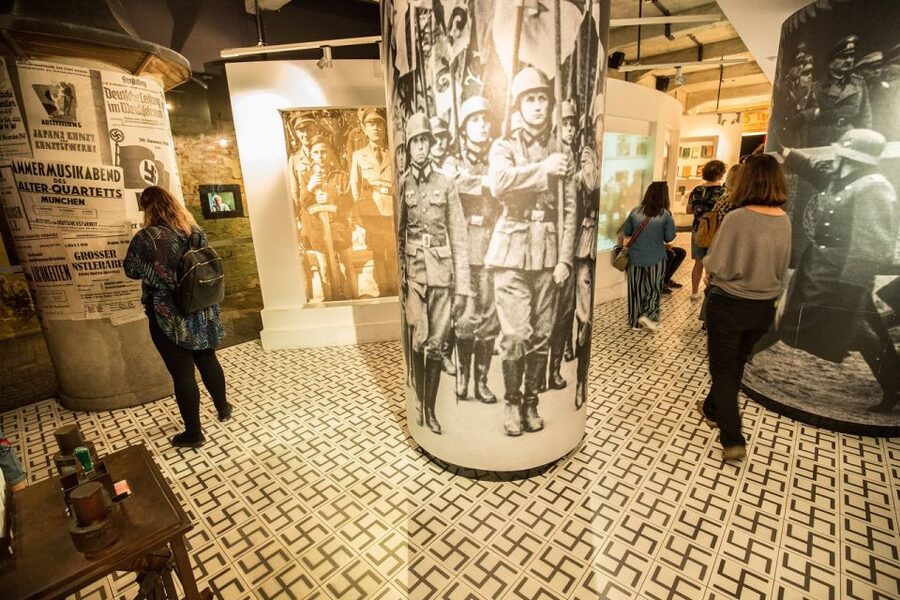
The museum occupies the former factory building, but it is now a historical museum rather than a working industrial site. Do not expect rows of original machines or a preserved factory floor. The building’s importance comes from what happened there and how the museum uses its rooms to tell the story.
Your guide meets you outside, and the meeting point can vary according to the option you book. Arrive at least 10 minutes early. Guides may hold laminated cards with the tour operator’s name, which helps you identify the right person in the crowd.
The skip-the-line arrangement is one of the clearest practical benefits. At busy periods, the queue outside can be long, with one visitor estimating roughly an hour and a half. Paying $49 per person is easier to justify when it saves that much standing time and includes a licensed guide.
You still need to pay attention to your voucher and meeting instructions. The museum uses personalized tickets, so you must provide every participant’s name when booking and bring an ID card or another identification document. If the name does not match, entry can be refused.
Krakow before the war
The tour begins by giving you a sense of Krakow before the Nazi occupation. That opening is useful because it avoids treating the Jewish community as a footnote that appears only when the war begins.
The exhibition presents the city as a place where Jewish and non-Jewish residents lived, worked, worshipped, raised families, and built ordinary routines. The point is simple but important: the people later targeted by Nazi policy had full lives before the catastrophe.
This section also helps explain what was lost. When you move later into rooms about restrictions, segregation, and violence, you have a clearer sense of the social world being broken apart.
A guide is particularly helpful here. The displays include photographs and written information, but the museum can be hard to absorb if you move through it alone. Several guides have been praised for explaining the meaning behind the layout instead of simply reading labels aloud.
The occupation through photographs and objects
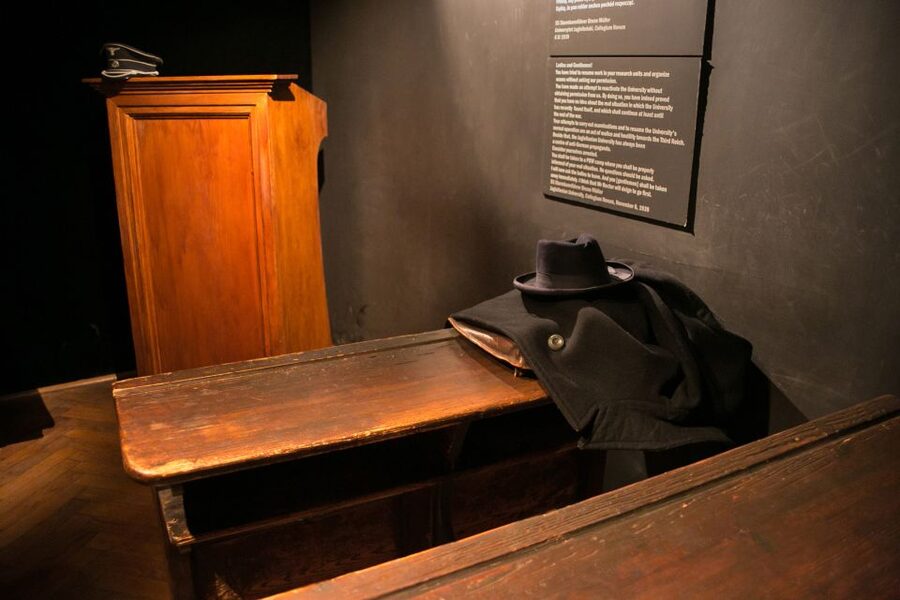
The exhibition then turns to the German invasion and occupation. You encounter original artifacts, photographs, and reconstructions that show how quickly daily life became controlled by fear and regulation.
The museum does not present the war as a distant sequence of dates. It focuses on what occupation meant for people in the city. Rules, threats, public humiliation, forced labor, and the removal of rights become part of the story.
The photographs can be disturbing. Some images are difficult to look at, and this is not a light sightseeing stop. You should allow yourself time afterward to process what you have seen, especially if you are visiting with teenagers or children. One parent found that a guided explanation helped a teenage son get far more from the museum than he would have gained by reading the panels independently.
The strongest guides connect large events with individual lives. Guides have shared personal accounts from people connected to those who were saved by Schindler, and some have spoken about relatives who experienced the occupation. These details can make the history feel immediate, but the tone may occasionally feel forceful. One visitor found a guide slightly accusatory, so you should expect an emotionally direct presentation rather than a detached lecture.
A few more in Krakow
- From Krakow: Auschwitz-Birkenau Guided Tour & Hotel Pickup
★ 4.5 · 33,358 reviews - From Krakow: Auschwitz-Birkenau Guided Tour & Hotel Pickup
★ 4.5 · 29,340 reviews - Krakow: Auschwitz Guided Tour with Optional Hotel Pickup
★ 4.5 · 15,280 reviews - Krakow–Zakopane: Cable Car, Chocholow Baths, Cheese & Vodka
★ 5.0 · 10,720 reviews
The Krakow ghetto and life under Nazi rule
One of the most important parts of the visit deals with the Krakow ghetto and the treatment of Jewish residents. The exhibition shows how the community was confined and stripped of safety, freedom, and dignity.
The museum’s design reinforces this subject. You pass through narrow, dimly lit spaces, and the route can feel cramped. The tight rooms are not an accident. They are meant to echo the lack of control and constant pressure that shaped life under Nazi rule.
A guide may point out details in the physical design, including symbolic features such as a difficult or uneven floor surface. These touches can help you see the exhibition as more than a collection of objects. The building itself becomes part of the explanation.
There is a downside. A group of 25 can be too large for some of the smaller rooms. People may need to move aside to let others pass, and you might not have enough quiet time to read every display. The museum can also be busy, making it harder to pause at a photograph or personal account.
The group limit is set at 25, and headsets are provided for groups of 15 or more. The headsets have generally worked well, but the tight spaces still affect how freely you can move.
Schindler’s role and the factory office
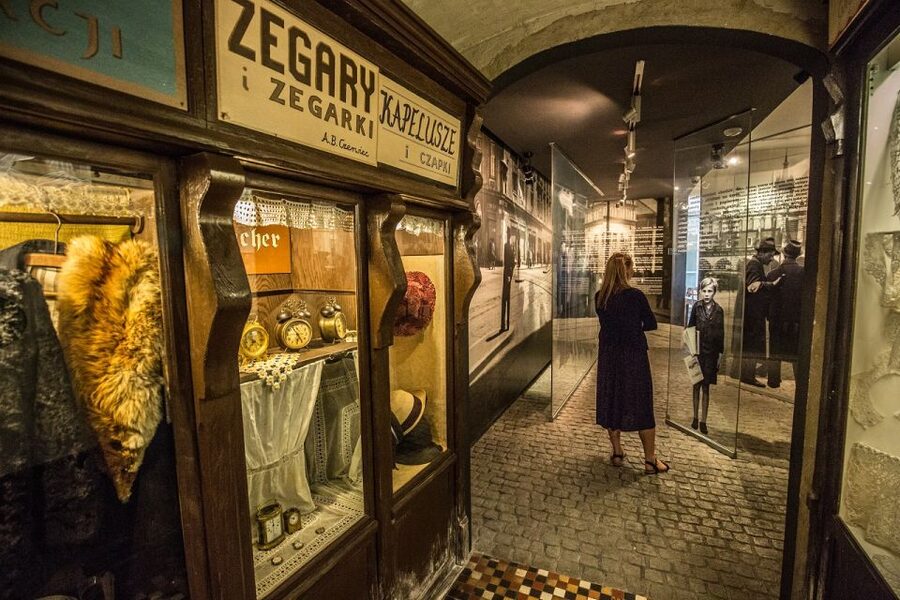
The Schindler section appears within the wider account of occupation. You learn how his factory employed Jewish workers and how that employment could provide protection when work permits and industrial usefulness sometimes delayed deportation.
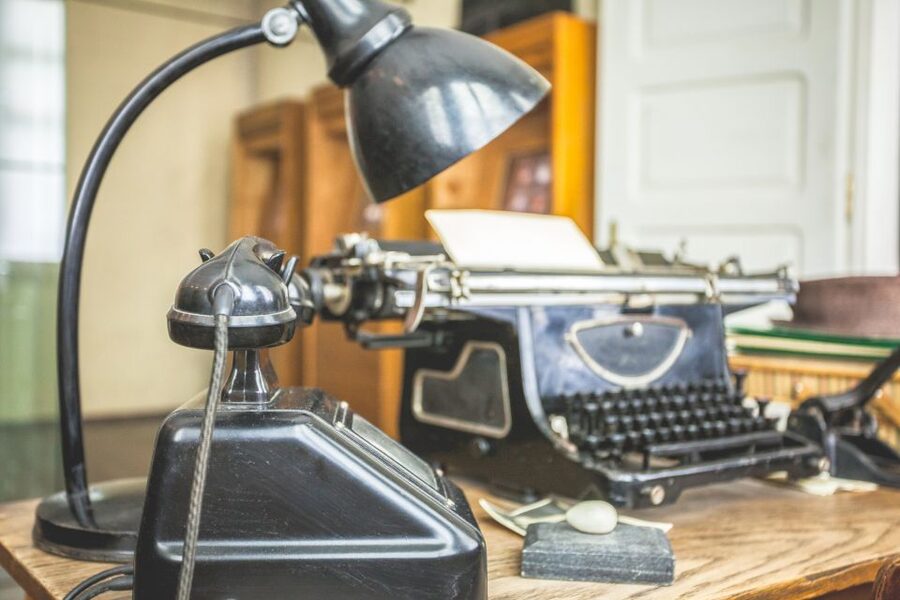
The tour also includes a look at Schindler’s office. This is likely to be one of the moments you have come specifically to see, but it is not presented as the entire point of the visit.
That balance is historically useful. Schindler was not separated from the ugly system around him. His story involved opportunism, privilege, changing motives, and acts that saved lives. The museum places those actions beside the much larger destruction taking place across Krakow.
If you know the film well, the museum can correct the idea that Schindler alone is the story. The people he protected remain central, but so do the thousands who were not protected. The result is less a heroic adventure and more a sobering account of choices made inside a system built on terror.
Why the guide is worth paying for
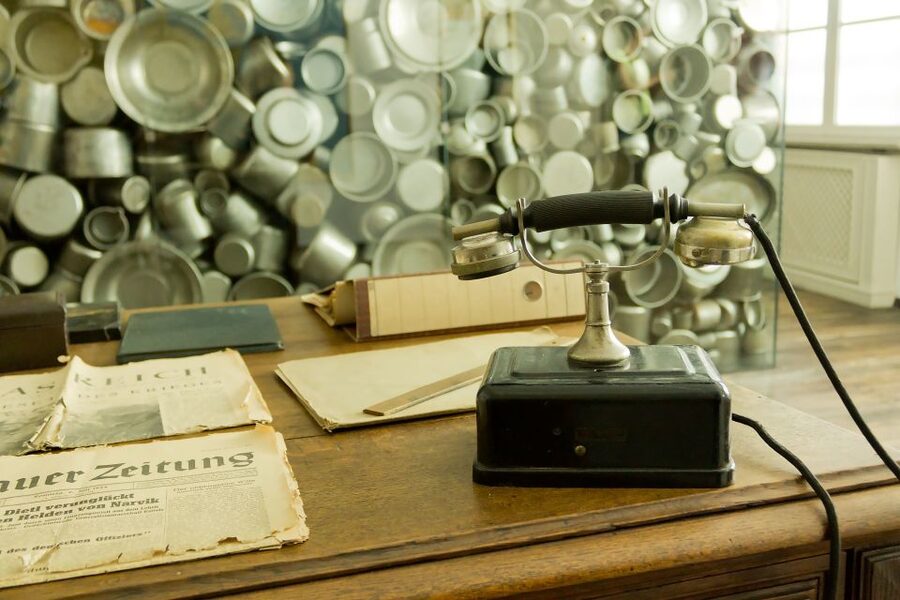
I would strongly favor the guided option over entering independently. The displays are dense, the route moves through symbolic spaces, and the 90-minute schedule does not leave much room for guesswork.
The best guides do three things well. They explain the historical sequence, point out details you might overlook, and keep Schindler’s story connected to the experience of ordinary people. Guides named in feedback include Anna or Ana, Helena, Kinga, Joanna, Dominique, Agnieszka, and Ivana, also called Jana.
Joanna received particular praise for clear English and a smooth presentation. Kinga was noted for speaking clearly, moving the group through the main displays without making the visit feel rushed, and explaining at the start that the museum focuses mainly on Krakow before and during the war. Anna provided one solo visitor with what felt like a private tour, adding extra facts and answering questions in detail.
Your experience will depend partly on the individual guide and partly on group size. The available languages are English, Italian, Spanish, French, and German, and each group tour is conducted in one language only. Select carefully when booking.
Is $49 a fair price?
At $49 per person, this is not the cheapest museum visit in Krakow. The value comes from three parts: admission, a 90-minute guided tour, and priority access past the ticket line.
If the museum is quiet and you could walk in without waiting, the price may feel high. If the queue is stretching outside and you want a clear explanation of the displays, the cost becomes easier to defend. A guide also helps you understand the museum’s unusual design and keeps the story from becoming a blur of dates and grim photographs.
The tour is especially good value if you have limited time in Krakow. You get a focused introduction to the occupation in an hour and a half, rather than spending several hours trying to work out the exhibition’s structure alone.
The trade-off is that a guided route is not a leisurely museum visit. You may need to keep moving, and there may be little time to read every panel. If you prefer silence and long pauses, buy a regular museum ticket only if that option is available and visit independently. If you want the main story explained in a short window, choose the guide.
Who should book this experience?
This tour suits anyone interested in World War II, Jewish history, Krakow, or the moral choices people faced under Nazi rule. It is also a good choice for families with older teenagers, since a guide can explain difficult subjects in context rather than leaving young visitors alone with upsetting images.
You should be ready for a serious and sometimes painful visit. The old photographs and recreated spaces are disturbing, and the exhibition does not soften the subject.
I would not make this your only Schindler-related activity if you are seeking a detailed personal biography. The museum gives Schindler a meaningful place, but the wider occupation takes priority. That is a benefit for many people, but it should be clear before you book.
The tour also suits visitors who dislike wasting time in queues. Arriving early, finding your guide, and entering with a reserved group can save a large part of your day.
Practical advice before you go
Arrive 10 minutes before the scheduled start. Latecomers cannot join once the group has entered, and their tickets cannot be refunded.
Bring the same identification document used for booking. Names are checked because museum tickets are personalized.
Wear comfortable shoes and expect narrow corridors. The exhibition’s design makes some rooms feel confined, and a full group can make movement awkward.
Try to keep your schedule open for a quiet pause afterward. This is an intense 90 minutes, not a quick photo stop.
The tour times are approximate and can change because of museum scheduling. You may select a preferred time, but the exact start is not guaranteed. Free cancellation is available up to 24 hours ahead, and you can reserve now and pay later, which helps if your Krakow plans are still shifting.
Should you book the Schindler’s Factory tour?
Book it if you want the full Krakow occupation story, not just a film-inspired portrait of Oskar Schindler. The guide, skip-the-line entry, and clear historical structure make this a strong use of 90 minutes, especially when the museum is crowded.
Think twice if you want original factory machinery, a quiet self-guided visit, or a long time with every display. The group may feel large in the narrow rooms, and the pace can be brisk.
For most first-time visitors interested in Krakow’s wartime past, I would book the guided tour. Choose your language carefully, arrive early with matching ID, and expect an important visit that stays with you long after you leave.
FAQ
How long does the Schindler’s Factory tour last?
The guided tour lasts 90 minutes, or one and a half hours.
What languages are available?
Tours are offered in English, Italian, Spanish, French, and German. Each group tour uses only one language.
Does the tour include skip-the-line admission?
Yes. The experience includes skip-the-line admission to Schindler’s Factory.
Is Oskar Schindler the main focus of the museum?
The museum includes Schindler, his factory, his office, and his efforts to protect more than 1,000 Jewish workers. However, the exhibition mainly covers Krakow under Nazi occupation from 1939 to 1945.
Is the original factory machinery still inside?
No. The building once housed Schindler’s factory, but it is now a museum without the original machinery.
How large can the tour group be?
Museum regulations limit each group to a maximum of 25 participants. Headsets are provided for groups of 15 or more.
Do I need identification?
Yes. Bring an ID card or another identification document. The name and surname on your ticket must match your identification.
What happens if I arrive late?
You should arrive 10 minutes early. Once the group has left, latecomers cannot join, and the ticket cannot be refunded.
Just added in Krakow
- Auschwitz-Birkenau – Skip the Line Tickets★ 3.5 · 29 reviews
- Auschwitz-Birkenau: Fast-Track Ticket & Guided Tour No Transfers★ 3.5 · 17 reviews
- Zakopane & Sleigh Ride with Bonfire – Group Tour from Kraków★ 5.0 · 2 reviews
- Sleigh Ride & Bonfire in Zakopane with Funicular – Private Trip★ 5.0 · 48 reviews
- Thermal Baths & Zakopane – Private Trip from Krakow★ 5.0 · 1 review
- Zakopane & Gubalowka Funicular – Private Winter Tour from Krakow★ 5.0 · 10 reviews
- Divine Mercy Sanctuary – Private Tour from Krakow★ 5.0 · 4 reviews
- stag dog chase Krakow prank★ 5.0 · 4 reviews