
REVIEW · COMMUNISM TOURS
ROYAL & COMMUNIST WARSAW walking tour in English
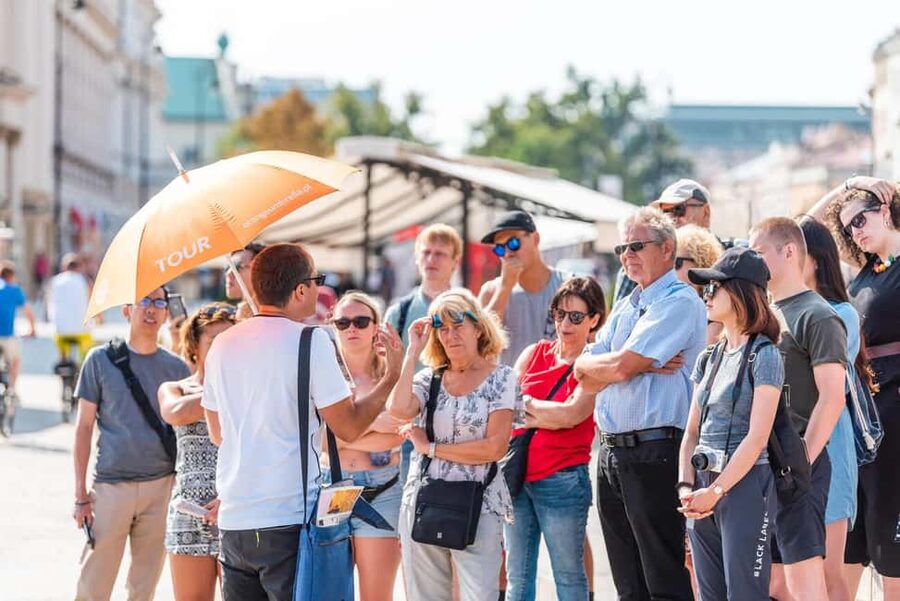
Warsaw’s story changes block by block. This 2.5-hour walking tour links the grand Royal Route with the communist city center, giving you a useful first look at a capital shaped by kings, war, rebuilding, and Soviet influence. I especially like the local guides, who were born and raised in Warsaw, and the clear two-part design that covers a lot without requiring a full day. The main drawback is the brisk pace: you see many places from outside, with limited time at each stop.
I also like the price. At $5 per person, this is an unusually inexpensive way to get your bearings, especially if Warsaw is new to you and you are unsure where to begin. Guides such as Arek, Margaret, and Gawel have been praised for clear explanations, useful anecdotes, and keeping the group moving in poor weather. Still, do not expect a slow architectural study or long interior visits. This is an overview tour, not a museum tour.
In This Review
- Key points about the Royal and Communist Warsaw walk
- Why this makes a smart first walk in Warsaw
- Starting at Sigismund’s Column in Castle Square
- St. Anne’s Church and the first royal-era contrasts
- University of Warsaw, the Presidential Palace, and public life
- The Prudential Building and a Warsaw skyline rebuilt
- Chopin, Marie Curie, and Polish cultural memory
- Holy Cross Church and the national story
- Adam Mickiewicz and the power of Polish symbols
- Kubusia Puchatka and the feel of central Warsaw
- The shift to communist Warsaw
- The Palace of Culture and Science as the final lesson
- What $5 really gets you
- Practical advice before you book
- Should you book the Royal and Communist Warsaw tour?
- FAQ
- Where does the tour start?
- Where does the tour finish?
- How long does the tour last?
- What language is the tour offered in?
- Is the tour wheelchair accessible?
- What is included in the price?
- Are food and drinks included?
- Can I cancel the booking?
Key points about the Royal and Communist Warsaw walk
- Two eras in 2.5 hours: The route begins with royal Warsaw and ends among communist-era buildings.
- Local Warsaw guides: The guides are Polish locals born and raised in the city, including Arek, Margaret, and Gawel.
- A very low price: At $5 per person, the tour offers strong value for a first orientation.
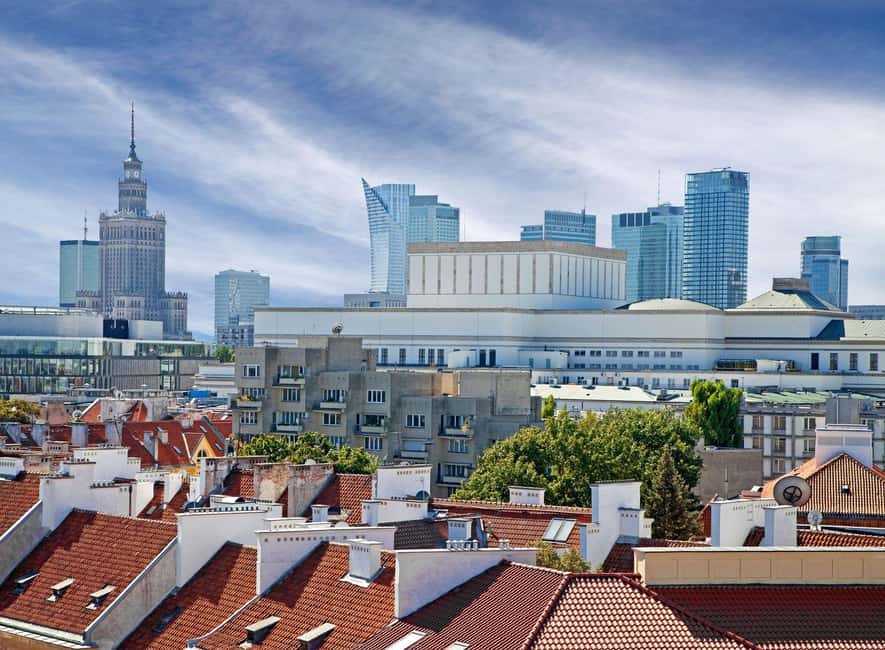
- The Palace of Culture is the final symbol: The communist city center ends with Warsaw’s most recognizable building.
- Anecdotes keep the history moving: Gawel was praised for adding stories beyond dates and names.
- English and wheelchair accessible: The tour is offered in English with a live guide.
Why this makes a smart first walk in Warsaw

Warsaw can be hard to read at first. One street may show restored royal architecture, while the next reveals broad communist planning and tall apartment blocks. The city’s history is not arranged in a tidy museum sequence. It is spread across the streets, squares, churches, monuments, and postwar buildings.
That is why this route works well as an introduction. The first half follows the Royal Route, Warsaw’s grand ceremonial spine. The second half shifts into the 20th-century center, where communist architects and planners reshaped the city. You get a clear before-and-after structure instead of a loose collection of sights.
The guide provides the connecting story. You are not simply stopping at a column, church, palace, or tower. You are hearing how Warsaw moved from noble power to national culture, then through war and communist rule into its modern form.
The tour lasts exactly 2.5 hours according to one detailed account, which matters in a city where key sights are spread out. You can use the walk as a starting point, then return later to places that deserve more time.
More Communism Tours in Warsaw
- Private Tour: Warsaw’s Communist History by Retro Fiat
★ 5.0 · 115 reviews - Warsaw: Communism Tour in an Original Socialist Van
★ 4.9 · 75 reviews - Warsaw: Communist History Self-Driving Tour
★ 4.8 · 52 reviews
Starting at Sigismund’s Column in Castle Square
Meet your guide by Sigismund’s Column in Castle Square, at the edge of Warsaw’s Old Town. This is an easy place to identify, but give yourself enough time to find the column rather than arriving at the last moment. The meeting point is in a busy historic part of the city, and your guide will be waiting there.
The column honors King Sigismund III Vasa, who moved Poland’s capital from Kraków to Warsaw in the late 16th century. The monument gives the tour a fitting start because it introduces the royal power that shaped the city around it.
You spend about 20 minutes here with the guide. That is enough time to learn why the column matters and how Castle Square fits into the Royal Route. It also gives you a visual reference for the rest of the walk.
The square is a good place to notice the contrast that defines the tour. The setting feels ceremonial and historic, yet much of Warsaw’s old center was rebuilt after wartime destruction. The guide can help you separate original features from reconstructed ones, an important point for understanding the city.
St. Anne’s Church and the first royal-era contrasts
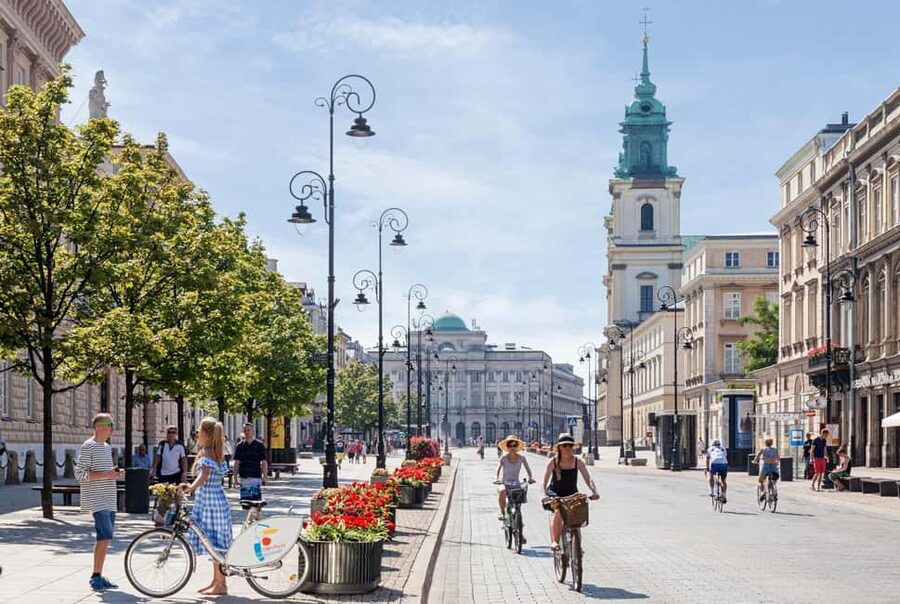
St. Anne’s Church receives another 20-minute guided stop. Its Baroque character suits the Royal Route, where wealthy noble families built grand residences and religious orders raised elaborate churches.
This stop helps explain how religion, aristocratic wealth, and royal government shaped Warsaw before the 20th century. You can expect the guide to focus on the building’s place in the city rather than turn the visit into a long technical lecture.
The route is designed for walking, so wear comfortable shoes. The tour includes many stops, and the value comes from the connections between them. If you prefer to study every façade in detail, the schedule may feel quick.
University of Warsaw, the Presidential Palace, and public life
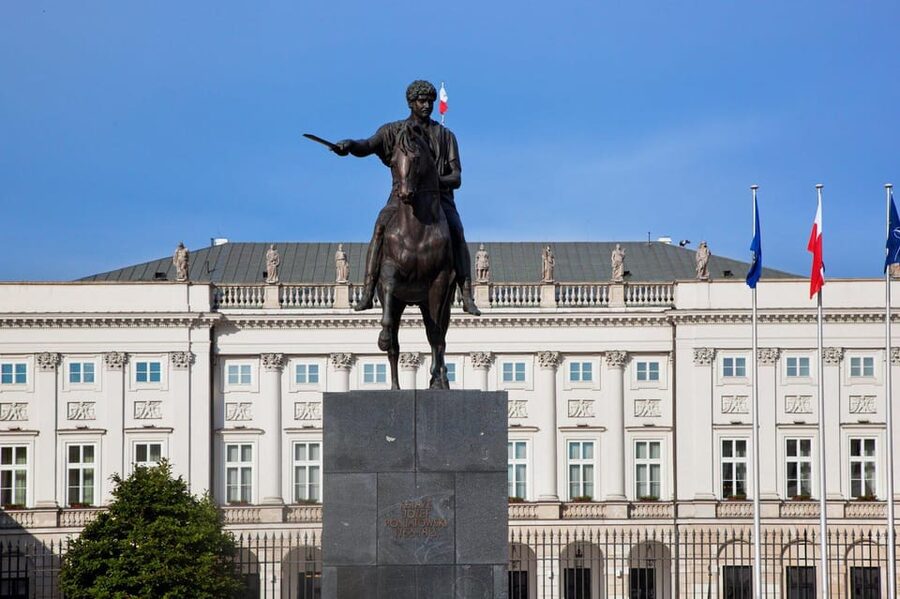
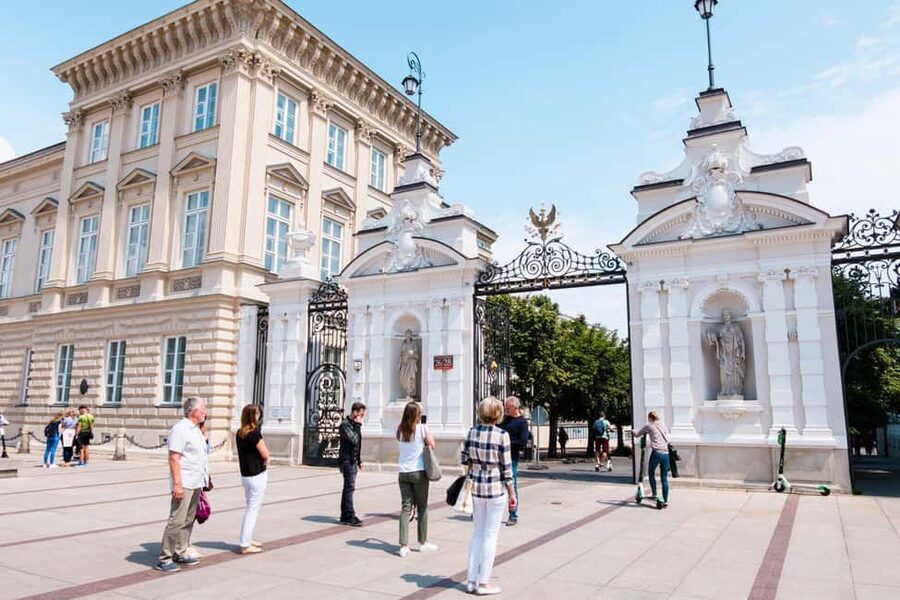
The next stops bring you through institutions tied to education and government. The University of Warsaw receives about 10 minutes, followed by roughly 10 minutes at the Presidential Palace.
The university adds a different layer to the Royal Route. This is not only a line of palaces and churches. It is also a route linked with students, scholarship, and Polish public life. The guide can show how the street served different groups over time.
The Presidential Palace shifts the focus toward national leadership. Together, these stops show how the Royal Route carried political, religious, and intellectual importance. You are likely to hear the names of major Polish figures and learn how the city’s ceremonial center developed.
The short timing is both a strength and a limit. You get a quick orientation to several important places, but you should not expect an extended visit inside the palace or university. Treat these as guided street stops.
More Walking Tours in Warsaw
- Warsaw: Old Town Highlights Walking Tour in English
★ 4.7 · 1,516 reviews - Warsaw: Old Town Guided Walking Tour
★ 4.9 · 599 reviews - Half-Day Polish Food Walking Tour with Guide and Dinner
★ 4.5 · 381 reviews - Warsaw: Warsaw Ghetto Private Walking Tour with Hotel Pickup
★ 4.9 · 369 reviews
The Prudential Building and a Warsaw skyline rebuilt
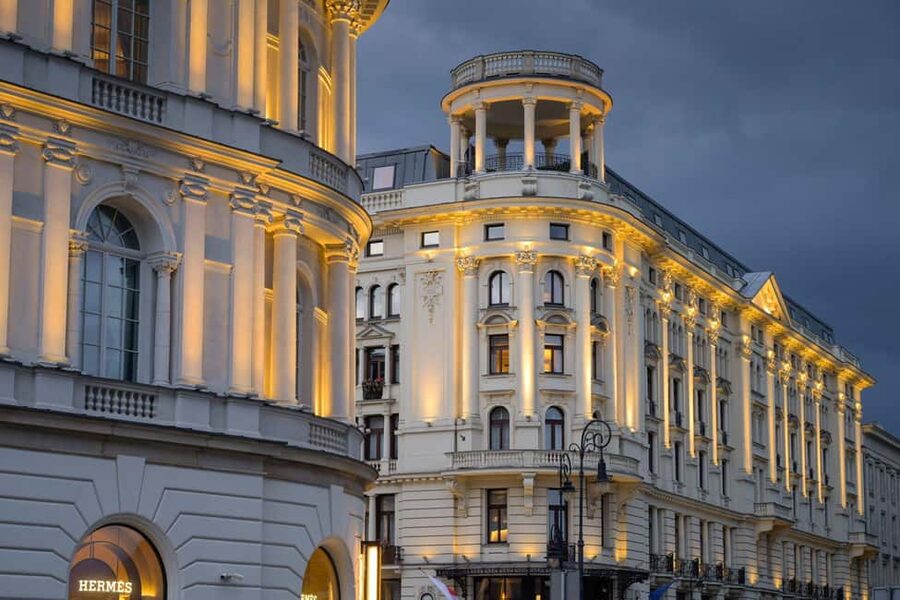
The Prudential Building, now associated with Hotel Warszawa, marks the move toward modern Warsaw. The walk allows about 15 minutes here and returns to the building later in the route, according to the stop schedule.
This is a useful change of mood. The Royal Route presents Warsaw through older institutions and grand façades. The Prudential Building points toward the modern city, new construction, and the pressures that changed the capital in the 20th century.
A return visit may seem repetitive on paper, but it can help connect the two halves of the tour. The building belongs to a city center that was reshaped by war and communist planning, so the guide can use it as a bridge between historic Warsaw and the postwar capital.
Because exact stop order and timing can vary with the guide and conditions, pay attention to the live explanation rather than expecting a rigid lecture. The listed duration is 2.5 hours, and one detailed account praised the guide for finishing on time.
Chopin, Marie Curie, and Polish cultural memory
The Royal Route is also tied to two of Poland’s best-known figures, Frédéric Chopin and Marie Curie. Chopin lived along this route, while Marie Curie studied in Warsaw.
These references make the street feel less like a parade of buildings and more like a place where ordinary city life, education, music, and national identity overlapped. You may not spend a long time at each related site, but the guide uses the route to show how Warsaw’s cultural story grew from its streets.
This is one of the tour’s strongest features. Solid historical information is balanced with anecdotes and small facts. Gawel was especially praised for using interesting stories to keep the walk engaging, while Arek was described as clear and helpful. Margaret was praised for taking care of the group during a drizzly day.
Those details matter. A walking tour depends as much on the guide’s judgment and delivery as on the route itself. Here, the guide is expected to do more than recite dates.
Holy Cross Church and the national story
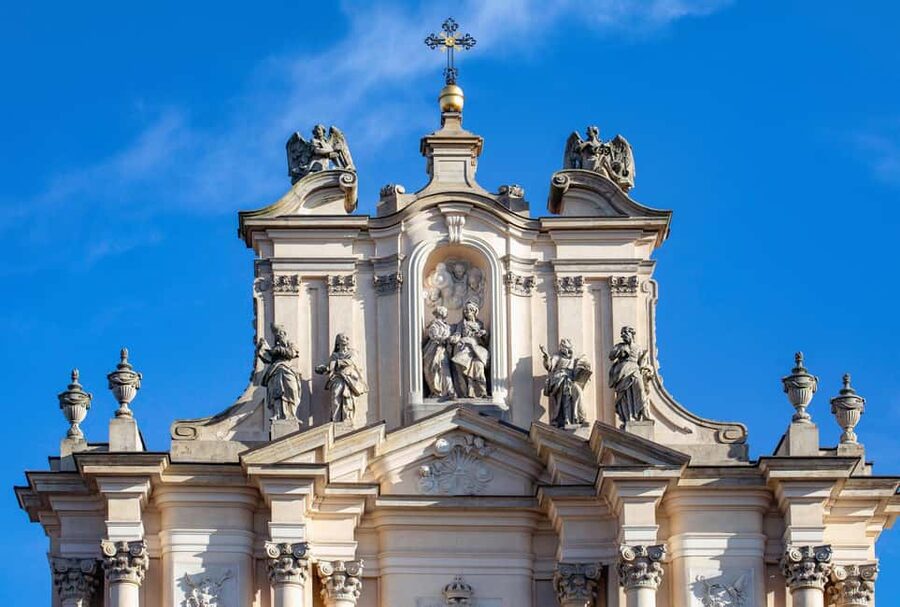
Holy Cross Church receives about 15 minutes. It adds religious and cultural importance to the route, while also connecting with Chopin’s memory in Warsaw.
The stop gives the guide another chance to explain how Polish identity survived periods when the country faced outside control and political pressure. The Royal Route is not simply decorative. Its churches, monuments, schools, and government buildings reflect the long effort to preserve Polish culture.
The pace remains quick. You will likely hear why the church matters and how it fits into the city’s story, but you may want to return later if you hope to explore the interior carefully.
Adam Mickiewicz and the power of Polish symbols
The Monument of Adam Mickiewicz gets another 15-minute guided stop. Mickiewicz is one of Poland’s major literary figures, and his monument brings literature and patriotism into the route.
This is a helpful reminder that Warsaw’s public spaces carry political meaning. A monument can honor a poet while also expressing national feeling. Your guide can explain why certain figures are given prominent places in the capital and how those symbols relate to Poland’s difficult past.
The stop also prepares you for the communist section. The tour keeps asking how Warsaw used architecture and public art to express power, identity, and political goals.
Kubusia Puchatka and the feel of central Warsaw
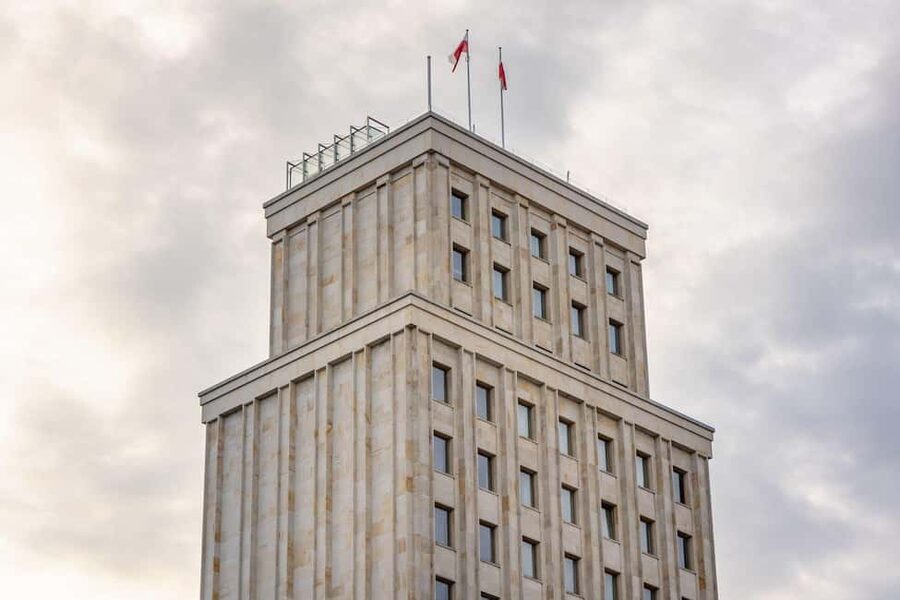
Kubusia Puchatka is a smaller and more unusual stop than the grand churches, palaces, and monuments. Its inclusion helps show the everyday side of central Warsaw.
A route made only of famous landmarks can give you a polished but incomplete picture. A modest street or local reference can reveal how residents experience the city beyond the postcard sights. The 15-minute stop suggests that the guide will use the location for context and anecdotes rather than a formal monument visit.
This is also where the tour’s balance of serious history and lighter facts becomes useful. Warsaw’s past includes tragedy and political conflict, but a good city walk also allows room for ordinary life, humor, and local character.
The shift to communist Warsaw
The second half changes the visual language of the walk. Instead of royal residences and Baroque churches, you see the city center reshaped by communist architects and urban planners.
This transition is the heart of the experience. Warsaw is often presented through its restored Old Town, but the communist center explains just as much about the city. Wide spaces, large public buildings, and Soviet-era planning changed how people moved through the capital and how the government presented power.
The guide grew up in communist Poland, which adds a personal angle to this section. That does not replace historical context, but it can make the era easier to understand as lived experience rather than a chapter in a textbook.
You should expect interpretation from the street, not a visit to a communist museum. The tour’s strength is comparison. You see how royal Warsaw and communist Warsaw sit close together, then consider why their styles and purposes differ so sharply.
The Palace of Culture and Science as the final lesson
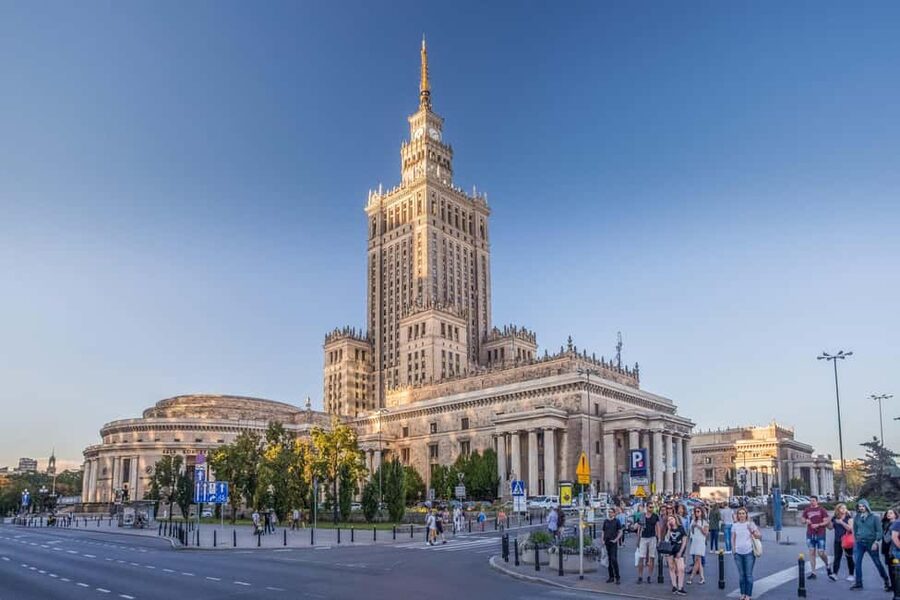
The Palace of Culture and Science is the main landmark of the communist section and the tour’s listed finishing point. The building was presented as a gift from Stalin to the People’s Republic of Poland, with the goal of giving Warsaw a new communist identity.
Its scale makes the political message easy to understand. The building was not meant to blend quietly into the city. It was designed to dominate the skyline and signal a new order.
The guide’s explanation is especially valuable here because the building remains politically loaded. For some people, it represents Soviet control. For others, it is an unmistakable part of Warsaw’s skyline and daily life. The tour helps you read it as both architecture and propaganda.
The route also includes Kazimierza Brokla for about 15 minutes before finishing at the Palace of Culture and Science. The meeting information says the activity ends back at the meeting point, while the route description identifies the Palace of Culture and Science as the finish. Confirm the exact end point when you book, especially if you have a train, restaurant reservation, or another timed activity afterward.
What $5 really gets you
At $5, the value is excellent if you want orientation, context, and a local voice. A private guide would cost far more, while a sightseeing bus would not give you the same street-level explanation. You also avoid spending your first hours in Warsaw trying to decide how the city fits together.
The price does not mean the walk is exhaustive. You are paying for a structured introduction, not admission to major interiors, food, drinks, or a full-day history course. The city map included with the tour adds practical value because you can mark places to revisit.
The tour has a 4.6 rating from eight reviews, with strong praise for clear guidance, useful anecdotes, good pacing, and value for money. The small number of ratings means you should treat that score as a helpful signal, not a guarantee that every guide or group will feel identical.
Practical advice before you book
Choose this walk early in your stay if you have only a short time in Warsaw. It covers the Royal Route and central communist districts in one outing, so you can decide later where to spend more time.
Plan for outdoor conditions. Margaret’s effort to keep the group comfortable during drizzle is encouraging, but you should still bring weather protection and wear supportive shoes. The tour is wheelchair accessible, though the route’s exact street conditions and crowd levels can affect comfort.
The tour is offered in English with a live guide. It includes a city map, but not food or drinks, so bring what you need for 2.5 hours.
This experience suits first-time visitors, history-minded walkers, and anyone who wants a fast introduction without paying much. It is less suitable if you want long interior visits, a small specialist group, or a detailed treatment of one period.
Should you book the Royal and Communist Warsaw tour?
I would book it as a first Warsaw walk, especially at $5. The two-part route gives you a clear way to understand a city that can otherwise feel scattered and historically complicated.
Book it for the guide’s local perspective, the royal-to-communist contrast, and the practical orientation. Skip it if you dislike brisk walking or want to spend most of your time inside buildings.
If you do go, listen closely during the transitions. The most useful lesson is not any single monument. It is seeing how royal ambition, Polish culture, war, and communist planning all share the same city streets.
FAQ
Where does the tour start?
The guide waits by Sigismund’s Column in Castle Square, Warsaw Old Town.
Where does the tour finish?
The route information identifies the Palace of Culture and Science as the finish. The meeting information also says the activity ends back at the meeting point, so confirm the exact end location when booking.
How long does the tour last?
The tour lasts 2.5 hours. One detailed account says it lasted exactly that long.
What language is the tour offered in?
The tour is conducted in English with a live English-speaking guide.
Is the tour wheelchair accessible?
Yes, the activity is listed as wheelchair accessible.
What is included in the price?
The price includes a professional English-speaking Warsaw guide and a city map.
Are food and drinks included?
No. Food and drinks are not included.
Can I cancel the booking?
Yes. You can cancel up to 24 hours in advance for a full refund. You can also reserve now and pay later.
Just added in Warsaw
- Historical Walking Tour of Jewish Warsaw★ 5.0 · 68 reviews
- Deluxe Polish Food Tour Experience in Warsaw★ 5.0 · 19 reviews
- CO2-Offset Arrival Transfer from Warsaw Airport to Warsaw City★ 5.0 · 1 review
- Amazing photo walk through the Old town of Warsaw★ 5.0 · 32 reviews
- 8-day tour around Poland by private car★ 5.0 · 2 reviews
- 2 Hour Super Segway City Tour of Warsaw★ 5.0 · 5 reviews
- Electric Scooter Tour: Full Tour – 3-Hours of Magic!★ 5.0 · 3 reviews
- 2h Rental of Motorboat for 10 in Warsaw no License Needed★ 5.0 · 1 review
Communism Tours, compared.
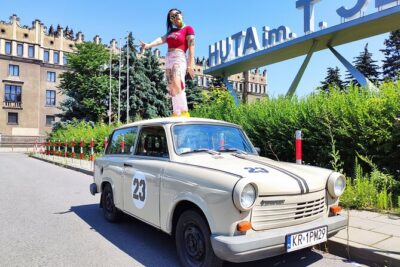
Legendary Private Nowa Huta Communism Tour with Crazy Guides
Read our review →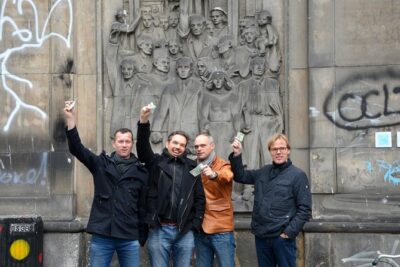
Private Tour: Warsaw’s Communist History by Retro Fiat
Read our review →
Private Nowa Huta Adventure Tour in Communist Cars
Read our review →
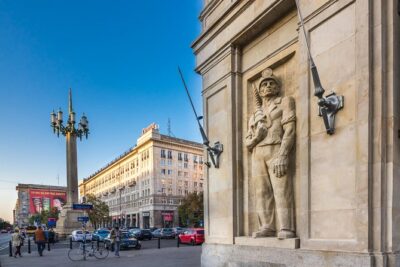
Communist Krakow – Nowa Huta Walking Tour in English
Read our review →Browse the lists this tour appears in