
REVIEW · HISTORICAL TOURS
Krakow: Second World War History Guided Walking Tour
Krakow’s buildings survived, but its people did not escape the war’s damage. This two-hour walk makes that contrast clear, showing why Krakow avoided the destruction suffered by Warsaw while explaining how Nazi and Soviet rule changed everyday life. I like the strong historical context, especially the attention given to Poland before 1939 and the role of resistance. I also like the small price of $19, which makes this a sensible way to give Krakow’s past some shape.
The main consideration is language. The live guide speaks Spanish, so this tour suits Spanish-speaking visitors best. Two hours is enough for a focused introduction, but not enough to cover every wartime site or story in Krakow.
In This Review
- Key points to know before booking
- Why Krakow’s survival needs explaining
- Beginning with Poland before 1939
- Following the machinery of Nazi occupation
- What occupation meant for ordinary people
- The importance of Krakow’s buildings
- The guide and the Spanish-language format
- Is two hours enough for $19?
- Accessibility and practical comfort
- Who will get the most from this walk
- Should you book the Krakow Second World War tour?
- FAQ
- Where does the Krakow Second World War tour take place?
- How long does the walking tour last?
- What language is the tour conducted in?
- How much does the tour cost?
- What is the meeting point?
- How early should I arrive?
- What does the tour cover?
- Why was Krakow’s physical structure less damaged than Warsaw’s?
- Is the tour wheelchair accessible?
- Are food and drinks included?
- Can I cancel the booking?
- Do I have to pay when I reserve?
Key points to know before booking
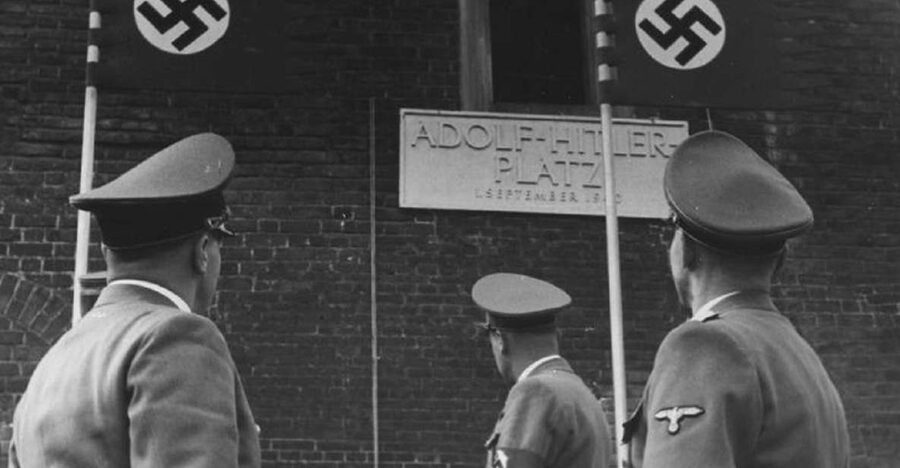
- Krakow’s survival has a specific explanation: The city served as a bastion and headquarters of the Nazi General Government, which helped protect much of its physical structure.
- The tour links buildings with daily life: You learn not only about occupation offices, but also about the social and economic pressure placed on ordinary Poles.
- The prewar setting matters: Poland’s route into the Second World War and the importance of resistance are part of the story.
- Luis is praised for bringing the subject to life: Fernando Torres described the guide as highly prepared and deeply committed to his work.
- The walk lasts two hours: That gives you a manageable history lesson without taking up a full morning or afternoon.
- Practical details are simple: Meet the guide with the gray umbrella, arrive 15 minutes early, and remember that food and drinks are not included.
Why Krakow’s survival needs explaining
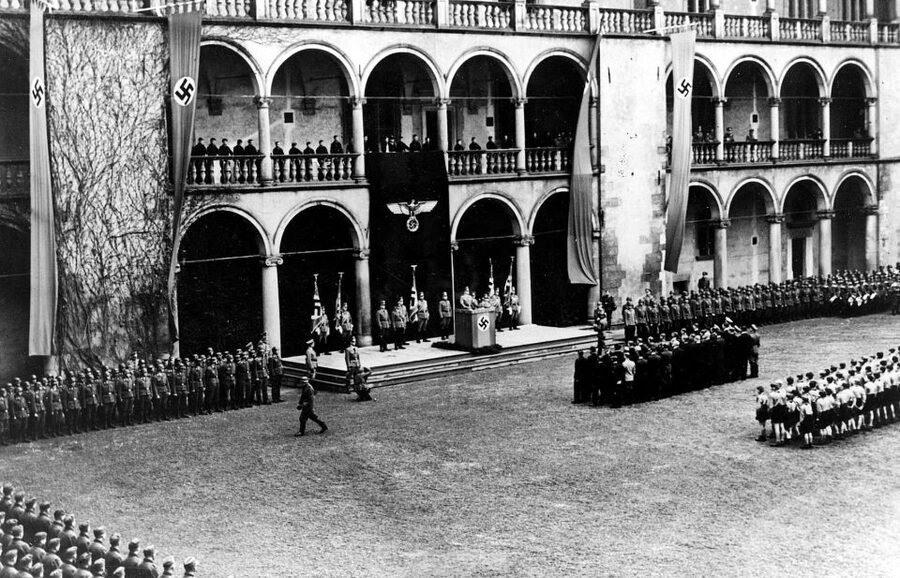
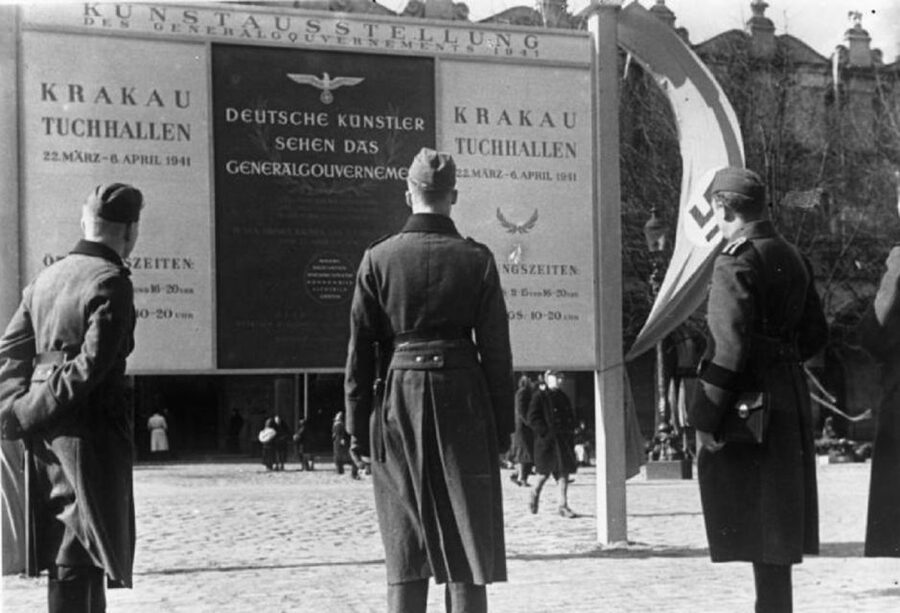
At first glance, Krakow can seem like a city that escaped the worst of the Second World War. Much of its built structure remained in place, unlike Warsaw, which suffered catastrophic destruction. That visible survival can create a misleading impression.
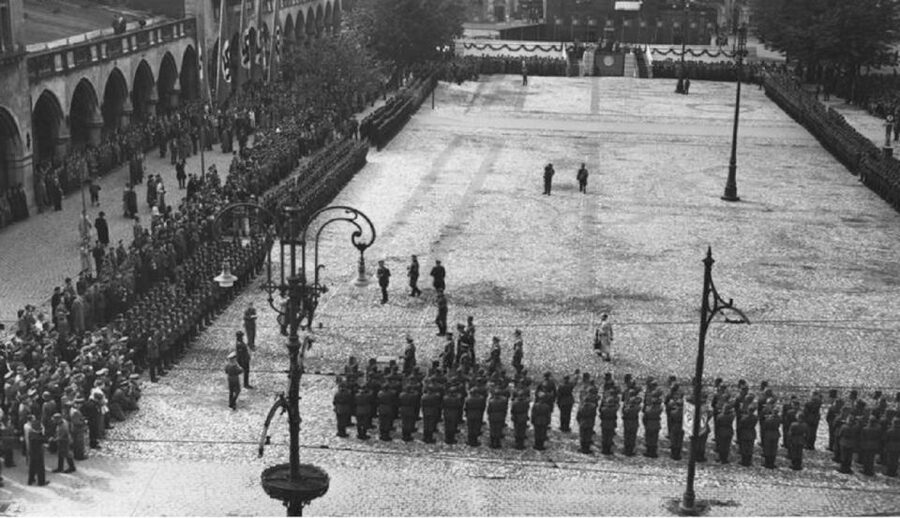
The city was not spared in any humane sense. Krakow became a major administrative center for the Nazi occupation and served as the headquarters of the Nazi General Government. Its importance to the occupiers helped protect streets and buildings, but it did not protect the city’s culture, institutions, Jewish population, or ordinary residents from repression.
That is the central idea behind this tour. You are not simply shown old buildings and told that they survived. You are asked to consider what survival means when a city’s physical shell remains but its people, culture, and social life are attacked.
I like this approach because it avoids treating wartime Krakow as a collection of dramatic dates. The city itself becomes evidence. Buildings connected to the occupation help explain how power was organized, while the guide’s broader account shows how that power reached into daily life.
More History Tours in Kraków
- Krakow: Vistula River Cruise with Historical Views
★ 3.5 · 357 reviews - Historic Krakow : Old Town & Wawel Castle Walking tour
★ 5.0 · 318 reviews - Krakow: Kościuszko Mound Ticket – History & Views!
★ 4.4 · 303 reviews
Beginning with Poland before 1939
The walk does not begin with the German invasion as if history suddenly appeared on one morning. The guide first sets out the context before the war, including the circumstances that led Poland into the conflict.
That background is useful because it gives you a clearer sense of Poland’s position in Europe. You receive the political setting needed to understand why the war reached Poland so quickly and why the country became a place of occupation rather than an ordinary battlefield between armies.
This part should be especially helpful if your knowledge of Polish history is limited. Krakow’s wartime story can otherwise feel disconnected from the wider conflict. A few well-placed explanations about Poland before 1939 make the later discussion of occupation, resistance, and social change easier to follow.
The guide also addresses the role of resistance. That matters because Polish civilians were not passive figures in the story. Resistance existed within a wider system of danger, surveillance, and punishment, and the tour presents it as part of the war’s larger context rather than as a separate heroic chapter.
Do not expect a full military history of the Second World War. This is a city walk, and its focus is Krakow’s people, administration, buildings, and changing society. That narrower focus is a strength if you want local meaning rather than a long list of battles.
Following the machinery of Nazi occupation
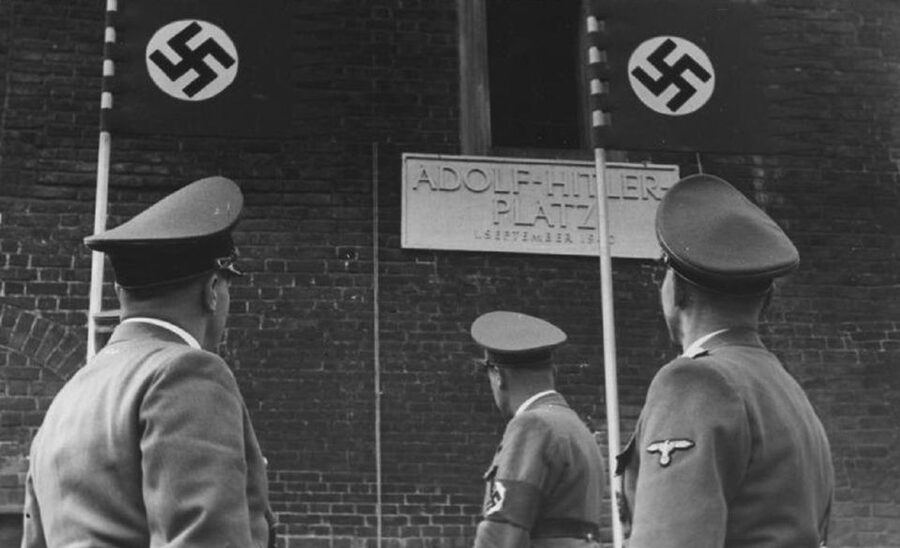
The main part of the walk takes you to important buildings connected with the Nazi occupation. The supplied details do not name each stop, so you should not book this expecting a fixed list of famous landmarks. Instead, think of the route as a guided reading of Krakow’s urban structure.
The value comes from learning what these buildings represented during the occupation. A government office, public institution, or prominent city building can look ordinary today. With the right explanation, it becomes part of a system that controlled movement, work, information, education, and public life.
This is where the tour’s geography and history training should be useful. The guide is a graduate in Geography and History, and the subject calls for both skills. You need the political story, but you also need to understand how control operated through the city itself.
I appreciate tours that explain why a place matters instead of simply pointing at a façade. You may leave with fewer postcard images than you would from a general sightseeing walk, but you should have a better sense of how occupation was organized in practical terms.
The limitation is that a two-hour walk can only give each site a short amount of time. If you want detailed information about every building, a museum collection, or a full account of the Holocaust in Krakow, you will need to add other visits to your schedule.
What occupation meant for ordinary people
The tour gives attention to social and economic life, not just official policy. That makes the subject more personal and more useful. Occupation was experienced through work, money, food, restrictions, fear, and the loss of normal routines. The tour aims to show those pressures as part of the city’s wartime story.
You will also hear about the effects of Soviet occupation. The supplied description places Nazi and Soviet rule within the same walking experience, giving you a broader view of how Krakow’s inhabitants lived through changing systems of power.
That wider frame is important. A tour focused only on the Nazi period might leave you with the impression that the story ended when German control ended. By including the Soviet period, the guide presents the war years and their aftermath as part of a longer period of political upheaval.
Still, you should keep your expectations in check. The activity description promises historical information about daily life, society, economics, geography, and occupation, but it does not promise personal testimonies, access inside historic buildings, or museum exhibits. The experience is built around walking and explanation.
For me, that is best suited to someone who wants a clear foundation before visiting Krakow’s museums and memorial sites. You can use the tour to organize what you see later, rather than trying to make two hours carry the weight of the entire city’s wartime past.
More Walking Tours in Kraków
- Old Town Krakow & Wawel Castle Walking Tour
★ 5.0 · 1,508 reviews - Creepy Krakow: 2-Hour City Walking Tour
★ 4.7 · 1,131 reviews - Krakow: The Old Town Walking Tour
★ 4.8 · 794 reviews - Krakow: Kazimierz Jewish Quarter Walking Tour
★ 4.8 · 571 reviews
The importance of Krakow’s buildings
A city walk works well for this subject because the setting remains part of the lesson. Krakow’s comparatively intact structure is not just a pleasant backdrop. It raises the question of why certain places survived and what happened inside them.
The guide’s job is to connect the visible city with the invisible systems that operated through it. You may look at a building that appears calm and historic, then learn how it formed part of the occupation’s administration. That shift in perspective is likely to be one of the walk’s strongest features.
The contrast with Warsaw also helps. Warsaw suffered far greater physical destruction, while Krakow retained more of its urban form. The tour uses that difference to explain Krakow’s wartime position, not to suggest that the city escaped suffering.
You should bring patience for a serious subject. This is not a light city orientation walk with a wartime footnote. The focus is occupation, repression, resistance, cultural damage, and the changes imposed on Krakow’s people.
The guide and the Spanish-language format
The tour is conducted in Spanish. That is a clear advantage if Spanish is your strongest language, especially for a subject where small distinctions and historical sequence matter.
The guide named in the feedback is Luis. Fernando Torres praised Luis’s preparation, enthusiasm, and personal commitment to the subject, and described the experience as the best tour of his stay in Krakow. He also highlighted Luis’s treatment of the social, economic, and geographical sides of the war, not just the major political events.
That praise points to the kind of guide you want for this subject: someone who can explain facts but also show why they mattered to people living in the city. You should remember, however, that guides can vary by date. The published information confirms Spanish-language guiding, but it does not guarantee that Luis will lead every departure.
The gray umbrella is the meeting marker. That is a small detail, but a useful one in a busy city. Arrive 15 minutes before the start so you have time to find the guide without beginning the walk in a hurry.
Is two hours enough for $19?
At $19 per person, this is good value if you want a focused introduction to Krakow during the war. You are paying for a live Spanish-speaking guide with a graduate background in Geography and History, not for food, drinks, transport, or entrance tickets.
The price makes sense for a first day in Krakow, when you want a framework for the city before exploring on your own. It is also reasonable for a short afternoon activity because two hours leaves room for another museum, meal, or neighborhood walk.
The cost is less attractive if you already know Krakow’s occupation history well or plan to spend several hours with a specialist museum guide. In that case, the tour may repeat some familiar ground. Its value rests on the guide’s ability to connect separate facts into a readable city story.
I would also avoid judging this experience by the number of locations covered. A fast march past ten buildings is not automatically better than a slower route with time for explanation. The real value is the interpretation of Krakow’s survival and the effect of occupation on its people.
Accessibility and practical comfort
The walk is listed as wheelchair accessible, which makes it more usable for visitors who need an accessible route. The available information does not provide details about pavement, slopes, seating, restroom access, or the exact meeting location, so you may want to confirm those points before booking if they are important for your needs.
Food and drinks are not included. For a two-hour activity, that is easy to manage, but bring water if you prefer to have it with you. The tour takes place outdoors, and the meeting instructions specifically tell you to identify the guide by a gray umbrella.
Free cancellation is available up to 24 hours before the start for a full refund. You can also reserve now and pay later, which helps if your Krakow schedule is still changing.
Who will get the most from this walk
I would choose this tour if you want:
- A Spanish-language introduction to Krakow’s wartime past
- Context before visiting other historical sites
- A focus on occupation and civilian life, not only military events
- A short activity with a low price
- A walking route that connects buildings to political history
- A guide who can explain social, economic, and geographical effects
You may want another option if you need a highly detailed museum experience, named landmarks in advance, or a longer specialist tour. The route’s exact stops are not listed, and two hours sets a firm limit on how much detail the guide can provide.
Should you book the Krakow Second World War tour?
Book it if you speak Spanish and want a serious, affordable way to understand how the war changed Krakow. The strongest reasons are the focus on daily life, the explanation of why the city’s physical structure survived, and the attention given to both Nazi and Soviet occupation.
I would book it early in your stay, then use the rest of your visit to explore the museums and memorial places that speak to the subjects introduced on the walk. Arrive early, look for the gray umbrella, and expect a thoughtful city lesson rather than a standard sightseeing circuit.
At $19, the risk is small. Just remember that the tour offers a concise introduction, not the final word on Krakow’s wartime history.
FAQ
Where does the Krakow Second World War tour take place?
The tour takes place in Krakow, in the Lesser Poland region of Poland.
How long does the walking tour last?
The tour lasts two hours.
What language is the tour conducted in?
The live tour guide speaks Spanish.
How much does the tour cost?
The listed price is $19 per person.
What is the meeting point?
The supplied meeting instructions identify the guide by a gray umbrella. The exact street address is not provided in the available details.
How early should I arrive?
You should arrive 15 minutes before the tour begins.
What does the tour cover?
It covers Krakow during the Second World War, the development of Nazi occupation, daily life under Nazi and Soviet occupation, resistance, and important buildings connected with the occupation.
Why was Krakow’s physical structure less damaged than Warsaw’s?
The tour explains that Krakow served as a bastion and headquarters of the Nazi General Government, which gave parts of the city’s structure some protection.
Is the tour wheelchair accessible?
Yes, the activity is listed as wheelchair accessible.
Are food and drinks included?
No. Food and drinks are not included.
Can I cancel the booking?
Yes. You can cancel up to 24 hours before the tour for a full refund.
Do I have to pay when I reserve?
No. The reserve now and pay later option lets you book without paying at the time of reservation.
Just added in Krakow
- Auschwitz-Birkenau – Skip the Line Tickets★ 3.5 · 29 reviews
- Auschwitz-Birkenau: Fast-Track Ticket & Guided Tour No Transfers★ 3.5 · 17 reviews
- Zakopane & Sleigh Ride with Bonfire – Group Tour from Kraków★ 5.0 · 2 reviews
- Sleigh Ride & Bonfire in Zakopane with Funicular – Private Trip★ 5.0 · 48 reviews
- Thermal Baths & Zakopane – Private Trip from Krakow★ 5.0 · 1 review
- Zakopane & Gubalowka Funicular – Private Winter Tour from Krakow★ 5.0 · 10 reviews
- Divine Mercy Sanctuary – Private Tour from Krakow★ 5.0 · 4 reviews
- stag dog chase Krakow prank★ 5.0 · 4 reviews
Historical Tours, compared.

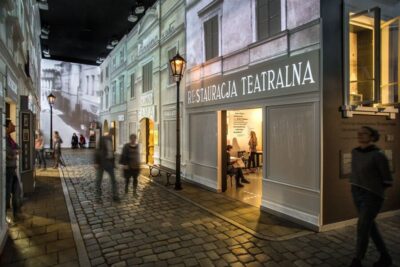
POLIN Museum of the History of Polish Jews Ticket
Read our review →
Gdańsk City Sights & History Guided Walking Tour in English
Read our review →

Small-Group Historical Guided Tour of Warsaw with pick up/drop off. Public Tour.
Read our review →Browse the lists this tour appears in