
REVIEW · SCHINDLER'S FACTORY TOURS
Kraków: Schindler’s Factory & Jewish Ghetto Guided Tour
History feels close here. This three-hour tour links Schindler’s Factory with the former Jewish Ghetto, giving you both the museum story and the places where that history unfolded. I like the strong guiding, especially the clear, passionate explanations praised by several guests, and I like the route’s balance between indoor exhibits and outdoor memorial sites. The main drawback is crowding: one group had more than 25 people inside narrow museum rooms, making it hard for everyone to see the guide’s displays.
You pay $58 per person for a licensed guide, skip-the-line museum admission, and a walking tour of the ghetto area. That is fair value if you want context rather than a quick visit, but you should arrive early, wear comfortable shoes, and expect emotionally heavy subject matter.
In This Review
- Key points to know before booking
- Why this three-hour tour works
- Entering Schindler’s former enamel factory
- What the museum rooms are like
- Schindler’s story within the larger wartime picture
- Walking to the remains of the Jewish Ghetto wall
- Ghetto Heroes Square and the Chair Memorial
- The Under the Eagle Pharmacy
- The value of $58 per person
- Who will appreciate this tour most
- Practical advice for a better visit
- Should you book it?
- FAQ
- Where does the tour meet?
- How long does the tour last?
- What does the tour include?
- Is hotel pickup included?
- Are food and drinks included?
- Which languages are available?
- Is Schindler’s original factory machinery still inside?
- Do I need to arrive early?
- Does the tour operate in bad weather?
- Can I cancel for a refund?
Key points to know before booking
- Schindler’s Factory is now a museum, not a working factory: You will not see original machinery. The building houses the exhibition Kraków under Nazi Occupation 1939 to 1945.
- The museum covers more than Oskar Schindler: You learn about the wartime lives of Jewish and non-Jewish residents, Nazi control, deportations, and the destruction of Kraków’s Jewish community.
- The ghetto walk adds vital context: The remaining ghetto wall, Ghetto Heroes Square, and the Chair Memorial connect museum displays with real locations.
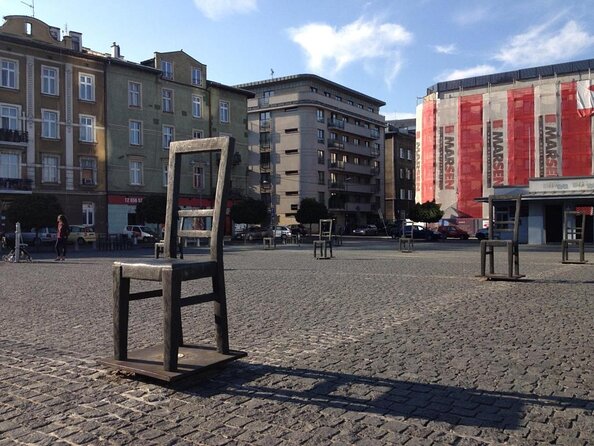
- The Chair Memorial is especially powerful: Each empty chair represents a life lost during the deportations from the square.
- Guiding is a major strength: The best guides explain history with precision, warmth, and clear links between political events and ordinary lives.
- Small museum spaces can affect the experience: If the group is large, stay close to the guide so you can see photographs, objects, and other displays being discussed.
Why this three-hour tour works
Kraków’s wartime story can feel scattered if you visit sites on your own. Schindler’s Factory is in the former industrial district, while the ghetto sites lie across the river in Podgórze. This tour gives you a useful order: first, build a picture of Nazi-occupied Kraków inside the museum, then walk through the places connected to the Jewish Ghetto.
That order matters. You first learn the political setting, the machinery of persecution, and the role of the city’s residents. Then you see the wall, the square, and the pharmacy as physical reminders of what happened.
The tour lasts three hours, which is long enough for real explanation without taking an entire day. Still, this is not a light sightseeing outing. The subject includes forced confinement, deportation, murder, and the destruction of a community. You should allow yourself some quiet time afterward rather than scheduling a rushed restaurant reservation or another major attraction.
The tour is offered in English, French, Italian, German, and Spanish. When booking, select the language that lets you follow difficult historical details without strain.
More Schindler Factory tours:
- Krakow: Oskar Schindler’s Factory Entry Ticket & Guided Tour
★ 4.2 · 3,793 reviews - Krakow: Schindler’s Factory Tour with Entrance Ticket
★ 4.5 · 3,182 reviews - Krakow: Schindler’s Factory Skip-the-Line Ticket
★ 4.4 · 3,105 reviews
Entering Schindler’s former enamel factory
The meeting point is in front of the main entrance to Schindler’s Factory Museum. Look for the guide holding an excursions.city sign, and arrive at least 10 minutes before the scheduled start. This is important because late arrivals cannot join once the group has left, and the ticket cannot be refunded.
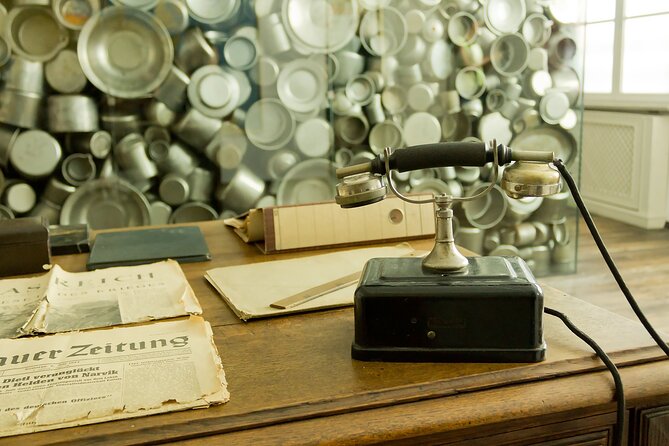
The building once housed Oskar Schindler’s enamel factory, but today it contains a museum rather than original production equipment. If you arrive expecting machinery, factory floors, or a narrow focus on Schindler himself, you may be surprised.
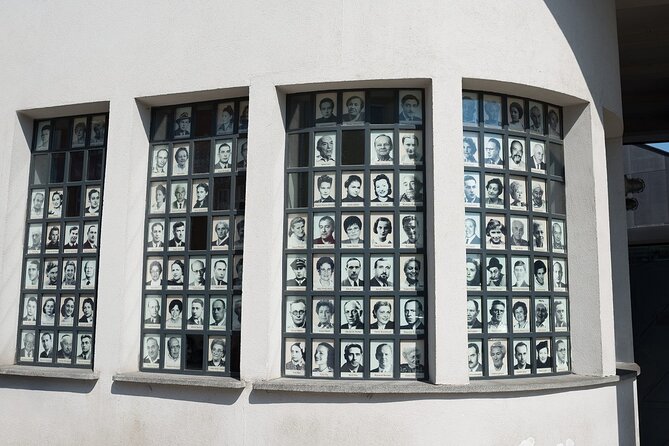
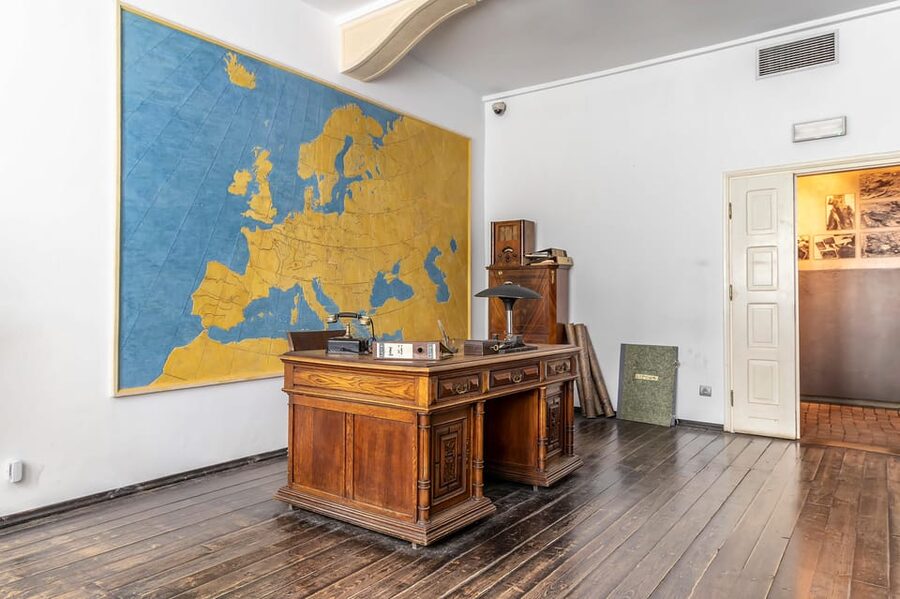
The main exhibition is called Kraków under Nazi Occupation 1939 to 1945. Its subject is the city during the war, not simply one industrialist’s biography. Schindler’s role is part of that story, but the museum gives much of its attention to the wider experience of Kraków’s Jewish and non-Jewish population.
That broader focus is one of the tour’s best features. Schindler’s decision to protect more than a thousand Jewish workers matters, but it becomes more meaningful when set beside the laws, violence, deportations, and daily fear surrounding those workers.
What the museum rooms are like

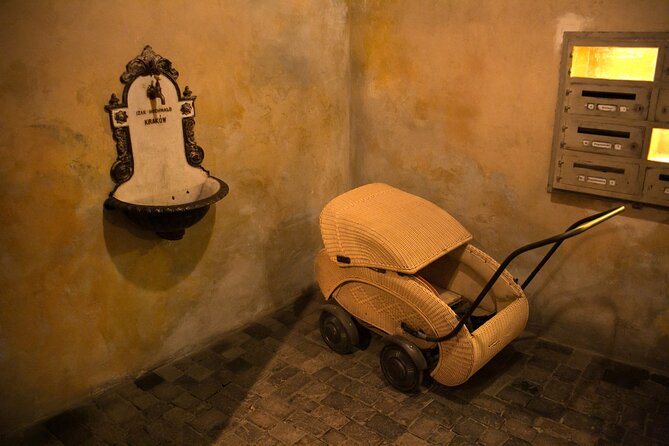
Expect narrow corridors, dim rooms, photographs, original objects, and reconstructed settings. The museum uses its design to create a sense of pressure and uncertainty. This can make the visit feel immediate, but it can also feel physically crowded and emotionally demanding.
You may find yourself moving through spaces designed to suggest wartime offices, streets, homes, and public institutions. The point is not simply to display objects behind glass. The layout asks you to think about how quickly normal city life was reshaped by occupation.
A good guide makes a major difference here. One highly praised guide was described as clear, personable, and deeply informed about history and politics. That combination is useful in a museum with many details. You want someone who can explain the sequence of events without turning the tour into a string of dates.
Several strong comments also praise the guide’s personal commitment to the material. That matters because the museum can feel confusing without direction. A skilled guide helps you understand what to look at, why it matters, and how one part of the exhibition connects to the next.
There is one practical problem to prepare for. The museum’s corridors are narrow, and a group of more than 25 people can make it difficult to see whatever the guide is explaining. Stay near the front or center of the group when possible. If you hang back, you may hear the explanation but miss the photograph or object that gives it meaning.
Schindler’s story within the larger wartime picture
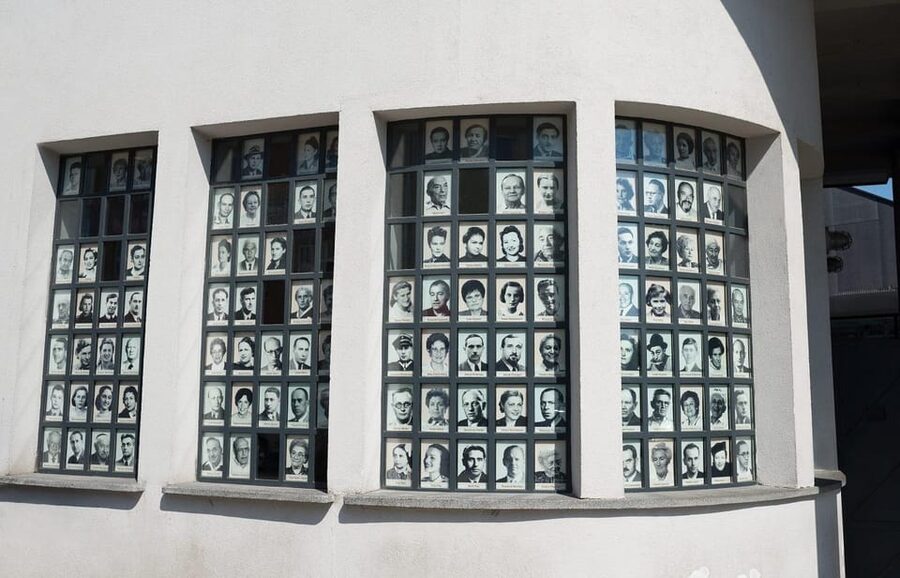
Oskar Schindler is the name most people associate with this museum, but the tour does not treat him as the entire story. You will learn how his factory provided refuge to more than a thousand Jewish workers, while also seeing the terrible conditions that made such protection necessary.
This approach is valuable. It avoids turning the visit into a simple tale of one heroic figure. Schindler’s actions were significant, but they took place within a system of persecution that affected an entire city.
You also gain a clearer sense of the difference between individual courage and large-scale destruction. The museum shows both. There are stories of people trying to help, but there is no softening of the forced removals, the deportations, or the loss of Kraków’s Jewish community.
The feedback about Schindler being somewhat underrepresented is worth taking seriously. If your main reason for visiting is to see a detailed biography of Schindler, you may want more time with his personal story than this tour provides. The museum is better understood as a history of occupied Kraków that includes Schindler, not as a dedicated life story from beginning to end.
More Jewish heritage tours in Krakow:
- Krakow: Schindler’s Factory & Ghetto Guided Tour
★ 4.7 · 1,694 reviews - Krakow: Jewish Quarter and Former Ghetto Tour
★ 4.9 · 1,441 reviews - Krakow: Bike Tour of Old Town, Jewish Quarter and the Ghetto
★ 4.9 · 1,155 reviews - Krakow: Kazimierz Jewish Quarter Walking Tour
★ 4.8 · 571 reviews
Walking to the remains of the Jewish Ghetto wall
After the museum, the tour continues on foot through the former Kraków Ghetto. The first major stop is the remains of the ghetto wall.
This is a stark change from the museum. Inside, you have displays, reconstructions, and guided explanation. At the wall, the physical barrier itself carries the message. It reminds you that Jewish residents were confined in a defined area and cut off from the rest of the city.
The stop is not about architecture. It is about control. A wall can look ordinary in a photograph, but standing beside what remains helps you understand the physical reality of segregation and confinement.
Your guide can also place the wall within the route of the wider walk. That makes this section more than a detached memorial stop. You begin to see how the ghetto functioned as part of the city, not as an isolated place outside everyday Kraków.
Comfortable footwear is sensible. The tour continues in all weather, so bring clothing suited to the forecast. Rain will not cancel the walk, but it can make several hours of outdoor history less comfortable.
Ghetto Heroes Square and the Chair Memorial
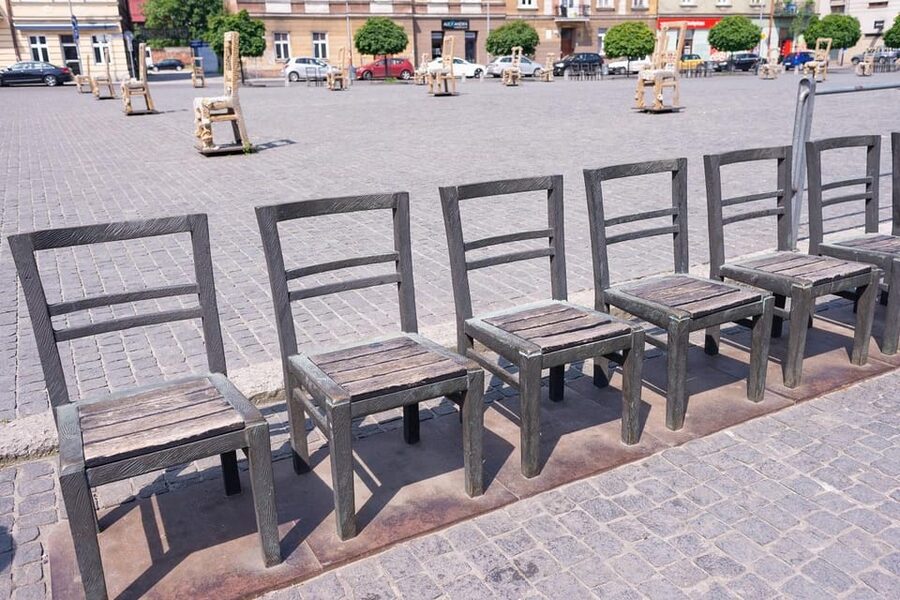
The route continues to Ghetto Heroes Square, the central point of the former ghetto. This was also where deportations to extermination camps took place.
Today, the square is marked by the Chair Memorial. Empty chairs are placed across the space, with each chair representing a life lost. The design is simple, but that simplicity gives it force. You do not need a long explanation to understand the sense of absence.
This is likely to be the most memorable outdoor stop. The chairs do not present a list of names or a large block of text. Instead, they make loss visible in the middle of an ordinary urban square.
Your guide’s role here is to connect the memorial to the events that took place at the site. Without that context, the chairs might seem like an unusual piece of public art. With the history explained, they become a reminder of people being forced from their homes and sent away from the city.
Give yourself time to look around rather than treating the square as a quick photo stop. The memorial works best when you slow down and consider the empty spaces around you.
The Under the Eagle Pharmacy
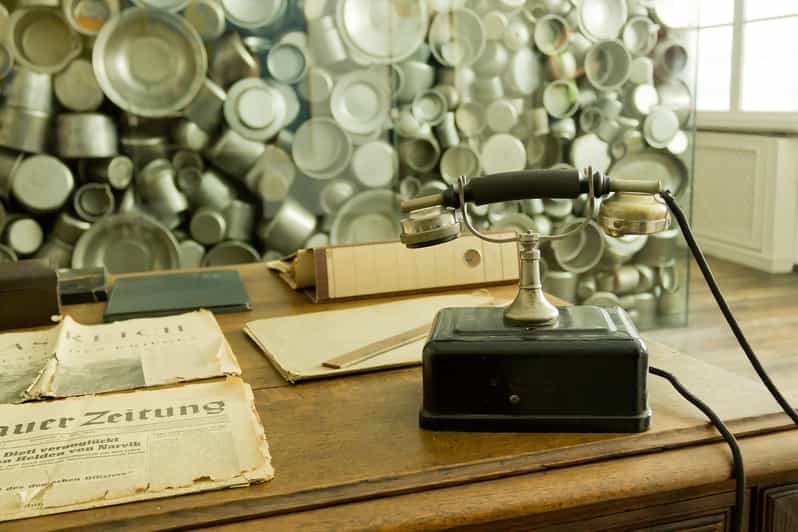
Across the square is the Under the Eagle Pharmacy. During the occupation, pharmacist Tadeusz Pankiewicz and his staff helped people in the ghetto. They preserved medicine and offered a measure of practical support and hope during a period when both were desperately scarce.
This stop adds a different kind of story to the tour. The ghetto wall shows imposed confinement. The square recalls deportation and loss. The pharmacy focuses on assistance, care, and moral courage within those conditions.
The pharmacy also helps you understand that resistance was not always dramatic or armed. Keeping medicine available, helping residents, and maintaining a place of aid could be dangerous acts under Nazi rule. The guide’s explanation gives this small site its proper weight.
The tour description does not include admission to the pharmacy as a separate interior visit, so you should think of it as an important stop on the walking route rather than assume you will receive a full museum visit inside. The included elements are the licensed guide, skip-the-line admission to Schindler’s Factory, and the walking tour of the ghetto.
The value of $58 per person
At $58, this is not the cheapest way to see Schindler’s Factory. The price makes more sense if you value a guide who can explain the exhibition and connect it to the ghetto sites afterward.
You are paying for three things that are hard to recreate efficiently on your own: entry to the museum without waiting in the ticket line, a live guide in your chosen language, and a planned walking route through the former ghetto. You are not paying for food, drinks, hotel pickup, or drop-off.
The skip-the-line entry is useful because it saves time at one of Kraków’s most popular museums. The bigger value, though, is interpretation. A museum this dense can leave you with isolated facts. A good guide gives you a framework.
The price is easier to justify for a first visit to Kraków or for anyone with limited time. If you have already studied the occupation in detail, speak Polish, or prefer to read displays at your own speed, a self-guided visit may offer more freedom.
The group size is the main factor that could affect value. A large group may make it harder to see the displays and ask questions. Since narrow rooms are part of the museum design, the difference between a manageable group and a crowded one is not minor.
Who will appreciate this tour most
I would recommend this experience to you if you want a guided introduction to Kraków’s wartime history and prefer connected sites rather than separate visits. It suits first-time visitors who want a clear route and families with older children who can handle serious historical subjects.
It is also a good choice if you want the Schindler connection but do not want a tour focused only on the film or on one individual. The museum gives you the city-wide setting, while the ghetto walk shows the places where the story took place.
You should think twice if you dislike guided groups, need a quiet pace inside museums, or want a detailed biography of Oskar Schindler. The exhibition may give Schindler less attention than you expect, and a larger group can make the narrow rooms frustrating.
People sensitive to enclosed spaces should also know about the museum’s tight corridors and dim design. This is deliberate, but it will not suit everyone.
Practical advice for a better visit
Arrive 10 minutes early and locate the excursions.city sign before the start time. Do not count on joining later if you are delayed.
Wear shoes suitable for a walking tour and check the forecast. The route continues in rain or sunshine, so a waterproof layer or sun protection may make a real difference.
Stay close to the guide inside the museum. In a large group, the front half will have the easiest view of photographs and objects. If you cannot hear or see well, tell the guide during a natural pause rather than waiting until the group has moved on.
Choose your language carefully. English, French, Italian, German, and Spanish are available, and the subject deserves a language in which you can follow political and historical explanations comfortably.
Book only if you are ready for serious material. This is a respectful memorial and history experience, not a casual city walk.
Cancellation is available up to 24 hours before the tour for a full refund, and you can reserve now and pay later. From January 1, 2026, museum times may be approximate because of site scheduling, and every participant’s full name must be supplied for personalized tickets. Without those names, entry may be refused.
Should you book it?
Book this tour if you want the museum and the former Jewish Ghetto explained as one connected story. The guide quality appears to be a real strength, and the combination of Schindler’s Factory, the ghetto wall, Ghetto Heroes Square, and the Under the Eagle Pharmacy gives you a serious understanding of wartime Kraków in three hours.
Skip it if you want a quiet, unhurried museum visit, a small private group, or a biography centered mainly on Schindler. For most first-time visitors who value context and careful guiding, $58 is a reasonable price, provided you prepare for narrow spaces, possible crowding, outdoor walking, and difficult subject matter.
FAQ
Where does the tour meet?
The guide meets you in front of the main entrance to Schindler’s Factory Museum. Look for the excursions.city sign.
How long does the tour last?
The tour lasts three hours.
What does the tour include?
It includes a licensed expert guide, skip-the-line admission to Schindler’s Factory, and a walking tour of Kraków’s former Jewish Ghetto.
Is hotel pickup included?
No. Hotel pickup and drop-off are not included.
Are food and drinks included?
No. Food and drinks are not included.
Which languages are available?
The tour is offered in English, French, Italian, German, and Spanish.
Is Schindler’s original factory machinery still inside?
No. The building is now a museum and does not contain the original machinery.
Do I need to arrive early?
Yes. You should arrive 10 minutes before the tour begins. Latecomers cannot join after the group has departed, and their tickets cannot be refunded.
Does the tour operate in bad weather?
Yes. The tour operates in all weather, so you should check the forecast and bring suitable clothing and footwear.
Can I cancel for a refund?
Yes. You can cancel up to 24 hours in advance for a full refund. You can also reserve now and pay later.
Just added in Krakow
- Auschwitz-Birkenau – Skip the Line Tickets★ 3.5 · 29 reviews
- Auschwitz-Birkenau: Fast-Track Ticket & Guided Tour No Transfers★ 3.5 · 17 reviews
- Zakopane & Sleigh Ride with Bonfire – Group Tour from Kraków★ 5.0 · 2 reviews
- Sleigh Ride & Bonfire in Zakopane with Funicular – Private Trip★ 5.0 · 48 reviews
- Thermal Baths & Zakopane – Private Trip from Krakow★ 5.0 · 1 review
- Zakopane & Gubalowka Funicular – Private Winter Tour from Krakow★ 5.0 · 10 reviews
- stag dog chase Krakow prank★ 5.0 · 4 reviews
- Divine Mercy Sanctuary – Private Tour from Krakow★ 5.0 · 4 reviews