
REVIEW · SCHINDLER'S FACTORY TOURS
Krakow: Schindler’s Factory & Ghetto Guided Tour
History feels close here. This three-hour tour links Schindler’s Factory Museum with the streets of Podgórze, the district where Krakow’s Jewish ghetto operated during the Second World War. I like the way it combines museum displays with real places outside, and I like that a professional guide provides the context that can be hard to piece together alone. The main drawback is the strict schedule: if you arrive late, the museum can refuse entry without a refund.
The tour is priced at $58 per person, which is fair if you value a guide who can connect the exhibition to the surrounding streets. Guide Eva earned especially warm praise for her passion and for giving detailed answers to questions. You should also plan carefully, since meeting times are tied to the museum’s entry schedule and can change.
In This Review
- Key Points at a Glance
- Why This Tour Works Better Than a Museum Visit Alone
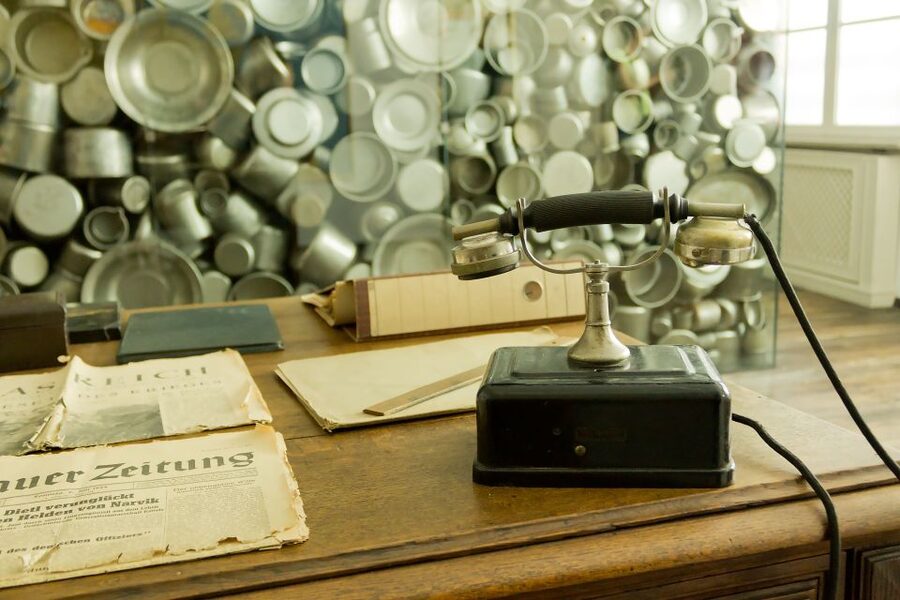
- Inside Schindler’s Factory and Krakow Under Nazi Occupation
- Walking Through Podgórze’s Former Jewish Ghetto
- The Surviving Ghetto Wall
- Pod Orłem Pharmacy and the Human Scale of the Story
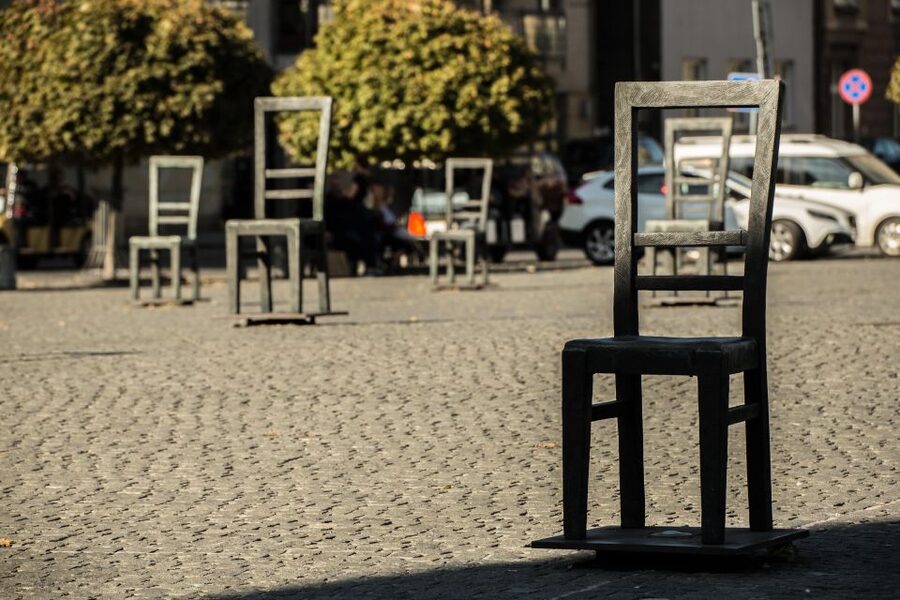
- Heroes’ Square and the 68 Empty Chairs
- Is $58 a Fair Price?
- Language, Timing, and Arrival Advice
- Who Should Book This Experience?
- Should You Book the Schindler’s Factory and Ghetto Tour?
- FAQ
- How long is the Schindler’s Factory and Ghetto tour?
- What does the tour include?
- Is food included?
- Where do I meet the guide?
- What languages are available?
- Can I arrive late?
- Do I need identification?
- Can I cancel the tour?
Key Points at a Glance
- See Schindler’s Factory Museum: Explore the exhibition Krakow Under Nazi Occupation, including the story of German entrepreneur Oskar Schindler and the Jews he helped.
- Walk through former ghetto streets: Podgórze adds physical meaning to the museum material, with homes and streets linked to wartime displacement.
- Find part of the original ghetto wall: This surviving fragment gives you a direct sense of the boundaries forced on the Jewish population.
- Visit the Pod Orłem Pharmacy: The pharmacy is tied to life inside the ghetto and is one of the tour’s most meaningful stops.
- Pause at the Empty Chair Monument: The 68 chairs in Heroes’ Square represent the people removed from the ghetto.
- Arrive early: The group meets in front of the museum entrance, and late arrivals are not admitted.
Why This Tour Works Better Than a Museum Visit Alone
Schindler’s Factory is one of Krakow’s major museums, but its subject is larger than one famous businessman. The exhibition places you in Krakow under Nazi occupation and examines daily life during a period of forced movement, fear, and mass persecution.
That broader focus matters. Schindler’s story is compelling, but it can easily become the only thing people remember. A guided visit helps put his actions into the wider setting of occupied Krakow and the Jewish ghetto. You learn not just about a German factory owner who helped many Jews, but also about the people whose lives were controlled by Nazi policy.
I like the pairing of indoor and outdoor history. Inside the museum, you get an organized exhibition with objects, photographs, and explanations. Outside, you see the streets of Podgórze, where displaced Jews were made to live. One setting explains the other.
The tour lasts three hours, so it has enough time for both parts without becoming an all-day commitment. Still, this is not a casual sightseeing walk. The subject is painful, and the pace is shaped by the museum appointment rather than by your own schedule.
More Schindler Factory tours:
- Krakow: Oskar Schindler’s Factory Entry Ticket & Guided Tour
★ 4.2 · 3,793 reviews - Krakow: Schindler’s Factory Tour with Entrance Ticket
★ 4.5 · 3,182 reviews - Krakow: Schindler’s Factory Skip-the-Line Ticket
★ 4.4 · 3,105 reviews
Inside Schindler’s Factory and Krakow Under Nazi Occupation
The tour begins at the main entrance to Schindler’s Factory Museum. Look for a guide carrying the inscription excursions.city. The museum ticket is included, and the tour is designed to skip the ticket line, though you still need to arrive before the assigned entry time.
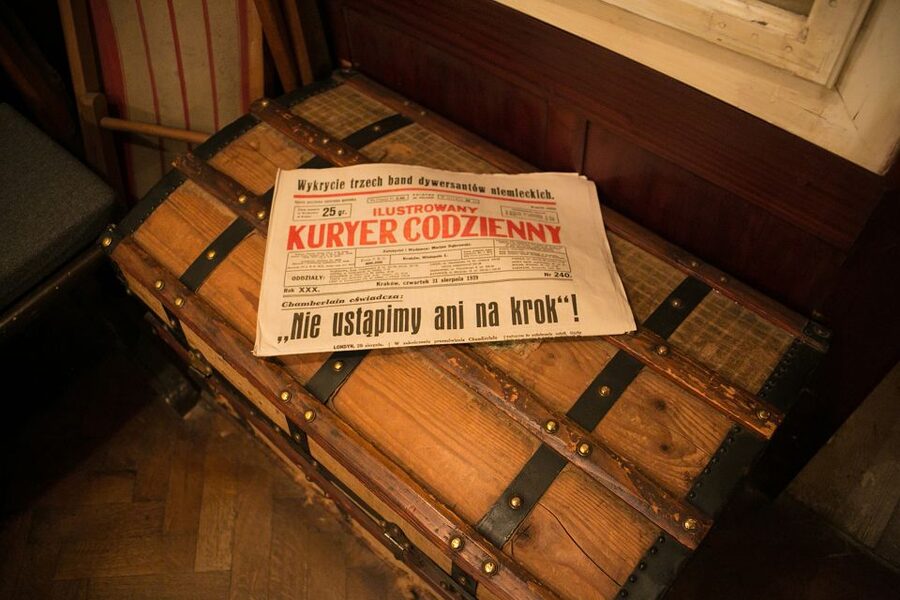
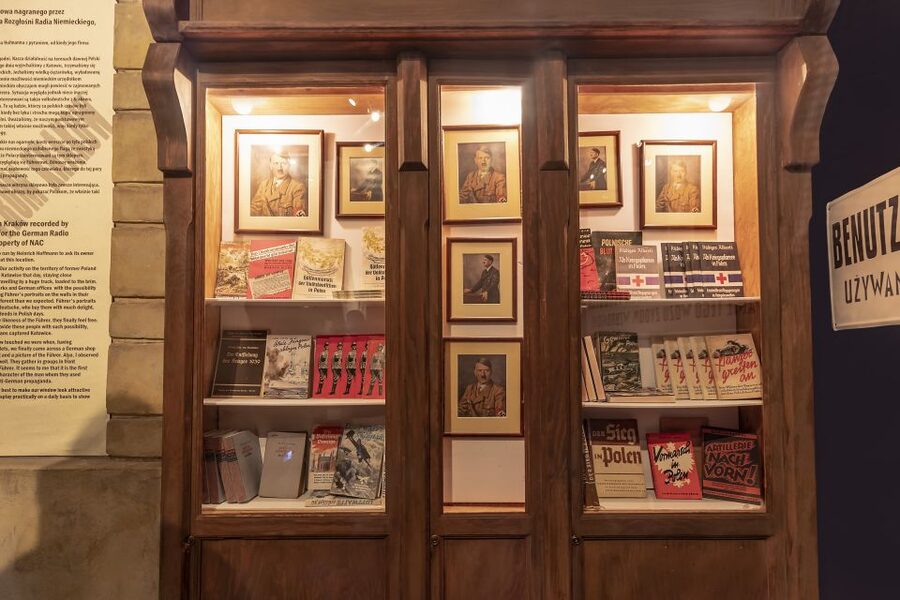
The central exhibition, Krakow Under Nazi Occupation, tells the story of the city during the Second World War. Its value lies in showing how occupation affected ordinary routines. Daily life did not simply stop. Instead, work, housing, movement, family life, and personal safety were reshaped by Nazi rule.
A guide can help you follow that story in a sensible order. Museum displays can be dense, especially when you are looking at unfamiliar names, dates, and places. An informed guide can point out what matters and answer questions as they arise. Eva, one of the guides associated with this tour, was praised for her enthusiasm and for responding to questions at length.
That personal element is important here. A quiet visit can be moving, but you may leave with gaps in your understanding. The guided format gives you someone to ask when a display raises a difficult question or when Schindler’s role needs more explanation.
Do not expect the museum to function as a simple movie tie-in. The focus is not only on Oskar Schindler. The exhibition presents occupied Krakow and the pressures placed on the Jewish population. If you arrive expecting a narrow story about one hero, you may find the wider historical focus more demanding, but also more useful.
Because the museum is the first major part of the tour, this is where you receive the background needed for Podgórze. Once outside, the streets are no longer just old buildings and city blocks. They become part of the story you have just been studying.
Walking Through Podgórze’s Former Jewish Ghetto
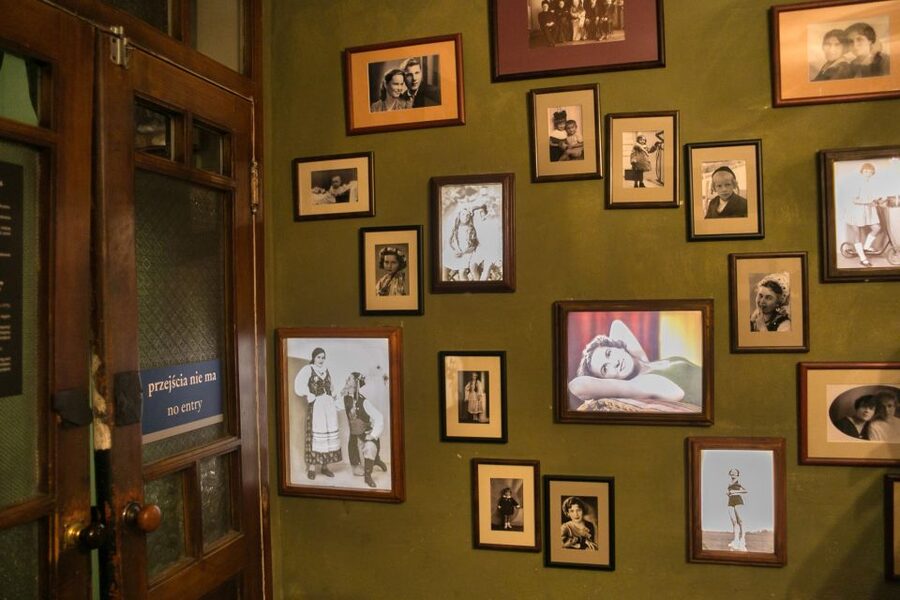
After the museum, the tour continues on foot through Podgórze. During the war, this district was the site of Krakow’s Jewish ghetto. The walk lets you see where displaced Jews were forced to live and helps translate museum information into a physical setting.
The tour includes houses where thousands of displaced Jews used to live. That detail may sound simple, but it is one of the strongest reasons to take the walk. You are not looking at an isolated memorial removed from daily life. You are seeing the buildings and streets connected with crowded, controlled living conditions.
The walk also brings a useful change of pace. Inside the museum, information comes through displays and a planned route. Outside, your guide can connect individual places to the wider story of the district. The result is less abstract than a museum-only visit.
At the same time, you should set your expectations correctly. Podgórze is an active city district, not a preserved wartime set. Modern life continues around these places. That contrast can be striking, but it also means some evidence is subtle. You will benefit from listening closely to the guide rather than expecting every stop to explain itself.
The walking portion is included in the three-hour schedule, but the precise balance between museum time and street time may depend on the museum’s timing. The tour follows a fixed plan, so you will not have unlimited time to linger at each location.
The Surviving Ghetto Wall
One stop brings you to part of the undestroyed wall that surrounded the ghetto. It is a small physical remnant, yet it carries a heavy meaning. The wall was not simply a boundary on a map. It separated people from the rest of Krakow and helped enforce the restrictions placed on the Jewish population.
This is a good example of why the outdoor walk matters. A museum can explain how the ghetto worked, but standing beside a remaining section of the wall gives that policy a physical edge. You can see the kind of barrier that turned forced separation into a daily reality.
The stop is likely to be brief compared with the museum visit, but do not judge its importance by its size. A fragment can make the past easier to picture. Your guide’s explanation is especially useful here because the surviving section alone cannot tell the whole story.
More Jewish heritage tours in Krakow:
- Krakow: Schindler’s Factory & Ghetto Guided Tour
★ 4.7 · 1,694 reviews - Krakow: Jewish Quarter and Former Ghetto Tour
★ 4.9 · 1,441 reviews - Krakow: Bike Tour of Old Town, Jewish Quarter and the Ghetto
★ 4.9 · 1,155 reviews - Krakow: Kazimierz Jewish Quarter Walking Tour
★ 4.8 · 571 reviews
Pod Orłem Pharmacy and the Human Scale of the Story
The tour also visits the Pod Orłem Pharmacy. Its inclusion adds a more personal point of reference to the walk through Podgórze. The pharmacy is connected with life inside the ghetto and helps shift the focus from broad wartime events to the people who were trying to survive them.
Places such as this are valuable because they show that the ghetto was not an empty holding area. It was a place where people still needed medicine, carried out daily tasks, and tried to maintain some form of ordinary life under extraordinary pressure.
I appreciate this kind of stop in a historical tour. It can be easier to remember a named place than a long list of dates. The pharmacy also gives your guide a chance to discuss how daily life worked within the restrictions imposed by the occupation.
As with the ghetto wall, the experience depends on the explanation provided. The building is meaningful because of its connection to the people and events around it. Stay close to the guide and listen for the links between this stop, the homes you see, and the museum exhibition.
Heroes’ Square and the 68 Empty Chairs
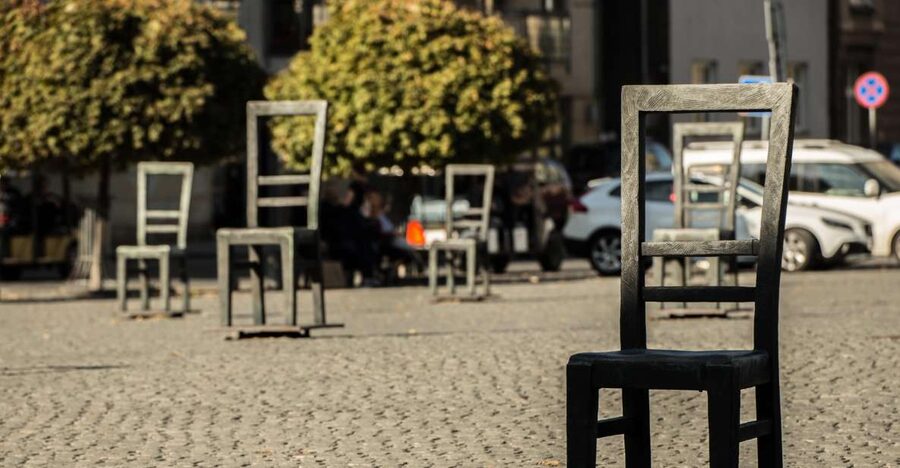
The walk includes the Empty Chair Monument in Heroes’ Square. Its 68 chairs symbolize the people removed from the ghetto. The design is spare and immediately understandable: empty seats suggest lives interrupted, families separated, and a community stripped from its homes.
This is likely to be one of the clearest visual moments of the tour. You do not need a long explanation to understand what the chairs represent, but the guide can place the monument within the story of Podgórze and the wartime deportations.
The monument also closes the outdoor section on a strong note. After seeing the former homes, the remaining ghetto wall, and the pharmacy, you encounter a memorial that gathers those details into one image. The chairs turn an enormous historical crime into something you can grasp at human scale.
Give yourself a quiet moment here. This is not a stop for rushing through, taking a quick photograph, and moving on. The tour has a fixed schedule, but a respectful pause still matters.
Is $58 a Fair Price?
At $58 per person, this is not the cheapest way to see Schindler’s Factory. You are paying for the museum ticket, a professional guide, and the walking tour through Podgórze. Food and drinks are not included, but that is not a serious weakness for a three-hour experience.
The real question is how much value you place on interpretation. If you are comfortable reading museum displays and finding the ghetto sites on your own, you may prefer to buy admission separately and explore at your own pace. If you want the museum and outdoor locations tied together, the price is easier to justify.
The tour also saves you from arranging two separate visits. You do not need to work out how the exhibition relates to the former ghetto streets or decide which surviving places are worth finding. That convenience has practical value, especially on a short Krakow visit.
The fixed schedule is both a strength and a limitation. It keeps the group moving and ensures that the museum entry happens on time. It also means you cannot simply arrive whenever convenient or stop for a long meal in the middle.
Language, Timing, and Arrival Advice
The live guide is available in English, French, German, or Italian. Choose the language that lets you follow difficult historical material without strain. The schedule lasts three hours, and available starting times depend on the museum’s timetable.
Meet in front of the main entrance to Schindler’s Factory Museum. The guide will carry the excursions.city sign. Arrive early, not just on time. The museum does not accept late arrivals, and people who miss the entry cannot join later or receive a refund.
From January 1, 2026, the time shown when you reserve may be approximate because the museum controls the schedule. You can select a preferred time, but the exact entry time is not guaranteed.
From that date, you must also provide the full names of everyone in your party when booking. Bring a passport or ID for each participant. Without the required names and identification, the museum may deny entry.
The tour offers free cancellation up to 24 hours before the start, and you can reserve now and pay later. Those options help if your Krakow plans are still shifting, but they do not change the strict entry rule on the day.
Who Should Book This Experience?
I would recommend this tour to you if you want a guided introduction to Krakow’s wartime history and prefer seeing both museum material and real locations. It suits first-time visitors who want a clear route through Schindler’s Factory and Podgórze without arranging the details alone.
It is also a good fit if you tend to have questions in museums. Eva’s strong reputation for giving detailed answers suggests that a lively guide can add real value, particularly when the subject becomes complex or emotionally difficult.
You may prefer a self-guided visit if you need complete control over timing, want to read every display slowly, or dislike group schedules. The tour cannot accommodate late arrivals, and the museum’s timing can change, so flexibility is limited.
This is not the right choice if you are looking for light sightseeing or a quick stop between other attractions. The subject is serious, and the experience asks you to give it your full attention.
Should You Book the Schindler’s Factory and Ghetto Tour?
Book it if you want the museum and Podgórze to make sense as one connected story. The strongest features are the combination of indoor and outdoor history, the visit to the surviving ghetto wall and Pod Orłem Pharmacy, and the guide’s role in explaining daily life under Nazi occupation.
At $58, the tour offers solid value for a three-hour guided experience, especially if you would otherwise struggle to connect the museum with the former ghetto sites. Just arrive early, prepare for a fixed schedule, and bring the required identification if you are visiting from January 1, 2026 onward.
FAQ
How long is the Schindler’s Factory and Ghetto tour?
The tour lasts three hours, including the museum visit and the walking tour of Podgórze.
What does the tour include?
The price includes admission to Schindler’s Factory Museum, a professional live guide, and the walking tour.
Is food included?
No. Food and drinks are not included.
Where do I meet the guide?
Meet in front of the main entrance to Schindler’s Factory Museum. Look for a guide with the inscription excursions.city.
What languages are available?
The live tour guide is available in English, French, German, and Italian.
Can I arrive late?
No. The museum does not accept late arrivals. Anyone who misses the scheduled entry may be refused admission and cannot receive a refund.
Do I need identification?
From January 1, 2026, each participant must provide a full name when reserving and bring a passport or ID for museum entry.
Can I cancel the tour?
Yes. You can cancel up to 24 hours in advance for a full refund. You can also reserve now and pay later.
Just added in Krakow
- Auschwitz-Birkenau – Skip the Line Tickets★ 3.5 · 29 reviews
- Auschwitz-Birkenau: Fast-Track Ticket & Guided Tour No Transfers★ 3.5 · 17 reviews
- Zakopane & Sleigh Ride with Bonfire – Group Tour from Kraków★ 5.0 · 2 reviews
- Sleigh Ride & Bonfire in Zakopane with Funicular – Private Trip★ 5.0 · 48 reviews
- Thermal Baths & Zakopane – Private Trip from Krakow★ 5.0 · 1 review
- Zakopane & Gubalowka Funicular – Private Winter Tour from Krakow★ 5.0 · 10 reviews
- Divine Mercy Sanctuary – Private Tour from Krakow★ 5.0 · 4 reviews
- stag dog chase Krakow prank★ 5.0 · 4 reviews