
REVIEW · SCHINDLER'S FACTORY TOURS
Krakow: Schindler’s Factory & Ghetto Guided Tour
History feels different when you walk its streets. This three-hour Krakow tour combines Schindler’s Factory Museum with the Podgórze district, where you see surviving ghetto walls, the former pharmacy Pod Orłem, and the Empty Chair Monument. I like the clear museum timeline, and I like that the walking route adds real places to the story. The main drawback is emotional: this is a serious, upsetting tour, not a light city stroll.
The $58 price includes museum admission, a guided walk, and a professional guide in English, German, Italian, French, or Spanish. Guides such as Hannah, Helen, and Helena have earned especially strong praise for their passion and clear explanations. You should also allow for several hours on foot, with no food, drinks, or hotel transport included.
In This Review
- Key points to know before booking
- Starting at Schindler’s Factory Museum
- Reading Krakow Under Nazi Occupation in sequence
- Walking through Podgórze after the museum
- Seeing the surviving ghetto wall
- The former Pod Orłem pharmacy
- The 68 empty chairs at Heroes’ Square
- Why the guided format matters here
- Is $58 a fair price?
- Languages, timing, and practical planning
- Who will appreciate this tour most?
- Should you book the Schindler’s Factory and Ghetto Tour?
- FAQ
- Where does the tour meet?
- How long does the experience last?
- What does the price include?
- Is hotel pickup included?
- Are food and drinks provided?
- Which languages are available?
- Can I skip the museum ticket line?
- Can I cancel the booking for a refund?
- What identification is required from January 1, 2026?
Key points to know before booking
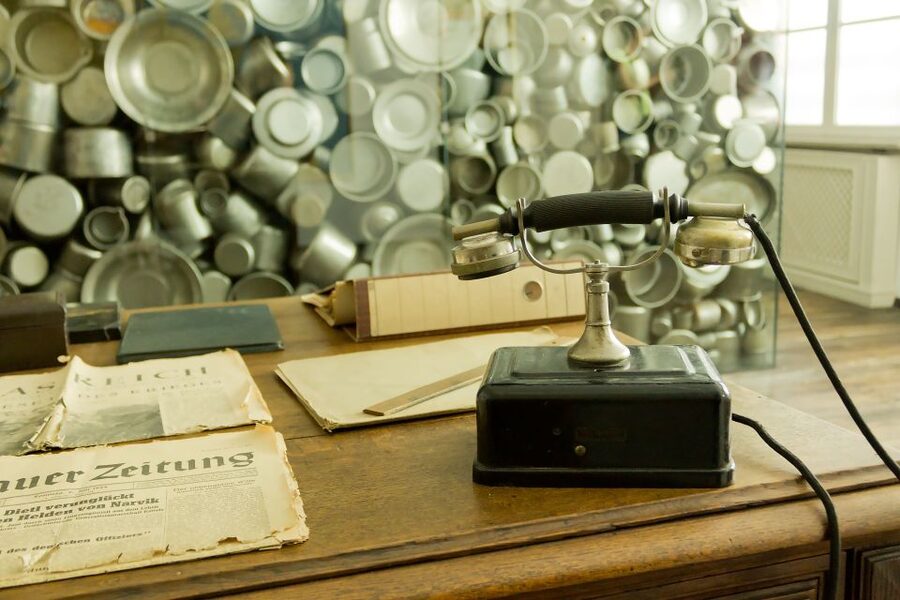
- The museum uses a chronological exhibition: Krakow Under Nazi Occupation follows events in a clear order, helping you understand how persecution grew into mass violence.
- The walking route adds essential context: Podgórze’s streets, the ghetto wall, Pod Orłem pharmacy, and Heroes’ Square connect museum displays with physical places.
- The Empty Chair Monument has 68 chairs: This spare memorial at the former ghetto square recalls the people forced from their homes.
- The guide makes a major difference: Hannah, Helen, and Helena received special praise for lively, personal explanations and strong command of the subject.
- A headphone system may help: One review specifically praised the audio system for making commentary easier to follow while walking.
- Bring identification from January 1, 2026: Personalized museum tickets require the full names of all participants and a passport or ID at entry.
Starting at Schindler’s Factory Museum
You meet your guide in front of the main entrance to Schindler’s Factory Museum. Look for the excursions.city sign. This detail matters because the museum is the fixed starting point, and you do not receive hotel pickup or a ride from central Krakow.
The tour begins inside the museum, with admission included and the ticket line skipped. That is useful on a short city break, when standing around waiting for entry can eat into the day. Your exact starting time depends on museum scheduling, so treat the selected time as a preference rather than a guarantee, especially for visits from January 1, 2026 onward.
The building is linked to Oskar Schindler, the German entrepreneur who helped save many Jewish workers during the war. Yet the museum’s purpose is wider than Schindler alone. The main exhibition, Krakow Under Nazi Occupation, places his actions within the much larger story of Nazi rule, forced displacement, persecution, and murder.
That wider focus is important. A visit centered only on Schindler can become a heroic biography. This exhibition instead shows the city and its people as the story develops. You get a better sense of the political changes and daily pressures that shaped life in occupied Krakow.
More Schindler Factory tours:
- Krakow: Oskar Schindler’s Factory Entry Ticket & Guided Tour
★ 4.2 · 3,793 reviews - Krakow: Schindler’s Factory Tour with Entrance Ticket
★ 4.5 · 3,182 reviews - Krakow: Schindler’s Factory Skip-the-Line Ticket
★ 4.4 · 3,105 reviews
Reading Krakow Under Nazi Occupation in sequence
The exhibition’s chronological approach is one of its strongest features. Helen was praised for explaining the chain of events that led to the atrocities, and that order is valuable when the subject is complex and painful.
You move through the story step by step rather than receiving a scattered collection of objects and dates. The guide can explain how daily life changed under occupation and how restrictions became more severe. This helps you understand that the ghetto was not an isolated event, but part of a process that affected homes, work, movement, families, and basic security.
I especially like this kind of museum visit with a guide because the setting alone cannot explain what you are seeing. A professional guide can connect the exhibition’s material to the streets you will later walk. The experience is less about collecting facts and more about seeing how the facts fit together.
The reviews give the guides unusually high marks. Hannah was praised for her strong command of the subject, while Helen was credited with personal anecdotes that brought the history closer. Helena was described as engaging and passionate. Those comments point to the most important variable on this tour: the guide’s ability to explain difficult material with care.
A headphone system can also improve the visit. One participant specifically praised the system for making the commentary easy to hear. That is a practical advantage in a busy museum or during the outdoor walk, where it can be hard to stay close to a guide and hear every sentence.
Still, expect a serious museum experience. The exhibition concerns Nazi occupation and the destruction of Jewish life in Krakow. If you prefer to take historical museums slowly and quietly, you may find the group pace a little brisk. The three-hour schedule has to balance museum time with the Podgórze walk.
Walking through Podgórze after the museum
After the museum, the tour continues on foot through Podgórze. This shift from indoor displays to city streets changes the way you absorb the story. You are no longer looking at a museum panel describing displacement. You are walking through the district where thousands of displaced Jews once lived.
The route gives you a sense of place. Buildings, streets, and surviving traces make the subject less abstract. Your guide can explain what happened in the district and point out locations tied to the wartime ghetto.
Do not expect a sightseeing walk filled with grand views or pretty lanes. The value here is historical, not decorative. Podgórze is being used as an outdoor record, and the mood is reflective. Wear comfortable shoes and be ready to spend a substantial part of the three-hour visit walking and listening.
Seeing the surviving ghetto wall
One of the most direct reminders of the ghetto is a surviving section of its wall. The fragment is physically modest, but that is part of its force. A large museum display can feel distant. A piece of wall in the city makes the act of confinement easier to picture.
Your guide provides the context that the wall itself cannot. You learn why it mattered and how it relates to the people forced into the district. Without explanation, it is simply an old structure. With the guide’s help, it becomes evidence of a system that controlled where people could live and move.
This stop also shows why the walking portion is worth keeping. The museum explains the history in an organized setting. The wall gives you a fixed point in the real city, where the past is tied to an ordinary urban environment.
More Jewish heritage tours in Krakow:
- Krakow: Schindler’s Factory & Ghetto Guided Tour
★ 4.7 · 1,694 reviews - Krakow: Jewish Quarter and Former Ghetto Tour
★ 4.9 · 1,441 reviews - Krakow: Bike Tour of Old Town, Jewish Quarter and the Ghetto
★ 4.9 · 1,155 reviews - Krakow: Kazimierz Jewish Quarter Walking Tour
★ 4.8 · 571 reviews
The former Pod Orłem pharmacy
The historic Pod Orłem pharmacy is another important stop. During the ghetto period, it became connected with Jewish life and survival in Podgórze. The tour includes it as part of the route, giving you another place where the wider story becomes personal and local.
The pharmacy helps broaden your understanding of daily life. Occupation was not experienced only through major political announcements or military events. It affected practical choices, access to medicine, family care, and the small networks that helped people endure.
Your guide’s role is central here. The building needs explanation, and the value comes from understanding its place in the district’s wartime story. This is one reason I would choose the guided option over simply walking through Podgórze with a map.
The 68 empty chairs at Heroes’ Square
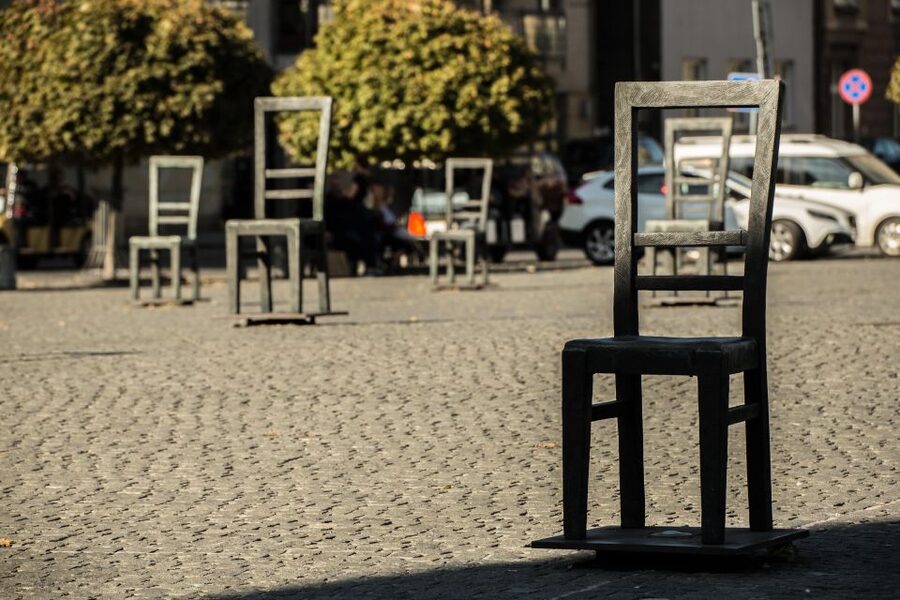
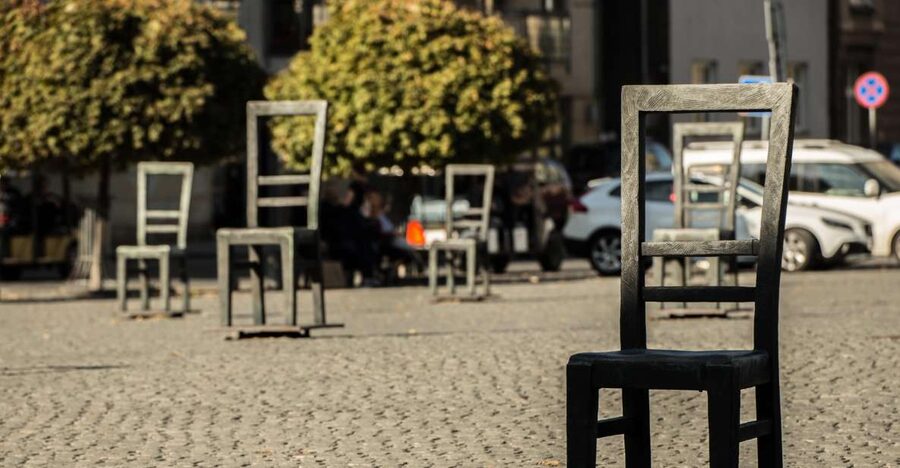
The Empty Chair Monument at Heroes’ Square is likely to be the most immediately memorable outdoor stop. The memorial consists of 68 chairs arranged across the square. The simple design represents absence, loss, and the homes left behind when people were forced from the ghetto.
The monument does not need much decoration. Its restraint makes the square feel quiet and unsettled. Your guide can explain the symbolism and connect it to the forced displacement covered in the museum.
This is also a useful moment to pause and take in the physical setting. You have just walked past remnants of the ghetto and learned about the people who lived there. The chairs give that story a visible human scale. They suggest belongings, rooms, families, and daily routines suddenly emptied.
Do not rush this part of the tour. The schedule is limited, but the memorial rewards a moment of silence and attention. It is a place where the emotional weight of the museum and the streets comes together.
Why the guided format matters here
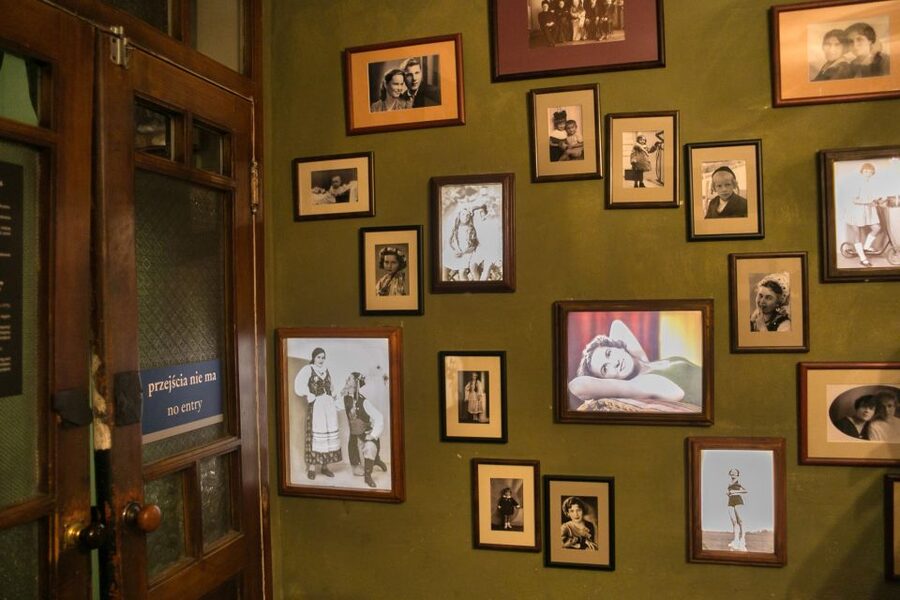
You can visit Schindler’s Factory Museum on your own, but this tour adds two things: structure and interpretation. The exhibition’s chronological design already provides a useful framework, and the guide helps you follow it without losing the larger meaning.
The guide also joins the museum to Podgórze. Without that link, you might see the ghetto wall, the pharmacy, and the chairs as separate points on a map. Together, they form a route through a district changed by occupation and forced removal.
The strongest comments about the guides focus on three qualities: clear knowledge, personal stories, and emotional engagement. That combination matters. The subject calls for accuracy, but a flat recital of dates would make the visit harder to follow. The best guide brings the material to life without turning tragedy into entertainment.
The headphone system is another small but useful feature. If your guide uses it, you can hear the commentary without crowding around one person. That makes it easier to look at the site while still following the explanation.
Is $58 a fair price?
At $58 per person, this is not the cheapest way to spend three hours in Krakow. You are paying for museum admission, a professional guide, the guided walk, and skip-the-line entry. The value depends on how much interpretation you want.
If you already know the history and prefer independent visits, the price may feel high. You could visit public locations in Podgórze without a tour, although you would lose the organized route and the guide’s explanations.
For a first visit to Schindler’s Factory, I think the price is easier to justify. The tour covers both the museum and the district, rather than treating the museum as a stand-alone attraction. The combination saves you from arranging separate visits and helps you understand how the exhibition relates to the city.
It also offers useful booking flexibility. You can reserve now and pay later, and you can cancel up to 24 hours before the tour for a full refund. Those terms are helpful when your Krakow plans are still shifting, but they do not change the fact that the meeting point and museum schedule need careful attention.
Languages, timing, and practical planning
The advertised guide languages are English, German, Italian, French, and Spanish. Make sure you select the language you need when booking, since the quality of the experience depends heavily on understanding the historical explanation.
The stated duration is three hours. Since the tour combines an indoor museum visit with an outdoor walking route, plan your day around it rather than squeezing it between two distant attractions. There is no food or drink included, so eat beforehand or plan a meal after the tour.
Comfortable footwear is sensible because the second part takes place on foot through Podgórze. The meeting point is directly at the museum entrance, and you should arrive with the booking details and, from January 1, 2026, the required passport or ID.
Personalized museum tickets require the full names of every participant at the time of reservation. If you arrive without the requested identification, entry may be refused. This is an easy detail to overlook, so check every name carefully before submitting the booking.
The exact tour time may change because of the museum’s schedule. You can choose a preferred time, but it is not guaranteed. Keep some flexibility in your Krakow plans, particularly if you are booking close to January 1, 2026 or later.
Who will appreciate this tour most?
I would recommend this experience to anyone who wants more than a quick museum visit. It suits you if you value context, prefer learning with a guide, and want to connect indoor displays with real locations in Krakow.
It is especially useful for first-time visitors to the city who may not know how Schindler’s story fits into the broader history of Nazi-occupied Krakow. The route gives you a focused introduction to the museum and Podgórze without requiring you to design your own research plan.
Families with older children and teenagers may also find the chronological structure helpful, though the subject is difficult and parents should decide if it suits their children. The tour is not designed as light entertainment. It asks you to pay attention and think about what happened to the people who lived in the district.
You may prefer another option if you want a relaxed sightseeing walk, free time inside the museum, or a private pace. The three-hour format has a set structure, and the outdoor portion is tied to the guide’s route. You also need to be comfortable spending time with emotionally heavy material.
Should you book the Schindler’s Factory and Ghetto Tour?
Book it if you want a guided, connected look at Schindler’s Factory and Podgórze in one three-hour visit. The strongest reasons are the chronological museum exhibition, the meaningful outdoor stops, and the quality of the guides named in the feedback, especially Hannah, Helen, and Helena.
The $58 cost is reasonable for a combined museum ticket and guided walk, though independent visitors may find it more than they need. Bring your identification, allow for schedule changes, wear practical shoes, and leave room in your day for a serious experience.
I would choose this tour for clear historical context and efficient planning, not for a casual afternoon out. It gives you the facts, the places, and a guide to help connect them. That makes the story of Krakow’s wartime ghetto harder to overlook and easier to understand.
FAQ
Where does the tour meet?
The guide meets you in front of the main entrance to Schindler’s Factory Museum. Look for the excursions.city sign.
How long does the experience last?
The tour lasts three hours.
What does the price include?
The $58 price includes admission to Schindler’s Factory Museum, the walking tour, and a professional guide.
Is hotel pickup included?
No. Hotel pickup and drop-off are not included.
Are food and drinks provided?
No. Food and drinks are not included.
Which languages are available?
Live guides are available in English, German, Italian, French, and Spanish.
Can I skip the museum ticket line?
Yes. Skip-the-ticket-line entry is included.
Can I cancel the booking for a refund?
You can cancel up to 24 hours in advance for a full refund.
What identification is required from January 1, 2026?
Because the museum uses personalized tickets, you must provide the full names of all participants when booking and bring a passport or ID for entry. Without these, entry may be denied.
Just added in Krakow
- Auschwitz-Birkenau – Skip the Line Tickets★ 3.5 · 29 reviews
- Auschwitz-Birkenau: Fast-Track Ticket & Guided Tour No Transfers★ 3.5 · 17 reviews
- Zakopane & Sleigh Ride with Bonfire – Group Tour from Kraków★ 5.0 · 2 reviews
- Thermal Baths & Zakopane – Private Trip from Krakow★ 5.0 · 1 review
- Zakopane & Gubalowka Funicular – Private Winter Tour from Krakow★ 5.0 · 10 reviews
- Sleigh Ride & Bonfire in Zakopane with Funicular – Private Trip★ 5.0 · 48 reviews
- Divine Mercy Sanctuary – Private Tour from Krakow★ 5.0 · 4 reviews
- stag dog chase Krakow prank★ 5.0 · 4 reviews