
REVIEW · SCHINDLER'S FACTORY TOURS
Krakow: Schindler’s Factory and Jewish Ghetto Guided Tour
History feels different when you walk through its streets. This three-hour Krakow tour links Oskar Schindler’s Enamel Factory with the former Jewish Ghetto in Podgórze, giving you both the museum story and the physical places where that story unfolded. I especially like the live historical guide and the chance to see original traces of the ghetto, including part of its wall and the 68 Empty Chairs memorial. The $58 price is fair for museum entry, guided interpretation, and a separate walking tour.
The main drawback is the museum’s narrow interior. A large group can make it hard to stop at every display, and the audio equipment has not worked perfectly for everyone. If you can choose your time, I would book an earlier departure so the outdoor portion takes place in daylight.
In This Review
- The key reasons to consider this Krakow tour
- Why Schindler’s Factory needs a guide
- The museum’s narrow rooms and audio equipment
- From the factory to Podgórze
- The Pharmacy Under the Eagle
- The 68 Empty Chairs in Heroes’ Square
- How long the three-hour schedule feels
- Is the $58 price good value?
- Who will get the most from this experience?
- Language, booking, and meeting details
- My verdict: book it for the context
- FAQ
- How long is the Schindler’s Factory and Jewish Ghetto tour?
- What does the tour price include?
- Are food and drinks included?
- Where does the tour meet?
- Which languages are available?
- Does the tour include the Jewish Ghetto?
- Which memorials and sites are included?
- Does the tour skip the museum ticket line?
- Do I need identification to enter the museum?
- Can I cancel the tour?
The key reasons to consider this Krakow tour
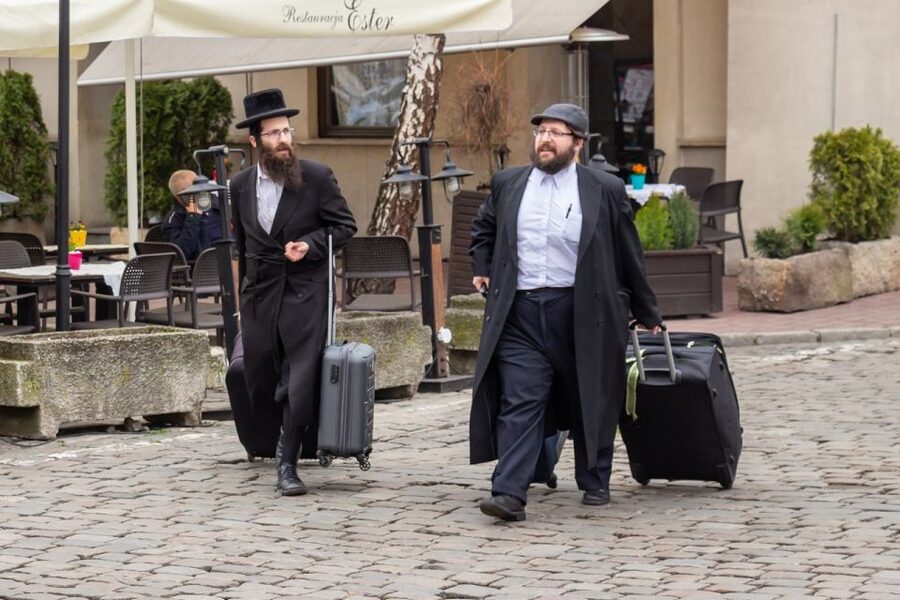
- Two experiences in one: You visit Schindler’s Factory, then walk through Podgórze and the former Jewish Ghetto.
- Guides add essential context: Guides such as Helena, Joanna, Christopher, and Ela have been praised for clear explanations, strong storytelling, and personal connections to the subject.
- Original places remain: You see part of the undestroyed ghetto wall and buildings where displaced Jewish families once lived.
- The 68 Empty Chairs make a lasting impression: This memorial in Heroes’ Square turns a historical event into a simple, stark image.
- Timing matters: The outdoor walk is much easier to follow in daylight, especially in winter.
- The tour is available in five languages: English, French, Spanish, German, and Italian.
Why Schindler’s Factory needs a guide
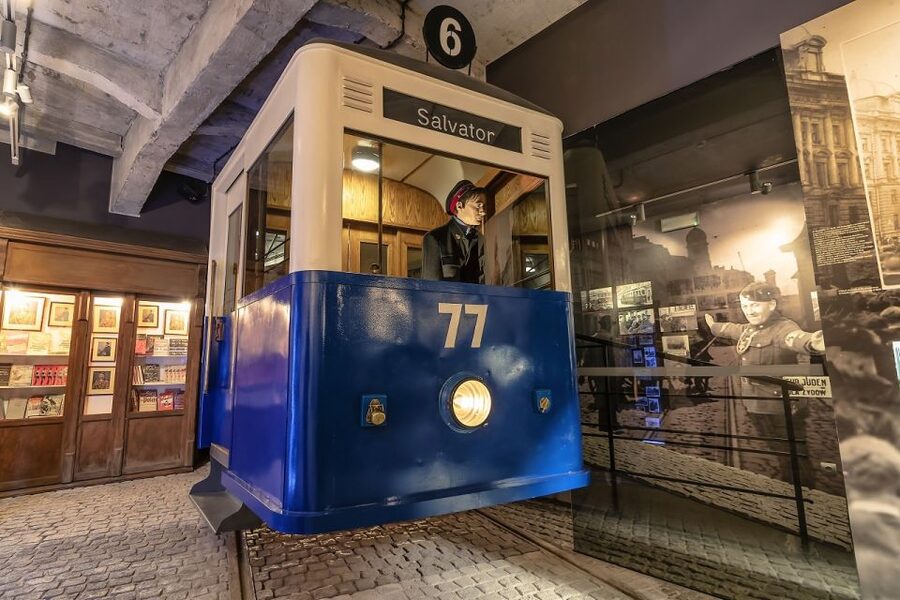
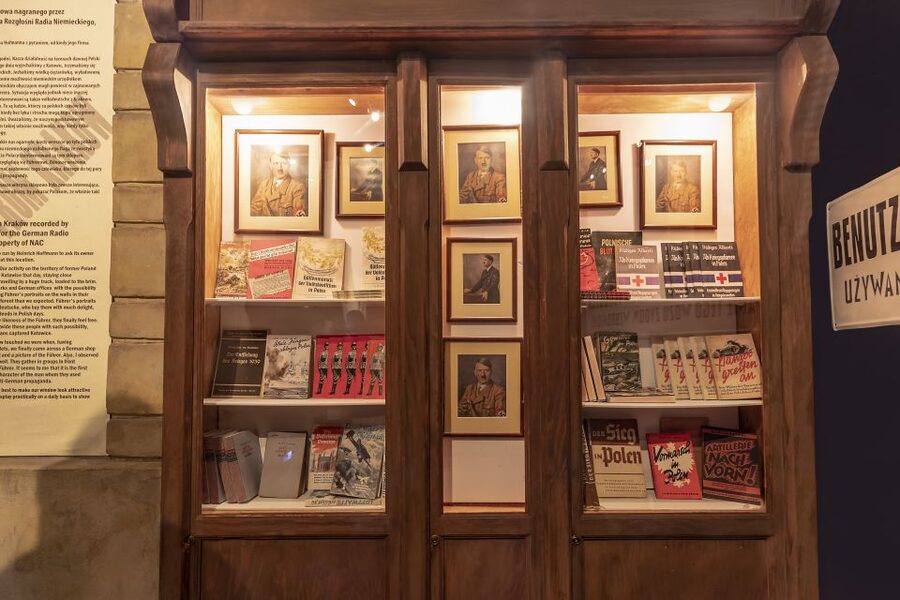
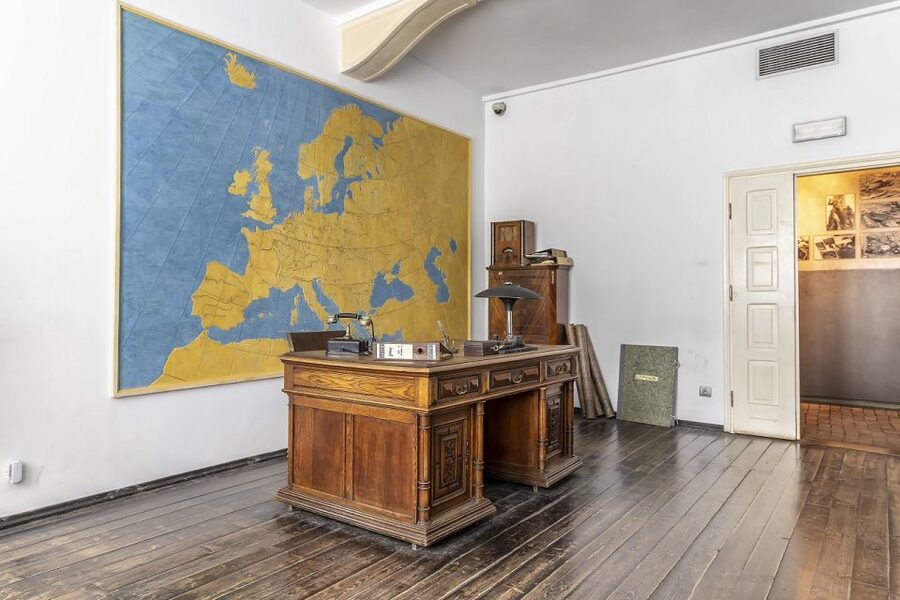
Schindler’s Factory Museum is not simply a room full of objects from the Second World War. It presents Krakow under German occupation, the lives of Jewish residents, daily survival, and the changing political order that followed the war. Without guidance, you can read the displays, but it may not always be clear why a particular object, photograph, or room matters.
The tour begins at the entrance to Oskar Schindler’s Enamel Factory Museum. You look for a guide holding an excursions.city sign. From there, the group enters the museum together, with admission included and the ticket line skipped.
The museum visit usually takes about an hour and a half, although the exact timing can change. You move through displays about Krakow before the Nazi invasion, the occupation itself, and the period of Russian control that followed. That wider frame is useful because it avoids reducing the entire story to one famous industrialist.
I like this approach. Oskar Schindler is central to the visit, but he is not presented as the only person who mattered. You hear how the factory operated, what daily work looked like, and how employing Jewish workers could help protect them from deportation and murder.
The factory also provides the setting for the real events that inspired Steven Spielberg’s Schindler’s List. The film brought the story to a worldwide audience, but the museum helps you separate cinema from documented events. You learn about Schindler as a German entrepreneur, his actions during the war, and the people whose lives were affected by his decisions.
A guide can also explain details that would otherwise pass unnoticed. One participant found that a personal family connection to the Holocaust made the visit especially powerful. That kind of personal testimony is not guaranteed, but the guides have often brought a serious, human tone to the subject.
More Schindler Factory tours:
- Krakow: Oskar Schindler’s Factory Entry Ticket & Guided Tour
★ 4.2 · 3,793 reviews - Krakow: Schindler’s Factory Tour with Entrance Ticket
★ 4.5 · 3,182 reviews - Krakow: Schindler’s Factory Skip-the-Line Ticket
★ 4.4 · 3,105 reviews
The museum’s narrow rooms and audio equipment
The museum has plenty to see, and that creates a practical problem. The corridors are narrow, so a large group can feel crowded as everyone moves from one section to the next. You may need to keep pace rather than study every display for as long as you like.
Headsets are used on some tours, and they can help you hear the guide in a busy room. Still, the audio controls have not always worked well. On one tour, the group eventually stopped using the devices because the sound was unreliable. This is worth knowing if you prefer to read quietly or listen at your own pace.
The situation is not always a serious issue. The museum tour remains useful because the guide explains the wider story and helps connect the exhibits. But I would not choose this experience expecting unlimited time at every display. The group format gives you structure, while a self-guided visit gives you more control.
That tradeoff is important. If you are deeply interested in wartime Krakow, you may wish you had longer inside the museum. One participant specifically wanted more time there. On the other hand, a longer museum visit might make the three-hour tour tiring, especially before the outdoor walk.
From the factory to Podgórze
After the museum, the experience shifts from indoor exhibits to the streets of Podgórze. The change matters. Inside the factory, you learn through photographs, objects, and displays. Outside, you see the surviving spaces and get a sense of the area where thousands of Jewish people were forced to live.
The walking portion lasts about an hour, with a break of roughly 30 minutes between the museum visit and the ghetto walk on at least some departures. That pause gives you time to regroup before continuing. Food and drinks are not included, so plan to handle refreshments yourself during the break.
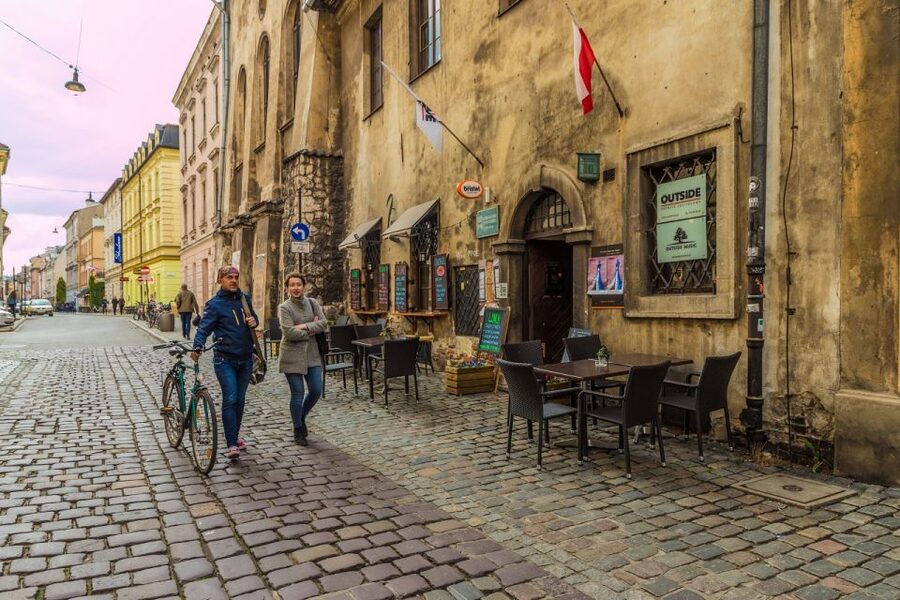
Podgórze is not presented as a polished historical set. It is a living part of Krakow, with ordinary streets and buildings alongside memorials and wartime remains. That contrast can make the history harder to absorb, but also more real. You are not looking at a completely reconstructed site. You are walking through the actual district where the ghetto existed.
The guide points out part of the original wall that remains. You also see houses where displaced Jewish families lived. These stops are not spectacular in the usual sightseeing sense, and that is precisely why they matter. A wall fragment or residential building can make the scale of forced displacement easier to picture than a general timeline in a museum.
The guide’s explanation is the main value here. Several guides have been praised for clear, personal storytelling, including Joanna, Helena, Christopher, and Ela. Their styles may differ, but the strongest part of the walking tour is the way they connect specific streets with the people who lived, worked, and suffered there.
The Pharmacy Under the Eagle
One of the important stops is the pharmacy Under the Eagle. You learn about its role in the lives of Jewish people during the occupation and why it became significant within the ghetto’s story.
This stop adds a different angle to the tour. The factory shows how employment and industrial work affected survival. The pharmacy helps you understand how a place serving a practical daily need could also become important during a time of persecution.
You should expect the guide to supply much of the meaning. The value is not just seeing the building, but hearing how it fit into life inside the ghetto. As with other stops, the experience depends on the guide’s ability to explain without rushing or turning tragedy into a string of dramatic anecdotes.
More Jewish heritage tours in Krakow:
- Krakow: Schindler’s Factory & Ghetto Guided Tour
★ 4.7 · 1,694 reviews - Krakow: Jewish Quarter and Former Ghetto Tour
★ 4.9 · 1,441 reviews - Krakow: Bike Tour of Old Town, Jewish Quarter and the Ghetto
★ 4.9 · 1,155 reviews - Krakow: Kazimierz Jewish Quarter Walking Tour
★ 4.8 · 571 reviews
The 68 Empty Chairs in Heroes’ Square
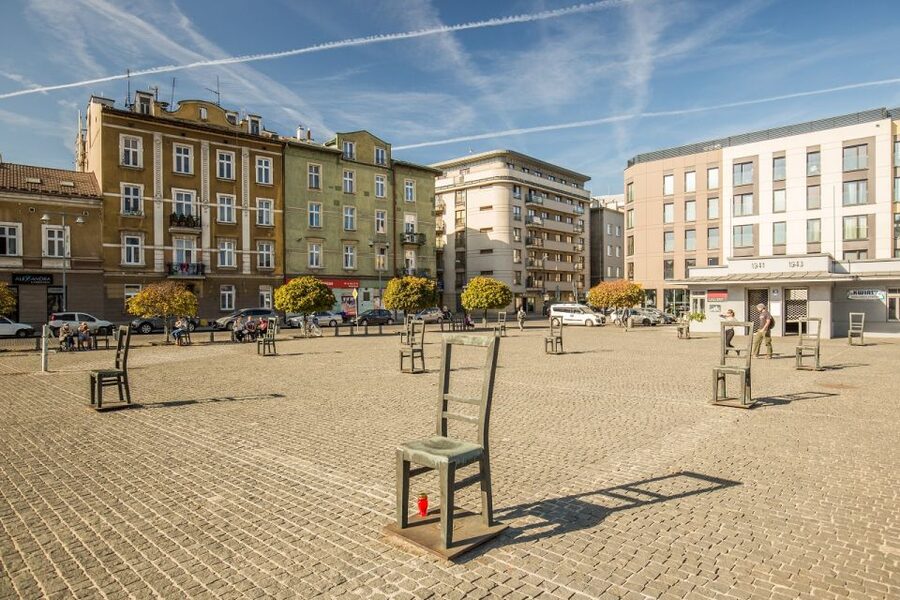
The tour ends, or reaches its most memorable outdoor stop, at Heroes’ Square and its 68 Empty Chairs memorial. The chairs represent the Jewish people who were removed from the ghetto. The image is simple: empty seats placed across the square, suggesting homes suddenly left without their occupants.
I find this kind of memorial more effective than a long inscription alone. You can understand the idea at once, then let the guide add the historical detail. The square also works as a final point because it gathers the themes of the day: removal, absence, and the loss of ordinary family life.
The memorial is outdoors, so timing and weather affect the visit. A late afternoon tour in December may reach the square after dark. One guest still considered the experience excellent, but noted that it was harder to see some of the points explained by the guide. I would choose a morning or early afternoon departure in winter if daylight matters to you.
How long the three-hour schedule feels
The advertised duration is three hours, but the parts do not always divide into neat blocks. A common pattern is around 90 minutes inside the factory, a 30-minute break, and about an hour walking through the ghetto. Museum scheduling can change the exact order and length.
That pace is fairly demanding but sensible. The subject is heavy, and the outdoor walk requires attention. You have enough time to understand the main story without giving up an entire day in Krakow.
The group size can change how the schedule feels. A large museum group may move slowly through narrow corridors, while the ghetto walk can be smaller and easier to follow. The outdoor portion has received especially strong praise because it is easier to hear the guide and move from one site to another.
An earlier tour is the best practical choice if available. Daylight helps you see the remaining wall, homes, streets, and memorial clearly. An afternoon departure can work well for scheduling, but the winter sunset may turn the walking tour into a mostly spoken experience.
Is the $58 price good value?
At $58 per person, this is not the cheapest way to see Schindler’s Factory. You are paying for more than entry, though. The price includes the factory ticket, a guided museum visit, a live guide, and a walking tour of Podgórze.
I think the cost is reasonable if you want interpretation rather than a quick museum visit. The ghetto walk is the part that makes the package more useful than museum admission alone. You see the factory, then stand in the district connected to the people and events discussed inside.
The value depends on your priorities. If you like to spend several hours reading every panel, a self-guided visit may suit you better. If you want the main story explained, the key outdoor locations identified, and the transition between museum history and present-day streets handled for you, the guided format earns its price.
The tour also offers free cancellation up to 24 hours before departure and a reserve-now, pay-later option. Those terms are helpful when your Krakow plans are still shifting. From January 1, 2026, the museum requires the full names of all participants and a passport or ID at entry because tickets are personalized. Bring the correct document, or admission may be refused.
Who will get the most from this experience?
This tour suits you if you want a serious introduction to Krakow during the Nazi occupation and prefer a guide to connect the details. It is especially useful if you have seen Schindler’s List and want to understand the real places and events behind the film.
It also works well for first-time visitors who might otherwise visit the museum and miss the former ghetto. The walking section adds physical context that a museum alone cannot provide.
Families with older children and teenagers may find the subject meaningful, but the material is difficult. The tour is not light sightseeing. You should be ready for discussions of forced displacement, persecution, and death.
History students and museum regulars may want more time with the displays. The group format and narrow corridors can limit how long you spend at individual exhibits. For that reason, I would consider this tour an efficient guided introduction rather than the final word on Schindler, Krakow, or the Holocaust.
Language, booking, and meeting details
The tour is offered in English, French, Spanish, German, and Italian. Check the available departure language before booking, since the guide is central to the experience.
Meet at the entrance to Schindler’s Factory Museum and look for the excursions.city sign. You do not need to arrange transport between the factory and the Podgórze walk as part of the experience. Food and drinks are not included, so use the break to buy anything you need.
Starting times vary, and from January 1, 2026, the selected time is approximate because the museum controls its schedule. You can state a preferred time, but the exact start is not guaranteed.
My verdict: book it for the context
I would book this tour if you want Schindler’s Factory and the Jewish Ghetto treated as one connected story. The strongest features are the guides, the original Podgórze locations, and the 68 Empty Chairs memorial. The outdoor walk is not an optional extra in spirit. It is what gives the museum visit a human setting.
Choose an early time when possible, bring identification from 2026 onward, and expect a serious subject rather than a casual city stroll. If you need hours to inspect every museum display, visit independently. For most people who want clear explanation, thoughtful storytelling, and good use of three hours, the $58 cost is justified.
FAQ
How long is the Schindler’s Factory and Jewish Ghetto tour?
The tour lasts about three hours. The museum portion is commonly around 90 minutes, followed by a break of about 30 minutes and an approximately one-hour walk through the former ghetto.
What does the tour price include?
The price includes a live guide, entry to Schindler’s Factory, a guided tour of the museum, and a walking tour of Podgórze.
Are food and drinks included?
No. Food and drinks are not included in the tour price.
Where does the tour meet?
Meet at the entrance to Schindler’s Factory Museum. Look for a guide holding an excursions.city sign.
Which languages are available?
The tour is available in English, French, Spanish, German, and Italian.
Does the tour include the Jewish Ghetto?
Yes. The walking portion takes you through Podgórze, the area of the former Jewish Ghetto.
Which memorials and sites are included?
The tour includes part of the original ghetto wall, houses where displaced Jewish people lived, the pharmacy Under the Eagle, and the 68 Empty Chairs in Heroes’ Square.
Does the tour skip the museum ticket line?
Yes. Skip-the-line entry to Schindler’s Factory is included.
Do I need identification to enter the museum?
From January 1, 2026, you must provide the full names of all participants when booking and bring a passport or ID for entry. Without these documents, entry may be denied.
Can I cancel the tour?
You can cancel up to 24 hours in advance for a full refund. A reserve-now, pay-later option is also available.
Just added in Krakow
- Auschwitz-Birkenau – Skip the Line Tickets★ 3.5 · 29 reviews
- Auschwitz-Birkenau: Fast-Track Ticket & Guided Tour No Transfers★ 3.5 · 17 reviews
- Zakopane & Sleigh Ride with Bonfire – Group Tour from Kraków★ 5.0 · 2 reviews
- Sleigh Ride & Bonfire in Zakopane with Funicular – Private Trip★ 5.0 · 48 reviews
- Thermal Baths & Zakopane – Private Trip from Krakow★ 5.0 · 1 review
- Zakopane & Gubalowka Funicular – Private Winter Tour from Krakow★ 5.0 · 10 reviews
- stag dog chase Krakow prank★ 5.0 · 4 reviews
- Divine Mercy Sanctuary – Private Tour from Krakow★ 5.0 · 4 reviews