
REVIEW · HISTORICAL TOURS
Krakow: Kazimierze Jewish History Tour. Italian
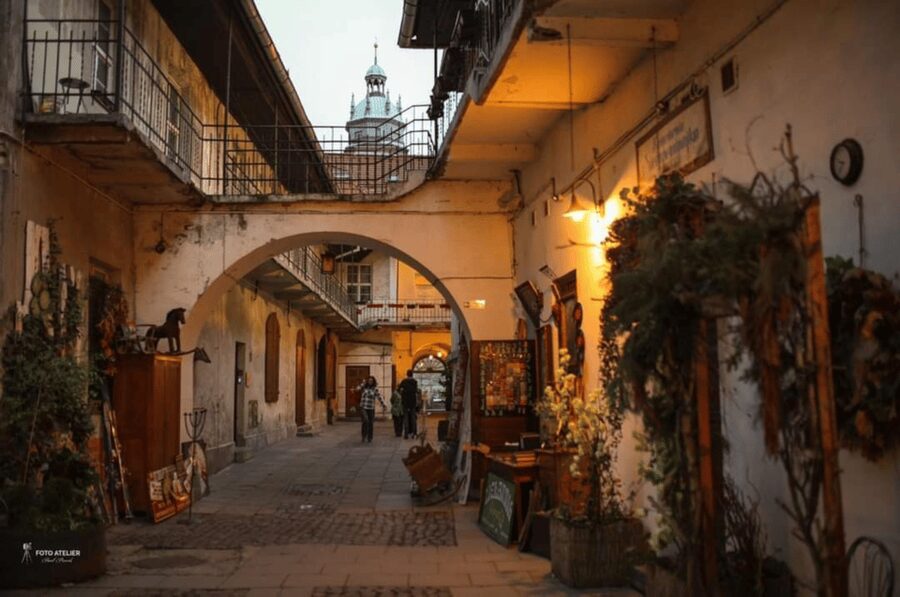
Kazimierz keeps its past close. I like that this private Italian-language tour links Jewish and Christian sites instead of treating the district as a collection of old buildings. I also like the focus on real events and deportee testimonies, which can give the visit a human scale. The main consideration is timing: three and a half hours is a serious history lesson, and the tour does not include tram transport back to central Krakow.
You meet at the Cloth Hall, known locally as the Fabric Palace, at 3:30 pm, with the walk beginning at 3:45 pm. Guide Leonardo earned especially high praise for his detail and for avoiding dry, textbook-style explanations. At $46 per person, the cost is reasonable for a private group and interior visits, but the value depends on how much historical detail you want in one afternoon.
In This Review
- Key details to know before you go
- Why Kazimierz matters before you arrive
- Szeroka Street and the old Jewish city
- Remuh and the memory of Jewish scholarship
- The candlelit attic and Rabbi Natan Spira
- From 19th-century change to Orthodox Krakow
- Churches, synagogues, and shared city space
- Facing the Second World War and the destroyed community
- Leonardo’s guiding style
- Is $46 a fair price?
- Timing, meeting point, and practical limits
- Who should book this Kazimierz tour?
- Should you book it?
- FAQ
- What language is the tour conducted in?
- How long does the Kazimierz tour last?
- Where and when is the meeting point?
- Is this a private tour?
- Are churches and synagogues visited inside?
- Is transport back to Krakow city center included?
- Is the tour wheelchair accessible?
- Can I cancel the tour for a refund?
Key details to know before you go
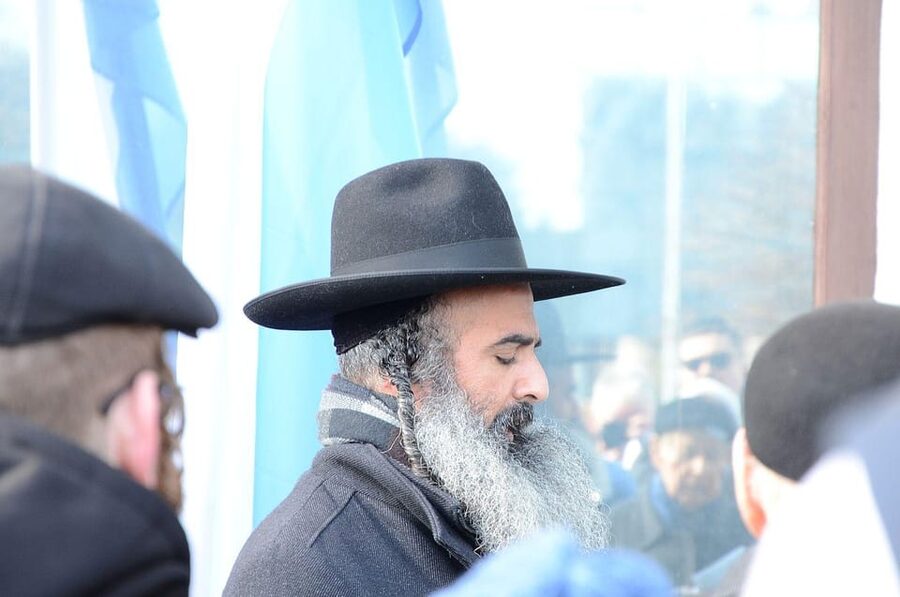
- Kazimierz’s Jewish quarter grew around Szeroka Street: This was the center of the old Jewish community, with synagogues, schools, and religious institutions close together.
- You enter some synagogues and churches: Interior access adds much more than an outside photo stop, though the exact buildings are not specified.
- The tour covers centuries, not only the Second World War: You move from the late 15th century through Jewish scholarship, Christian and Jewish coexistence, modern persecution, and the destruction of Krakow’s Jewish community.
- Italian is the only stated tour language: This suits Italian-speaking visitors who want detailed explanations without relying on translation.
- The experience lasts 210 minutes: Plan for a slow, serious afternoon rather than a quick neighborhood stroll.
- Leonardo received particular praise: His approach was described as detailed, vivid, and willing to address both the lighter and darker parts of Krakow’s story.
Why Kazimierz matters before you arrive
Kazimierz was not simply an old quarter next to Krakow. For centuries, it was a separate city with its own walls, institutions, and identity. At the end of the 15th century, an autonomous settlement was created here for Jews confined by Krakow. Its formal name was the oppidum iudaeorum, or Jewish city.
That background changes how you read the streets. Szeroka Street was not just a pleasant lane with historic facades. It formed the center of Jewish life, surrounded by synagogues, schools, places of study, and community institutions. The tour’s value begins here, by showing you how a neighborhood worked as a living religious and cultural center.
I like this wider frame because it keeps Kazimierz from being reduced to wartime tragedy alone. The destruction of the Jewish community must be faced, but it came after centuries of scholarship, family life, worship, and public activity. You get a fuller picture when the tour sets the loss against everything that existed before it.
More History Tours in Kraków
- Krakow: Vistula River Cruise with Historical Views
★ 3.5 · 357 reviews - Historic Krakow : Old Town & Wawel Castle Walking tour
★ 5.0 · 318 reviews - Krakow: Kościuszko Mound Ticket – History & Views!
★ 4.4 · 303 reviews
Szeroka Street and the old Jewish city
The visit is built around the area’s close Jewish and Christian presence. That proximity is one of the most important ideas in the tour. Kazimierz witnessed long periods in which Jewish and Christian communities lived near one another, sometimes in cooperation and sometimes under restrictions that shaped where people could live and work.
As you walk around Szeroka Street and the surrounding district, you can expect the guide to explain why so many religious and educational buildings appeared in such a compact area. The point is not simply to count synagogues. It is to understand why this particular part of Krakow became one of Europe’s important Jewish cultural and spiritual centers.
The supplied information does not name every stop, so you should not expect a fixed list of buildings from the description alone. What is clear is that the route includes the interiors of some synagogues and churches. That is a useful distinction. Seeing a facade takes a minute; entering a religious building lets you consider its layout, purpose, and continuing place in the district.
Remuh and the memory of Jewish scholarship
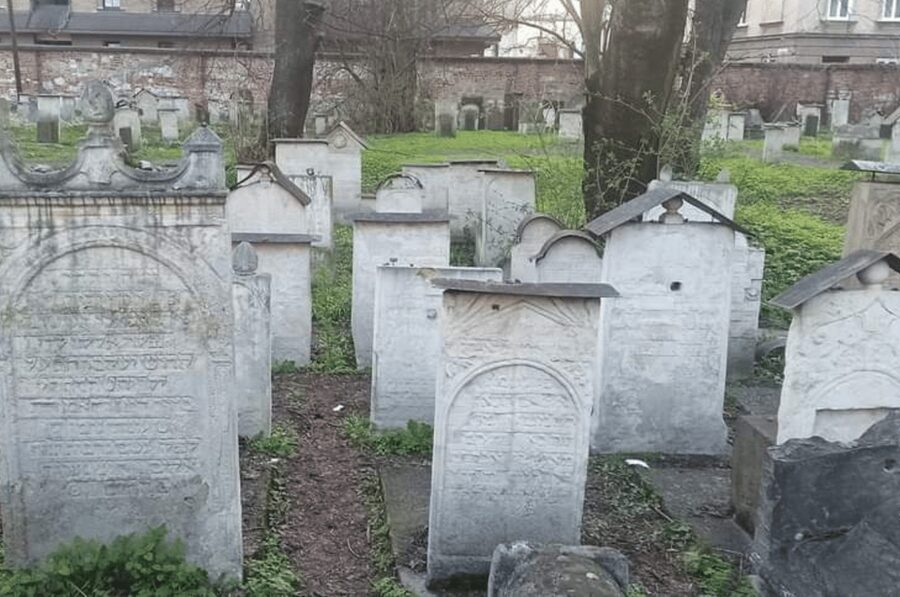
One of the most important figures connected with Kazimierz is Moshe Isserles, known as Remuh. He lived in the 16th century and served as a scholar and rector of the Talmudic Academy. His tomb remains a destination for Jewish pilgrims from around the world.
This detail gives the tour a personal center. Instead of hearing only about institutions, you connect the quarter with a real scholar whose work still shapes the meaning of the place. The story of Remuh also helps you see Kazimierz as a center of learning, not merely a residential district.
The account of his supposedly miraculous tomb adds another layer. It shows how memory operates in Kazimierz, where historical figures remain part of religious life long after their deaths. If this subject interests you, listen for the difference between documented history and devotional tradition. Both matter, but they are not the same thing.
The candlelit attic and Rabbi Natan Spira
The tour also brings in a more unusual story from the 17th century. Rabbi Natan Spira is said to have studied Jewish Kabbalah by candlelight in the attic of the synagogue at 22 Szeroka Street. According to the story, the candle went out in 1633, and the rabbi died of exhaustion.
It is a striking tale, and it helps make the district’s intellectual life feel less abstract. You can picture a scholar working late in a cramped attic, focused on difficult religious study while the rest of the city slept. At the same time, the wording matters: this is presented as a story handed down through tradition, not as a simple fact to accept without question.
That balance is one reason Leonardo’s approach sounds appealing. The strongest guide does not flatten every story into either proven fact or useless legend. He can show you how local memory, belief, and historical records sit beside one another.
Something quite different:
- From Krakow: Auschwitz-Birkenau Guided Tour & Hotel Pickup
★ 4.5 · 33,358 reviews - From Krakow: Auschwitz-Birkenau Guided Tour & Hotel Pickup
★ 4.5 · 29,340 reviews - Krakow: Auschwitz Guided Tour with Optional Hotel Pickup
★ 4.5 · 15,280 reviews - Krakow–Zakopane: Cable Car, Chocholow Baths, Cheese & Vodka
★ 5.0 · 10,720 reviews
From 19th-century change to Orthodox Krakow
In the 19th century, Kazimierz was incorporated into Krakow. The district then became an Orthodox center and a place of pilgrimage for Jewish communities across the Republic. The walls around the Jewish quarter were demolished in 1822, allowing Jews to settle more freely throughout Kazimierz.
This is an important turning point. A walled quarter suggests separation and limits. Removing the walls did not erase every social barrier, but it changed the physical shape of daily life. The Jewish community could spread through more of Kazimierz, and the district became less confined to one enclosed area.
By the 1930s, Jews made up about a quarter of Krakow’s population. That figure gives you a sense of scale. You are not studying a small, isolated group that briefly appeared in the city. You are looking at a major part of Krakow’s population and public life, with its own institutions and traditions.
Churches, synagogues, and shared city space
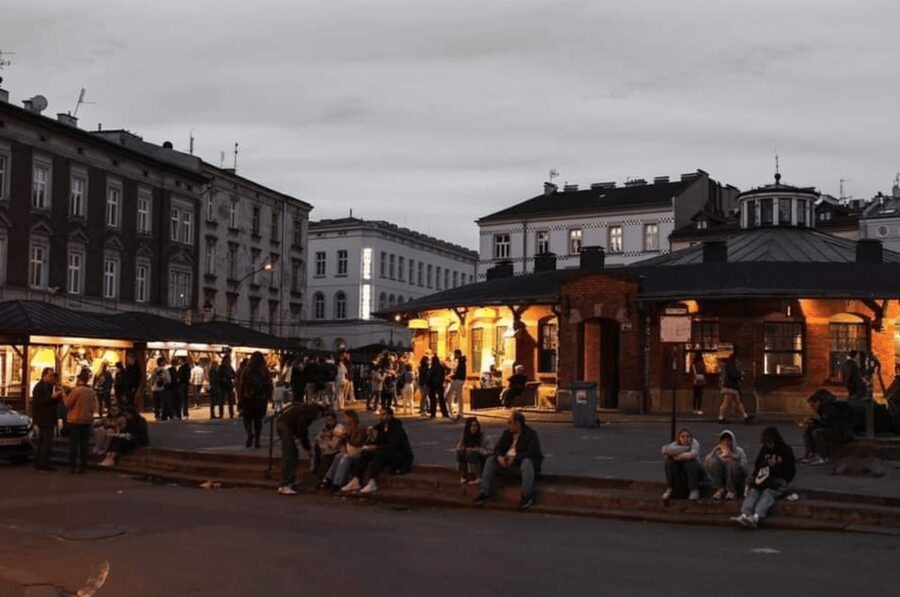
The inclusion of churches matters because Kazimierz’s story is about Jewish and Christian communities together. You are not asked to view the Jewish quarter as disconnected from the rest of Krakow. The buildings and streets show how different religious communities occupied the same city and how that relationship changed over time.
Interior visits can also make the afternoon more varied. Three and a half hours of street walking and explanation could become tiring, especially in poor weather. Moving inside some churches and synagogues gives you a chance to study the spaces themselves while continuing the historical discussion.
The tour description does not promise entry into every religious site, so keep your expectations measured. It says some churches and synagogues are visited internally. Access may depend on the day, opening arrangements, or religious use, but no specific restriction is provided. The safe assumption is that interior visits form part of the experience without guaranteeing every building on the route.
Facing the Second World War and the destroyed community
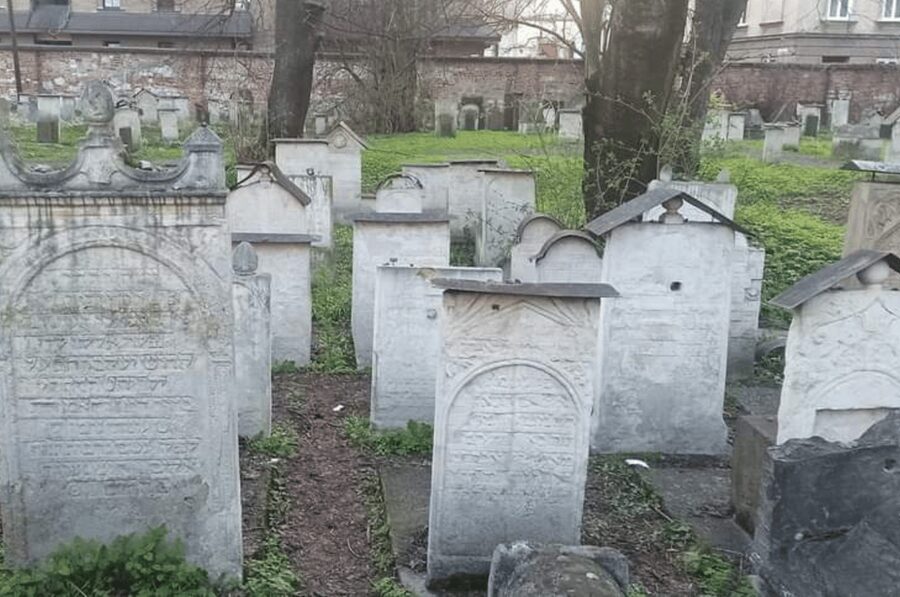
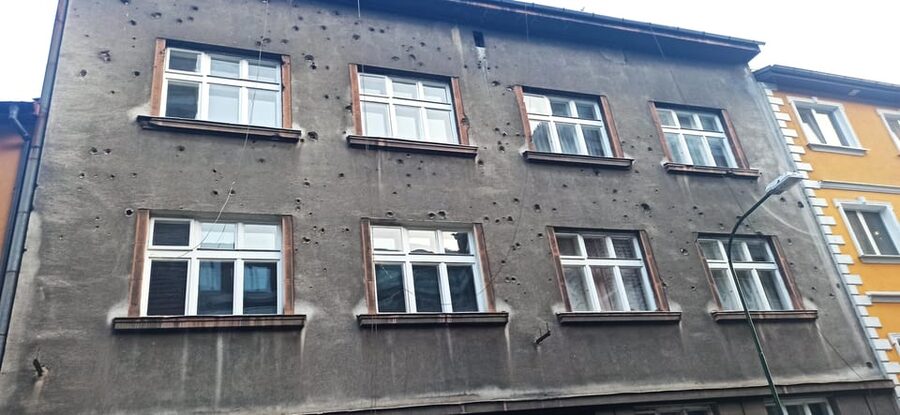
The final period is the hardest. During the Second World War, Krakow’s Jewish community suffered extermination and diaspora. The tour addresses this through real events and testimonies from deportees, rather than stopping at dates and political labels.
That focus is valuable because a neighborhood can look peaceful while carrying painful memories. Testimonies help shift the subject from numbers to individual lives. You are encouraged to think about what deportation meant for people who had families, homes, religious practices, schools, and work in the very district you are walking through.
The description does not identify the individual deportees or specify where every testimony is presented. Still, the stated emphasis is clear: this is not a light sightseeing walk with a brief wartime footnote. You should come prepared for serious material and for an afternoon that may be emotionally demanding.
I also appreciate the stated aim of reliving the history of the time and bringing the past into the present. That can be effective when handled with care. The goal should not be theatrical shock. It should be to help you notice how ordinary streets and buildings connect to events that changed Krakow forever.
Leonardo’s guiding style
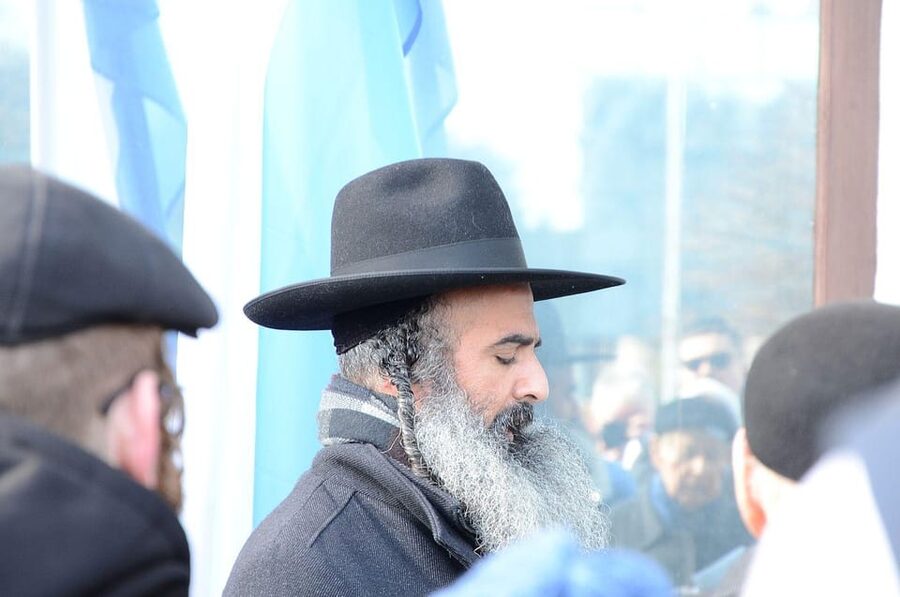
Leonardo is the one guide specifically named in the available feedback, and his work received a full five-star rating from an Italian visitor. The strongest praise was for his wealth of detail and for avoiding explanations that felt copied from a generic encyclopedia.
That is exactly what you want in Kazimierz. The district contains enough dates and names to overwhelm you, but a good guide gives those facts a clear shape. Leonardo was also praised for taking the group into both the brightest and darkest corners of the city. That suggests a tour willing to discuss beauty, belief, loss, and difficult history without polishing away the uncomfortable parts.
Because this is a private group, you should have more room to ask questions than on a large shared walk. The available information does not state the maximum group size, so do not assume it is a one-to-one tour. Still, private-group format usually makes it easier to keep the pace focused on your interests, especially if you want more time on religious history or wartime testimony.
Is $46 a fair price?
At $46 per person, this is not the cheapest way to see Kazimierz. You are paying for 210 minutes with a live Italian-speaking guide, a private group format, and visits inside some churches and synagogues.
I consider that fair if you want a serious, guided explanation. The price becomes less attractive if you only want to wander through the streets, take photographs, and read a few signs. Kazimierz is easy to explore on your own, but the major value here is interpretation. You are paying for connections between buildings, people, religious traditions, and historical periods.
The single five-star rating is encouraging, especially because it names Leonardo and praises a specific quality: detailed storytelling without canned explanations. It is not enough evidence to claim universal perfection, so I would judge the tour mainly by your interest in the subject and the benefit of receiving the history in Italian.
Timing, meeting point, and practical limits
The gathering point is the Fabric Palace at 3:30 pm. The visit begins at 3:45 pm, so arrive with enough time to find the meeting place rather than appearing at the last minute.
The total duration is 210 minutes. That is three hours and 30 minutes, making this a substantial part of your day. I would avoid scheduling another major attraction immediately afterward. The wartime sections may also call for a quiet pause before dinner or an evening activity.
Transport back to the center by tram is not included. You should plan that final leg yourself, particularly if you are tired after the walk. The activity is wheelchair accessible, which is useful, although the exact route and interior access details are not provided.
You can cancel up to 24 hours ahead for a full refund, and you can reserve now while paying later. Those terms help if your Krakow plans are still shifting, but the more important practical question is your energy. Three and a half hours of concentrated history requires attention.
Who should book this Kazimierz tour?
I would recommend it most strongly to Italian-speaking visitors who want context, not just photo stops. It suits anyone interested in Jewish life in Krakow, religious history, the relationship between Jewish and Christian communities, or the personal cost of wartime persecution.
It is also a good fit if you prefer a private setting and want to ask questions. Families with older children may find the stories meaningful, though the deportation material is serious. Younger children may struggle with the length and subject matter.
You may want to skip it if you dislike long historical walks, want only entertainment, or have already spent a full day on emotionally heavy wartime sites. The tour covers several centuries, so it is not a quick introduction.
Should you book it?
Book this tour if you want to understand why Kazimierz matters, not simply see where it is. The combination of synagogue and church interiors, Jewish scholarship, local stories, deportee testimonies, and an Italian-speaking private guide gives the afternoon real purpose.
I would make the booking with two expectations: the route will be detailed, and the final section will be difficult. If that sounds worthwhile, $46 is a sensible price for the time and personal attention. If you want a short, casual stroll, choose a shorter walk instead and explore Kazimierz at your own pace.
FAQ
What language is the tour conducted in?
The tour is conducted in Italian, with a live Italian-speaking guide.
How long does the Kazimierz tour last?
The tour lasts 210 minutes, or three and a half hours.
Where and when is the meeting point?
You meet at the Fabric Palace at 3:30 pm. The visit begins at 3:45 pm.
Is this a private tour?
Yes. The group type is listed as a private group.
Are churches and synagogues visited inside?
Yes. Internal visits to some churches and synagogues are included.
Is transport back to Krakow city center included?
No. Transport back to the center by tram is not included.
Is the tour wheelchair accessible?
Yes. The activity is listed as wheelchair accessible.
Can I cancel the tour for a refund?
Yes. You can cancel up to 24 hours in advance for a full refund.
Just added in Krakow
- Auschwitz-Birkenau – Skip the Line Tickets★ 3.5 · 29 reviews
- Auschwitz-Birkenau: Fast-Track Ticket & Guided Tour No Transfers★ 3.5 · 17 reviews
- Zakopane & Sleigh Ride with Bonfire – Group Tour from Kraków★ 5.0 · 2 reviews
- Thermal Baths & Zakopane – Private Trip from Krakow★ 5.0 · 1 review
- Zakopane & Gubalowka Funicular – Private Winter Tour from Krakow★ 5.0 · 10 reviews
- Sleigh Ride & Bonfire in Zakopane with Funicular – Private Trip★ 5.0 · 48 reviews
- Divine Mercy Sanctuary – Private Tour from Krakow★ 5.0 · 4 reviews
- stag dog chase Krakow prank★ 5.0 · 4 reviews
Historical Tours, compared.
POLIN Museum of the History of Polish Jews Ticket
Read our review →
Gdańsk City Sights & History Guided Walking Tour in English
Read our review →
Small-Group Historical Guided Tour of Warsaw with pick up/drop off. Public Tour.
Read our review →Browse the lists this tour appears in