
REVIEW · SCHINDLER'S FACTORY TOURS
Krakow: Kazimierz, Schindler’s Factory & Ghetto Guided Tour
History feels close here. This five-hour Kraków tour links Kazimierz’s Jewish Quarter with the former Ghetto and Schindler’s Factory, giving you a clear route through Jewish life before the war, Nazi occupation, and the human choices made during terrible years. I like the way the experience connects streets, museum rooms, and memorials instead of treating each place as a separate sight.
I also like the practical setup: skip-the-line entry to Schindler’s Factory and a licensed local guide who leads the walking portions and museum visit. The main consideration is emotional weight. This is not a light sightseeing stroll, and the museum’s narrow, dim corridors can feel intense. You also need to arrive 10 minutes early, since late arrivals cannot join and tickets are non-refundable.
In This Review
- Key things to know before booking
- Why this five-hour route works
- Kazimierz: seeing the Jewish Quarter before the war
- Schindler’s Factory and Kraków under occupation
- The former Kraków Ghetto and the original wall fragments
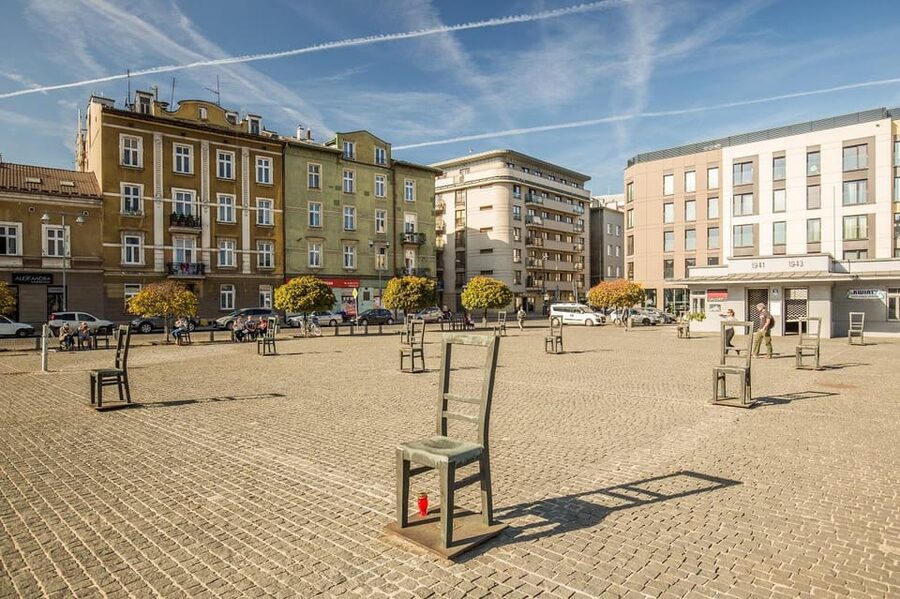
- Ghetto Heroes Square and the Chair Memorial
- Under the Eagle Pharmacy and the courage of Tadeusz Pankiewicz
- What the guide adds to the experience
- Is $76 a fair price?
- Who should book this Kraków history tour?
- Should you book it?
- FAQ
- How long does the tour last?
- What places are included?
- Is admission to Schindler’s Factory included?
- Does the museum contain the original factory machinery?
- Which languages are available?
- Is the tour conducted in more than one language?
- Where does the tour meet?
- How early should I arrive?
- Does the tour operate in bad weather?
- Can I cancel the booking?
Key things to know before booking
- Kazimierz comes first: Walk among historic synagogues, prayer houses, townhouses, and courtyards while learning about Jewish life before 1939.
- The five-hour route has a strong historical arc: It moves from prewar community life to Nazi occupation, the Kraków Ghetto, deportations, and remembrance.
- Schindler’s Factory is a museum, not a working factory: The exhibition uses photographs, artifacts, sound, and room design rather than original factory machinery.
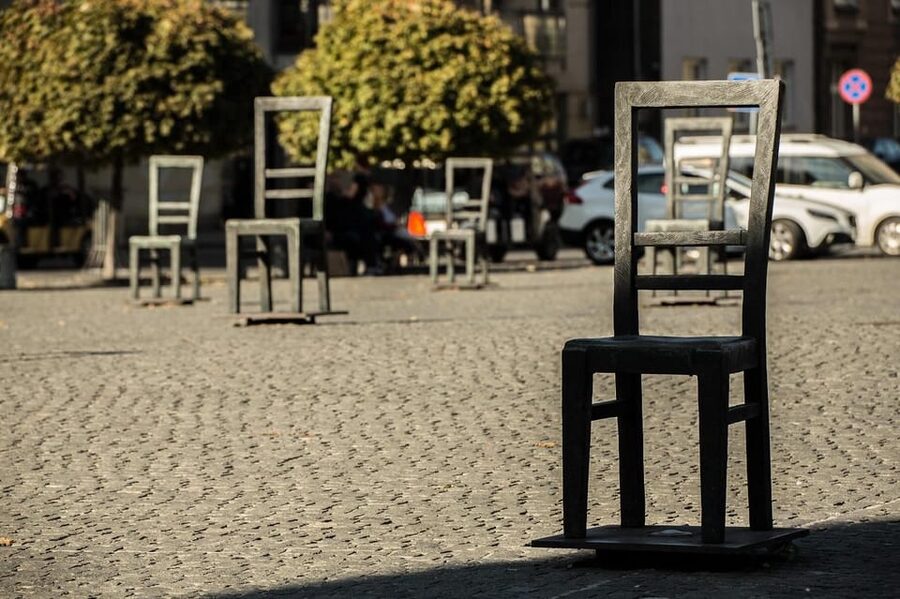
- Ghetto Heroes Square has the Chair Memorial: Empty chairs mark the suffering and loss connected with the former deportation site.
- The tour includes two important acts of memory and courage: You learn about Oskar Schindler and pharmacist Tadeusz Pankiewicz.
- One language is used per group: English, French, German, Spanish, or Italian must be selected when booking.
Why this five-hour route works
Kraków has several sites connected with Jewish life and the Second World War, but they do not all tell the same story. Kazimierz helps you understand the community that existed before the war. The former Ghetto shows how that community was confined and persecuted. Schindler’s Factory places those events within the wider story of Nazi-occupied Kraków.
That order matters. If you begin only with the war, you see victims as names and statistics. Starting in Kazimierz gives the neighborhood a human setting. You hear about rabbis, merchants, families, prayer, trade, and daily routines before the destruction of the Jewish community.
I find a guided route especially useful here because the streets do not explain themselves. A synagogue facade or quiet courtyard can look like an ordinary old-city detail if you do not know what happened there. The guide supplies the connections, dates, and personal stories while you walk.
The tour lasts five hours, so you should expect a serious half-day rather than a quick introduction. It is best suited to a day when you have enough time to listen and reflect. Trying to squeeze this between several unrelated attractions would make the experience feel rushed.
More Schindler Factory tours:
- Krakow: Oskar Schindler’s Factory Entry Ticket & Guided Tour
★ 4.2 · 3,793 reviews - Krakow: Schindler’s Factory Tour with Entrance Ticket
★ 4.5 · 3,182 reviews - Krakow: Schindler’s Factory Skip-the-Line Ticket
★ 4.4 · 3,105 reviews
Kazimierz: seeing the Jewish Quarter before the war
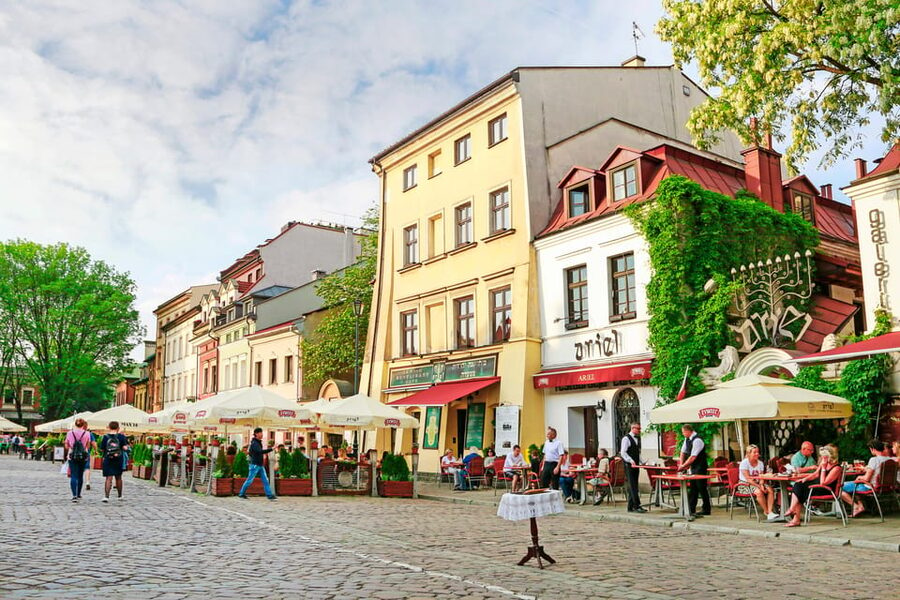
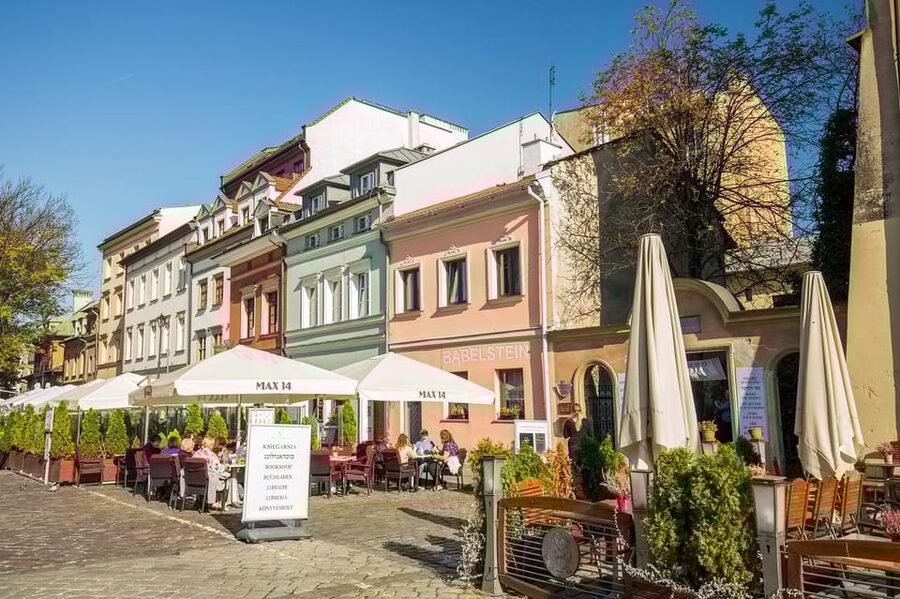
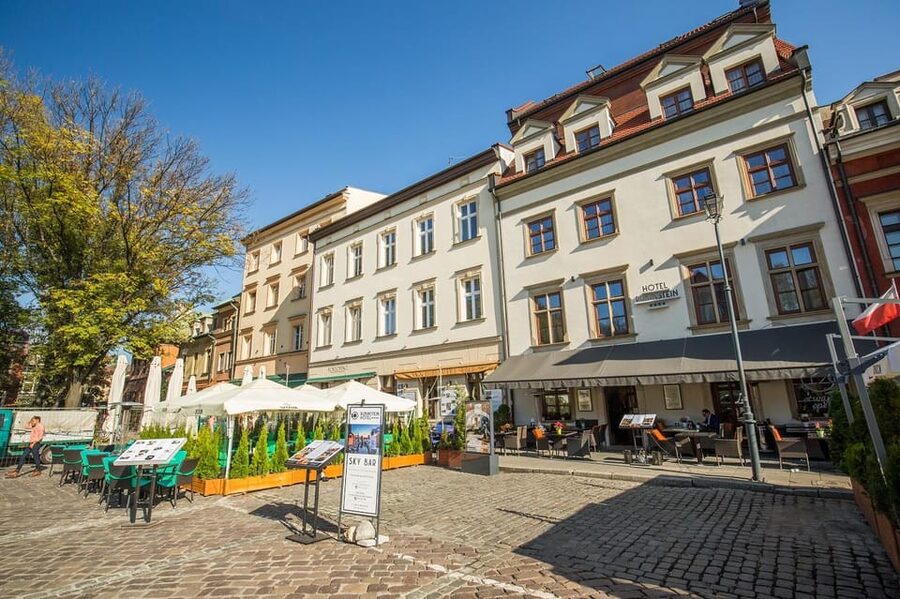
The tour begins in Kazimierz, Kraków’s historic Jewish Quarter. For centuries, this district served as a center of Jewish faith, learning, commerce, and family life. Its narrow cobbled streets and older townhouses provide the setting, but the guide’s explanations are what make the area meaningful.
You walk past centuries-old synagogues, prayer houses, and traditional buildings. The route also brings attention to less formal spaces, including courtyards and streets where ordinary life unfolded. That focus is valuable because Jewish history is not only a story of religious buildings. It is also a story of homes, work, education, markets, neighbors, and family routines.
I like that this portion does not rush straight toward tragedy. You first get a sense of what was present before the war. The guide evokes the sounds, colors, customs, and community life that once filled Kazimierz, helping you picture the district as a lived-in neighborhood rather than a collection of historic facades.
The cobblestones and narrow streets are part of the atmosphere, but they also make footwear important. Wear comfortable shoes. The tour operates in all weather, so bring clothing suited to the forecast rather than hoping the sky will cooperate.
This section is also a good reason to take the tour with a guide instead of walking Kazimierz alone. You can see the main buildings independently, but you may miss the links between them. The value lies in learning why a place mattered, who used it, and how the neighborhood changed.
Schindler’s Factory and Kraków under occupation
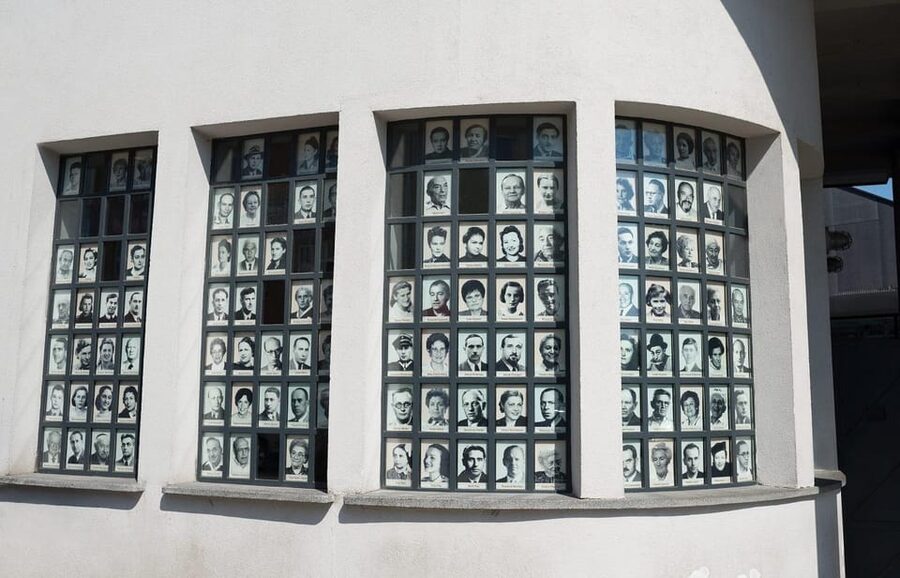
The next major stop is Schindler’s Enamel Factory, now home to the exhibition Kraków under Nazi Occupation 1939-1945. The museum visit is included with skip-the-line admission, which matters because waiting in a long ticket queue would take time from an already full itinerary.
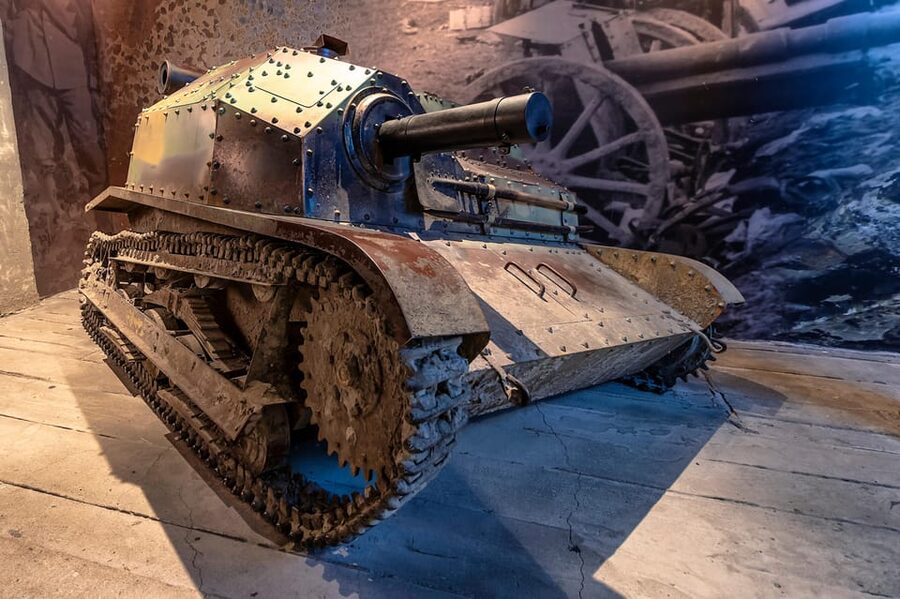
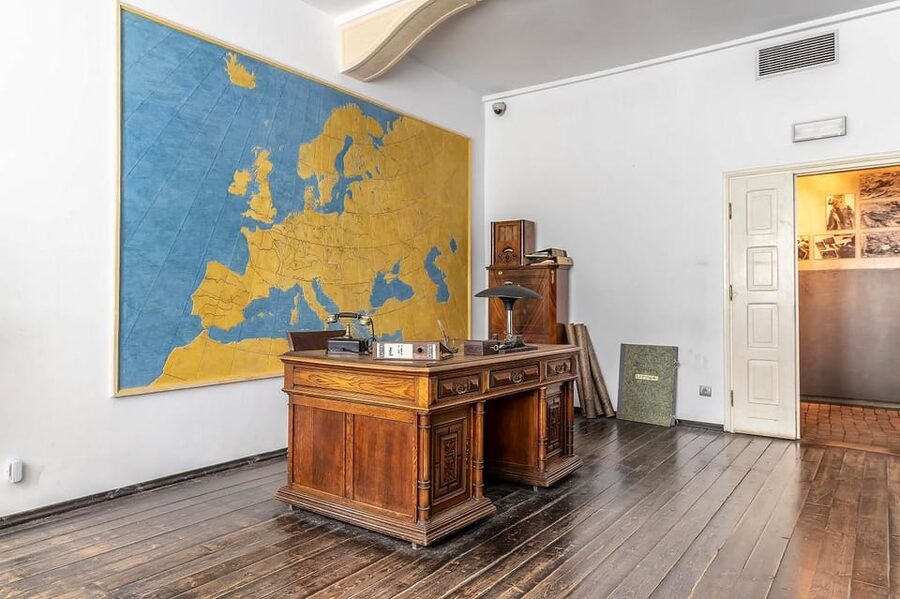
The museum does not contain the original factory machinery. That is worth knowing before you arrive. Its power comes from the exhibition design: authentic photographs, original artifacts, sound, and rooms arranged to evoke wartime Kraków.
You move through narrow, dim corridors and recreated spaces. The setting is intentionally uncomfortable. It aims to convey the fear, confusion, and uncertainty of life under occupation, not to offer a polished industrial museum experience.
I appreciate the broader scope of the exhibition. Oskar Schindler is central, and you learn how he saved more than a thousand Jewish workers. But the visit is not presented as a single-hero story detached from the rest of Kraków. It also examines Jewish and non-Jewish residents and the pressures placed on them during the occupation.
That broader view is one of the strongest reasons to include the museum in this tour. Schindler’s actions are important, but they make more sense when you understand the system around him and the dangers faced by the people he employed. The museum gives you a setting for that story rather than reducing the period to one famous name.
The guide continues inside the museum, which helps you interpret the displays as you go. A museum of this kind can be difficult to process alone because there is so much material and the subject is painful. A live guide gives the visit structure and can point out details you might otherwise pass without noticing.
The skip-the-line benefit is practical rather than glamorous. It does not make the museum shorter or easier emotionally, but it reduces wasted time. Since the full experience already takes five hours, that is a real advantage.
The former Kraków Ghetto and the original wall fragments
After Kazimierz and the museum, the route continues through the former Kraków Ghetto. This shift in setting is important. Kazimierz represents the community before the war. The Ghetto represents the restrictions, separation, and suffering imposed under Nazi rule.
Fragments of the original Ghetto wall remain. They are physical reminders of a system designed to confine people. You are not simply hearing about a boundary in a museum display. You are seeing sections of the structure that once controlled movement and divided families from the rest of the city.
The wall fragments are not a grand monument, and that is part of their effect. They are quiet and stark. Your guide provides the context needed to understand what the wall meant in daily life, while the surviving material makes that history feel immediate.
This walking section also gives the experience a different rhythm after the enclosed museum. You return to the city streets, but the streets now carry a heavier meaning. The tour asks you to look at ordinary urban spaces through the events that took place there.
Because the route is outdoors, weather can shape your comfort. The activity runs in all weather, so a waterproof layer, warm clothing in cold months, and comfortable shoes are sensible choices. The practical advice is simple: dress for a five-hour walk with time inside and outside.
More Jewish heritage tours in Krakow:
- Krakow: Schindler’s Factory & Ghetto Guided Tour
★ 4.7 · 1,694 reviews - Krakow: Jewish Quarter and Former Ghetto Tour
★ 4.9 · 1,441 reviews - Krakow: Bike Tour of Old Town, Jewish Quarter and the Ghetto
★ 4.9 · 1,155 reviews - Krakow: Kazimierz Jewish Quarter Walking Tour
★ 4.8 · 571 reviews
Ghetto Heroes Square and the Chair Memorial
Ghetto Heroes Square was once connected with mass deportations. Today, its most striking feature is the Chair Memorial, a group of empty chairs that represent lives lost.
The memorial is powerful because it avoids a crowded display of words and objects. The empty chairs suggest absence. They make you think about homes emptied, families separated, and personal belongings left behind. Your guide explains the square’s wartime role, while the chairs give the place a visual language that needs little decoration.
This stop rewards attention. It is easy to pass through a public square while thinking about the next attraction. Here, I would slow down and allow time to look at the arrangement of the chairs and consider why an everyday object was chosen to represent loss.
The site also shows how Kraków handles memory in public spaces. Schindler’s Factory offers a detailed museum presentation. The Chair Memorial communicates through a simple image. Together, they provide two different ways to understand the same period.
You may find this portion especially difficult if you prefer history presented with distance. The tour does not soften the subject. Its purpose is to help you understand what happened and how Kraków remembers it.
Under the Eagle Pharmacy and the courage of Tadeusz Pankiewicz
Near Ghetto Heroes Square, the route includes the Under the Eagle Pharmacy. The story here adds an important human dimension to the wartime narrative.
Tadeusz Pankiewicz, the pharmacist, risked his life to help people in the Ghetto. He provided medicine, shelter, and hope under dangerous conditions. His actions show that courage was not always displayed on a battlefield or in a dramatic public act. Sometimes it meant continuing to help people when doing so could bring severe punishment.
I value this stop because it widens the story beyond victims and official decisions. You learn about an individual who used his position to offer practical help. Medicine matters in any crisis, but the pharmacy also became a place connected with refuge and human contact.
The guide’s role is important here. A building can seem modest if you do not know its history. Once you understand what happened at the pharmacy, it becomes part of the moral story of the Ghetto, alongside the larger events of confinement and deportation.
This is also a useful counterpoint to the Schindler story. Oskar Schindler saved more than a thousand Jewish workers through his factory and personal actions. Pankiewicz helped people through a pharmacy. Their circumstances were different, but both stories show individual choices within a system built on cruelty.
What the guide adds to the experience
A licensed local guide leads the walking route and the museum visit. The guide’s biggest contribution is continuity. Instead of receiving disconnected facts at separate sites, you follow one historical path from community life to persecution and remembrance.
I would pay attention to how the guide explains change over time. The most useful moments are not necessarily the dates alone, but the explanations of how a neighborhood functioned, how occupation altered daily life, and why particular places now carry memorial meaning.
The tour is offered in English, French, German, Spanish, and Italian. Each group uses one language, so select your preferred language when booking. This is not a mixed-language format where the guide repeats everything in several languages.
The meeting point can vary by the option booked. Check your confirmation carefully and allow more time than you think you need to reach it. Arrive at least 10 minutes early. Late arrivals cannot join the group, and the tickets are non-refundable.
Is $76 a fair price?
At $76 per person, this is not the cheapest way to see Kazimierz or the former Ghetto. You could walk through public streets and squares without paying for a tour. The price makes more sense when you count the licensed guide, five hours of organized interpretation, skip-the-line museum admission, and the guided visit inside Schindler’s Factory.
The value is strongest if you want context rather than a checklist. Kazimierz, the Ghetto wall fragments, Ghetto Heroes Square, the Chair Memorial, and the pharmacy are more meaningful when you understand how they relate to one another. The tour saves you from building that route and research alone.
It is less compelling for someone who prefers self-guided sightseeing, reads extensively before arriving, or wants to spend only a short time in the area. The five-hour duration is a commitment, and the serious subject requires attention.
The reserve-now-and-pay-later option adds flexibility, while free cancellation is available up to 24 hours in advance for a full refund. Those terms help if your Kraków schedule may change, but you still need to respect the late-arrival rule on the day.
Who should book this Kraków history tour?
I would recommend it to first-time visitors who want a structured introduction to Jewish Kraków and the city under Nazi occupation. It also suits anyone who finds museums easier to understand with a guide beside them.
The tour is a good fit if you want:
- A connected story rather than separate sightseeing stops
- Guided access to Schindler’s Factory
- More background on Jewish life before the war
- A close look at the former Ghetto and its memorials
- A five-hour historical experience conducted in one chosen language
I would think twice if you want a relaxed, cheerful half-day or dislike emotionally difficult museums. The subject is painful, and the narrow museum corridors are designed to create a sense of wartime pressure. That atmosphere may be effective, but it will not suit everyone.
Should you book it?
Book this tour if you want Kraków’s Jewish Quarter, Ghetto, memorials, and Schindler’s Factory explained as one connected story. The strongest features are the local guide, the careful route, and the balance between everyday prewar life, wartime suffering, and acts of courage.
Skip it if you prefer to explore at your own pace or only want a brief visit to the museum. For most visitors with five available hours, though, the $76 cost is reasonable because it combines admission, guiding, and a substantial walking program. Wear good shoes, arrive early, and prepare for a serious experience rather than a casual city outing.
FAQ
How long does the tour last?
The tour lasts five hours. Starting times vary, so check availability for the date you want.
What places are included?
The tour includes Kazimierz’s Jewish Quarter, the former Kraków Ghetto, Ghetto Heroes Square, the Chair Memorial, the Under the Eagle Pharmacy, and Schindler’s Factory Museum.
Is admission to Schindler’s Factory included?
Yes. The tour includes a skip-the-line admission ticket and a guided visit inside the museum.
Does the museum contain the original factory machinery?
No. The building no longer contains the original factory machinery. The exhibition uses photographs, artifacts, sound, and specially designed rooms to present wartime Kraków.
Which languages are available?
The tour is offered in English, French, German, Spanish, and Italian.
Is the tour conducted in more than one language?
No. Each group is conducted in one language, so you need to select your preferred language when booking.
Where does the tour meet?
The meeting point may vary depending on the option booked. Check the details for your selected option before setting out.
How early should I arrive?
Arrive 10 minutes early. Late arrivals cannot join the group, and tickets are non-refundable.
Does the tour operate in bad weather?
Yes. The tour operates in all weather conditions, so dress appropriately and wear comfortable footwear.
Can I cancel the booking?
You can cancel up to 24 hours in advance for a full refund. A reserve-now-and-pay-later option is also available.
Just added in Krakow
- Auschwitz-Birkenau – Skip the Line Tickets★ 3.5 · 29 reviews
- Auschwitz-Birkenau: Fast-Track Ticket & Guided Tour No Transfers★ 3.5 · 17 reviews
- Zakopane & Sleigh Ride with Bonfire – Group Tour from Kraków★ 5.0 · 2 reviews
- Sleigh Ride & Bonfire in Zakopane with Funicular – Private Trip★ 5.0 · 48 reviews
- Thermal Baths & Zakopane – Private Trip from Krakow★ 5.0 · 1 review
- Zakopane & Gubalowka Funicular – Private Winter Tour from Krakow★ 5.0 · 10 reviews
- Divine Mercy Sanctuary – Private Tour from Krakow★ 5.0 · 4 reviews
- stag dog chase Krakow prank★ 5.0 · 4 reviews