
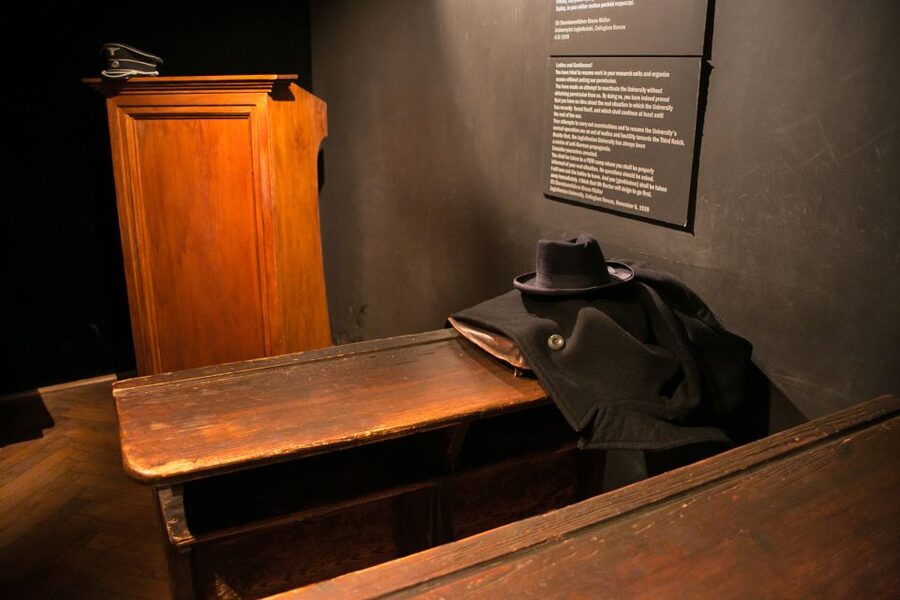
REVIEW · SCHINDLER'S FACTORY TOURS
Krakow: Jewish Quarter Kazimierz & Schindler’s Factory Tour
Kazimierz tells Krakow’s hardest stories. I like that this 210-minute tour links centuries of Jewish life with the Second World War, then adds a look at the neighborhood’s cafés, shops, and art scene. I also like that the price includes a guide and entry to Schindler’s Factory. The main consideration is the pace: you cover a large amount of history before reaching the museum.
The meeting point is clear, on the steps of the Old Synagogue, where you look for a guide carrying an excursions.city sign. Museum times can be approximate, especially from January 1, 2026, so you should keep some flexibility in your Krakow plans.
- Kazimierz from the 14th century onward: Follow the district’s story through settlement, Jewish communal life, 19th-century assimilation, wartime destruction, and modern renewal.
- Synagogues and old cemeteries: See surviving Jewish institutions that give the neighborhood a physical connection to its past.
- A present-day Kazimierz: Pair serious history with cafés, fashionable shops, galleries, and a youthful beatnik feel.
- Schindler’s Factory Museum: Visit a modern exhibition about Krakow under German occupation and Oskar Schindler’s efforts to save Jewish workers.
- Strong guide-led experience: Guide Anna has been praised for explaining difficult subjects clearly and at length without becoming dull.
- Several language choices: Tours are offered in English, French, Italian, German, and Spanish.
In This Review
- Why Kazimierz Makes a Powerful Starting Point
- Old Synagogue Steps and the First Orientation
- Synagogues, Cemeteries, and Everyday Jewish Life
- Modern Kazimierz: Cafés, Shops, and a New Rhythm
- The Walk Toward Schindler’s Factory
- Inside Schindler’s Factory Museum
- How the Three and a Half Hours Are Used
- Is $69 a Fair Price?
- Who Will Get the Most From This Tour?
- Practical Advice Before You Go
- Should You Book This Kazimierz and Schindler’s Factory Tour?
- FAQ
- Where does the tour meet?
- How long does the experience last?
- Is admission to Schindler’s Factory included?
- Are food and drinks included?
- Which languages are available?
- What do I need for museum entry from January 1, 2026?
Why Kazimierz Makes a Powerful Starting Point
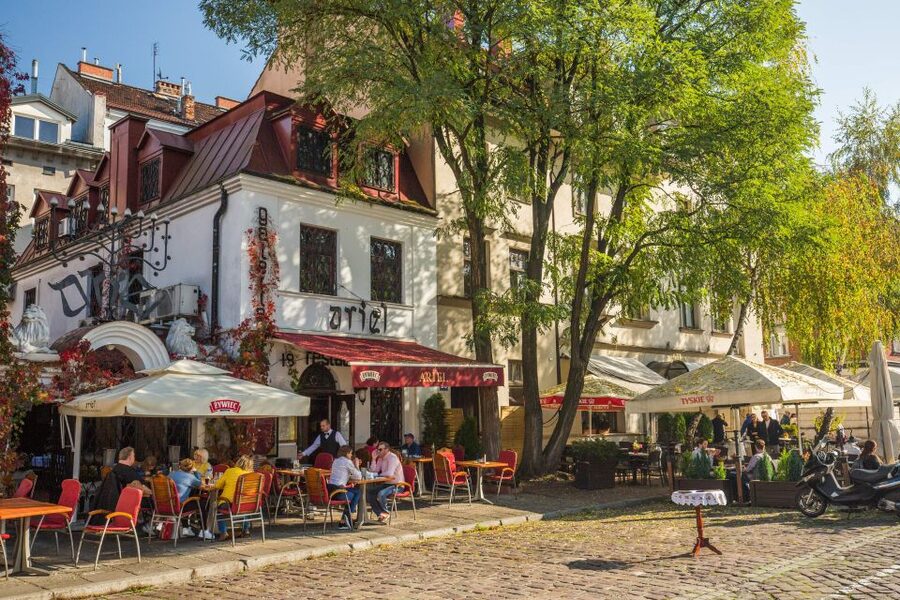
Kazimierz is not simply a historic quarter with attractive old buildings. It was a separate city founded in the 14th century, and its Jewish story developed over many generations. On this tour, you begin by learning how Jewish communities formed, lived, worshiped, and worked in a district that changed greatly over time.
I like starting here because the history is tied to real streets and institutions. Instead of hearing about Jewish life only inside a museum, you see where synagogues and old cemeteries remain. The district itself becomes part of the lesson.
Your guide explains the more closed life of the early settlements, when Jewish residents maintained strong communal traditions and institutions. You also learn how that way of life changed during the 19th century, as assimilation brought Jewish and non-Jewish society into closer contact.
That shift matters. It keeps the story from becoming a simple before-and-after tale. Kazimierz was not frozen in one period, and its Jewish population was not defined only by the war that came later.
The guide’s role is especially important here. The tour covers several centuries in a limited amount of time, so a good explanation helps you understand what you are seeing rather than treating each building as an isolated stop. Anna, in particular, has received praise for being very well informed, detailed, and engaging without making the presentation boring.
Old Synagogue Steps and the First Orientation
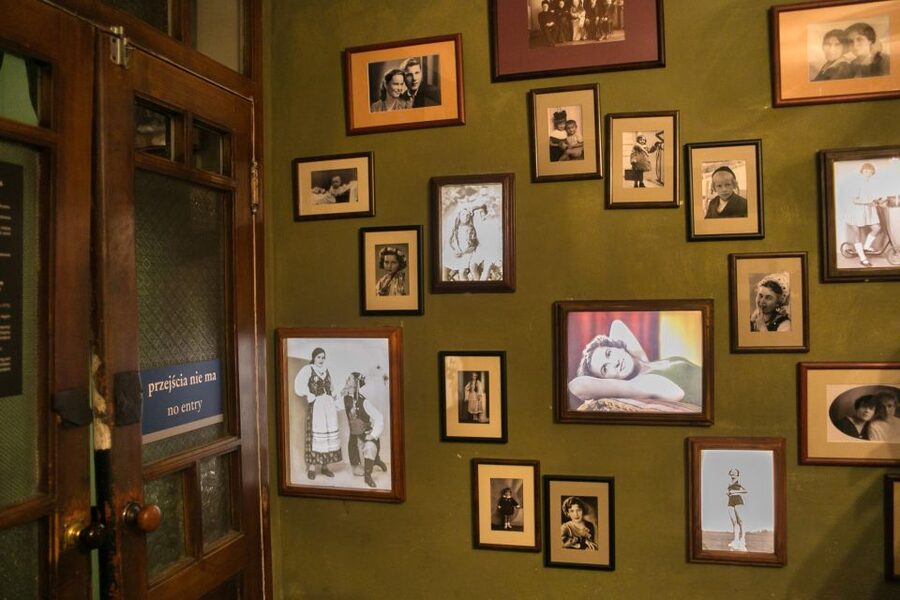
The tour begins on the steps of the Old Synagogue. This is a useful meeting point because it places you directly inside Kazimierz rather than at a generic city-center location.
Look for the guide holding an excursions.city sign. That detail is worth remembering, since the area has many historic buildings and the meeting point may be busy with pedestrians and other tours.
The Old Synagogue also gives the tour a fitting opening. You are not starting with an abstract timeline. You are beginning beside one of the district’s traditional Jewish institutions, with the physical setting already in front of you.
From here, the guide sets out the broad story of Kazimierz. You learn how the neighborhood developed from the 14th century to the present, including the social changes that took place before the Second World War.
I would pay close attention during this first section. The later visit to Schindler’s Factory makes more sense when you understand that Krakow’s Jewish community had already built homes, religious institutions, businesses, and family networks long before the German occupation.
More Schindler Factory tours:
- Krakow: Oskar Schindler’s Factory Entry Ticket & Guided Tour
★ 4.2 · 3,793 reviews - Krakow: Schindler’s Factory Tour with Entrance Ticket
★ 4.5 · 3,182 reviews - Krakow: Schindler’s Factory Skip-the-Line Ticket
★ 4.4 · 3,105 reviews
Synagogues, Cemeteries, and Everyday Jewish Life
The tour includes traditional Jewish institutions such as synagogues and old cemeteries. These places help you picture Jewish life as something organized and ordinary, not just as a chapter in a war memorial.
A synagogue represents more than a place of worship. Within the wider story of Kazimierz, it points to a community with its own religious customs, social structure, and public presence.
The old cemeteries provide another kind of evidence. Names, gravestones, and enclosed burial grounds connect the district to generations of residents. Even when the tour does not stop for a long visit at every site, seeing these places helps you understand the scale and permanence of the community that once lived here.
The guide also places these institutions within the larger changes of the 19th century. Assimilation affected how Jewish residents related to the rest of Krakow, and that process brought both opportunity and change to older communal patterns.
You should expect the subject to be serious. This is not a quick photo walk through attractive streets. The value comes from learning how the district functioned before the war and how much was lost during it.
At the same time, the tour does not present Kazimierz only as a place of tragedy. That balance is one of its better features. You see evidence of religious life, community life, and changing urban culture before confronting the destruction of the Second World War.
Modern Kazimierz: Cafés, Shops, and a New Rhythm
The district today has a noticeably different character. Alongside historic sites, you find fashionable shops, cafés, and an art scene with a beatnik feel.
This part of the tour gives you a useful pause from the more difficult history. It also shows how Kazimierz has developed a new identity without losing all connection to its old one.
I like that the modern neighborhood is included rather than treated as irrelevant. A historic district is also a living place. Cafés and creative businesses show how present-day Krakow uses these streets, even as the buildings and institutions recall earlier communities.
The modern section may appeal most to you if you enjoy seeing how history and current city life overlap. You get a sense of the district as a place where people meet, eat, shop, and make art, not merely a preserved memorial zone.
There is a trade-off. The tour is not designed as a dedicated café crawl, food tour, or shopping walk. Food and drinks are not included, and the main purpose remains historical interpretation. If you want time to sit down or browse independently, plan to return to Kazimierz after the guided portion.
That can actually be an advantage. The tour gives you context first, then you can choose a café or shop with a better understanding of the neighborhood around you.
The Walk Toward Schindler’s Factory
After Kazimierz, the experience turns toward the Second World War and the museum at Schindler’s Factory. The change in subject is important. You move from the long story of Jewish life to the specific events that transformed Krakow under German occupation.
The factory visit is included in the price, and the experience provides a skip-the-ticket-line arrangement. That is useful because the museum is the most time-sensitive part of the tour. A guide-led visit also gives the exhibition a clear frame instead of leaving you to connect every item on your own.
The information provided does not specify the exact route between Kazimierz and the museum or the group size, so you should not assume private transport or a private tour. The important point is that the experience combines a neighborhood visit with museum admission in one organized outing.
The scheduling requires some care. From January 1, 2026, the requested start time is only approximate because of Schindler’s Factory Museum scheduling. You can choose a preferred time, but the exact time is not guaranteed.
For that reason, I would avoid placing another fixed booking immediately afterward. Give yourself room in your day, especially if you are coordinating meals, transport, or another timed attraction.
More Jewish heritage tours in Krakow:
- Krakow: Schindler’s Factory & Ghetto Guided Tour
★ 4.7 · 1,694 reviews - Krakow: Jewish Quarter and Former Ghetto Tour
★ 4.9 · 1,441 reviews - Krakow: Bike Tour of Old Town, Jewish Quarter and the Ghetto
★ 4.9 · 1,155 reviews - Krakow: Kazimierz Jewish Quarter Walking Tour
★ 4.8 · 571 reviews
Inside Schindler’s Factory Museum
The museum provides a modern exhibition about Krakow during the Second World War. Its focus is broader than the personal story suggested by the name. You learn about the tragic events that took place in the city, with Oskar Schindler’s efforts to save many Jewish workers forming one important part of the story.
Schindler was a German entrepreneur whose wartime actions later inspired Steven Spielberg’s Oscar-winning film Schindler’s List. Knowing the film may give you a familiar starting point, but the museum visit is meant to offer a fuller view of Krakow during the war.
I value this pairing because Kazimierz gives you the community story, while Schindler’s Factory gives you the wartime city story. Together, they help you place individual actions within a much larger historical setting.
The museum section is also where the tour becomes most emotionally demanding. The exhibition deals with persecution, death, and the destruction of Jewish life in Krakow. You should expect serious material and allow yourself time to process it.
The guide can help you understand how the exhibition connects to the places you have just seen. That is one reason the guided format may be worth paying for, especially if you do not already know Krakow’s wartime history.
The museum entrance is included, but personalized tickets create an important rule. From January 1, 2026, you must provide the full names of all participants when booking and bring a passport or identity card for entry. Without those documents, admission may be refused.
How the Three and a Half Hours Are Used
At 210 minutes, this is longer than a quick orientation walk but shorter than a full-day historical program. The length works well for you if you want a focused introduction to two connected parts of Krakow’s past.
The time is divided between outdoor interpretation in Kazimierz and the museum visit. The exact balance may vary because museum scheduling affects the day’s timing.
You should expect walking and standing at historic sites. The supplied details do not state the distance, accessibility arrangements, or number of participants, so it is best to ask the provider if you need specific mobility information.
The pace may feel brisk if you like to linger at every synagogue, cemetery, shop, or café. On the other hand, the structured pace is useful if you have limited time in Krakow and want to cover both Kazimierz and Schindler’s Factory without arranging separate visits.
I would treat this as a first look rather than the final word on Kazimierz. After the tour, you can return to the places that caught your attention and spend more time on your own.
Is $69 a Fair Price?
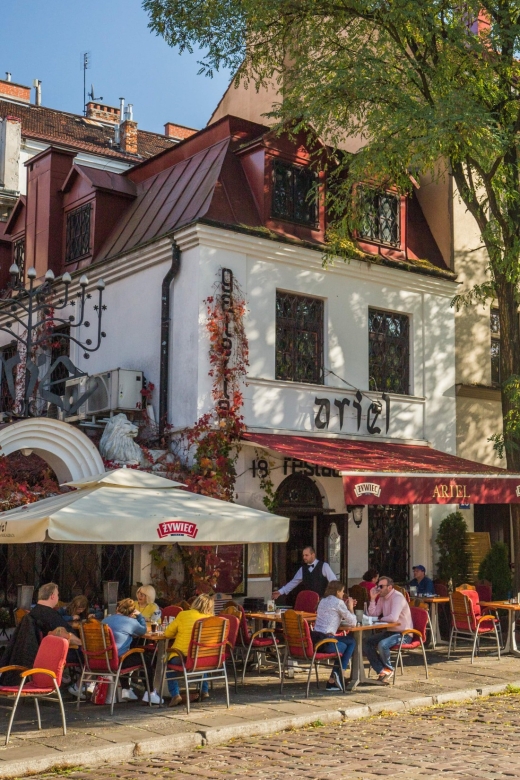
At $69 per person, the value depends on how much guidance you want. The fee includes a live guide and admission to Oscar Schindler’s Factory, while food and drinks are extra.
If you were already planning to visit the museum and felt comfortable exploring Kazimierz alone, you could see the price as paying mainly for interpretation and organization. If you want the history explained as you move through the district, the combination is more attractive.
I especially like that the tour joins two experiences that are often treated separately. You get the streets, religious institutions, cemeteries, and current café culture of Kazimierz, then a museum focused on wartime Krakow.
The strong point is not simply admission. It is the connection between place and story. A guide can explain why the synagogue matters, what changed in the 19th century, and how the war affected the people who lived in the district.
The rating is 4.8 from four reviews, which is a small sample but still encouraging. The most consistent praise concerns the guide’s ability to explain difficult history in an interesting way. A Dutch customer described the guide as exceptionally capable and engaging, while a United Kingdom customer specifically praised Anna for answering questions thoroughly without becoming dull.
That feedback points to the tour’s greatest strength: the quality of the explanation. It also suggests that you should choose this experience for the guide-led historical context, not simply for a list of entrance tickets.
Who Will Get the Most From This Tour?
I would recommend it to first-time visitors who want a clear introduction to Krakow’s Jewish quarter and wartime history. It suits you particularly well if you prefer learning on foot and want a guide to connect separate sites into one story.
It is also a good match for anyone interested in the history behind Schindler’s List. The museum visit provides context about the real person and the city in which his actions took place.
History-minded families may appreciate the structure, though the Second World War material is serious. Adults and older children who can engage with difficult subjects are likely to get more from it than very young children.
You may want a different plan if your main aim is eating, shopping, photography, or relaxed café time. Kazimierz offers all of those things, but this tour gives them less attention than the historical sites.
It may also be less suitable if you dislike fixed schedules. Museum timing can change, and the exact time is not guaranteed from January 1, 2026. You should be comfortable allowing part of your day to remain flexible.
The range of languages is helpful. You can book a live guide in English, French, Italian, German, or Spanish, which makes the historical material easier to follow and discuss.
Practical Advice Before You Go
Arrive at the Old Synagogue steps with enough time to locate the excursions.city sign. The meeting point is specific, but the surrounding district contains many historic façades and tour groups.
Bring your passport or identity card for the museum if your visit is from January 1, 2026 onward. Provide every participant’s full name during booking, since the museum uses personalized tickets.
Wear something suitable for walking and standing, though the tour description does not provide an exact route length. If you want to eat in Kazimierz, plan that separately because food and drinks are not included.
Keep the rest of the day flexible. The requested tour time may change because of museum scheduling, and the 210-minute duration is an estimate of the full experience rather than a guarantee of a precise finish time.
Cancellation is flexible: you can cancel up to 24 hours in advance for a full refund. You can also reserve now and pay later, which helps if your Krakow plans are still taking shape.
Should You Book This Kazimierz and Schindler’s Factory Tour?
Book it if you want one guided experience that connects Jewish Krakow, modern Kazimierz, and the Second World War. The included museum ticket and multilingual guide make the $69 price reasonable for visitors who value explanation over independent wandering.
I would be especially inclined to book if you have never studied Krakow’s history or if you want help making sense of Schindler’s Factory after seeing Kazimierz. The praise for guides such as Anna suggests that the presentation is the part most likely to make the experience worthwhile.
Skip it if you want a slow café afternoon, a food-focused walk, or complete control over your timing. Kazimierz deserves extra time on its own, so even if you book this tour, try to return later for the shops, cafés, and streets you only glimpse during the guided visit.
FAQ
Where does the tour meet?
Meet on the steps of the Old Synagogue in Kazimierz. Your guide will be holding a sign marked excursions.city.
How long does the experience last?
The scheduled duration is 210 minutes, or three and a half hours. Museum scheduling may affect the exact timing.
Is admission to Schindler’s Factory included?
Yes. The entrance ticket to Oscar Schindler’s Factory is included, along with the guide.
Are food and drinks included?
No. Food and drinks are not included in the tour price.
Which languages are available?
The live guide is available in English, French, Italian, German, and Spanish.
What do I need for museum entry from January 1, 2026?
You must provide the full names of all participants when booking and bring a passport or identity card. Without these documents, museum entry may be denied.
Just added in Krakow
- Auschwitz-Birkenau – Skip the Line Tickets★ 3.5 · 29 reviews
- Auschwitz-Birkenau: Fast-Track Ticket & Guided Tour No Transfers★ 3.5 · 17 reviews
- Zakopane & Sleigh Ride with Bonfire – Group Tour from Kraków★ 5.0 · 2 reviews
- Sleigh Ride & Bonfire in Zakopane with Funicular – Private Trip★ 5.0 · 48 reviews
- Thermal Baths & Zakopane – Private Trip from Krakow★ 5.0 · 1 review
- Zakopane & Gubalowka Funicular – Private Winter Tour from Krakow★ 5.0 · 10 reviews
- stag dog chase Krakow prank★ 5.0 · 4 reviews
- Divine Mercy Sanctuary – Private Tour from Krakow★ 5.0 · 4 reviews