
REVIEW · SCHINDLER'S FACTORY TOURS
Krakow: Jewish Quarter Kazimierz & Schindler’s Factory & Ghetto Guided Tour
History here is written into the streets. This five-hour Krakow tour links Kazimierz, Schindler’s former factory, and the wartime ghetto in one thoughtful walk. I like the clear story it builds across three locations, and I especially value the guides’ strong command of Krakow’s Jewish and WWII past.
The main drawback is the length. You may walk close to 10,000 steps and spend much of the day standing, with a short break rather than a full meal stop. The museum can also feel crowded, especially when the group is larger than 20 people.
The guide can make or break a history tour, and this one has earned high praise for its excellent storytelling. Guides such as Barbara, Helena, Magdalena, Dominika, Phil, Joanne, Krzysztof, and Kristof have been singled out for clear explanations, patience, and the ability to answer detailed questions. At $83.27 per person, the price is fair if you want one connected lesson with skip-the-line museum entry, but less appealing if you prefer to explore the museum alone at your own pace.
In This Review
- Key points before you book
- Why this Krakow tour works as one story
- Kazimierz, two hours among synagogues and old streets
- The walk toward Schindler’s Factory
- Schindler’s Factory, ninety minutes inside the occupation museum
- Ghetto Heroes Square and the Chair Memorial
- Guides who give the tour its shape
- Five hours, walking shoes, and a realistic pace
- Is $83.27 a fair price?
- Who should book this experience?
- Should you book the Kazimierz and Schindler tour?
- FAQ
- How long does the Krakow Jewish Quarter and Schindler’s Factory tour last?
- Where does the tour begin?
- Where does the tour end?
- Is admission to Schindler’s Factory included?
- Do I need identification for the museum?
- Is the tour available in English?
- How large is the tour group?
- Can I cancel for a full refund?
Key points before you book
- Three connected parts: Kazimierz, Schindler’s Factory, and the former Krakow Ghetto make this more than a single museum visit.
- Expect about 10,000 steps: The route is manageable but long, with plenty of walking and standing.
- The guide is the main asset: Strong guides add photographs, local stories, and context that you would likely miss alone.
- Schindler’s Factory is not a machinery museum: It is a museum about Krakow under Nazi occupation, with no original factory machinery on display.
- The museum may feel crowded: The walking groups can be small, but the museum portion may include more than 20 people.
- Bring water and lunch: A short break is provided, but you should not count on a relaxed sit-down meal.
Why this Krakow tour works as one story
Krakow’s Jewish Quarter and former ghetto are often visited as separate sights. That can leave you with disconnected facts: a synagogue here, a museum there, a memorial somewhere else. This route gives you a clearer sequence.
You begin in Kazimierz, where Jewish life in Krakow developed over centuries. You then walk toward the area shaped by Nazi occupation and the ghetto. Finally, you visit Schindler’s Factory, where the museum places the war in the wider story of the city and its people.
I like this order because it begins with community and culture rather than with wartime tragedy. You first see Kazimierz as a place of faith, work, family, and ordinary life. That matters. The later account of persecution becomes more human when you have first learned something about the community that existed before the war.
This is not a light sightseeing outing. The subject is painful, and several parts are deliberately somber. Still, the guide-led format helps you process what you are seeing instead of simply moving from one memorial to the next.
More Schindler Factory tours:
- Krakow: Oskar Schindler’s Factory Entry Ticket & Guided Tour
★ 4.2 · 3,793 reviews - Krakow: Schindler’s Factory Tour with Entrance Ticket
★ 4.5 · 3,182 reviews - Krakow: Schindler’s Factory Skip-the-Line Ticket
★ 4.4 · 3,105 reviews
Kazimierz, two hours among synagogues and old streets
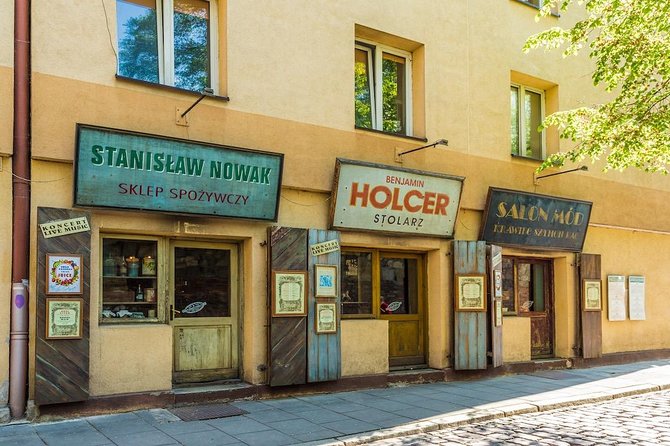
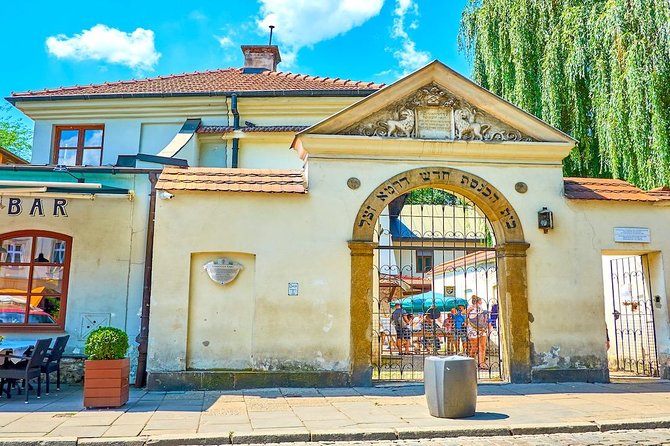
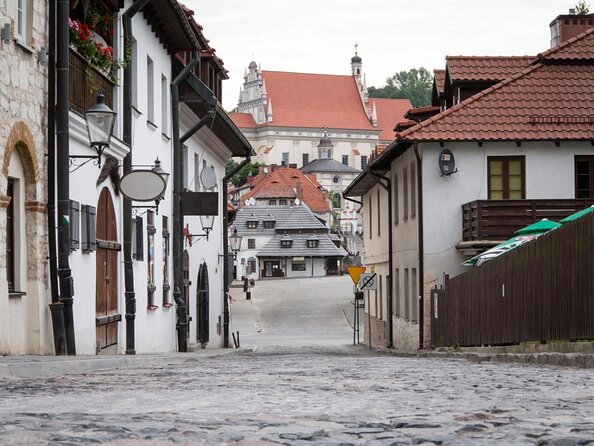
The tour begins at Szeroka 24, in the heart of Kazimierz. You walk through narrow cobbled streets, past synagogues, prayer houses, old townhouses, and courtyards connected with Krakow’s Jewish community.
The value of this section lies in the explanation. Buildings can tell you only so much by themselves. A good guide connects them to rabbis, merchants, families, religious practice, and daily routines. The emphasis is on how the district functioned as a community before WWII, not simply on its appearance today.
Guides have used old photographs to help show how the area changed. This is one of the most useful touches on the tour. You are not just looking at restored facades and asking what they once meant. You get a visual comparison between the streets you see now and the people and activities that once filled them.
The walk also gives you time to ask questions. Several guides have been praised for answering detailed questions about Jewish life, Krakow’s development, and the later destruction of the community. Helena, Barbara, and Krzysztof received particularly warm praise for their ability to explain difficult material in a way that stayed clear and engaging.
Do not expect every stop to be a formal interior visit. This part is mainly an outdoor walking tour, and admission is included at no extra charge. You should wear comfortable shoes and prepare for changing weather, since the tour operates in rain or sunshine.
Kazimierz is also a good reason not to rush this experience. Its importance is not limited to a few famous buildings. The guide helps you notice the relationship between the streets, religious sites, housing, and public spaces. Without that background, you might see a pleasant old quarter. With it, you begin to understand what was lost.
The walk toward Schindler’s Factory
After Kazimierz, the route continues on foot toward Schindler’s Factory and then the former ghetto area. This is where the tour shifts from the long development of Jewish Krakow to the German occupation and the destruction of the city’s Jewish community.
The walking distance is part of the lesson. You are not being driven between isolated attractions. You move through the city and see how the sites relate to one another. Several hours on foot can be tiring, but it gives the tour a stronger sense of place.
The exact arrangement may include a short break, and one guide described the pause as about 30 minutes. Bring a snack, lunch, and water. A packed lunch is the safest choice because the break is not presented as a full restaurant stop.
This route is easiest for people who are comfortable with a moderate amount of walking and standing. One person brought an elderly parent and found the pace suitable, but that does not mean every departure will move at the same speed. If you walk slowly, tell the guide early and arrive ready to keep with the group.
Schindler’s Factory, ninety minutes inside the occupation museum
The museum is the tour’s central indoor stop. Entry is included, and the guide handles the ticket arrangement so you do not have to wait in the normal line. That can be useful because Schindler’s Factory is a popular attraction and may be busy.
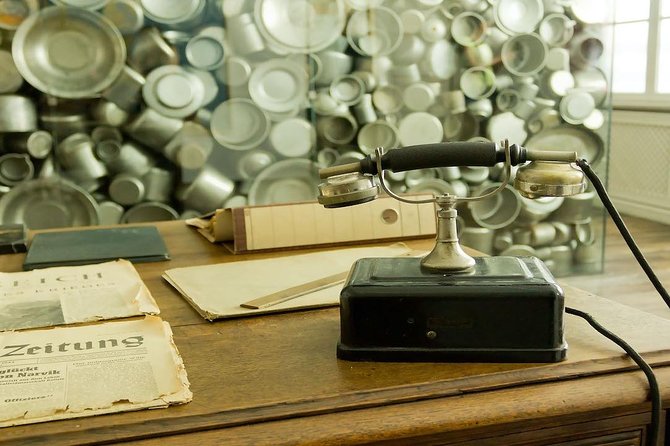
The museum occupies the building that once housed Oskar Schindler’s enamel factory. You should adjust your expectations, though. There is no original factory machinery on display. The museum is built around the exhibition Krakow under Nazi Occupation 1939 to 1945.
This distinction is important. The visit is not mainly a biography of Schindler, and it is not a working-factory tour. Schindler’s actions are part of the story, including the saving of about 1,200 Jewish people, but the wider focus is the daily experience of Krakow’s Jewish and non-Jewish residents under Nazi rule.
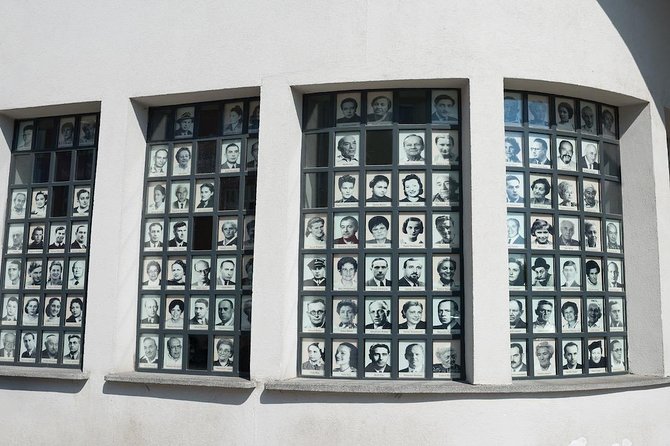
Inside, you encounter photographs, original objects, reconstructions, and rooms designed to create a sense of confinement. Narrow corridors and dim spaces echo the fear and pressure of wartime Krakow. The design is purposeful, but it can also make the visit emotionally heavy and physically cramped.
A guide adds real value here. The museum contains a great deal of information, and it is easy to miss the meaning behind the displays. Several guides have explained how the exhibition is arranged and pointed out details that visitors might otherwise pass without noticing. One guide was praised for helping the group understand the museum’s subtle design choices. Another received high marks for explaining the German invasion, the occupation, and Schindler’s role in a clear sequence.
The chief weakness is group size. The walking portion may have only three, four, or nine people, while the museum section can grow to more than 20. In a crowded gallery, you may not always see the object or panel the guide is discussing. One visitor felt the museum portion was rushed and would have preferred to visit independently.
That criticism is worth taking seriously. Skip-the-line admission saves time, but a guided entry does not guarantee a quiet museum. If you are sensitive to crowds or like to read every display, visiting separately may suit you better. If you want the guide’s interpretation and the convenience of organized entry, the group format remains useful.
More Jewish heritage tours in Krakow:
- Krakow: Schindler’s Factory & Ghetto Guided Tour
★ 4.7 · 1,694 reviews - Krakow: Jewish Quarter and Former Ghetto Tour
★ 4.9 · 1,441 reviews - Krakow: Bike Tour of Old Town, Jewish Quarter and the Ghetto
★ 4.9 · 1,155 reviews - Krakow: Kazimierz Jewish Quarter Walking Tour
★ 4.8 · 571 reviews
Ghetto Heroes Square and the Chair Memorial
The final section takes you into the former Krakow Ghetto, ending at Plac Bohaterow Getta, also called Ghetto Heroes Square. The square is now marked by the Chair Memorial, with empty chairs representing the people who were removed from their homes and deported.
It is a simple memorial with a strong effect. The empty chairs suggest absence without filling the space with excessive decoration. Your guide can place the square within the larger story of the ghetto, making the memorial more than a photo stop.
You also see surviving sections of the original ghetto wall. These fragments are stark reminders that the ghetto was not an abstract idea. It was a controlled physical space, built to confine people.
The route ends near the Under the Eagle Pharmacy, at Plac Bohaterow Getta 18. The pharmacist Tadeusz Pankiewicz provided medicine, shelter, and help to people trapped in the ghetto. The pharmacy adds an individual story of courage to the larger account of occupation and deportation.
Ending here works well. After the museum’s crowded rooms and the walk through the ghetto, the square gives you space to think. This is not a cheerful final stop, but it is an honest one.
Guides who give the tour its shape
The strongest feature of this experience is the guide. The tour covers several centuries and a painful period of modern history in about five hours. Without a strong narrator, it could become a tiring list of dates and buildings.
The best guide reports praise clear speech, strong English, patience, and a gift for storytelling. Magdalena was noted for detailed preparation and vivid explanations. Barbara was praised for explaining the growth of Krakow’s Jewish population, the creation of the ghetto, and the later deportations. Phil received repeated praise for his depth of knowledge and ability to speak clearly for the full tour.
Krzysztof made a particularly strong impression by turning the subject into a personal study project for one participant, who later ordered a book about the Krakow Ghetto Pharmacy. That tells you what a good guide can do: not entertain you away from the subject, but make you want to learn more.
Guide quality can vary from departure to departure, as with any group tour. The consistent pattern is encouraging, but you should understand that the guide’s style will shape your day. Some prefer a more formal history lesson. Others use many personal stories and photographs.
Five hours, walking shoes, and a realistic pace
The advertised duration is about five hours. In practice, you should treat it as a serious half-day outing with a lot of time on your feet.
The distance itself is not the only issue. You may stand outside while listening, wait in busy museum spaces, and move through narrow corridors. One person described the full route as around 10,000 steps. Another called it a long day on foot but felt the pace was manageable.
Wear supportive shoes. Bring water, a light meal, and clothing suited to the forecast. There is little advantage in dressing for a polished city tour when the day calls for walking on cobbles and standing outdoors.
The tour begins in Kazimierz and ends at the former ghetto pharmacy. It does not return you to the starting point. The route is easy to reach from Krakow’s Old Town on foot, and the area is near public transportation, but plan your onward route before you set out.
Arrive at least 10 minutes early. Late arrivals cannot join after the group leaves, and the ticket cannot be refunded. From January 1, 2026, the selected time is only an estimate because the museum controls the schedule, so leave some flexibility in your day.
Is $83.27 a fair price?
At $83.27 per person, this is not the cheapest way to see Kazimierz or the ghetto. You are paying for a guide, a connected walking route, and museum admission with arranged entry.
I think the price is reasonable for first-time visitors who want historical context rather than a quick look at the main sights. The guide’s photographs, explanations, and local stories are the part you cannot reproduce simply by walking around with a map.
The value is less clear for independent history readers who want to spend hours with museum displays. The group can be crowded inside Schindler’s Factory, and the visit may feel rushed. In that case, a separate museum visit could provide more control, though you would lose the linked walking narrative.
The 97 percent recommendation rate and 4.9 rating indicate that the overall experience is performing very well. I would still focus less on the score and more on your preferred travel style. This is a good buy if you value interpretation, structure, and convenience. It is a weaker fit if you dislike groups or want to linger over every exhibit.
Who should book this experience?
I would choose this tour if you want a serious introduction to Krakow’s Jewish past and WWII history in one half-day. It suits first-time visitors, history-minded travelers, and anyone who wants help understanding how Kazimierz, the ghetto, and Schindler’s Factory connect.
It also suits you if you learn best through stories. The guides have been praised for making difficult material understandable, and the route gives you physical places to attach to the history.
I would hesitate if you have limited stamina, dislike walking, or need a slow museum visit. The subject matter is also somber, so this is not a casual sightseeing trip. Give yourself quiet time afterward rather than scheduling another demanding activity immediately.
Should you book the Kazimierz and Schindler tour?
Book it if you want one coherent, guide-led history lesson rather than three disconnected stops. The combination of Kazimierz’s prewar community, the occupation museum, Ghetto Heroes Square, and the pharmacy creates a fuller picture of Krakow than any one site can provide.
Skip it if your main goal is an unhurried museum visit or if five hours of walking and standing sounds unpleasant. For most visitors who want context, strong storytelling, and arranged entry to Schindler’s Factory, the $83.27 cost is justified. Bring lunch, wear good shoes, arrive early, and approach the day with the attention its subject deserves.
FAQ
How long does the Krakow Jewish Quarter and Schindler’s Factory tour last?
The tour lasts approximately five hours. The itinerary includes about two hours in Kazimierz, 90 minutes at Schindler’s Factory, and one hour in the former ghetto area.
Where does the tour begin?
The meeting point is Szeroka 24, 31-053 Krakow, Poland, in the Kazimierz district.
Where does the tour end?
The tour ends at the Under the Eagle Pharmacy, Apteka pod Orlem, at Plac Bohaterow Getta 18, Krakow.
Is admission to Schindler’s Factory included?
Yes. Admission to Schindler’s Factory is included, and the tour includes arranged entry so you do not need to wait in the regular ticket line.
Do I need identification for the museum?
Yes. You must provide the full names of all participants when booking and bring a passport or ID for entry. Without the required identification, entry may be denied.
Is the tour available in English?
Yes. English is offered. Group tours operate in only one language, so you should select your preferred language when booking.
How large is the tour group?
The activity has a maximum of 25 participants. The walking sections may be smaller, but the museum group can be larger than 20 people.
Can I cancel for a full refund?
Yes, if you cancel at least 24 hours before the experience begins. Cancellations or changes made less than 24 hours before the start time are not refunded or accepted.
Just added in Krakow
- Auschwitz-Birkenau – Skip the Line Tickets★ 3.5 · 29 reviews
- Auschwitz-Birkenau: Fast-Track Ticket & Guided Tour No Transfers★ 3.5 · 17 reviews
- Zakopane & Sleigh Ride with Bonfire – Group Tour from Kraków★ 5.0 · 2 reviews
- Sleigh Ride & Bonfire in Zakopane with Funicular – Private Trip★ 5.0 · 48 reviews
- Thermal Baths & Zakopane – Private Trip from Krakow★ 5.0 · 1 review
- Zakopane & Gubalowka Funicular – Private Winter Tour from Krakow★ 5.0 · 10 reviews
- stag dog chase Krakow prank★ 5.0 · 4 reviews
- Divine Mercy Sanctuary – Private Tour from Krakow★ 5.0 · 4 reviews