
REVIEW · SCHINDLER'S FACTORY TOURS
Kazimierz, Schindler’s Factory & Ghetto Guided Tour
History feels close to the pavement here. This five-hour walking tour links Kazimierz’s Jewish heritage with Schindler’s Factory and the former ghetto in Podgórze, giving you a clear way to understand Kraków before and during World War II. I like the carefully connected route, and I especially like having a licensed guide explain the Jewish quarter before you enter the museum. The main drawback is the group size, which can reach 25 people and may feel crowded inside Schindler’s Factory.
I also like the fast-track museum entry and the tour’s useful mix of street history, religious sites, personal stories, and wartime memorials. The tour is highly rated at 4.8 out of 5 from nine ratings, with repeated praise for the guides. One practical warning: arriving late can mean missing the group and losing your ticket, so give yourself extra time to reach the Old Synagogue.
In This Review
- Key points to know before booking
- Why this five-hour route works
- Beginning on Szeroka Street in Kazimierz
- Old Synagogue, Remuh, Kupa, and Tempel
- Walking from Kazimierz toward Schindler’s Factory
- Schindler’s story inside the museum
- The former Jewish Ghetto in Podgórze
- Ghetto Heroes Square and the empty chairs
- The guide makes the biggest difference
- Group size, timing, and practical comfort
- Who should book this Kraków history tour?
- Should you book it?
- FAQ
- Where does the tour meet?
- How long does the tour last?
- What languages are available?
- Is admission to Schindler’s Factory included?
- Does the factory still contain its original equipment?
- How large can the group be?
- Are food and drinks included?
- What happens if I arrive late?
Key points to know before booking
- Three important Kraków sites in five hours: You visit Kazimierz, Schindler’s Factory, and the former Jewish Ghetto in Podgórze on one guided route.
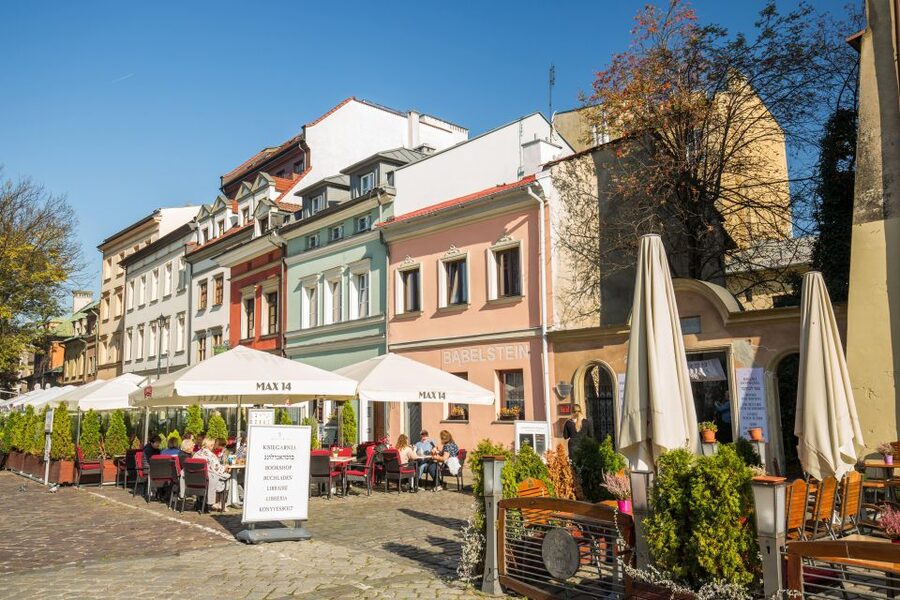
- Start at Szeroka Street: Meet your guide on the steps of the Old Synagogue, where they will hold a Kazimierz Guided Tour sign.
- A strong history-first approach: The walk through Kazimierz gives context for Jewish life, traditions, and culture before the wartime sections.
- Fast-track entry to Schindler’s Factory: The museum visit is included, but it is not a tour of original factory machinery.
- The group may reach 25 people: This is manageable outdoors but can make the museum’s narrow passages harder to follow.
- Five languages are available: You can book an English, French, German, Spanish, or Italian tour, with each group conducted in one language.
Why this five-hour route works
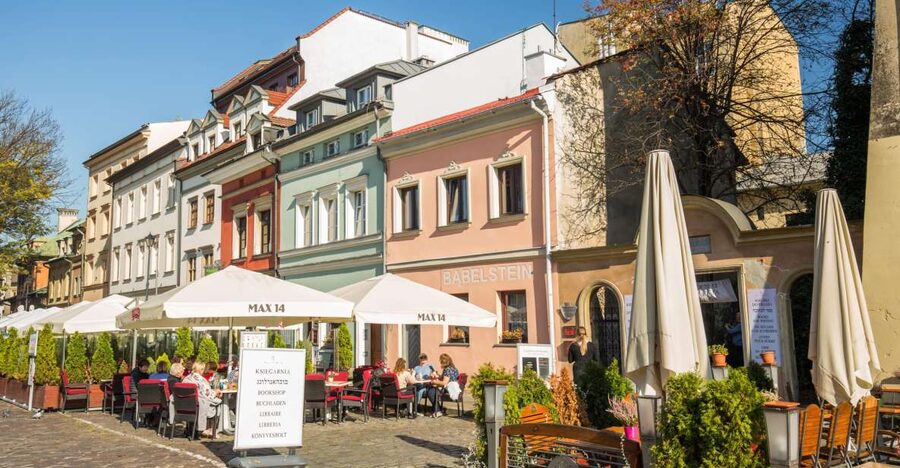
Kraków’s Jewish story is spread across two districts and several centuries. Kazimierz tells you about community life, worship, family, and culture. Podgórze shows what happened when Nazi occupation destroyed that community and forced Jewish residents into a confined area.
That sequence matters. If you visit Schindler’s Factory without first learning about Kazimierz, the museum can feel like a collection of wartime facts. This route gives you a human setting first. You see the religious buildings and streets where Jewish life developed, then follow the story toward persecution, deportation, and remembrance.
You also get a licensed guide throughout the walking portions and the museum visit. The strongest part of the experience depends on that person’s ability to connect places with people. Past guide feedback has been especially positive, including specific praise for Aneta and several comments describing the guides as excellent, prepared, and clear.
At $81 per person, this is not a budget stroll. Still, the price includes five hours, a professional guide, the walking route through two districts, and fast-track admission to Schindler’s Factory. For you, the value depends on whether you want interpretation rather than simply checking off landmarks. If you would otherwise pay separately for a museum ticket and a local guide, the package is easier to justify.
More Schindler Factory tours:
- Krakow: Oskar Schindler’s Factory Entry Ticket & Guided Tour
★ 4.2 · 3,793 reviews - Krakow: Schindler’s Factory Tour with Entrance Ticket
★ 4.5 · 3,182 reviews - Krakow: Schindler’s Factory Skip-the-Line Ticket
★ 4.4 · 3,105 reviews
Beginning on Szeroka Street in Kazimierz
The tour begins on the steps of the Old Synagogue on Szeroka Street. Arrive at least 10 minutes early. Your guide will be holding a Kazimierz Guided Tour sign, but late arrivals cannot be added once the group has entered, and tickets are non-refundable.
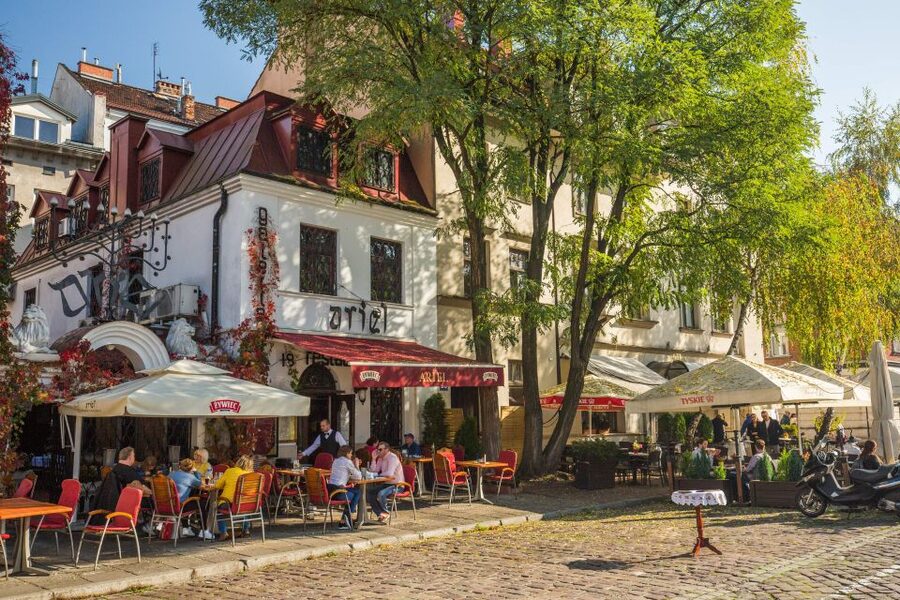
Szeroka Street is a fitting starting point. It was the historic heart of Kazimierz, framed by old townhouses and synagogues dating from the 16th to the 18th centuries. The street helps you picture Kazimierz as a center of Jewish life rather than simply a picturesque part of modern Kraków.
The Old Synagogue is the oldest preserved synagogue in Poland and now operates as a museum of Jewish history. From the outside, you see one of the district’s key religious landmarks. The guide’s explanation adds the details that architecture alone cannot provide: how worship, tradition, and community life shaped the neighborhood.
I appreciate that the tour does not rush straight to the wartime story. You first learn what existed before Nazi occupation. That makes the later sections more painful, but also more understandable.
Old Synagogue, Remuh, Kupa, and Tempel
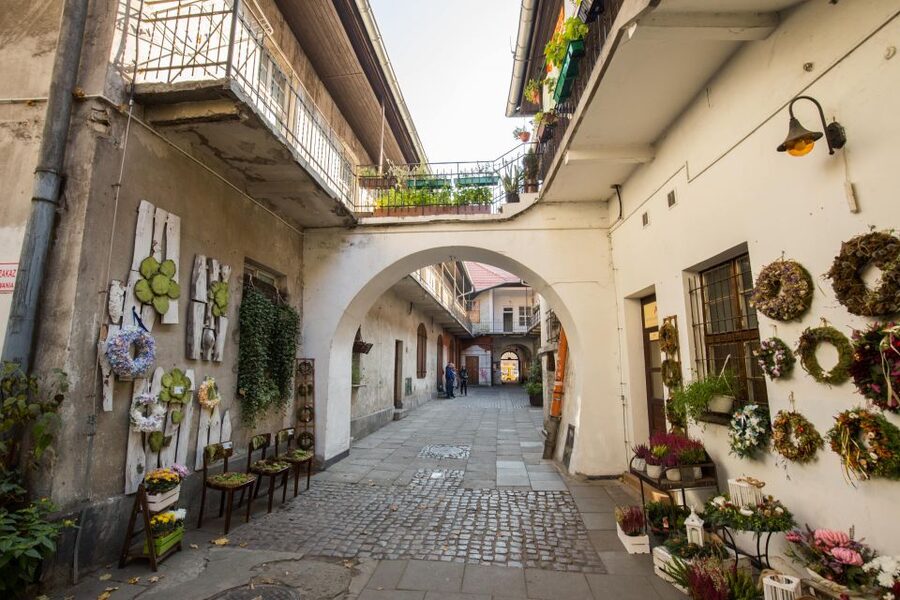
The route continues past several important synagogues, each connected with a different part of Kazimierz’s religious and social life.
The Remuh Synagogue and Cemetery are among the most important Jewish religious sites in Poland. Even if you do not enter every building, seeing the synagogue and cemetery together gives you a sense of the district’s long spiritual connection. Your guide can explain why this site matters within Kraków’s Jewish heritage.
You also pass the Kupa Synagogue, which once served poorer residents. That detail is useful because it pushes the story beyond grand monuments. A neighborhood is made from different social groups, not only its most famous buildings.
The Tempel Synagogue offers another contrast. It is now an active center of cultural life, linking the area’s historic identity with its present use. These stops show that Kazimierz is not preserved only as a museum setting. It remains a place where Jewish memory and culture continue to be visible.
The walk ends in Plac Nowy, a lively square with cafés, markets, and local art. This is a useful point to notice the difference between the district’s current atmosphere and the harder history being discussed. The square is active and modern, but the surrounding streets still carry signs of older community life.
Do not expect a long stop at every synagogue. The purpose is to build a connected picture while walking. If you want detailed architectural study or interior access at each site, a specialist Jewish heritage tour may suit you better.
Walking from Kazimierz toward Schindler’s Factory
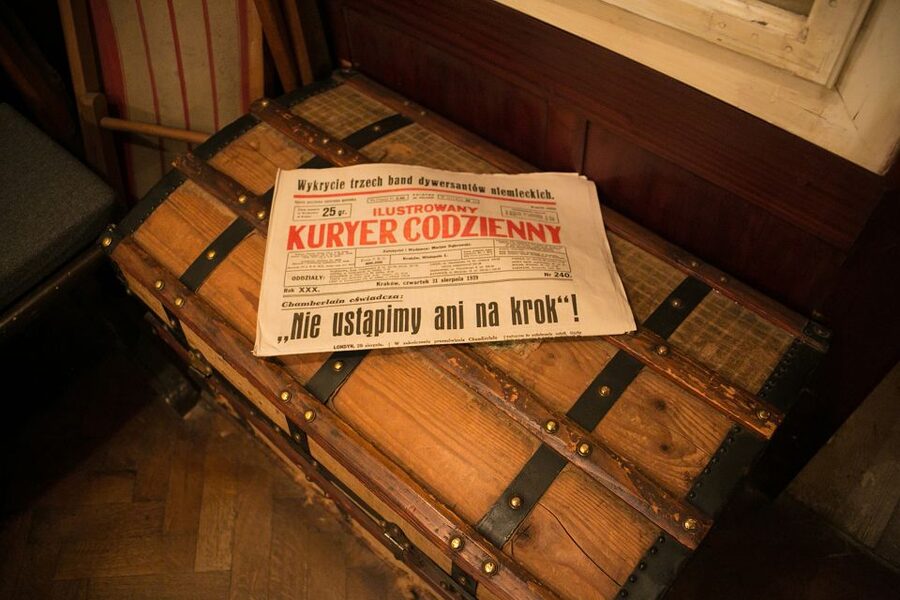
The route then shifts from the history of Jewish community life to the Nazi occupation of Kraków. That change is one of the tour’s strengths. Instead of treating the war as an isolated museum topic, the guide connects it to the people and places you have just encountered.
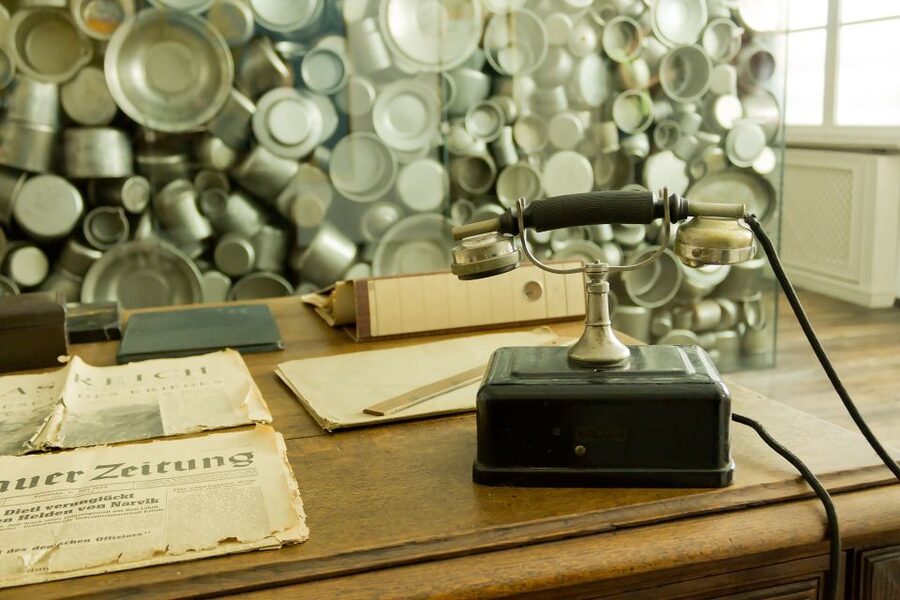
Schindler’s Enamel Factory is now a museum. The building originally functioned as Oskar Schindler’s factory, but it no longer contains the original production equipment. This is important to know before you book. You are not visiting a working industrial site or seeing a preserved factory floor in the usual sense.
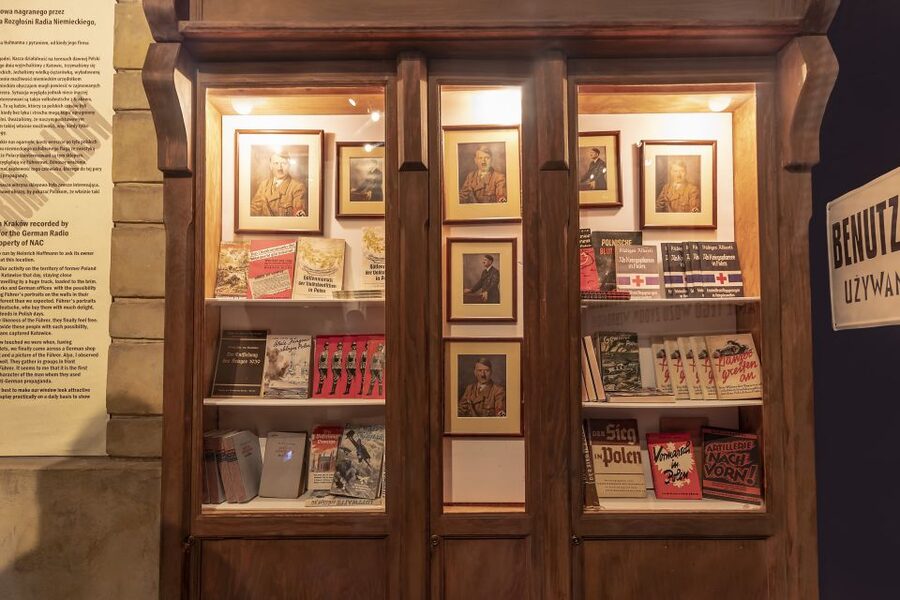
The museum houses the exhibition Kraków under Nazi Occupation 1939 to 1945. The focus is broader than Schindler alone. You learn about the city’s inhabitants, the pressure of occupation, and the fear and uncertainty that shaped daily life.
The guide uses photographs, personal objects, and reconstructed streets to explain the period. These details give the museum a human scale. Rather than presenting only dates and military events, the exhibition shows how occupation affected ordinary people.
More Jewish heritage tours in Krakow:
- Krakow: Schindler’s Factory & Ghetto Guided Tour
★ 4.7 · 1,694 reviews - Krakow: Jewish Quarter and Former Ghetto Tour
★ 4.9 · 1,441 reviews - Krakow: Bike Tour of Old Town, Jewish Quarter and the Ghetto
★ 4.9 · 1,155 reviews - Krakow: Kazimierz Jewish Quarter Walking Tour
★ 4.8 · 571 reviews
Schindler’s story inside the museum
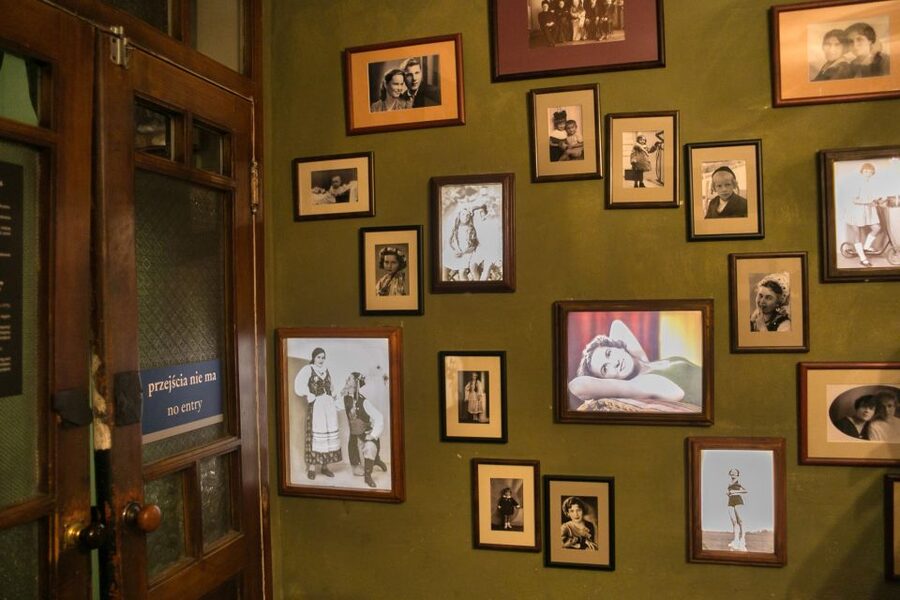
Oskar Schindler’s role forms the emotional center of the museum visit. He employed Jewish workers and used his influence and resources to protect them from deportation. More than a thousand men and women survived because of his actions.
The guide also introduces the people often called Schindlerjuden, the Jewish workers he saved. Their stories help you see Schindler’s actions in personal terms. The point is not simply that one man became famous, but that individual lives were affected by his decisions.
The exhibition places Schindler’s courage within a wider story of oppression. That balance matters. You learn about his efforts without losing sight of the many people who suffered or were killed during the occupation.
The museum can be an intense part of the afternoon. It is also where the group-size issue matters most. The maximum is 25 people, and one past experience found that a group grew from 15 to 25 after reaching the factory. In narrow, twisting corridors, the guide could still be heard through the audio system, but it became difficult to see what was being shown.
That is a fair warning, especially if you prefer quiet museum visits or need time to study displays. A large group does not ruin the content, but it can reduce your view and make the indoor part feel pressured. Stay close to the guide when possible and expect the museum portion to be less comfortable than the open-air walk.
The former Jewish Ghetto in Podgórze
After the museum, the tour continues into Podgórze, the area of the former Kraków Ghetto. Here, the subject becomes more direct and physical. You are no longer only learning about a historical period inside an exhibition. You are walking through places connected with confinement and deportation.
The surviving fragments of the ghetto walls are among the most sobering stops. These remains show the boundaries that confined Kraków’s Jewish population and separated the ghetto from the rest of the city.
A wall fragment can look simple, but the guide’s explanation gives it weight. The barrier was not just a line on a map. It controlled movement and made exclusion visible in everyday life. Seeing part of it helps you understand how occupation reshaped the city street by street.
Weather can affect this part of the tour. You will spend several hours outside, and the walking route includes open streets and public squares. Wear comfortable shoes and check the forecast before leaving. Food and drinks are not included, so consider eating before the tour or carrying something if appropriate for your schedule.
Ghetto Heroes Square and the empty chairs
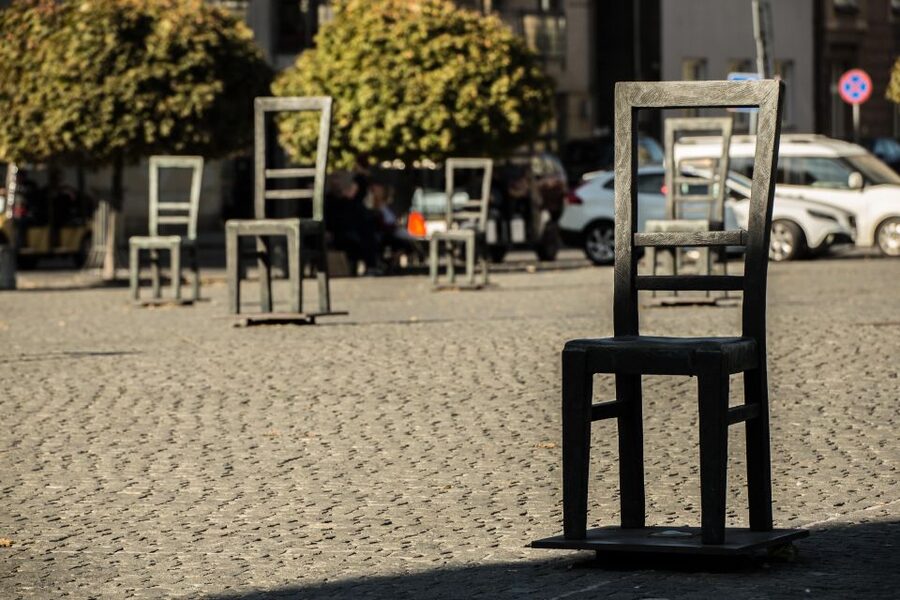
The final major stop is Ghetto Heroes Square, once a center of the Kraków Ghetto and a place linked with deportations. Today, the square is a memorial site marked by rows of empty metal chairs.
The chairs are a powerful image. They represent lives lost and the belongings left behind when people were forced from their homes. The memorial does not need a long explanation to make an impression, but a good guide can explain why the square matters and how it connects with the events described earlier.
I find this ending effective because it leaves you with a place of remembrance rather than a final museum display. You have moved from Jewish life in Kazimierz, through Nazi occupation and Schindler’s actions, to the physical remains and memorials of the ghetto.
The tone is serious throughout this section. This is not a light sightseeing walk with a few historical facts added on. You should book it when you have the time and attention for difficult subjects.
The guide makes the biggest difference
The tour’s strongest repeated praise concerns the guides. Aneta was singled out for explaining the history of Jews in Poland and Kraków from the Middle Ages through World War II, while also covering Jewish culture and Schindler’s role. That kind of background is particularly useful if you plan to visit Auschwitz later, because it helps place the camp within the wider story of Jewish life and Nazi persecution.
Other guide comments describe the experience as very interesting, well prepared, and enjoyable from an educational point of view. The guide is not just there to lead you between addresses. Their explanations shape how you understand the buildings, memorials, and museum displays.
Language choice also matters. The available languages are English, French, German, Spanish, and Italian. Each group is conducted in one language, so select the language you want when booking rather than expecting a multilingual presentation.
Group size, timing, and practical comfort
Five hours is a substantial block of your Kraków day. The benefit is a connected route with enough time for context. The cost is that you will spend a long period walking and concentrating on serious material.
The stated group limit is 25 people, though museum scheduling can affect how the route runs. Tour times are approximate and may change because of museum or site scheduling. You can request a preferred time, but the final starting time is not guaranteed.
Personalized museum tickets require the full names of every participant at booking. Get those details right. A missing name may lead to denied entry.
The tour is outdoors for much of its route, so weather affects comfort. Comfortable footwear is a sensible choice, and you should avoid placing this experience immediately before another fixed appointment. The tour includes no food or drinks, and there is no promise of a meal stop.
Free cancellation is available up to 24 hours before the start, with a full refund. You can also reserve now and pay later, which helps if your Kraków schedule is still changing.
Who should book this Kraków history tour?
I would recommend this experience to you if you want a guided introduction to Kraków’s Jewish heritage and World War II history in one half-day. It suits first-time visitors who want a clear structure, families with older children able to handle serious topics, and anyone planning a later visit to Auschwitz who wants more local context first.
It is also a good match if you value explanation over independent wandering. The route covers many important places, but the meaning comes from the guide’s narration.
I would think twice if you dislike group tours, need a slow pace, or want extended time inside each synagogue and museum room. The possible 25-person group can be awkward in the museum’s narrow corridors, and the five-hour schedule does not leave much room for lingering.
Should you book it?
Book this tour if you want the major Jewish and wartime sites linked into one thoughtful route, with a guide to explain what you are seeing. The Old Synagogue, Remuh Cemetery, ghetto wall fragments, Ghetto Heroes Square, and Schindler’s Factory form a strong progression from community life to persecution and remembrance.
At $81, the value is best for visitors who want interpretation, fast-track museum entry, and a full five-hour experience. If you prefer quiet museums or independent walks, split the sites across separate visits instead. For most first visits to Kraków, though, this is a useful and serious way to understand the city’s past.
FAQ
Where does the tour meet?
Meet your guide on the steps of the Old Synagogue on Szeroka Street. The guide will hold a Kazimierz Guided Tour sign.
How long does the tour last?
The tour lasts five hours. Starting times vary, so check availability when booking.
What languages are available?
You can book the tour in English, French, German, Spanish, or Italian. Each group tour is conducted in one language.
Is admission to Schindler’s Factory included?
Yes. The tour includes fast-track admission to Schindler’s Factory and the exhibition about Kraków under Nazi Occupation from 1939 to 1945.
Does the factory still contain its original equipment?
No. The building originally operated as Schindler’s factory, but it is now a museum and no longer contains the original production equipment.
How large can the group be?
Museum guidelines limit the group to a maximum of 25 participants. Group size can affect how easily you see the guide in the museum’s narrow corridors.
Are food and drinks included?
No. Food and drinks are not included in the tour price.
What happens if I arrive late?
You should arrive at least 10 minutes before the start. Once the group has entered, late arrivals cannot be accommodated, and the tickets are non-refundable.
Just added in Krakow
- Auschwitz-Birkenau – Skip the Line Tickets★ 3.5 · 29 reviews
- Auschwitz-Birkenau: Fast-Track Ticket & Guided Tour No Transfers★ 3.5 · 17 reviews
- Zakopane & Sleigh Ride with Bonfire – Group Tour from Kraków★ 5.0 · 2 reviews
- Sleigh Ride & Bonfire in Zakopane with Funicular – Private Trip★ 5.0 · 48 reviews
- Thermal Baths & Zakopane – Private Trip from Krakow★ 5.0 · 1 review
- Zakopane & Gubalowka Funicular – Private Winter Tour from Krakow★ 5.0 · 10 reviews
- Divine Mercy Sanctuary – Private Tour from Krakow★ 5.0 · 4 reviews
- stag dog chase Krakow prank★ 5.0 · 4 reviews